
English Constitutional Monarchy Evolution of English Constitutional Government
![The Restoration King Charles II [1660 -1685] Ø Son of Charles I Ø Had](https://slidetodoc.com/presentation_image_h/e4211204c8840b2ea2a7af1ca344757e/image-34.jpg "The Restoration King Charles II [1660 -1685] Ø Son of Charles I Ø Had")
- Slides: 42
English Constitutional Monarchy
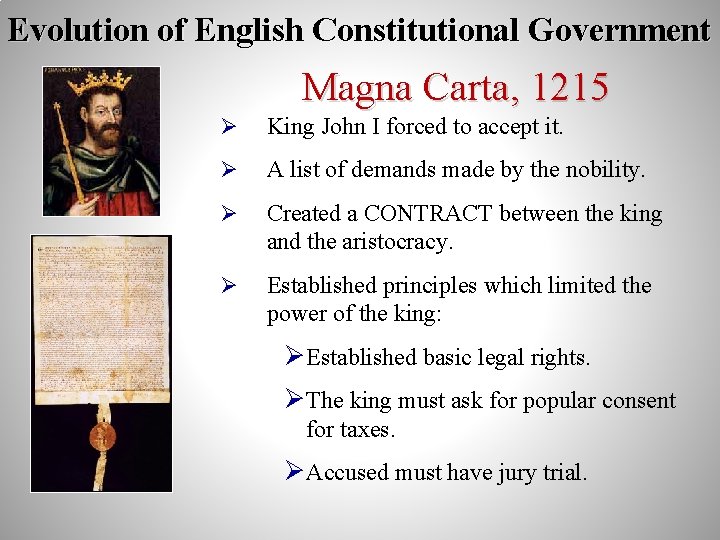
Evolution of English Constitutional Government Magna Carta, 1215 Ø King John I forced to accept it. Ø A list of demands made by the nobility. Ø Created a CONTRACT between the king and the aristocracy. Ø Established principles which limited the power of the king: ØEstablished basic legal rights. ØThe king must ask for popular consent for taxes. ØAccused must have jury trial.
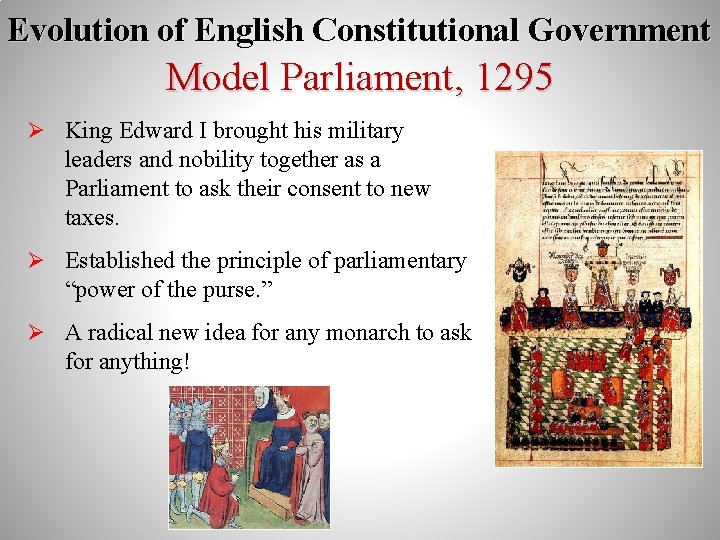
Evolution of English Constitutional Government Model Parliament, 1295 Ø King Edward I brought his military leaders and nobility together as a Parliament to ask their consent to new taxes. Ø Established the principle of parliamentary “power of the purse. ” Ø A radical new idea for any monarch to ask for anything!
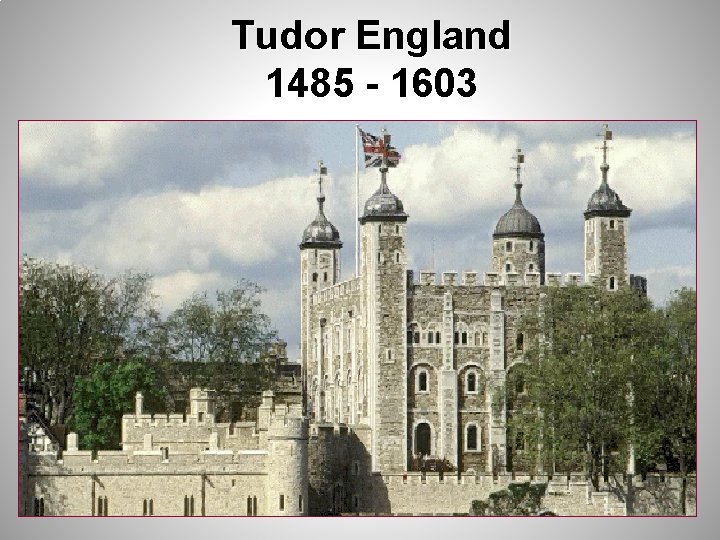
Tudor England 1485 - 1603
Characteristics of Tudor Rule • Greatly increased royal power. • Establishment of the protestant church. • Emergence of England as a world power. • Strong popularity among the people • Growth of English nationalism. • Tremendous influence over Parliament by Tudor monarchs
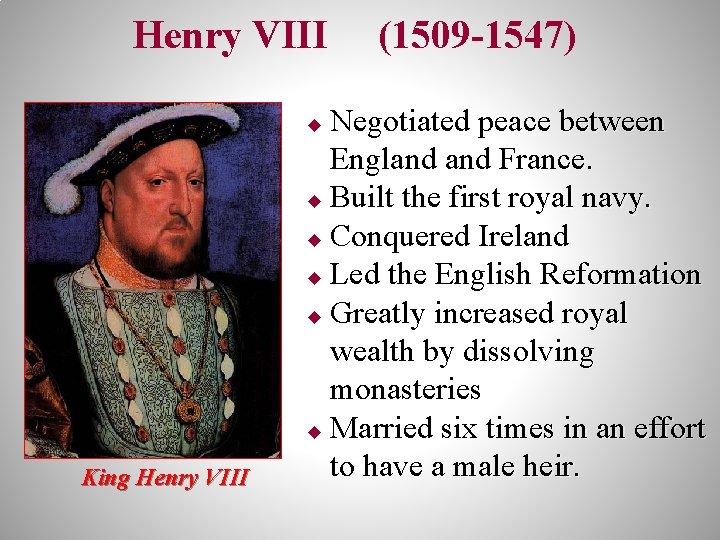
Henry VIII Negotiated peace between England France. u Built the first royal navy. u Conquered Ireland u Led the English Reformation u Greatly increased royal wealth by dissolving monasteries u Married six times in an effort to have a male heir. u King Henry VIII (1509 -1547)
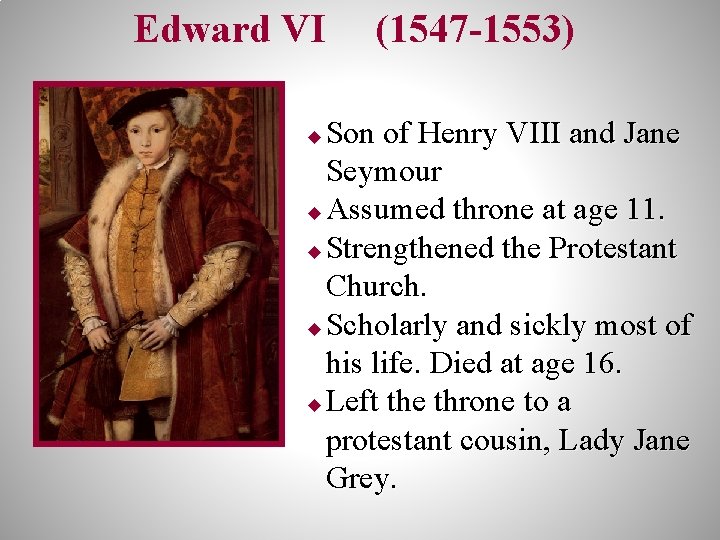
Edward VI (1547 -1553) Son of Henry VIII and Jane Seymour u Assumed throne at age 11. u Strengthened the Protestant Church. u Scholarly and sickly most of his life. Died at age 16. u Left the throne to a protestant cousin, Lady Jane Grey. u
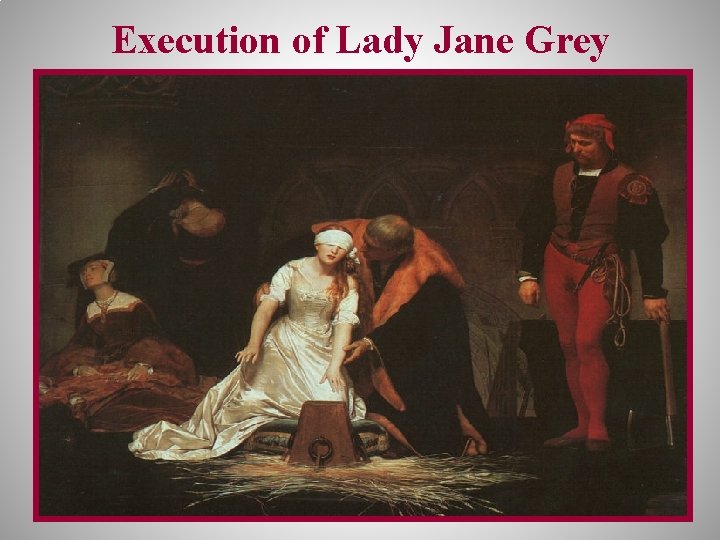
Execution of Lady Jane Grey
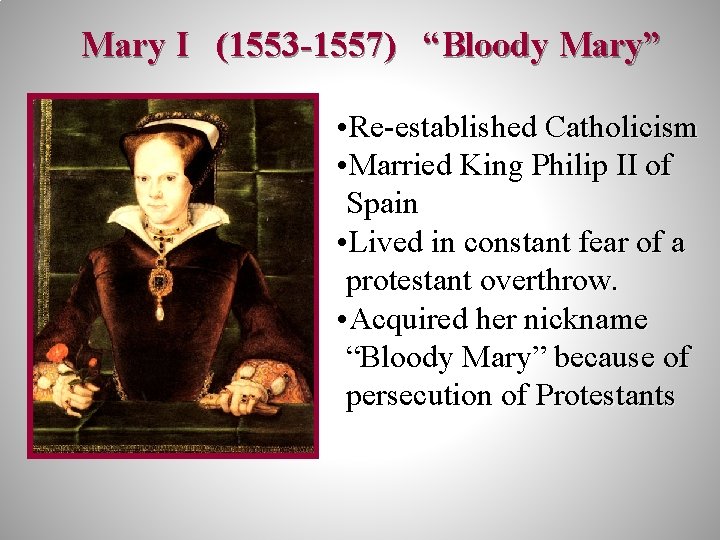
Mary I (1553 -1557) “Bloody Mary” • Re-established Catholicism • Married King Philip II of Spain • Lived in constant fear of a protestant overthrow. • Acquired her nickname “Bloody Mary” because of persecution of Protestants
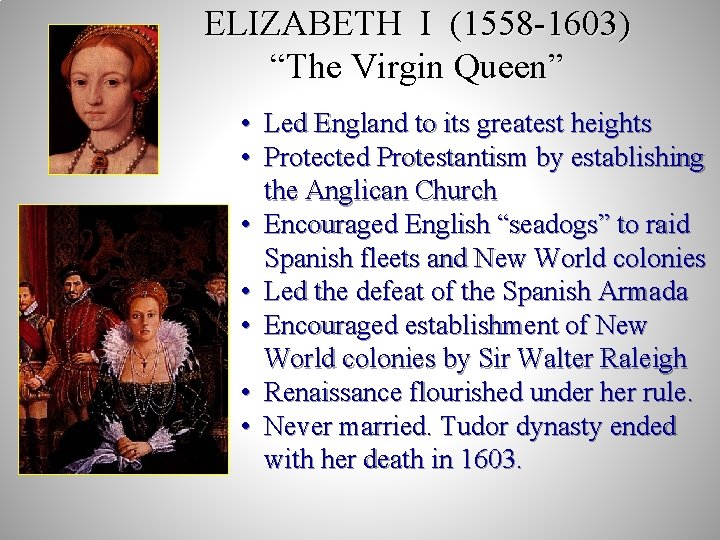
ELIZABETH I (1558 -1603) “The Virgin Queen” • Led England to its greatest heights • Protected Protestantism by establishing the Anglican Church • Encouraged English “seadogs” to raid Spanish fleets and New World colonies • Led the defeat of the Spanish Armada • Encouraged establishment of New World colonies by Sir Walter Raleigh • Renaissance flourished under her rule. • Never married. Tudor dynasty ended with her death in 1603.
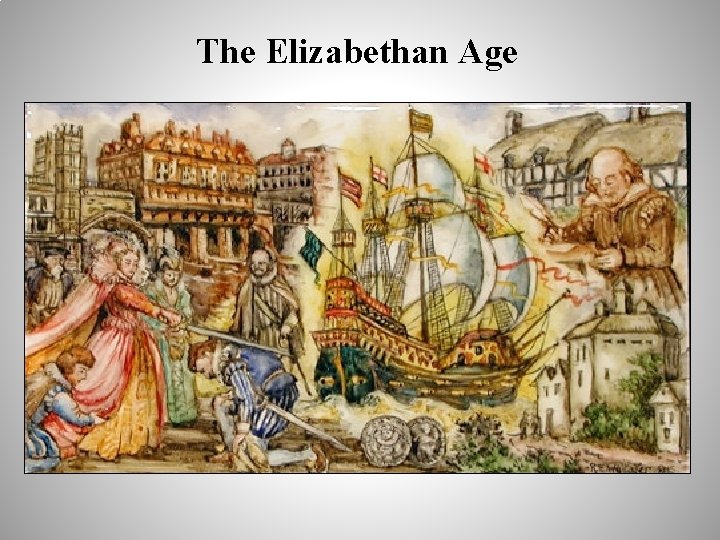
The Elizabethan Age
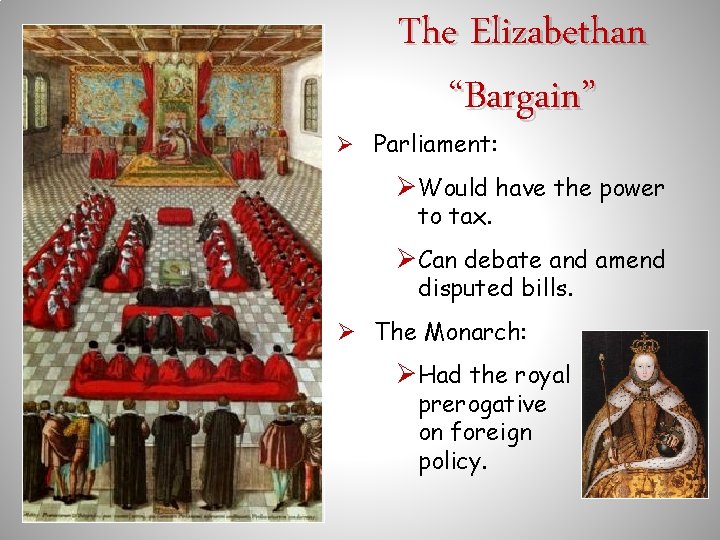
The Elizabethan “Bargain” Ø Parliament: ØWould have the power to tax. ØCan debate and amend disputed bills. Ø The Monarch: ØHad the royal prerogative on foreign policy.
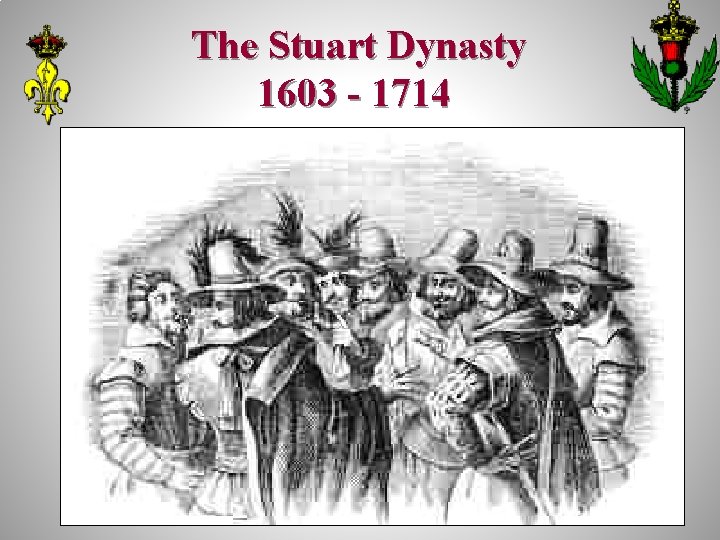
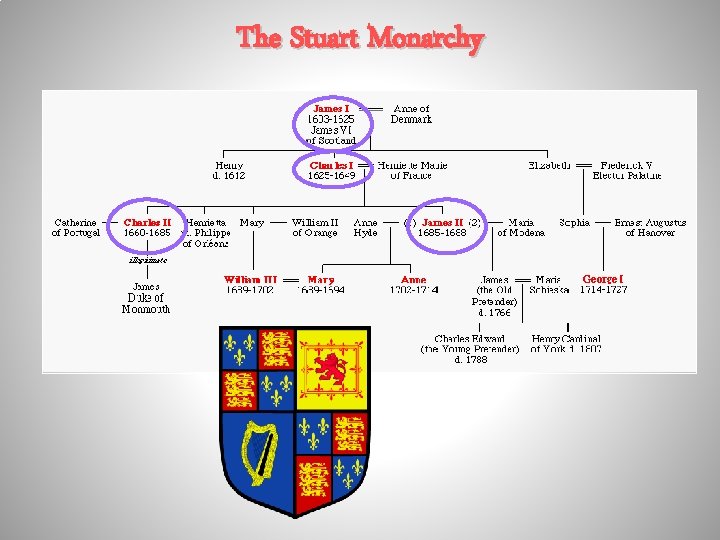
The Stuart Dynasty 1603 - 1714
Characteristics of Early Stuart Rule § § Claimed Divine Right Constantly feuded with Parliament regarding money and power. James I’s speech to the House of Commons: “I am surprised that my ancestors should ever be permitted such an institution to come into existence. I am a stranger, and found it here when I arrived, so that I am obliged to put up with what I cannot get rid of!”
Characteristics of Early Stuart Rule § § § Lacked the political astuteness of Tudor rulers Unpopular with Parliament and the English people. Viewed as outsiders by the people because of Scottish background accent. Strong supporters of Anglicanism Discriminated against Puritans and Catholics Openly violated English law
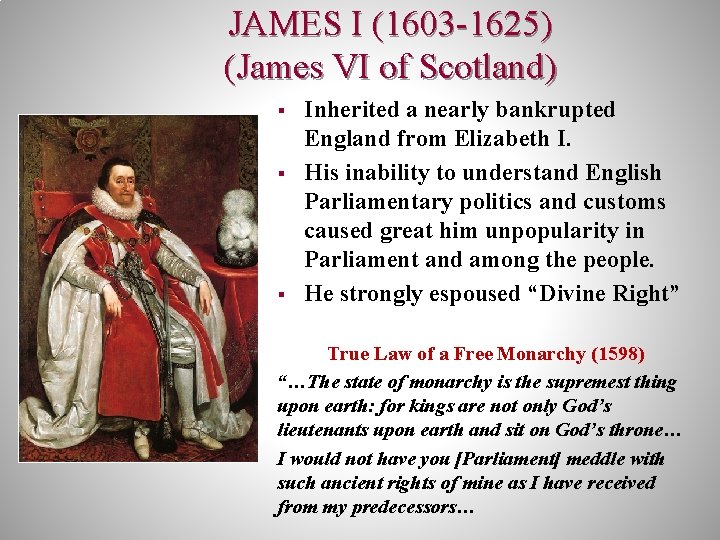
JAMES I (1603 -1625) (James VI of Scotland) § § § Inherited a nearly bankrupted England from Elizabeth I. His inability to understand English Parliamentary politics and customs caused great him unpopularity in Parliament and among the people. He strongly espoused “Divine Right” True Law of a Free Monarchy (1598) “…The state of monarchy is the supremest thing upon earth: for kings are not only God’s lieutenants upon earth and sit on God’s throne… I would not have you [Parliament] meddle with such ancient rights of mine as I have received from my predecessors…
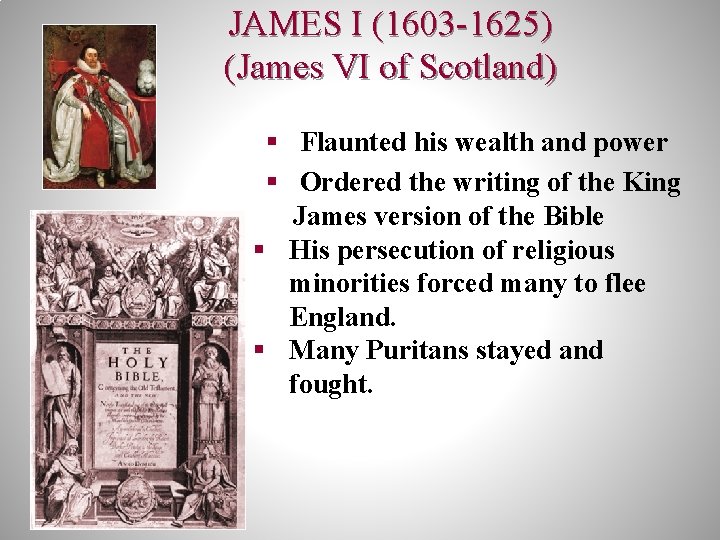
JAMES I (1603 -1625) (James VI of Scotland) § Flaunted his wealth and power § Ordered the writing of the King James version of the Bible § His persecution of religious minorities forced many to flee England. § Many Puritans stayed and fought.
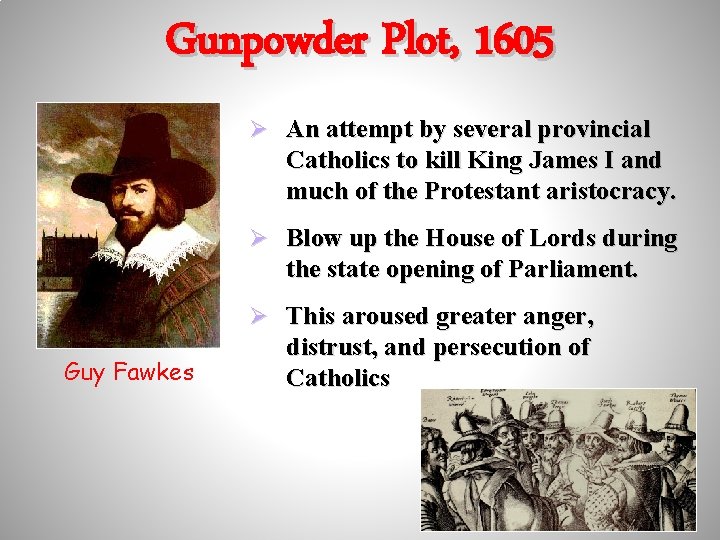
Gunpowder Plot, 1605 Ø An attempt by several provincial Catholics to kill King James I and much of the Protestant aristocracy. Ø Blow up the House of Lords during the state opening of Parliament. Ø This aroused greater anger, Guy Fawkes distrust, and persecution of Catholics
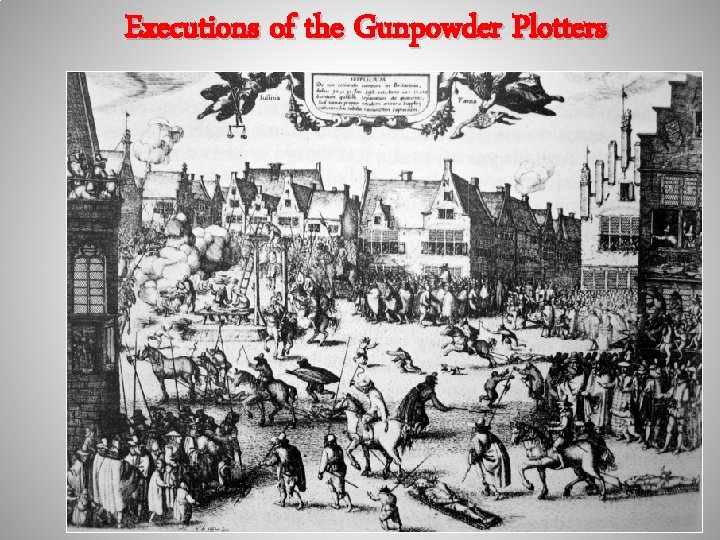
Executions of the Gunpowder Plotters
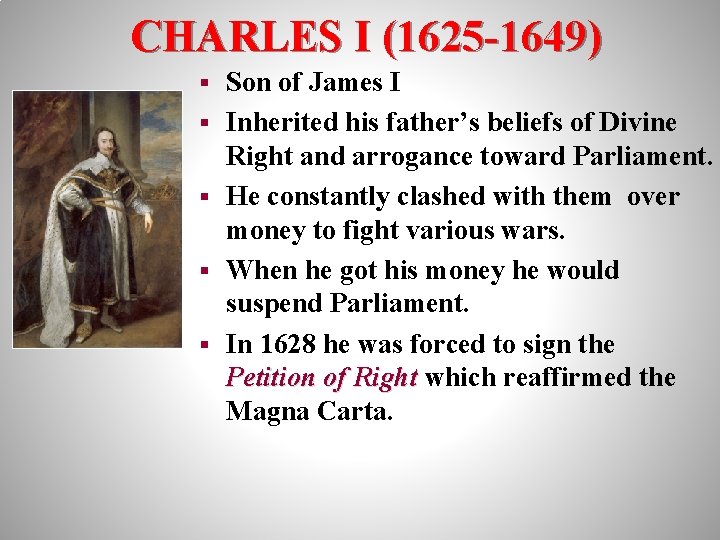
CHARLES I (1625 -1649) § § § Son of James I Inherited his father’s beliefs of Divine Right and arrogance toward Parliament. He constantly clashed with them over money to fight various wars. When he got his money he would suspend Parliament. In 1628 he was forced to sign the Petition of Right which reaffirmed the Magna Carta.
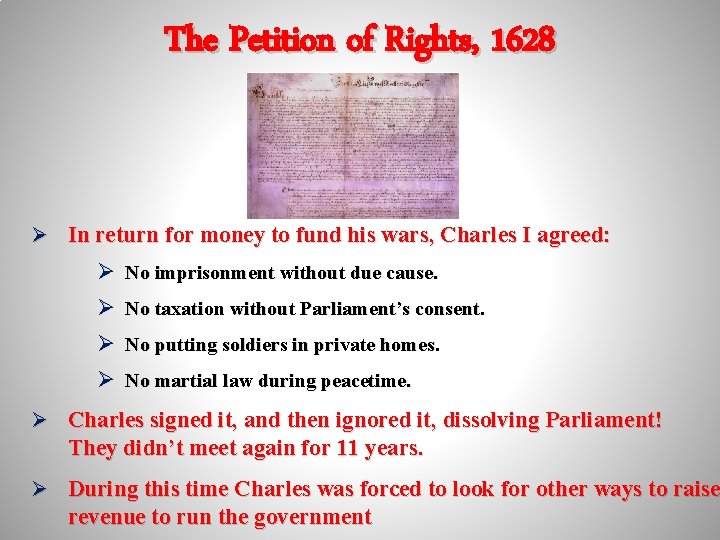
The Petition of Rights, 1628 Ø In return for money to fund his wars, Charles I agreed: Ø No imprisonment without due cause. Ø No taxation without Parliament’s consent. Ø No putting soldiers in private homes. Ø No martial law during peacetime. Ø Charles signed it, and then ignored it, dissolving Parliament! They didn’t meet again for 11 years. Ø During this time Charles was forced to look for other ways to raise revenue to run the government
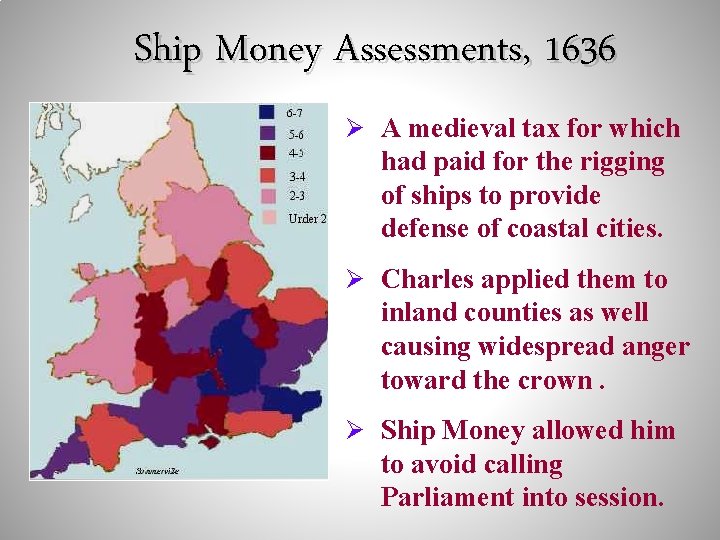
Ship Money Assessments, 1636 Ø A medieval tax for which had paid for the rigging of ships to provide defense of coastal cities. Ø Charles applied them to inland counties as well causing widespread anger toward the crown. Ø Ship Money allowed him to avoid calling Parliament into session.
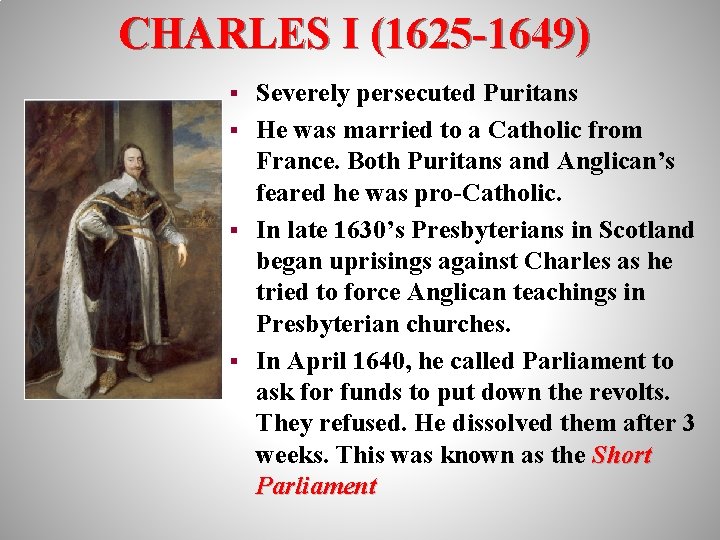
CHARLES I (1625 -1649) Severely persecuted Puritans § He was married to a Catholic from France. Both Puritans and Anglican’s feared he was pro-Catholic. § In late 1630’s Presbyterians in Scotland began uprisings against Charles as he tried to force Anglican teachings in Presbyterian churches. § In April 1640, he called Parliament to ask for funds to put down the revolts. They refused. He dissolved them after 3 weeks. This was known as the Short Parliament §
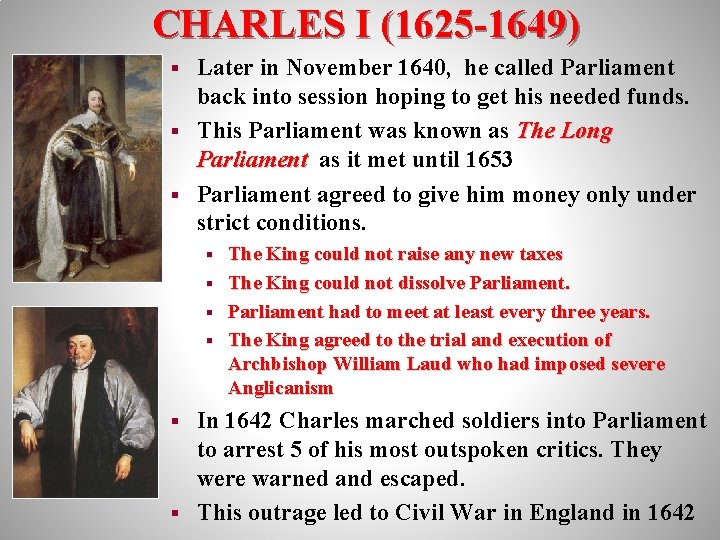
CHARLES I (1625 -1649) Later in November 1640, he called Parliament back into session hoping to get his needed funds. § This Parliament was known as The Long Parliament as it met until 1653 § Parliament agreed to give him money only under strict conditions. § The King could not raise any new taxes § The King could not dissolve Parliament. § Parliament had to meet at least every three years. § The King agreed to the trial and execution of Archbishop William Laud who had imposed severe Anglicanism § In 1642 Charles marched soldiers into Parliament to arrest 5 of his most outspoken critics. They were warned and escaped. § This outrage led to Civil War in England in 1642 §
The Civil War (1642 -1649)
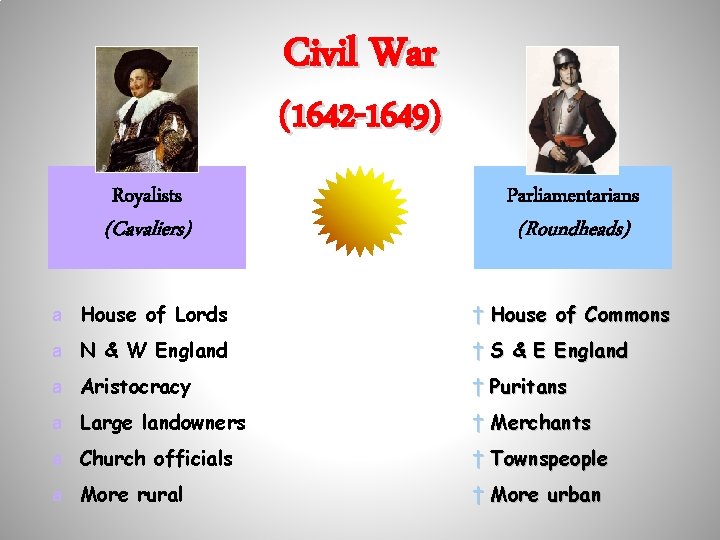
Civil War (1642 -1649) Royalists (Cavaliers) Parliamentarians (Roundheads) a House of Lords † House of Commons a N & W England † S & E England a Aristocracy † Puritans a Large landowners † Merchants a Church officials † Townspeople a More rural † More urban
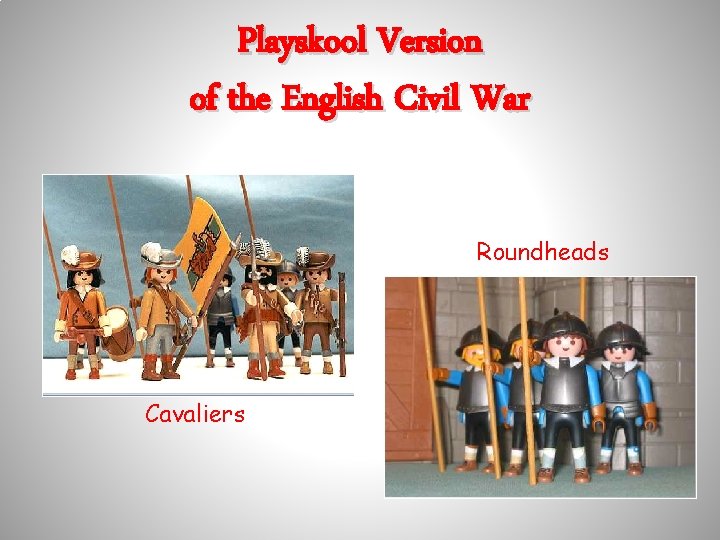
Playskool Version of the English Civil War Roundheads Cavaliers
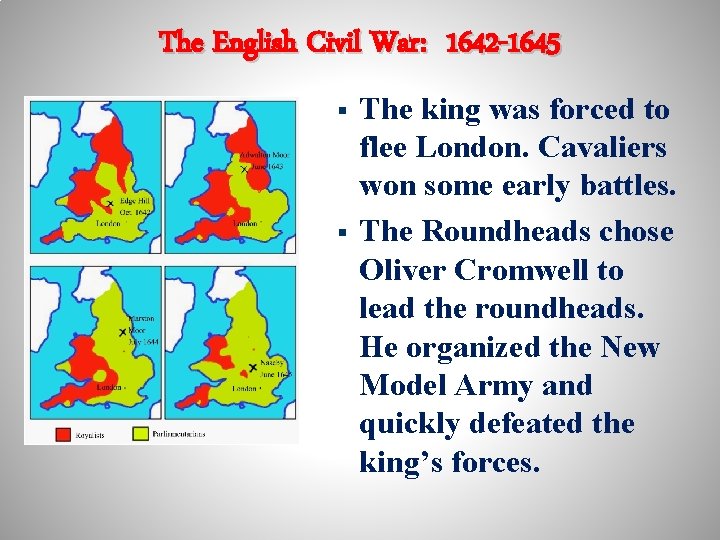
The English Civil War: 1642 -1645 § § The king was forced to flee London. Cavaliers won some early battles. The Roundheads chose Oliver Cromwell to lead the roundheads. He organized the New Model Army and quickly defeated the king’s forces.
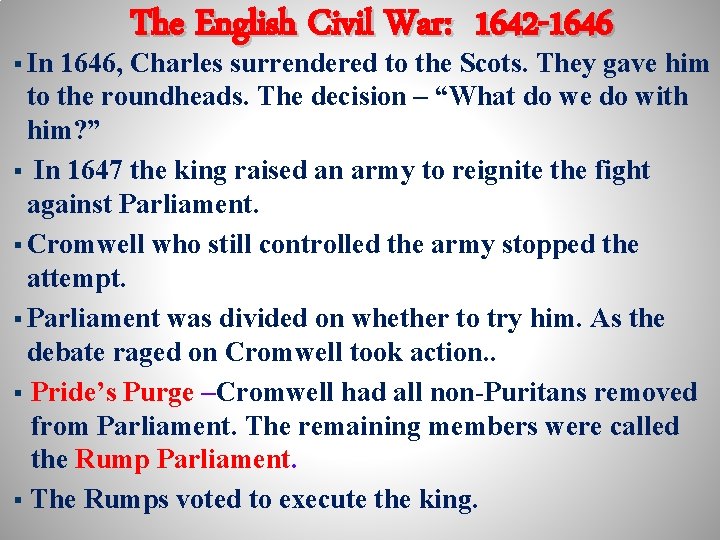
§ In The English Civil War: 1642 -1646, Charles surrendered to the Scots. They gave him to the roundheads. The decision – “What do we do with him? ” § In 1647 the king raised an army to reignite the fight against Parliament. § Cromwell who still controlled the army stopped the attempt. § Parliament was divided on whether to try him. As the debate raged on Cromwell took action. . § Pride’s Purge –Cromwell had all non-Puritans removed from Parliament. The remaining members were called the Rump Parliament. § The Rumps voted to execute the king.
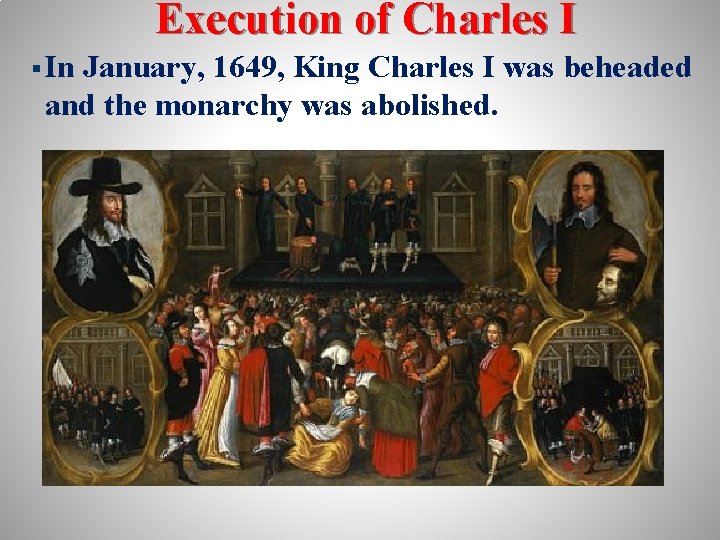
Execution of Charles I § In January, 1649, King Charles I was beheaded and the monarchy was abolished.
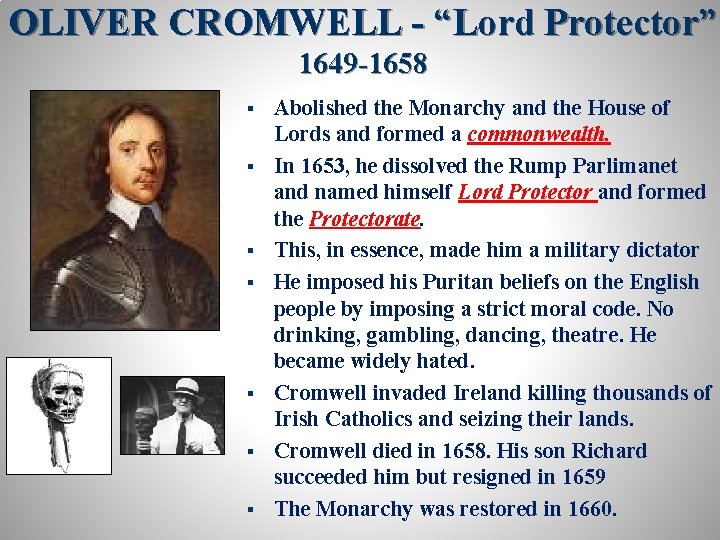
OLIVER CROMWELL - “Lord Protector” 1649 -1658 § § § § Abolished the Monarchy and the House of Lords and formed a commonwealth. In 1653, he dissolved the Rump Parlimanet and named himself Lord Protector and formed the Protectorate. This, in essence, made him a military dictator He imposed his Puritan beliefs on the English people by imposing a strict moral code. No drinking, gambling, dancing, theatre. He became widely hated. Cromwell invaded Ireland killing thousands of Irish Catholics and seizing their lands. Cromwell died in 1658. His son Richard succeeded him but resigned in 1659 The Monarchy was restored in 1660.
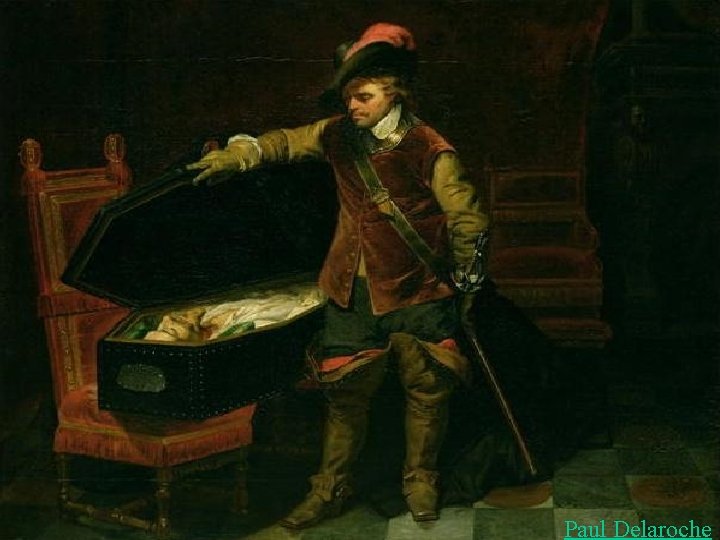
Paul Delaroche
The Stuart Monarchy
The Restoration King Charles II [1660 -1685] Ø Son of Charles I Ø Had charm, poise, & political skills [unlike his father!]. Ø Realized that he could not repeat the mistakes his father had made. Ø Restored theaters and reopened the pubs and brothels closed during the Restoration. Ø Favored religious toleration. Ø Had secret Catholic sympathies. (His mother was Catholic)
King Charles II (The Merry Monarch) r. 1660 -1685 Ø 1673 Test Act Ø Parliament excluded all but Anglicans from civilian and military positions. [to the Anglican gentry, the Puritans were considered “radicals” and the Catholics were seen as “traitors!”] Ø 1679 Habeas Corpus Act Ø Any unjustly imprisoned persons could obtain a writ of habeas corpus compelling the govt. to explain why he had lost his liberty. Ø Political Parties Developed Ø Whigs – Middle Class Puritans who favored Parliament and religious toleration. (Liberal) Ø Tories – Nobles, Gentry, and Anglicans who supported monarchy. (Conservative)
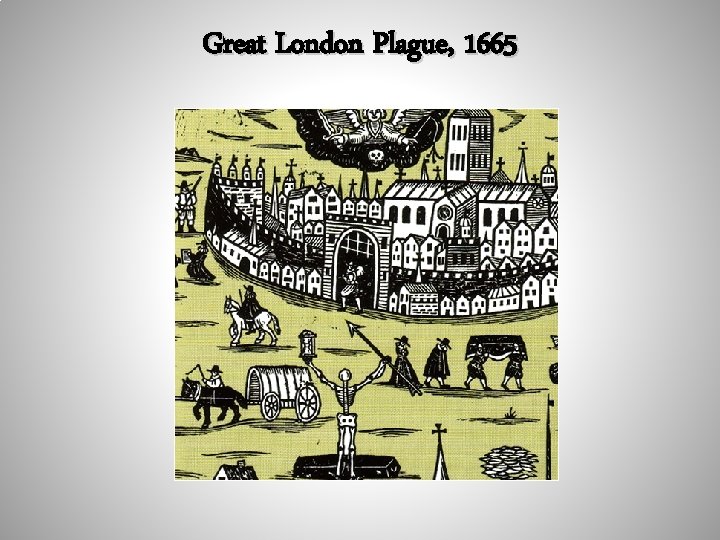
Great London Plague, 1665
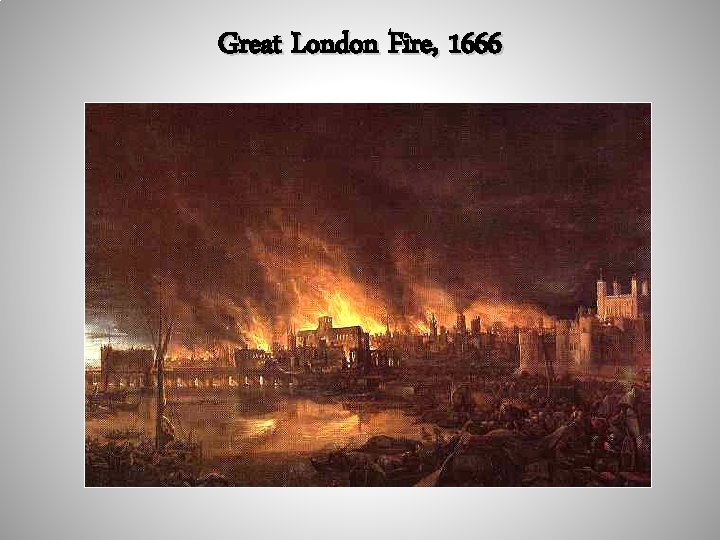
Great London Fire, 1666
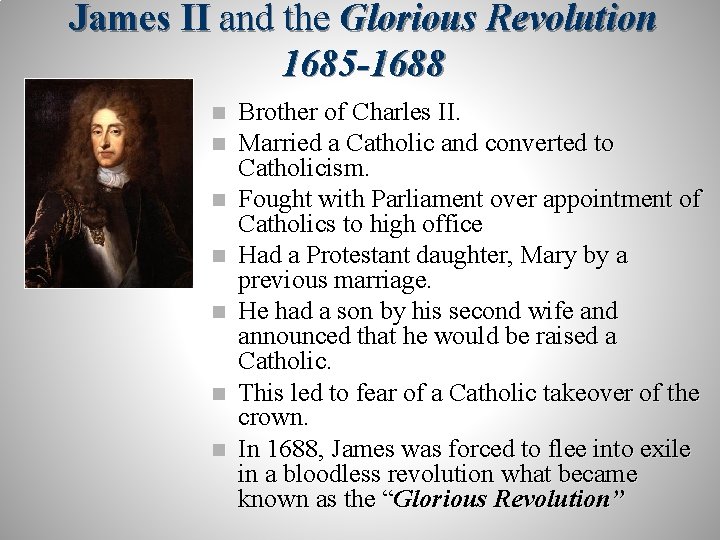
James II and the Glorious Revolution 1685 -1688 n n n n Brother of Charles II. Married a Catholic and converted to Catholicism. Fought with Parliament over appointment of Catholics to high office Had a Protestant daughter, Mary by a previous marriage. He had a son by his second wife and announced that he would be raised a Catholic. This led to fear of a Catholic takeover of the crown. In 1688, James was forced to flee into exile in a bloodless revolution what became known as the “Glorious Revolution”
The Glorious Revolution 1688
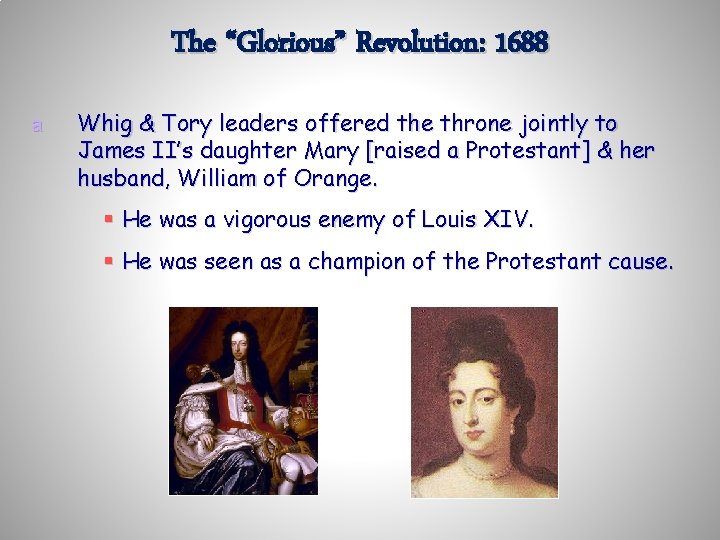
The “Glorious” Revolution: 1688 a Whig & Tory leaders offered the throne jointly to James II’s daughter Mary [raised a Protestant] & her husband, William of Orange. § He was a vigorous enemy of Louis XIV. § He was seen as a champion of the Protestant cause.
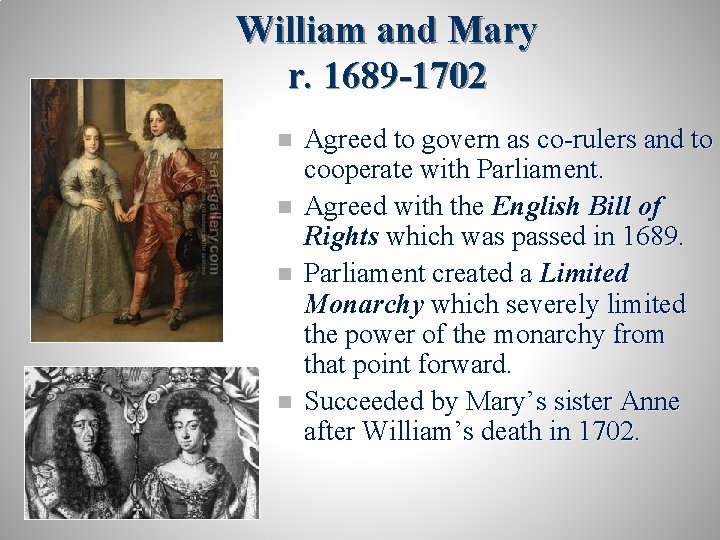
William and Mary r. 1689 -1702 n n Agreed to govern as co-rulers and to cooperate with Parliament. Agreed with the English Bill of Rights which was passed in 1689. Parliament created a Limited Monarchy which severely limited the power of the monarchy from that point forward. Succeeded by Mary’s sister Anne after William’s death in 1702.
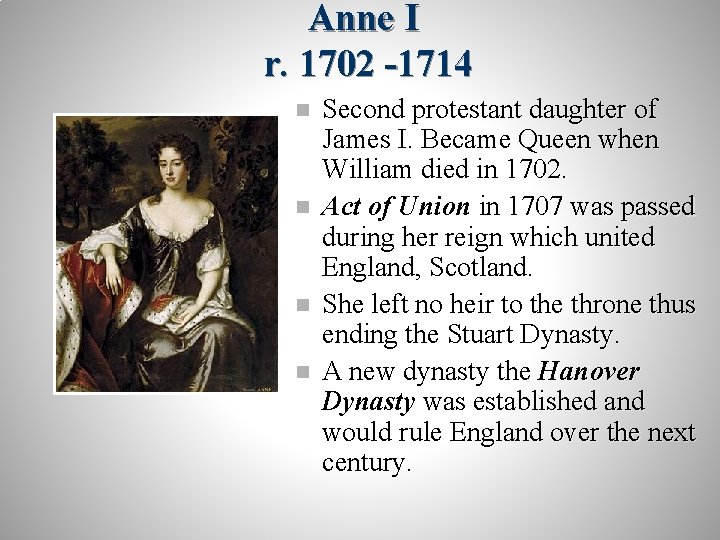
Anne I r. 1702 -1714 n n Second protestant daughter of James I. Became Queen when William died in 1702. Act of Union in 1707 was passed during her reign which united England, Scotland. She left no heir to the throne thus ending the Stuart Dynasty. A new dynasty the Hanover Dynasty was established and would rule England over the next century.