
English Civil War Development of the Rights of
- Slides: 18
English Civil War Development of the Rights of Englishmen
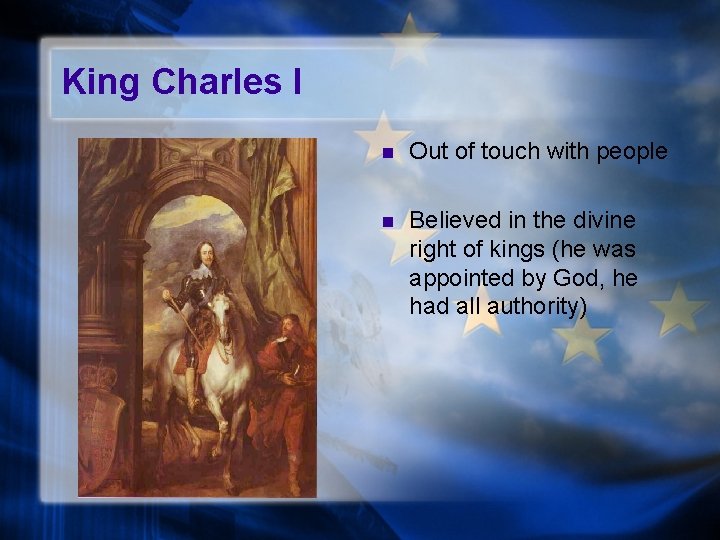
King Charles I n Out of touch with people n Believed in the divine right of kings (he was appointed by God, he had all authority)
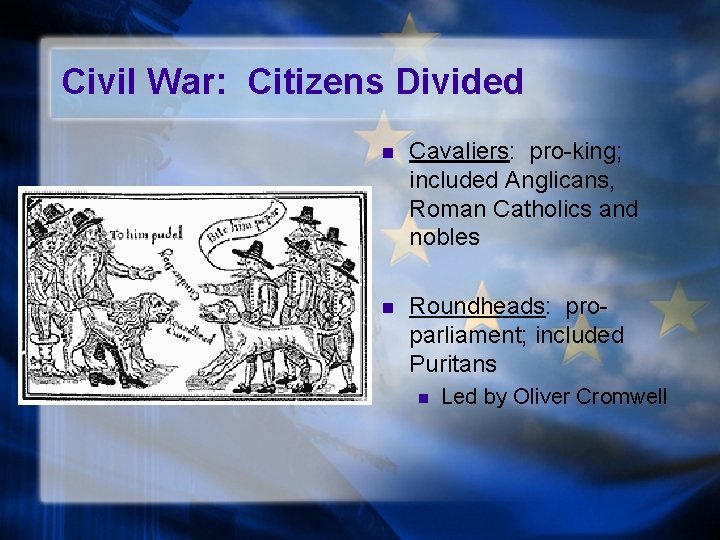
Civil War: Citizens Divided n Cavaliers: pro-king; included Anglicans, Roman Catholics and nobles n Roundheads: proparliament; included Puritans n Led by Oliver Cromwell
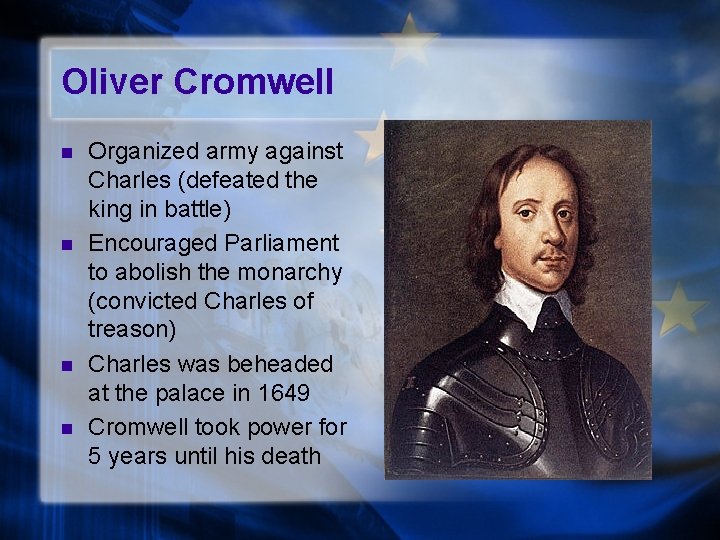
Oliver Cromwell n n Organized army against Charles (defeated the king in battle) Encouraged Parliament to abolish the monarchy (convicted Charles of treason) Charles was beheaded at the palace in 1649 Cromwell took power for 5 years until his death
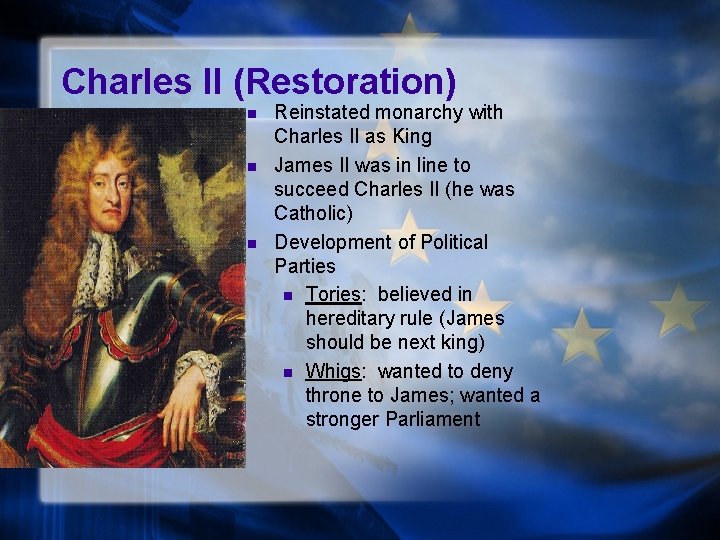
Charles II (Restoration) n n n Reinstated monarchy with Charles II as King James II was in line to succeed Charles II (he was Catholic) Development of Political Parties n Tories: believed in hereditary rule (James should be next king) n Whigs: wanted to deny throne to James; wanted a stronger Parliament
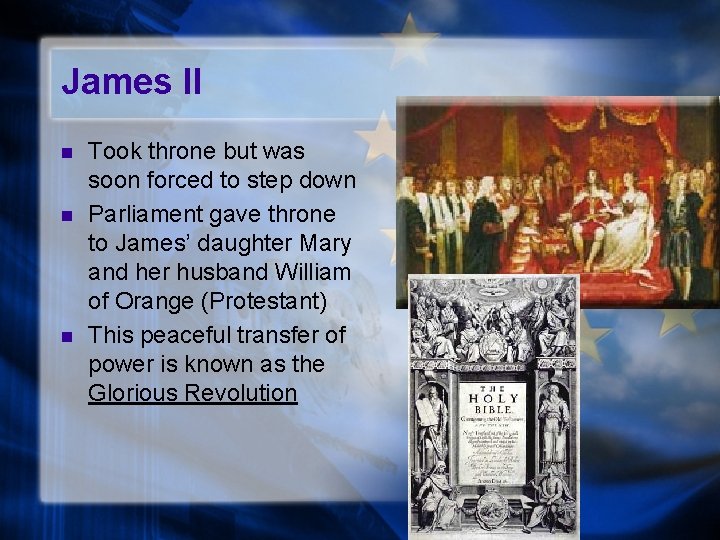
James II n n n Took throne but was soon forced to step down Parliament gave throne to James’ daughter Mary and her husband William of Orange (Protestant) This peaceful transfer of power is known as the Glorious Revolution
Development of the Rights of Englishmen The English Civil War and the Glorious Revolution helped Englishmen get more rights (increased parliamentary power)
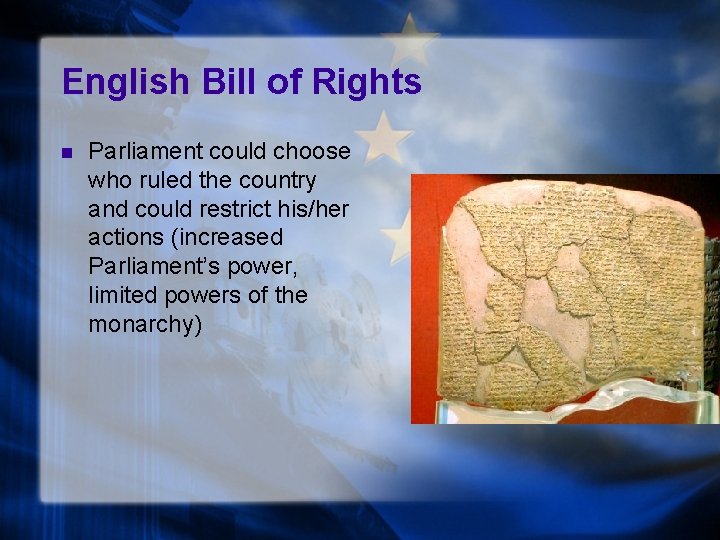
English Bill of Rights n Parliament could choose who ruled the country and could restrict his/her actions (increased Parliament’s power, limited powers of the monarchy)
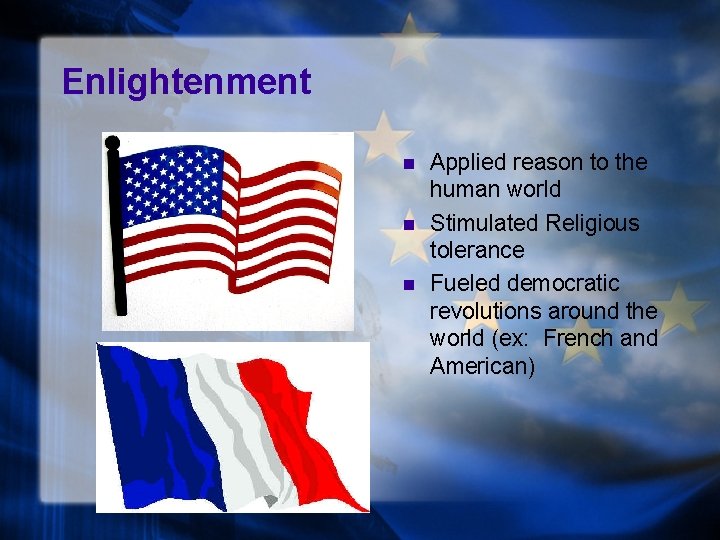
Enlightenment n n n Applied reason to the human world Stimulated Religious tolerance Fueled democratic revolutions around the world (ex: French and American)
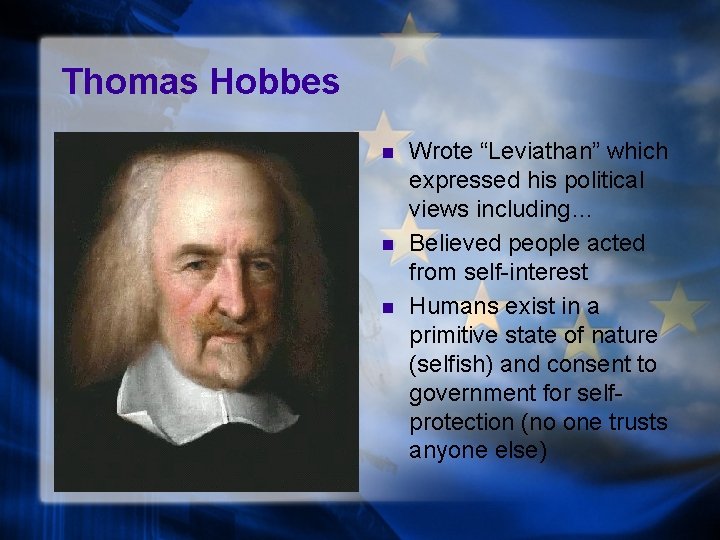
Thomas Hobbes n n n Wrote “Leviathan” which expressed his political views including… Believed people acted from self-interest Humans exist in a primitive state of nature (selfish) and consent to government for selfprotection (no one trusts anyone else)
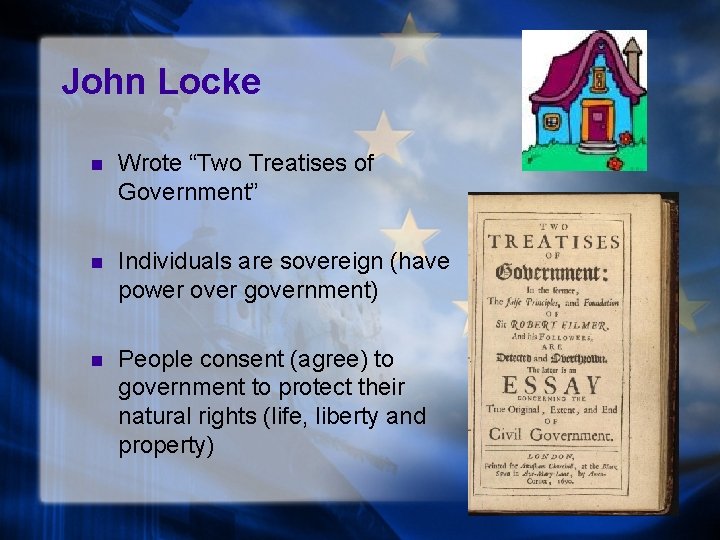
John Locke n Wrote “Two Treatises of Government” n Individuals are sovereign (have power over government) n People consent (agree) to government to protect their natural rights (life, liberty and property)
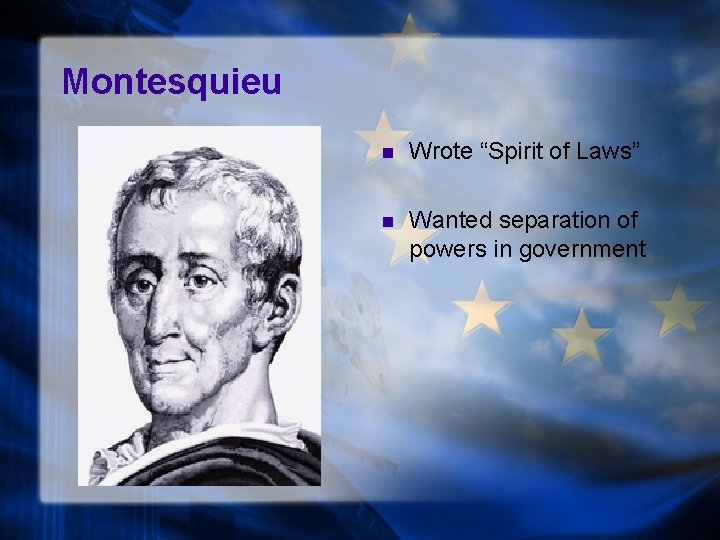
Montesquieu n Wrote “Spirit of Laws” n Wanted separation of powers in government
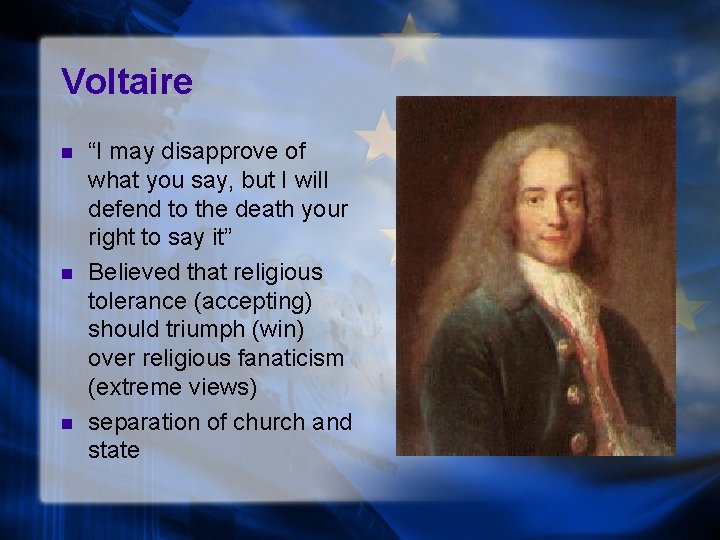
Voltaire n n n “I may disapprove of what you say, but I will defend to the death your right to say it” Believed that religious tolerance (accepting) should triumph (win) over religious fanaticism (extreme views) separation of church and state
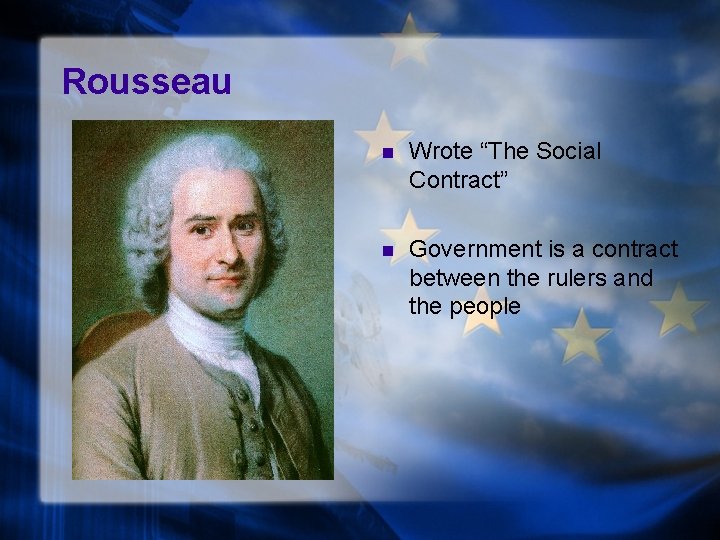
Rousseau n Wrote “The Social Contract” n Government is a contract between the rulers and the people
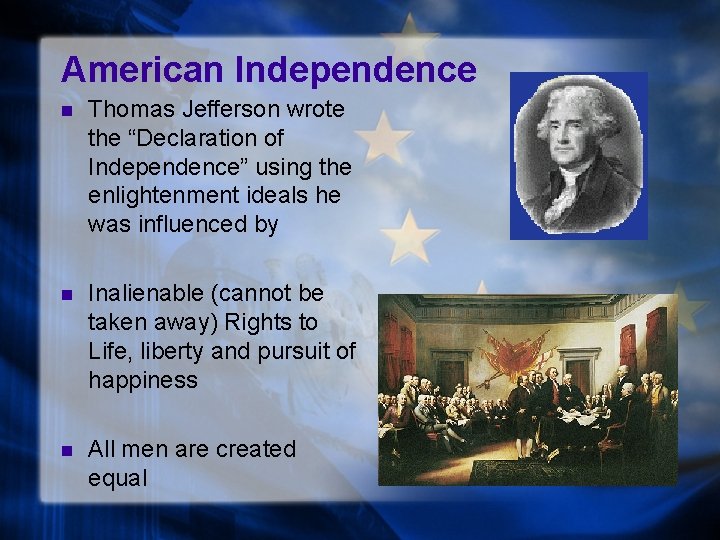
American Independence n Thomas Jefferson wrote the “Declaration of Independence” using the enlightenment ideals he was influenced by n Inalienable (cannot be taken away) Rights to Life, liberty and pursuit of happiness n All men are created equal
Government in America n Constitution n Incorporated enlightenment ideas Three branches of government Bill of Rights n n Freedom of speech Freedom of religion
New Schools of Art and Forms of Literature n n Paintings depicted (showed) classical subjects, public events, natural scenes, and living people (portraits) New forms of literature evolved (novel)
Enlightenment People n n Johann Bach- Baroque Composer Wolfgang Mozartclassical composer Eugene Delacroix. Romantic painter Miguel de Cervantesnovelist who wrote “Don Quixote”