
English accents 10 Liverpool Scouse Liverpool located in
![1. Northernisms • STRUT words have /ʊ/ • BATH words have /æ/ (phonetically [a])](https://slidetodoc.com/presentation_image/5bfdb6acb99a124c3c7b101a31226813/image-3.jpg "1. Northernisms • STRUT words have /ʊ/ • BATH words have /æ/ (phonetically [a])")
![no BATH broadening æ remains short / _ [-voi +fric] bæθ pass, glass, grass,](https://slidetodoc.com/presentation_image/5bfdb6acb99a124c3c7b101a31226813/image-5.jpg "no BATH broadening æ remains short / _ [-voi +fric] bæθ pass, glass, grass,")
![final [g] remains after [ŋ] sɪŋg compare ˈsɪŋgɪŋg ˈsɪŋgə [g] retained in northwest England,](https://slidetodoc.com/presentation_image/5bfdb6acb99a124c3c7b101a31226813/image-9.jpg "final [g] remains after [ŋ] sɪŋg compare ˈsɪŋgɪŋg ˈsɪŋgə [g] retained in northwest England,")
![SQUARE vowel merged with NURSE vowel fare = fur [fɛ ː, fɜː] work [wɛ](https://slidetodoc.com/presentation_image/5bfdb6acb99a124c3c7b101a31226813/image-17.jpg "SQUARE vowel merged with NURSE vowel fare = fur [fɛ ː, fɜː] work [wɛ")
- Slides: 19
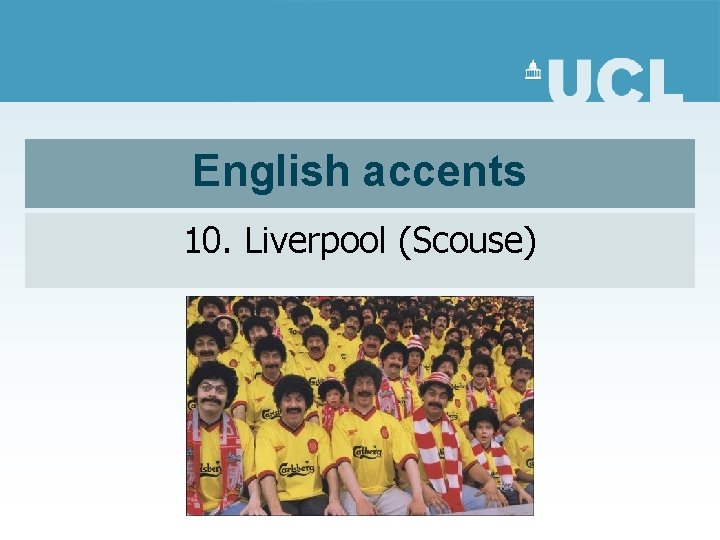
English accents 10. Liverpool (Scouse)
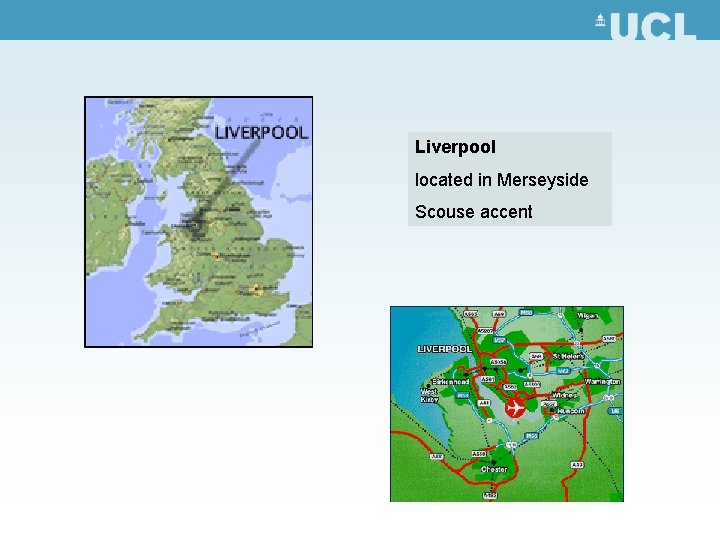
Liverpool located in Merseyside Scouse accent
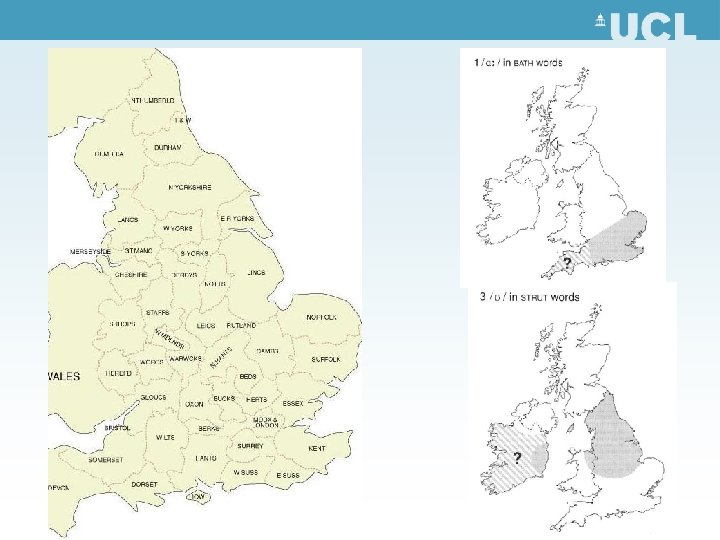
1. Northernisms • STRUT words have /ʊ/ • BATH words have /æ/ (phonetically [a]) • [g] is retained after [ŋ]
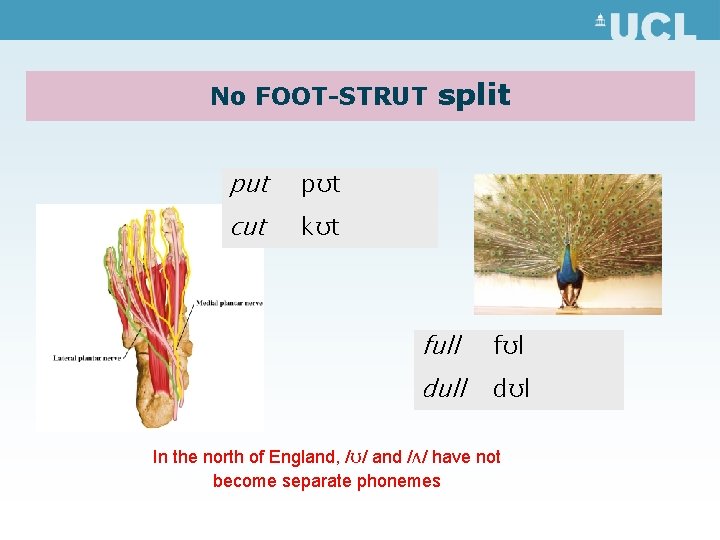
No FOOT-STRUT put pʊt cut kʊt split full fʊl dull dʊl In the north of England, /ʊ/ and /ʌ/ have not become separate phonemes
no BATH broadening æ remains short / _ [-voi +fric] bæθ pass, glass, grass, staff, raft, laugh, bath, path, after, castle Rhymes: bath - math(s), castle - tassel, pass - gas
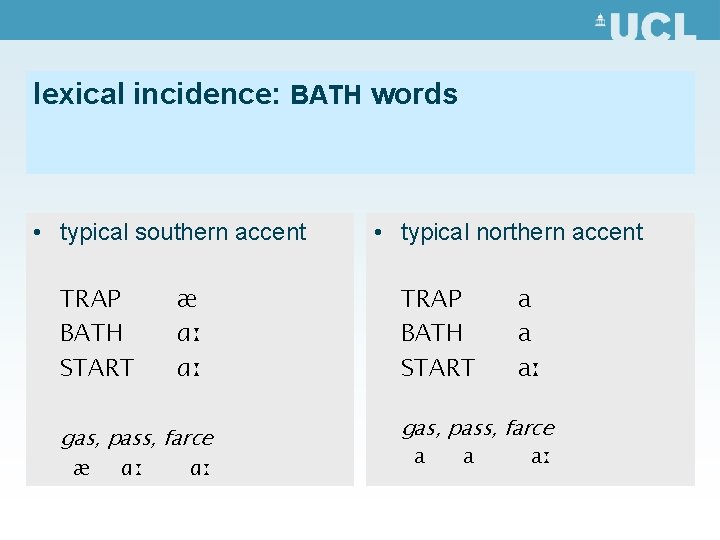
lexical incidence: BATH words • typical southern accent TRAP BATH START æ ɑː ɑː gas, pass, farce æ ɑː ɑː • typical northern accent TRAP BATH START a a aː gas, pass, farce a a aː
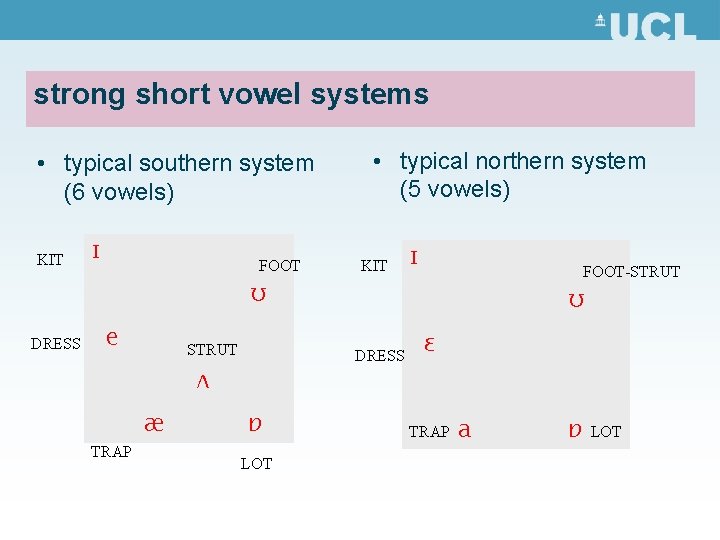
strong short vowel systems • typical southern system (6 vowels) KIT ɪ FOOT • typical northern system (5 vowels) KIT ɪ FOOT-STRUT ʊ DRESS e STRUT DRESS ʌ æ TRAP ʊ ɒ LOT ɛ TRAP a ɒ LOT
final [g] remains after [ŋ] sɪŋg compare ˈsɪŋgɪŋg ˈsɪŋgə [g] retained in northwest England, lost elsewhere ˈfɪŋgə
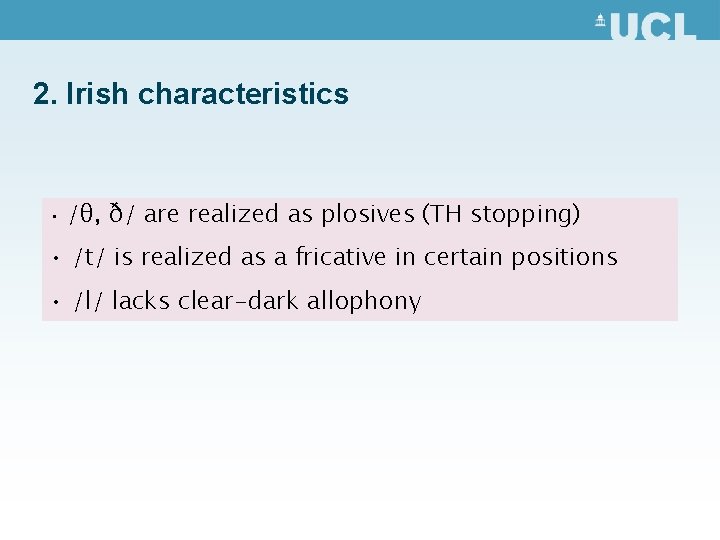
2. Irish characteristics • /θ, ð/ are realized as plosives (TH stopping) • /t/ is realized as a fricative in certain positions • /l/ lacks clear-dark allophony
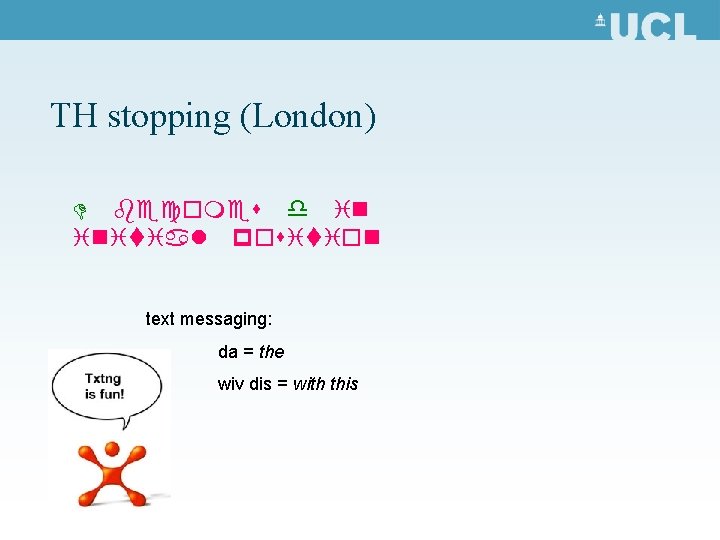
TH stopping (London) D becomes d in initial position text messaging: da = the wiv dis = with this
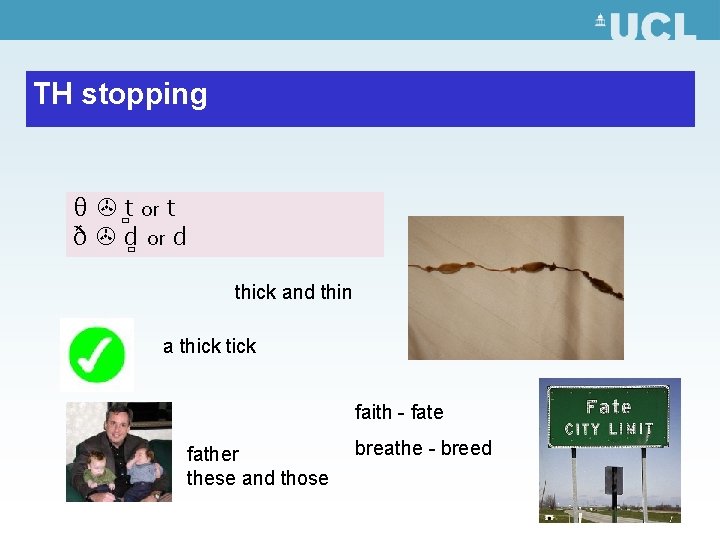
TH stopping θ t or t ð d or d thick and thin a thick tick faith - fate father these and those breathe - breed
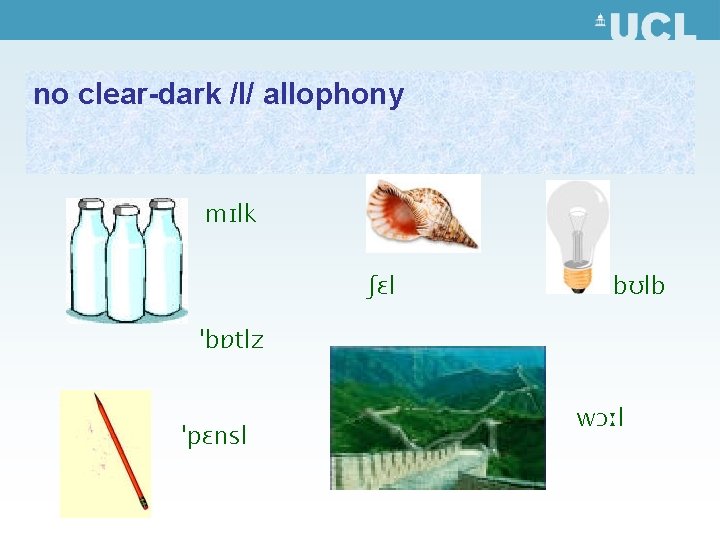
no clear-dark /l/ allophony mɪlk ʃɛl bʊlb ˈbɒtlz ˈpɛnsl wɔːl
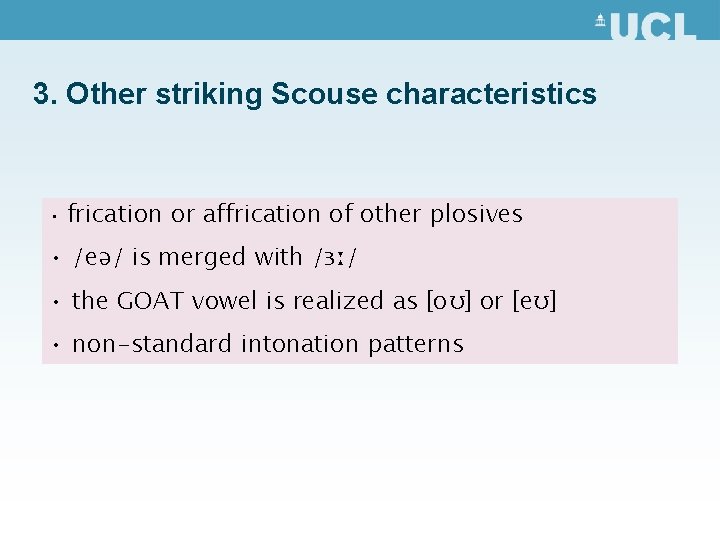
3. Other striking Scouse characteristics • frication or affrication of other plosives • /eə/ is merged with /ɜː/ • the GOAT vowel is realized as [oʊ] or [eʊ] • non-standard intonation patterns
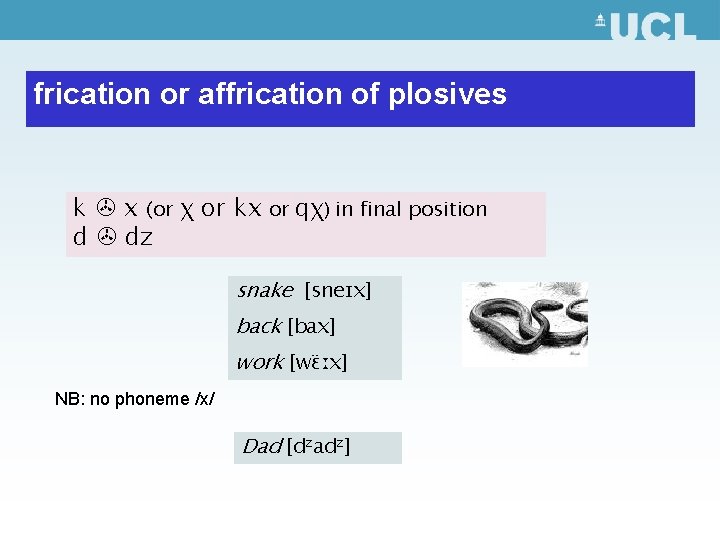
frication or affrication of plosives k x (or χ or kx or qχ) in final position d dz snake [sneɪx] back [bax] work [wɛ ːx] NB: no phoneme /x/ Dad [dzadz]
SQUARE vowel merged with NURSE vowel fare = fur [fɛ ː, fɜː] work [wɛ ːx] Homophones: stare - stir pair - purr fairy = furry [ˈmɜːri]
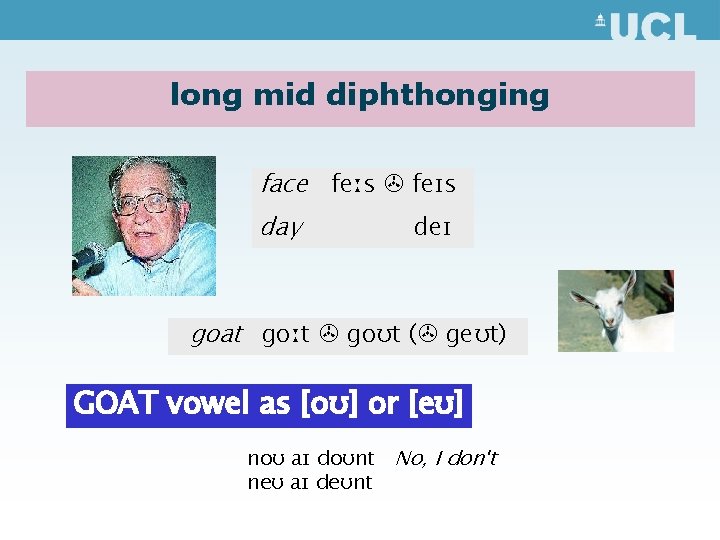
long mid diphthonging face feːs feɪs day deɪ goat goːt goʊt ( geʊt) GOAT vowel as [oʊ] or [eʊ] noʊ aɪ doʊnt No, I don't neʊ aɪ deʊnt
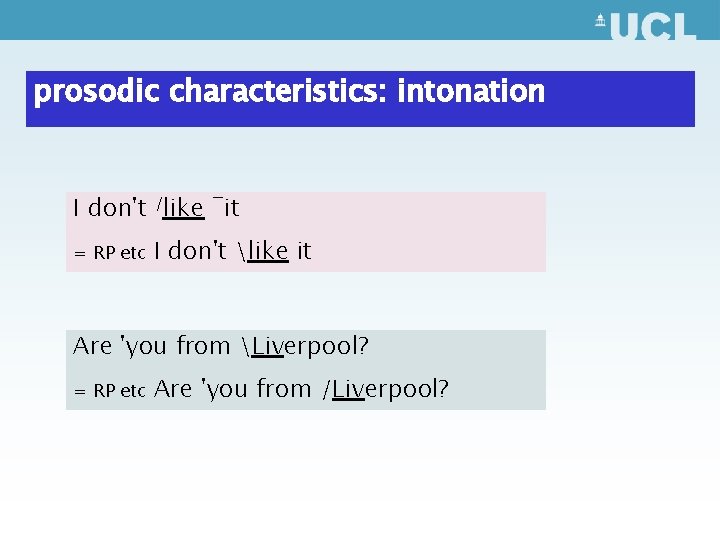
prosodic characteristics: intonation I don't /like ¯it = RP etc I don't like it Are 'you from Liverpool? = RP etc Are 'you from /Liverpool?