
English 103 Freewrites 4 Stages of Writing 1
- Slides: 24
English 103 Freewrites
4 Stages of Writing 1. Pre-Writing Generating Ideas 2. Writing 3. Revising Re-think, re-considering, re-writing 4. Editing Correcting grammar and mechanics
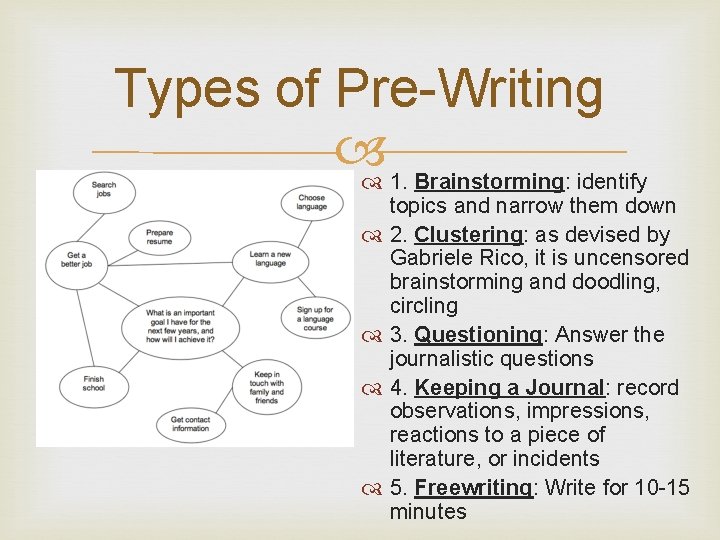
Types of Pre-Writing 1. Brainstorming: identify topics and narrow them down 2. Clustering: as devised by Gabriele Rico, it is uncensored brainstorming and doodling, circling 3. Questioning: Answer the journalistic questions 4. Keeping a Journal: record observations, impressions, reactions to a piece of literature, or incidents 5. Freewriting: Write for 10 -15 minutes
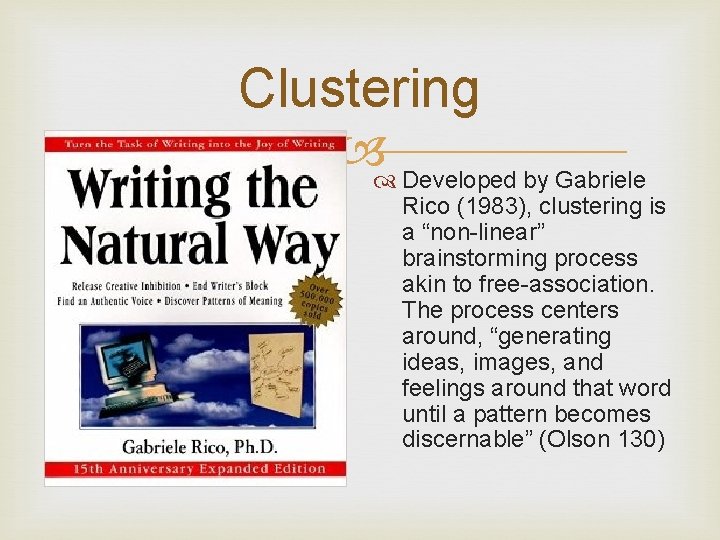
Clustering Developed by Gabriele Rico (1983), clustering is a “non-linear” brainstorming process akin to free-association. The process centers around, “generating ideas, images, and feelings around that word until a pattern becomes discernable” (Olson 130)
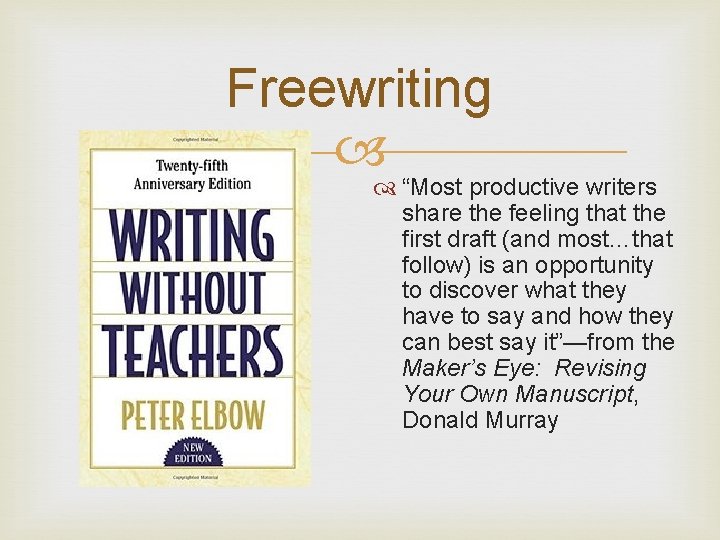
Freewriting “Most productive writers share the feeling that the first draft (and most…that follow) is an opportunity to discover what they have to say and how they can best say it”—from the Maker’s Eye: Revising Your Own Manuscript, Donald Murray
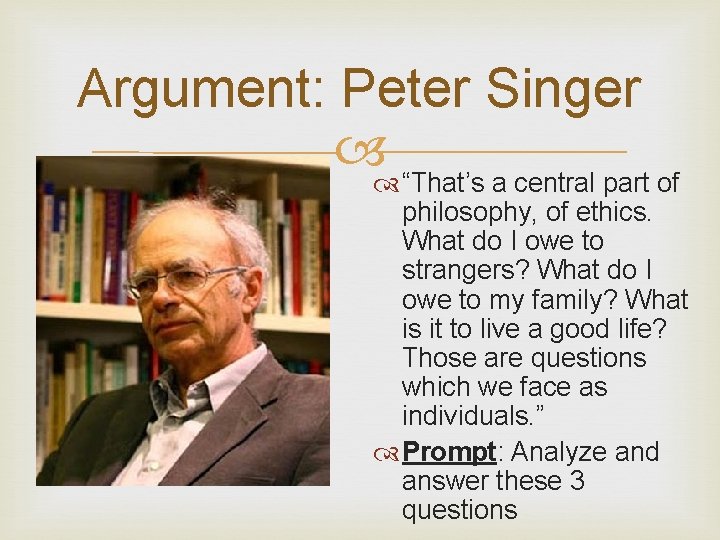
Argument: Peter Singer “That’s a central part of philosophy, of ethics. What do I owe to strangers? What do I owe to my family? What is it to live a good life? Those are questions which we face as individuals. ” Prompt: Analyze and answer these 3 questions
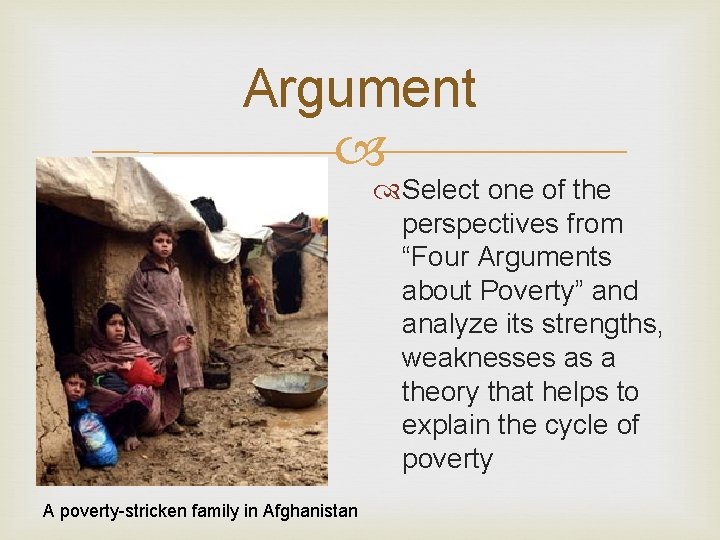
Argument Select one of the perspectives from “Four Arguments about Poverty” and analyze its strengths, weaknesses as a theory that helps to explain the cycle of poverty A poverty-stricken family in Afghanistan
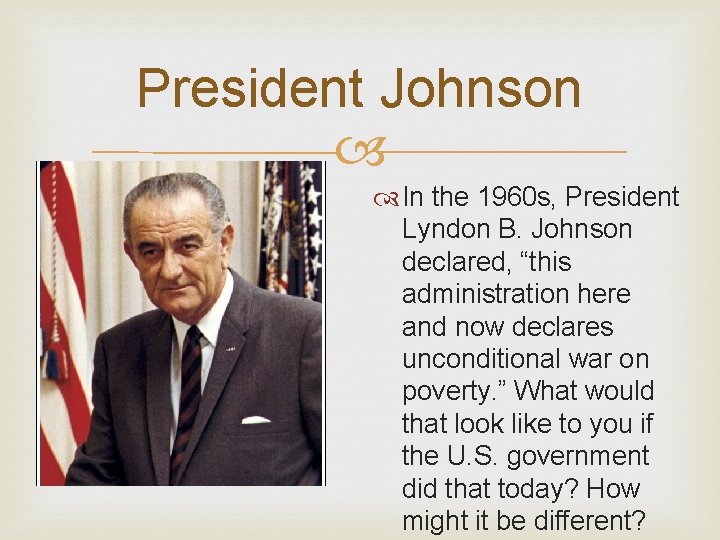
President Johnson In the 1960 s, President Lyndon B. Johnson declared, “this administration here and now declares unconditional war on poverty. ” What would that look like to you if the U. S. government did that today? How might it be different?
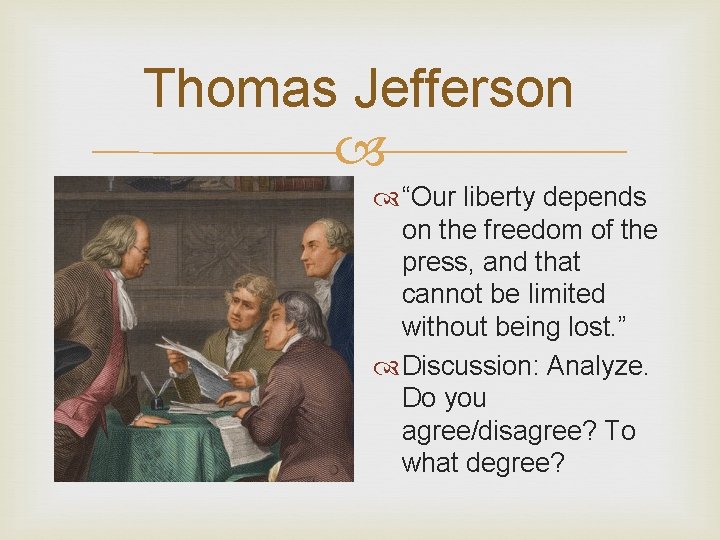
Thomas Jefferson “Our liberty depends on the freedom of the press, and that cannot be limited without being lost. ” Discussion: Analyze. Do you agree/disagree? To what degree?
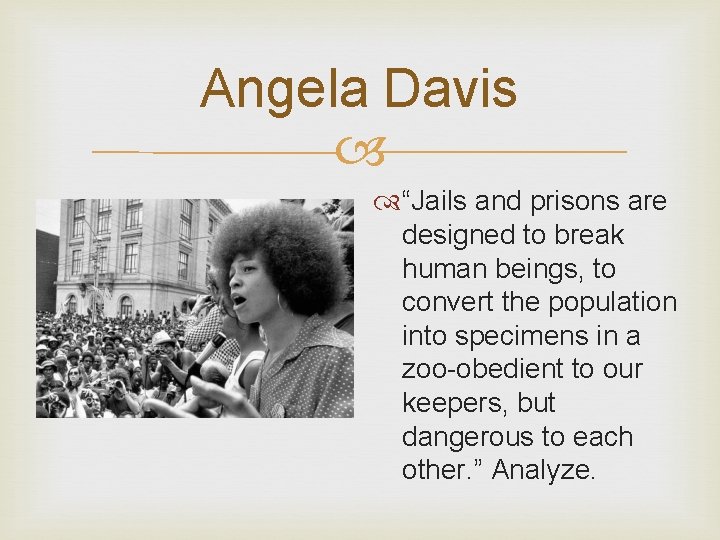
Angela Davis “Jails and prisons are designed to break human beings, to convert the population into specimens in a zoo-obedient to our keepers, but dangerous to each other. ” Analyze.
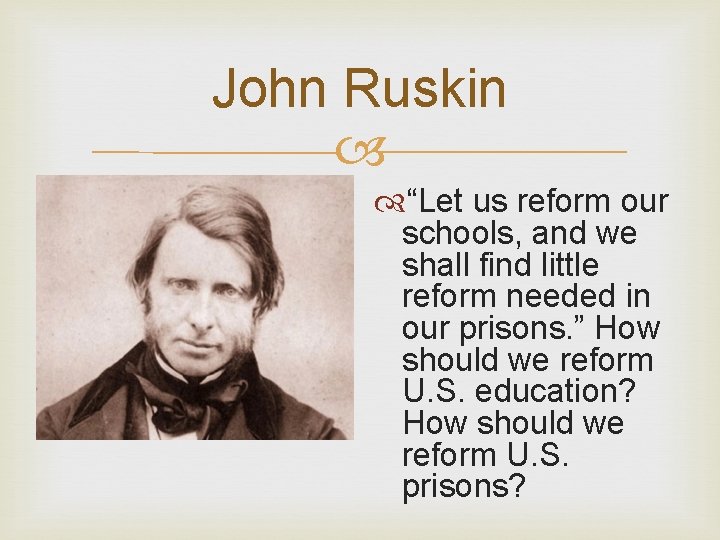
John Ruskin “Let us reform our schools, and we shall find little reform needed in our prisons. ” How should we reform U. S. education? How should we reform U. S. prisons?
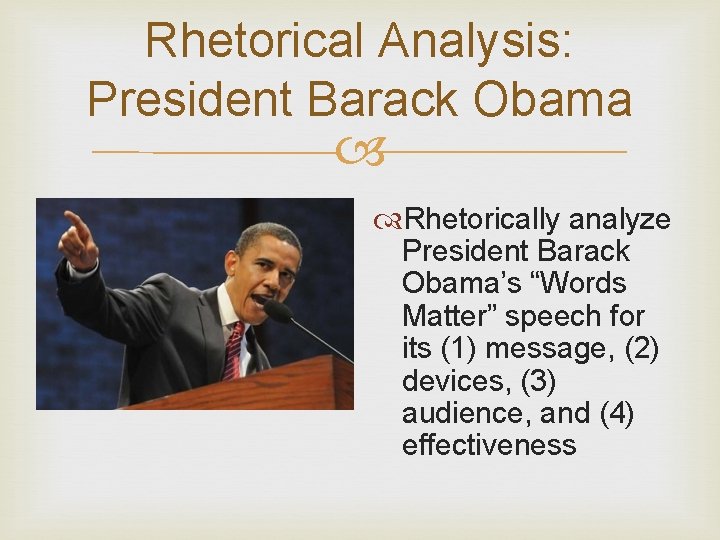
Rhetorical Analysis: President Barack Obama Rhetorically analyze President Barack Obama’s “Words Matter” speech for its (1) message, (2) devices, (3) audience, and (4) effectiveness
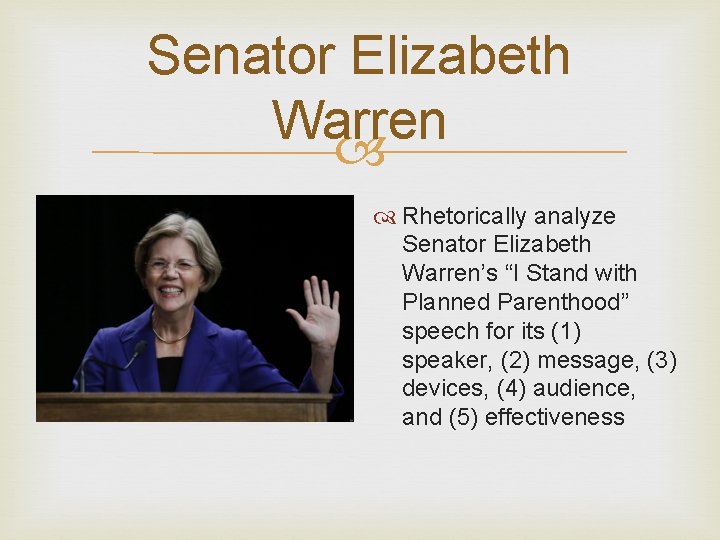
Senator Elizabeth Warren Rhetorically analyze Senator Elizabeth Warren’s “I Stand with Planned Parenthood” speech for its (1) speaker, (2) message, (3) devices, (4) audience, and (5) effectiveness
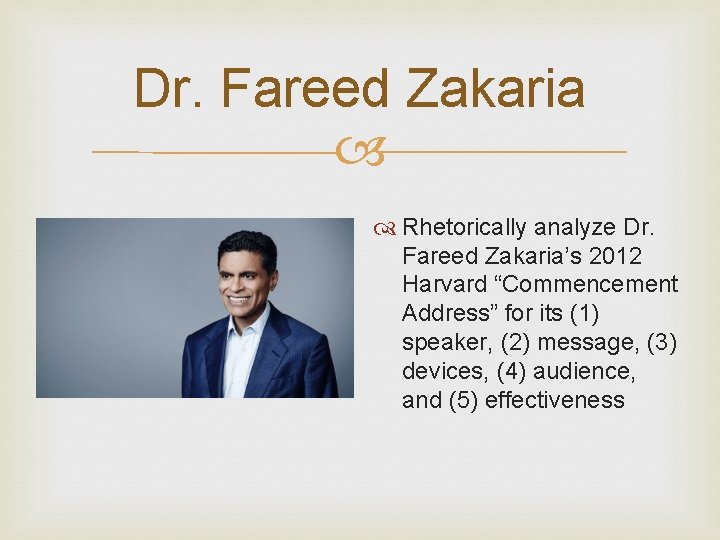
Dr. Fareed Zakaria Rhetorically analyze Dr. Fareed Zakaria’s 2012 Harvard “Commencement Address” for its (1) speaker, (2) message, (3) devices, (4) audience, and (5) effectiveness
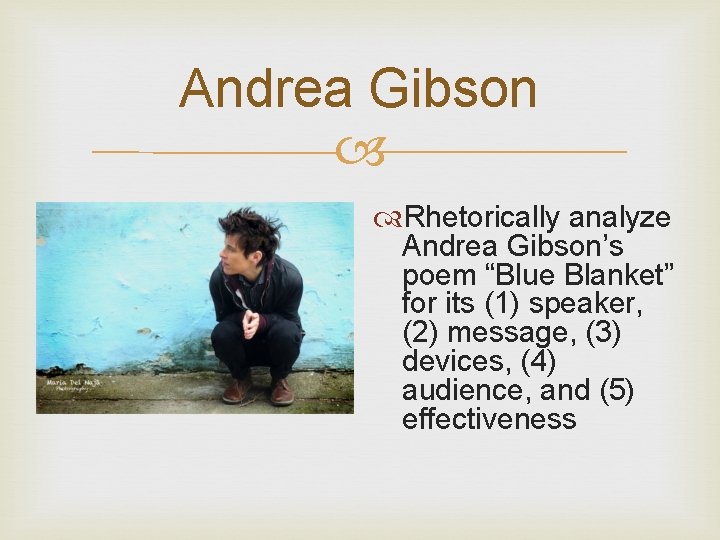
Andrea Gibson Rhetorically analyze Andrea Gibson’s poem “Blue Blanket” for its (1) speaker, (2) message, (3) devices, (4) audience, and (5) effectiveness
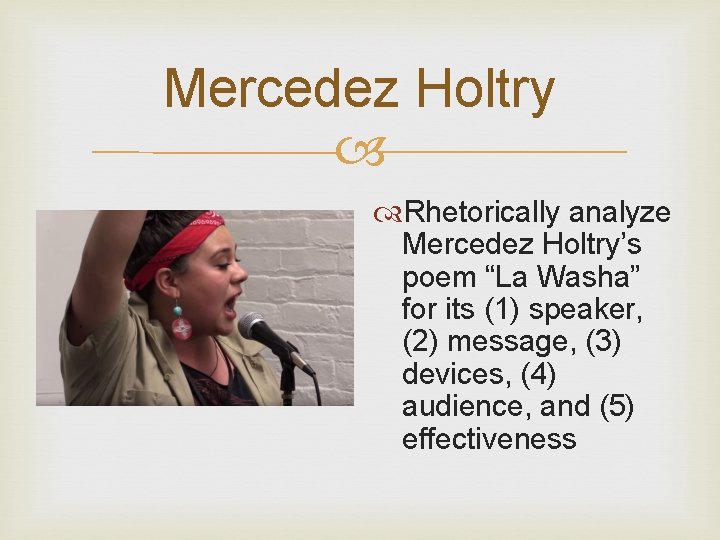
Mercedez Holtry Rhetorically analyze Mercedez Holtry’s poem “La Washa” for its (1) speaker, (2) message, (3) devices, (4) audience, and (5) effectiveness
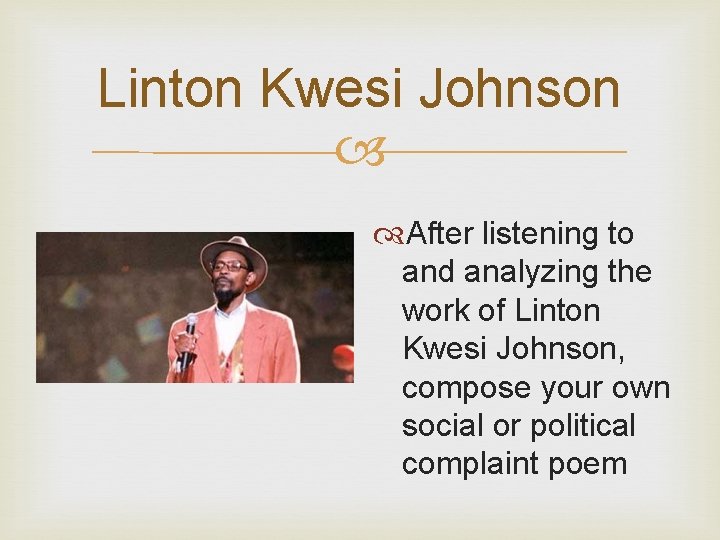
Linton Kwesi Johnson After listening to and analyzing the work of Linton Kwesi Johnson, compose your own social or political complaint poem
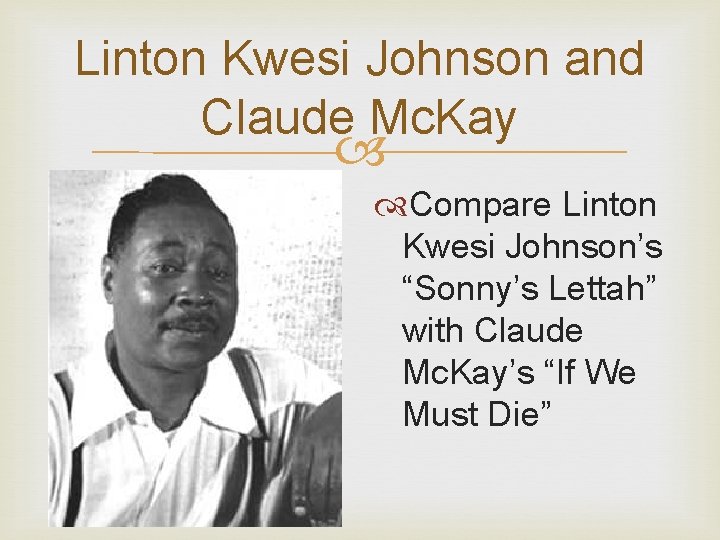
Linton Kwesi Johnson and Claude Mc. Kay Compare Linton Kwesi Johnson’s “Sonny’s Lettah” with Claude Mc. Kay’s “If We Must Die”
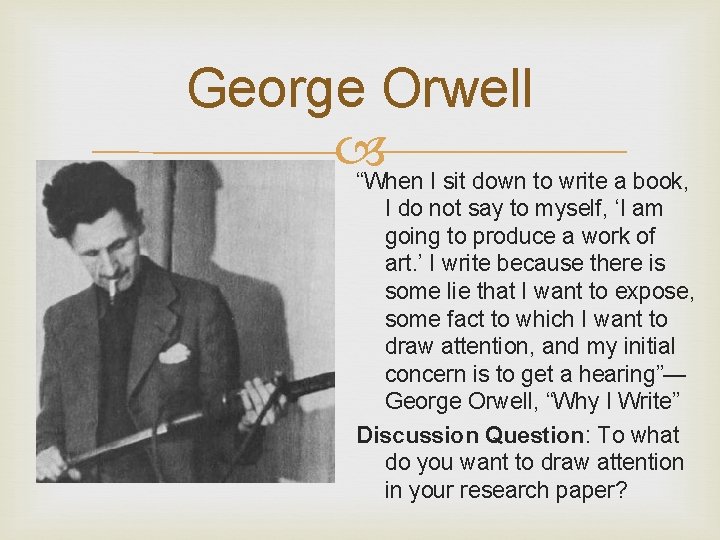
George Orwell “When I sit down to write a book, I do not say to myself, ‘I am going to produce a work of art. ’ I write because there is some lie that I want to expose, some fact to which I want to draw attention, and my initial concern is to get a hearing”— George Orwell, “Why I Write” Discussion Question: To what do you want to draw attention in your research paper?
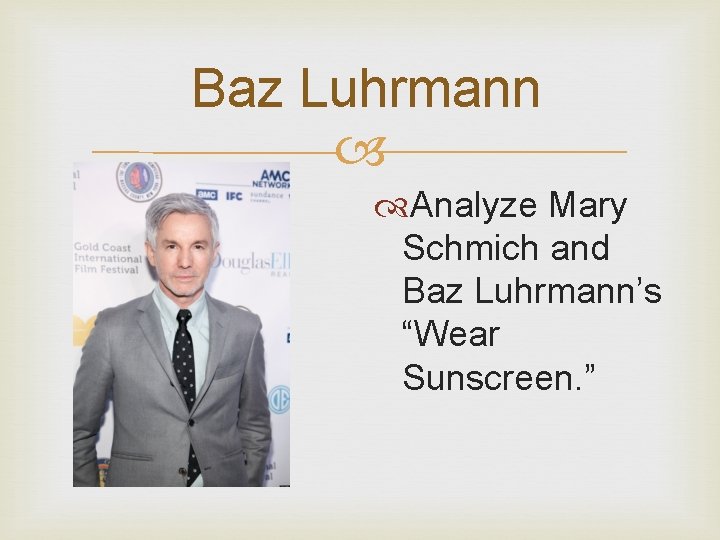
Baz Luhrmann Analyze Mary Schmich and Baz Luhrmann’s “Wear Sunscreen. ”
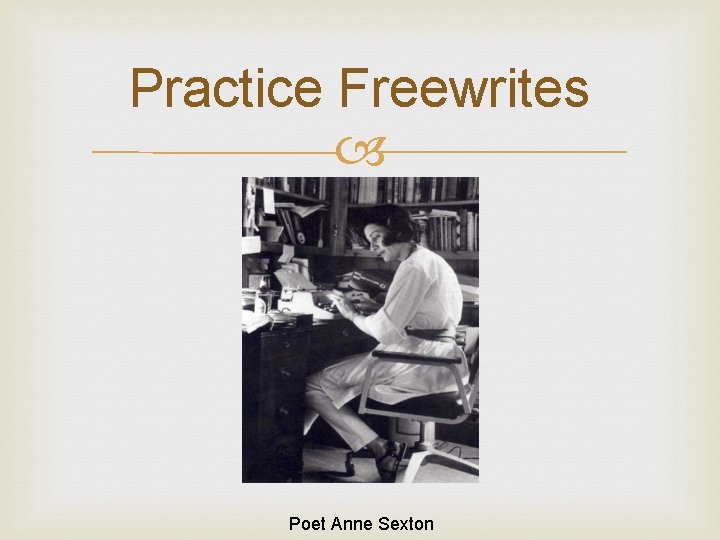
Practice Freewrites Poet Anne Sexton
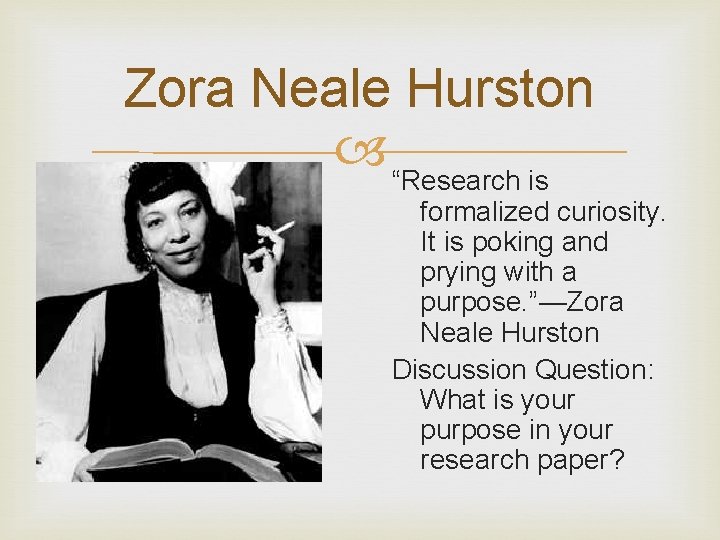
Zora Neale Hurston “Research is formalized curiosity. It is poking and prying with a purpose. ”—Zora Neale Hurston Discussion Question: What is your purpose in your research paper?
Ralph Waldo Emerson “Put the argument into a concrete shape, into an image, some hard phrase, round and solid as a ball, which they can see and handle and carry home with them, and the cause is half won”— Ralph Waldo Emerson Discussion Question: Analyze what each word or phrase suggests about an effective argument
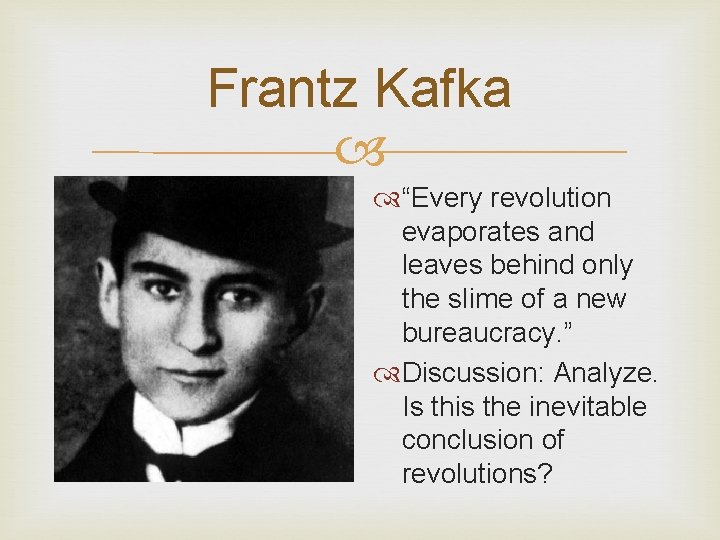
Frantz Kafka “Every revolution evaporates and leaves behind only the slime of a new bureaucracy. ” Discussion: Analyze. Is this the inevitable conclusion of revolutions?