
ENGINEOUT PROCEDURES ENGINEOUT PROCEDURES VMC Minimum control speed

- Slides: 18
ENGINE-OUT PROCEDURES
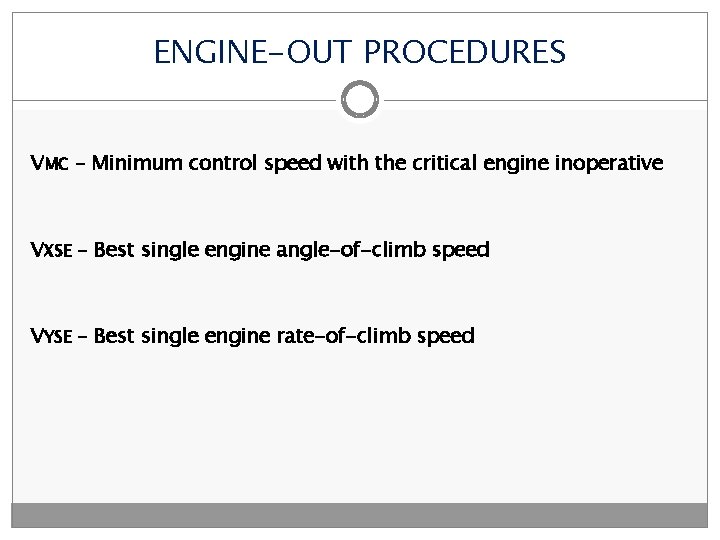
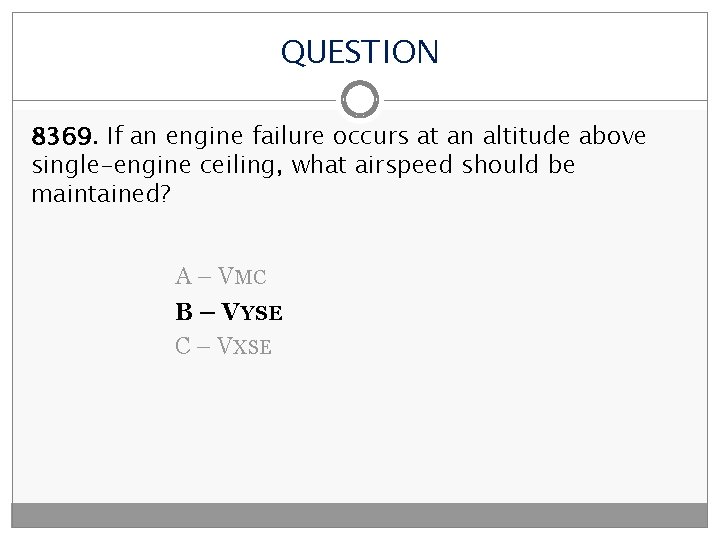
ENGINE-OUT PROCEDURES VMC – Minimum control speed with the critical engine inoperative VXSE – Best single engine angle-of-climb speed VYSE – Best single engine rate-of-climb speed
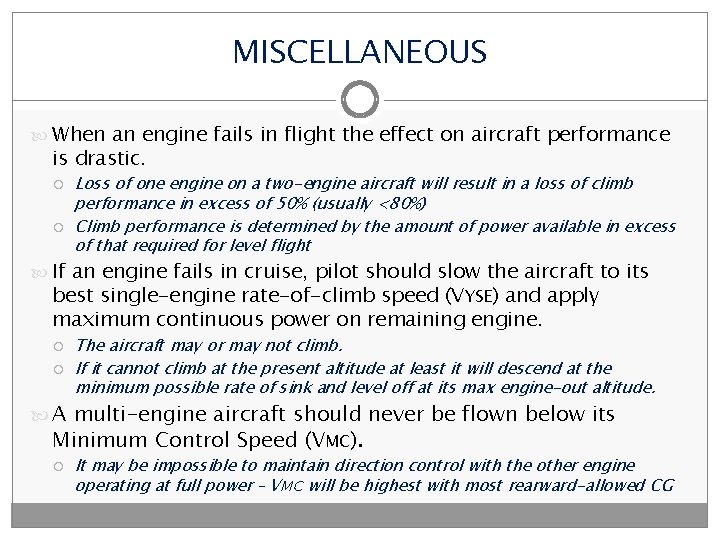
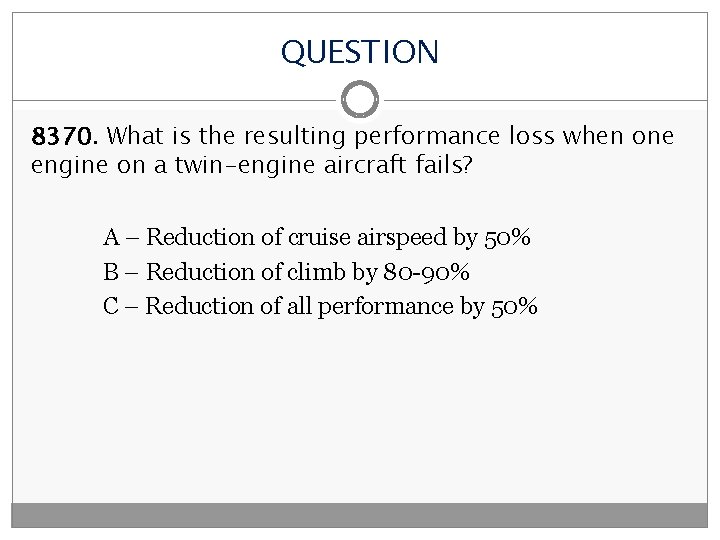
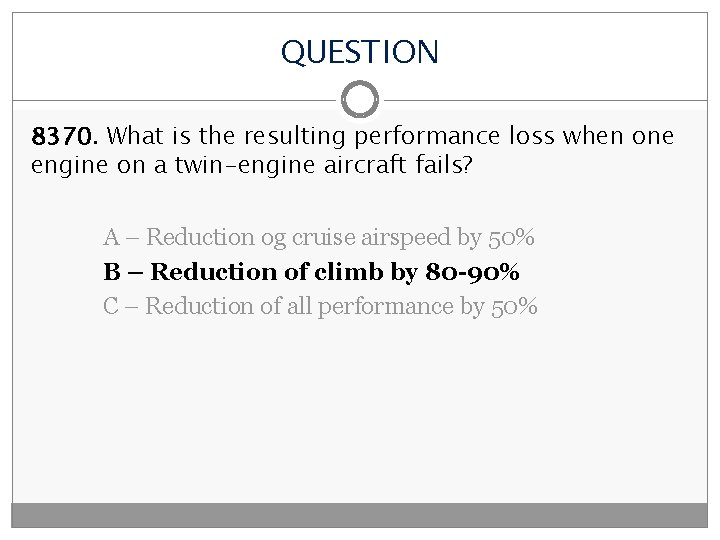
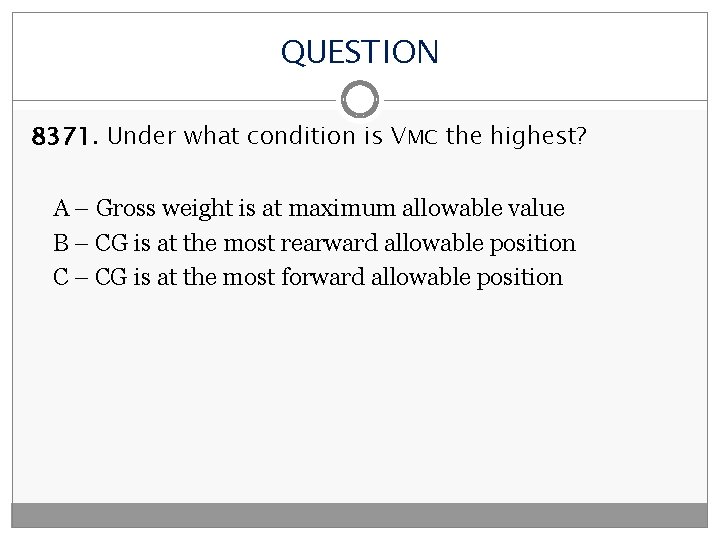
MISCELLANEOUS When an engine fails in flight the effect on aircraft performance is drastic. Loss of one engine on a two-engine aircraft will result in a loss of climb performance in excess of 50% (usually <80%) Climb performance is determined by the amount of power available in excess of that required for level flight If an engine fails in cruise, pilot should slow the aircraft to its best single-engine rate-of-climb speed (VYSE) and apply maximum continuous power on remaining engine. The aircraft may or may not climb. If it cannot climb at the present altitude at least it will descend at the minimum possible rate of sink and level off at its max engine-out altitude. A multi-engine aircraft should never be flown below its Minimum Control Speed (VMC). It may be impossible to maintain direction control with the other engine operating at full power – VMC will be highest with most rearward-allowed CG
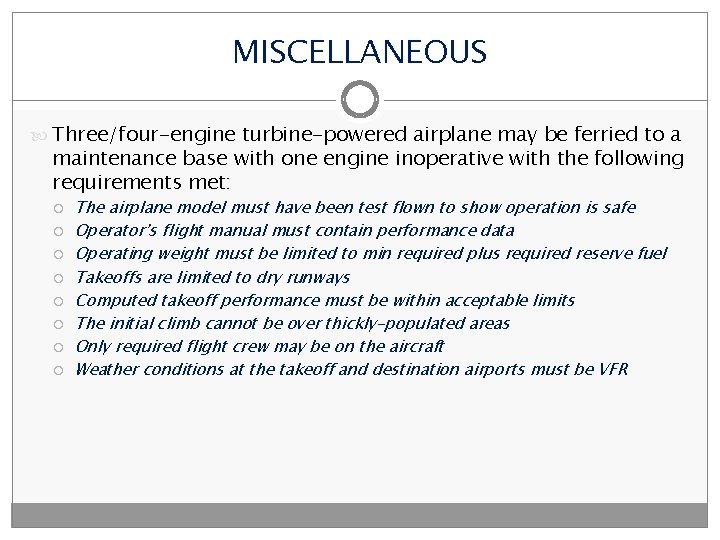
MISCELLANEOUS Three/four-engine turbine-powered airplane may be ferried to a maintenance base with one engine inoperative with the following requirements met: The airplane model must have been test flown to show operation is safe Operator’s flight manual must contain performance data Operating weight must be limited to min required plus required reserve fuel Takeoffs are limited to dry runways Computed takeoff performance must be within acceptable limits The initial climb cannot be over thickly-populated areas Only required flight crew may be on the aircraft Weather conditions at the takeoff and destination airports must be VFR
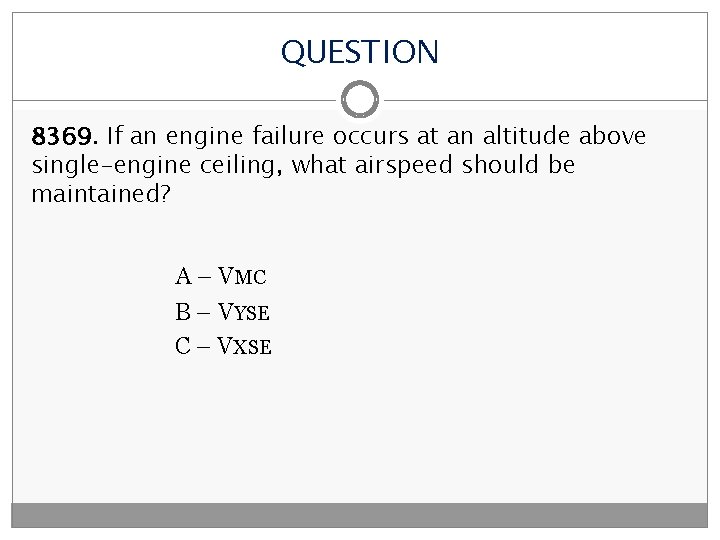
QUESTION 8369. If an engine failure occurs at an altitude above single-engine ceiling, what airspeed should be maintained? A – VMC B – VYSE C – VXSE
QUESTION 8369. If an engine failure occurs at an altitude above single-engine ceiling, what airspeed should be maintained? A – VMC B – VYSE C – VXSE
QUESTION 8370. What is the resulting performance loss when one engine on a twin-engine aircraft fails? A – Reduction of cruise airspeed by 50% B – Reduction of climb by 80 -90% C – Reduction of all performance by 50%
QUESTION 8370. What is the resulting performance loss when one engine on a twin-engine aircraft fails? A – Reduction og cruise airspeed by 50% B – Reduction of climb by 80 -90% C – Reduction of all performance by 50%
QUESTION 8371. Under what condition is VMC the highest? A – Gross weight is at maximum allowable value B – CG is at the most rearward allowable position C – CG is at the most forward allowable position
QUESTION 8371. Under what condition is VMC the highest? A – Gross weight is at maximum allowable value B – CG is at the most rearward allowable position C – CG is at the most forward allowable position
QUESTION 9355. Which operational requirement must be observed by a commercial operator when ferrying a large, threeengine, turbojet-powered airplane from one facility to another to repair an inoperative engine? A – The computed takeoff distance to reach V 1 must not exceed 70% of the effective runway length B – The existing and forecast weather for departure, en route and approach must be VFR C – No passengers may be carried
QUESTION 9355. Which operational requirement must be observed by a commercial operator when ferrying a large, threeengine, turbojet-powered airplane from one facility to another to repair an inoperative engine? A – The computed takeoff distance to reach V 1 must not exceed 70% of the effective runway length B – The existing and forecast weather for departure, en route and approach must be VFR C – No passengers may be carried
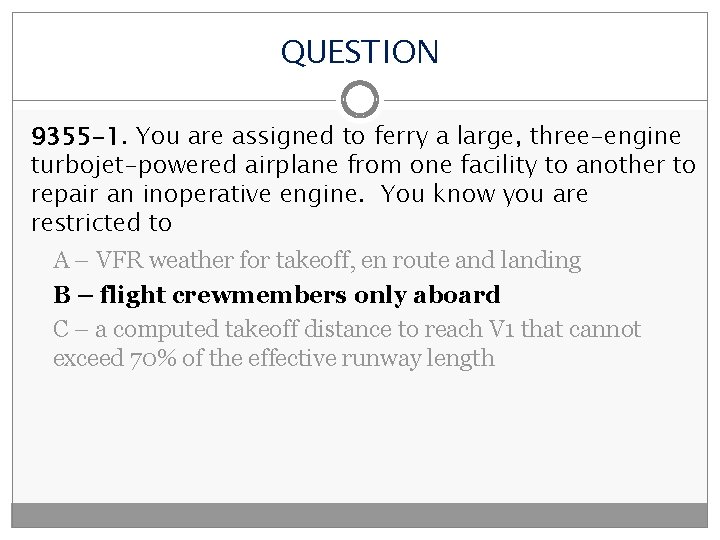
QUESTION 9355 -1. You are assigned to ferry a large, three-engine turbojet-powered airplane from one facility to another to repair an inoperative engine. You know you are restricted to A – VFR weather for takeoff, en route and landing B – flight crewmembers only aboard C – a computed takeoff distance to reach V 1 that cannot exceed 70% of the effective runway length
QUESTION 9355 -1. You are assigned to ferry a large, three-engine turbojet-powered airplane from one facility to another to repair an inoperative engine. You know you are restricted to A – VFR weather for takeoff, en route and landing B – flight crewmembers only aboard C – a computed takeoff distance to reach V 1 that cannot exceed 70% of the effective runway length
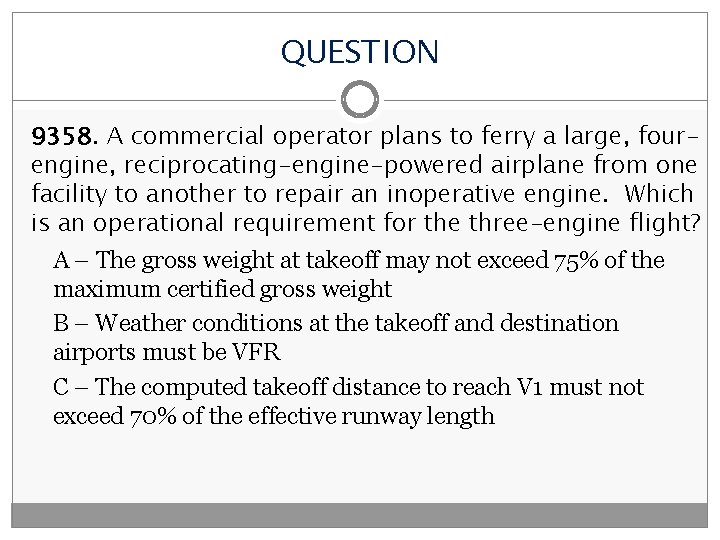
QUESTION 9358. A commercial operator plans to ferry a large, fourengine, reciprocating-engine-powered airplane from one facility to another to repair an inoperative engine. Which is an operational requirement for the three-engine flight? A – The gross weight at takeoff may not exceed 75% of the maximum certified gross weight B – Weather conditions at the takeoff and destination airports must be VFR C – The computed takeoff distance to reach V 1 must not exceed 70% of the effective runway length
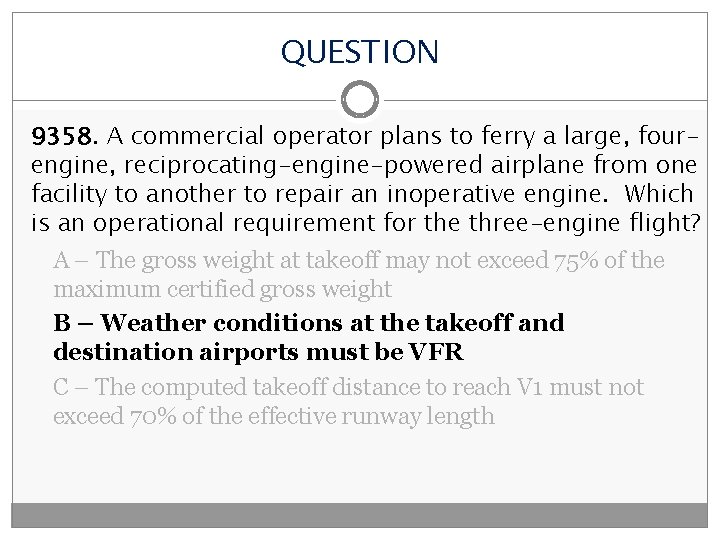
QUESTION 9358. A commercial operator plans to ferry a large, fourengine, reciprocating-engine-powered airplane from one facility to another to repair an inoperative engine. Which is an operational requirement for the three-engine flight? A – The gross weight at takeoff may not exceed 75% of the maximum certified gross weight B – Weather conditions at the takeoff and destination airports must be VFR C – The computed takeoff distance to reach V 1 must not exceed 70% of the effective runway length
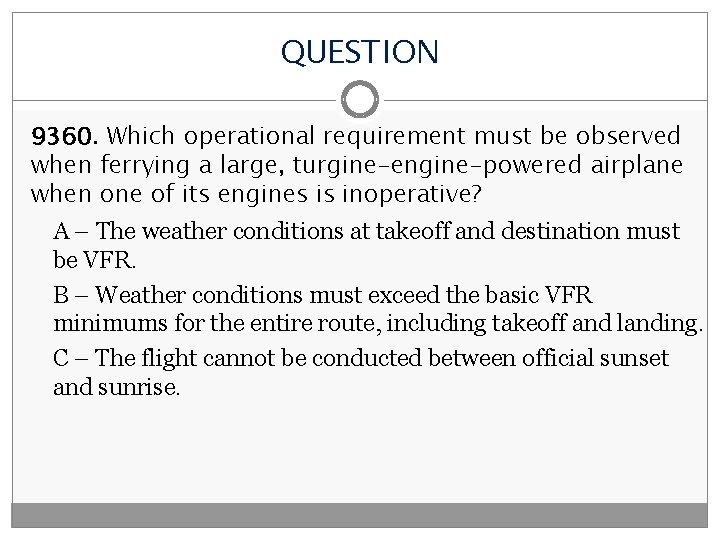
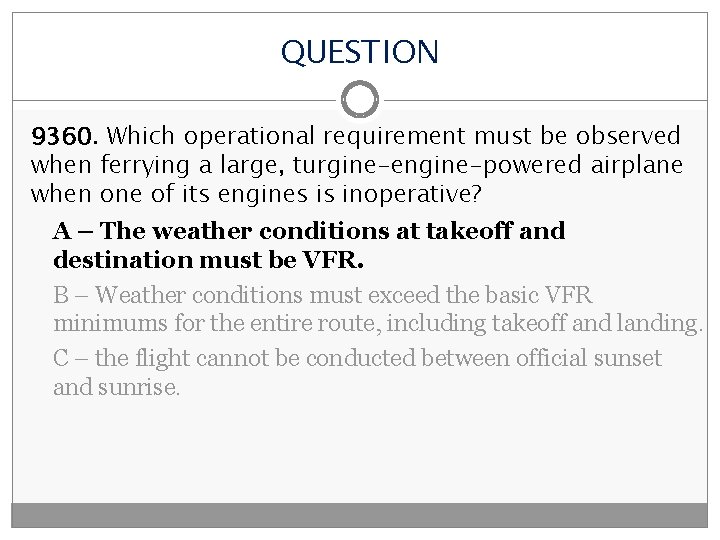
QUESTION 9360. Which operational requirement must be observed when ferrying a large, turgine-engine-powered airplane when one of its engines is inoperative? A – The weather conditions at takeoff and destination must be VFR. B – Weather conditions must exceed the basic VFR minimums for the entire route, including takeoff and landing. C – The flight cannot be conducted between official sunset and sunrise.
QUESTION 9360. Which operational requirement must be observed when ferrying a large, turgine-engine-powered airplane when one of its engines is inoperative? A – The weather conditions at takeoff and destination must be VFR. B – Weather conditions must exceed the basic VFR minimums for the entire route, including takeoff and landing. C – the flight cannot be conducted between official sunset and sunrise.