Engineering Waves Seismic Waves Engineering Waves Overview In
- Slides: 16
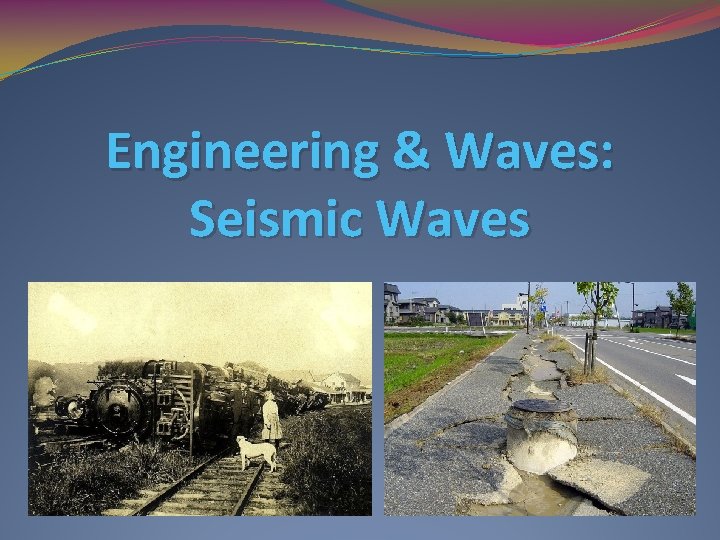
Engineering & Waves: Seismic Waves
Engineering Waves Overview �In this lesson, we will learn about: �What are waves? �What are different types of waves? �How do waves travel? �How do waves relate to engineering? �Our focus is on: �Seismic waves
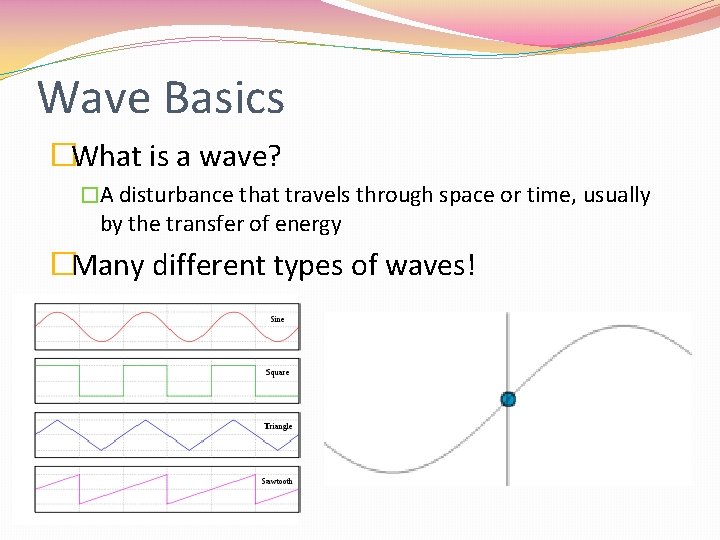
Wave Basics �What is a wave? �A disturbance that travels through space or time, usually by the transfer of energy �Many different types of waves!
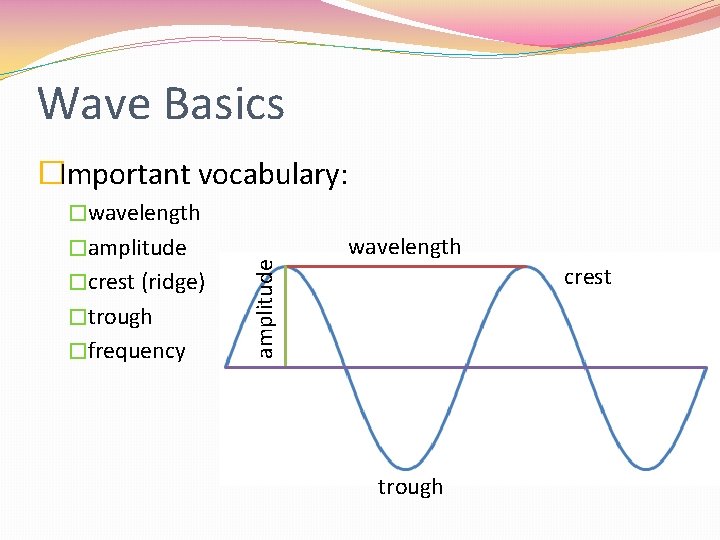
Wave Basics �Important vocabulary: �amplitude �crest (ridge) �trough �frequency amplitude �wavelength crest trough
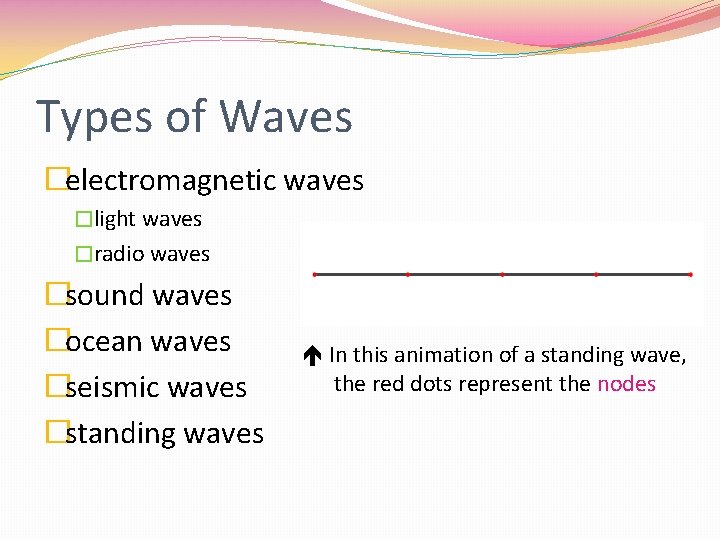
Types of Waves �electromagnetic waves �light waves �radio waves �sound waves �ocean waves �seismic waves �standing waves In this animation of a standing wave, the red dots represent the nodes
Engineering & Waves: Seismic Waves
Why are engineers concerned about earthquakes?
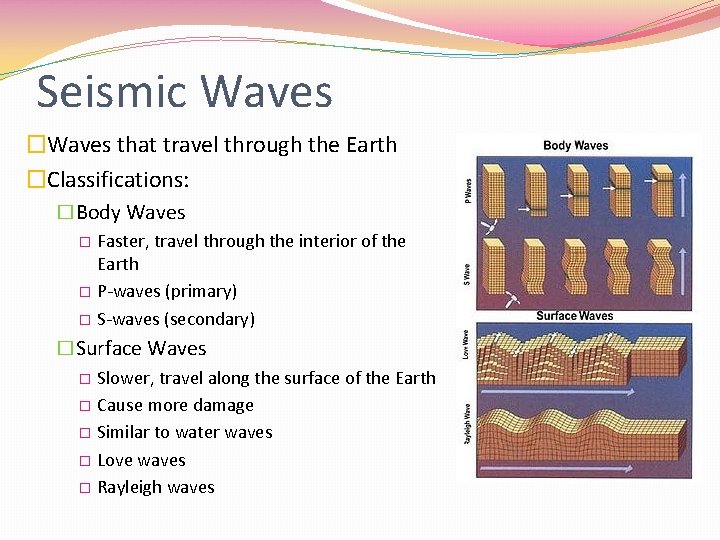
Seismic Waves �Waves that travel through the Earth �Classifications: �Body Waves � Faster, travel through the interior of the Earth � P-waves (primary) � S-waves (secondary) �Surface Waves � Slower, travel along the surface of the Earth � Cause more damage � Similar to water waves � Love waves � Rayleigh waves
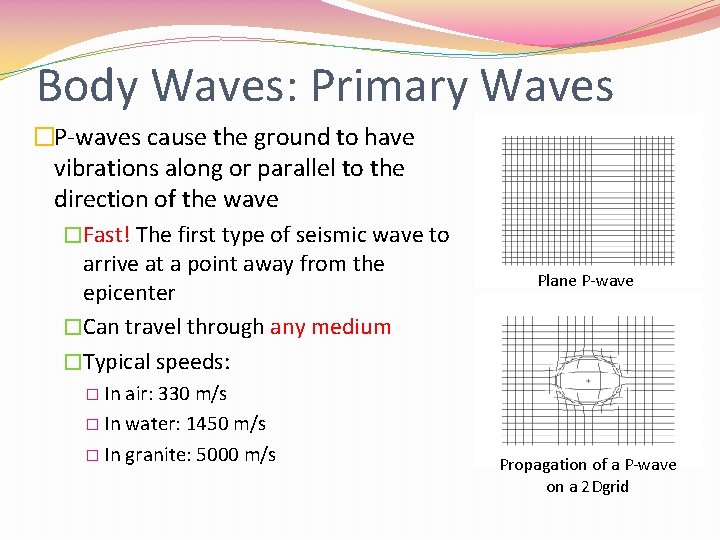
Body Waves: Primary Waves �P-waves cause the ground to have vibrations along or parallel to the direction of the wave �Fast! The first type of seismic wave to arrive at a point away from the epicenter �Can travel through any medium �Typical speeds: air: 330 m/s � In water: 1450 m/s � In granite: 5000 m/s Plane P-wave � In Propagation of a P-wave on a 2 Dgrid
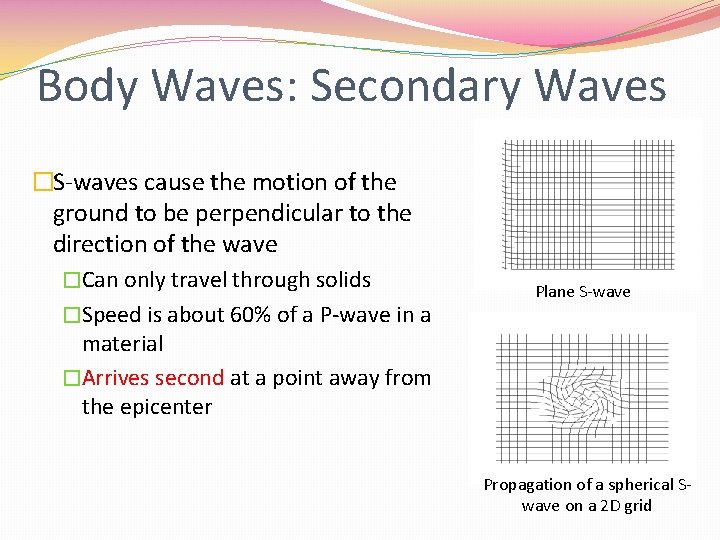
Body Waves: Secondary Waves �S-waves cause the motion of the ground to be perpendicular to the direction of the wave �Can only travel through solids �Speed is about 60% of a P-wave in a material �Arrives second at a point away from the epicenter Plane S-wave Propagation of a spherical Swave on a 2 D grid
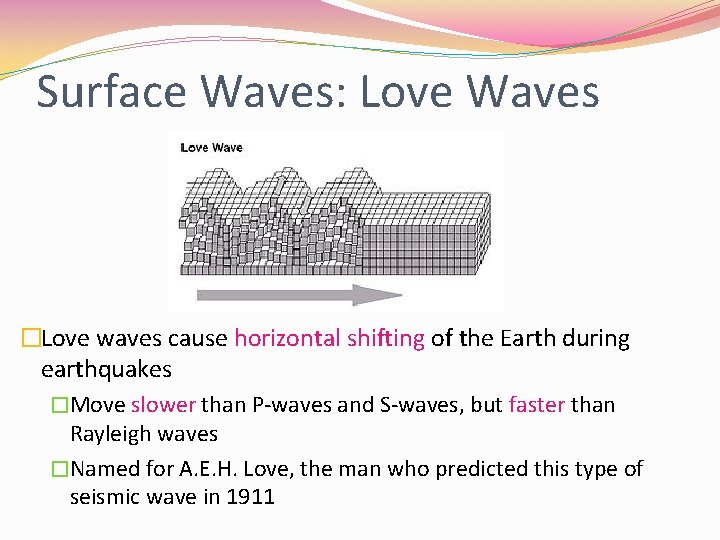
Surface Waves: Love Waves �Love waves cause horizontal shifting of the Earth during earthquakes �Move slower than P-waves and S-waves, but faster than Rayleigh waves �Named for A. E. H. Love, the man who predicted this type of seismic wave in 1911
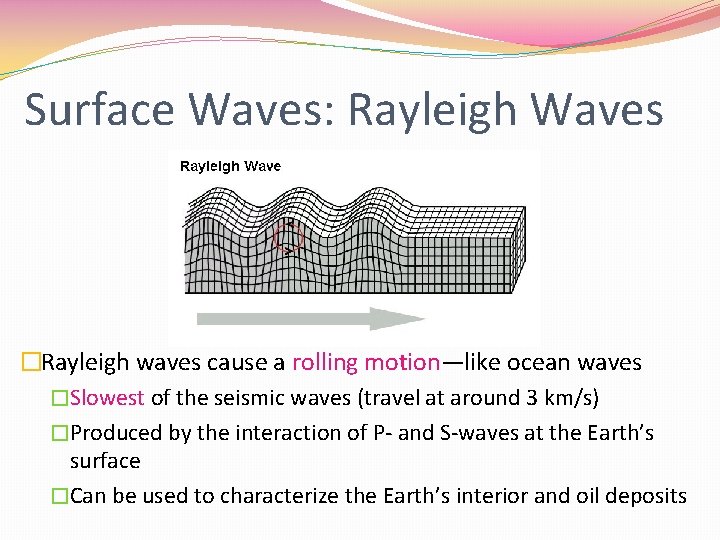
Surface Waves: Rayleigh Waves �Rayleigh waves cause a rolling motion—like ocean waves �Slowest of the seismic waves (travel at around 3 km/s) �Produced by the interaction of P- and S-waves at the Earth’s surface �Can be used to characterize the Earth’s interior and oil deposits
All Seismic Waves �Intensity depends on: �Size of earthquake �Distance to the earthquake �Depth of the earthquake �Geological structure of the crust �The amplitude decreases with increasing depth of the earthquake and with distance traveled
More information on Seismic Waves
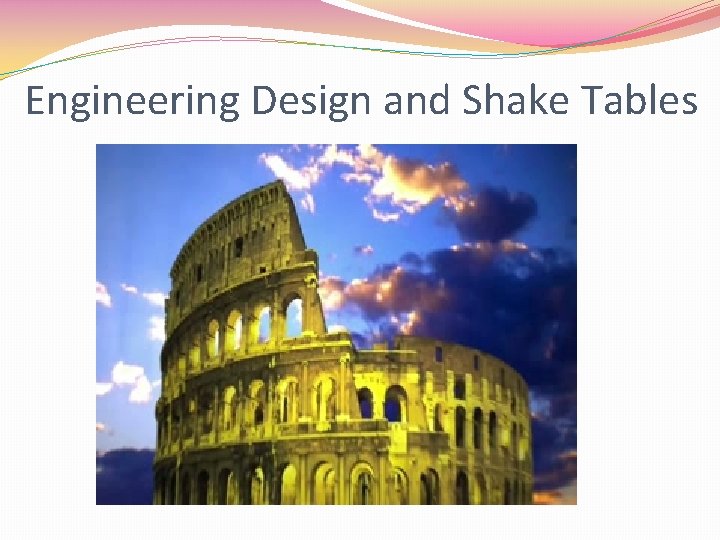
Engineering Design and Shake Tables
The World’s Largest Shake Table