
Engineering T cells for HCC Immunotherapy Yukai He
- Slides: 37
Engineering T cells for HCC Immunotherapy Yukai He Medical College of Georgia, Augusta University 9 -22 -2019, ILCA, Chicago www. augusta. edu/cancer
Disclosure My employer, Medical College of Georgia, holds the patents of TCRs and CARs Consultant: CBMG, Cupertino, CA www. augusta. edu/cancer
Recruiting a highly motivated postdoc with immunology background www. augusta. edu/cancer
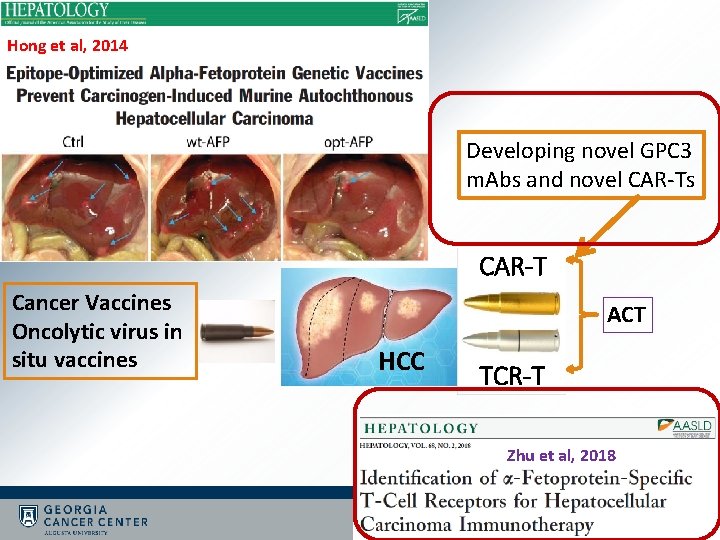
Immunotherapy for HCC 1. Cancer vaccines: Not effective yet. a. Together with ACT b. Neoantigen cancer vaccines 2. Checkpoint blockade effective in ~20% of patients (El-Khoueiry et al, 2017, Lancet) - Checkpoint blockade plus antiangiogenesis, 30 -40% response rate 3. Engineered T cells therapy are emerging www. augusta. edu/cancer
Hong et al, 2014 Developing novel GPC 3 m. Abs and novel CAR-Ts CAR-T Cancer Vaccines Oncolytic virus in situ vaccines ACT HCC TCR-T Zhu et al, 2018 www. augusta. edu/cancer
Identify TCRs for HCC immunotherapy www. augusta. edu/cancer
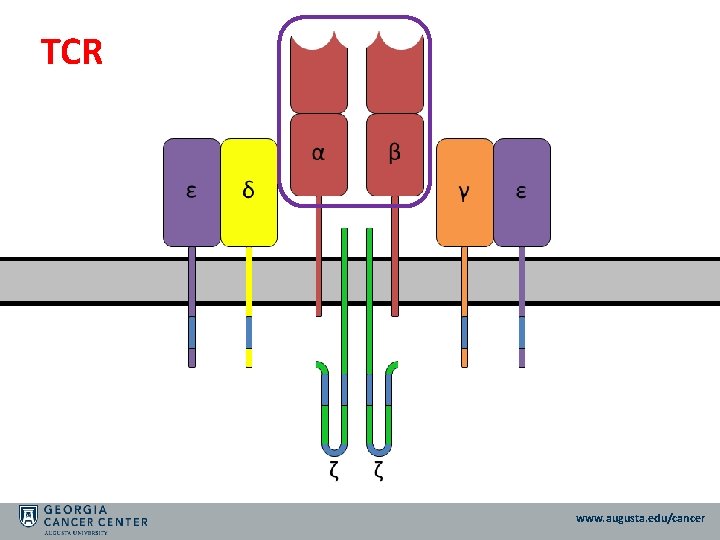
TCR www. augusta. edu/cancer
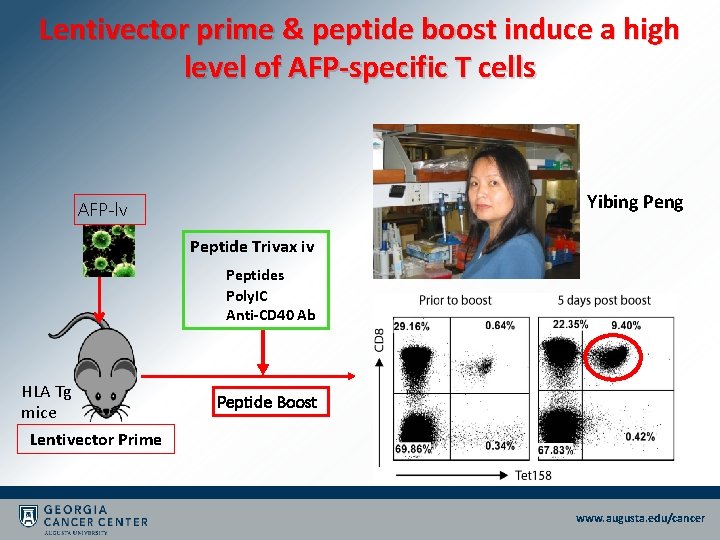
Lentivector prime & peptide boost induce a high level of AFP-specific T cells Yibing Peng AFP-lv Peptide Trivax iv Peptides Poly. IC Anti-CD 40 Ab HLA Tg mice Lentivector Prime Peptide Boost www. augusta. edu/cancer
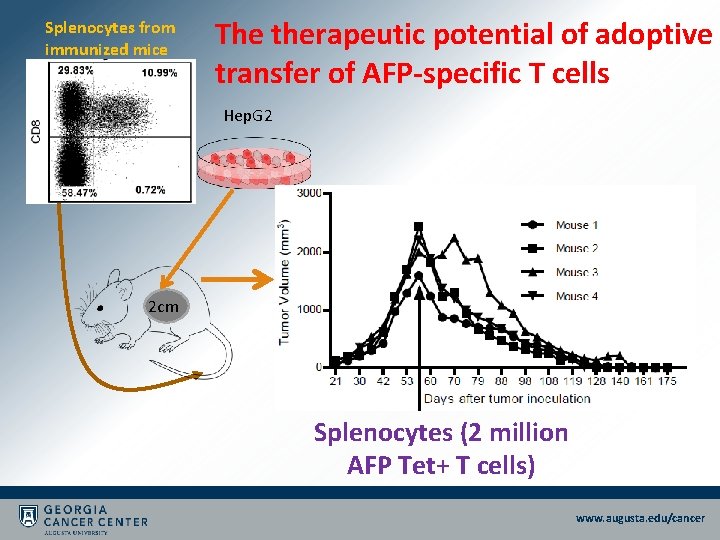
Splenocytes from immunized mice The therapeutic potential of adoptive transfer of AFP-specific T cells Hep. G 2 2 cm Splenocytes (2 million AFP Tet+ T cells) www. augusta. edu/cancer
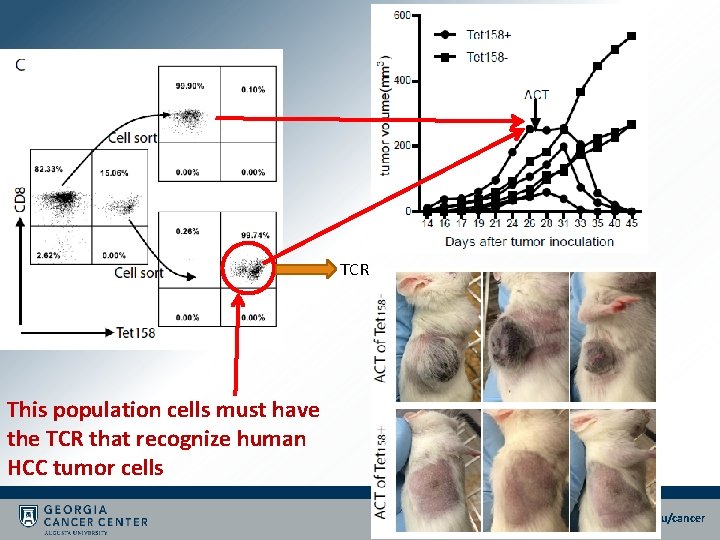
TCR This population cells must have the TCR that recognize human HCC tumor cells www. augusta. edu/cancer
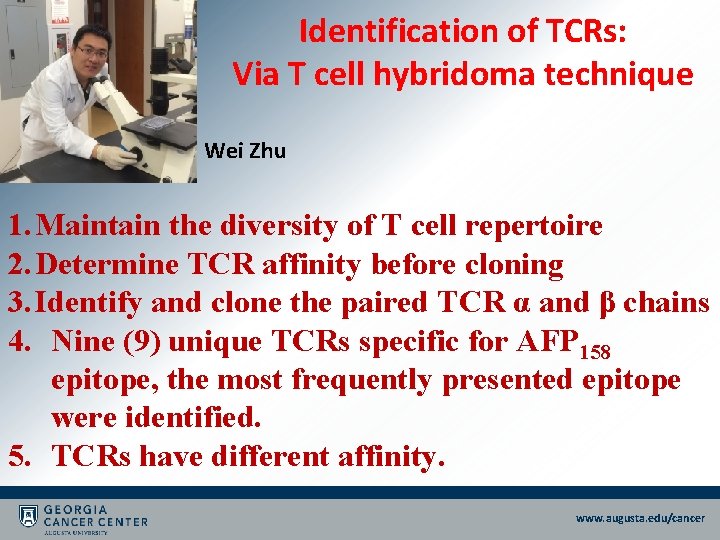
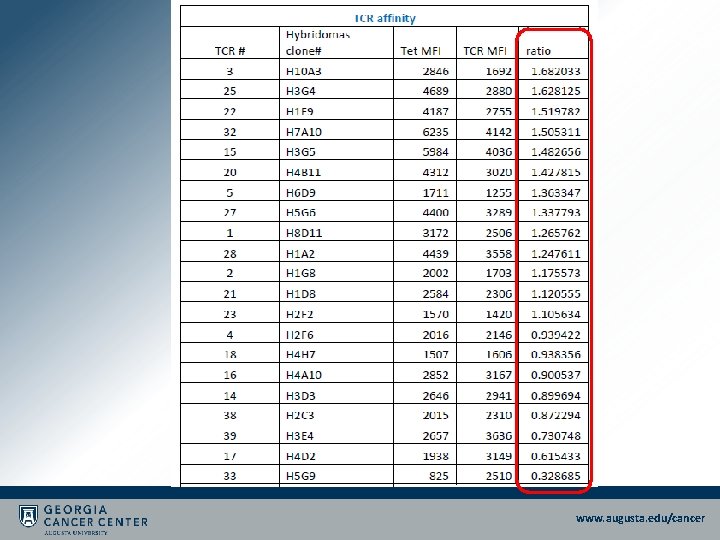
Identification of TCRs: Via T cell hybridoma technique Wei Zhu 1. Maintain the diversity of T cell repertoire 2. Determine TCR affinity before cloning 3. Identify and clone the paired TCR α and β chains 4. Nine (9) unique TCRs specific for AFP 158 epitope, the most frequently presented epitope were identified. 5. TCRs have different affinity. www. augusta. edu/cancer
www. augusta. edu/cancer
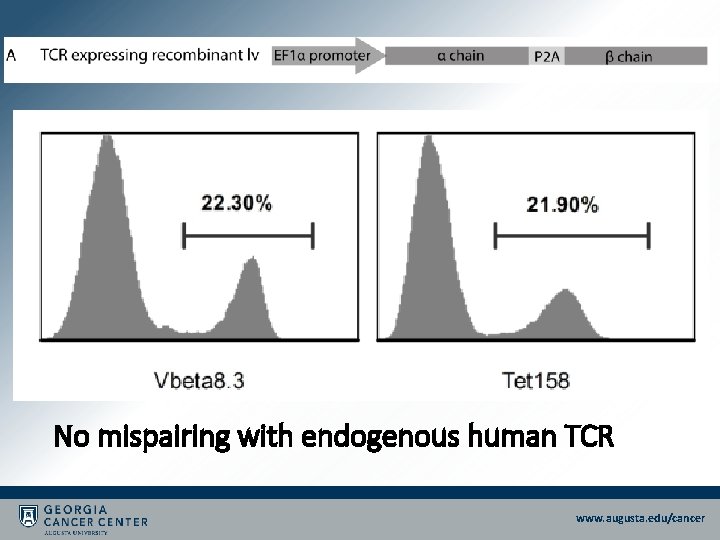
No mispairing with endogenous human TCR www. augusta. edu/cancer
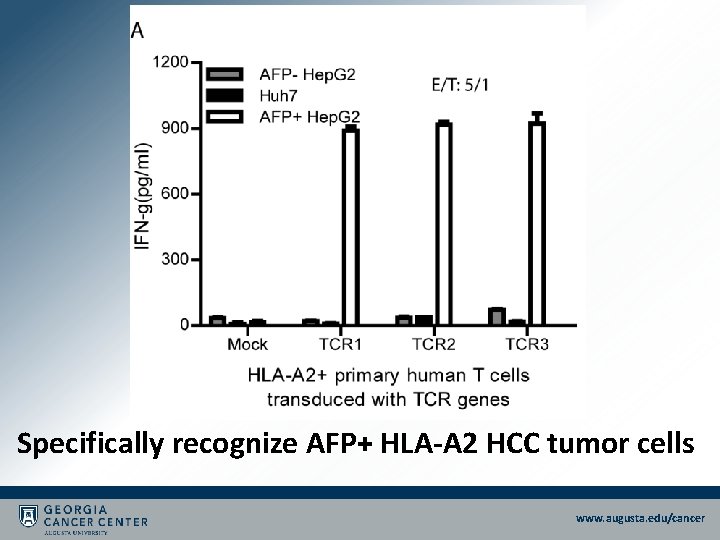
Specifically recognize AFP+ HLA-A 2 HCC tumor cells www. augusta. edu/cancer
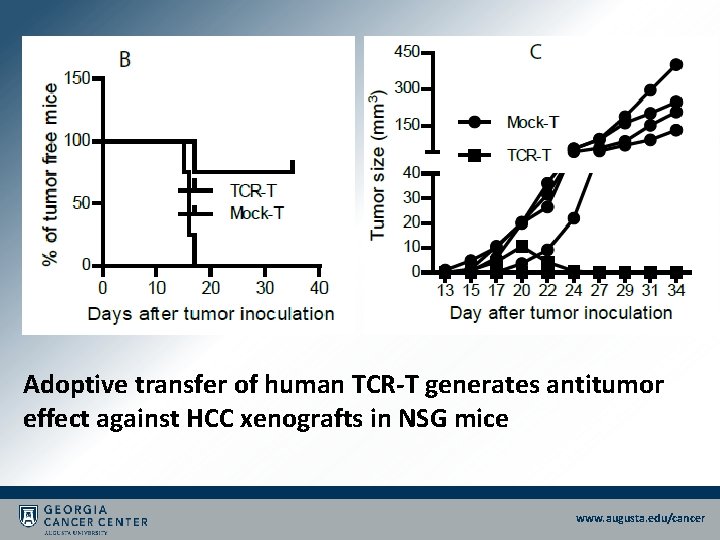
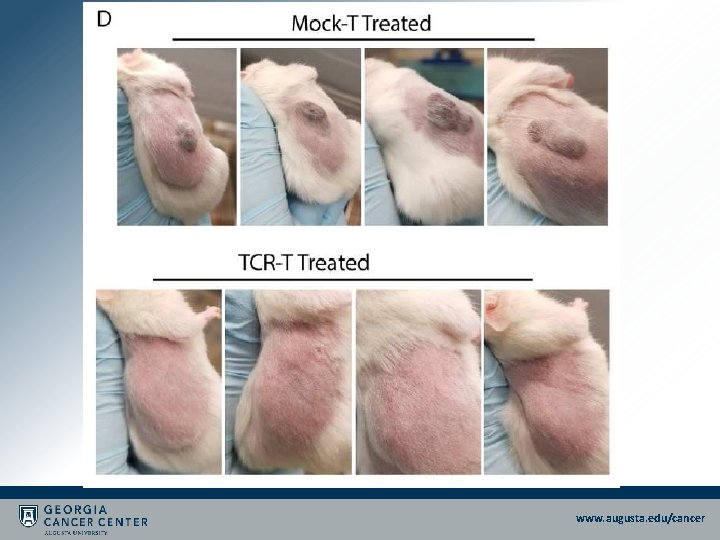
Adoptive transfer of human TCR-T generates antitumor effect against HCC xenografts in NSG mice www. augusta. edu/cancer
www. augusta. edu/cancer
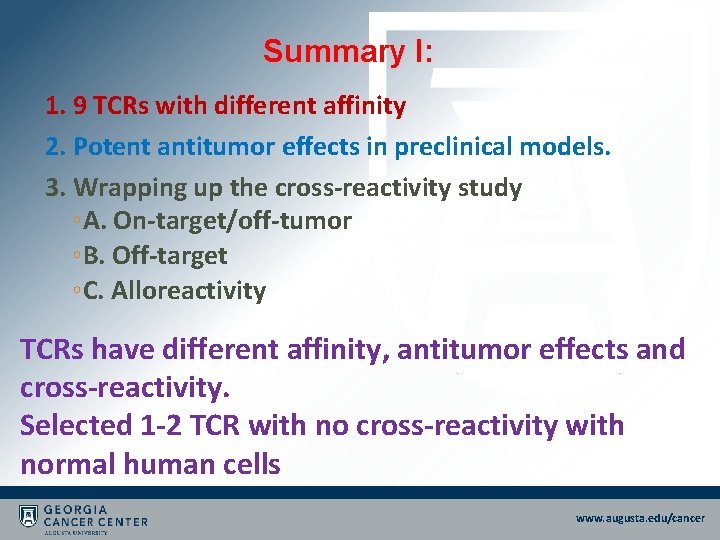
Summary I: 1. 9 TCRs with different affinity 2. Potent antitumor effects in preclinical models. 3. Wrapping up the cross-reactivity study ◦A. On-target/off-tumor ◦B. Off-target ◦C. Alloreactivity TCRs have different affinity, antitumor effects and cross-reactivity. Selected 1 -2 TCR with no cross-reactivity with normal human cells www. augusta. edu/cancer
GPC 3 -specific CAR-Ts www. augusta. edu/cancer
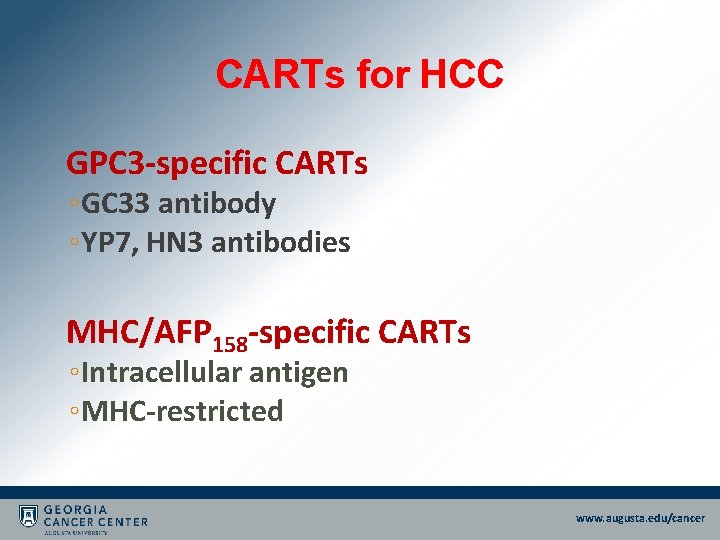
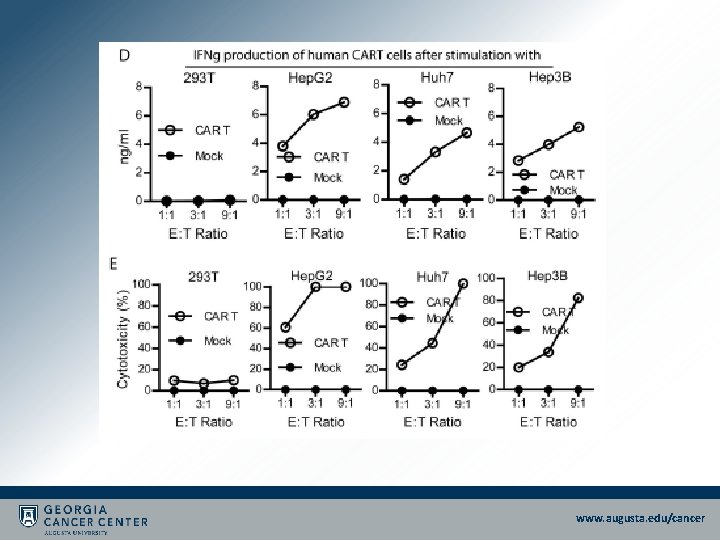
CARTs for HCC GPC 3 -specific CARTs ◦GC 33 antibody ◦YP 7, HN 3 antibodies MHC/AFP 158 -specific CARTs ◦Intracellular antigen ◦MHC-restricted www. augusta. edu/cancer
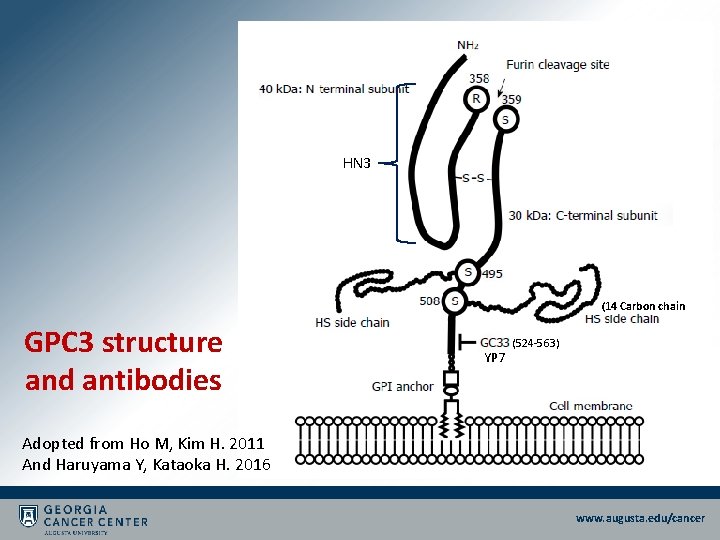
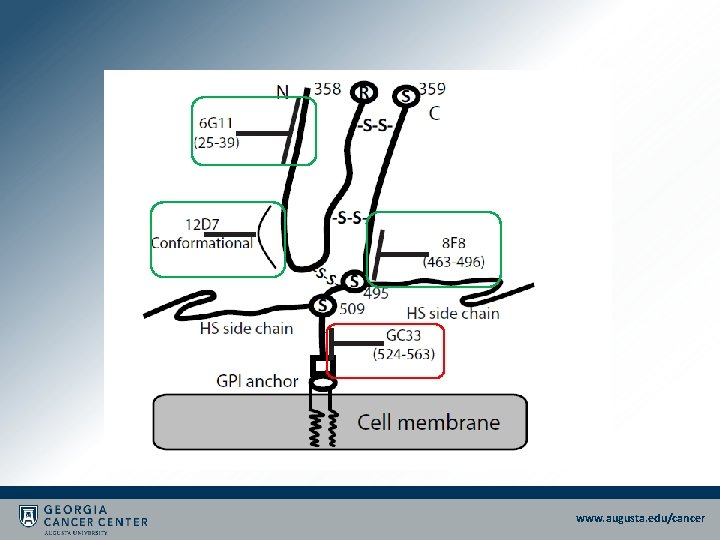
HN 3 (14 Carbon chain GPC 3 structure and antibodies YP 7 (524 -563) Adopted from Ho M, Kim H. 2011 And Haruyama Y, Kataoka H. 2016 www. augusta. edu/cancer
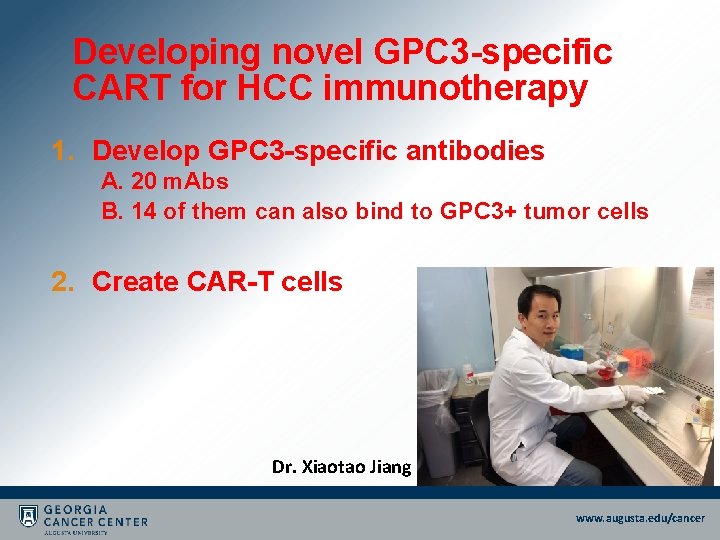
Developing novel GPC 3 -specific CART for HCC immunotherapy 1. Develop GPC 3 -specific antibodies A. 20 m. Abs B. 14 of them can also bind to GPC 3+ tumor cells 2. Create CAR-T cells Dr. Xiaotao Jiang www. augusta. edu/cancer
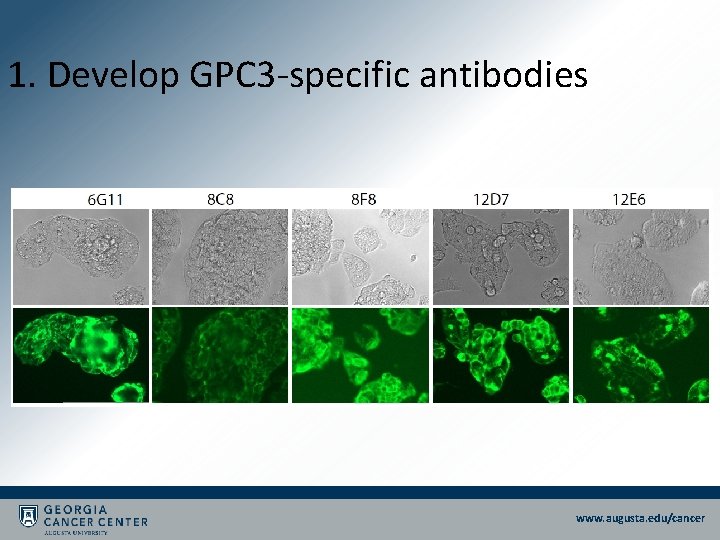
1. Develop GPC 3 -specific antibodies www. augusta. edu/cancer
www. augusta. edu/cancer
www. augusta. edu/cancer
www. augusta. edu/cancer
www. augusta. edu/cancer
www. augusta. edu/cancer
www. augusta. edu/cancer
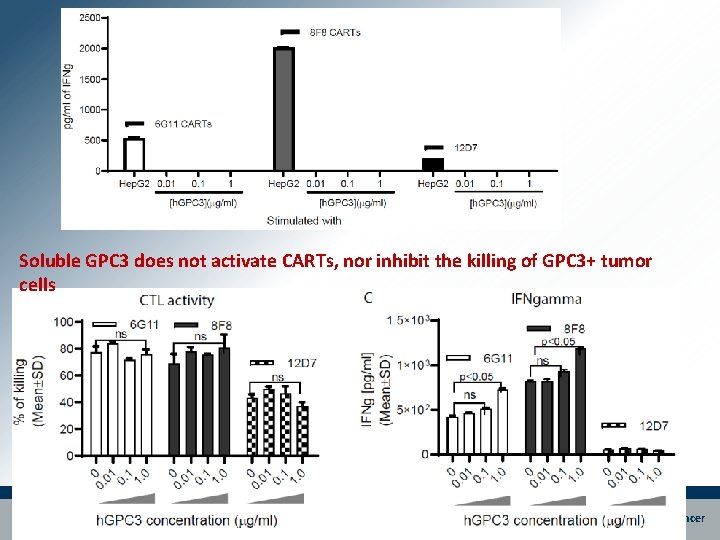
Soluble GPC 3 does not activate CARTs, nor inhibit the killing of GPC 3+ tumor cells www. augusta. edu/cancer
www. augusta. edu/cancer
www. augusta. edu/cancer
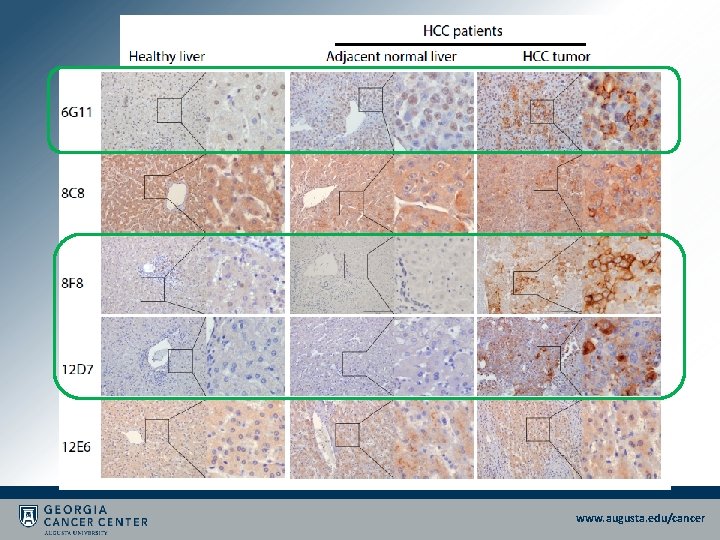
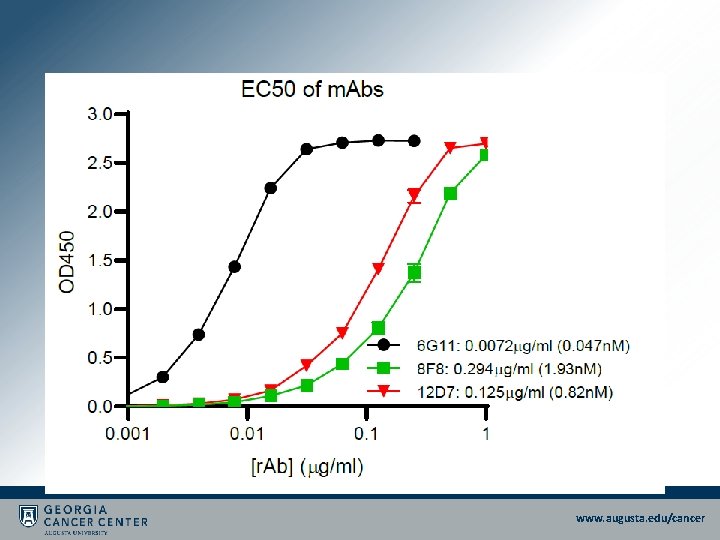
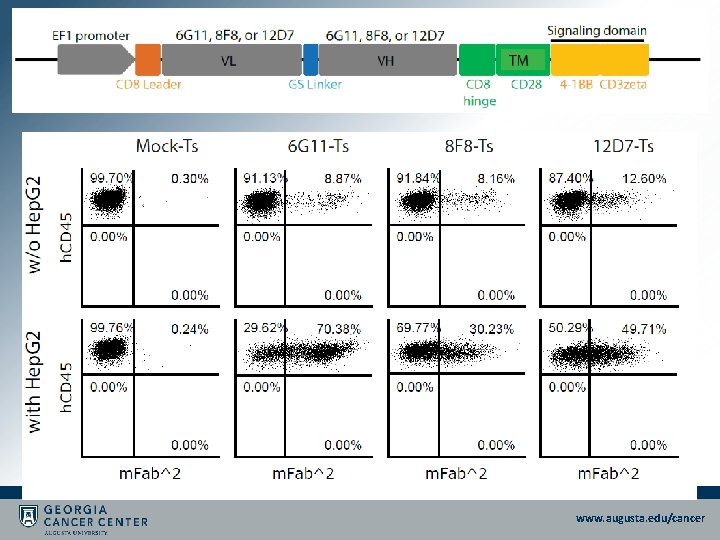
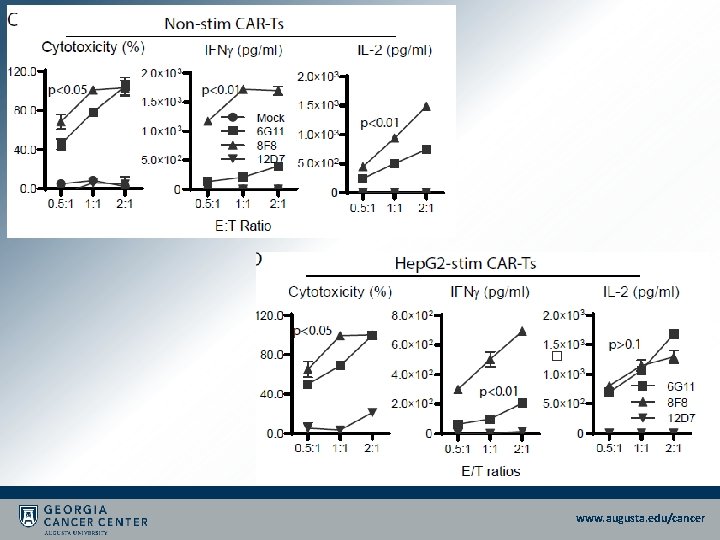
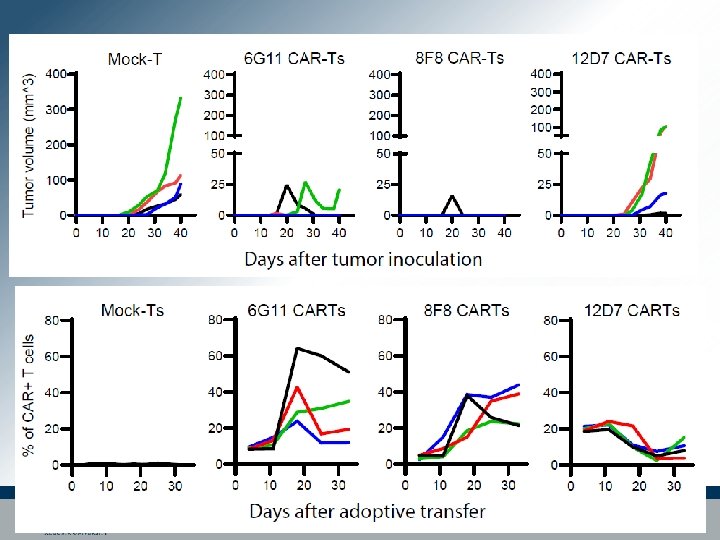
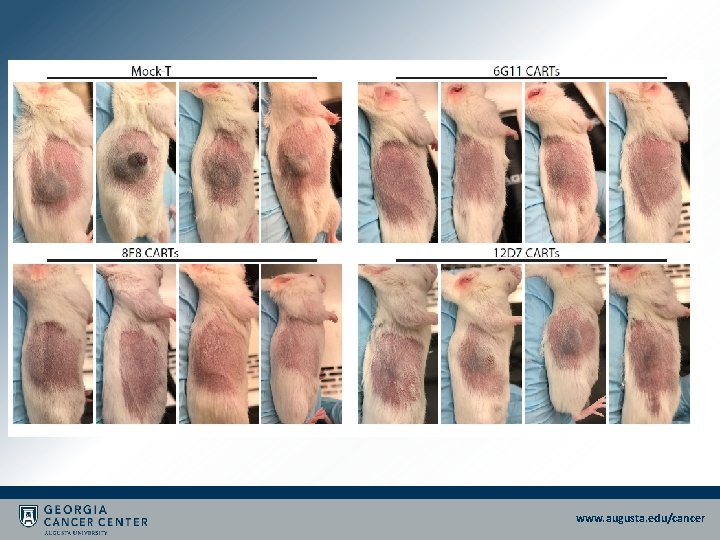
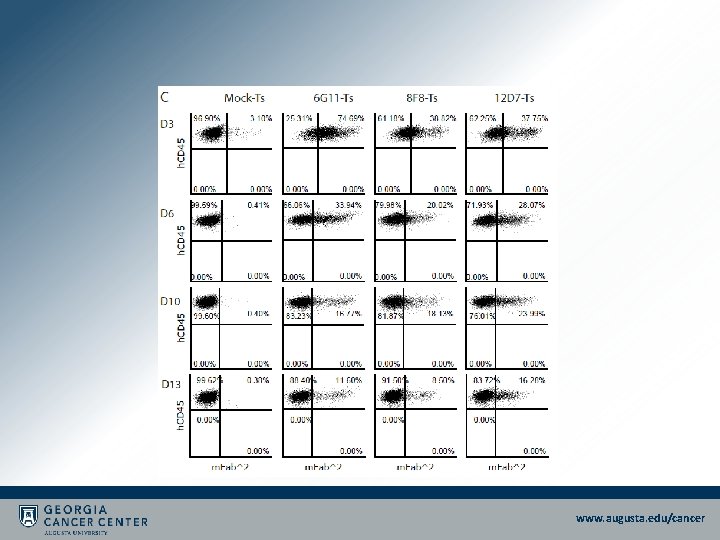
Summary II 1. Develop 3 h. GPC 3 -specific and HCC-specific m. Abs (6 G 11, 8 F 8, and 12 D 7). 2. Create 3 corresponding CARTs from the 3 m. Abs, which expand after HCC cell stimulation. 3. The 6 G 11 and 8 F 8 CARTs targeting h. GPC 3 Nor C- epitope have strong effector function. 4. Adoptive transfer of 6 G 11 and 8 F 8, but not 12 D 7 CARTs results in tumor regression. www. augusta. edu/cancer
www. augusta. edu/cancer
Acknowledgement Yukai’s lab: ◦ Yibing Peng ◦ Leidy Caraballo Galva ◦ Catherine Cai ◦ Yanxia Shao ◦ Previous members ◦ Qi Li ◦ Dr. Xiaotao Jiang ◦ Dr. Wei Zhu ◦ Dr. Lan Wang ◦ Dr. Yuan Hong ◦Collaborators: ◦ Dr. Esteban Celis ◦ Dr. Ignatowicz (Georgia State University) ◦Georgetown University ◦ Dr. Aiwu (Ruth) He ◦Funding: ◦ NCI R 01 CA 168912, NCI R 01 CA 235159 ◦ Georgia Cancer Center intramural grant www. augusta. edu/cancer
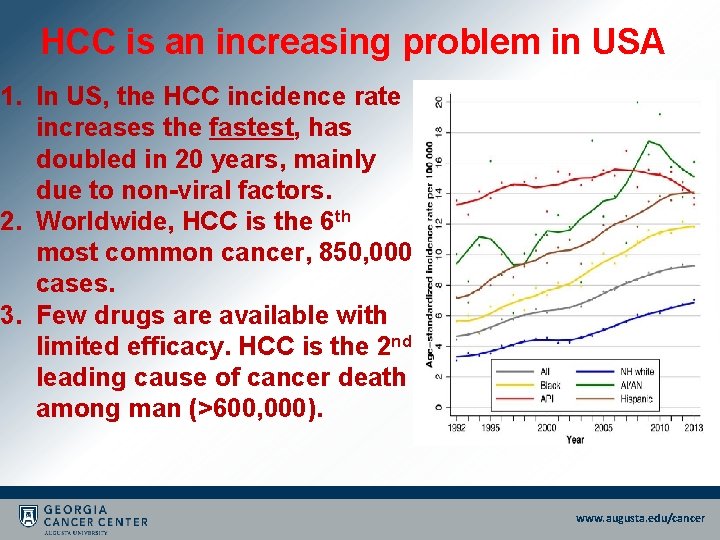
HCC is an increasing problem in USA 1. In US, the HCC incidence rate increases the fastest, has doubled in 20 years, mainly due to non-viral factors. 2. Worldwide, HCC is the 6 th most common cancer, 850, 000 cases. 3. Few drugs are available with limited efficacy. HCC is the 2 nd leading cause of cancer death among man (>600, 000). www. augusta. edu/cancer
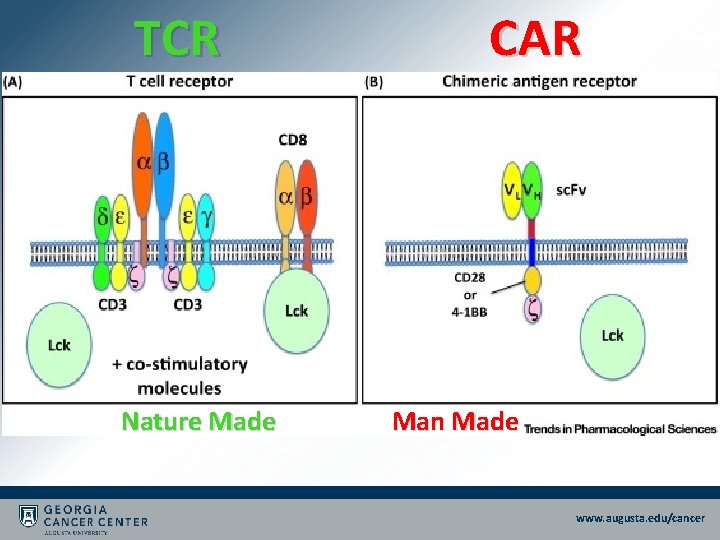
TCR Nature Made CAR Man Made www. augusta. edu/cancer
www. augusta. edu/cancer