
Engineering Science Major in Machine LearningArtificial Intelligence Deepa
- Slides: 13
Engineering Science Major in Machine Learning/Artificial Intelligence Deepa Kundur Chair, Division of Engineering Science
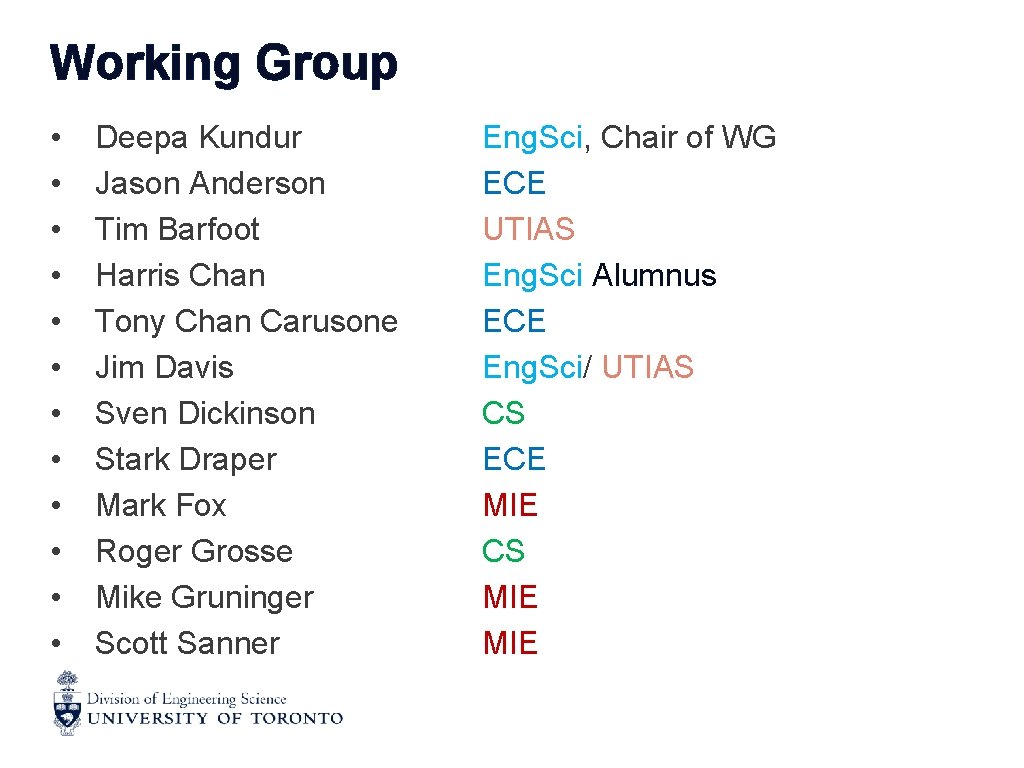
Working Group • • • Deepa Kundur Jason Anderson Tim Barfoot Harris Chan Tony Chan Carusone Jim Davis Sven Dickinson Stark Draper Mark Fox Roger Grosse Mike Gruninger Scott Sanner Eng. Sci, Chair of WG ECE UTIAS Eng. Sci Alumnus ECE Eng. Sci/ UTIAS CS ECE MIE CS MIE
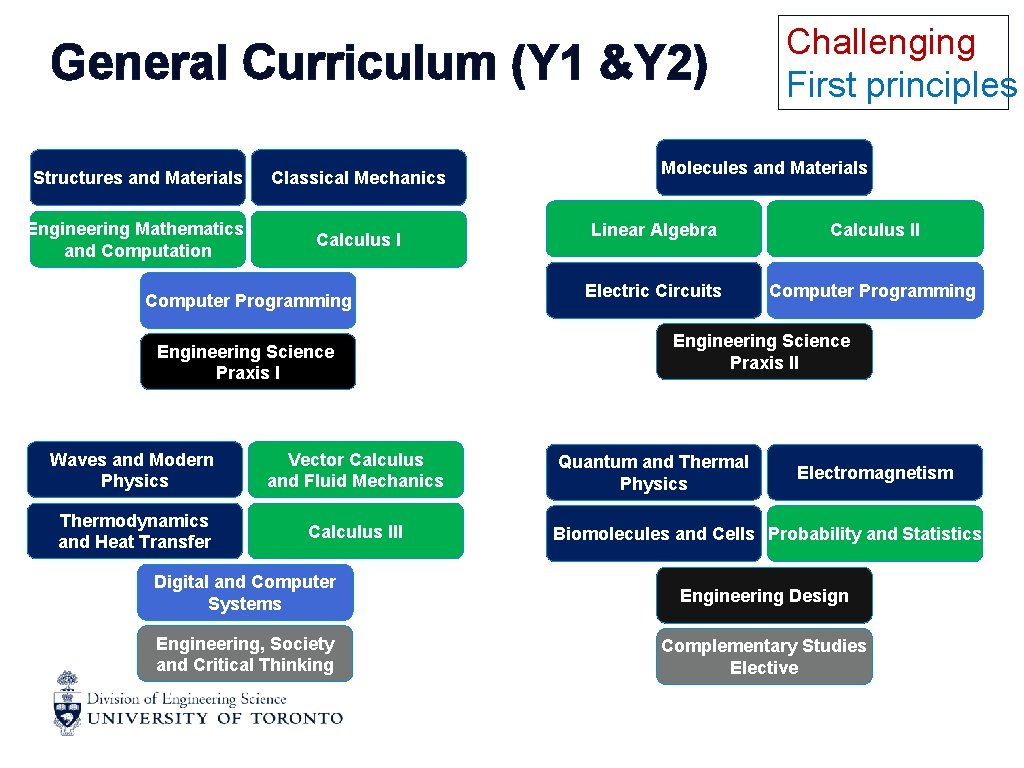
General Curriculum (Y 1 &Y 2) Structures and Materials Classical Mechanics Engineering Mathematics and Computation Calculus I Computer Programming Engineering Science Praxis I Waves and Modern Physics Vector Calculus and Fluid Mechanics Thermodynamics and Heat Transfer Calculus III Challenging First principles Molecules and Materials Linear Algebra Calculus II Electric Circuits Computer Programming Engineering Science Praxis II Quantum and Thermal Physics Electromagnetism Biomolecules and Cells Probability and Statistics Digital and Computer Systems Engineering Design Engineering, Society and Critical Thinking Complementary Studies Elective
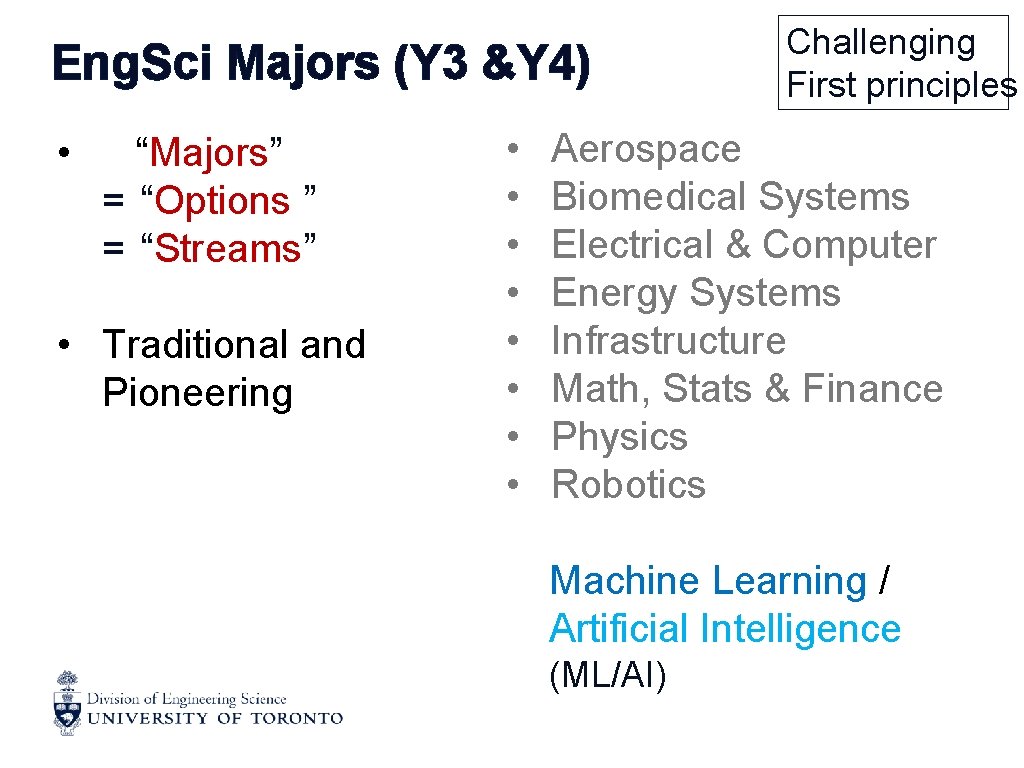
Eng. Sci Majors (Y 3 &Y 4) • “Majors” = “Options ” = “Streams” • Traditional and Pioneering • • Challenging First principles Aerospace Biomedical Systems Electrical & Computer Energy Systems Infrastructure Math, Stats & Finance Physics Robotics Machine Learning / Artificial Intelligence (ML/AI)
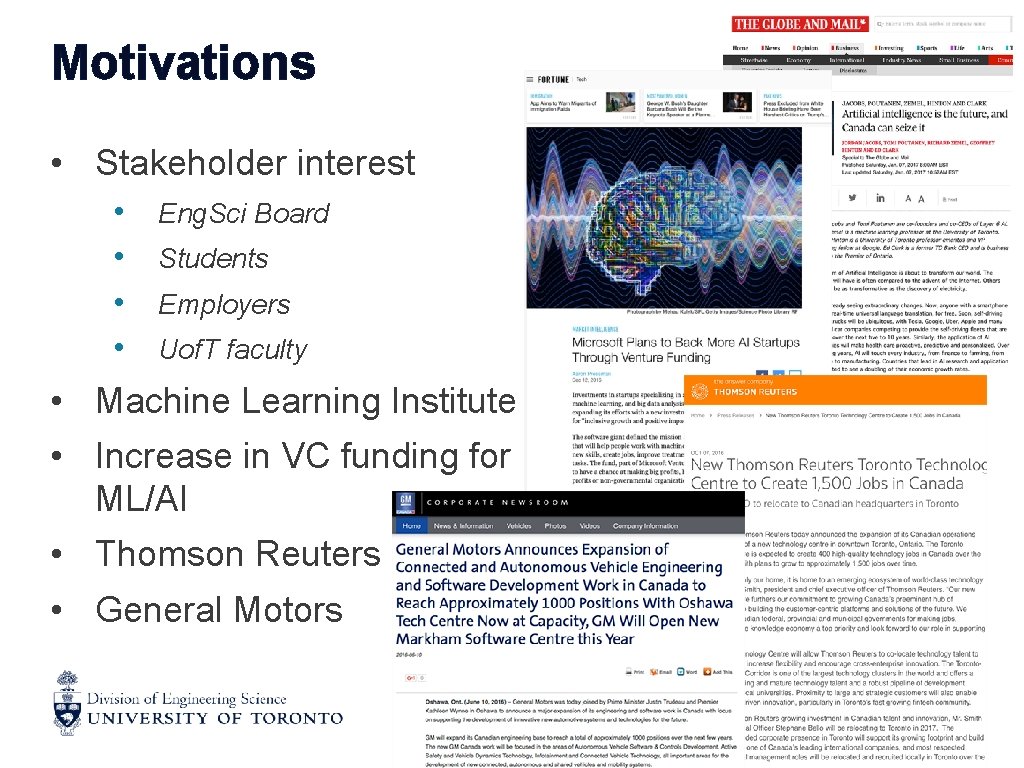
Motivations • Stakeholder interest • • Eng. Sci Board Students Employers Uof. T faculty • Machine Learning Institute • Increase in VC funding for ML/AI • Thomson Reuters • General Motors
Opportunities • Engineering has a place in ML/AI • ML/AI foundations: information theory, signal processing, control theory, optimization, algebra, probability • Scientists problem solve by analysis while designers problem solve by synthesis (How Designers Think, 1980) • Design Thinking: divergent thinking to ideate many solutions and convergent thinking to realize the best solution
Suitability & Strengths • Engineering Science program • • ML/AI: Algorithms/theory Implementation Application First principles approach Hardware/software and system emphasis Promote application modeling and problem framing Design experiences • Uof. T is hub of most important developments in ML and deep learning • Consistent with multi-year expansion at University
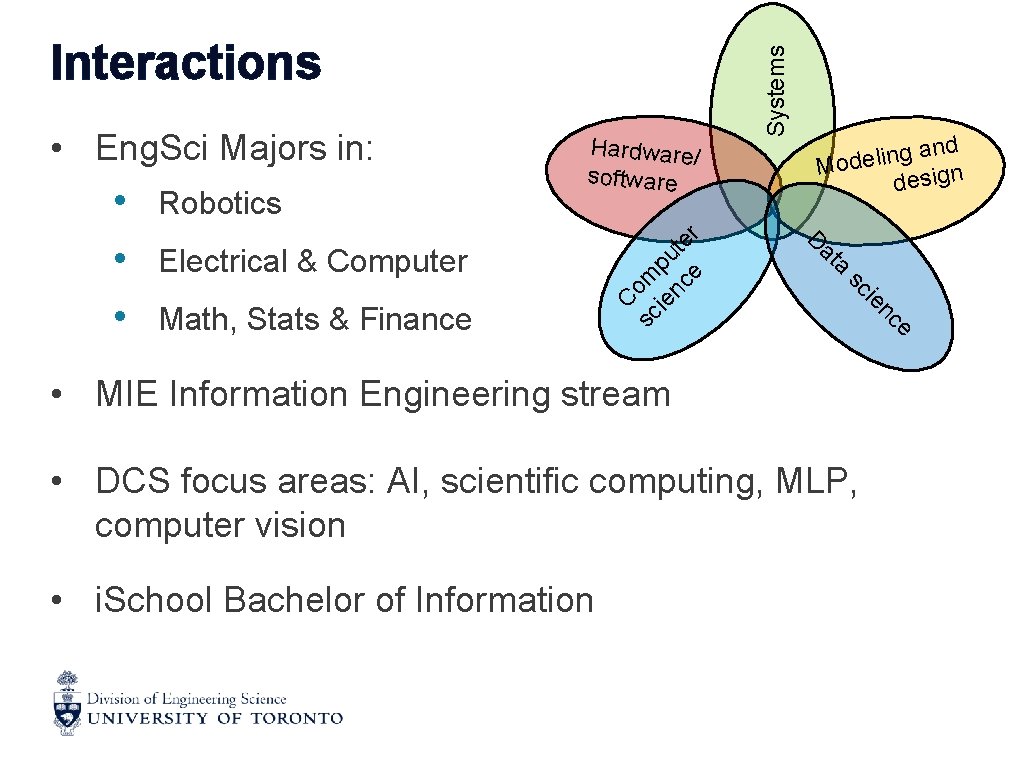
• Eng. Sci Majors in: • Robotics • Electrical & Computer • Math, Stats & Finance Hardware/ software r e t u p e m o enc C ci s Systems Interactions nd a g n i l e Mod design D at a sc • MIE Information Engineering stream • DCS focus areas: AI, scientific computing, MLP, computer vision • i. School Bachelor of Information ie nc e
Machine Intelligence Engineering • Working name • Must appeal to both high school students and employers of graduates Machine Intelligence = Machine Learning + Artificial Intelligence
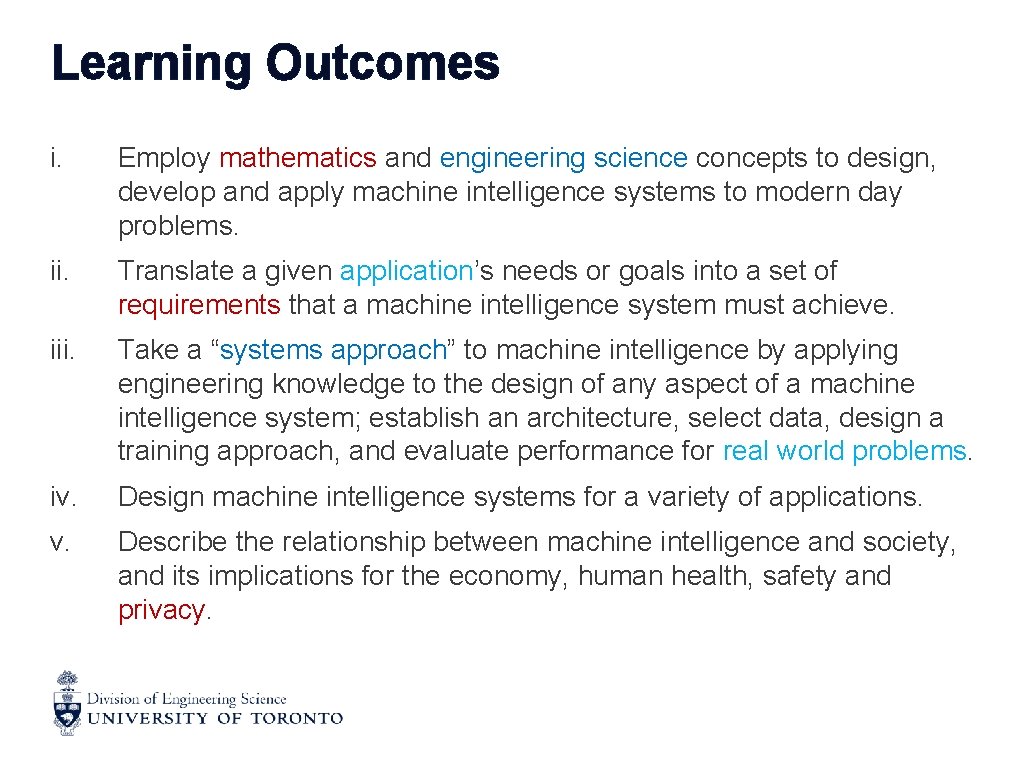
Learning Outcomes i. Employ mathematics and engineering science concepts to design, develop and apply machine intelligence systems to modern day problems. ii. Translate a given application’s needs or goals into a set of requirements that a machine intelligence system must achieve. iii. Take a “systems approach” to machine intelligence by applying engineering knowledge to the design of any aspect of a machine intelligence system; establish an architecture, select data, design a training approach, and evaluate performance for real world problems. iv. Design machine intelligence systems for a variety of applications. v. Describe the relationship between machine intelligence and society, and its implications for the economy, human health, safety and privacy.
Next Steps for Working Group • Develop Y 3 and Y 4 curriculum: core courses and electives • Accreditation • Identify need for new courses • Assess extent of Computer Science participation • Consultation from Engineering Science stakeholders • Solidify partnerships
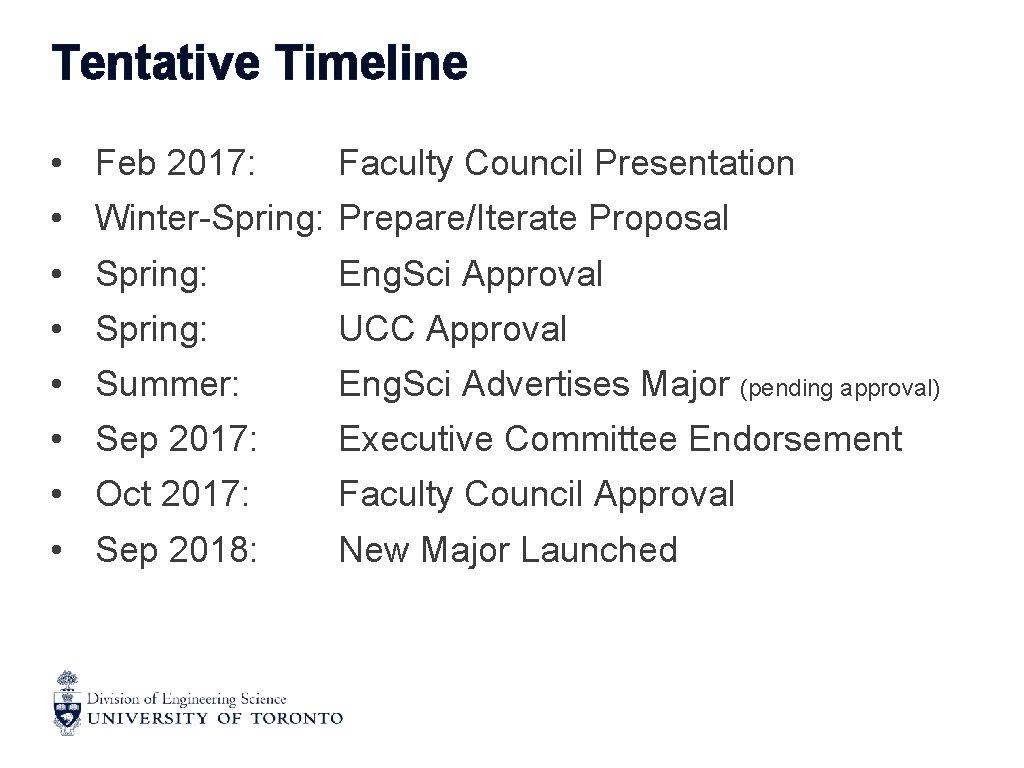
Tentative Timeline • Feb 2017: Faculty Council Presentation • Winter-Spring: Prepare/Iterate Proposal • Spring: Eng. Sci Approval • Spring: UCC Approval • Summer: Eng. Sci Advertises Major (pending approval) • Sep 2017: Executive Committee Endorsement • Oct 2017: Faculty Council Approval • Sep 2018: New Major Launched
Thank You! Feedback? Questions?