
Engineering Review of the concepts of reaction kinetics


- Slides: 39
Engineering Review of the concepts of reaction kinetics- Chapter 1 v. Classification of chemical reactions, definition of reaction rate v. The general mole balance
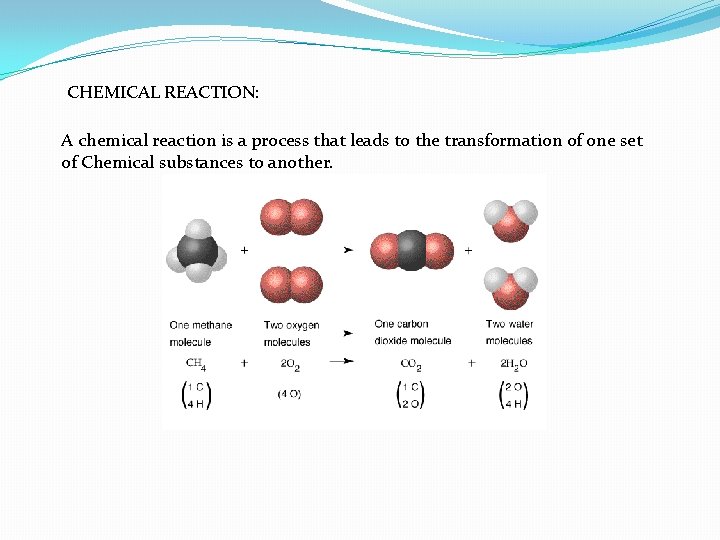
CHEMICAL REACTION: A chemical reaction is a process that leads to the transformation of one set of Chemical substances to another.
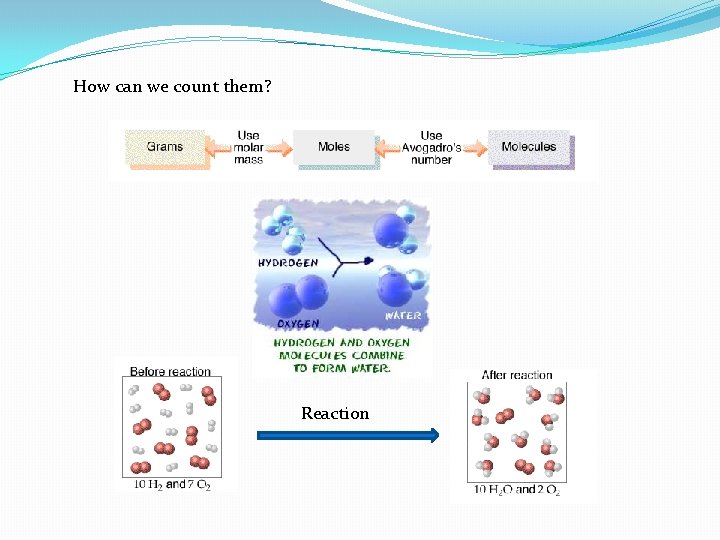
How can we count them? Reaction
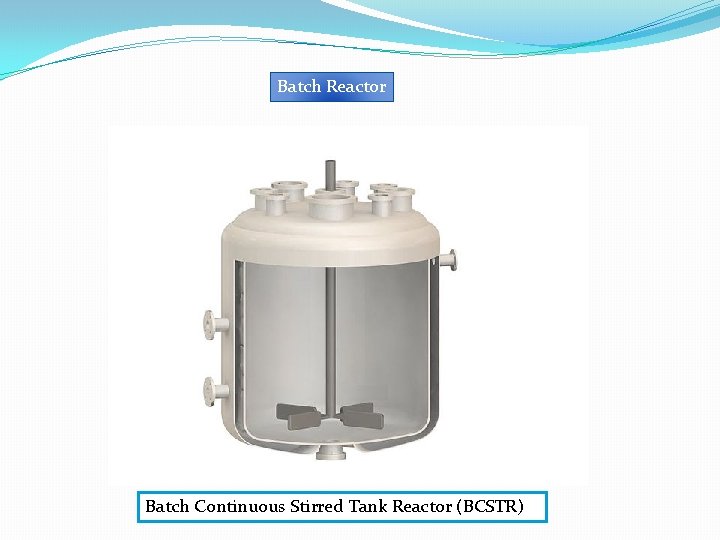
Batch Reactor Batch Continuous Stirred Tank Reactor (BCSTR)
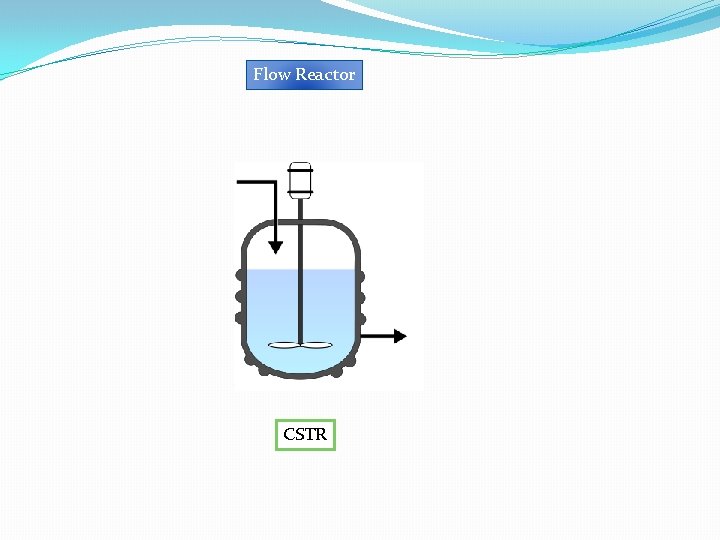
Flow Reactor CSTR
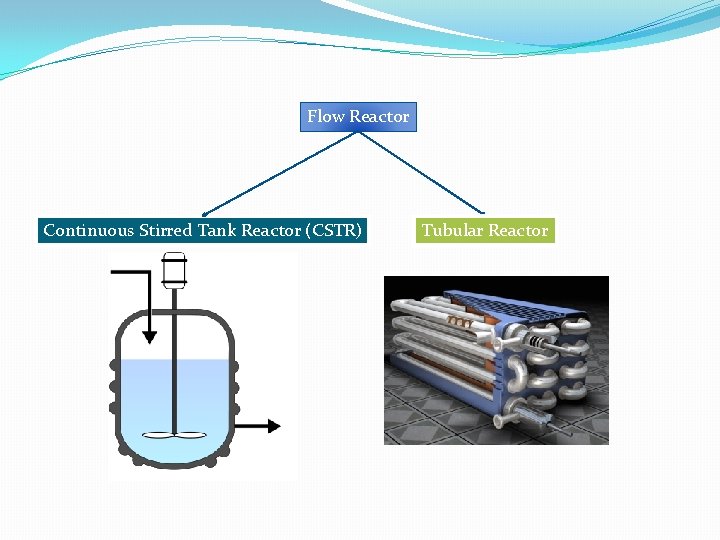
Flow Reactor Continuous Stirred Tank Reactor (CSTR) Tubular Reactor
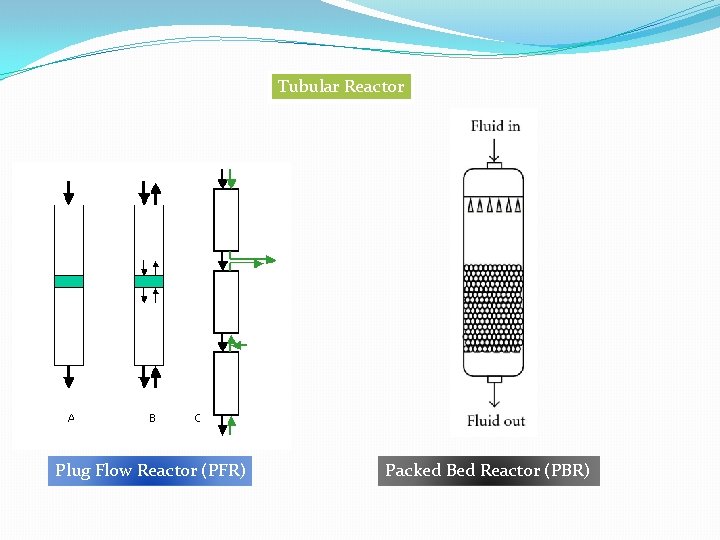
Tubular Reactor Plug Flow Reactor (PFR) Packed Bed Reactor (PBR)
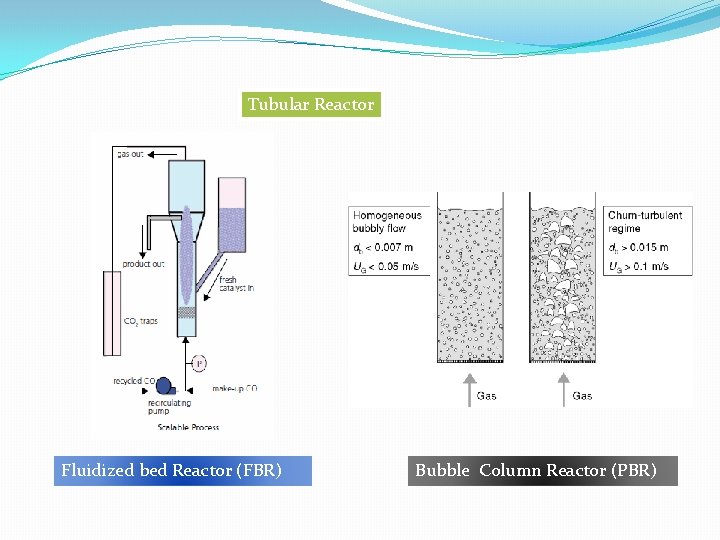
Tubular Reactor Fluidized bed Reactor (FBR) Bubble Column Reactor (PBR)
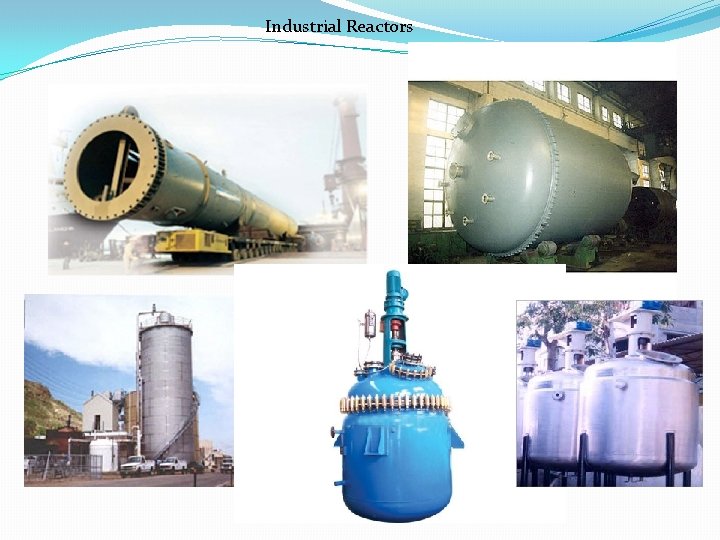
Industrial Reactors
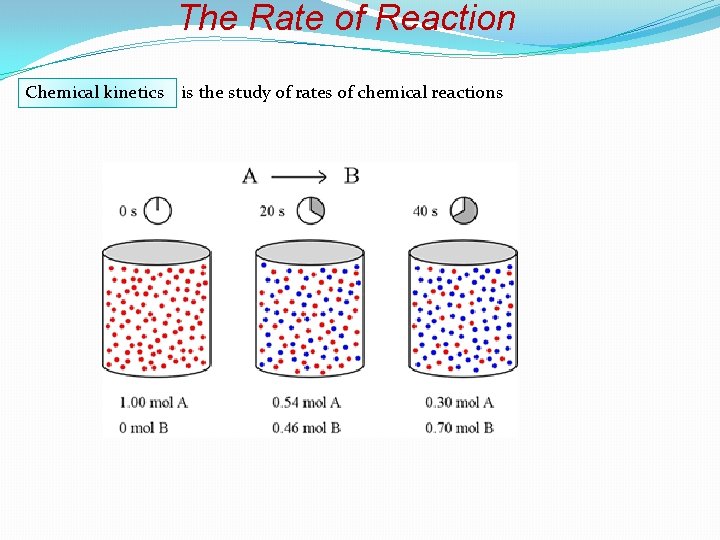
The Rate of Reaction Chemical kinetics is the study of rates of chemical reactions
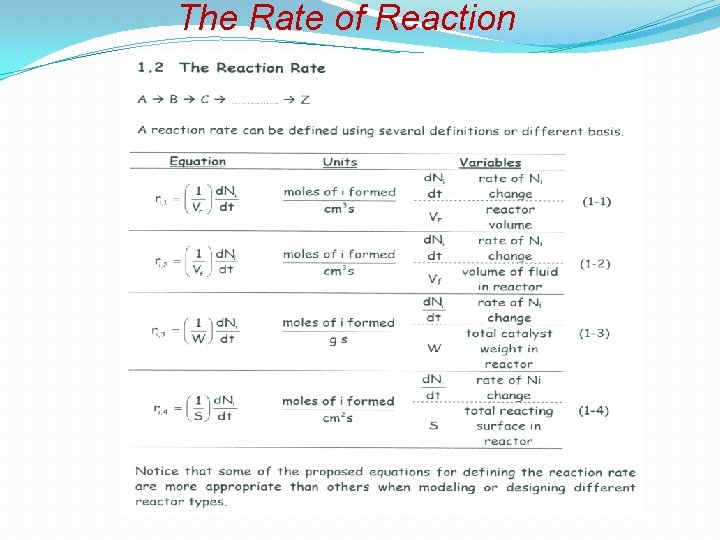
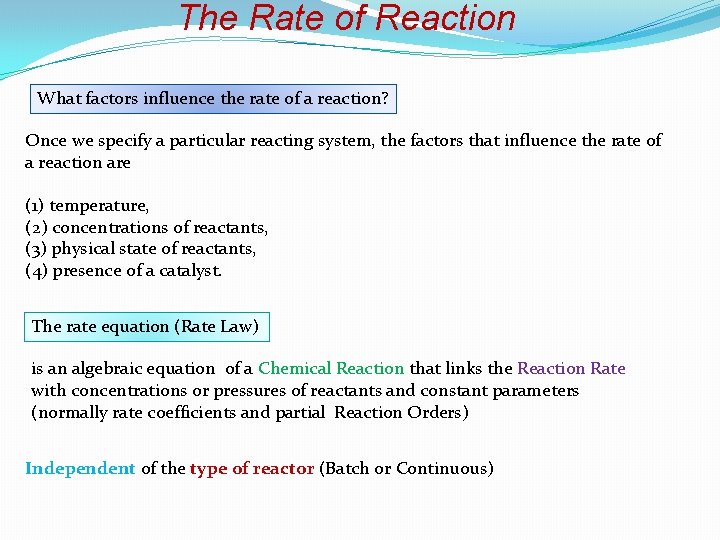
The Rate of Reaction What factors influence the rate of a reaction? Once we specify a particular reacting system, the factors that influence the rate of a reaction are (1) temperature, (2) concentrations of reactants, (3) physical state of reactants, (4) presence of a catalyst. The rate equation (Rate Law) is an algebraic equation of a Chemical Reaction that links the Reaction Rate with concentrations or pressures of reactants and constant parameters (normally rate coefficients and partial Reaction Orders) Independent of the type of reactor (Batch or Continuous)
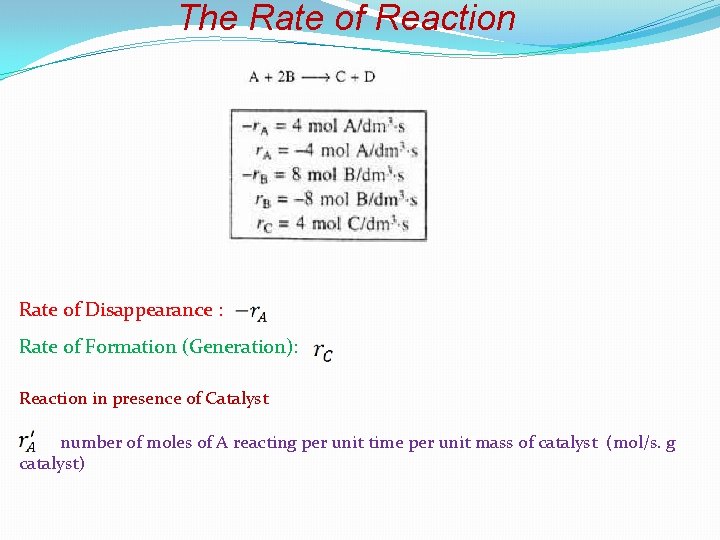
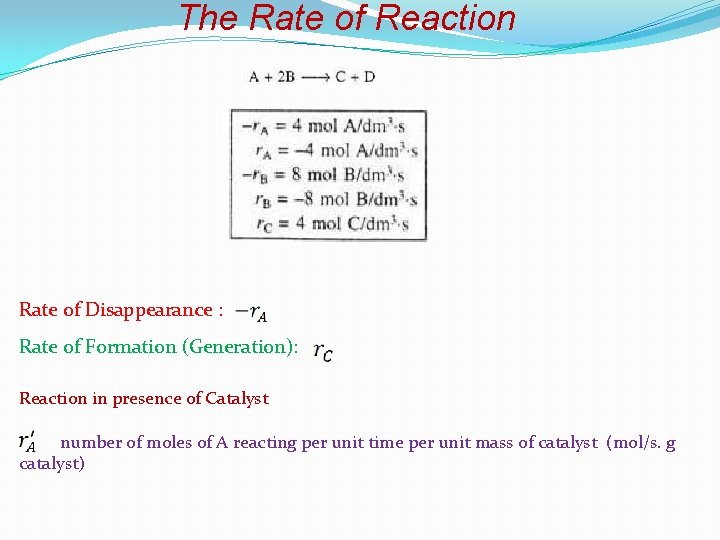
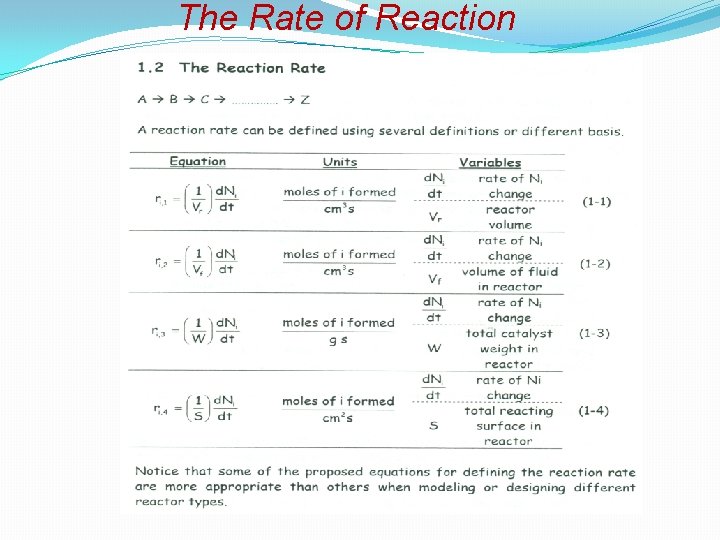
The Rate of Reaction Rate of Disappearance : Rate of Formation (Generation): Reaction in presence of Catalyst number of moles of A reacting per unit time per unit mass of catalyst (mol/s. g catalyst)
The Rate of Reaction
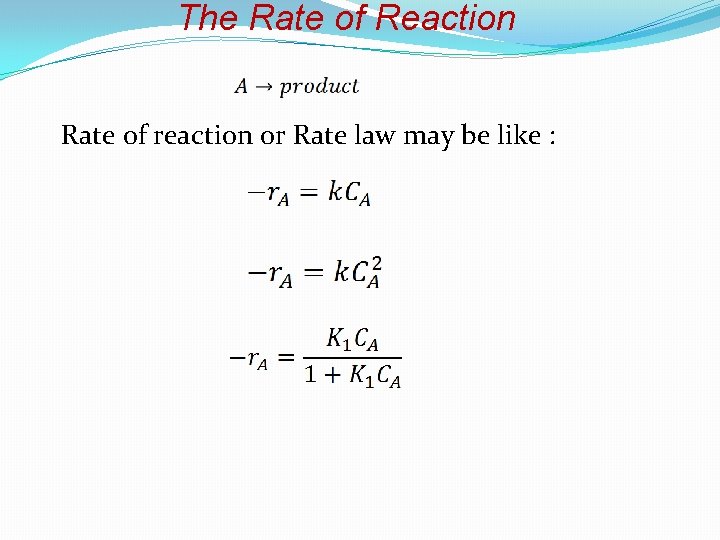
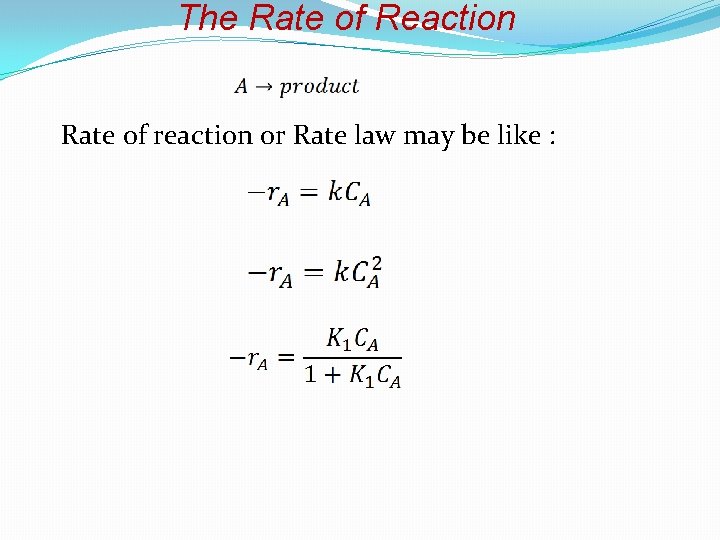
The Rate of Reaction Rate of reaction or Rate law may be like :
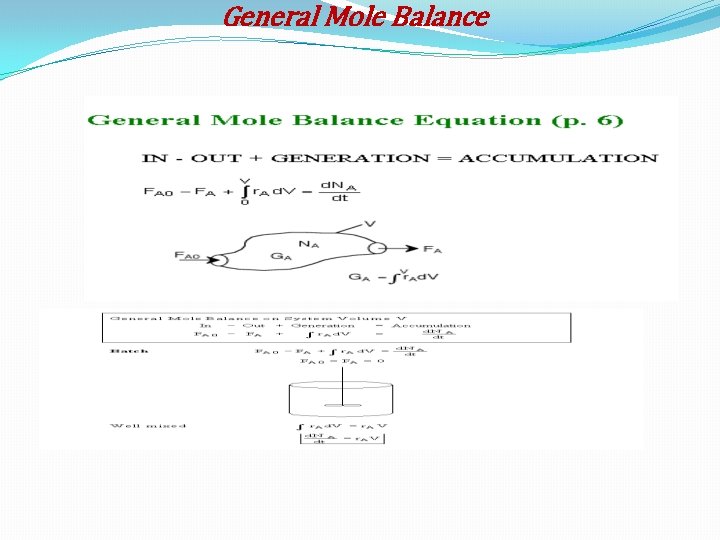
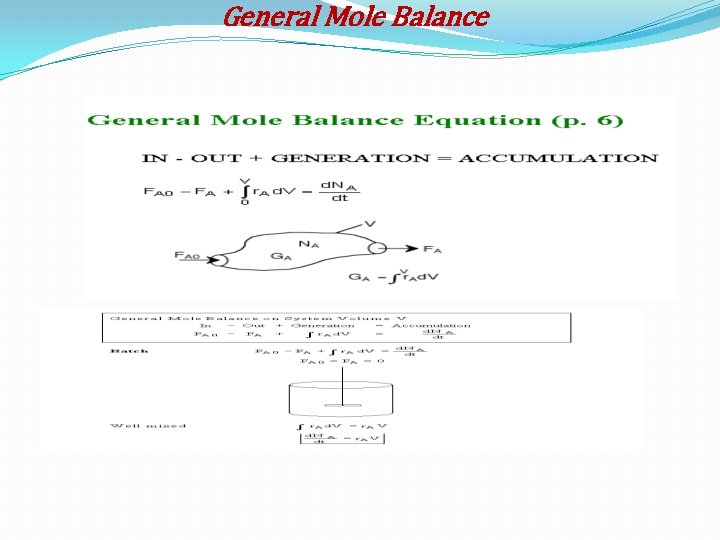
General Mole Balance
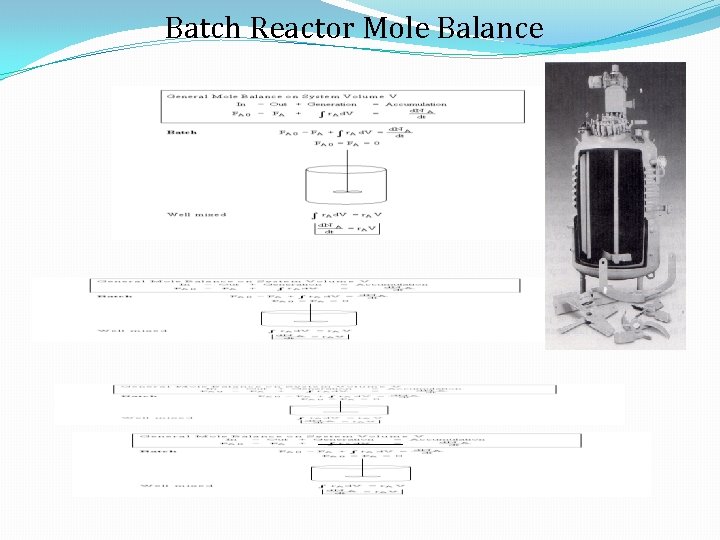
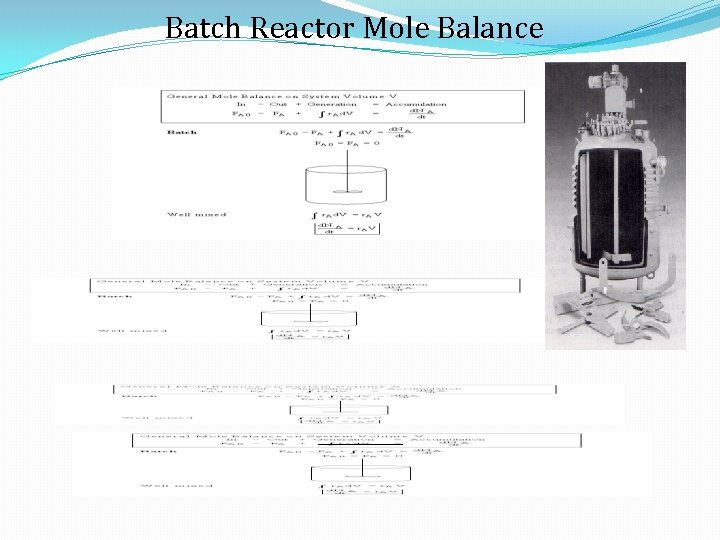
Batch Reactor Mole Balance
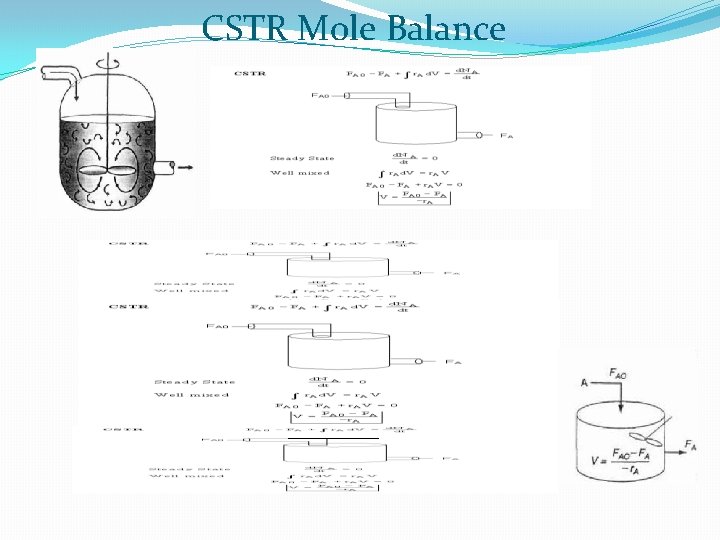
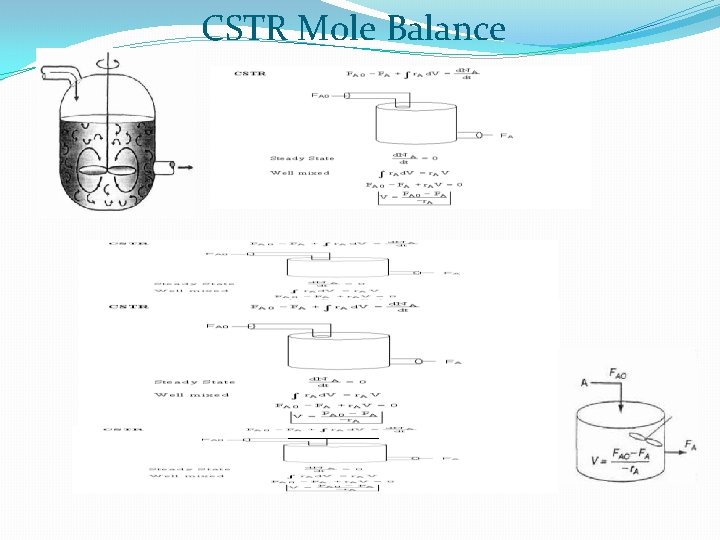
CSTR Mole Balance
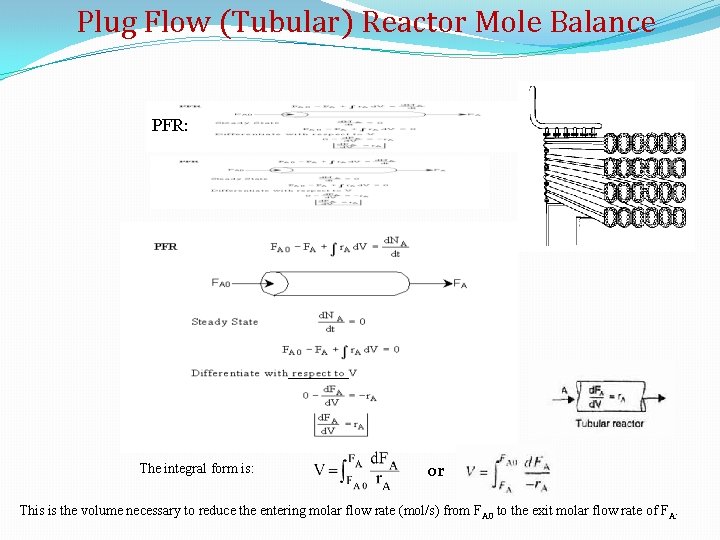
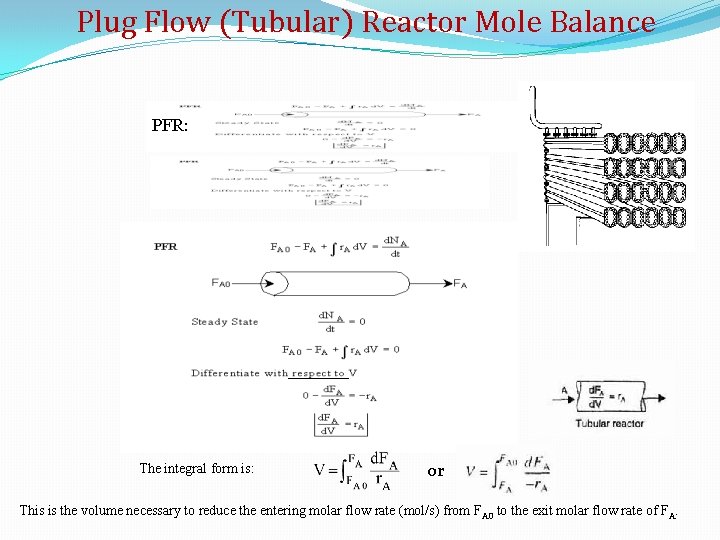
Plug Flow (Tubular) Reactor Mole Balance PFR: The integral form is: or This is the volume necessary to reduce the entering molar flow rate (mol/s) from FA 0 to the exit molar flow rate of FA.
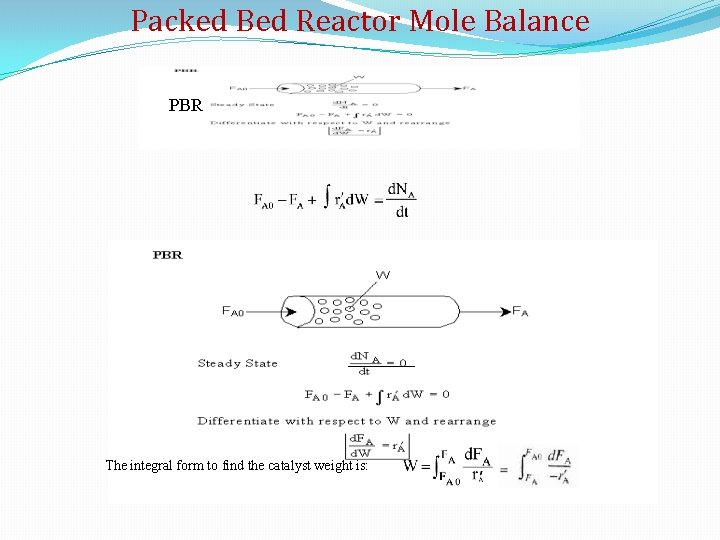
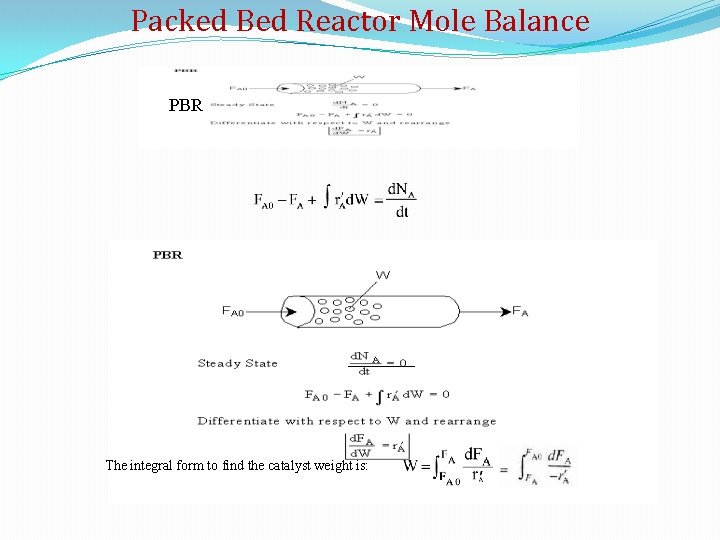
Packed Bed Reactor Mole Balance PBR The integral form to find the catalyst weight is:
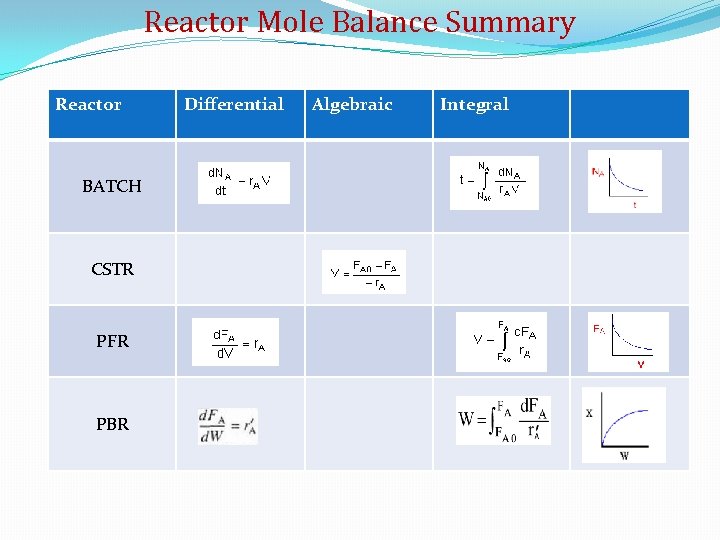
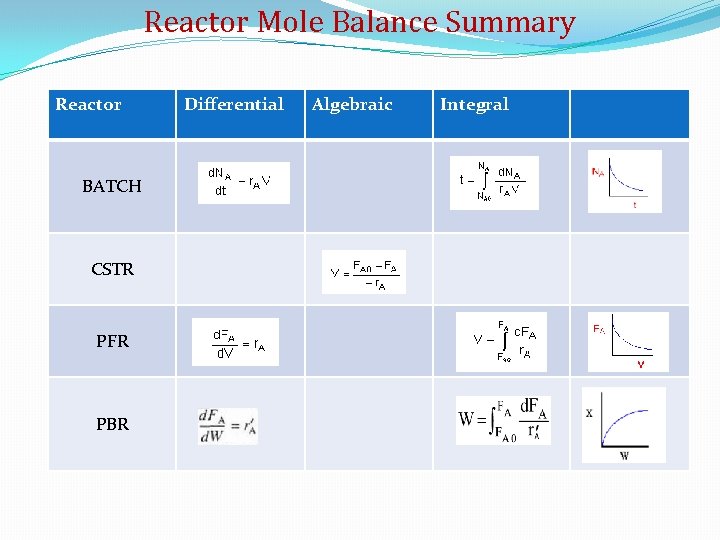
Reactor Mole Balance Summary Reactor BATCH CSTR PFR PBR Differential Algebraic Integral
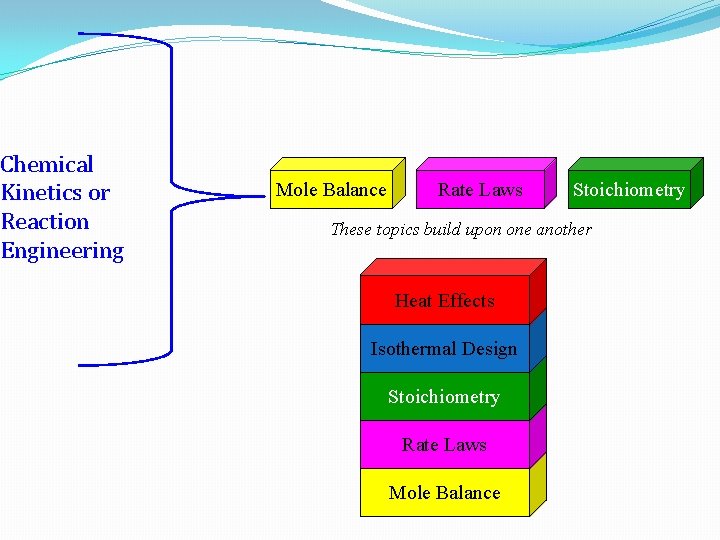
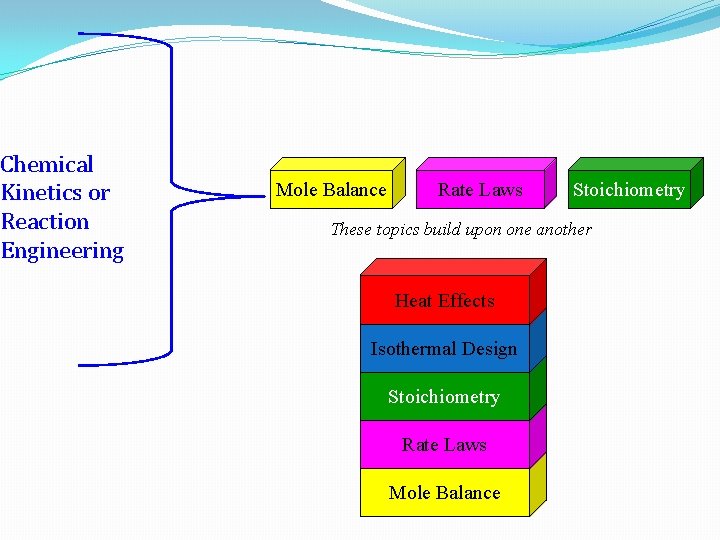
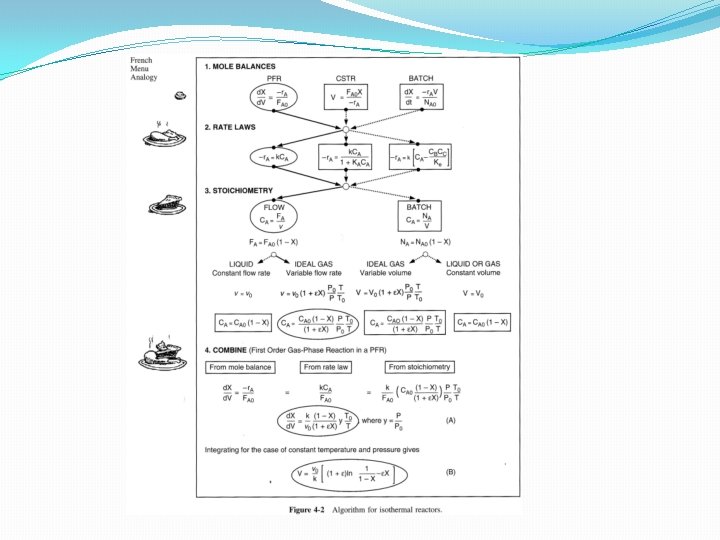
Chemical Kinetics or Reaction Engineering Mole Balance Rate Laws Stoichiometry These topics build upon one another Heat Effects Isothermal Design Stoichiometry Rate Laws Mole Balance
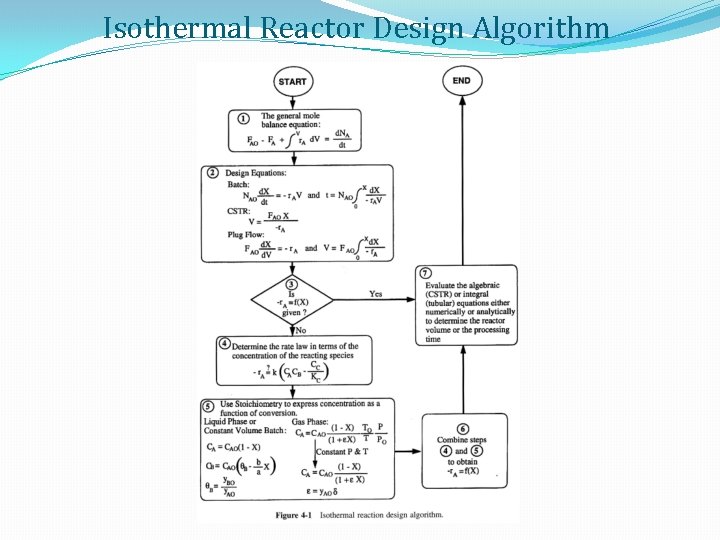
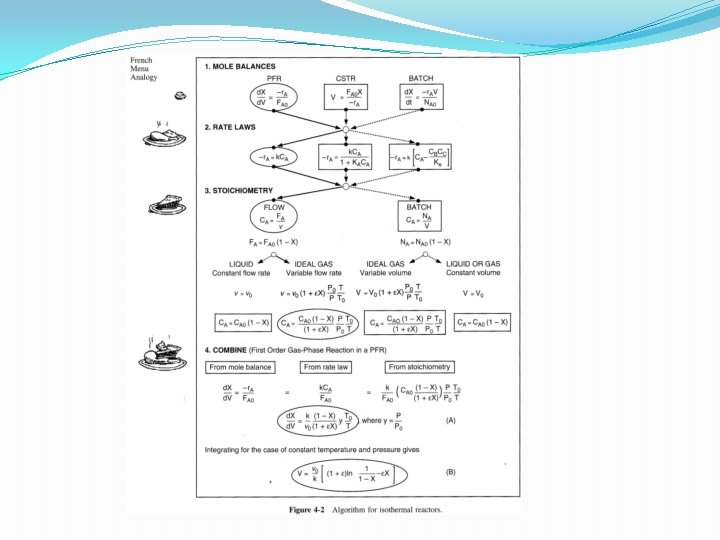
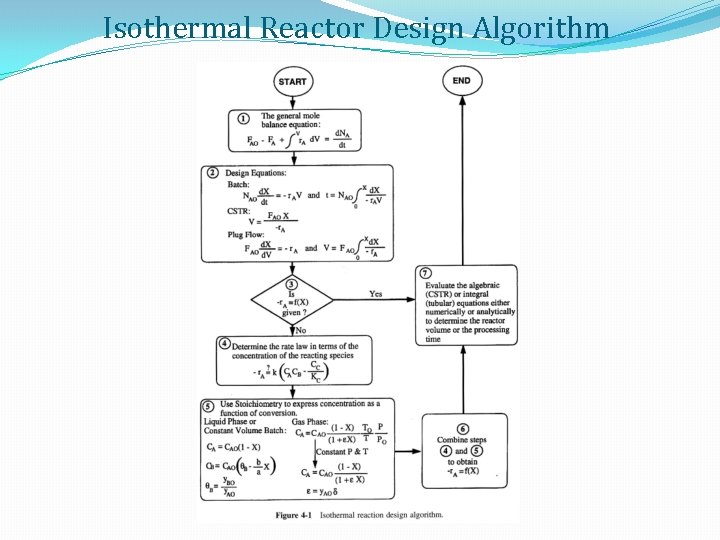
Isothermal Reactor Design Algorithm
Engineering Review of the concepts of reaction kinetics- Chapter 1 v. Classification of chemical reactions, definition of reaction rate v. The general mole balance
General Mole Balance
Batch Reactor Mole Balance
CSTR Mole Balance
Plug Flow (Tubular) Reactor Mole Balance PFR: The integral form is: or This is the volume necessary to reduce the entering molar flow rate (mol/s) from FA 0 to the exit molar flow rate of FA.
Packed Bed Reactor Mole Balance PBR The integral form to find the catalyst weight is:
Reactor Mole Balance Summary Reactor BATCH CSTR PFR PBR Differential Algebraic Integral
The Rate of Reaction What factors influence the rate of a reaction? Once we specify a particular reacting system, the factors that influence the rate of a reaction are (1) temperature, (2) concentrations of reactants, (3) physical state of reactants, (4) presence of a catalyst. The rate equation (Rate Law) is an algebraic equation of a Chemical Reaction that links the Reaction Rate with concentrations or pressures of reactants and constant parameters (normally rate coefficients and partial Reaction Orders) Independent of the type of reactor (Batch or Continuous)
The Rate of Reaction Rate of Disappearance : Rate of Formation (Generation): Reaction in presence of Catalyst number of moles of A reacting per unit time per unit mass of catalyst (mol/s. g catalyst)
The Rate of Reaction
The Rate of Reaction Rate of reaction or Rate law may be like :
Chemical Kinetics or Reaction Engineering Mole Balance Rate Laws Stoichiometry These topics build upon one another Heat Effects Isothermal Design Stoichiometry Rate Laws Mole Balance
Isothermal Reactor Design Algorithm