
ENGINEERING MECHANICS Lecture 5 1 2 Dot Product
- Slides: 17
ENGINEERING MECHANICS Lecture 5 1
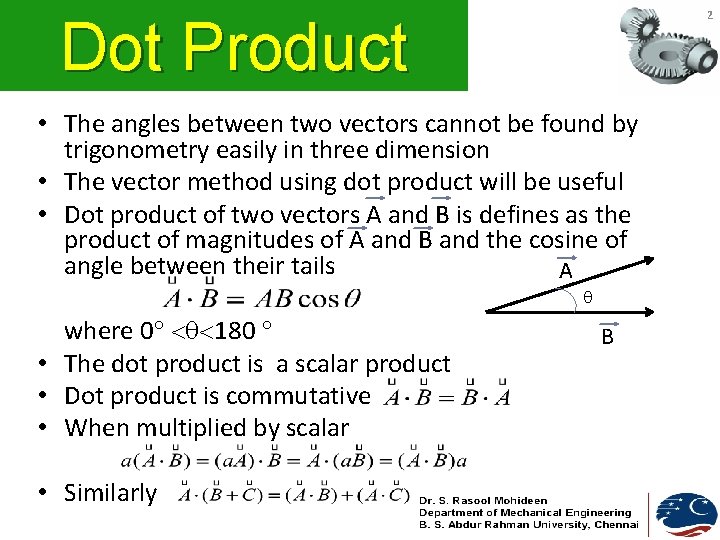
2 Dot Product • The angles between two vectors cannot be found by trigonometry easily in three dimension • The vector method using dot product will be useful • Dot product of two vectors A and B is defines as the product of magnitudes of A and B and the cosine of angle between their tails A where 0 180 • The dot product is a scalar product • Dot product is commutative • When multiplied by scalar • Similarly B
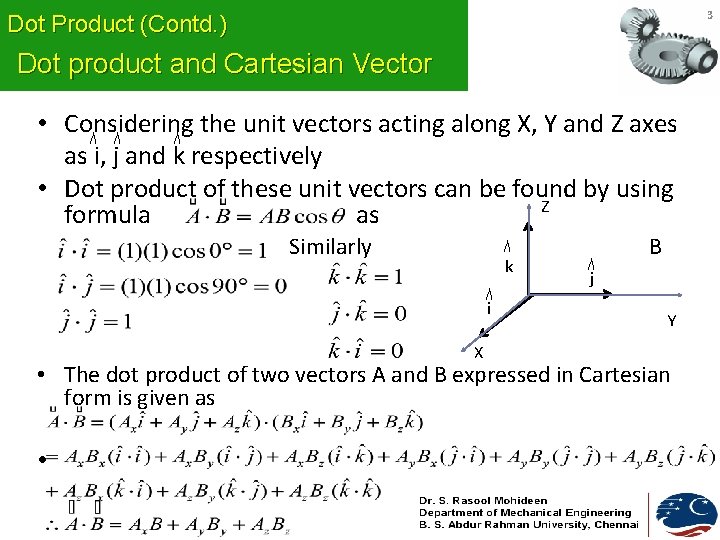
3 Dot Product (Contd. ) Dot product and Cartesian Vector • Considering the unit vectors acting along X, Y and Z axes as i, j and k respectively • Dot product of these unit vectors can be found by using Z formula as Similarly k i X B j Y • The dot product of two vectors A and B expressed in Cartesian form is given as •
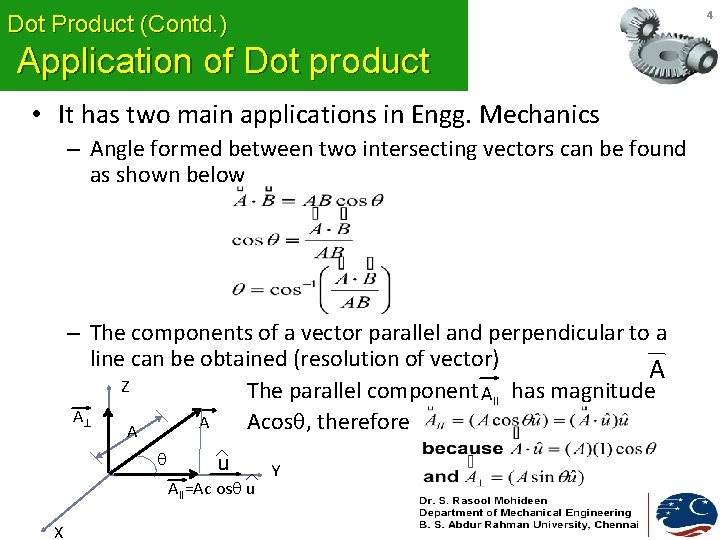
4 Dot Product (Contd. ) Application of Dot product • It has two main applications in Engg. Mechanics – Angle formed between two intersecting vectors can be found as shown below – The components of a vector parallel and perpendicular to a line can be obtained (resolution of vector) A Z The parallel component AII has magnitude A A Acos , therefore A u AII=Ac os u X Y
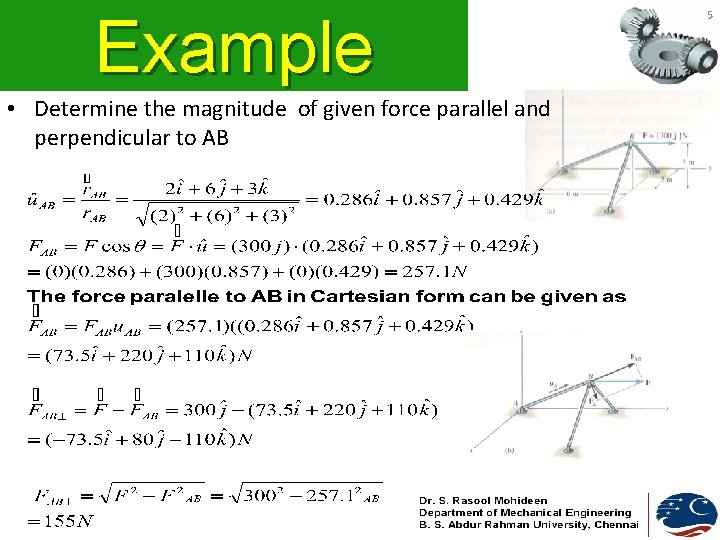
Example • Determine the magnitude of given force parallel and perpendicular to AB 5
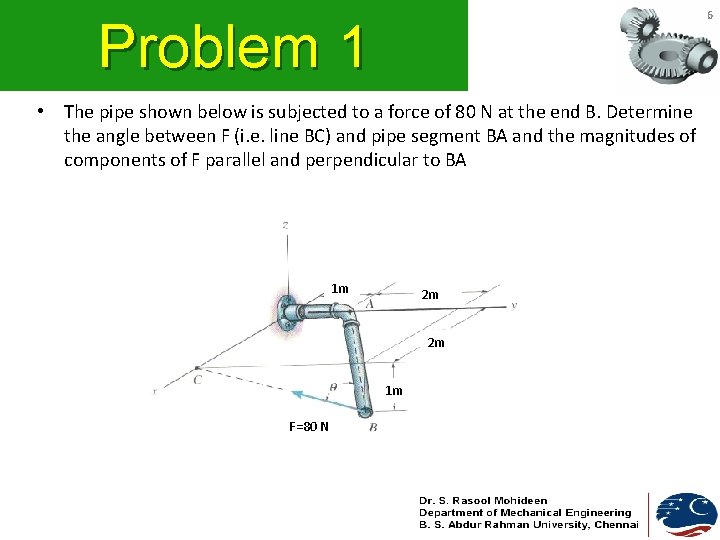
6 Problem 1 • The pipe shown below is subjected to a force of 80 N at the end B. Determine the angle between F (i. e. line BC) and pipe segment BA and the magnitudes of components of F parallel and perpendicular to BA 1 m 2 m 2 m 1 m F=80 N
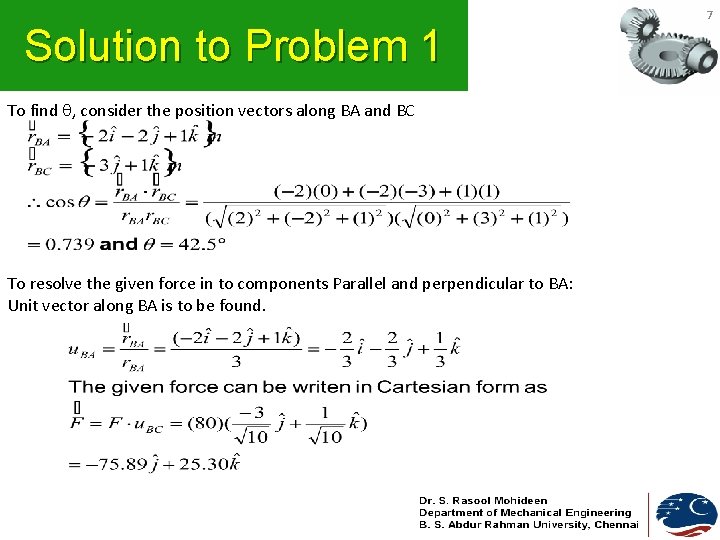
Solution to Problem 1 To find , consider the position vectors along BA and BC To resolve the given force in to components Parallel and perpendicular to BA: Unit vector along BA is to be found. 7
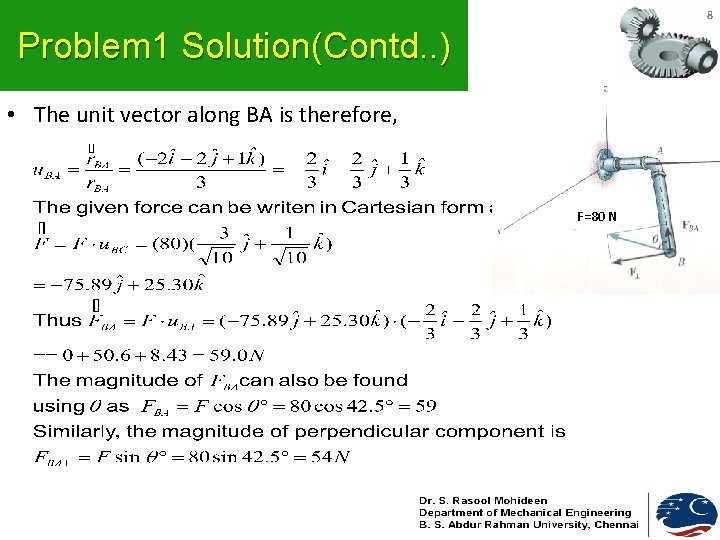
8 Problem 1 Solution(Contd. . ) • The unit vector along BA is therefore, F=80 N
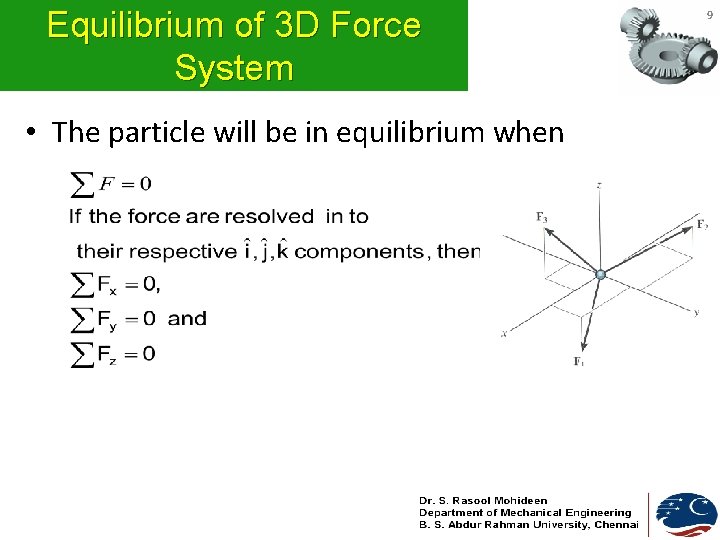
Equilibrium of 3 D Force System • The particle will be in equilibrium when 9
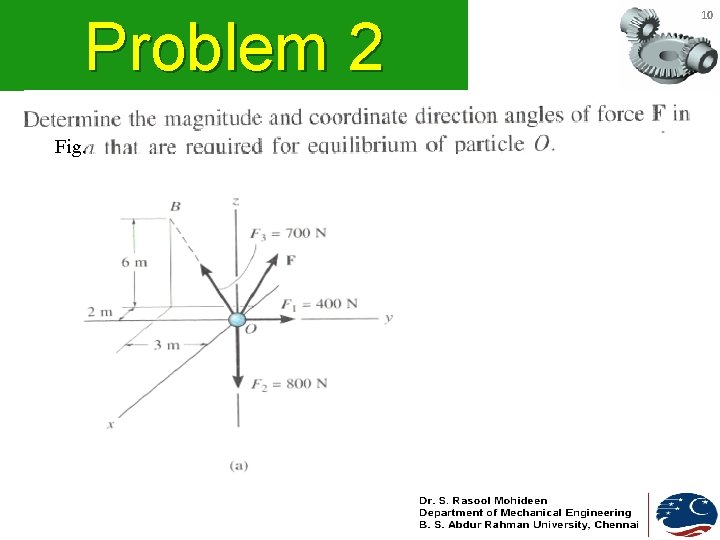
Problem 2 Fig. 10
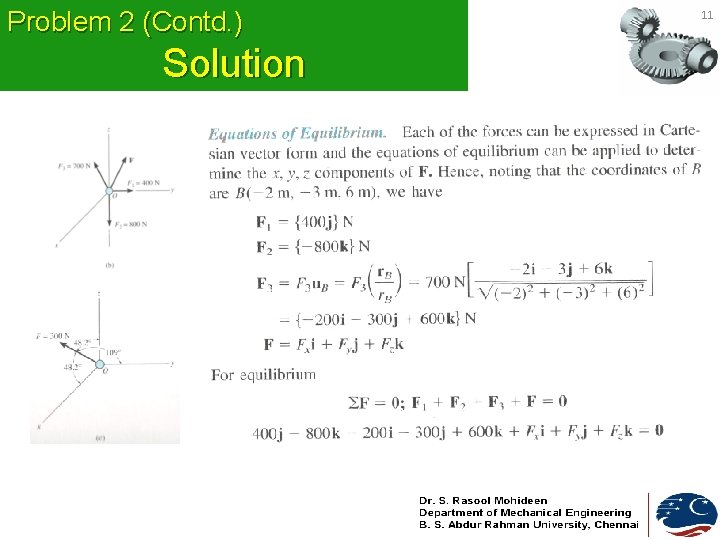
Problem 2 (Contd. ) Solution 11
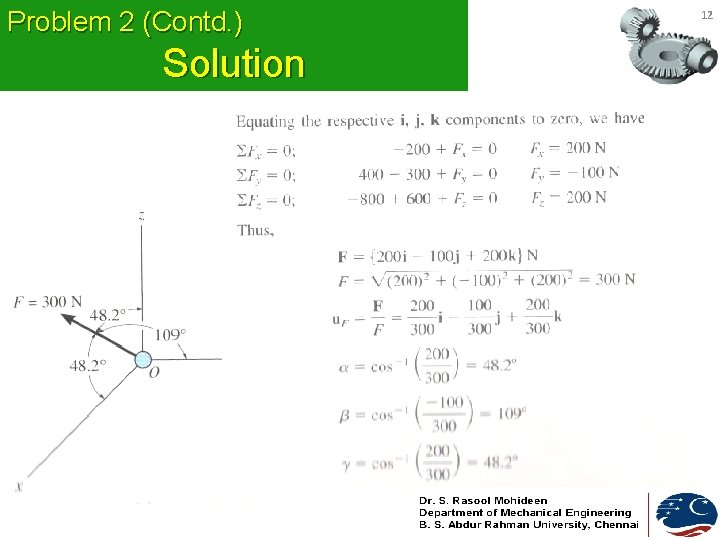
Problem 2 (Contd. ) Solution 12
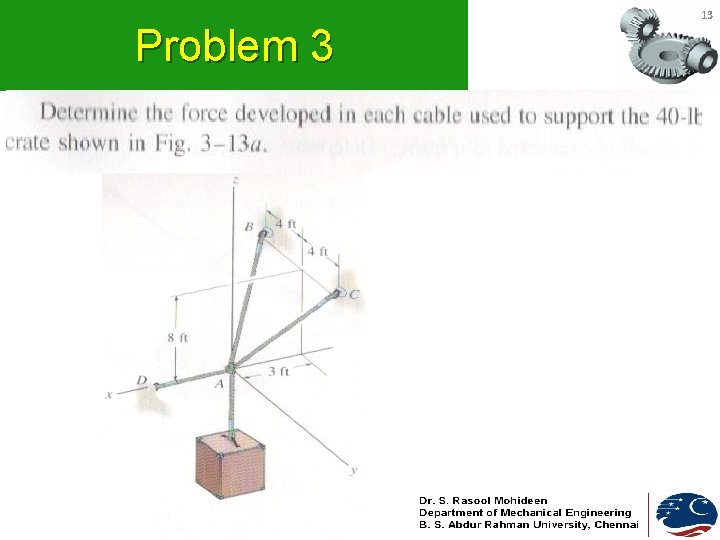
Problem 3 13
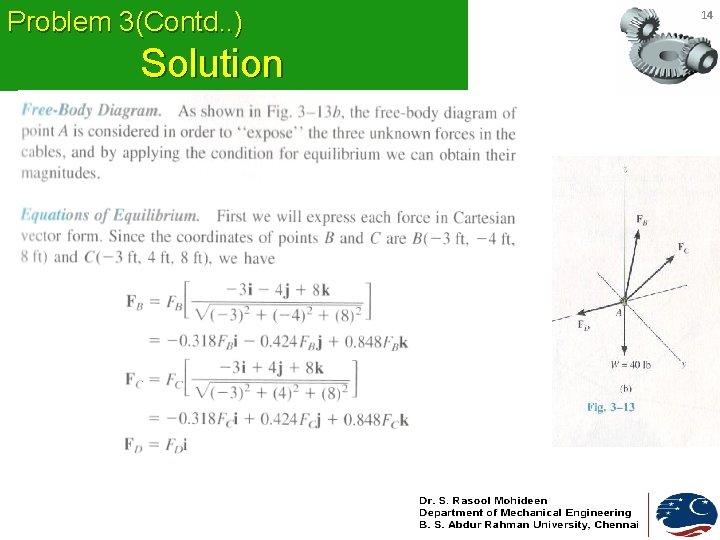
Problem 3(Contd. . ) Solution 14
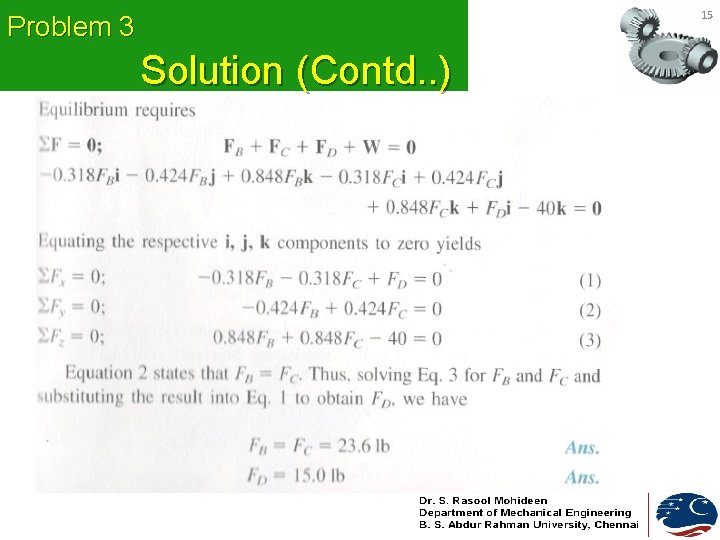
15 Problem 3 Solution (Contd. . )
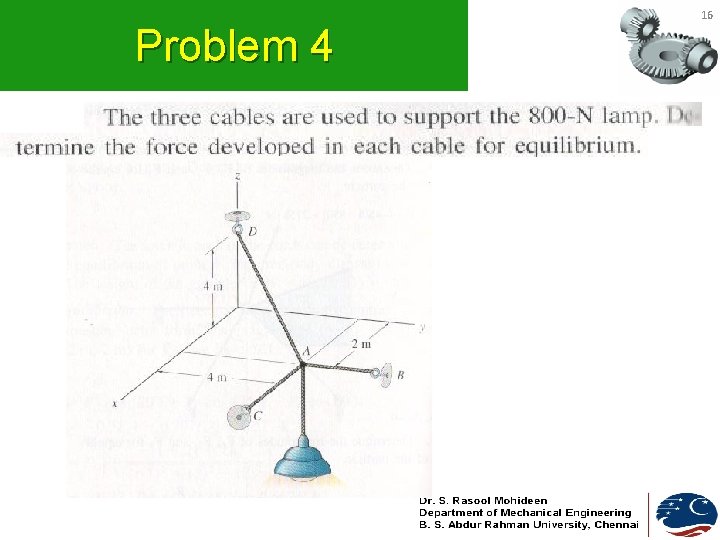
Problem 4 16
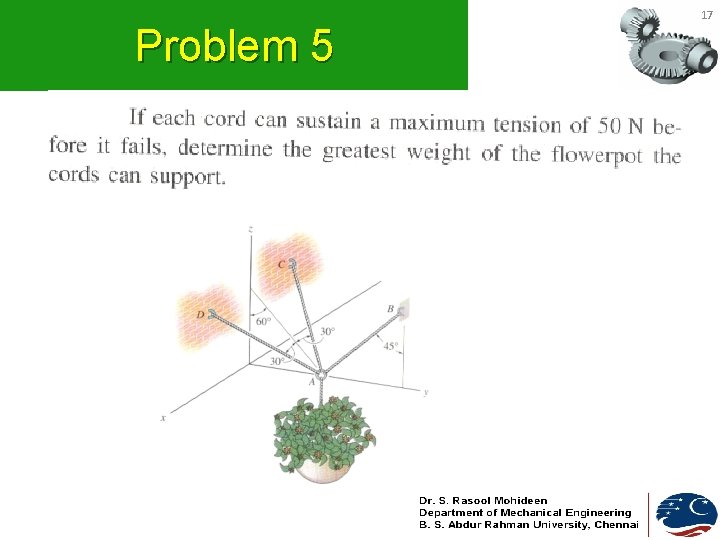
Problem 5 17