
Engineering Mechanics LECTURE 4142 By D V Ramana
Engineering Mechanics LECTURE 41&42 By D. V. Ramana Reddy Assistant Professor Department of Mechanical Engineering
Lecture 41&42 TOPIC : Dynamics(collisions) Collisions and types Coefficient of restitution Numerical problems
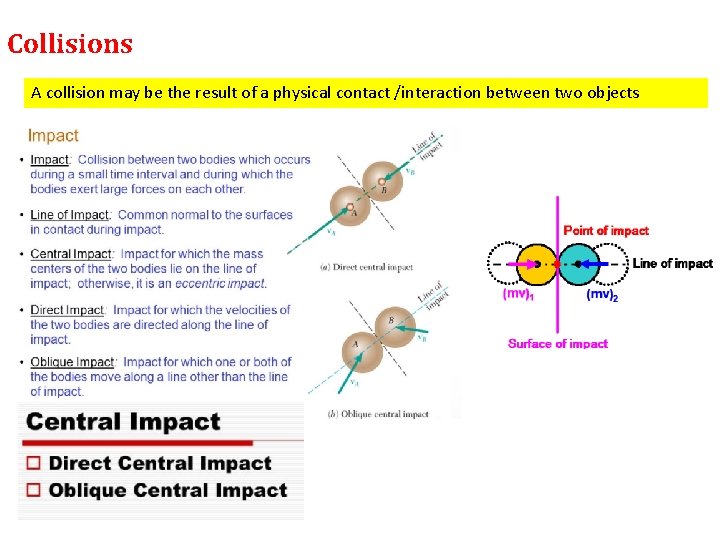
Collisions A collision may be the result of a physical contact /interaction between two objects
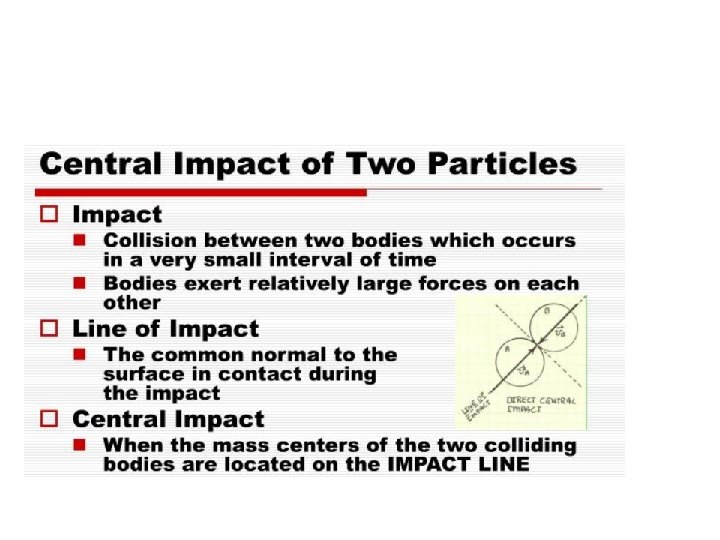
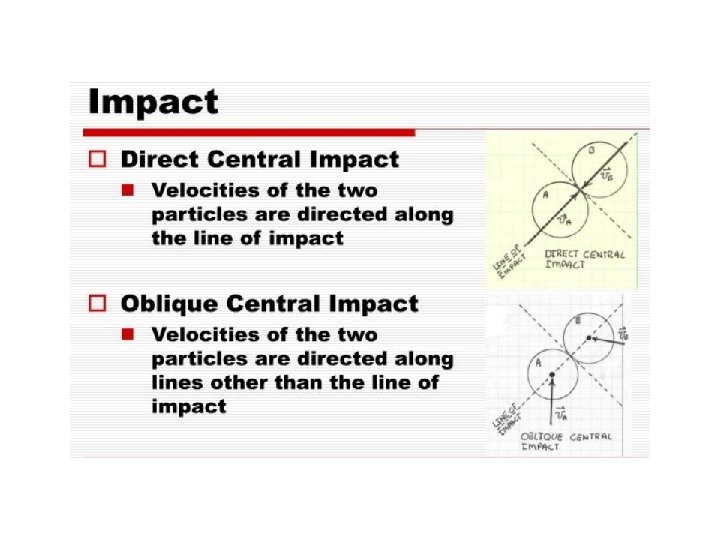

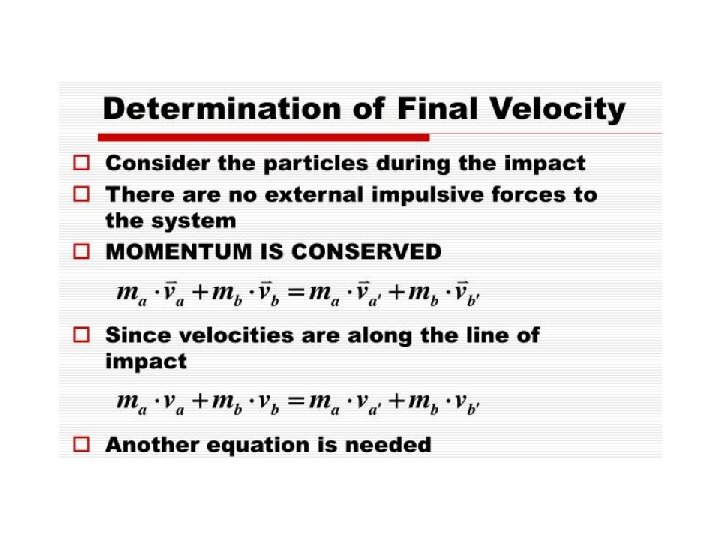
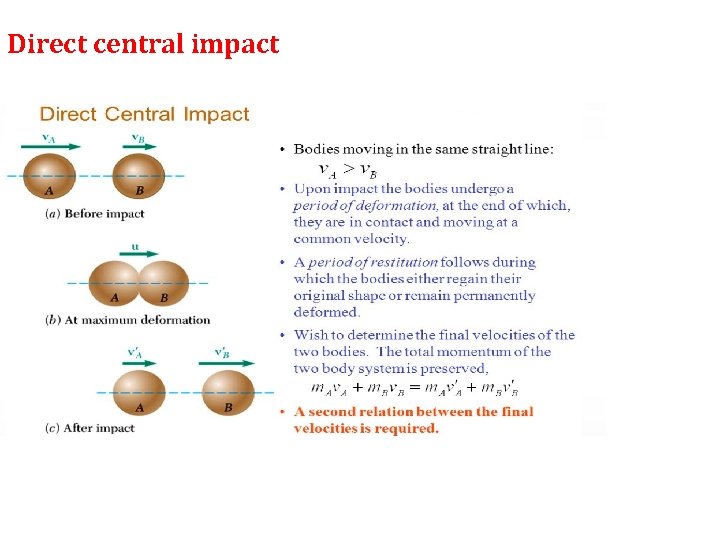
Direct central impact
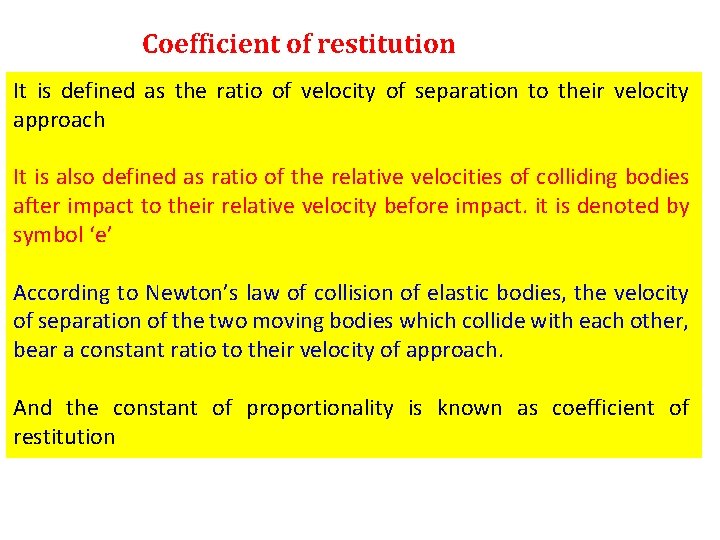
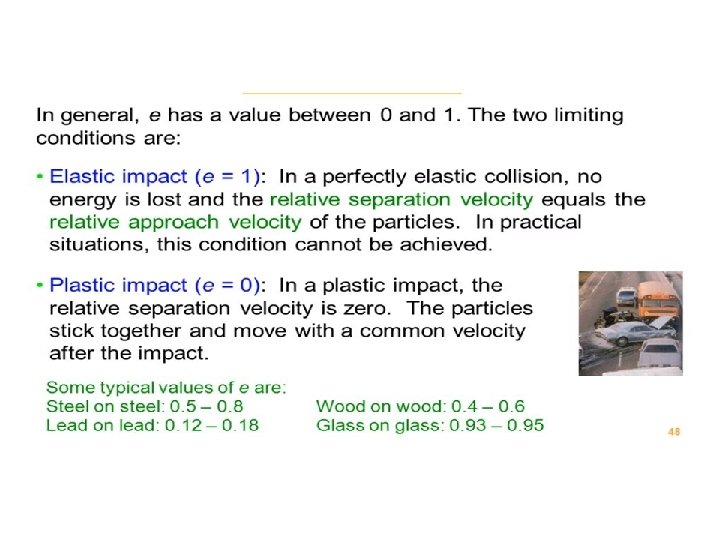
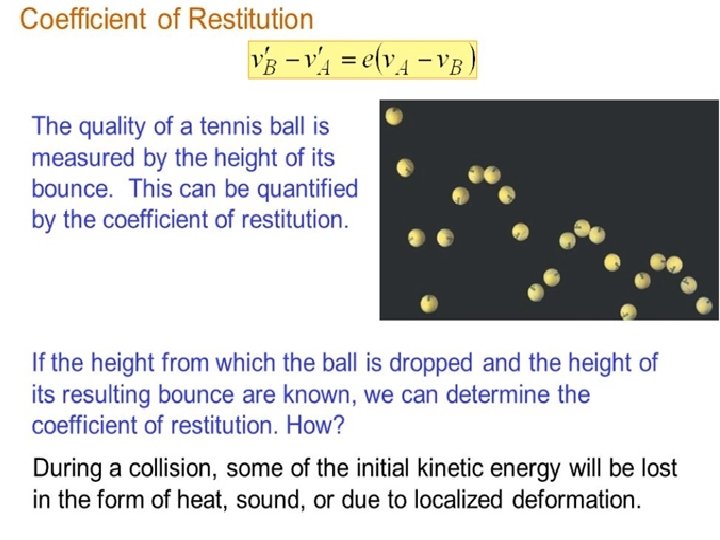
Coefficient of restitution It is defined as the ratio of velocity of separation to their velocity approach It is also defined as ratio of the relative velocities of colliding bodies after impact to their relative velocity before impact. it is denoted by symbol ‘e’ According to Newton’s law of collision of elastic bodies, the velocity of separation of the two moving bodies which collide with each other, bear a constant ratio to their velocity of approach. And the constant of proportionality is known as coefficient of restitution
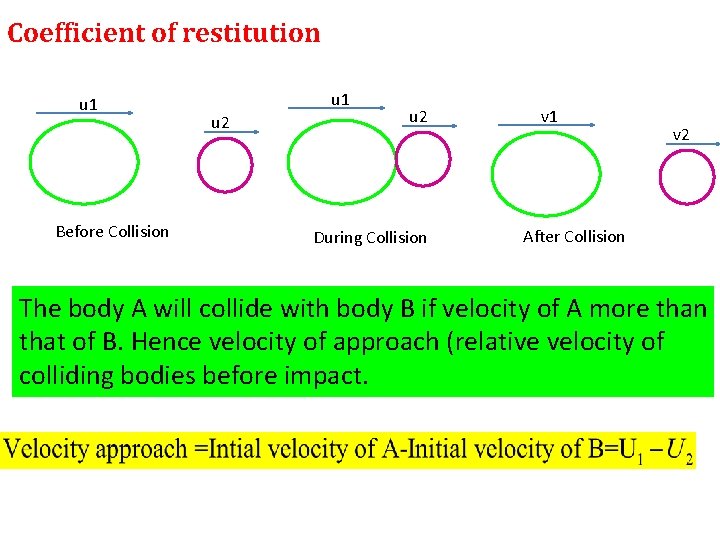
Coefficient of restitution u 1 Before Collision u 1 u 2 During Collision v 1 v 2 After Collision The body A will collide with body B if velocity of A more than that of B. Hence velocity of approach (relative velocity of colliding bodies before impact.
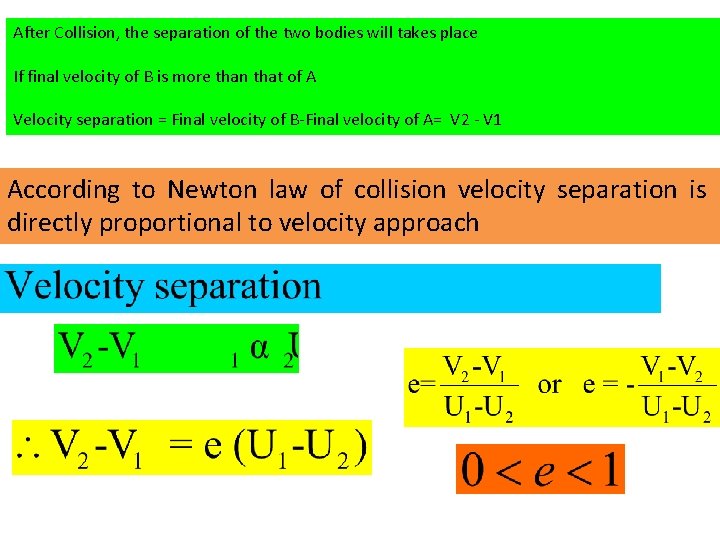
After Collision, the separation of the two bodies will takes place If final velocity of B is more than that of A Velocity separation = Final velocity of B-Final velocity of A= V 2 - V 1 According to Newton law of collision velocity separation is directly proportional to velocity approach
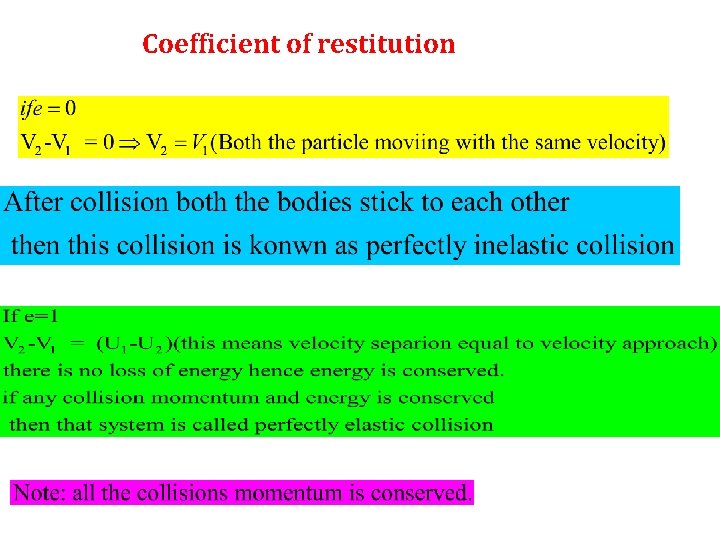
Coefficient of restitution
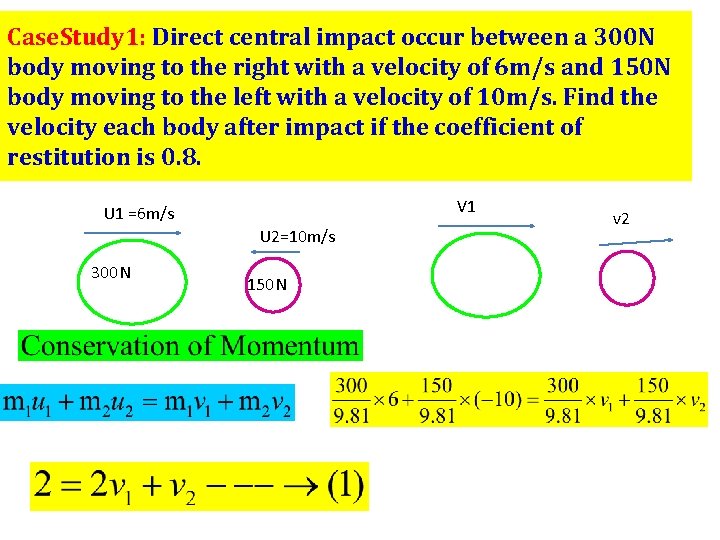
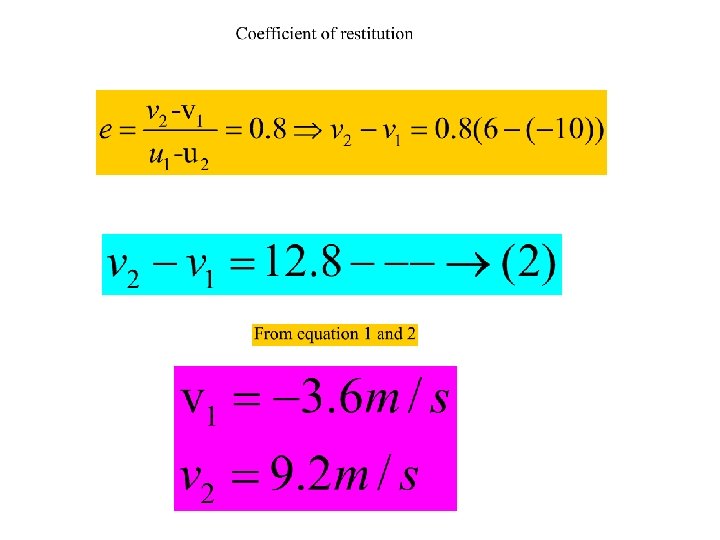
Case. Study 1: Direct central impact occur between a 300 N body moving to the right with a velocity of 6 m/s and 150 N body moving to the left with a velocity of 10 m/s. Find the velocity each body after impact if the coefficient of restitution is 0. 8. V 1 U 1 =6 m/s U 2=10 m/s 300 N 150 N v 2
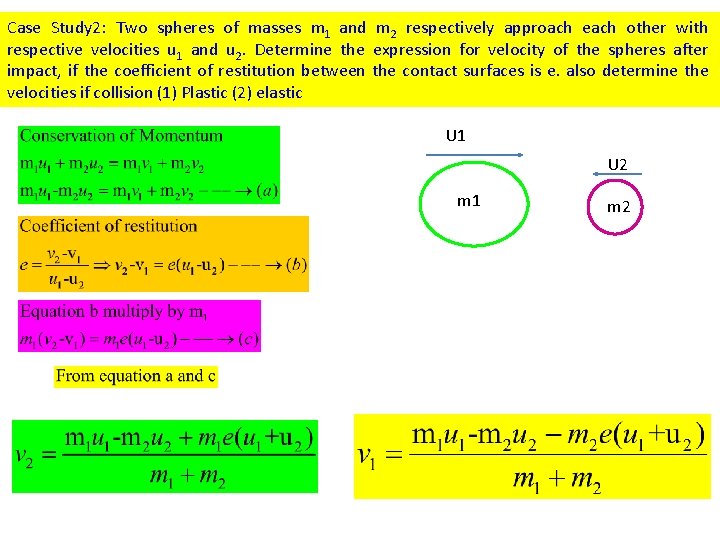
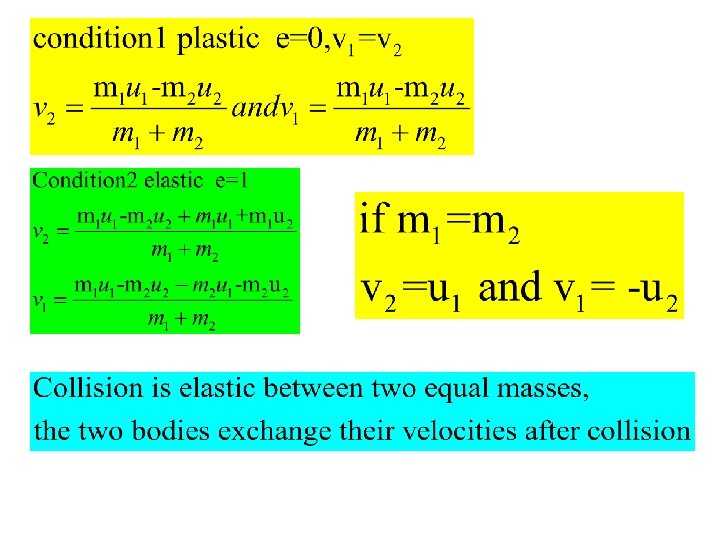
Case Study 2: Two spheres of masses m 1 and m 2 respectively approach each other with respective velocities u 1 and u 2. Determine the expression for velocity of the spheres after impact, if the coefficient of restitution between the contact surfaces is e. also determine the velocities if collision (1) Plastic (2) elastic U 1 U 2 m 1 m 2
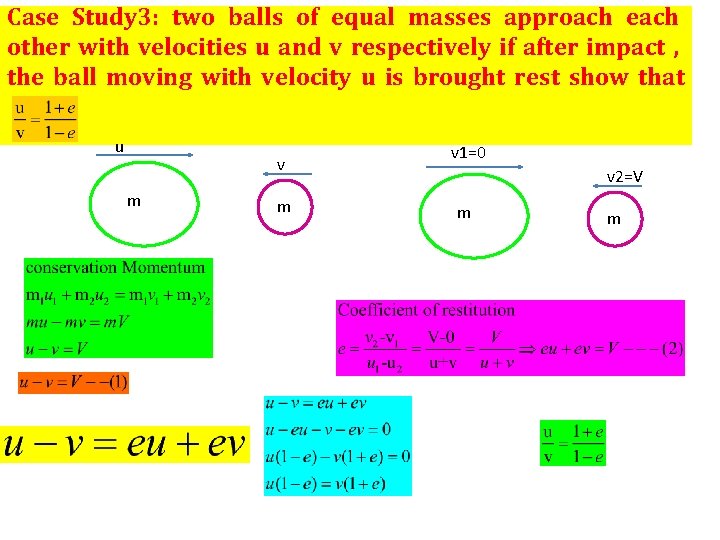
Case Study 3: two balls of equal masses approach each other with velocities u and v respectively if after impact , the ball moving with velocity u is brought rest show that u v m m v 1=0 v 2=V m m
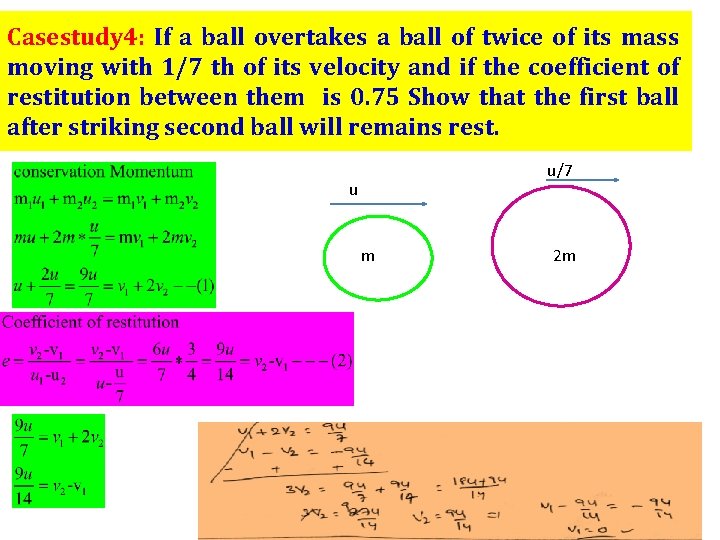
Casestudy 4: If a ball overtakes a ball of twice of its mass moving with 1/7 th of its velocity and if the coefficient of restitution between them is 0. 75 Show that the first ball after striking second ball will remains rest. u/7 u m 2 m
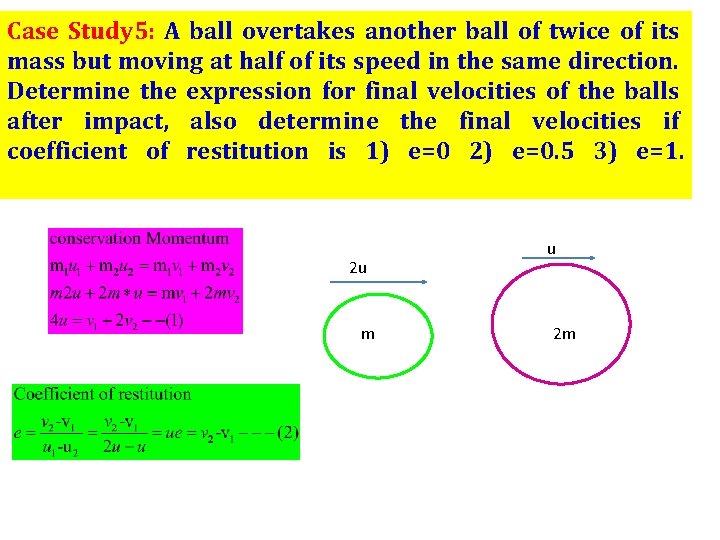
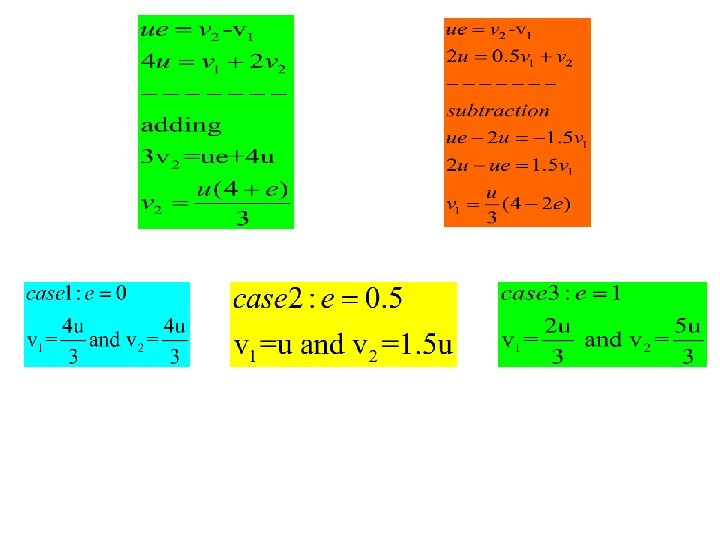
Case Study 5: A ball overtakes another ball of twice of its mass but moving at half of its speed in the same direction. Determine the expression for final velocities of the balls after impact, also determine the final velocities if coefficient of restitution is 1) e=0 2) e=0. 5 3) e=1. 2 u m u 2 m
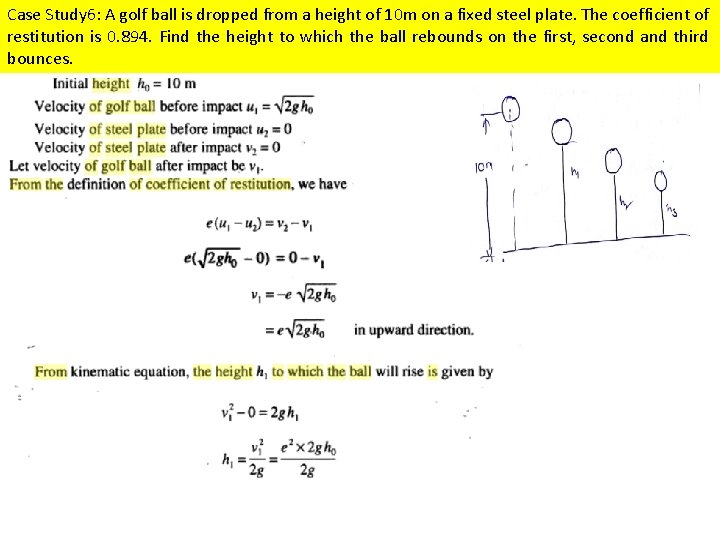
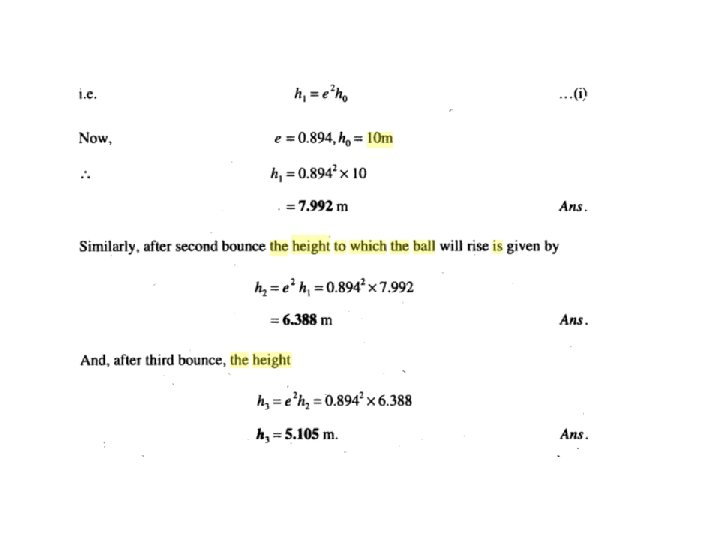
Case Study 6: A golf ball is dropped from a height of 10 m on a fixed steel plate. The coefficient of restitution is 0. 894. Find the height to which the ball rebounds on the first, second and third bounces.
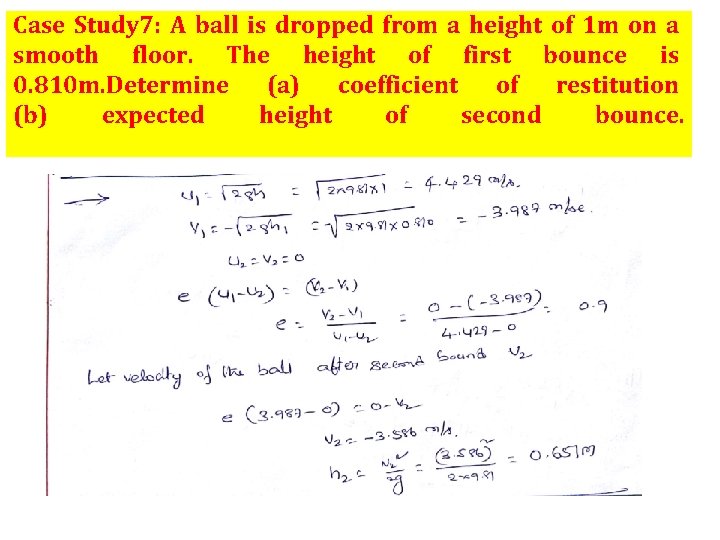
Case Study 7: A ball is dropped from a height of 1 m on a smooth floor. The height of first bounce is 0. 810 m. Determine (a) coefficient of restitution (b) expected height of second bounce.
- Slides: 25