
Engineering Materials Chemistry Pollution and Solutions Materials and
- Slides: 9
Engineering Materials: Chemistry, Pollution, and Solutions
Materials and Pollution ● Materials engineers apply an understanding of chemistry and material science to design and manufacture new materials that are useful in everyday life. ● In this unit we will learn about the chemistry and engineering of everyday materials: ●polymers - all plastics, rubber, wool, cotton ●composites - wood, paper, concrete, fiberglass, carbon-fiber materials ●alloys - steel, aluminum cans, brass, bronze ●glass - optical fibers
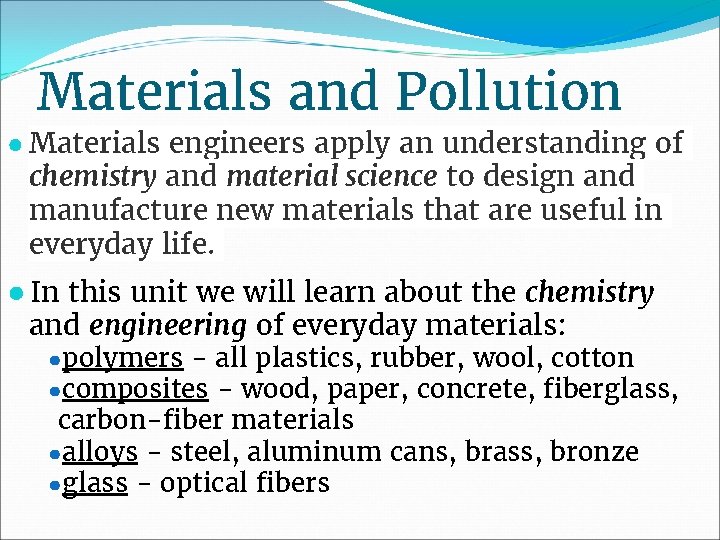
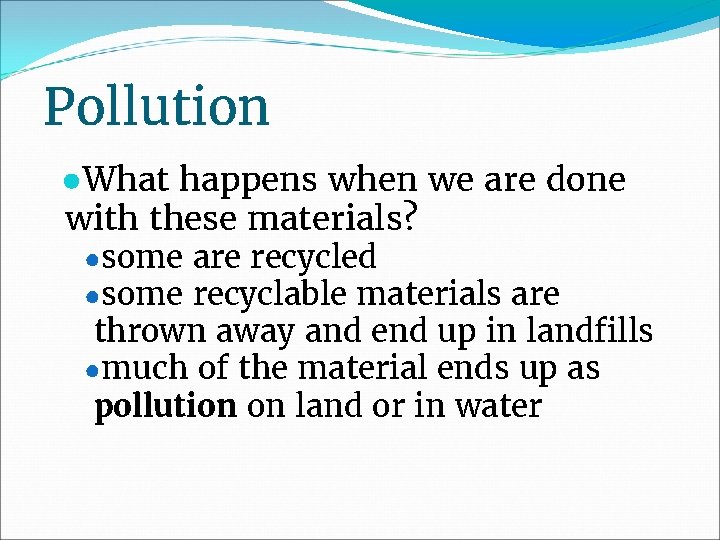
Pollution ●What happens when we are done with these materials? ●some are recycled ●some recyclable materials are thrown away and end up in landfills ●much of the material ends up as pollution on land or in water
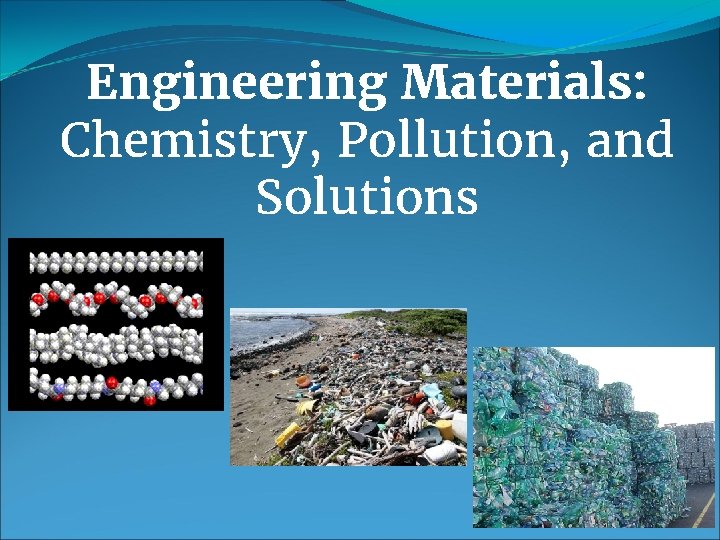
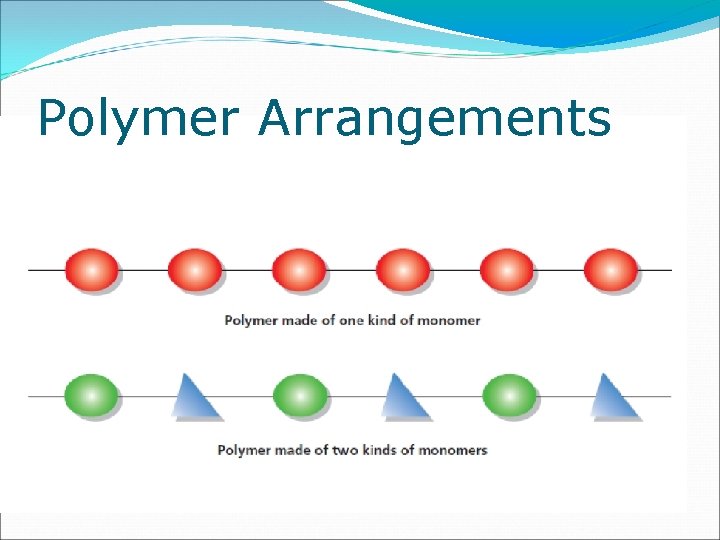
Monomers and Polymers ● Monomersare small molecules that build up polymers ● A polymeris a large complex ____ built from monomers joined together in a repeating pattern by a chemical bond. ● A polymer’s chemical properties depend on the monomers that make them up. ● Ex. of polymers: protein in meat, plastics, polyester, nylon.
Polymer Arrangements
Synthetic Polymers ● Synthetic polymersare inexpensive to make, strong, and last a long time. ● They do not break down into simpler substances like _______ do. As a result, plastics build up in the environment in the form of trash. ● A way to reduce the amount of trash is through _______. ● Recycled plastics can be used to make bottles, clothing and many other substances. ● Ex: polystyrene, nylon, kevlar
Natural Polymers ● Ex: Celluloseis a flexible and strong polymer found in fruits and vegetables. ● It is also found in the cell walls of plants ● When in long chains, humans cannot digest it ● When it is connected in shorter chains, as in starches, humans can digest it ● Other examples: Silk, wool, proteins in the body
Homework due tomorrow On a sheet of lined paper, with the heading “Everyday Materials and Recycling”: ● Make a list of four different things that you regularly throw out in your house or at school that you realize could be recycled. ● How could you use engineering to improve your disposal of recyclable materials at home and at school?
Composites ●A compositeis made of two or more different polymers and has different properties than the polymers it is made of. ●Ex: paper