
Engineering Materials and Processes Lecture 20 Properties of
![Videos: 1. Plastics in manufacturing [videorecording] Davis, John. Warriewood, NSW : Classroom Video, c](https://slidetodoc.com/presentation_image_h/25b73b0ae32d208c92c51ccf8e225726/image-29.jpg "Videos: 1. Plastics in manufacturing [videorecording] Davis, John. Warriewood, NSW : Classroom Video, c")
- Slides: 32
Engineering Materials and Processes Lecture 20 – Properties of plastics
Properties of plastics Reference Text Section Higgins RA & Bolton, 2010. Materials for Engineers and Technicians, 5 th ed, Butterworth Heinemann Ch 20 Reference Text Section Callister, W. Jr. and Rethwisch, D. , 2010, Materials Science and Engineering: An Introduction, 8 th Ed, Wiley, New York. Ch 4 Engineering Materials and Processes
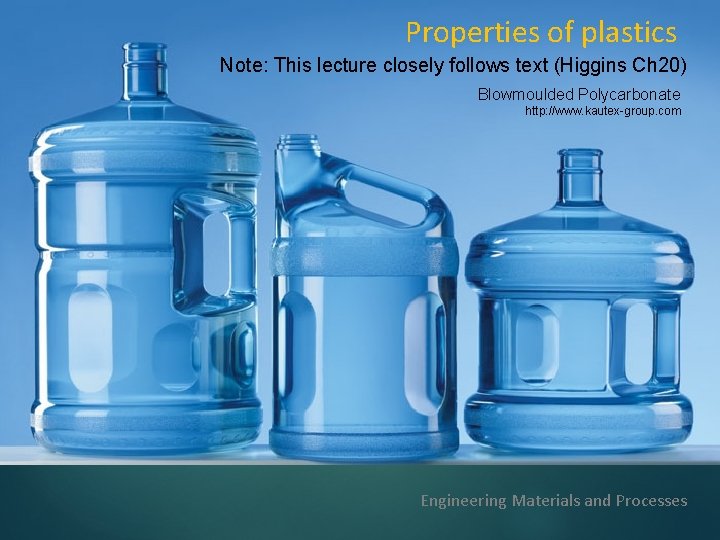
Properties of plastics Note: This lecture closely follows text (Higgins Ch 20) Blowmoulded Polycarbonate http: //www. kautex-group. com Engineering Materials and Processes
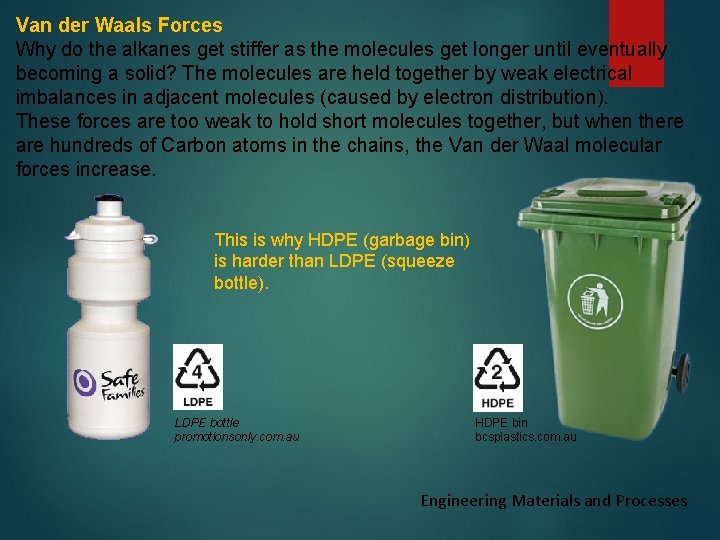
Van der Waals Forces Why do the alkanes get stiffer as the molecules get longer until eventually becoming a solid? The molecules are held together by weak electrical imbalances in adjacent molecules (caused by electron distribution). These forces are too weak to hold short molecules together, but when there are hundreds of Carbon atoms in the chains, the Van der Waal molecular forces increase. This is why HDPE (garbage bin) is harder than LDPE (squeeze bottle). LDPE bottle promotionsonly. com. au HDPE bin bcsplastics. com. au Engineering Materials and Processes
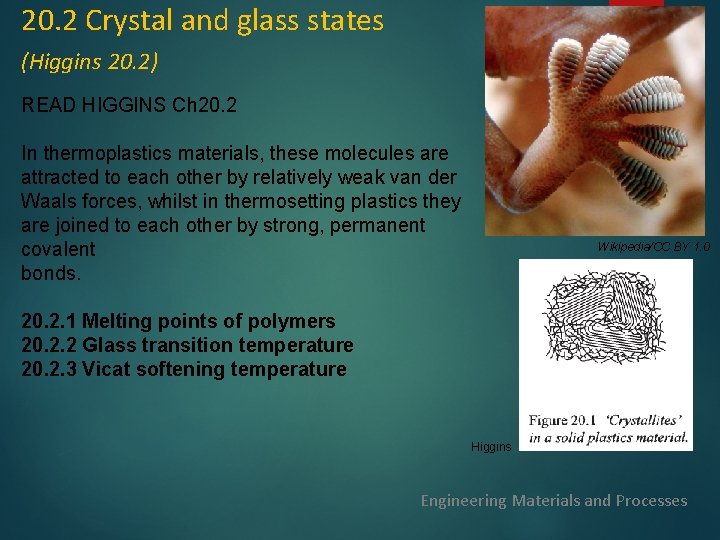
20. 2 Crystal and glass states (Higgins 20. 2) READ HIGGINS Ch 20. 2 In thermoplastics materials, these molecules are attracted to each other by relatively weak van der Waals forces, whilst in thermosetting plastics they are joined to each other by strong, permanent covalent bonds. Wikipedia/CC BY 1. 0 20. 2. 1 Melting points of polymers 20. 2. 2 Glass transition temperature 20. 2. 3 Vicat softening temperature Higgins Engineering Materials and Processes
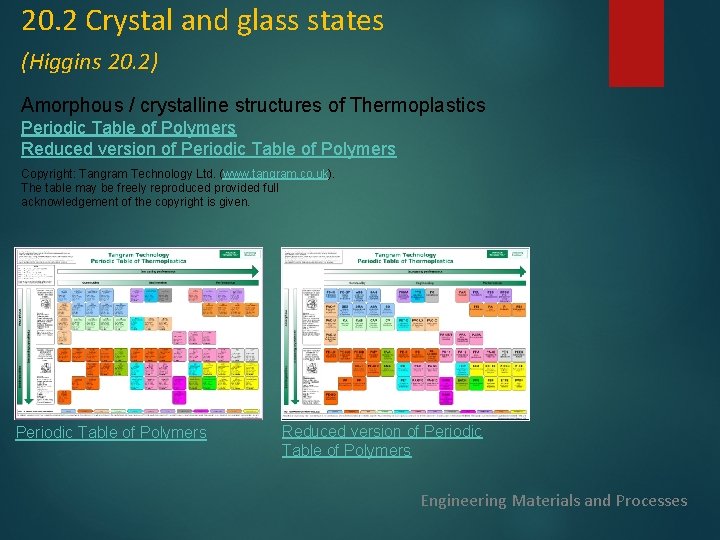
20. 2 Crystal and glass states (Higgins 20. 2) Amorphous / crystalline structures of Thermoplastics Periodic Table of Polymers Reduced version of Periodic Table of Polymers Copyright: Tangram Technology Ltd. (www. tangram. co. uk). The table may be freely reproduced provided full acknowledgement of the copyright is given. Periodic Table of Polymers Reduced version of Periodic Table of Polymers Engineering Materials and Processes
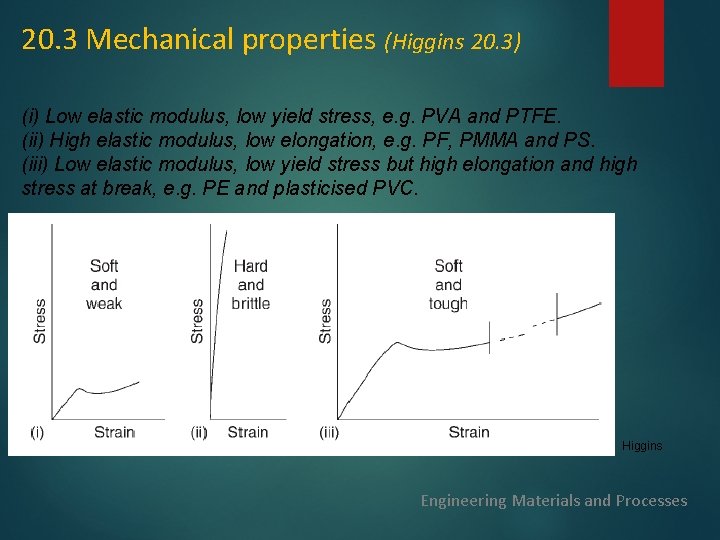
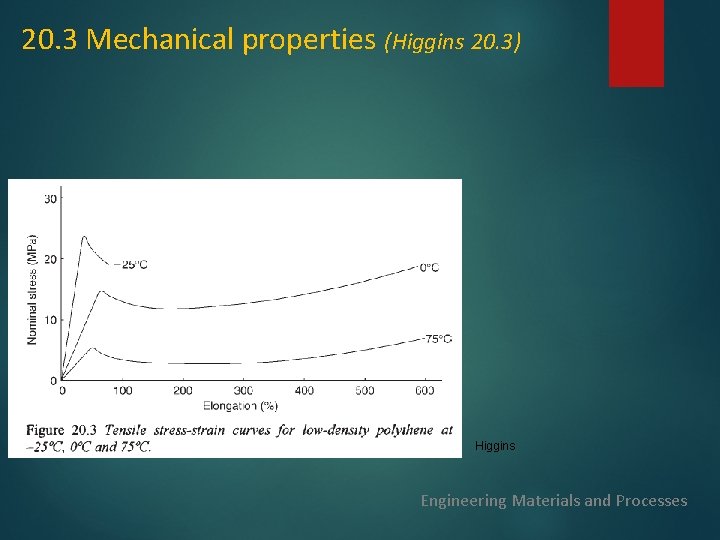
20. 3 Mechanical properties (Higgins 20. 3) (i) Low elastic modulus, low yield stress, e. g. PVA and PTFE. (ii) High elastic modulus, low elongation, e. g. PF, PMMA and PS. (iii) Low elastic modulus, low yield stress but high elongation and high stress at break, e. g. PE and plasticised PVC. Higgins Engineering Materials and Processes
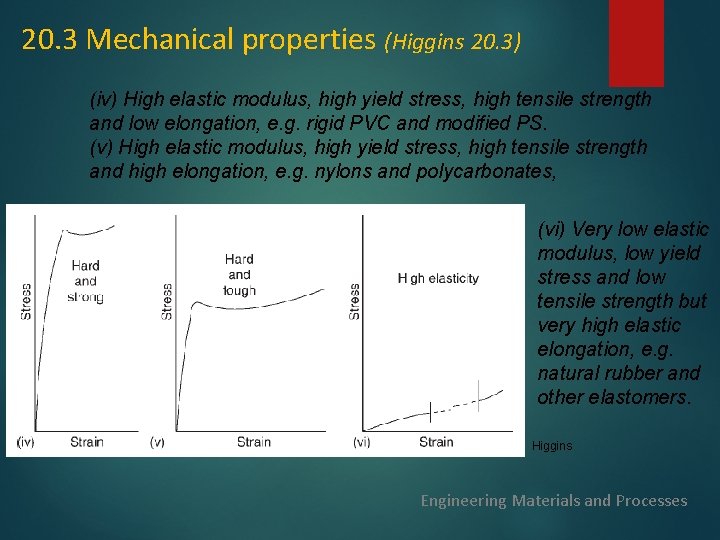
20. 3 Mechanical properties (Higgins 20. 3) (iv) High elastic modulus, high yield stress, high tensile strength and low elongation, e. g. rigid PVC and modified PS. (v) High elastic modulus, high yield stress, high tensile strength and high elongation, e. g. nylons and polycarbonates, (vi) Very low elastic modulus, low yield stress and low tensile strength but very high elastic elongation, e. g. natural rubber and other elastomers. Higgins Engineering Materials and Processes
20. 3 Mechanical properties (Higgins 20. 3) Higgins Engineering Materials and Processes
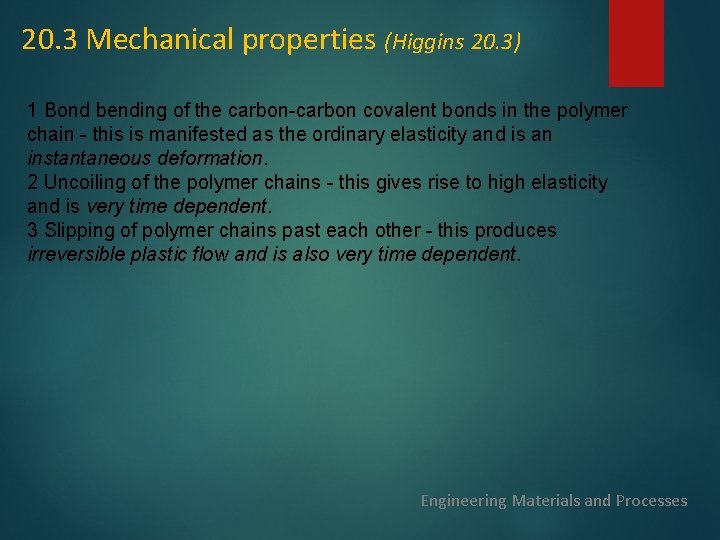
20. 3 Mechanical properties (Higgins 20. 3) 1 Bond bending of the carbon-carbon covalent bonds in the polymer chain - this is manifested as the ordinary elasticity and is an instantaneous deformation. 2 Uncoiling of the polymer chains - this gives rise to high elasticity and is very time dependent. 3 Slipping of polymer chains past each other - this produces irreversible plastic flow and is also very time dependent. Engineering Materials and Processes
20. 3 Mechanical properties (Higgins 20. 3) Higgins Engineering Materials and Processes
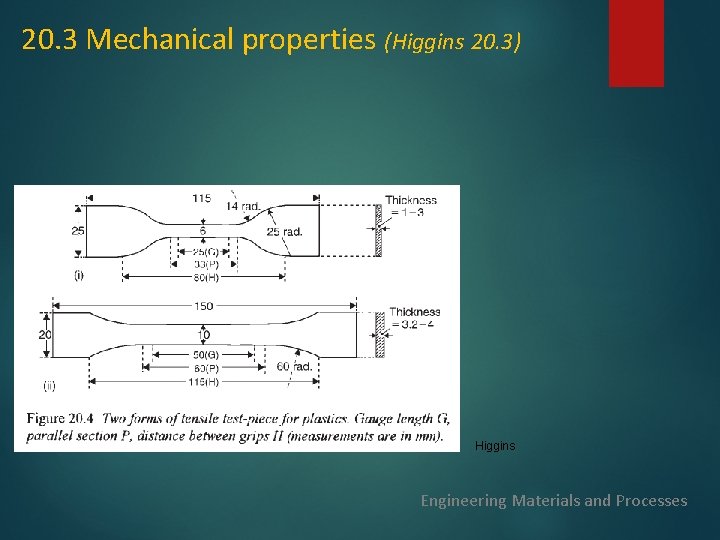
20. 3 Mechanical properties (Higgins 20. 3) Higgins Engineering Materials and Processes
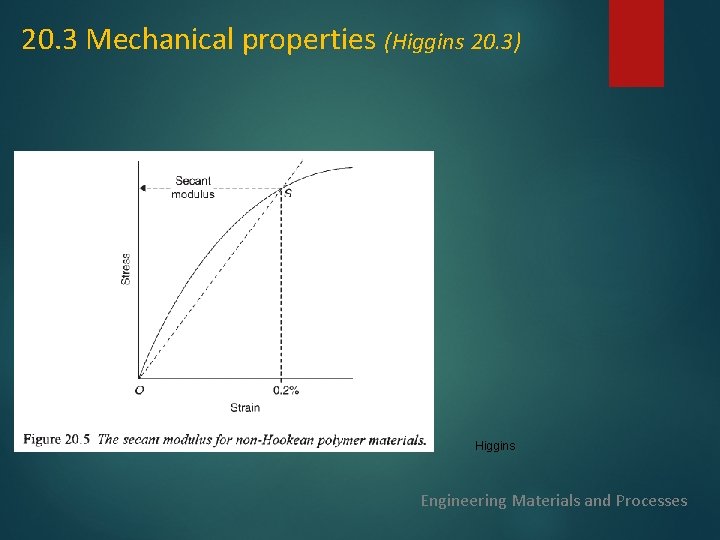
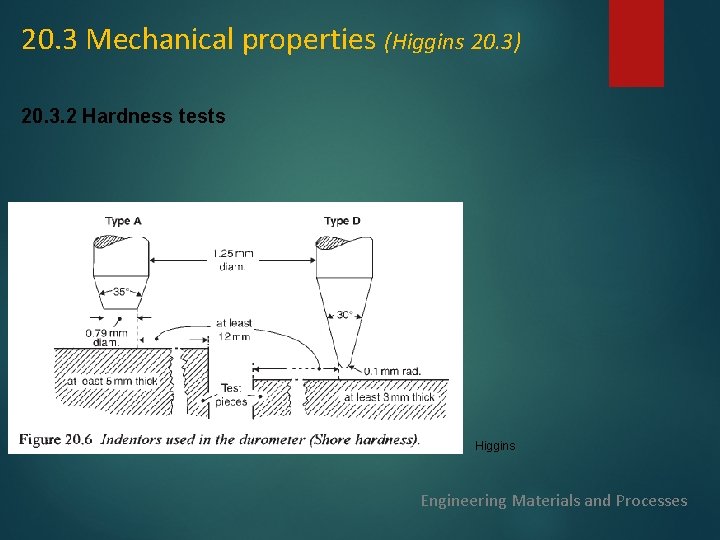
20. 3 Mechanical properties (Higgins 20. 3) 20. 3. 2 Hardness tests Higgins Engineering Materials and Processes
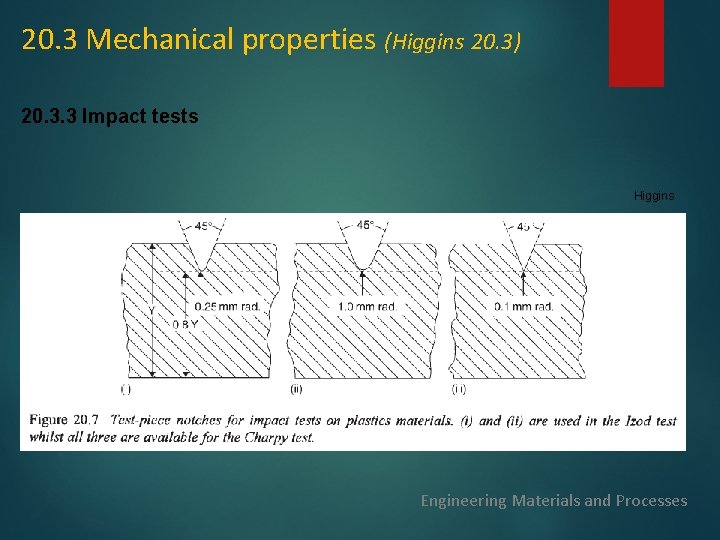
20. 3 Mechanical properties (Higgins 20. 3) 20. 3. 3 Impact tests Higgins Engineering Materials and Processes
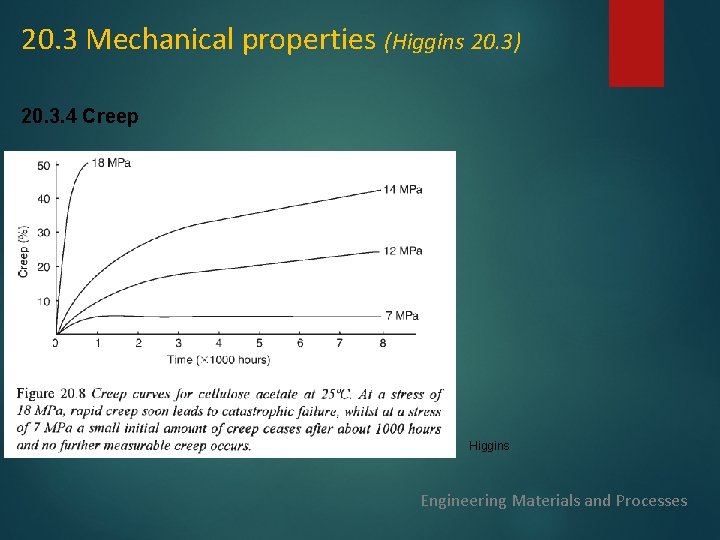
20. 3 Mechanical properties (Higgins 20. 3) 20. 3. 4 Creep Higgins Engineering Materials and Processes
20. 3 Mechanical properties (Higgins 20. 3) 20. 3. 5 Other mechanical tests Higgins Engineering Materials and Processes
20. 4 Additives (Higgins 20. 4) 20. 4. 1 Fillers 20. 4. 2 Anti-static agents 20. 4. 3 Flame retardants 20. 4. 4 Friction modifiers 20. 4. 5 Other additives 20. 4. 6 Foamed or 'expanded' plastics materials Higgins Engineering Materials and Processes
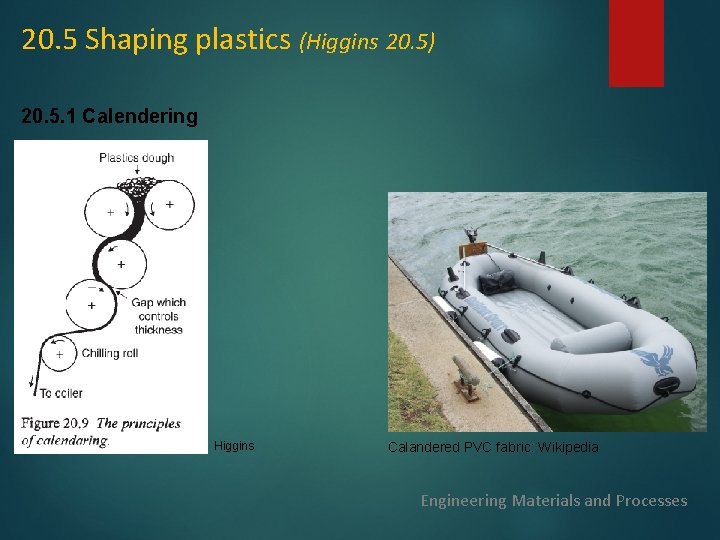
20. 5 Shaping plastics (Higgins 20. 5) 20. 5. 1 Calendering Higgins Calandered PVC fabric: Wikipedia Engineering Materials and Processes
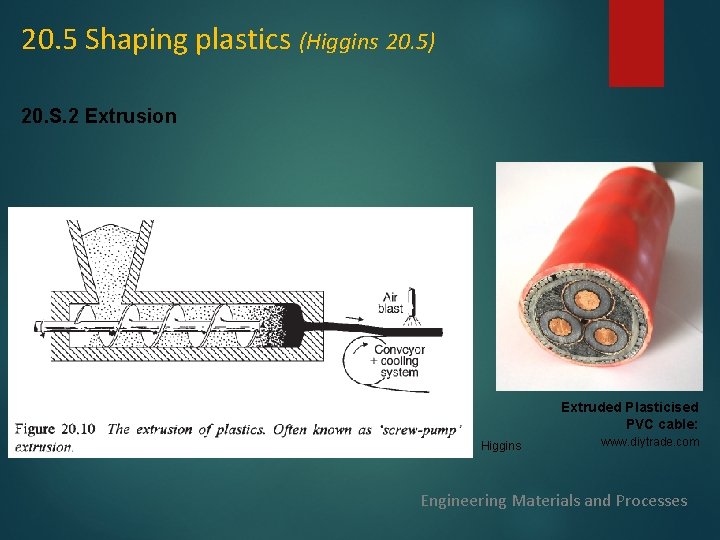
20. 5 Shaping plastics (Higgins 20. 5) 20. S. 2 Extrusion Higgins Extruded Plasticised PVC cable: www. diytrade. com Engineering Materials and Processes
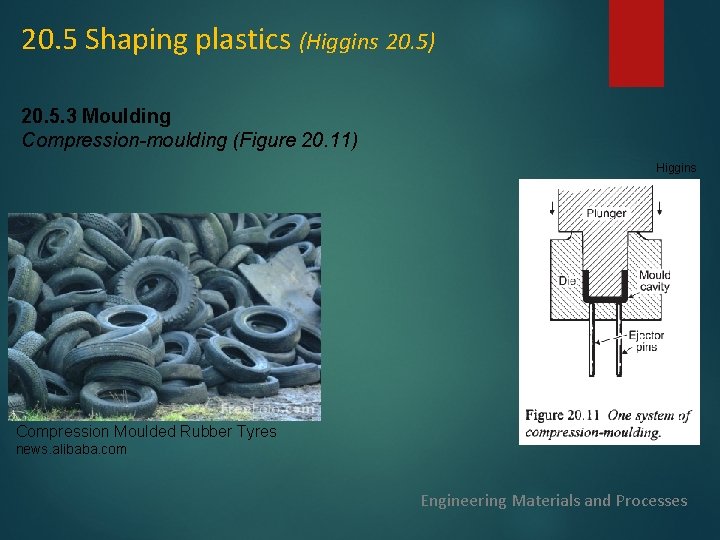
20. 5 Shaping plastics (Higgins 20. 5) 20. 5. 3 Moulding Compression-moulding (Figure 20. 11) Higgins Compression Moulded Rubber Tyres news. alibaba. com Engineering Materials and Processes
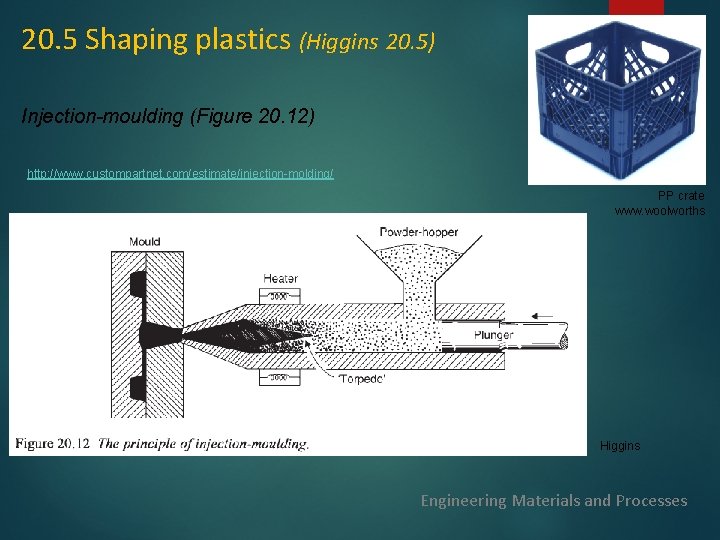
20. 5 Shaping plastics (Higgins 20. 5) Injection-moulding (Figure 20. 12) http: //www. custompartnet. com/estimate/injection-molding/ PP crate www. woolworths Higgins Engineering Materials and Processes
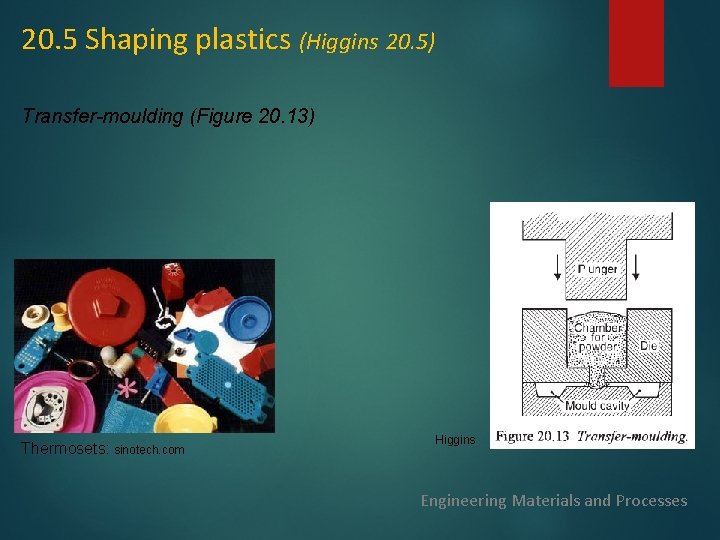
20. 5 Shaping plastics (Higgins 20. 5) Transfer-moulding (Figure 20. 13) Thermosets: sinotech. com Higgins Engineering Materials and Processes
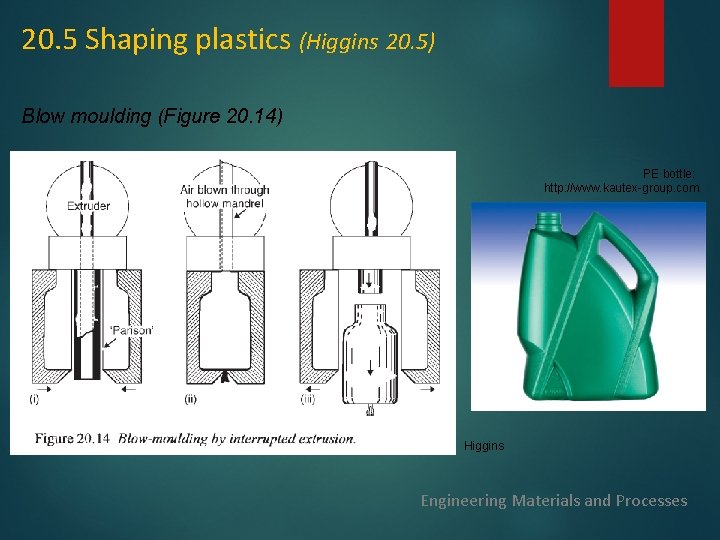
20. 5 Shaping plastics (Higgins 20. 5) Blow moulding (Figure 20. 14) PE bottle: http: //www. kautex-group. com Higgins Engineering Materials and Processes
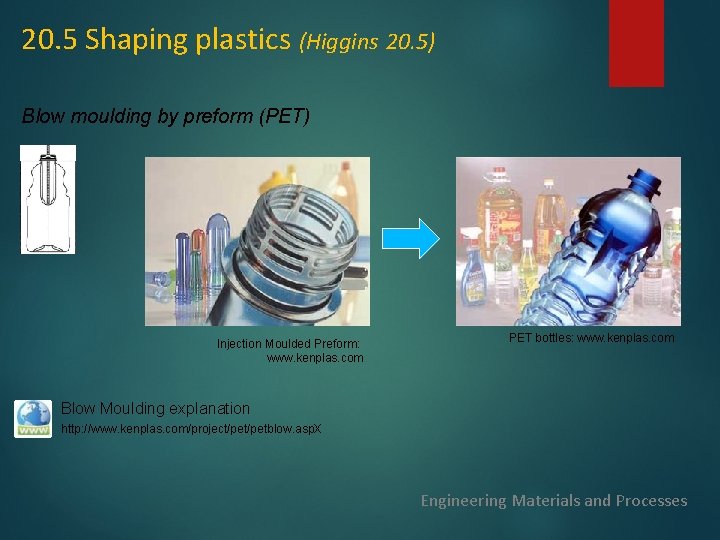
20. 5 Shaping plastics (Higgins 20. 5) Blow moulding by preform (PET) Injection Moulded Preform: www. kenplas. com PET bottles: www. kenplas. com Blow Moulding explanation http: //www. kenplas. com/project/petblow. aspx Engineering Materials and Processes
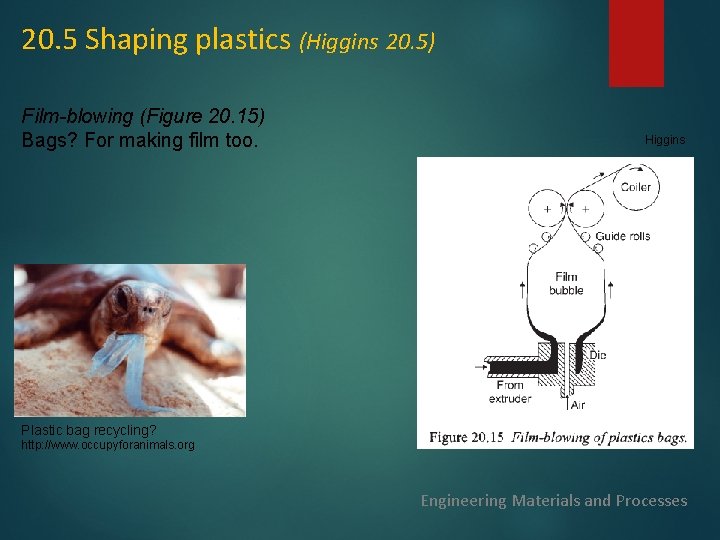
20. 5 Shaping plastics (Higgins 20. 5) Film-blowing (Figure 20. 15) Bags? For making film too. Higgins Plastic bag recycling? http: //www. occupyforanimals. org Engineering Materials and Processes
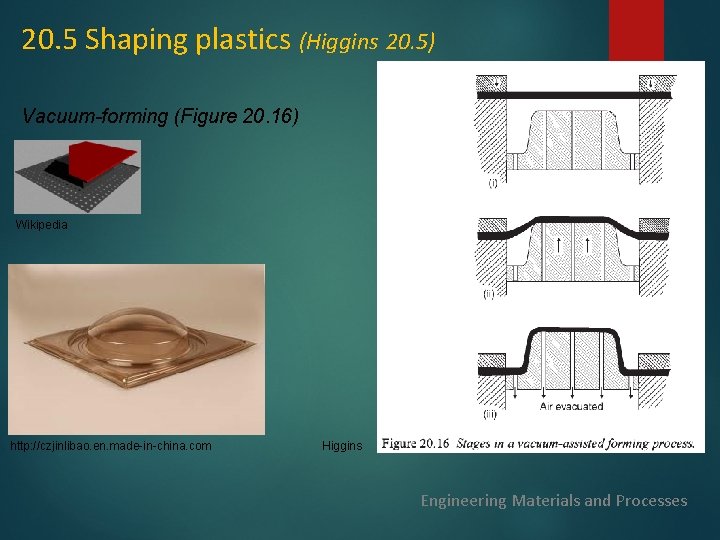
20. 5 Shaping plastics (Higgins 20. 5) Vacuum-forming (Figure 20. 16) Wikipedia http: //czjinlibao. en. made-in-china. com Higgins Engineering Materials and Processes
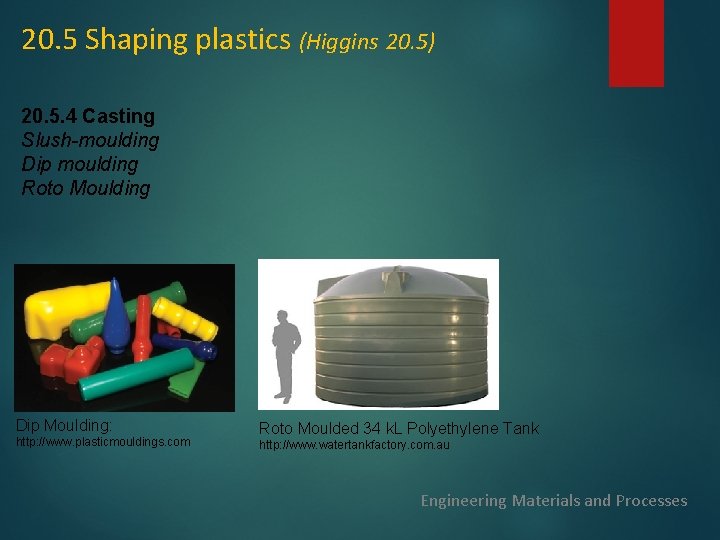
20. 5 Shaping plastics (Higgins 20. 5) 20. 5. 4 Casting Slush-moulding Dip moulding Roto Moulding Dip Moulding: http: //www. plasticmouldings. com Roto Moulded 34 k. L Polyethylene Tank http: //www. watertankfactory. com. au Engineering Materials and Processes
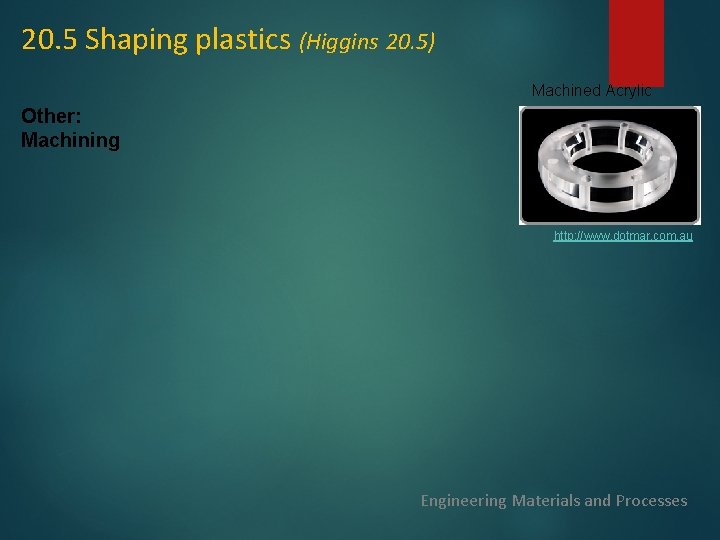
20. 5 Shaping plastics (Higgins 20. 5) Machined Acrylic Other: Machining http: //www. dotmar. com. au Engineering Materials and Processes
Videos: 1. Plastics in manufacturing [videorecording] Davis, John. Warriewood, NSW : Classroom Video, c 2003. 1 videodisc (21 min. ) : sd. , col. ; 4 3/4 in. + teacher's notes. Explains injection moulding, rotational moulding, and vacuum and pressure forming of plastic products. DVD 668. 412/PLAS 35555076215658 2. Forming of plastics. Part A [videorecording] Scutt, Don. Chadstone, Vic. : Double D Technical Productions, c 2002. 1 videodisc (29 min. ) : sd. , col. ; 4 3/4 in. This video examines compression and injection moulding of thermosetting materials, physical properties of polymers and how these vary with temperature changes, compounding, extrusion of sheet tube, cross head and co extrusion, blow moulding, blown film and printing, production of fibres and printing on plastics. DVD 668. 412/FORM PART A 3. Forming of plastics. Part B [videorecording] Scutt, Don. Chadstone, Vic. : Double D Technical Productions, c 2002. 1 videodisc (29 min. ) : sd. , col. ; 4 3/4 in. This video examines the injection moulding process for a range of products, injection blow moulding, using preforms, production of flexible foams, rotational moulding, extrusion compression moulding, thermoforming and the computer modelling and production of stadium seat. DVD 668. 412/FORM PART B Engineering Materials and Processes
Resources. Polymers Wikipedia: Plastic http: //www. kenplas. com/project/petblow. aspx http: //www. dotmar. com. au/engineered-plastics-products. html http: //www. adelaideplastics. com. au/glossary. htm Engineering Materials and Processes
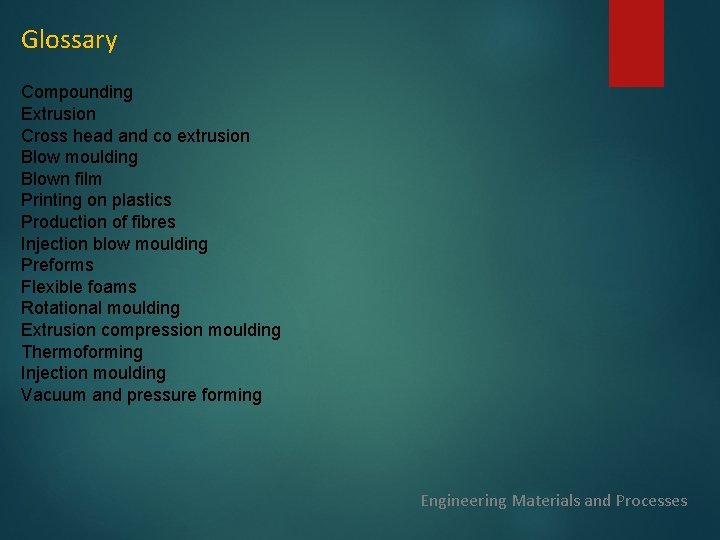
Glossary Compounding Extrusion Cross head and co extrusion Blow moulding Blown film Printing on plastics Production of fibres Injection blow moulding Preforms Flexible foams Rotational moulding Extrusion compression moulding Thermoforming Injection moulding Vacuum and pressure forming Engineering Materials and Processes
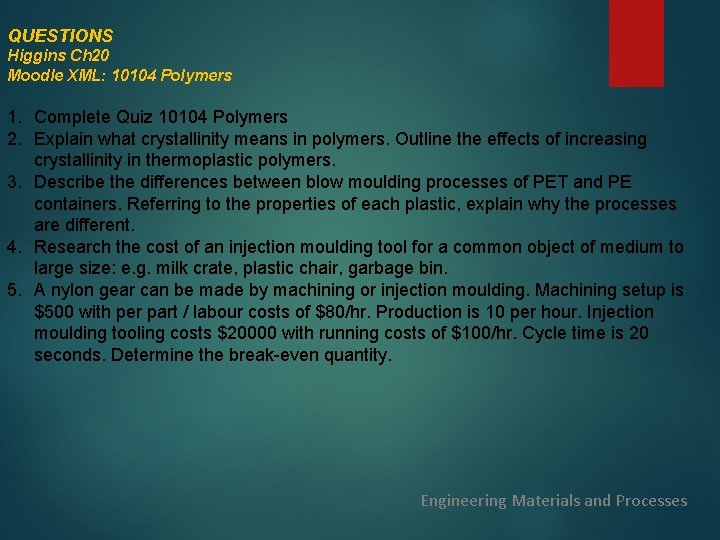
QUESTIONS Higgins Ch 20 Moodle XML: 10104 Polymers 1. Complete Quiz 10104 Polymers 2. Explain what crystallinity means in polymers. Outline the effects of increasing crystallinity in thermoplastic polymers. 3. Describe the differences between blow moulding processes of PET and PE containers. Referring to the properties of each plastic, explain why the processes are different. 4. Research the cost of an injection moulding tool for a common object of medium to large size: e. g. milk crate, plastic chair, garbage bin. 5. A nylon gear can be made by machining or injection moulding. Machining setup is $500 with per part / labour costs of $80/hr. Production is 10 per hour. Injection moulding tooling costs $20000 with running costs of $100/hr. Cycle time is 20 seconds. Determine the break-even quantity. Engineering Materials and Processes