
ENGINEERING IDEAS Engineers are problem solvers Use available
ENGINEERING IDEAS
Engineers are problem solvers. →Use available technology to solve →Rely on creativity and academic skills →Use math, science, and computers It is very important to note that even though the tasks are very different, many of the methods used are common to all engineers.
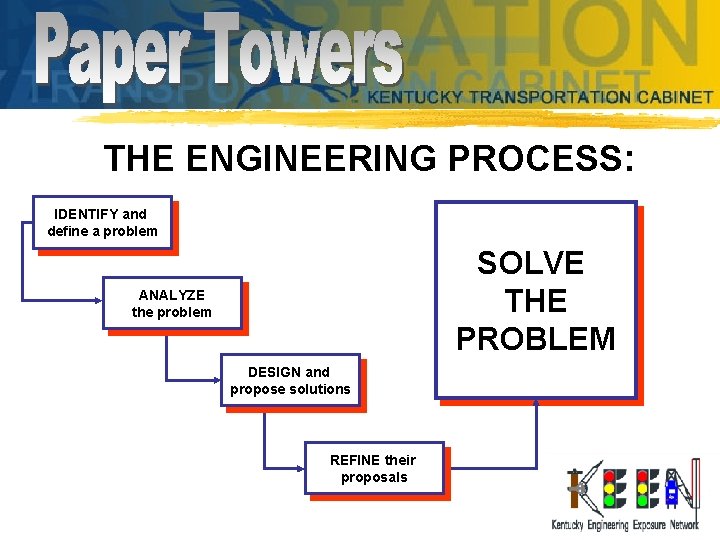
THE ENGINEERING PROCESS: IDENTIFY and define a problem SOLVE THE PROBLEM ANALYZE the problem DESIGN and propose solutions REFINE their proposals
TYPES OF ENGINEERS CIVIL CHEMICAL ELECTRICAL COMPUTER INDUSTRIAL MECHANICAL AERONAUTICAL
TYPES OF CIVIL ENGINEERS þ STRUCTURAL þ TRANSPORTATION þ GEOTECHNICAL þ ENVIRONMENTAL þ WATER RESOURCES
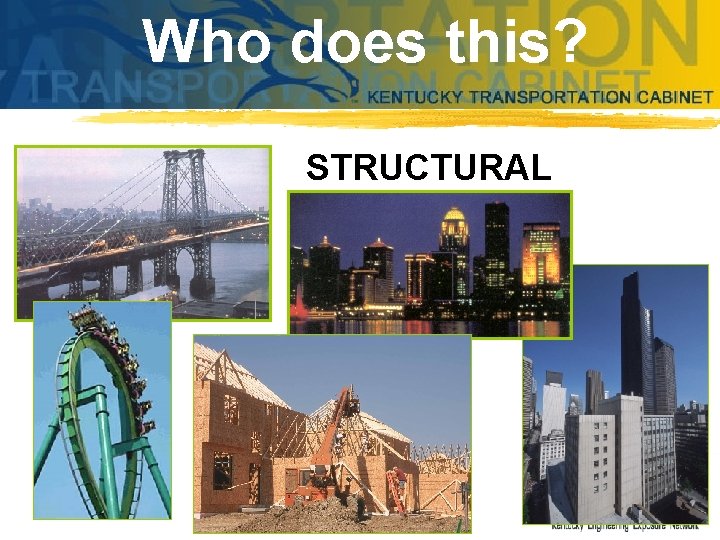
Who does this? STRUCTURAL ENGINEERS
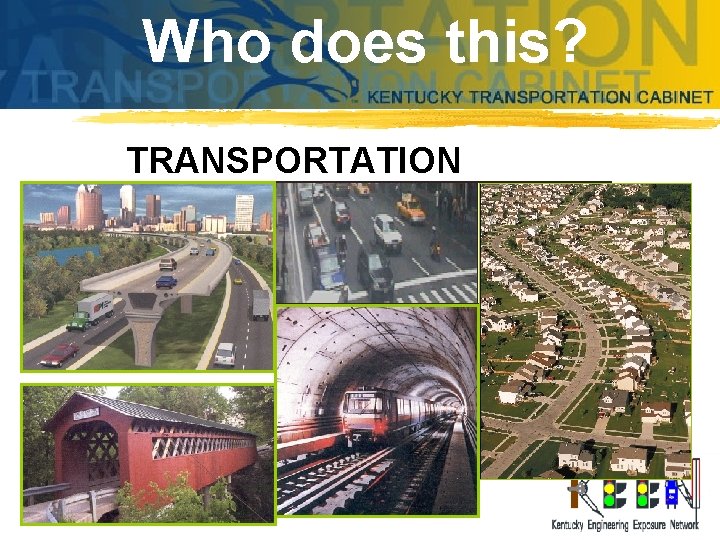
Who does this? TRANSPORTATION ENGINEERS

Who does this? ENVIRONMEN TAL ENGINEERS
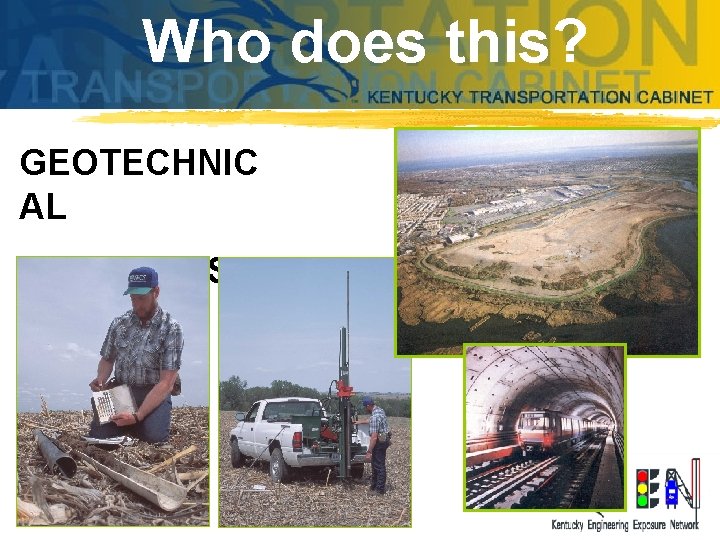
Who does this? GEOTECHNIC AL ENGINEERS
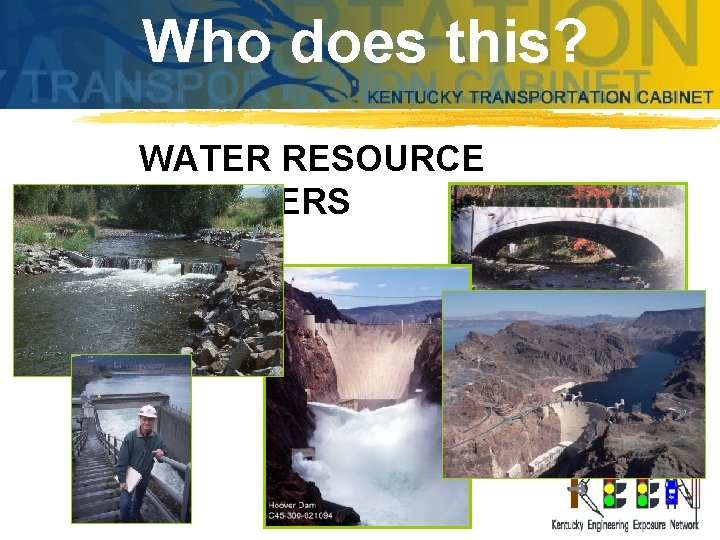
Who does this? WATER RESOURCE ENGINEERS
History of Structural Engineering Structural engineering is one of the oldest professions in the world. The existence of structural engineering can be date back to 27 th century B. C. (THE PYRAMIDS!)
History of Structural Engineering In the late of 19 th and earlier of 20 th centuries, along with modern science revolution, structural engineering developed. In 1889, Eiffel Tower built by Gustave Eiffel and Maurice Koechlin.
Structural engineering Deals with the design of any structural systems. The purpose of which is to support and resist loads. Most commonly, a structural engineer is involved in the design of buildings and nonbuilding structures where structural integrity of the design item is a matter of safety and reliability.
Structural engineering Structural engineers design based on: • safety (structures don’t collapse without warning) • serviceability (i. e. floor vibration) and • building sway can’t result in discomfort for occupants.
Structural engineering Structural engineers are responsible for making efficient use of: • funds and • materials to achieve these goals.
EQUILIBRIUM z. LOADS z. FORCES z. MOMENTS z. TORSION Summation of Forces Σ F=0 y Horizontal Direction Σ Fh=0 y Vertical Direction Fv=0 Σ
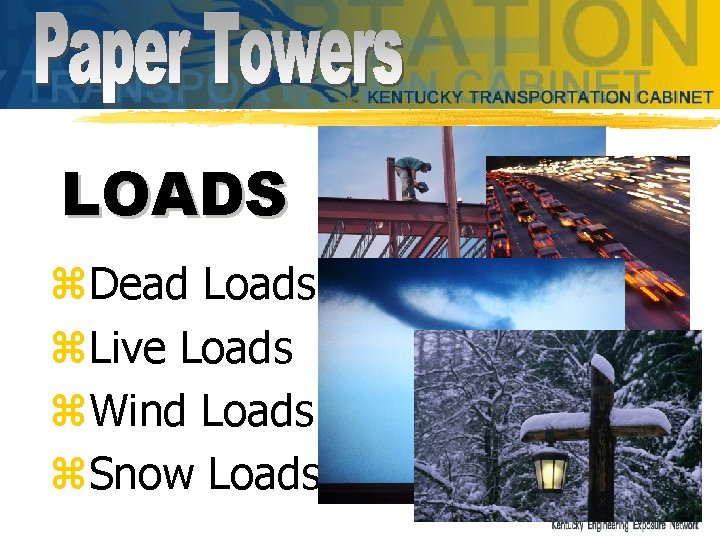
LOADS z. Dead Loads z. Live Loads z. Wind Loads z. Snow Loads
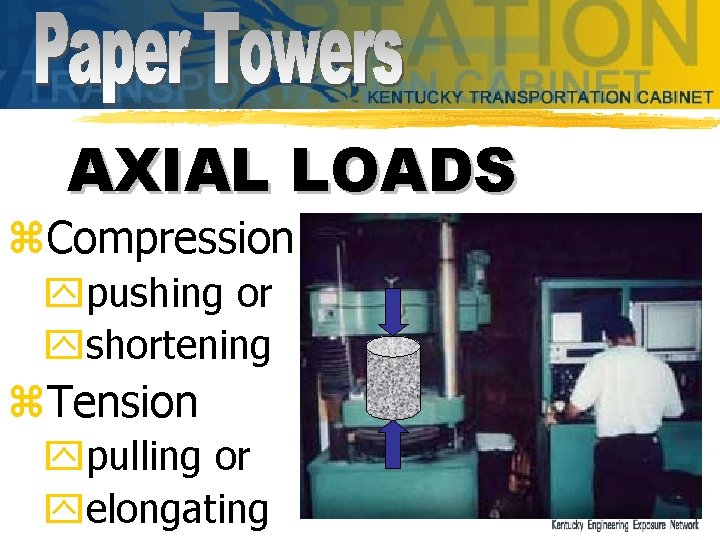
AXIAL LOADS z. Compression ypushing or yshortening z. Tension ypulling or yelongating
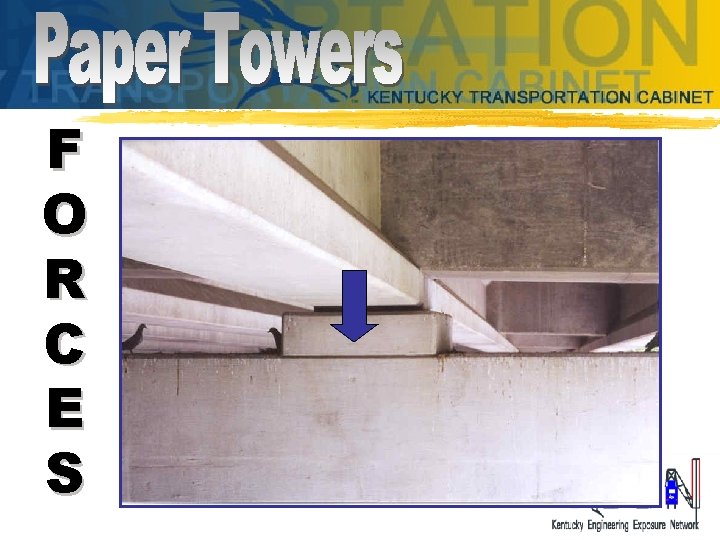
F O R C E S
MOMENTS z. Summation of Moments – Σ M=0 z. Moment = Force * Distance
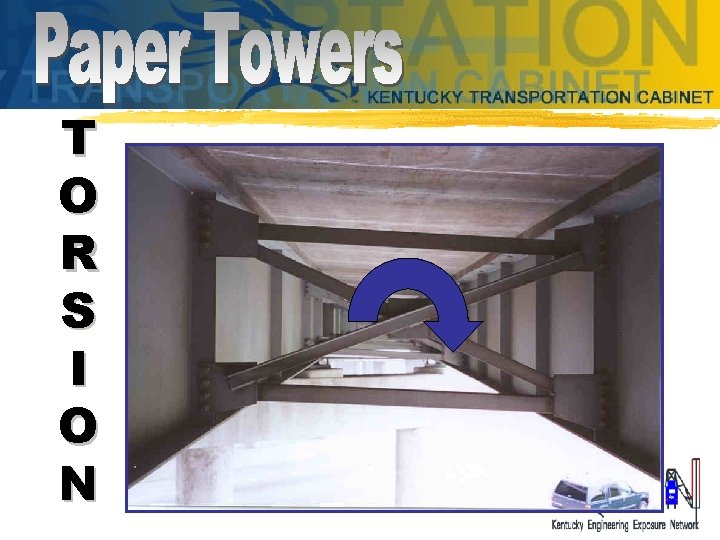
TORSION z. Torsion is produced when a beam is subjected to loads which cause it to buckle and roll. z. Diaphragms are inserted to eliminate torsion.
T O R S I O N
A tower is…. A structure; A tall man-made building; Always (and usually much) taller than they are wide; Built to take advantage of their height; Either free standing or part of a larger structure.
Examples of the various uses of towers include: To save ground-level space: skyscrapers To enhance views: tourist towers, air-traffic Control tower To increase strategic advantage: prison watch tower To increase potential energy: water tower To enhance communications: lighthouse, bell tower, clock tower As support: bridge towers To access tall or high objects: launch tower As art: Gettysburg National Tower, Eiffel Tower For recreation: rock climbing tower
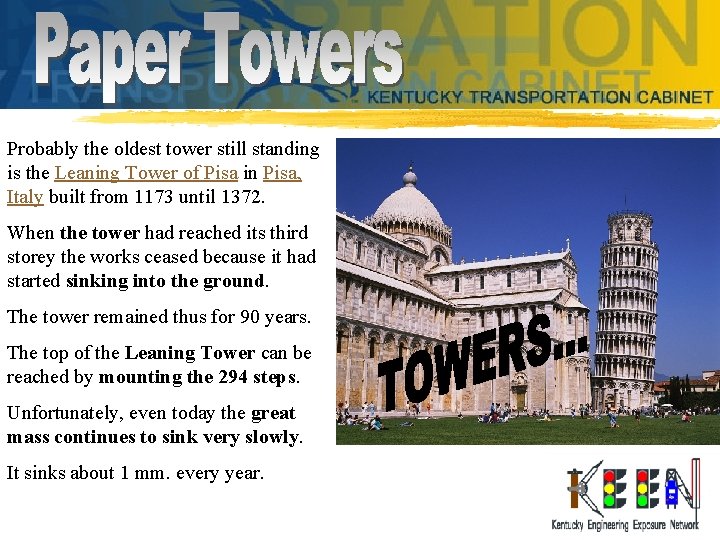
Probably the oldest tower still standing is the Leaning Tower of Pisa in Pisa, Italy built from 1173 until 1372. When the tower had reached its third storey the works ceased because it had started sinking into the ground. The tower remained thus for 90 years. The top of the Leaning Tower can be reached by mounting the 294 steps. Unfortunately, even today the great mass continues to sink very slowly. It sinks about 1 mm. every year.
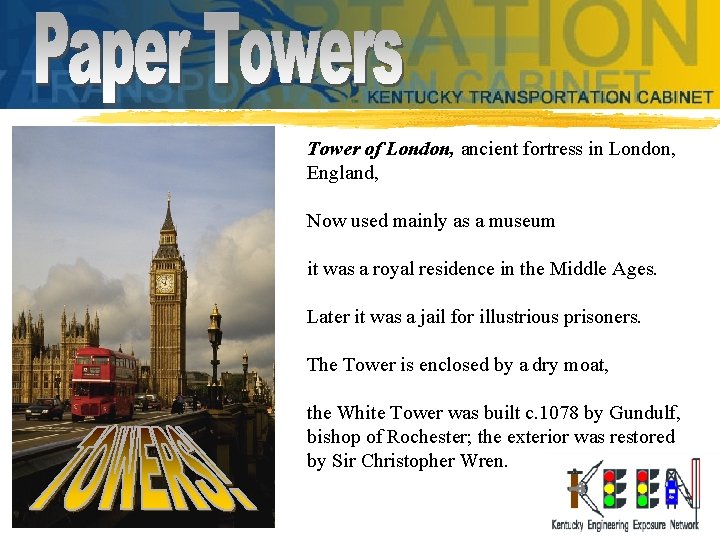
Tower of London, ancient fortress in London, England, Now used mainly as a museum it was a royal residence in the Middle Ages. Later it was a jail for illustrious prisoners. The Tower is enclosed by a dry moat, the White Tower was built c. 1078 by Gundulf, bishop of Rochester; the exterior was restored by Sir Christopher Wren.
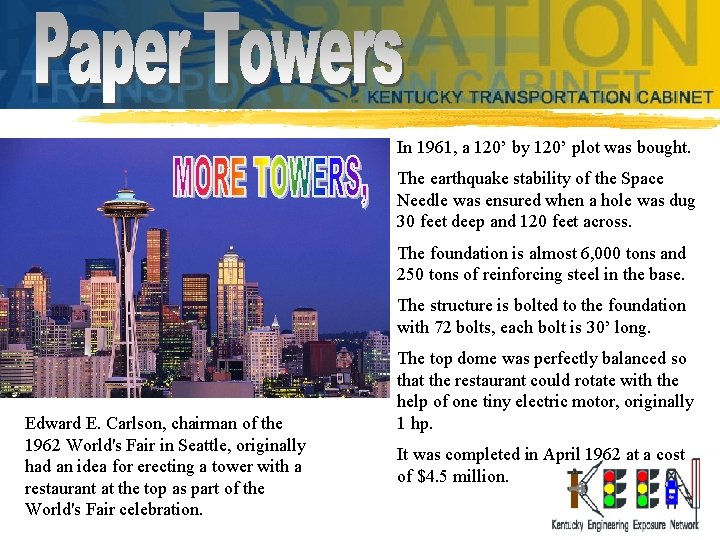
In 1961, a 120’ by 120’ plot was bought. The earthquake stability of the Space Needle was ensured when a hole was dug 30 feet deep and 120 feet across. The foundation is almost 6, 000 tons and 250 tons of reinforcing steel in the base. The structure is bolted to the foundation with 72 bolts, each bolt is 30’ long. Edward E. Carlson, chairman of the 1962 World's Fair in Seattle, originally had an idea for erecting a tower with a restaurant at the top as part of the World's Fair celebration. The top dome was perfectly balanced so that the restaurant could rotate with the help of one tiny electric motor, originally 1 hp. It was completed in April 1962 at a cost of $4. 5 million.
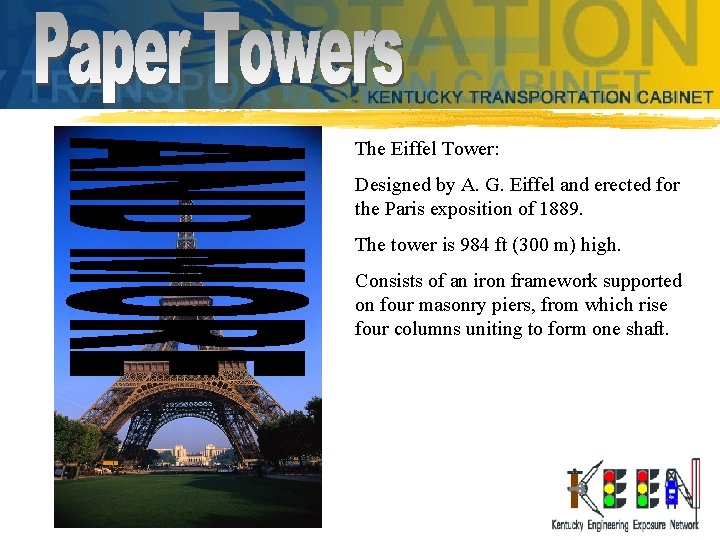
The Eiffel Tower: Designed by A. G. Eiffel and erected for the Paris exposition of 1889. The tower is 984 ft (300 m) high. Consists of an iron framework supported on four masonry piers, from which rise four columns uniting to form one shaft.


- Slides: 36