
Engineering Graphics MENG 104 Lecture Hamed Pourasl INTRODUCTION

- Slides: 46
Engineering Graphics MENG 104 Lecture : Hamed Pourasl
INTRODUCTION: The old saying that “necessity is the mother of invention ” is still true, and a new machine, structure, system, or device is the result of that need. Why we need to learn this course :
Aim of the course Knowledge of engineering drawing instruments. Understanding and interpretation of technical drawings. Ability to develop projections of a 3 D object Introduction to CAD
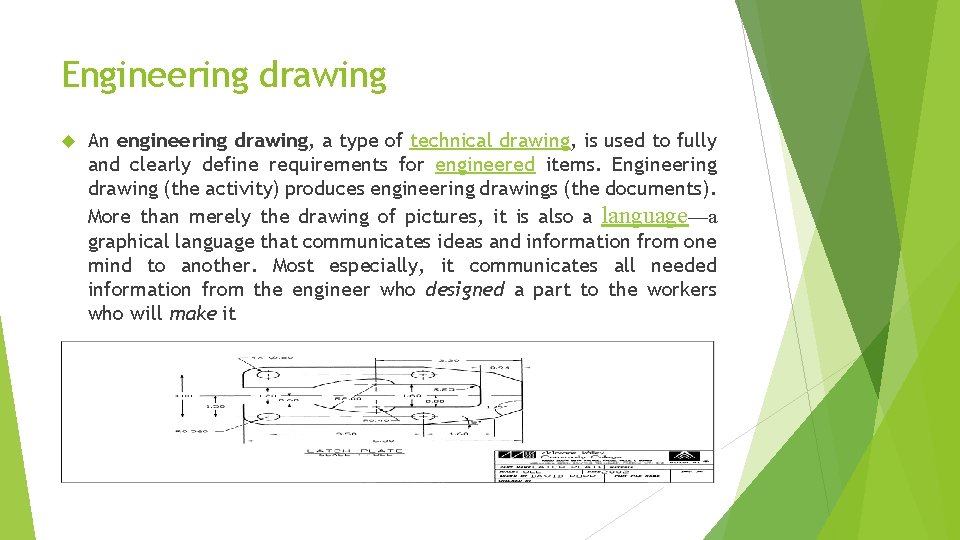
Engineering drawing An engineering drawing, a type of technical drawing, is used to fully and clearly define requirements for engineered items. Engineering drawing (the activity) produces engineering drawings (the documents). More than merely the drawing of pictures, it is also a language—a graphical language that communicates ideas and information from one mind to another. Most especially, it communicates all needed information from the engineer who designed a part to the workers who will make it
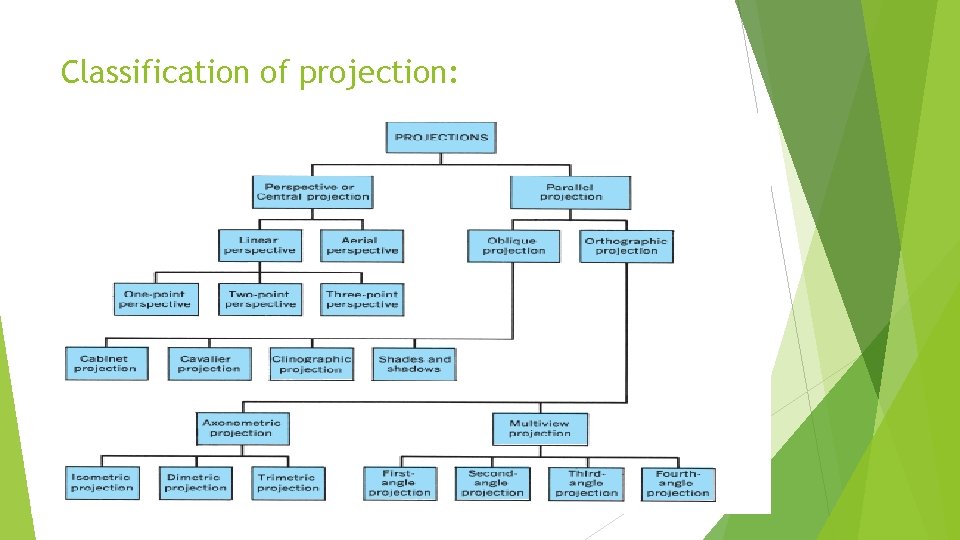
Classification of projection:
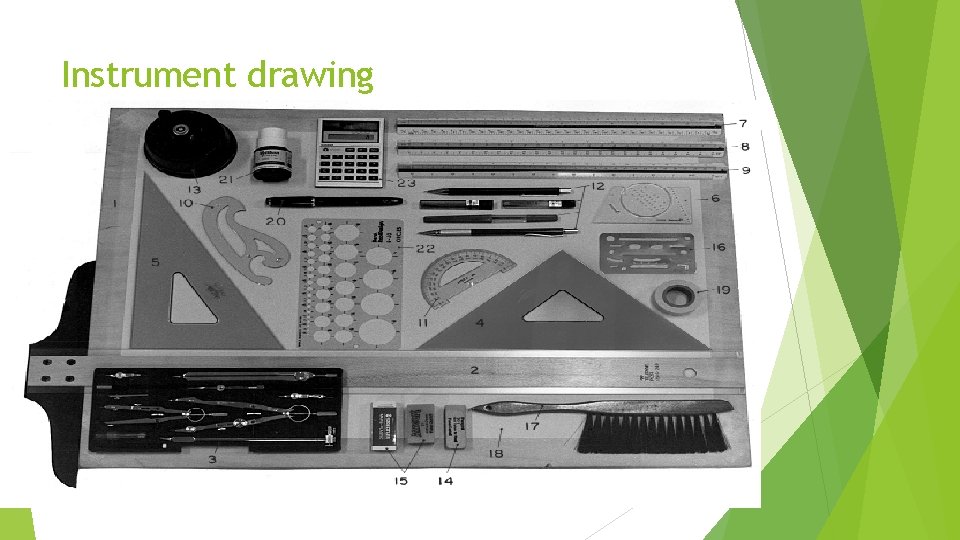
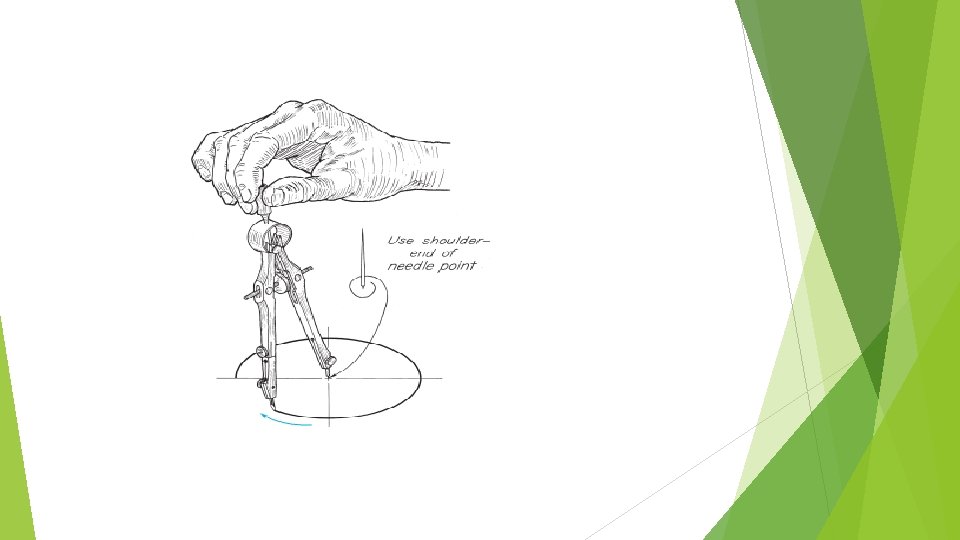
Instrument drawing
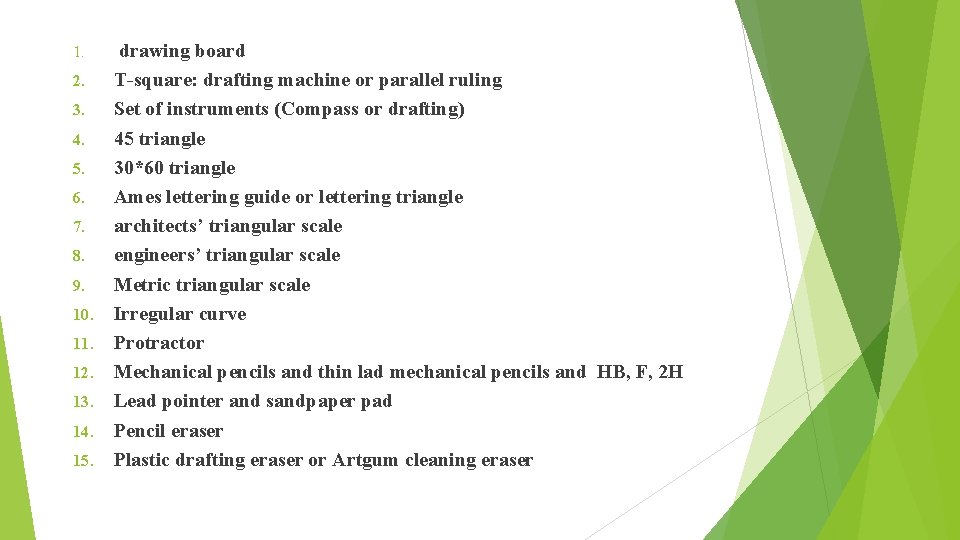
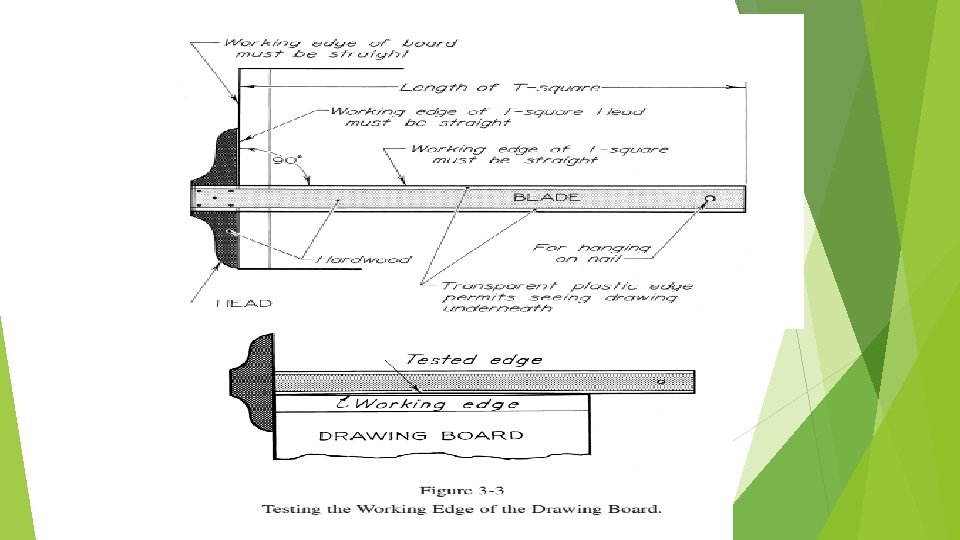
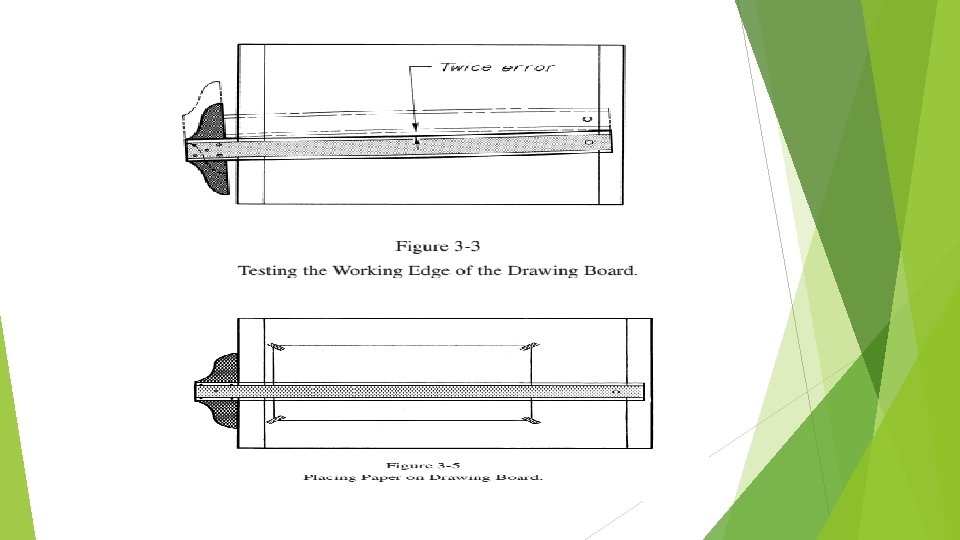
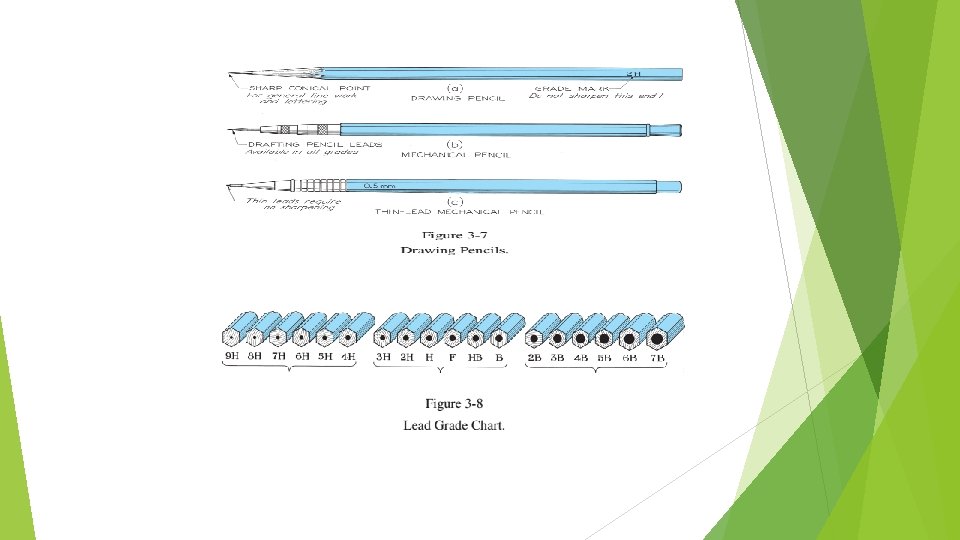
1. 2. 3. 4. 5. 6. 7. 8. 9. 10. 11. 12. 13. 14. 15. drawing board T-square: drafting machine or parallel ruling Set of instruments (Compass or drafting) 45 triangle 30*60 triangle Ames lettering guide or lettering triangle architects’ triangular scale engineers’ triangular scale Metric triangular scale Irregular curve Protractor Mechanical pencils and thin lad mechanical pencils and HB, F, 2 H Lead pointer and sandpaper pad Pencil eraser Plastic drafting eraser or Artgum cleaning eraser
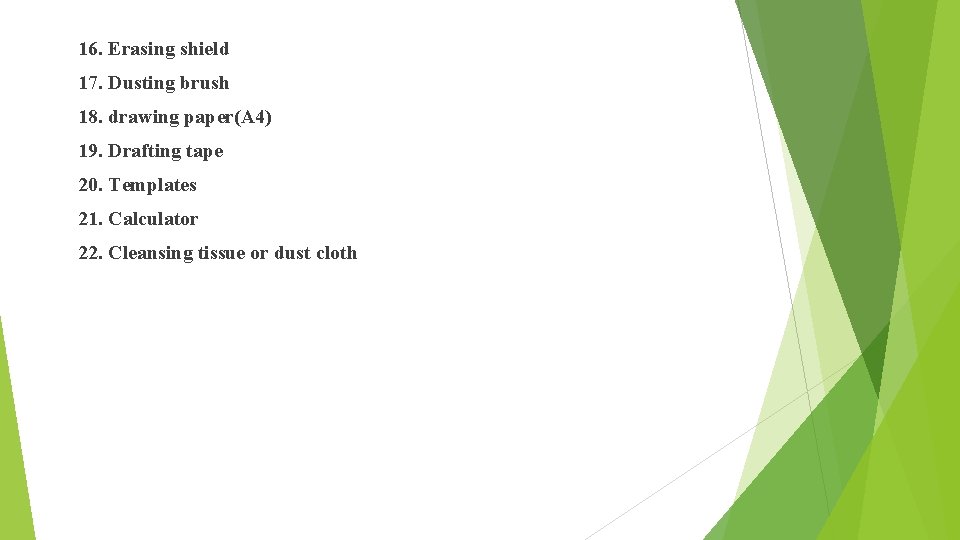
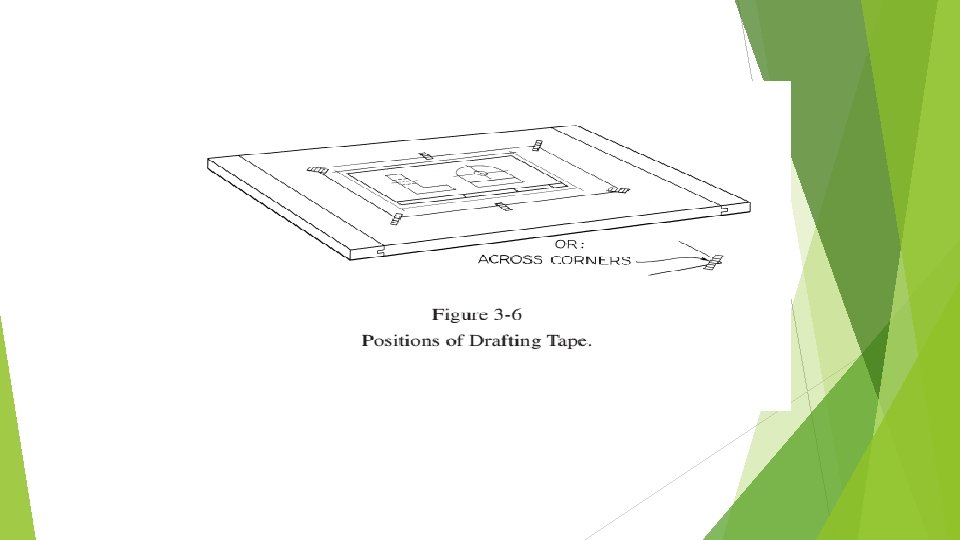
16. Erasing shield 17. Dusting brush 18. drawing paper(A 4) 19. Drafting tape 20. Templates 21. Calculator 22. Cleansing tissue or dust cloth
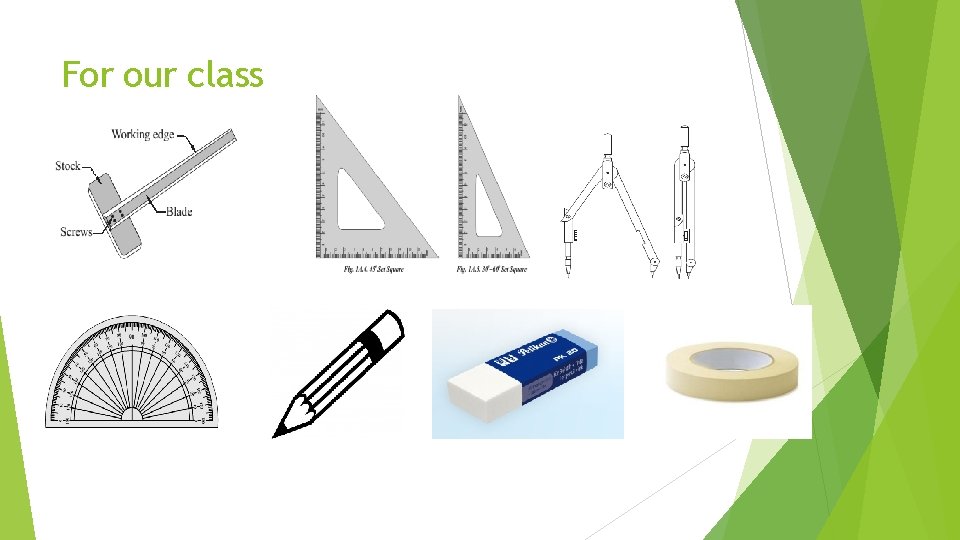
For our class
Scale 1: 1 full size 1: 2 Half full size 1: 5 one-fifth full size 1: 10 one-tenth full size 2: 1 Twice full size 5: 1 five times full size 10: 1 Ten times full size
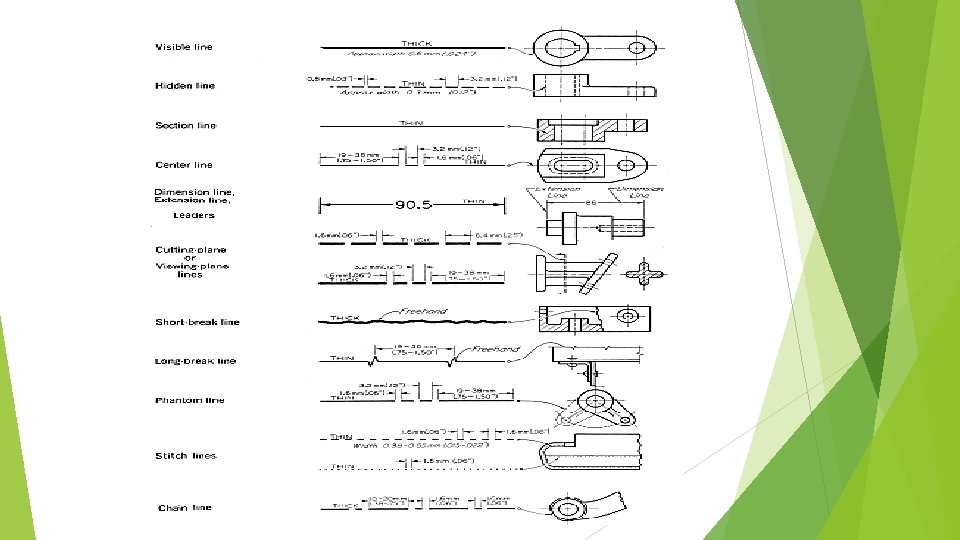
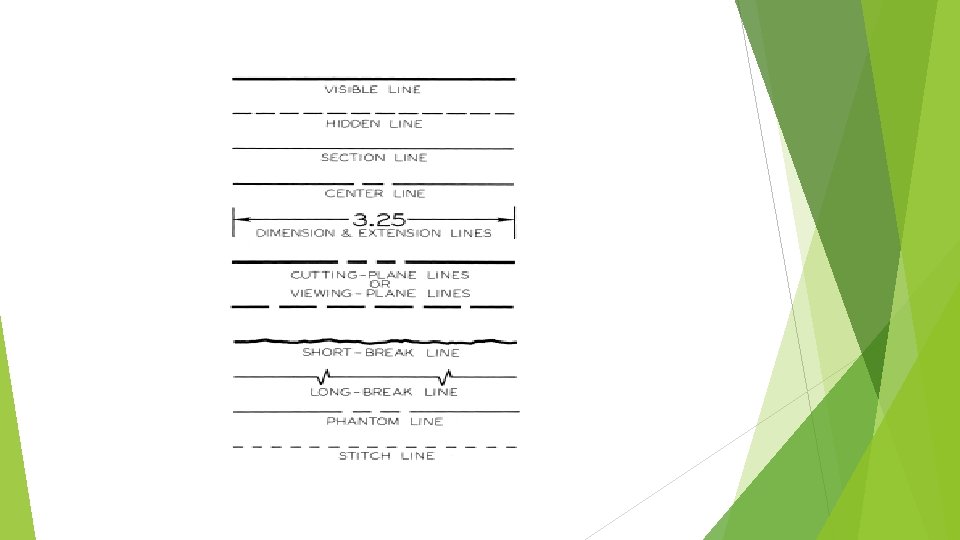
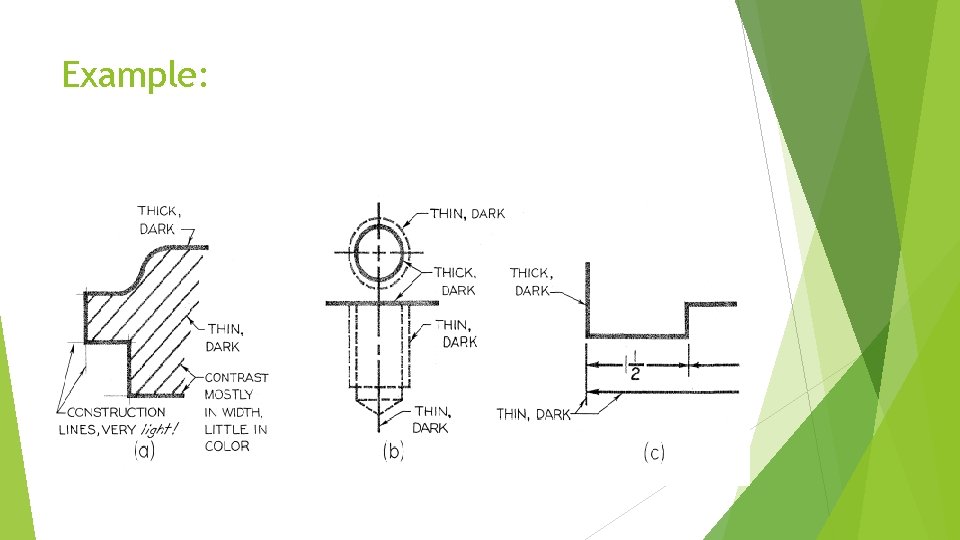
Alphabet of lines 1: Visible lines: thick dark line use to show outline o object, visible and surfaces. 2: Construction: Very light and thin line use to construct layout work 3: Dimension line: Thin and dark lines use to show the size of an object with a numeric value. 4: Hidden line: Short dash lines use to show non visible surface. Usually shows as medium thickness 5: Centre line: long and short dash lines. Usually indicates center of holes, circle and arcs. 6: extension line: thin and dark line use to show the starting and ending of dimension. 7: short and long break lines: short and long medium line use to show cutaway view of long section. 8: phantom line: long line followed by two short dashes use to show alternate position of moving part. 9: Section line: medium lines at 45 degrees use to show interior view of slid areas of cutting plane line.
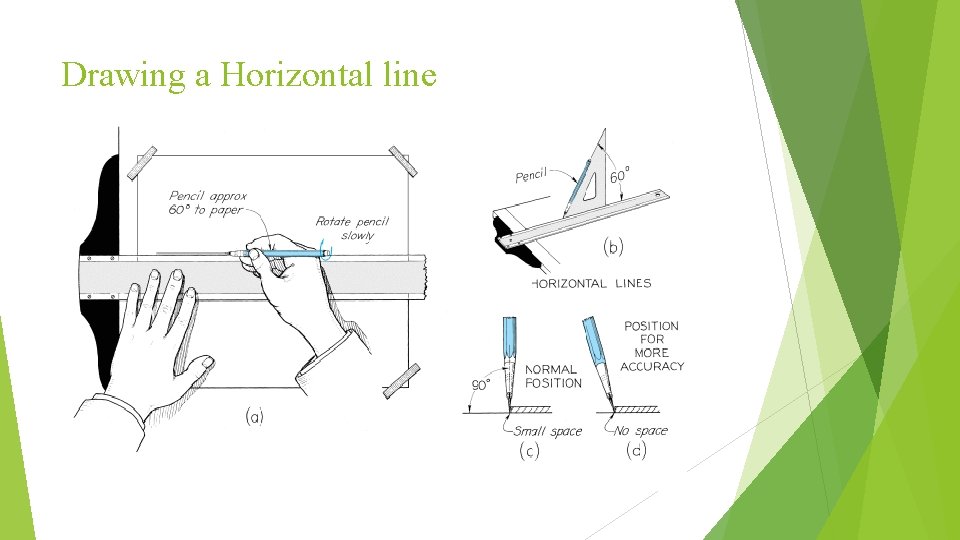
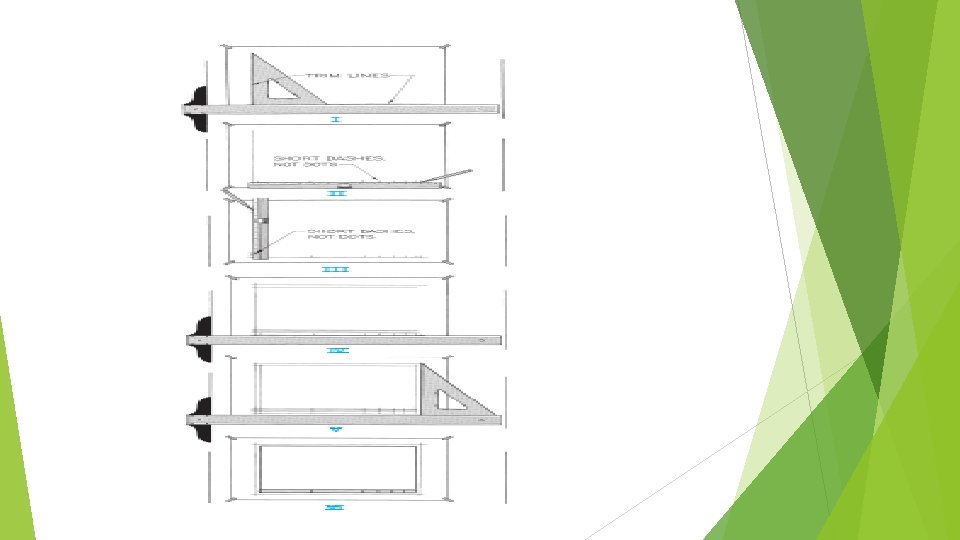
Drawing a Horizontal line
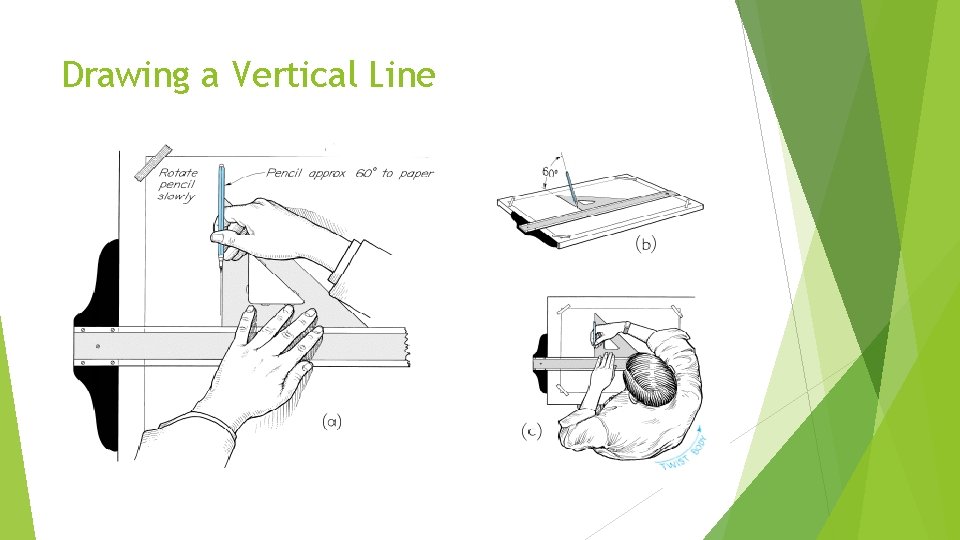
Drawing a Vertical Line
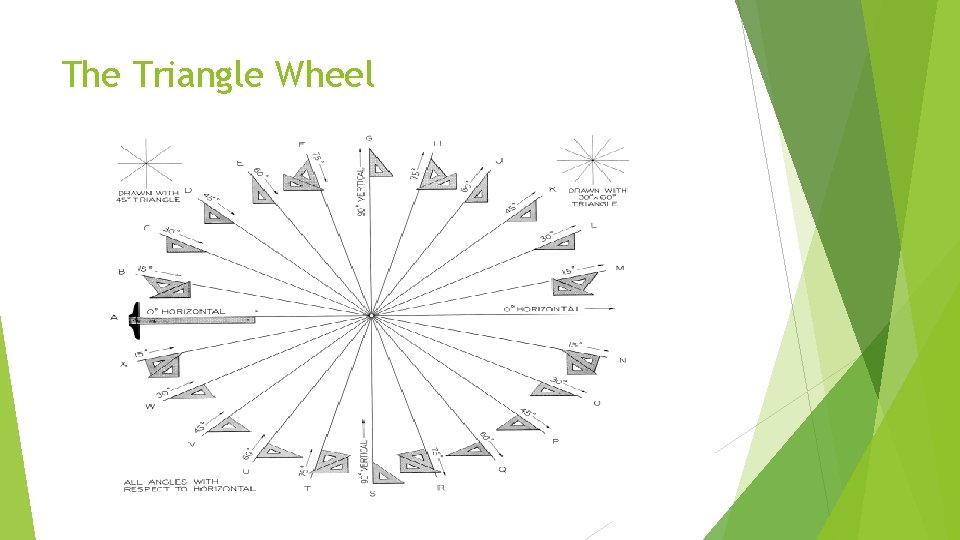
The Triangle Wheel
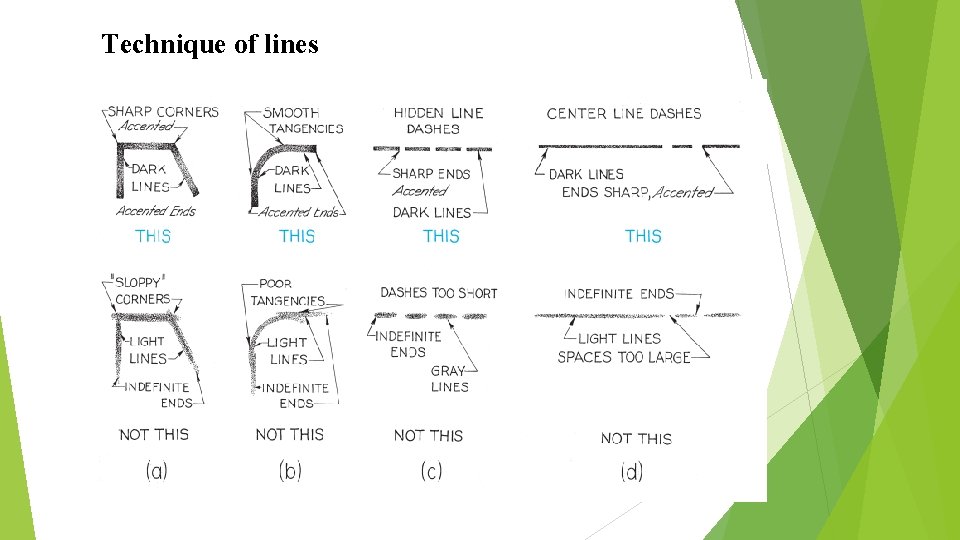
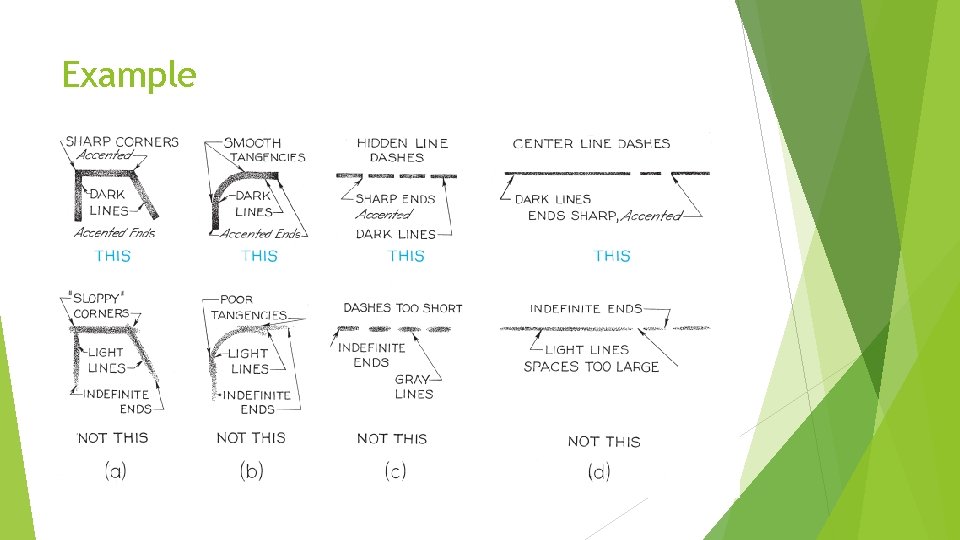
Technique of lines
Example:
Example
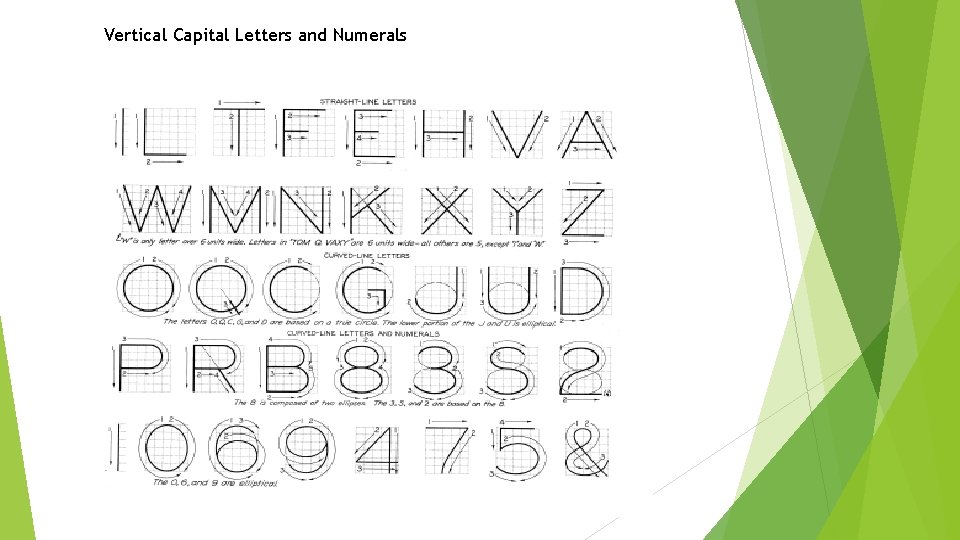
Vertical Capital Letters and Numerals
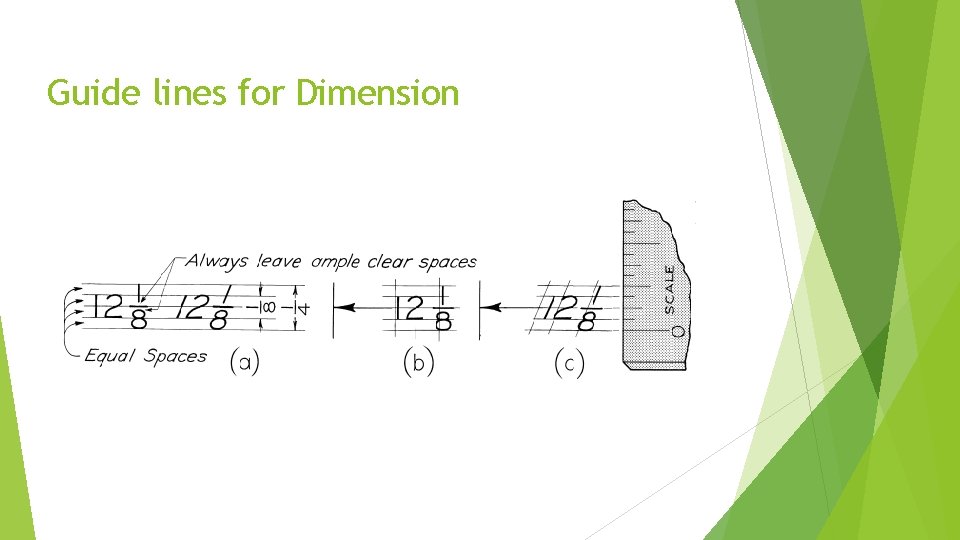
Guide lines for Dimension
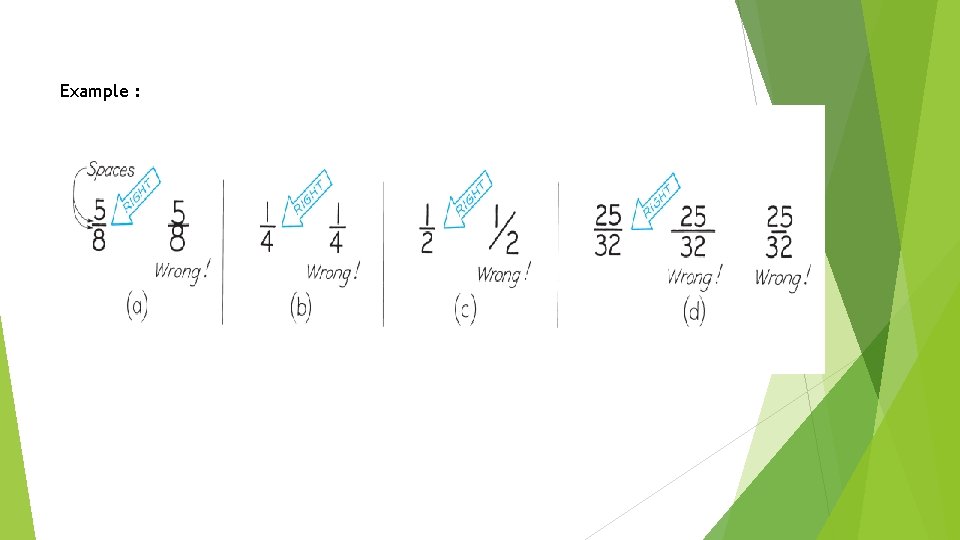
Example :
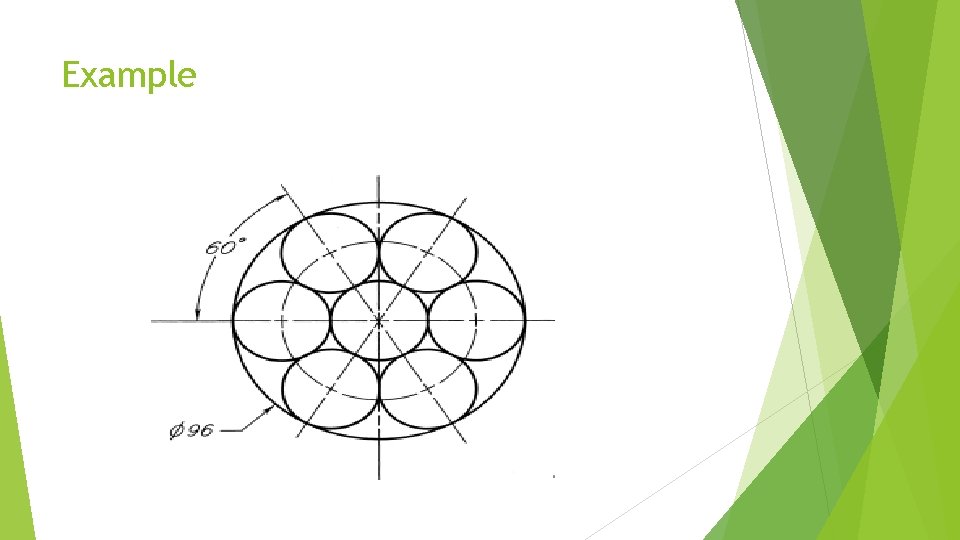
Example
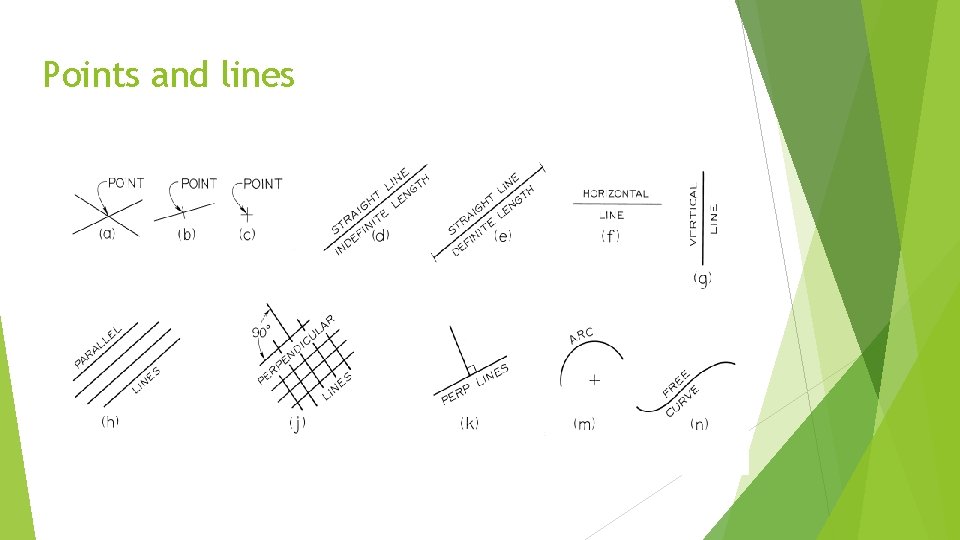
Points and lines
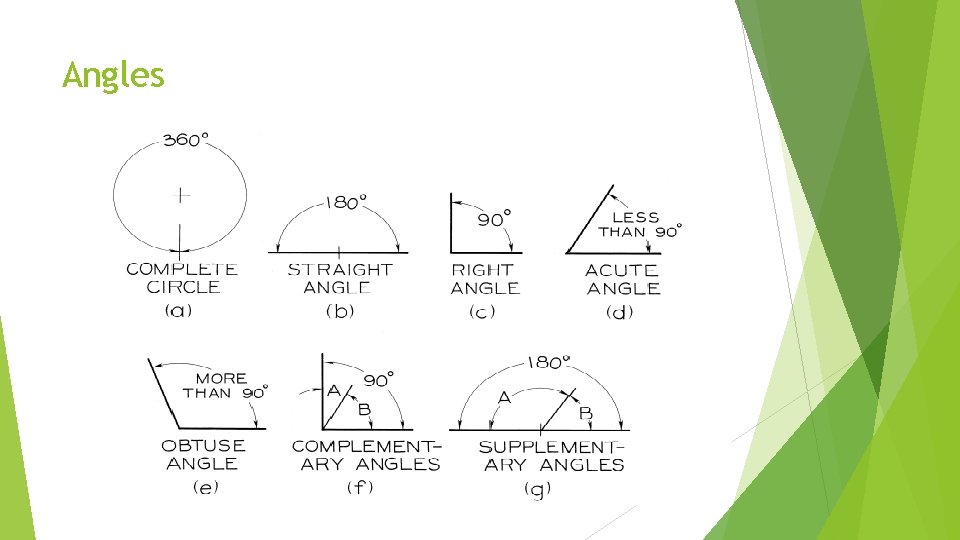
Angles
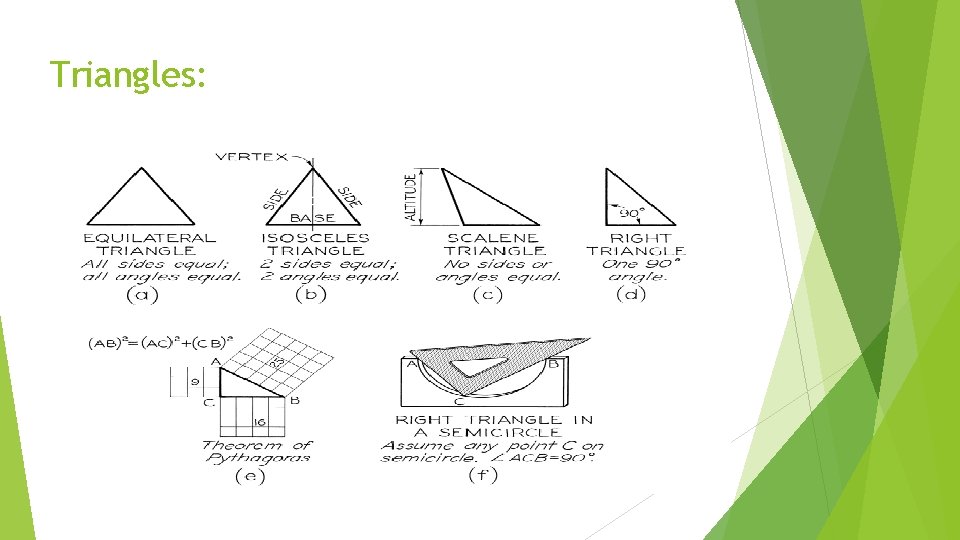
Triangles:
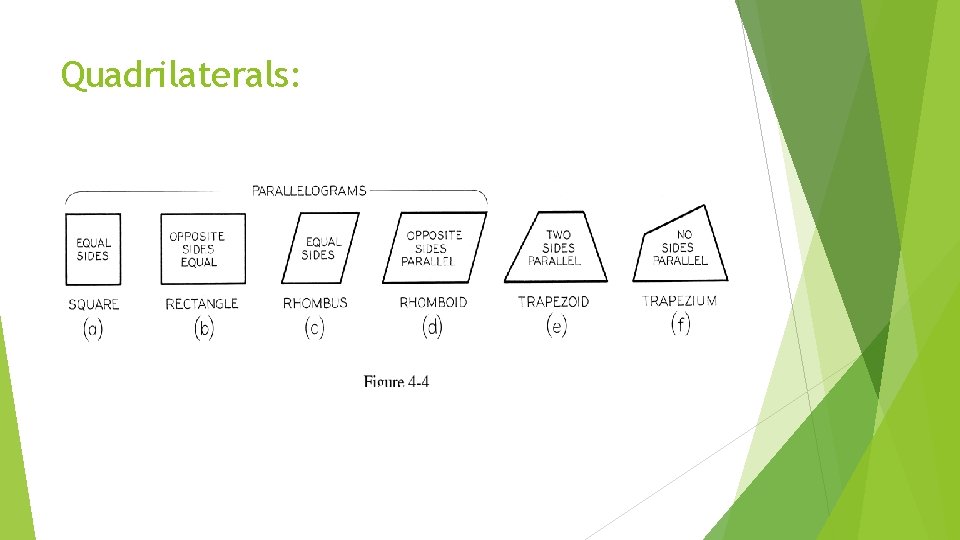
Quadrilaterals:
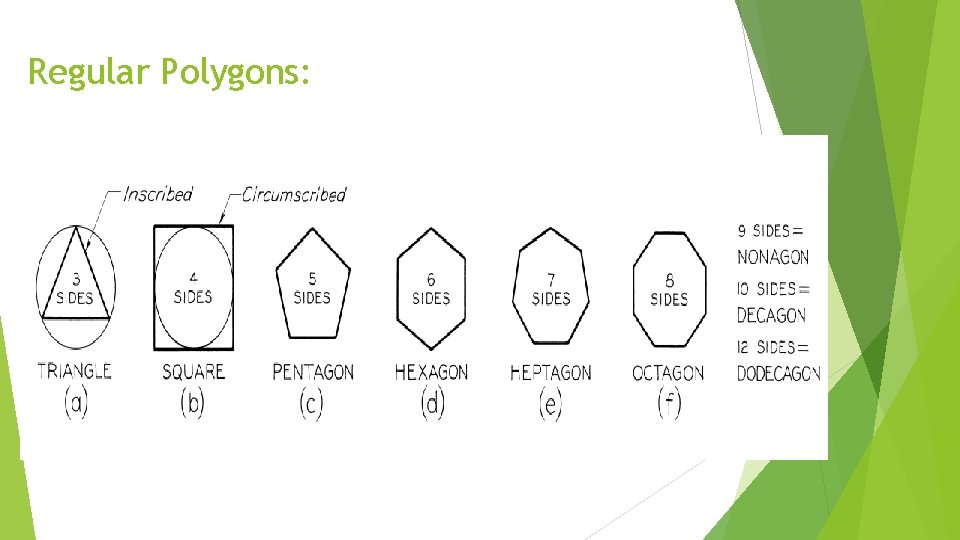
Regular Polygons:
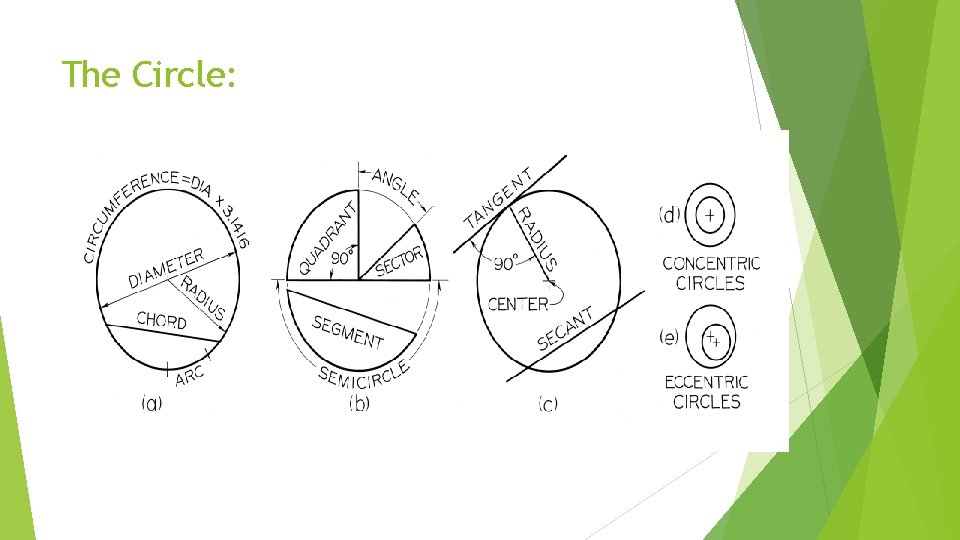
The Circle:
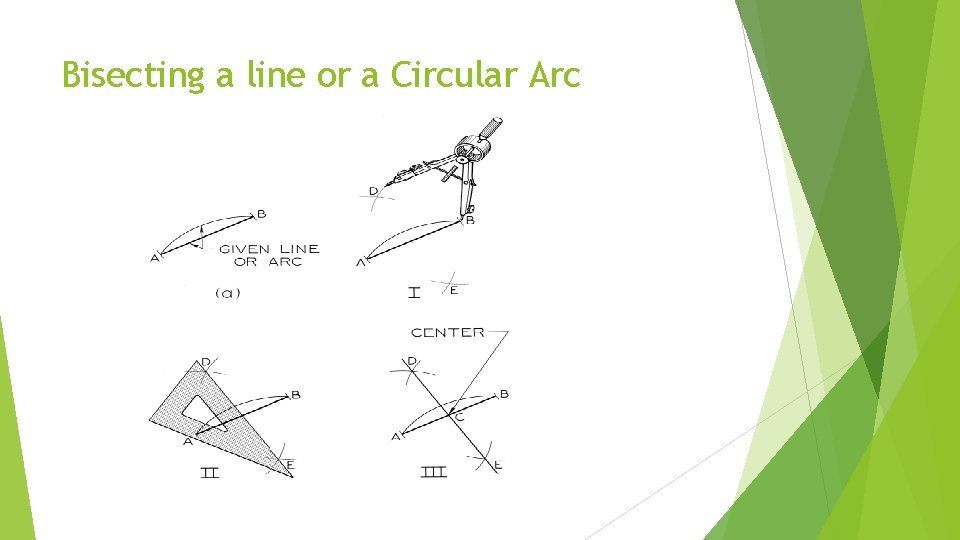
Bisecting a line or a Circular Arc
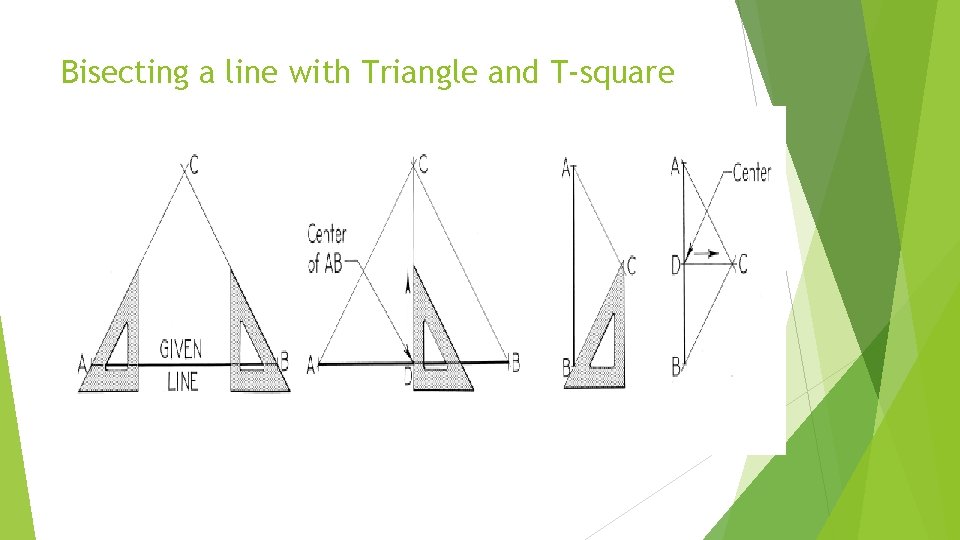
Bisecting a line with Triangle and T-square
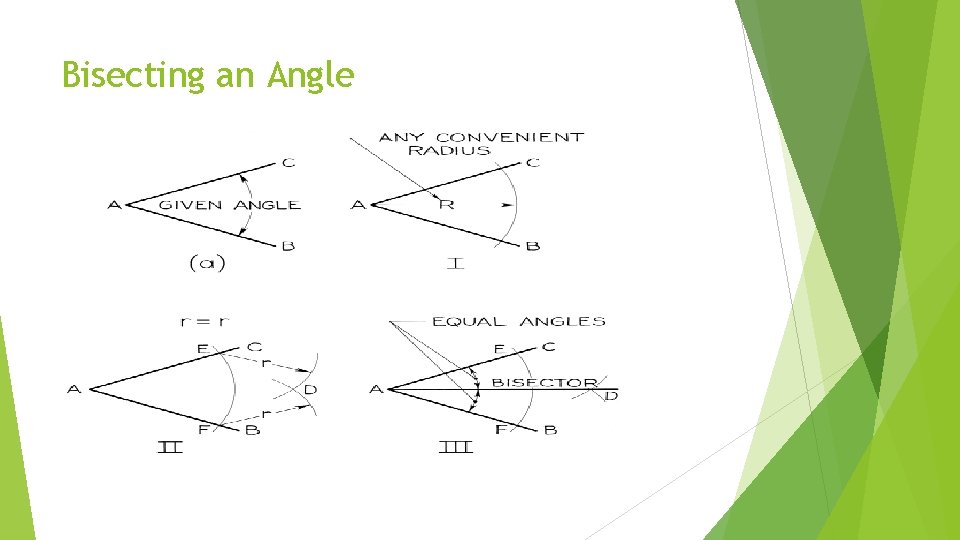
Bisecting an Angle
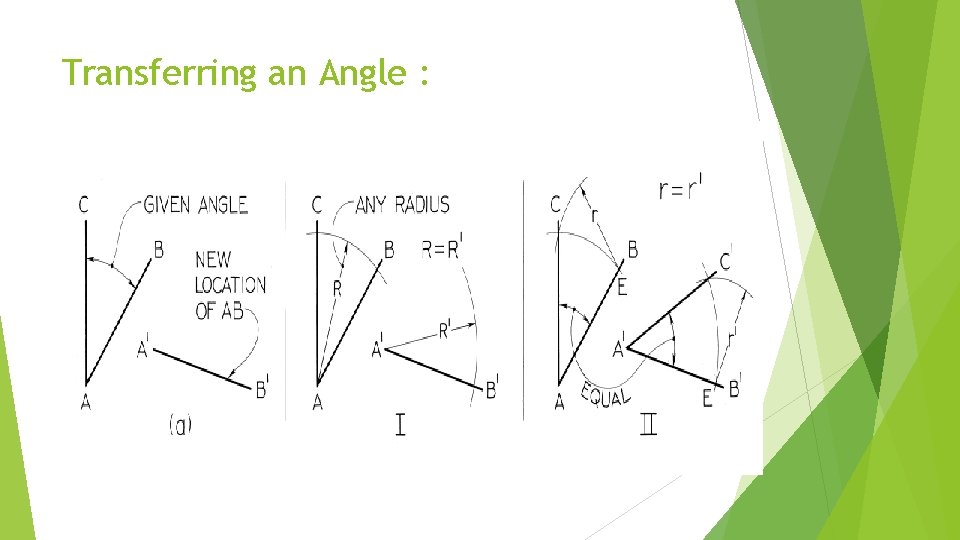
Transferring an Angle :
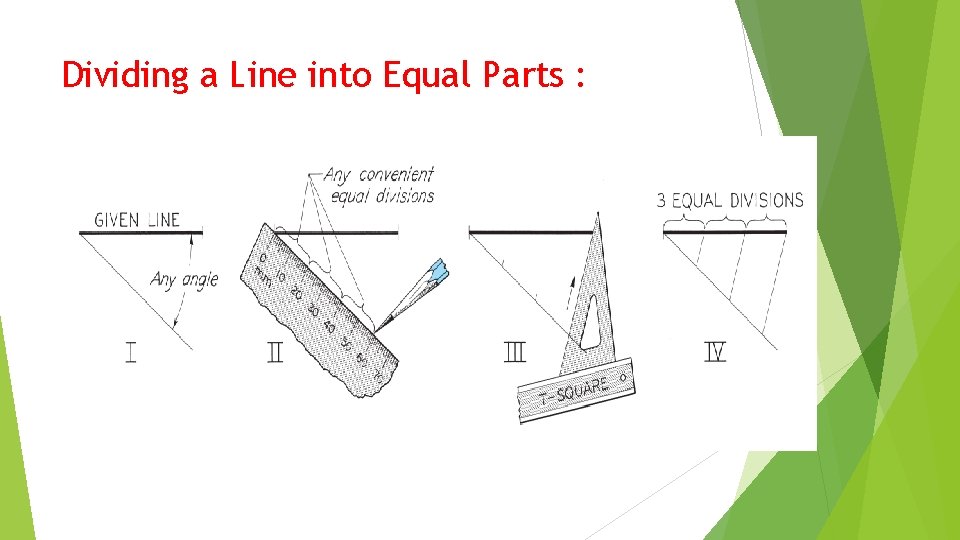
Dividing a Line into Equal Parts :
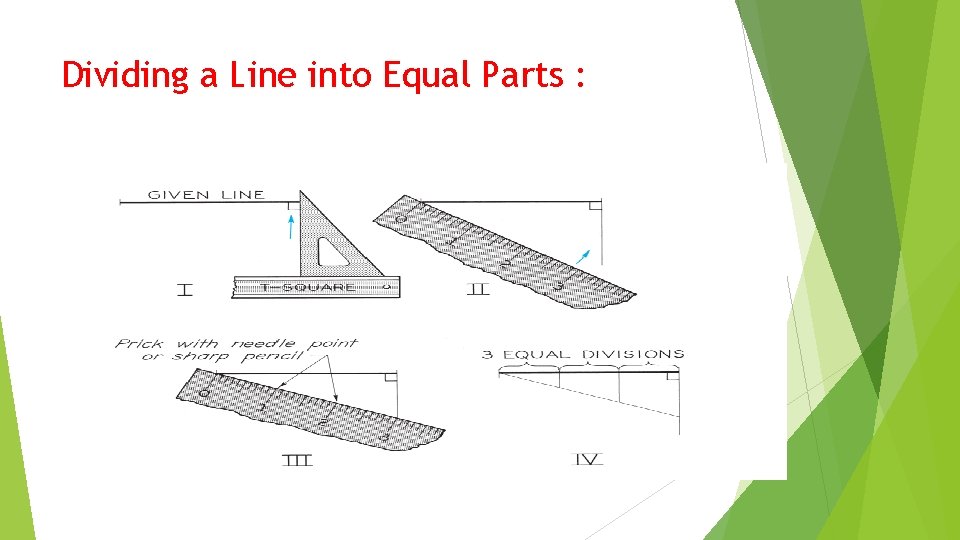
Dividing a Line into Equal Parts :
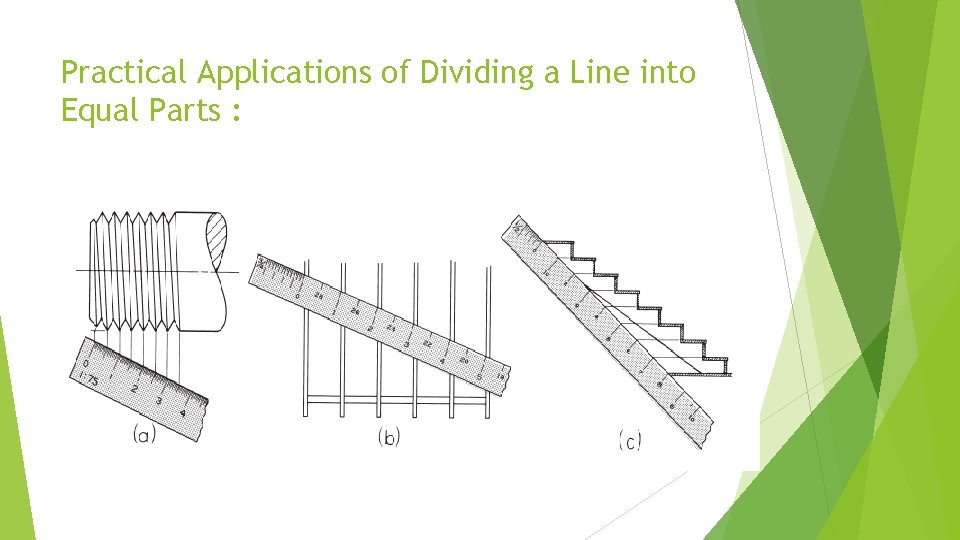
Practical Applications of Dividing a Line into Equal Parts :
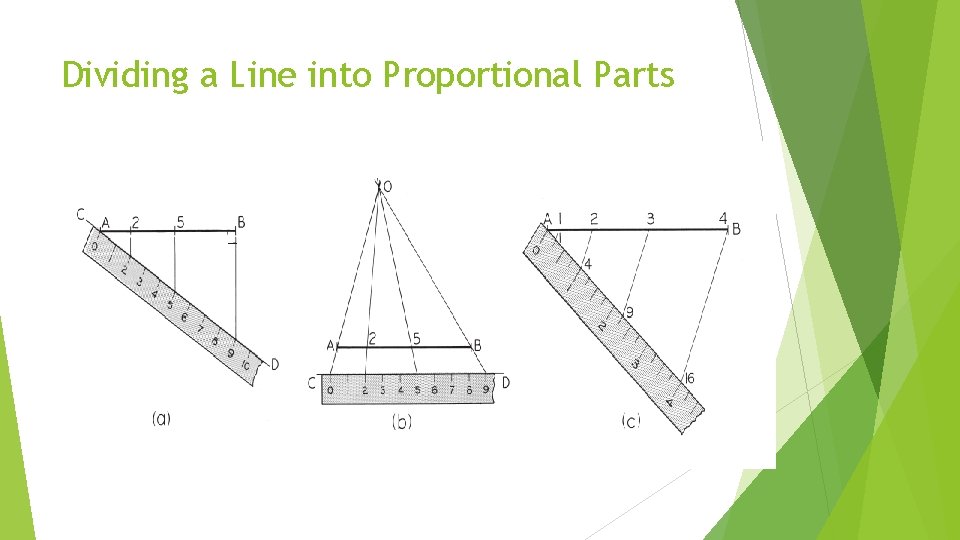
Dividing a Line into Proportional Parts
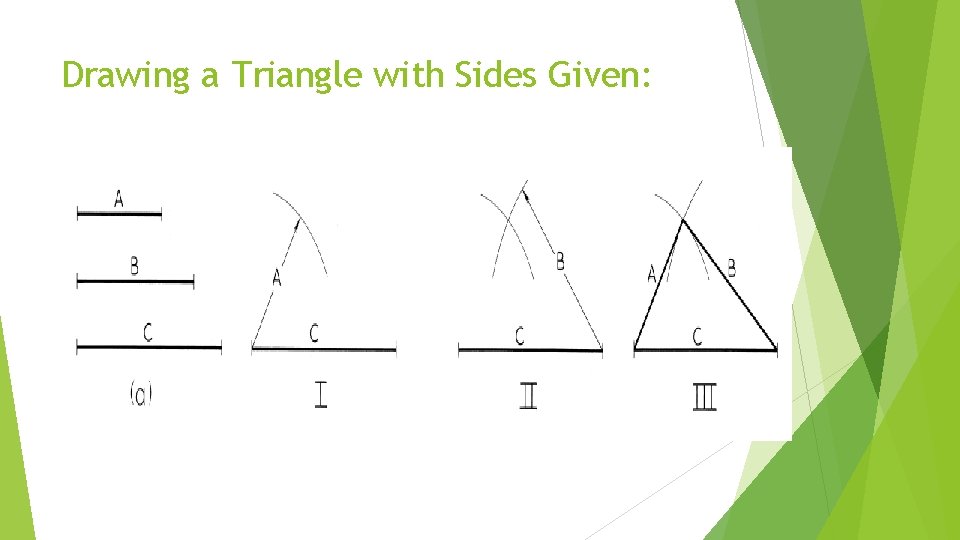
Drawing a Triangle with Sides Given: