
ENGINEERING Chemical Engineering Module 5 3 Proudly developed
- Slides: 16
ENGINEERING Chemical Engineering Module 5. 3 Proudly developed by SMART with funding from Inspiring Australia
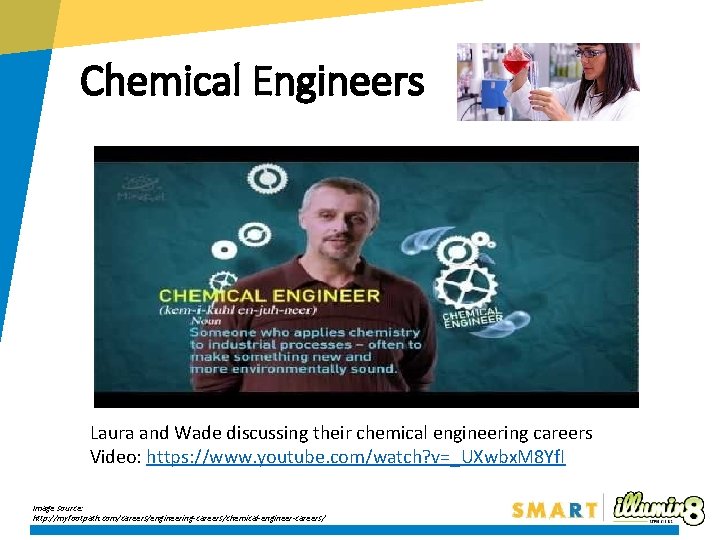
Chemical Engineers Laura and Wade discussing their chemical engineering careers Video: https: //www. youtube. com/watch? v=_UXwbx. M 8 Yf. I Image source: http: //myfootpath. com/careers/engineering-careers/chemical-engineer-careers/
Chemical Engineering: Soap? Image source: Pixabay. com
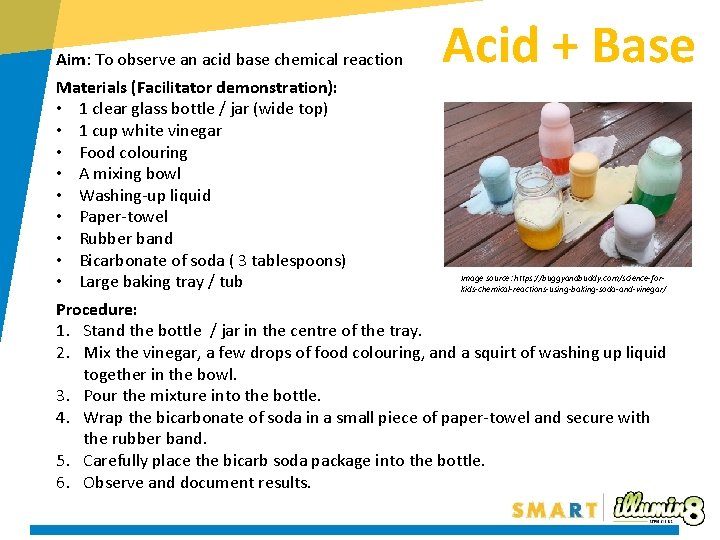
Aim: To observe an acid base chemical reaction Materials (Facilitator demonstration): • 1 clear glass bottle / jar (wide top) • 1 cup white vinegar • Food colouring • A mixing bowl • Washing-up liquid • Paper-towel • Rubber band • Bicarbonate of soda ( 3 tablespoons) • Large baking tray / tub Acid + Base Image source: https: //buggyandbuddy. com/science-forkids-chemical-reactions-using-baking-soda-and-vinegar/ Procedure: 1. Stand the bottle / jar in the centre of the tray. 2. Mix the vinegar, a few drops of food colouring, and a squirt of washing up liquid together in the bowl. 3. Pour the mixture into the bottle. 4. Wrap the bicarbonate of soda in a small piece of paper-towel and secure with the rubber band. 5. Carefully place the bicarb soda package into the bottle. 6. Observe and document results.
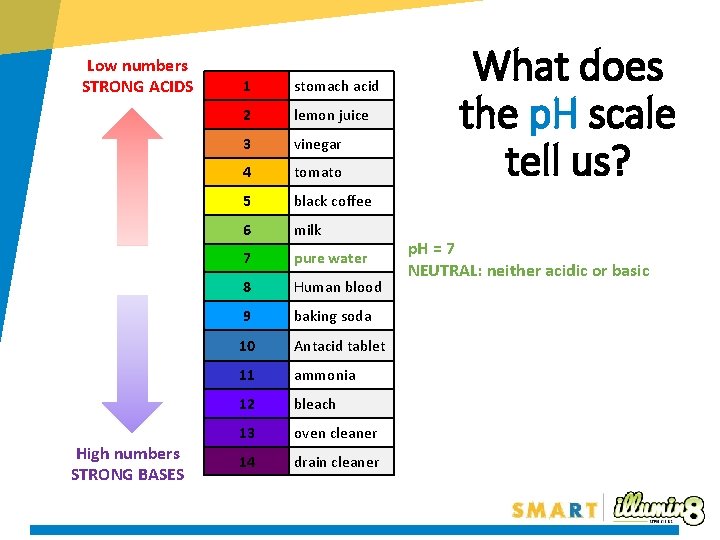
Low numbers STRONG ACIDS High numbers STRONG BASES 1 stomach acid 2 lemon juice 3 vinegar 4 tomato 5 black coffee 6 milk 7 pure water 8 Human blood 9 baking soda 10 Antacid tablet 11 ammonia 12 bleach 13 oven cleaner 14 drain cleaner What does the p. H scale tell us? p. H = 7 NEUTRAL: neither acidic or basic
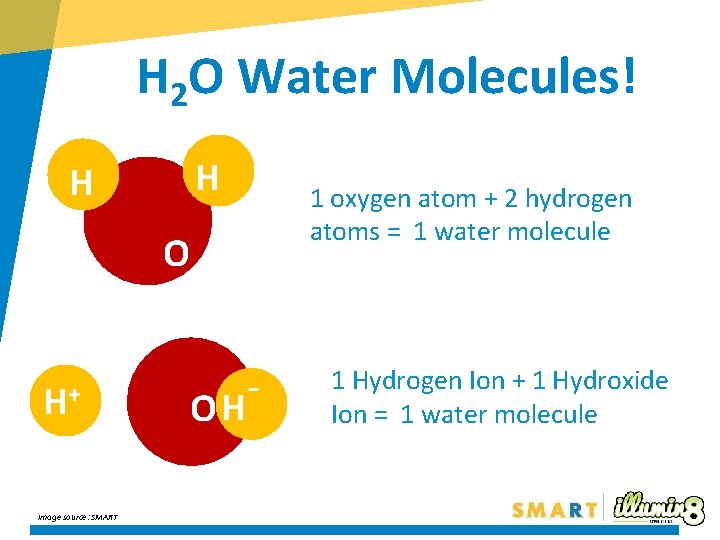
H 2 O Water Molecules! H O O 1 oxygen atom + 2 hydrogen atoms = 1 water molecule δ- H+ OH O H H Image source: SMART 1 Hydrogen Ion + 1 Hydroxide Ion = 1 water molecule
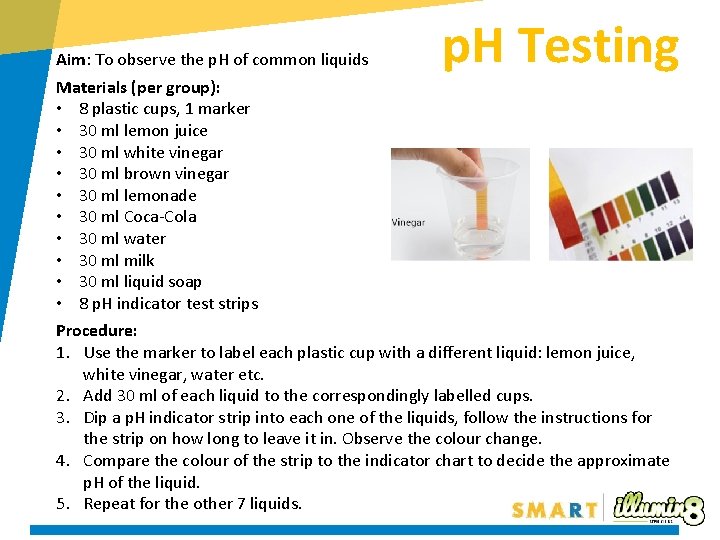
Aim: To observe the p. H of common liquids Materials (per group): • 8 plastic cups, 1 marker • 30 ml lemon juice • 30 ml white vinegar • 30 ml brown vinegar • 30 ml lemonade • 30 ml Coca-Cola • 30 ml water • 30 ml milk • 30 ml liquid soap • 8 p. H indicator test strips p. H Testing Procedure: 1. Use the marker to label each plastic cup with a different liquid: lemon juice, white vinegar, water etc. 2. Add 30 ml of each liquid to the correspondingly labelled cups. 3. Dip a p. H indicator strip into each one of the liquids, follow the instructions for the strip on how long to leave it in. Observe the colour change. 4. Compare the colour of the strip to the indicator chart to decide the approximate p. H of the liquid. 5. Repeat for the other 7 liquids.
Chemical Engineering: Medicine? Image source: Pixabay. com
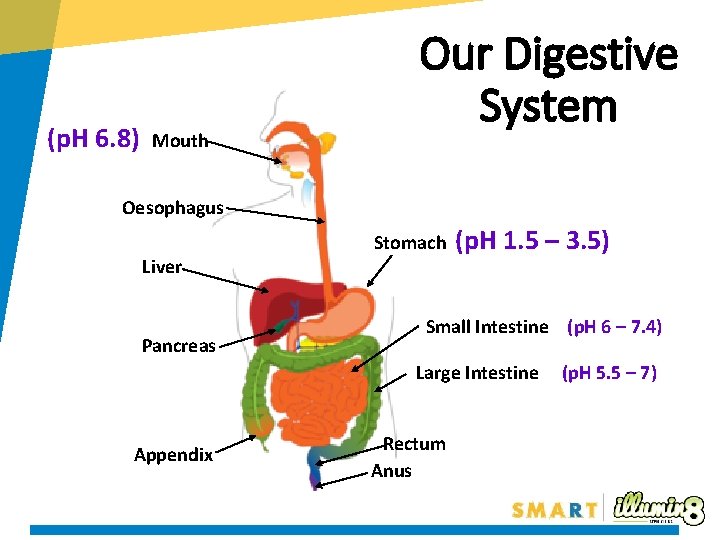
(p. H 6. 8) Mouth Our Digestive System Oesophagus Liver Pancreas Stomach (p. H 1. 5 – 3. 5) Small Intestine (p. H 6 – 7. 4) Large Intestine Appendix Rectum Anus (p. H 5. 5 – 7)
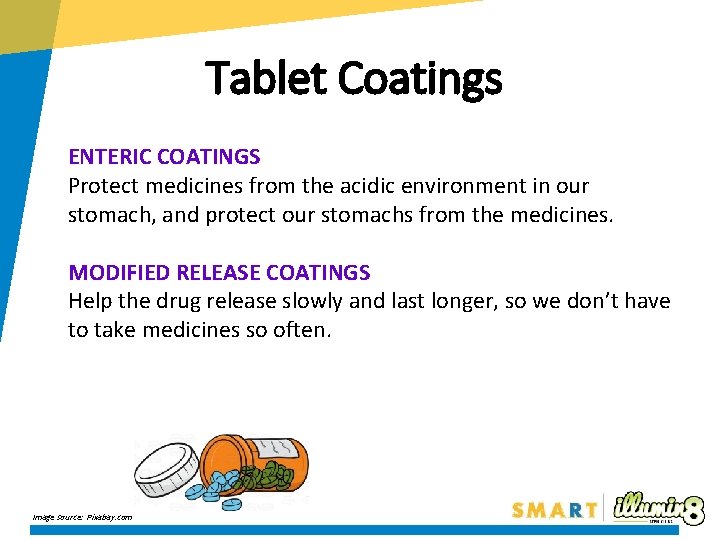
Tablet Coatings ENTERIC COATINGS Protect medicines from the acidic environment in our stomach, and protect our stomachs from the medicines. MODIFIED RELEASE COATINGS Help the drug release slowly and last longer, so we don’t have to take medicines so often. Image source: Pixabay. com
Tablet Coating Challenge! A new drug has been designed to treat a disease harming the small intestine. Hooray! The Problem: The clinical trials so far show that the new drug breaks down in the acidic environment of the stomach, so it never reaches the small intestine to help patients. Your Mission: You and your team of chemical engineers and gastroenterologists (doctors of the digestive organs!) have been asked to experiment with different tablet coatings, to find a coating which will allow the drug to reach the small intestine.
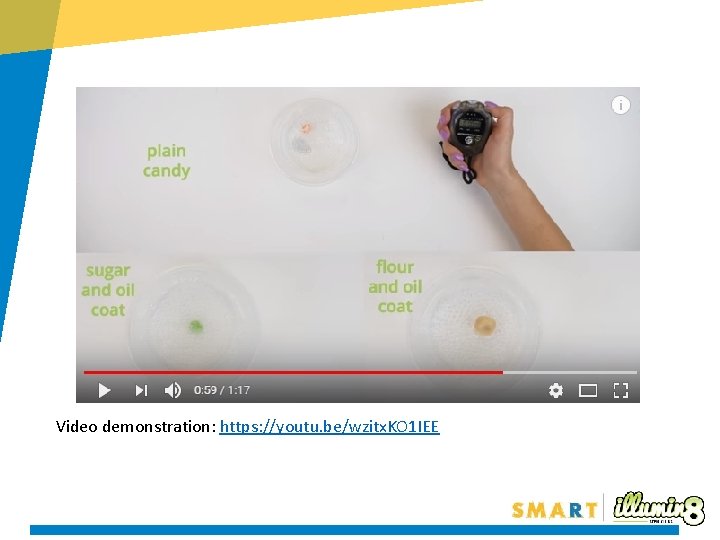
Video demonstration: https: //youtu. be/wzitx. KO 1 IEE
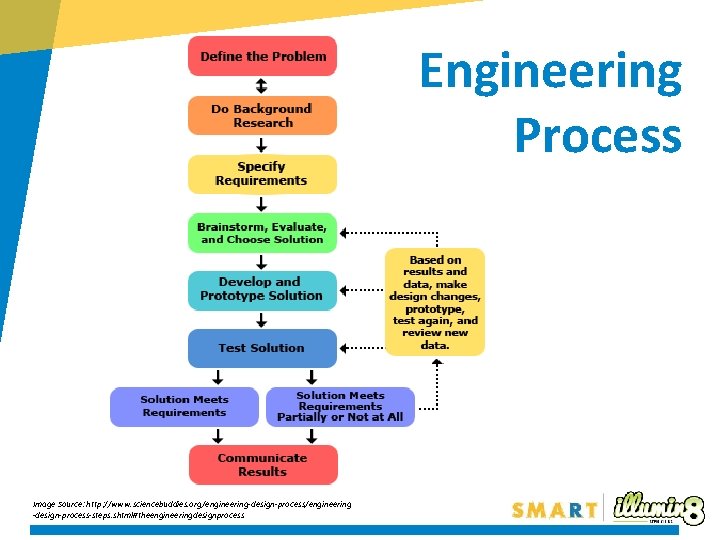
Engineering Process Image Source: http: //www. sciencebuddies. org/engineering-design-process/engineering -design-process-steps. shtml#theengineeringdesignprocess
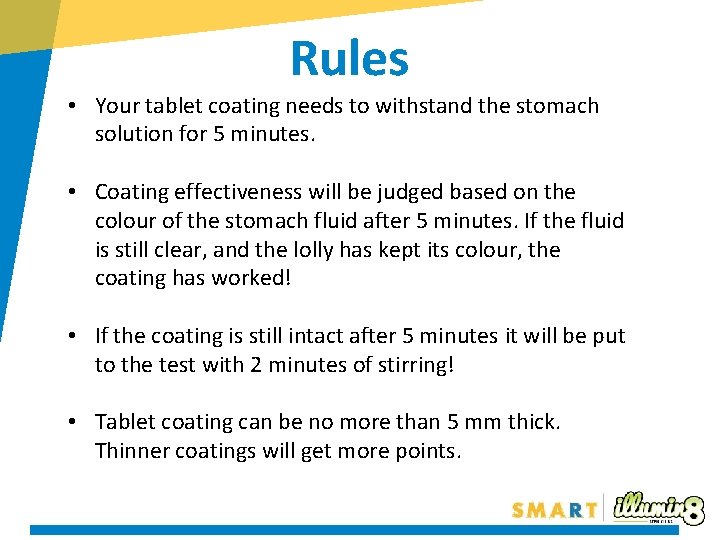
Rules • Your tablet coating needs to withstand the stomach solution for 5 minutes. • Coating effectiveness will be judged based on the colour of the stomach fluid after 5 minutes. If the fluid is still clear, and the lolly has kept its colour, the coating has worked! • If the coating is still intact after 5 minutes it will be put to the test with 2 minutes of stirring! • Tablet coating can be no more than 5 mm thick. Thinner coatings will get more points.
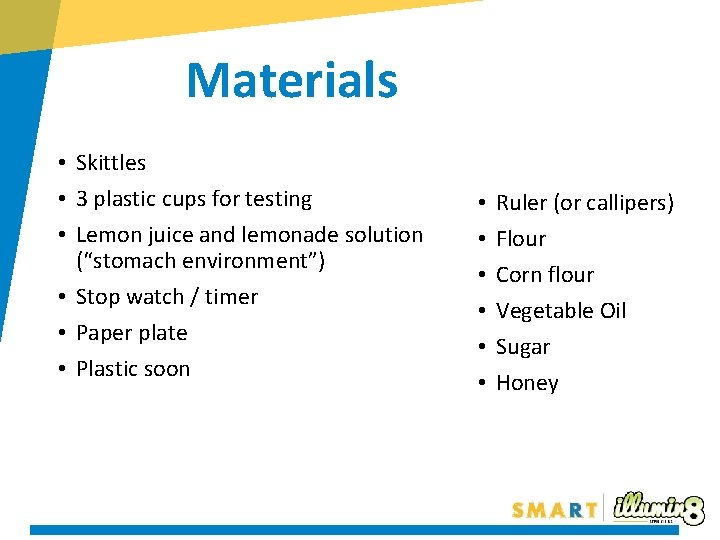
Materials • Skittles • 3 plastic cups for testing • Lemon juice and lemonade solution (“stomach environment”) • Stop watch / timer • Paper plate • Plastic soon • • • Ruler (or callipers) Flour Corn flour Vegetable Oil Sugar Honey
References Challenge activity inspired by the ‘Protect that Pill’ activity at Teach. Engineering. org. Copyright © 2008 Teach. Engineering. org. Used with permission. https: //www. teachengineering. org/view_activity. php? url=collection/cub_/activities/ cub_biomed/cub_biomed_lesson 05_activity 1. xml Chemical engineering • https: //www. engineersaustralia. org. au/Communities-And. Groups/Colleges/Chemical • https: //www. youtube. com/watch? v=_UXwbx. M 8 Yf. I Acid and Bases • Video Demonstration: https: //youtu. be/t. TP 1 LJl 4 BTk • https: //www. visionlearning. com/en/library/Chemistry/1/Acids-and-Bases/58 • http: //www. chem 4 kids. com/files/react_acidbase. html Digestive system • http: //www. gesa. org. au/resources/patients/the-gastrointestinal-gi-system/ • http: //patients. gi. org/what-is-a-gastroenterologist/