
Engineered for Tomorrow Subject Name Wireless Networks and
Engineered for Tomorrow Subject Name: Wireless Networks and Mobile Computing Subject Code: 10 CS 831 Prepared By: Mrs. Thanu Kurian Department: Computer Science Date: 30/01/2015 12/28/2021
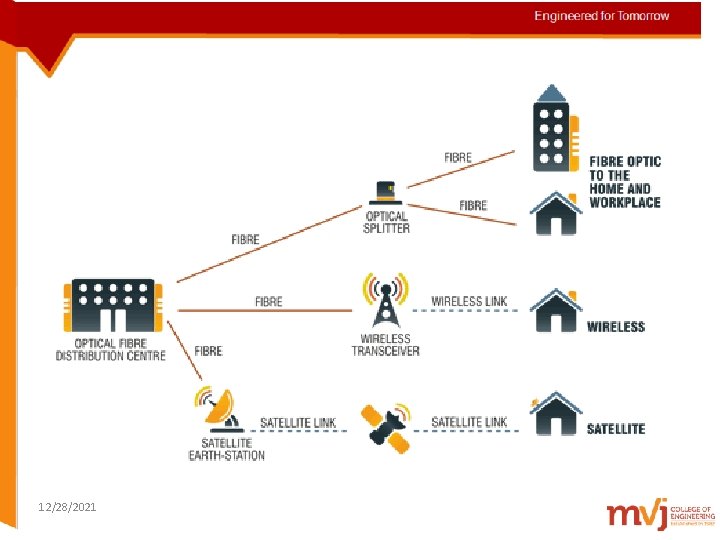
Engineered for Tomorrow Networks § Wireline Networks(Fixedline) § Designed over copper wire and fiber optic Eg: fixed telephone networks and broadband networks over DSL § Wireless Networks(Mobile) § Networks used by radio taxis, cellular phone Eg: PCS(Personal Cellular System), AMPS(Advanced Mobile Phone System), GSM, CDMA § Ad hoc Networks 12/28/2021
Engineered for Tomorrow 12/28/2021
Engineered for Tomorrow Networks § Ad hoc Networks § A collection of nodes which can communicate with each other without any fixed connection or a central base station § In this, some devices are part of the network only for the duartion of a communication session § The term adhoc(meaning “for this purpose only”) has been applied to networks in which new devices can be quickly added using for eg using bluetooth or wireless LAN § Bearers 12/28/2021
Engineered for Tomorrow Architecture of Mobile Computing § Transaction processing(TP)-information processing divided into individual operations called transactions § In mainframe computers many mission critical systems use TP § At the core the TP monitor software manages terminal resources and database resources § Terminal resources-VDU(Visual display unit, POS(Point of Sale terminal), printers § Database resources § Centralized mainframe distributed systems (Two-tier client server architecture) § Centralized server based architecture (Three-tier architecture) 12/28/2021
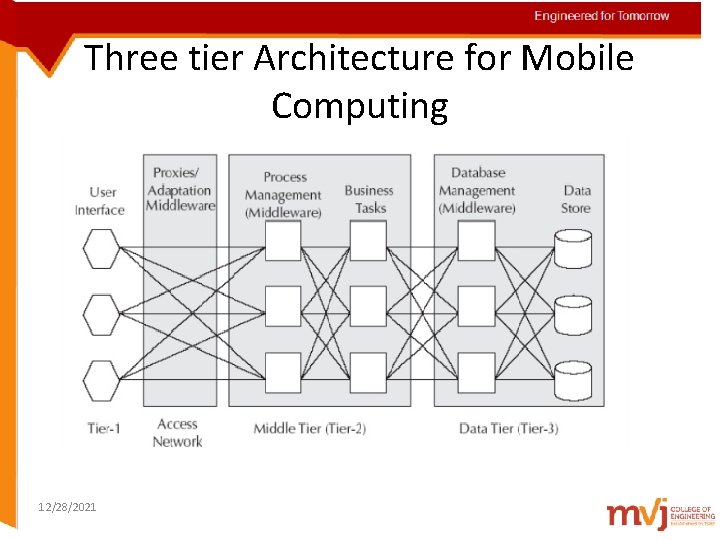
Engineered for Tomorrow Three tier Architecture for Mobile Computing 12/28/2021
Engineered for Tomorrow § First layer(User interface /presentation layer) § Deals with user facing device handling and rendering § User services(session, text input, dialog and display management) § Second layer(Process Management/Application tier) § Business logic and rules are executed § Controls asynchronous transactions and asynchronous queuing § Third layer(Database management/Data tier) § Database access and management 12/28/2021
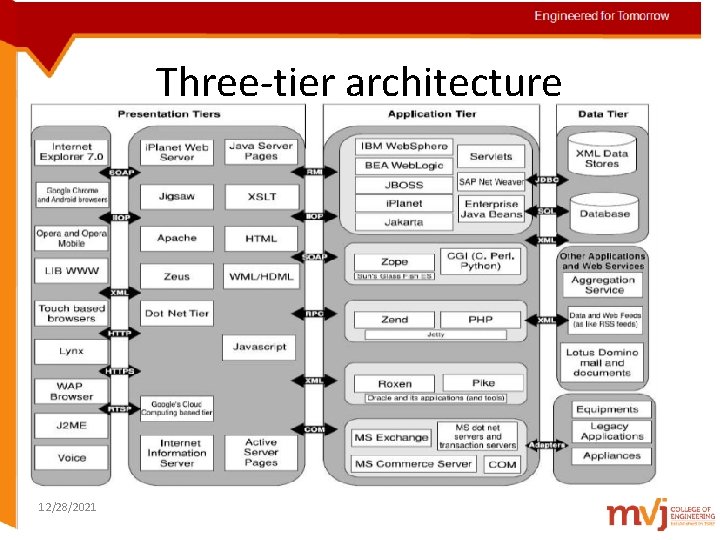
Engineered for Tomorrow Three-tier architecture 12/28/2021
Engineered for Tomorrow § Presentation(Tier-1) § User facing system(agent software) § Presents information to the end user § Includes web browsers(Mozilla, Lunx, Internet explorer, Netscape navigator) 12/28/2021
Engineered for Tomorrow § Agent software functions as an agent for a user or another program working autonomously in a particular environment § As an applet- access some other application through http api to sophisticated applications like real time sales and inventory management § As web scraper- extracts information from websites. It transforms unstructured data on the web into structured data 12/28/2021
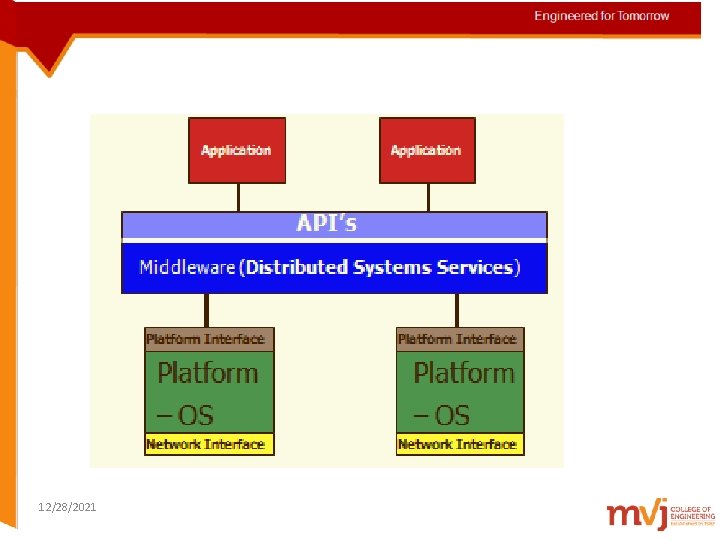
Engineered for Tomorrow § Application(Tier-2) § Engine of a ubiquitous application § It processes user input, obtains data and makes decisions § Includes technology like CGIs, Java, JSP, . NET services, Cold. Fusion etc § Middleware is connectivity software that provides a mechanism for processes to interact with other processes running on multiple networked machines 12/28/2021
Engineered for Tomorrow 12/28/2021
Engineered for Tomorrow § Middleware can be grouped into following categories 1. 2. 3. 4. 5. 6. 12/28/2021 Message oriented middleware Transaction Processing middleware Database middleware Communication middle ware Distributed object and components Transcoding middleware
Engineered for Tomorrow § Message Oriented Middleware § A middleware framework that loosely connects different applications through asynchronous exchange of messages § MOM system provides a message queue between any two interoperating applications § If destination process busy, message is held in a temporary storage location until it is processed Eg: Message queue from IBM known as MQ services JMS(Java Message Service) in Java 12/28/2021

Engineered for Tomorrow 12/28/2021
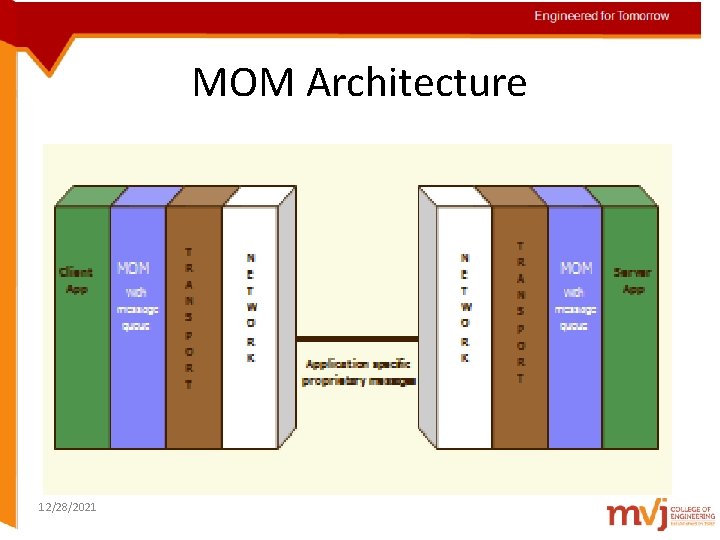
Engineered for Tomorrow MOM Architecture 12/28/2021
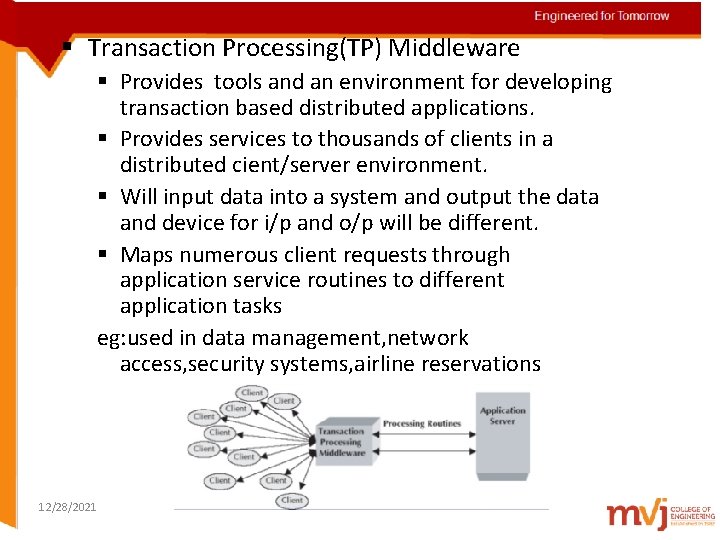
Engineered for Tomorrow § Transaction Processing(TP) Middleware § Provides tools and an environment for developing transaction based distributed applications. § Provides services to thousands of clients in a distributed cient/server environment. § Will input data into a system and output the data and device for i/p and o/p will be different. § Maps numerous client requests through application service routines to different application tasks eg: used in data management, network access, security systems, airline reservations 12/28/2021
Engineered for Tomorrow § Model View Controller § An eg of transaction processing system § An application is split into separate layers§ Presentation § Domain logic § data access § In MVC the data access layer is encapsulated by the model § View is responsible for rendering the model into a form suitable to be undesrstood by the user § Controller manages processes and responds to events 12/28/2021
Engineered for Tomorrow § Communication Middleware § Used to connect one application to another § Quite useful in telecommunication world § Example-Using telnet to connect one application to another § Distributed Objects and Components § Eg: CORBA(Common Object Request Broker Architecture)-An architecture for creating, distributing and managing distributed program objects in a network § Allows programs developed by different vendors to to communicate § Integrates machines ranging from mainframes through minis 12/28/2021
Engineered for Tomorrow Transcoding Middleware § Used to transcode one format of data to another to suit the need of client Eg: If we want to access a website through a mobile phone supporting WAP, we need to transcode the HTML page to. WML page so that the mobile phone can access it. 12/28/2021
Engineered for Tomorrow Internet Content Adaptation Protocol(ICAP) • Provides simple object based content vectoring for HTTP services • A light weight protocol to do transcoding on http messages. • Similar to executing a RPC on a http request 12/28/2021
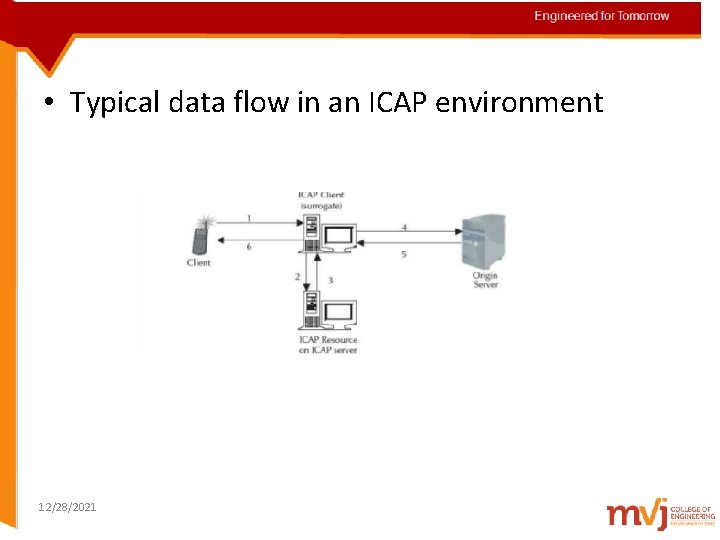
Engineered for Tomorrow • Typical data flow in an ICAP environment 12/28/2021
Engineered for Tomorrow 1. A user agent makes a request to the ICAP server 2. The surrogate sends the request to the ICAP server 3. The ICAP server executes the ICAP resources service on the request and sends the possible modified request or response back to the ICAP client 4. The surrogate sends the request, possibly different from the original client’s request, to the original server 5. The origin server responds to the request 6. The surrogate sends the reply to the client 12/28/2021
Engineered for Tomorrow ICAP services § § § § Suit content delivery based on network bandwidth Suit content delivery based on device characteristics Language translation Virus checking for requested content Content filtering Local real time advertisement insertion like television Local real time advertisement elimination for premium subscribers Wireless protocol translation Anonymous web usage profiling Transcoding or image enhancement Image magnification for the elderly Image sixe reduction based on device display characteristics Intelligent video condensation Digest production/batch download of Web content Content filtering Peer to peer compression and encryption of data 12/28/2021
Engineered for Tomorrow Web Services § Provides a standard means of communication and information exchange among different software applications running on a variety of platforms § Software systems interact with web service using XML based messgaes § Web service architecture defines standards for message exchange between sservice requester and service provider 12/28/2021
Engineered for Tomorrow Data(Tier-3) § Store data § Repository for both temporary and permanent data § Range from sophisticated relational database to simple text files Database Middleware § Runs between the application program and the database § Also called database connectors. § Allows business logic to be independent and transparent of the database technology and database vendor. 12/28/2021
Engineered for Tomorrow Sync. ML § A protocol for synchronization of data access from different nodes § A method to synchronize contact and calendar information between some type of handheld device and a computer(personal or network based) § Works over all networks used by mobile devices-wired and wireless 12/28/2021
Engineered for Tomorrow Design Considerations for Mobie Computing § Context information is the information that helps determine the state of an object or information related to the surrounding environment of an actor in that environment § Mobility implies that attributes associated with devices and users will change constantly § Such changes will mean that the content and behaviour of applications should be adapted to suit to current situation 12/28/2021
Engineered for Tomorrow § Some examples are: § Content with context awareness § Different services for different client context § Content switch on context § Service is the same for internet, PDA and WAP § All access banks service through http: //www. mybank. com/ § An intelligent code identifies the agent to decide what type of device or context it is § Content transcoding on context § Middleware intelligently identifies the context either from http or additional customized parameters 12/28/2021
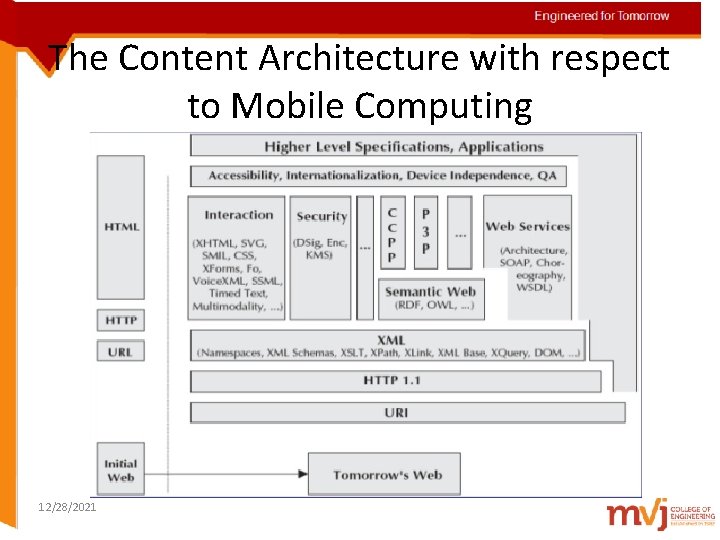
Engineered for Tomorrow The Content Architecture with respect to Mobile Computing 12/28/2021
Engineered for Tomorrow § Client Context Manager Client content manager gather and maintain information in dynamic conditions-user prefernces, enterprise policy, network policy § All these informantion will be provided by a set of awareness modules-sensors(h/w or s/w) § Any information available at the time of an interaction can be seen as context information § Examples § § § § § 12/28/2021 Identity Spatial information Temporal information Environmantal information Social situation Rosources that are nearby Availlability of resources Physiologica measurements’activity Schedules and agendas
Engineered for Tomorrow Context Aware System § A system is context aware if it can extract, interpret and use content related information to adapt its functionality to the current content § This leads to three aspects of context management § Context sensing-The way in which context data is obtained § Context Representation-The way in which context information is stored and transported § Context interpretation-The way in which meaning is obtained from the context represenation 12/28/2021
Engineered for Tomorrow Composite Capabillities/Preference Profiles(CC/PP) § A standard proposed by W 3 C for context information for describing device capabilities and user preferences § Based on RDF(Resource Description Framework) § A CC/PP profile contains a number of attribute names and associated values § CC/PP standard defines vocabularies for different applications to interoperate 12/28/2021
Engineered for Tomorrow § CC/PP is designed in such a way that an origin server of proxy can perform some sort of content to device matching § The sequence of steps include § Device sends serialized profile model with request for content § Origin server receives and converts it into in-memory model § The profile for the requested document is retrieved an in memory model is created § The device profile model is matched against document profile model § A suitable representation of document is chosen § Document is returned to device and presented 12/28/2021
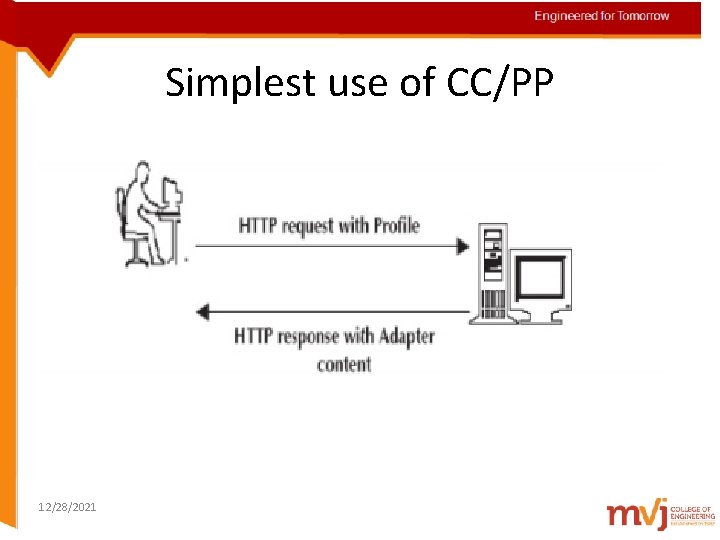
Engineered for Tomorrow Simplest use of CC/PP 12/28/2021
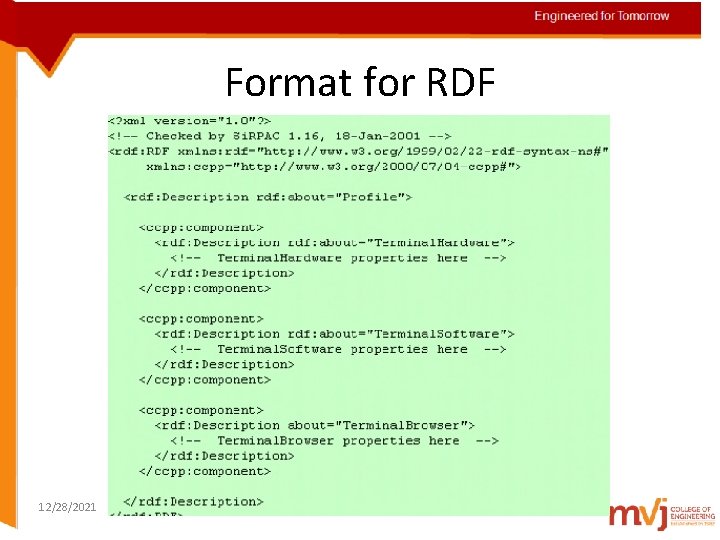
Engineered for Tomorrow Format for RDF 12/28/2021
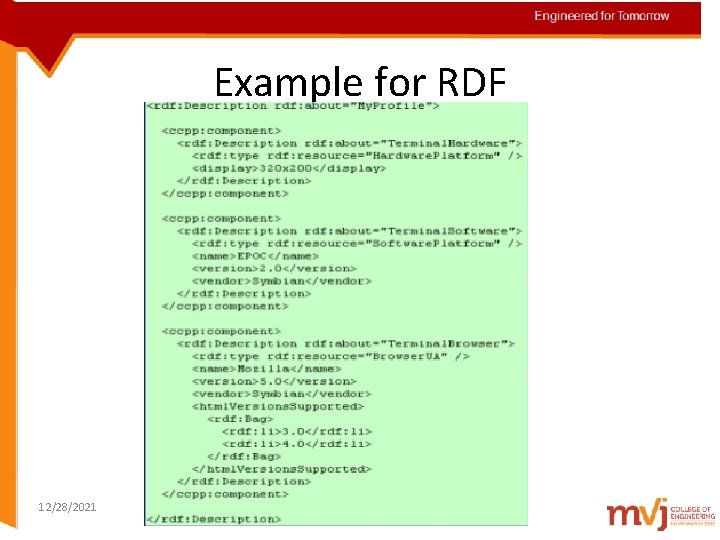
Engineered for Tomorrow Example for RDF 12/28/2021
Engineered for Tomorrow Policy Manager § Policy-set of rules to be followed § Controlling policies related to mobility § With mobility, data or information will be visible from outside the four walls of the enterprise § Mobile computing policy manager defines policy for documents/services and assign roles to users § Should assign roles to users like § Permission § Prohibition § Obligation 12/28/2021
Engineered for Tomorrow Sematic Web § Provides a common framework that allows data to be shared and reused across application, enterprise and community boundaries § Allows to put machine understandable data on the web § Usually built on syntaxes which use URIs to represent data § These syntaxes are called RDF(Resource Description Framework) 12/28/2021
Engineered for Tomorrow Security Manager § Provides secure connection between client device and the origin server § Security w. r. t: § Confidentiality-Nobody can see the message transacted § Integrity-Message should be tamper resistant § Availability-Nobody will be able to stop the service § Non-repudiation-Users of the system can be identified § Trust-System will be trusted 12/28/2021
Engineered for Tomorrow Platform for Privacy Preference Project(P 3 P) § An emerging standard defined by W 3 C § Enables websites to inform users about privacy policies about the site § This will help users to decide whether to release their personal information or not. 12/28/2021
Engineered for Tomorrow Adaptability Manager § Responsible for adapting content, behaviour and other aspects according to content and policy § A device uses services through the network. Content should adapt to the dymnamic situations- Content adaptation § Content adaptation can be at § Content level at Server end (Infopyramid) § Agent level in client device § Intermediate level in middleware 12/28/2021
Engineered for Tomorrow Content adaptation should consider the following factors: • Physical capabilities of device eg: screen size • Logical capabilities of device required for displaying video, image, audio • Effective network bandwidth • Payload ie, no of bits that can be delivered 12/28/2021
Engineered for Tomorrow Transcoding § Transcoding content is done so that it can be viewed on a particular device § Transcoding is classified as: § Spatial transcoding § Frame is changed from one size to another to suit the target device § Temporal transcoding § Downscales the no: of transferred frames to suit the target device § Color transcoding § Using less bits for pixels can reduce bandwidth and modify perception of images § Code transcoding § Change code from one standard to another § Object or sematic transcoding § Semantically extract valuabale objects from scene and transfer them 12/28/2021
Engineered for Tomorrow Autonomous Computing § An autonomous system will free users and system administrators from details of system operation and maintainance compexity § An autonomous system is § Self configurable-System configures itself automatically in accordance with high level policices § Self-optimizing-System will look for ways to improve its operation w. r. t resource, cost and performance § Self-healing-System will detect diagnize and repair localised problems resulting from bugs or failures § Self-protecting-Syetem will defend itself from attacks § Self-upgradable-Syetms will grow and upgrade itself within control of above properties 12/28/2021
Engineered for Tomorrow Context Aware Systems § A context manager maintains information pertaining to location, mobile devices, network, users the environment around each mobile device and any other context information § Location information-helps us to identify location of device § Device information-helps to know the characteristics of the device § Device-User-Agent parameter of HTTP protocol § Network-EIR(Equipment Identity Register) 12/28/2021
Engineered for Tomorrow § Network Information-information about the network § User Information§ Identify the user correctly § Genuine user and nobody is impersonating § Through authentication § Environment information-surrounding awareness for sensor based networks 12/28/2021
Engineered for Tomorrow GPS(Global Positioning System) § System gives us the exact postion on the earth § Funded and controlled by US department of defence § GPS consists of three parts: § Space segment § consist of 24 satellites 11000 nautical miles above earth § Each satellite equipped with clock to let it broadcast messages § User segment § Consists of recievers in users hand, embedded in a mobie device or mounted in a vehicle § Receives satellite signals § Control segment 12/28/2021

Engineered for Tomorrow 12/28/2021

Engineered for Tomorrow 12/28/2021

Engineered for Tomorrow 12/28/2021

Engineered for Tomorrow 12/28/2021

Engineered for Tomorrow 12/28/2021

Engineered for Tomorrow 12/28/2021
- Slides: 54