
Engineered Building Products Dilpreet Bajwa Chad Ulven James

Engineered Building Products Dilpreet Bajwa Chad Ulven James Helphrey 1
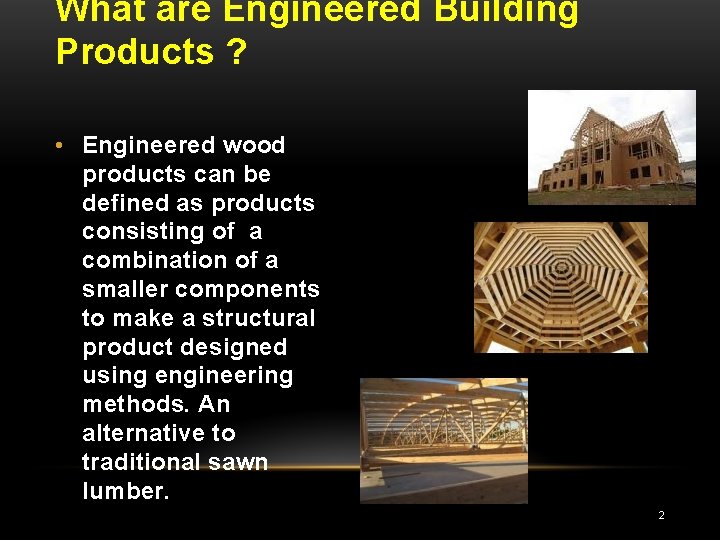
What are Engineered Building Products ? • Engineered wood products can be defined as products consisting of a combination of a smaller components to make a structural product designed using engineering methods. An alternative to traditional sawn lumber. 2

Why use Engineered Building Products ? • Variety of Wood Sources • Performance Standard • Uniform Properties • Efficient use of Resources • Economics 3
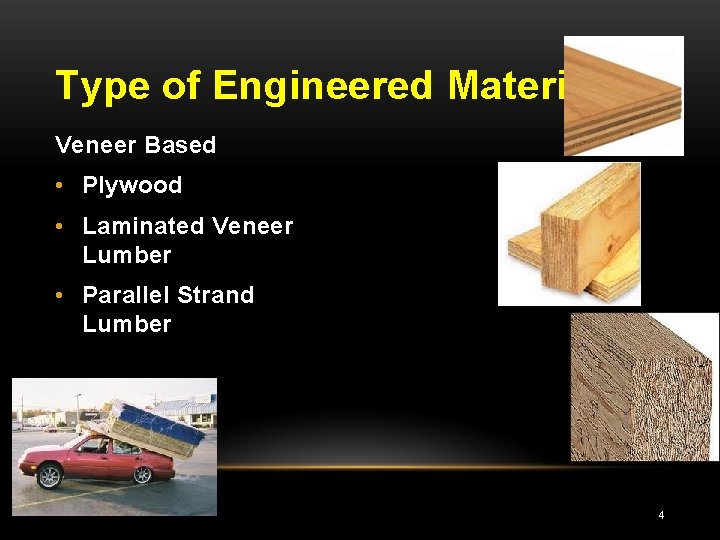
Type of Engineered Materials Veneer Based • Plywood • Laminated Veneer Lumber • Parallel Strand Lumber 4

Laminates • Glue Laminated Timber • Overlayed Materials • Laminated Woodnonwood Composites 5
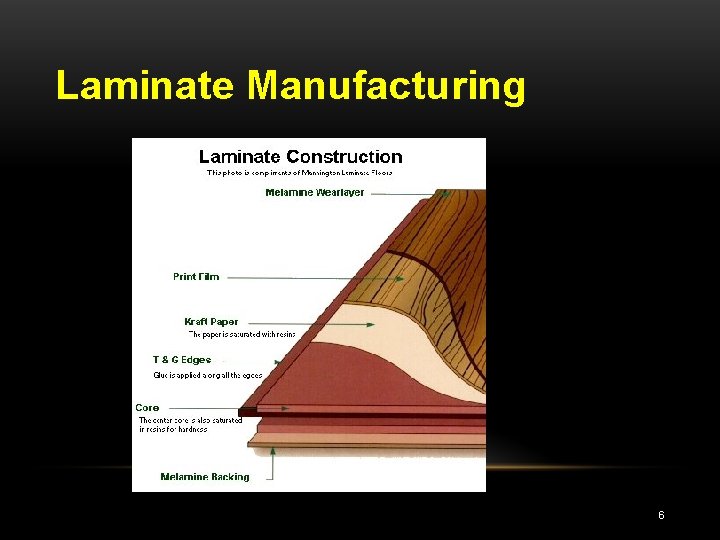
Laminate Manufacturing 6
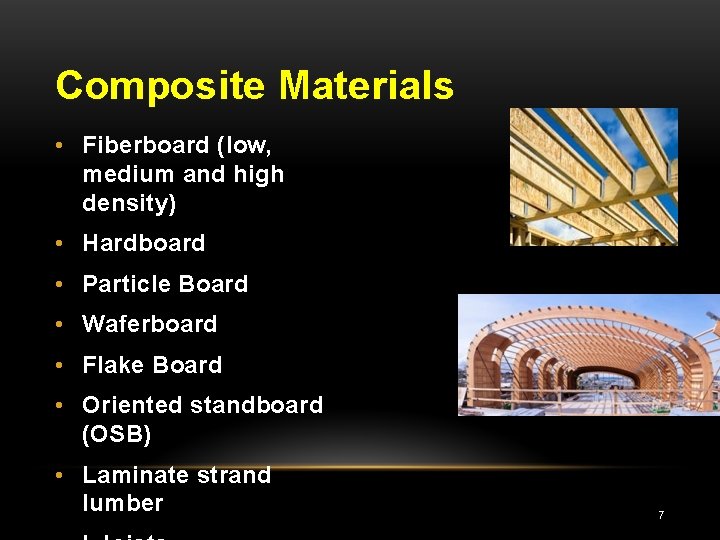
Composite Materials • Fiberboard (low, medium and high density) • Hardboard • Particle Board • Waferboard • Flake Board • Oriented standboard (OSB) • Laminate strand lumber 7
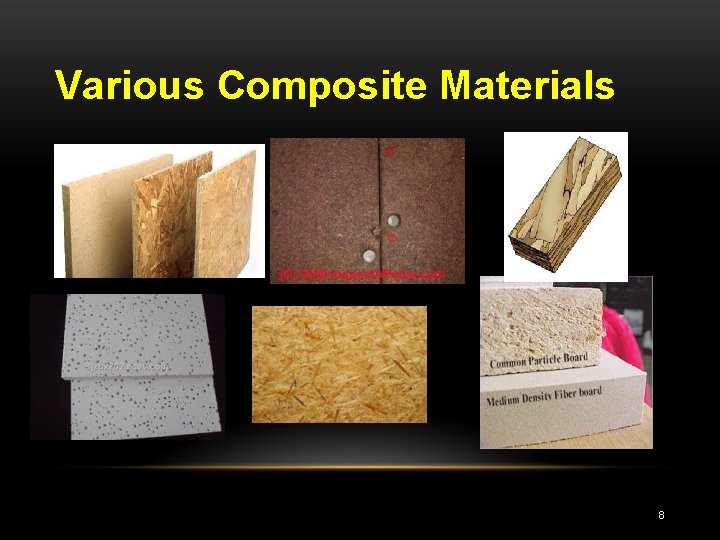
Various Composite Materials 8
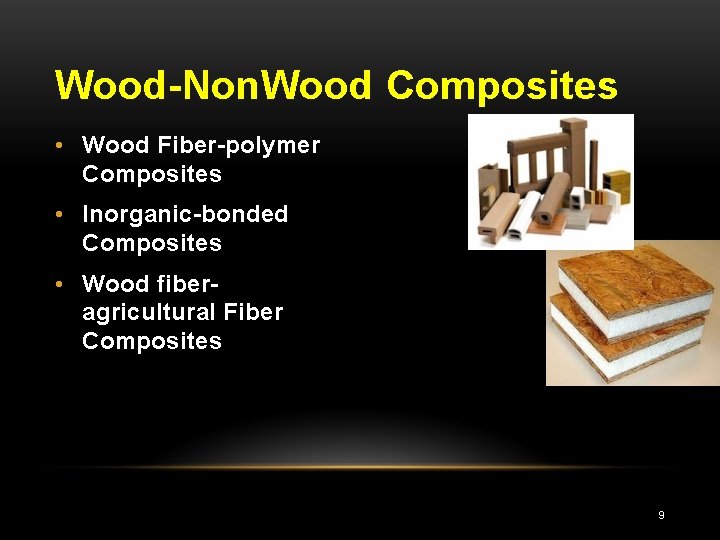
Wood-Non. Wood Composites • Wood Fiber-polymer Composites • Inorganic-bonded Composites • Wood fiberagricultural Fiber Composites 9
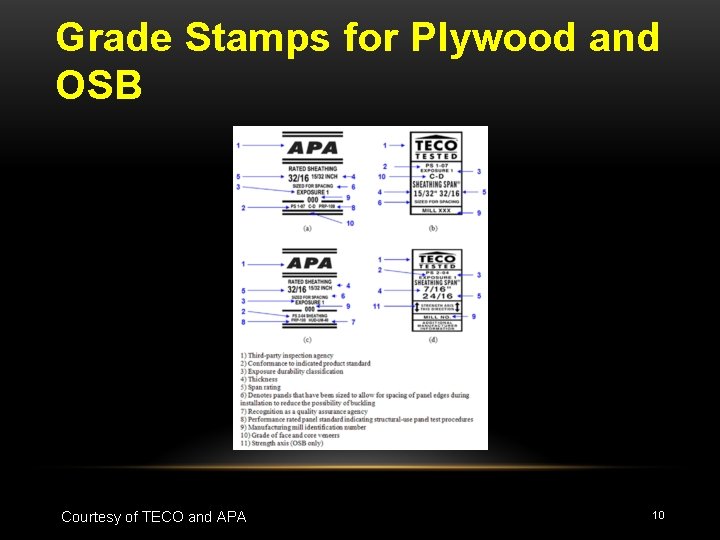
Grade Stamps for Plywood and OSB Courtesy of TECO and APA 10
Adhesives for Bonding • Curing Types • Phenol - Formaldehyde – Construction Plywood and OSB • Urea - Formaldehyde – Particle Board, MDF • Melamine - Formaldehyde – Decorative Laminates, Paper Coatings • Isocyanates – Composites from Strands • Bio-Based – Proteins, Glues 11
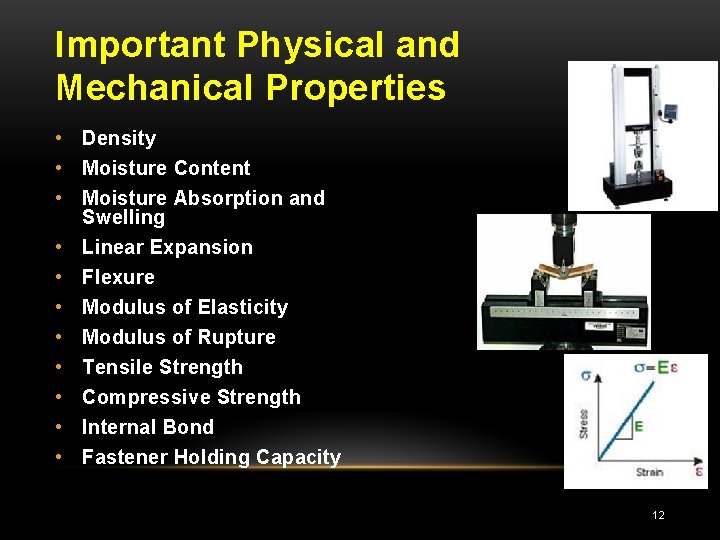
Important Physical and Mechanical Properties • Density • Moisture Content • Moisture Absorption and Swelling • Linear Expansion • Flexure • Modulus of Elasticity • Modulus of Rupture • Tensile Strength • Compressive Strength • Internal Bond • Fastener Holding Capacity 12
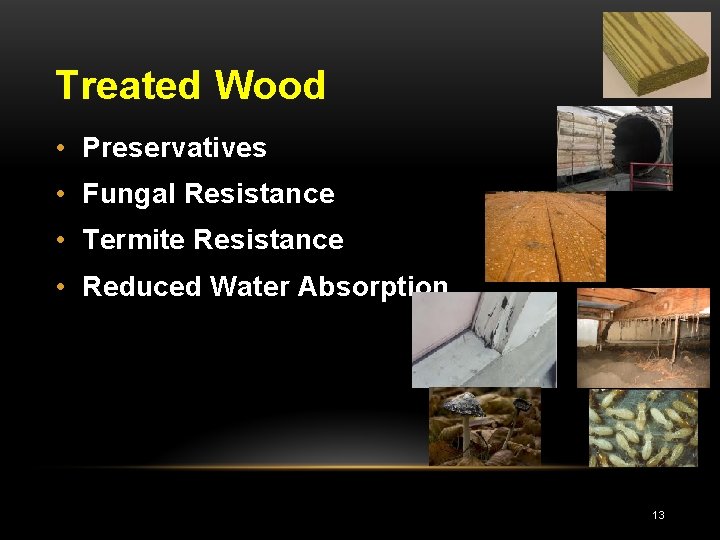
Treated Wood • Preservatives • Fungal Resistance • Termite Resistance • Reduced Water Absorption 13
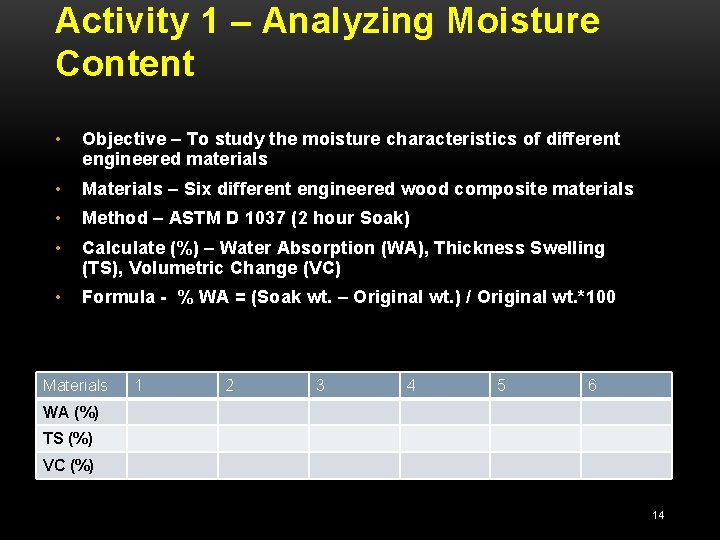
Activity 1 – Analyzing Moisture Content • Objective – To study the moisture characteristics of different engineered materials • Materials – Six different engineered wood composite materials • Method – ASTM D 1037 (2 hour Soak) • Calculate (%) – Water Absorption (WA), Thickness Swelling (TS), Volumetric Change (VC) • Formula - % WA = (Soak wt. – Original wt. ) / Original wt. *100 Materials 1 2 3 4 5 6 WA (%) TS (%) VC (%) 14
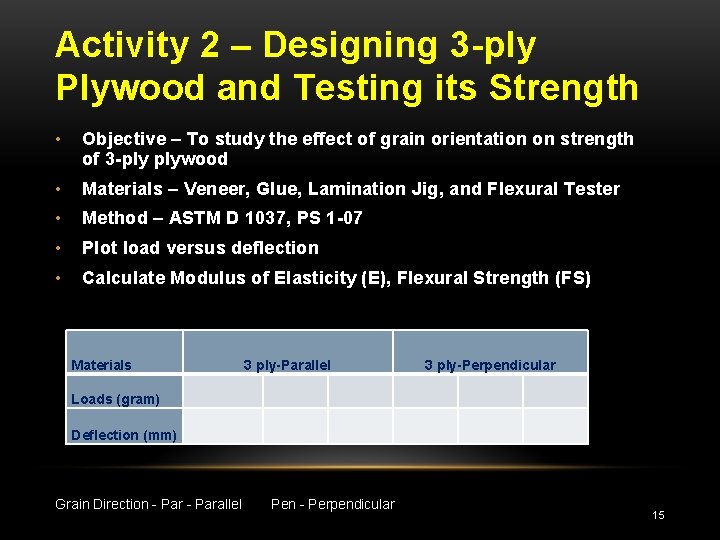
Activity 2 – Designing 3 -ply Plywood and Testing its Strength • Objective – To study the effect of grain orientation on strength of 3 -ply plywood • Materials – Veneer, Glue, Lamination Jig, and Flexural Tester • Method – ASTM D 1037, PS 1 -07 • Plot load versus deflection • Calculate Modulus of Elasticity (E), Flexural Strength (FS) 3 ply-Parallel Materials Loads (gram) 3 ply-Perpendicular Deflection (mm) Grain Direction - Parallel Pen - Perpendicular 15
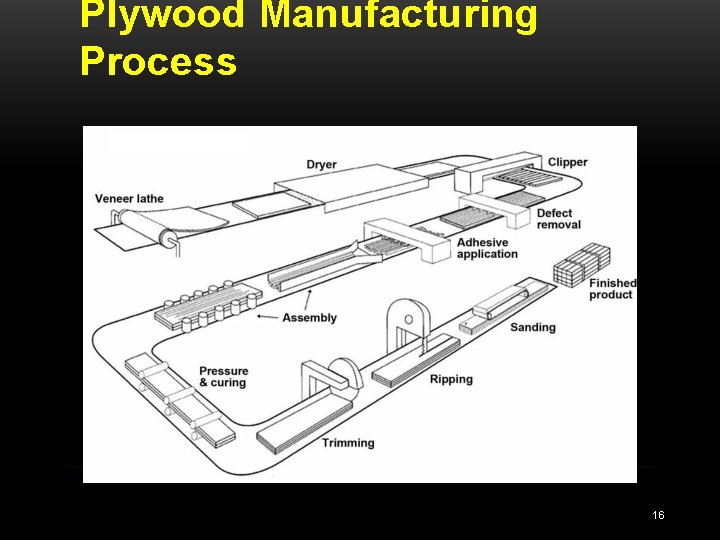
Plywood Manufacturing Process 16

Video of plywood production process http: //www. youtube. com/watch? v=Yt 2 rmu 2 Omrs Questions ? ? 17
- Slides: 17