
Engine Lubricants and Lubricating Systems Home Page http
Engine Lubricants and Lubricating Systems Home Page: http: //baen. tamu. edu/users/lepori/ AGSM 201 Slides Page: <http: //baen. tamu. edu/users/lepori/agsm_power_point_slides. htm>
Functions of Engine Oils 1. 2. 3. 4. 5. 6. 7. Reduce wear Reduce friction Seal Compression Reduce noise Cool engine parts Reduce rust Keep parts clean

Organizations Providing Uniform Standards for Oil ® S. A. E. ® Society of Automotive Engineers ® A. P. I. ® American Petroleum Institute ® A. S. T. M. ® American Society of Testing & Materials ® American Automobile Manufacturers Association ® Engine Manufacturers Association ® I. S. O. ® International Standards Organizations
Properties of Motor Oils ® Viscosity Index (VI) ® Flash Point ® Pour Point ® Per cent sulfated ash ® Per cent zinc.
Properties of Motor Oils ® Viscosity Index (VI) ® Flash Point ® Pour Point ® Per cent sulfated ash ® Per cent zinc.

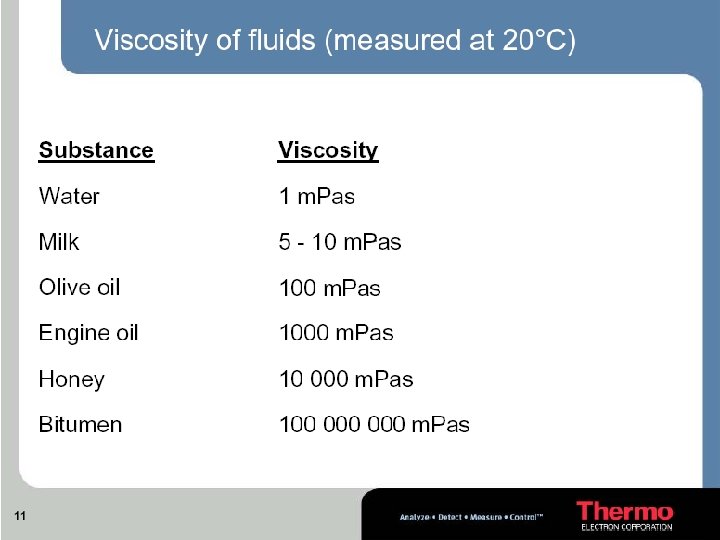
Viscosity ® Measure of ® Kinematic ® Dynamic the "flowability“ ® Property – ® Resistance to flow ® Shearing stress ® High viscosity - thick oils ® Too high viscosity may not reach all parts ® Low viscosity – thin oil ® Too low viscosity may not provide enough strength to keep parts from wearing
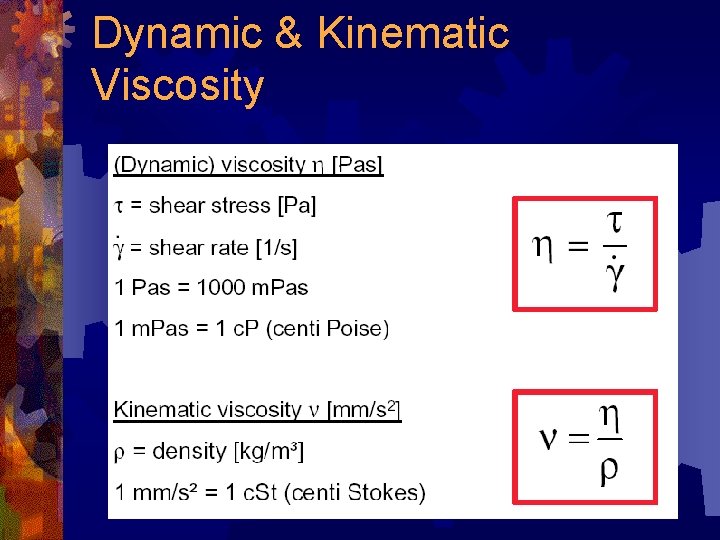
Dynamic & Kinematic Viscosity
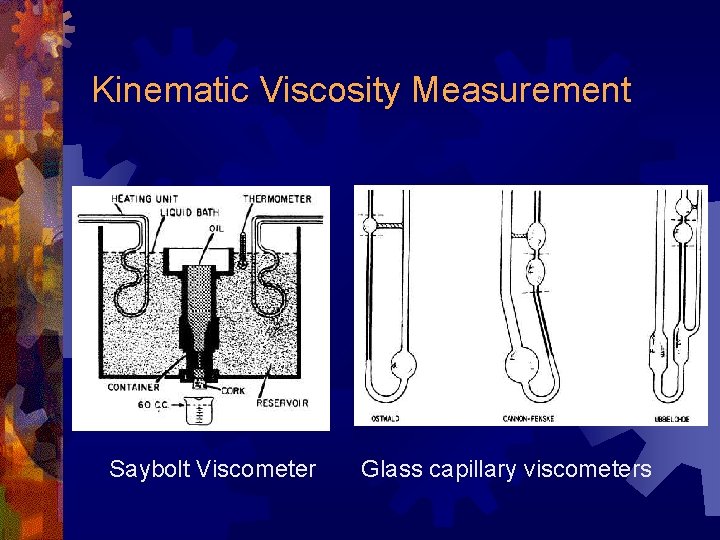
Kinematic Viscosity Measurement Saybolt Viscometer Glass capillary viscometers
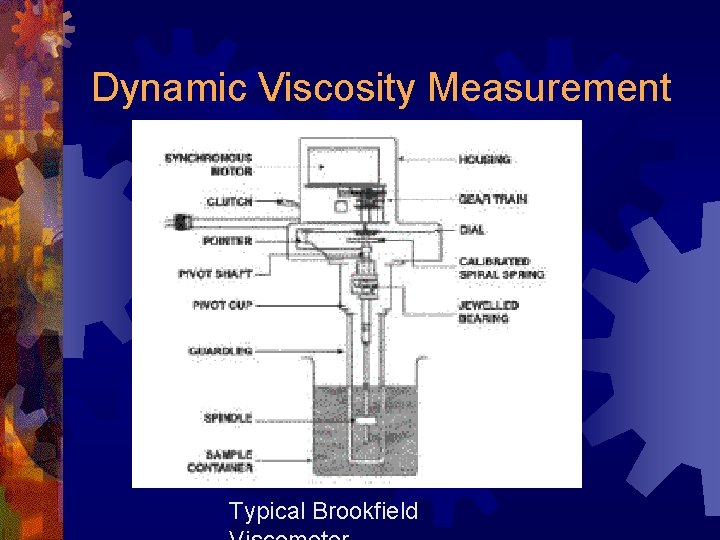
Dynamic Viscosity Measurement Typical Brookfield
Weight of oils ® Common term identifying viscosity for oils ® Numbers assigned by the S. A. E. correspond to "real" viscosity, as measured by accepted techniques. ® These measurements are taken at specific temperatures. ® Oils that fall into a certain range are designated 5, 10, 20, 30, 40, 50 by the S. A. E. ® The W means the oil meets specifications for viscosity at 0 F and is therefore suitable for Winter use. ®
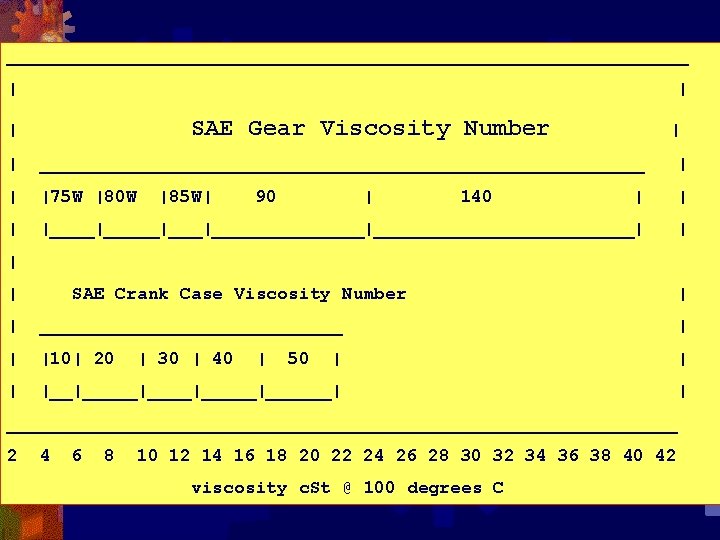
________________________________ | | SAE Gear Viscosity Number | | | ____________________________ | | |75 W |80 W | |____|___|__________________| | |85 W| 90 | 140 | | SAE Crank Case Viscosity Number | | ______________ | | |10| 20 | |__|_____|______| | | 30 | 40 | 50 _______________________________ 2 4 6 8 10 12 14 16 18 20 22 24 26 28 30 32 34 36 38 40 42 viscosity c. St @ 100 degrees C
Properties of Motor Oils ® Viscosity Index (VI) ® Flash Point ® Pour Point ® Per cent sulfated ash ® Per cent zinc.
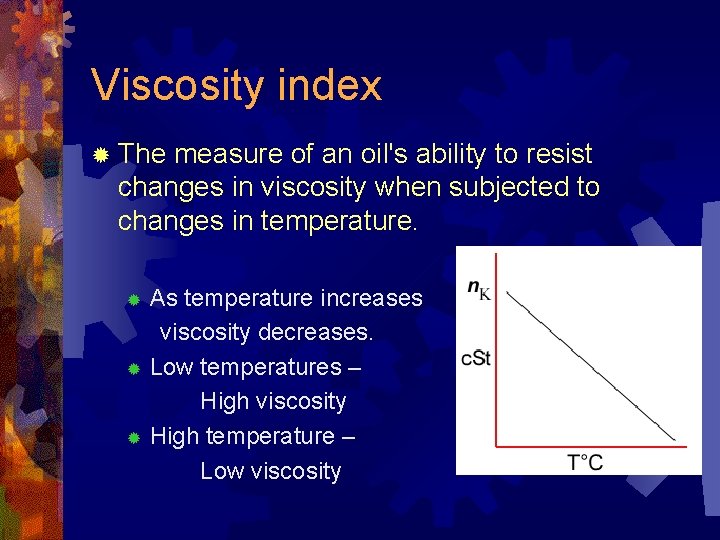
Viscosity index ® The measure of an oil's ability to resist changes in viscosity when subjected to changes in temperature. As temperature increases viscosity decreases. ® Low temperatures – High viscosity ® High temperature – Low viscosity ®
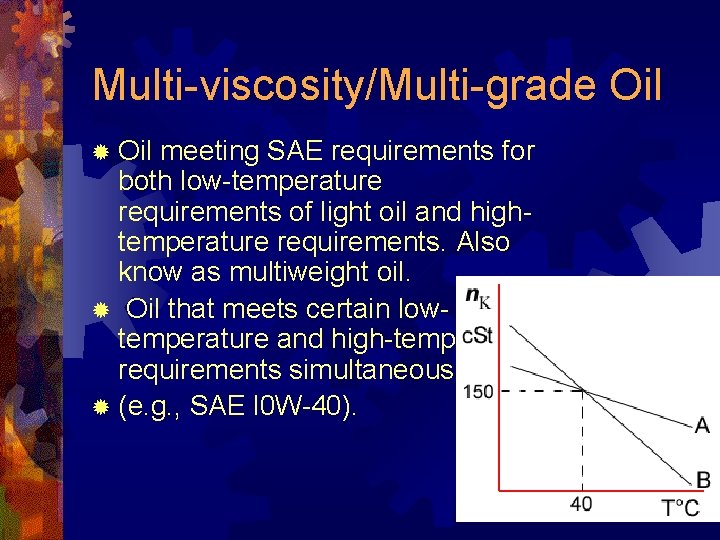
Multi-viscosity/Multi-grade Oil ® Oil meeting SAE requirements for both low-temperature requirements of light oil and hightemperature requirements. Also know as multiweight oil. ® Oil that meets certain lowtemperature and high-temperature requirements simultaneously ® (e. g. , SAE l 0 W-40).
Properties of Motor Oils ® ® Viscosity Index (VI) ® Flash Point ® Minimum sample temperature at which vapor is produced at a sufficient rate to yield a combustible mixture. ® Pour Point ® The lowest temperature at which oil will pour. ® Per cent sulfated ash ® Per cent zinc.
Properties of Motor Oils ® ® Viscosity Index (VI) Flash Point Pour Point ® Percent sulfated ash ® how much solid material is left when the oil burns. ® A high ash content will tend to form more sludge and deposits in the engine. ® Low ash content also seems to promote long valve life. Look for oils with a low ash content. ® Per cent zinc.
Properties of Motor Oils ® ® ® Viscosity Index (VI) Flash Point Pour Point Per cent sulfated ash ® Percent zinc ® the amount of zinc used as an extreme pressure, anti-wear additive. ® The zinc is only used when there is actual metal to metal contact in the engine. Hopefully the oil will do its job and this will rarely occur, but if it does, the zinc compounds react with the metal to prevent scuffing and wear. ® A level of 0. 11% is enough to protect an automobile engine for the extended oil drain interval, under normal use.
Common motor oil additives ® Viscosity index improvers ® used to enhance the base qualities of the oil, and to keep the oil from thinning too much as heat increases. ® Pour-point ® prevent depressants crystals from forming in extreme cold conditions, and consequently lower the oil's pour point (temperature at which it pours).
Common motor oil additives ® Oxidation inhibitors ® help prevent the oil from oxidizing (in other words, burning). When oil oxidizes, it loses its ability to protect the engine. It also produces sludge deposits and traps corrosive acids. ® Rust-corrosion ® help inhibitors prevent and neutralize water and oxygen from acid-etching the metals in the engine and forming rust particles. If this corrosion were to happen, some complex acids would form and other sludge problems would occur.
Common motor oil additives ® Dispersants ® help the oil to absorb and retain contaminants such as dirt or tiny metal particles (from engine wear) until the oil passes through the oil filter, where the contaminants are trapped. ® Detergents ® help to remove contaminants from the engine components and hold them in the oil until it reaches a filter, or until it is changed the next time. They don't only clean up a dirty engine.
Common motor oil additives ® Friction ® modifiers/wear inhibitors "stick" to engine surfaces better, reducing friction and improving fuel economy. Oils with the "energy conserving" labels contain friction modifiers. ® Foam inhibitors (Antifoamants) ® prevent the oil from being whipped into many tiny air bubbles. Air bubbles don't lubricate. This also helps prevent sludge formation when the emulsion process is a possible threat in an engine.
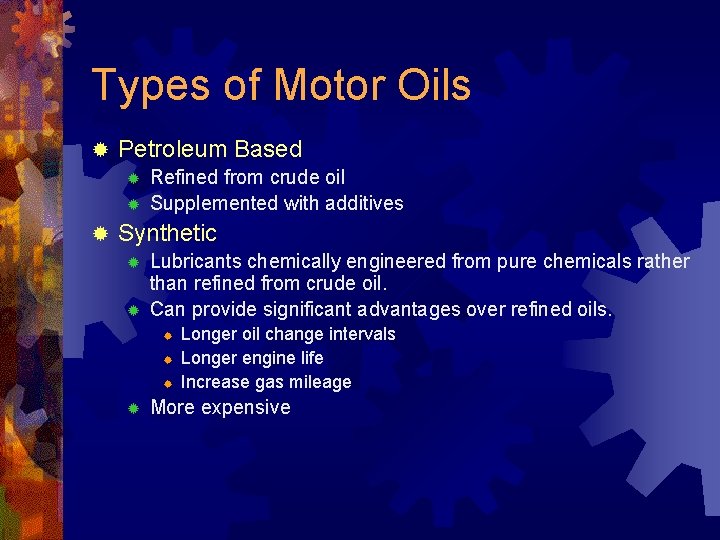
Types of Motor Oils ® Petroleum Based ® ® ® Refined from crude oil Supplemented with additives Synthetic ® ® Lubricants chemically engineered from pure chemicals rather than refined from crude oil. Can provide significant advantages over refined oils. ® ® Longer oil change intervals Longer engine life Increase gas mileage More expensive

What the h___ is he talking about? Items that tell us about selecting an oil!

What the h___ is he talking about? ® How to select an oil for different purposes. ® What to look for on an oil container.
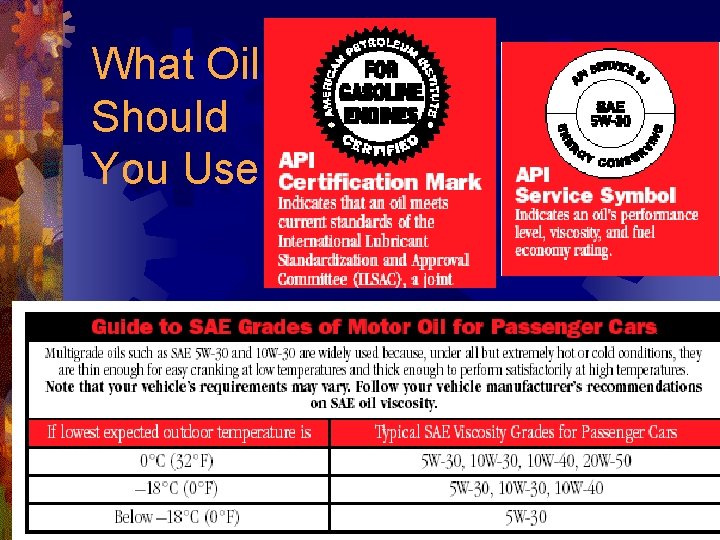
What Oil Should You Use

API “Donut”
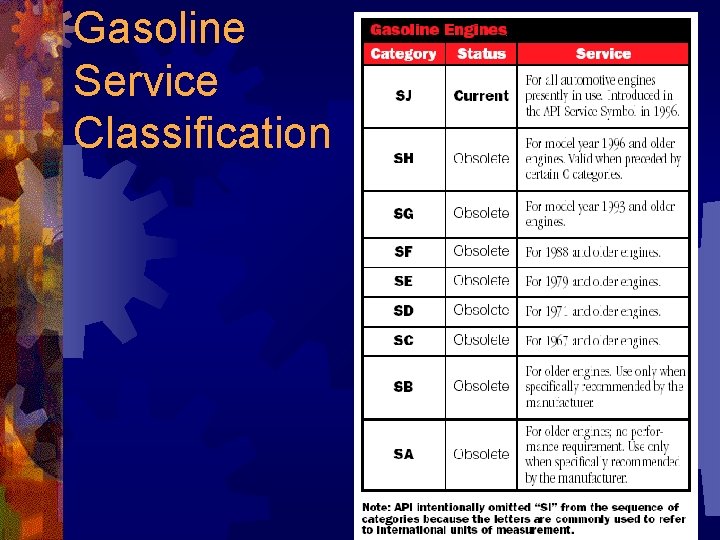
Gasoline Service Classification
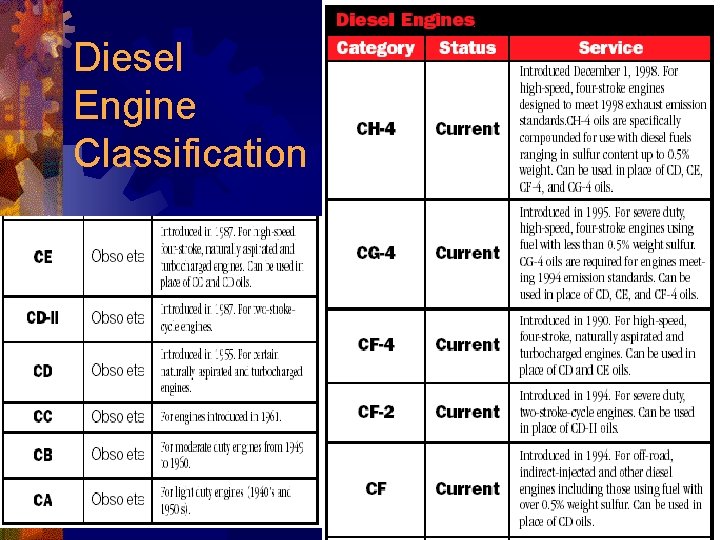
Diesel Engine Classification

Lubrication Systems ® Splash ® Dipper ® Slinger ® Force Feed & Splash ® Full Force Feed
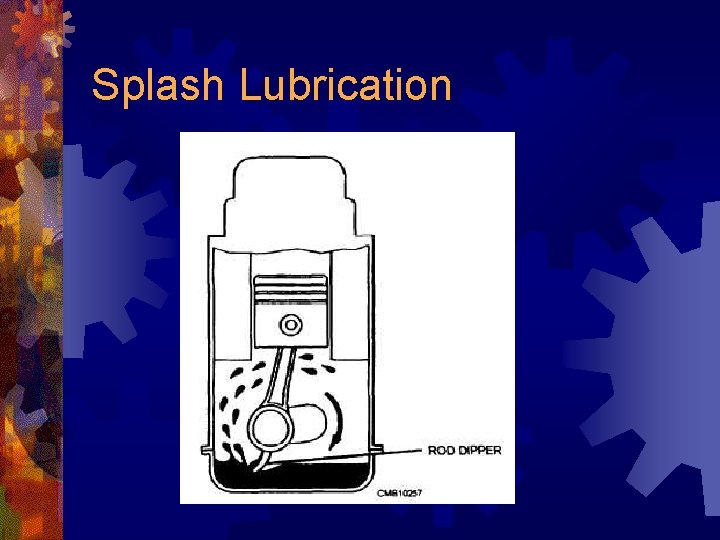
Splash Lubrication
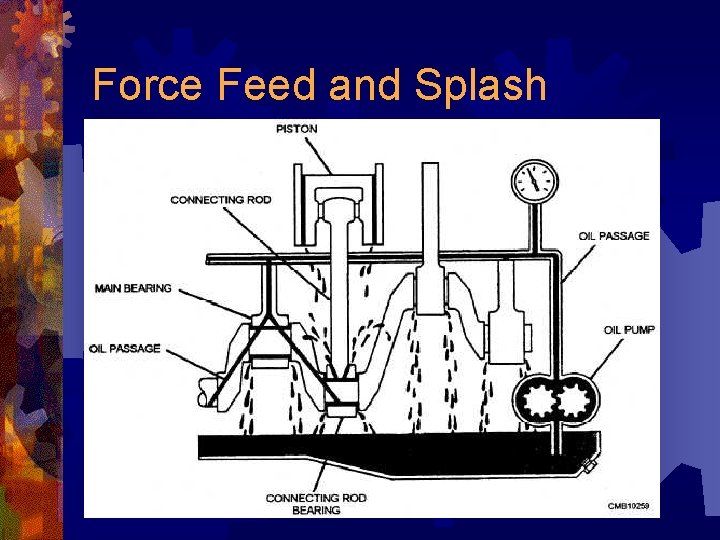
Force Feed and Splash

Full Force Feed
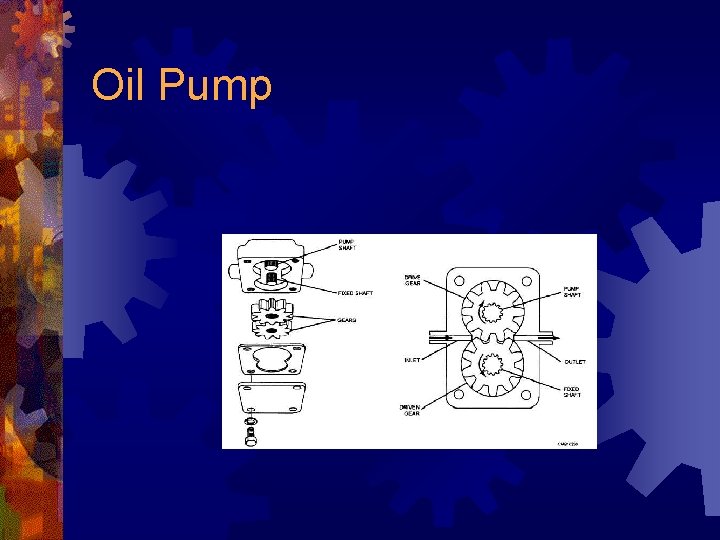
Oil Pump
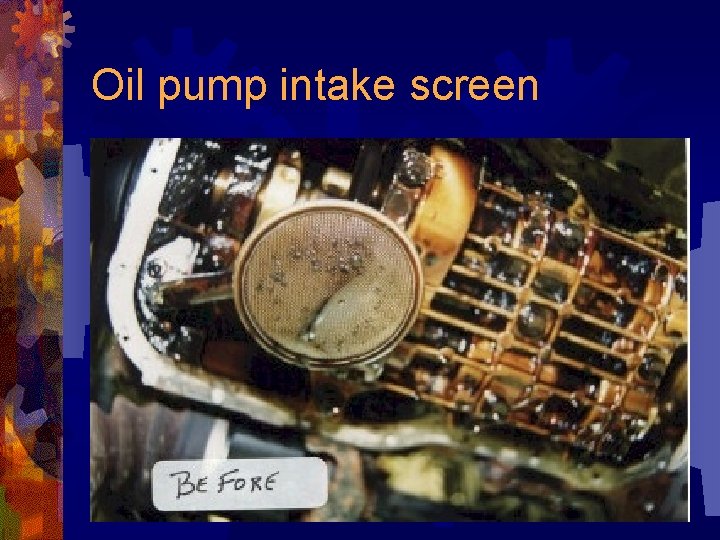
Oil pump intake screen
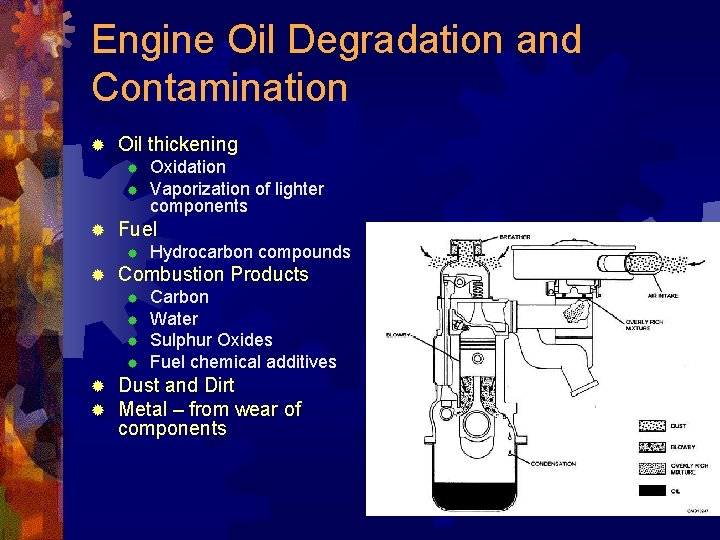
Engine Oil Degradation and Contamination ® Oil thickening ® ® ® Fuel ® ® Hydrocarbon compounds Combustion Products ® ® ® Oxidation Vaporization of lighter components Carbon Water Sulphur Oxides Fuel chemical additives Dust and Dirt Metal – from wear of components
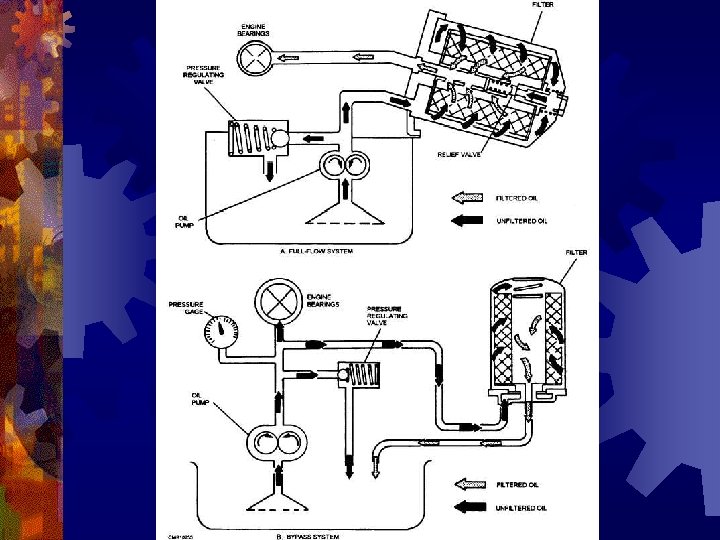
Oil Filtration Systems ® By-Pass ® Full –Flow ® Shunt
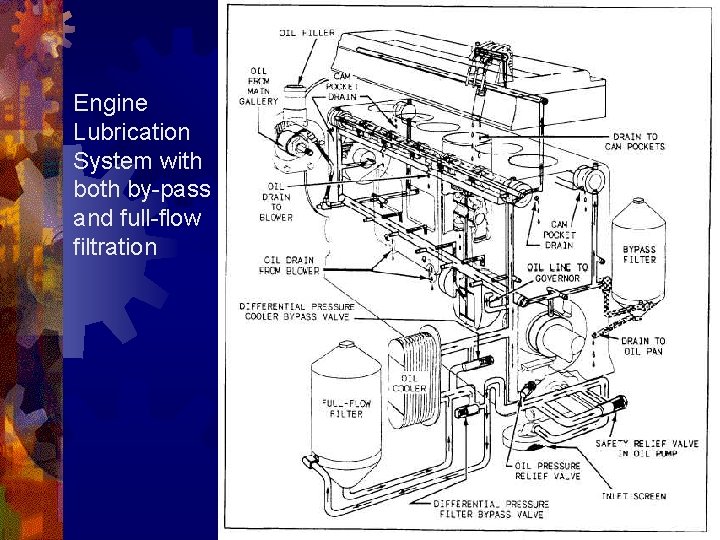
Engine Lubrication System with both by-pass and full-flow filtration
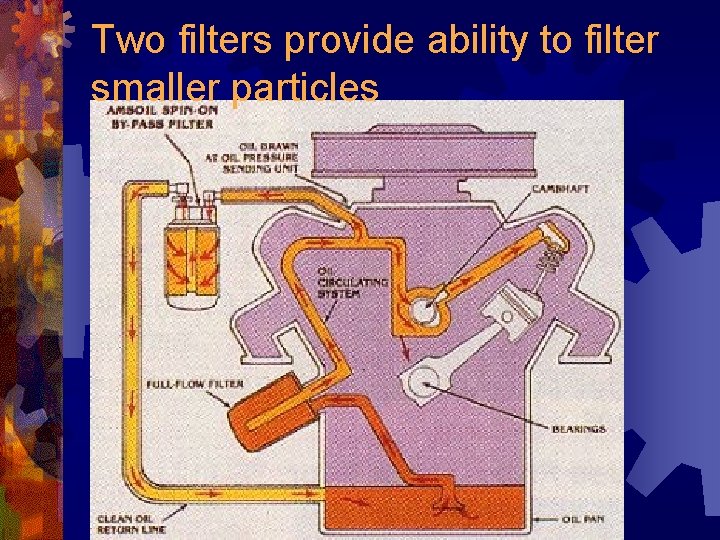
Two filters provide ability to filter smaller particles
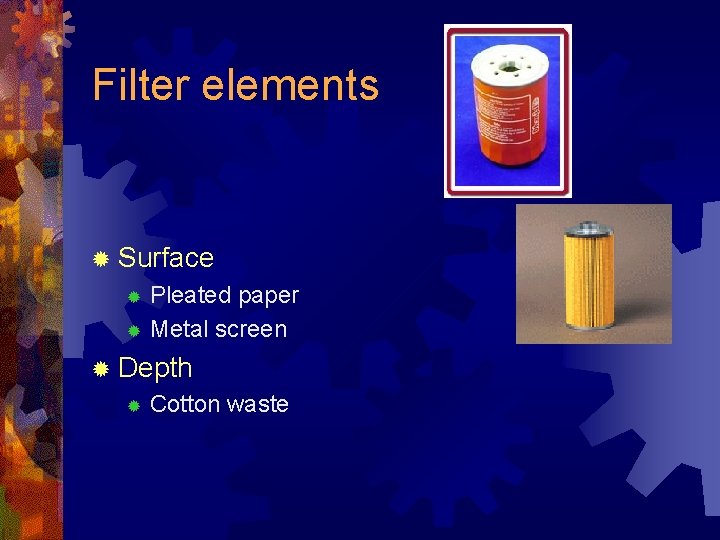
Filter elements ® Surface Pleated paper ® Metal screen ® ® Depth ® Cotton waste
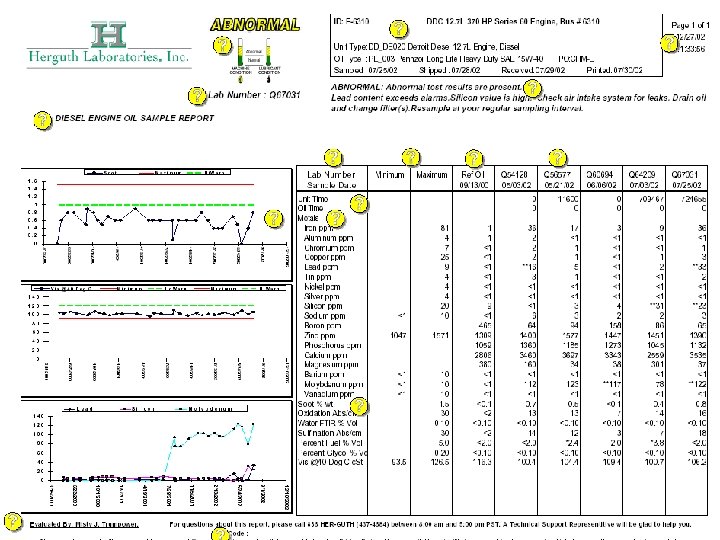
Changing oil and filters renews engine protection ® Dirty oil reduces life of an engine. ® Reduce maintenance and increase engine life by changing engine oil and filters on a regularly scheduled basis. ® Interval between changes depends on operating conditions. ® Oil analysis provides management of oil change intervals ® Recommend for fleet operations.
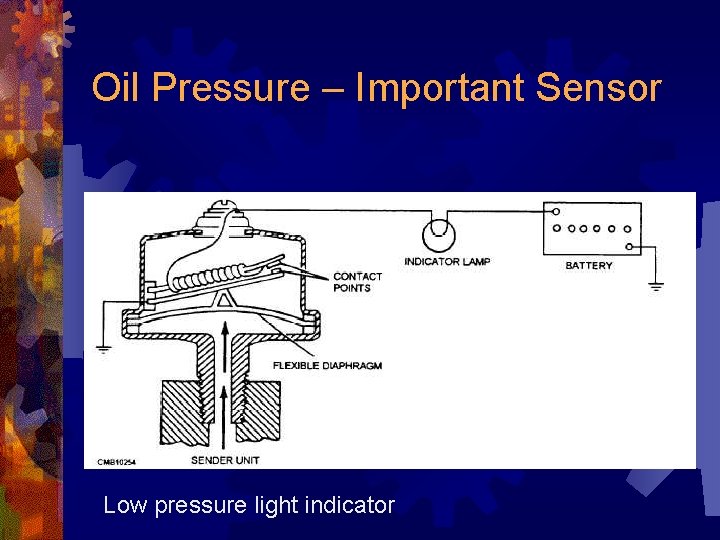
Oil Pressure – Important Sensor Low pressure light indicator
Lubrication Links on the Web ® ® ® Motor oils and more Motor Oil Functions & Properties Selecting motor oils ® ® Motor Oil Additives Lubrication Systems Filtration Systems ® ® ® API Starburst and Donut Sources of oil contaminants Filters & filter media Synthetic oil base stocks Synthetic oil history Oil Analysis – ® ® Example 1 Example 2
- Slides: 45