
ENGAGING PEOPLE PERFORMANCE PLANNING UTTAM ACHARYA Objectives 2
ENGAGING PEOPLE: PERFORMANCE PLANNING UTTAM ACHARYA
Objectives 2 Describe the process of performance management Explain the concept and purpose of performance planning Set goals for the job in a given situation Identify ways to set performance indicators
Contents 3 Planning for performance: An overview Setting performance goals and indicators
What is performance management? 4 Discussion Involvement
Revisit Performance Management Performance refers to “outcomes, results or accomplishments” 5 Rothwell, 2005
6 Performance managementstrategy Performance management is, “a continuous process of identifying, measuring and developing the performance of individuals and teams and aligning performance with the strategic goals of the organization. ” - Aguinis, 2005
Performance management- not 7 “A system that involves employee evaluations once a year without an ongoing effort to provide feedback and coaching so that performance can be improved is not a true performance management system. ” Aguinis, 2005
8 Components of Performance: engaging people Components of performance �A performer �Supervisor �Behaviour �Situation �Results Morhman et al , 1989
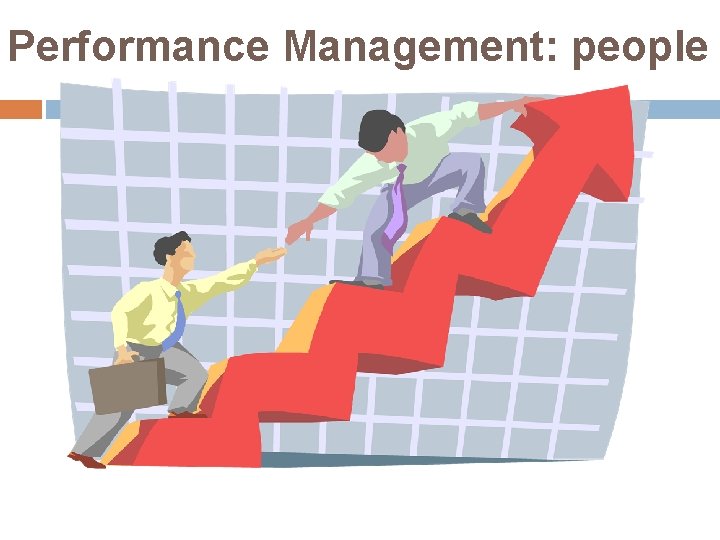
Performance Management: people
Performance Managementholistic approach Organizational system Focusing on employee performance Consistently applied throughout organization With a supporting structure
Need of Performance Management Systems Administer Salary & Wages Correct Performance/Behavior Plan for Future (promotion, transfer, career dev) Facilitate Decision-Making (counseling, terminations) Facilitate Human Resource Planning Create Culture Building Good Relationships Increase Organizational Loyalty Determine Effectiveness of Selection and
Performance Planning? 12 Discussion
Performance planning 13 The term performance planning is used to describe the whole process of �forming an agreement and then � expressing it as a number of actions to be taken by the individual, by the manager or by the individual and the manager jointly

Performance planning (work 14 plan) It is the normal activity of preparing and agreeing programmes for the achievements of the objectives. It is a continuing activity because of the need to revise and update work plans to meet new demands or situations. It may be incorporated specifically into the performance agreement as a record of any decisions made about future

Performance planning 15 PLAN PERFORMANCE (Strategic, Operational Plans Job Clarification) SUPPORTING PERFORMANCE (Monitoring, Coaching, Feedback) FINAL REVIEW OF PERFORMANCE (Results vs. Expectations)
Features of performance plan 16 Discussion about performance management Encouragement Guidance and orientation/training for basic skills Joint agreement Feedback Review
Performance agreement 17 KRA-Key result areas � Areas - job holders are accountable for the achievement � Principle accountabilities � Will be quantified as targets � If not quantifiable; basis for defining performance standard Objectives and standards of performance Performance measures and indicators Attributes and competencies
Performance Agreement Key Performance Area Ø Ø The status, authority and responsibility etc. that the job holder has in carrying out the assigned job. Key Performance Area describe the areas in which significant contributions are expected from the position. Are the key or critical functions relevant at present requiring priority attention. Significant areas of the job which contribute significantly to the overall results.
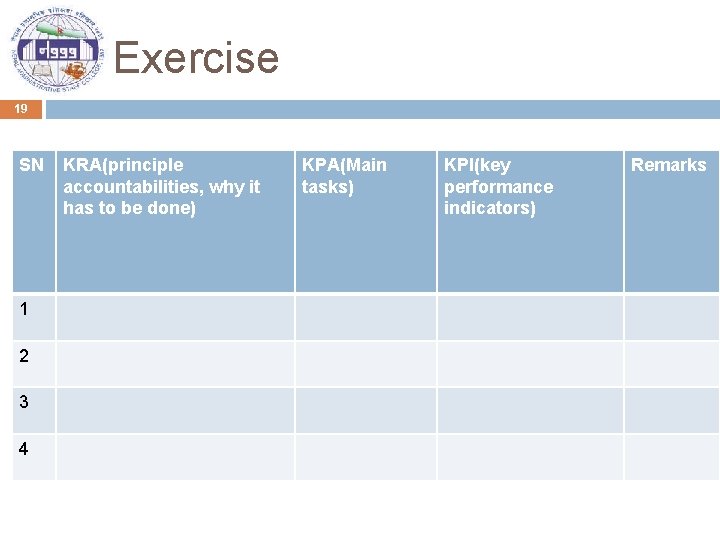
Exercise 19 SN 1 2 3 4 KRA(principle accountabilities, why it has to be done) KPA(Main tasks) KPI(key performance indicators) Remarks
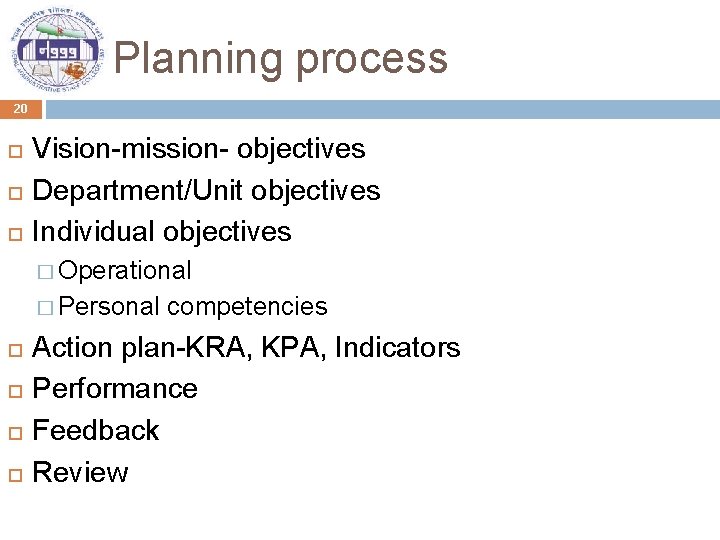
Planning process 20 Vision-mission- objectives Department/Unit objectives Individual objectives � Operational � Personal competencies Action plan-KRA, KPA, Indicators Performance Feedback Review
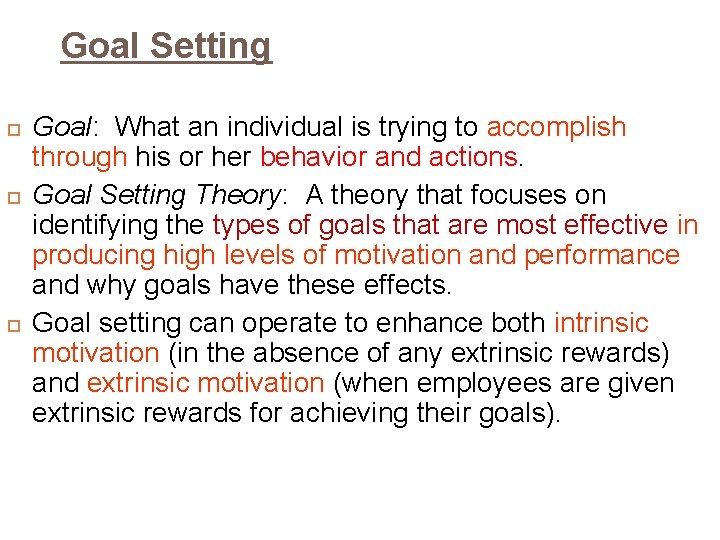
Goal Setting Goal: What an individual is trying to accomplish through his or her behavior and actions. Goal Setting Theory: A theory that focuses on identifying the types of goals that are most effective in producing high levels of motivation and performance and why goals have these effects. Goal setting can operate to enhance both intrinsic motivation (in the absence of any extrinsic rewards) and extrinsic motivation (when employees are given extrinsic rewards for achieving their goals).
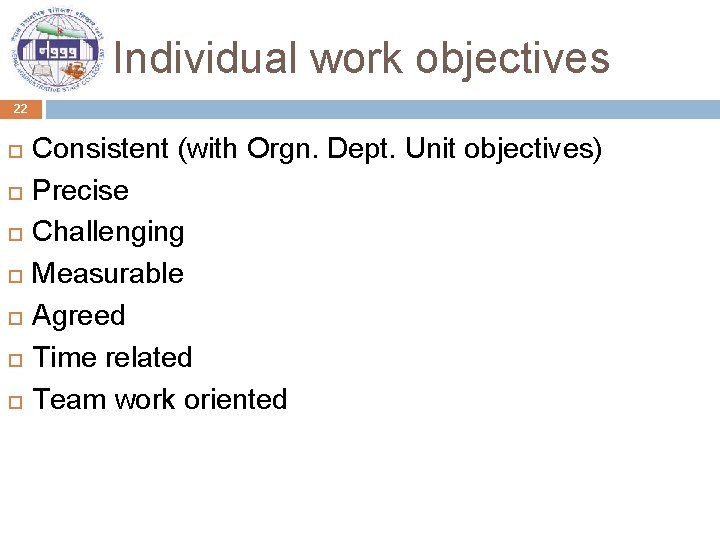
Individual work objectives 22 Consistent (with Orgn. Dept. Unit objectives) Precise Challenging Measurable Agreed Time related Team work oriented
Goals, dreams and wishes People confuse goals with dreams and wishes. Dreams and wishes are nothing more than desire. Desires are weak. Desires become strong when they are supported by: � Direction � Dedication � Determination � Discipline � Deadlines
Goal as a motivator The basic idea is that a goal serves as a motivator because it allows people to compare their current performance with that required to achieve the goal. To the extend they believe they will miss the goal, they feel dissatisfied and strive to improve their performance to meet it.
Why Performance Monitoring and Feedback ? Manager’s performance is tied up with subordinates’ performance Poor performance leads to poor organizational performance Therefore, manager must understand to manage staff performance. Monitoring and feedback, in this process, can have significant impact on overall performance of the staff.
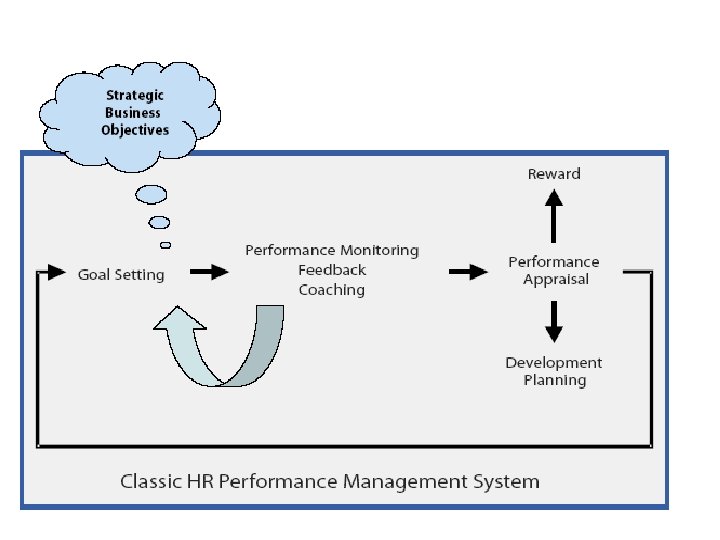
Monitoring 27 Routine or continuous measurement of progress while the performance is ongoing 1. Checking and measuring progress 2. Analyzing the situation 3. Reacting to new events, opportunities, and issues
Monitoring The employee and manager should regularly monitor progress against �Goals, �Try to remove or minimize road blocks, �Re-assess goals, �Change goals as business direction changes, �Re-evaluate training and resource needs.
Monitoring day-to-day performance does not mean watching over every aspect of how employees carry out assigned activities and tasks.
Monitoring Managers should not micro-manage employees, but rather focus their attention on results achieved, as well as individual behaviors and team dynamics affecting the work environment i. e. , KRA and KPI.
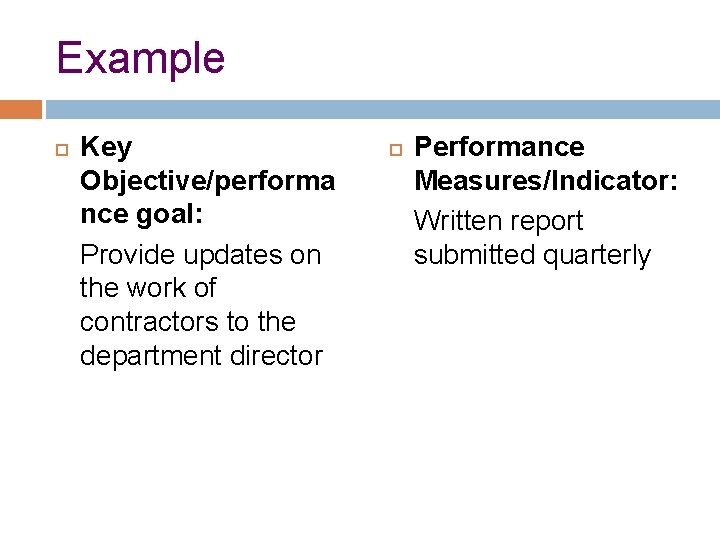
Example Key Objective/performa nce goal: Provide updates on the work of contractors to the department director Performance Measures/Indicator: Written report submitted quarterly
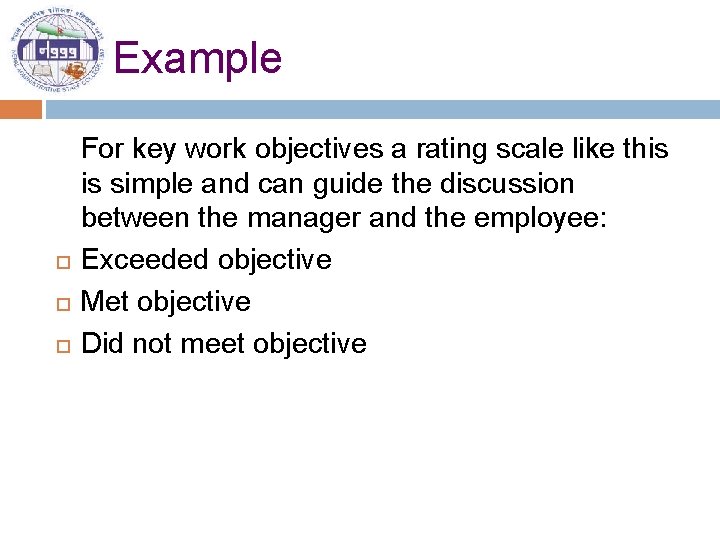
Example For key work objectives a rating scale like this is simple and can guide the discussion between the manager and the employee: Exceeded objective Met objective Did not meet objective
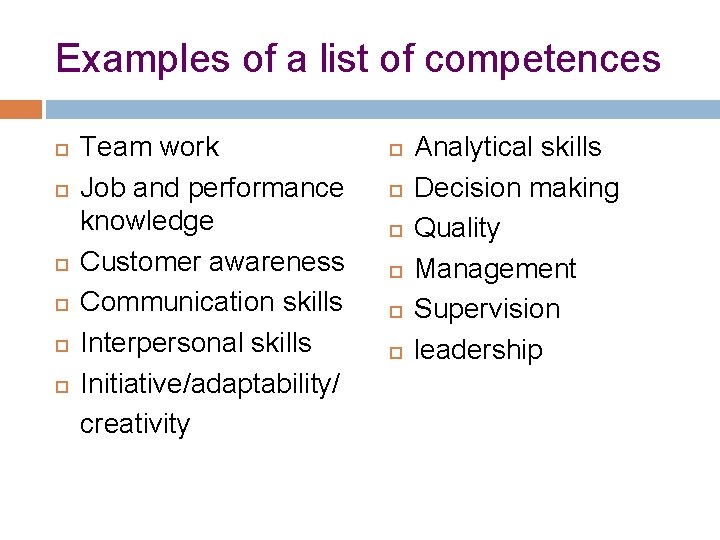
Examples of a list of competences Team work Job and performance knowledge Customer awareness Communication skills Interpersonal skills Initiative/adaptability/ creativity Analytical skills Decision making Quality Management Supervision leadership
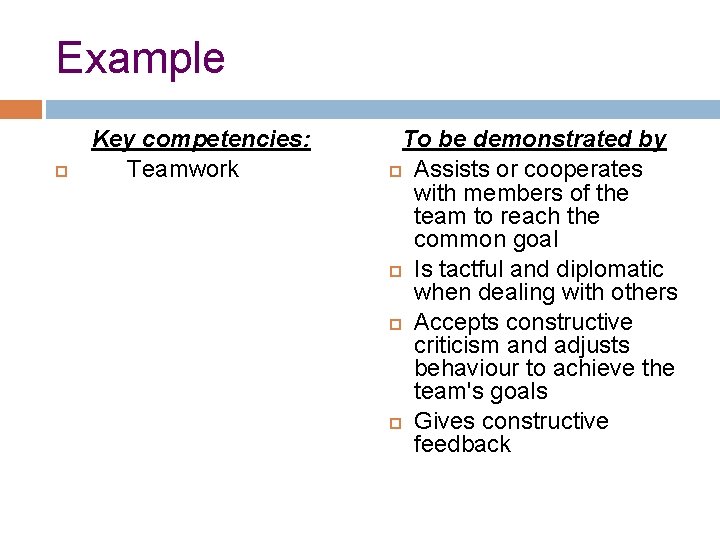
Example Key competencies: Teamwork To be demonstrated by Assists or cooperates with members of the team to reach the common goal Is tactful and diplomatic when dealing with others Accepts constructive criticism and adjusts behaviour to achieve the team's goals Gives constructive feedback
Key Competencies Group Activity Group 1 Leadership Group 2 Job knowledge Group 3 Communication skills Group 4 Decision Making Group 5 Supervision
Performance Feedback in monitoring process is always factual refers to results, events, critical incidents and significant behaviors which have affected performance in specific way.
If an employee is not meeting performance expectations, managers need to provide constructive and honest feedback. Constructive feedback alerts an individual to an area in which performance could improve. It is descriptive and should always be directed to the action, not the person.
The main purpose of constructive feedback is to help people understand where they stand in relation to expected and/or productive job and workplace behavior.
Considerations when giving constructive feedback: Be clear about what the issue is and about the consequences if the employee's performance does not improve
Considerations when giving constructive feedback: Plan to meet in a location where there will be privacy and minimal interruptions (note that in a unionized environment, you may have to invite a union representative, if necessary, to be with the employee during the discussion) Be calm, so that you can approach the discussion objectively and with clarity
Considerations when giving constructive feedback: Document the action plan and attach to employees performance management file Specify the consequences for the employee if the performance issue is not resolved.
Considerations when giving constructive feedback: If the issue has not improved or been resolved over the specified time period, enact the consequences as discussed in the action plan
Conclusion Performance Planning and Goal Setting has the power to massively change one’s contribution in the organization. From one perspective if we plan and set goals in the right way we will achieve it. So the real key with planning and goal setting is to ensure that we set the right goal or goals. Timely monitoring and supervision is essential as they aid in achieving the set targets.
- Slides: 43