
Engaging Men and Boys in Gender Equality as
Engaging Men and Boys in Gender Equality as a Key Strategy in HIV/AIDS Prevention Gary Barker, Ph. D Instituto Promundo Rio de Janeiro, Brasil
Driving Questions • Why does engaging men and changing masculinities matter for HIV/AIDS prevention? • Can men and boys – and masculinities – change? • Can they change quickly enough to matter for reducing HIV/AIDS? • What is the evidence base?
The Global HIV/AIDS Epidemic and Men • 39. 5 million living with AIDS in 2006 -63% in Africa, 90% infected through sex • In generalized or concentrated epidemics, sexual behavior of men key • Epidemic leveling off in some countries mostly when large groups of men change behaviors – eg Thailand, Brazil, Uganda • Young women 50% more likely to contract HIV than young men • HIV higher in conflict zones, in armed forces, prisons and in cases of genderbased violence and transactional sex • Men less likely than women in some settings to seek VCT; women unlikely to disclose HIV status
Social norms about manhood are key …. In numerous sample survey studies men’s and boys’ attitudes related to what it means to be a man correlated with their. . Ø Ø Ø Self-reported physical violence toward female partners Number of sexual partners Rates of self-reported STI symptoms Condom use Substance/alcohol use In sum, how and to what extent boys and men internalize prevailing inequitable social definitions of manhood and gender-related norms affects their health and well-being and that of their partners and their behavior related to HIV/AIDS. . .

Can men and boys change? üNew generation of boys and men influenced by the gains of women’s rights movement üNew legislation in many countries – VAW, paternity leave, joint custody of children üEntrance of women into the paid workforce outside the home üGirls’ educational parity with boys üLots of boys and young men who show a mixture of more genderequitable views mixed with inequitable views about women The question is not if men can change, but how we can speed up the change
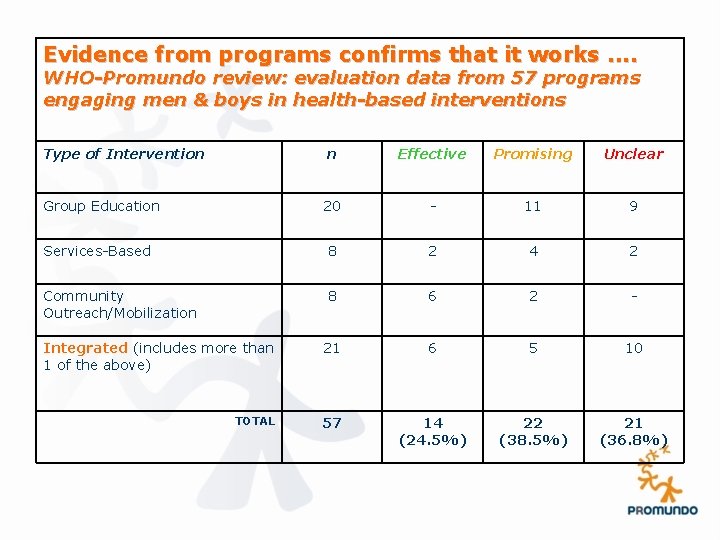
Evidence from programs confirms that it works. . WHO-Promundo review: evaluation data from 57 programs engaging men & boys in health-based interventions Type of Intervention n Effective Promising Unclear Group Education 20 - 11 9 Services-Based 8 2 4 2 Community Outreach/Mobilization 8 6 2 - Integrated (includes more than 1 of the above) 21 6 5 10 TOTAL 57 14 (24. 5%) 22 (38. 5%) 21 (36. 8%)
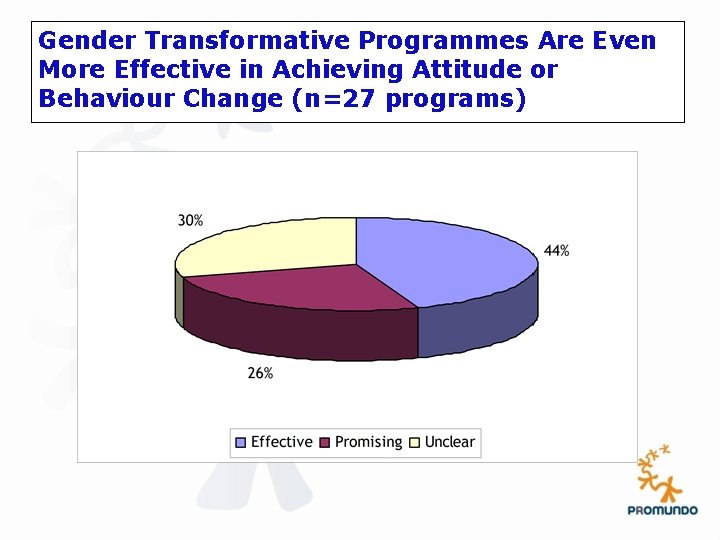
Gender Transformative Programmes Are Even More Effective in Achieving Attitude or Behaviour Change (n=27 programs)
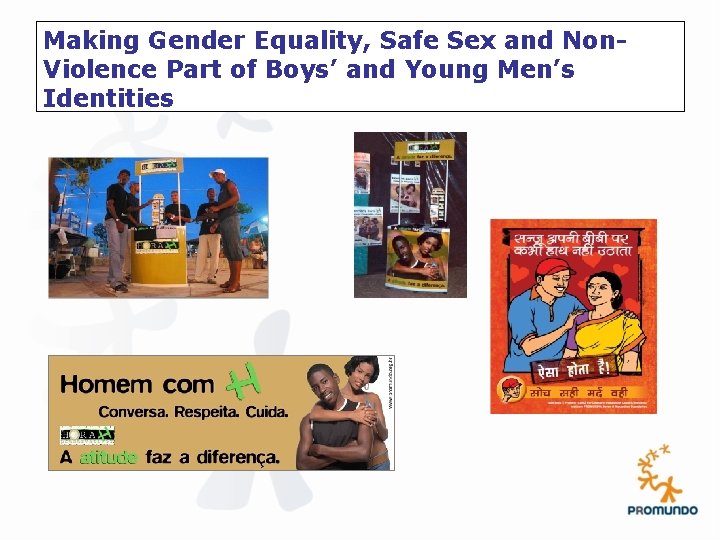
Making Gender Equality, Safe Sex and Non. Violence Part of Boys’ and Young Men’s Identities
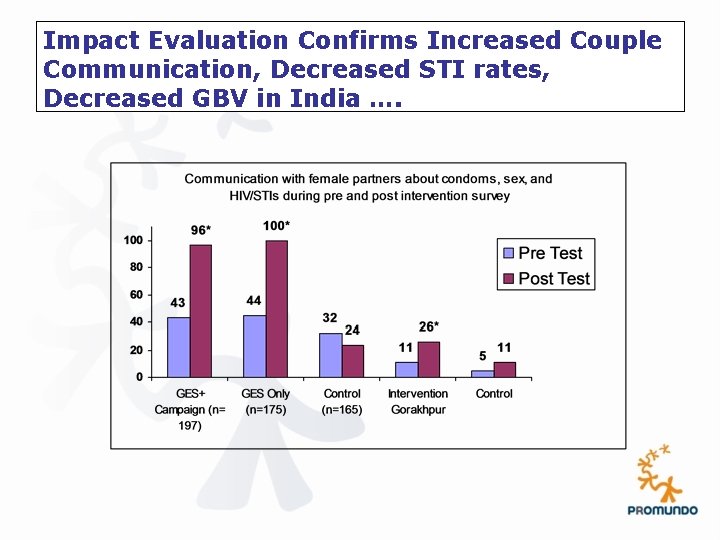
Impact Evaluation Confirms Increased Couple Communication, Decreased STI rates, Decreased GBV in India ….
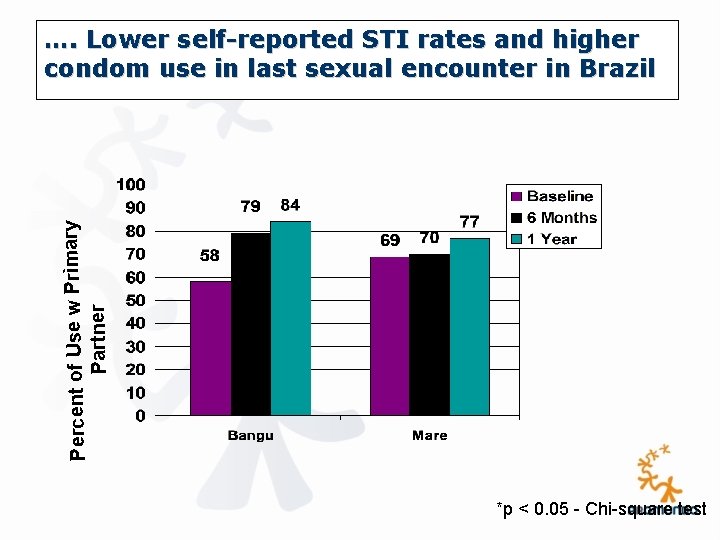
Percent of Use w Primary Partner …. Lower self-reported STI rates and higher condom use in last sexual encounter in Brazil *p < 0. 05 - Chi-square test
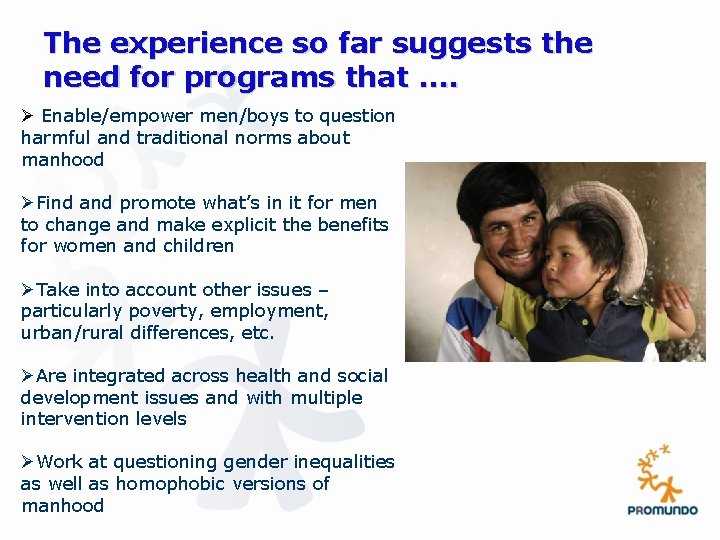
The experience so far suggests the need for programs that. . Ø Enable/empower men/boys to question harmful and traditional norms about manhood ØFind and promote what’s in it for men to change and make explicit the benefits for women and children ØTake into account other issues – particularly poverty, employment, urban/rural differences, etc. ØAre integrated across health and social development issues and with multiple intervention levels ØWork at questioning gender inequalities as well as homophobic versions of manhood
What’s happening at the grassroots level? • 60 countries implementing the White Ribbon Campaign • More than 400 NGOs from 75 countries participating in the very nascent Men. Engage Alliance • Groups of men organizing in small but important ways around the world • Growing field of research on men and masculinities • Increasing collaborations with women’s rights organizations and activists
- Slides: 12