
Engaging Learners A Case Study of Docent Training
- Slides: 42
Engaging Learners: A Case Study of Docent Training at the Albuquerque Museum National Docent Symposium October 2019 David F. Bower, Ed. D.
Presentation summary Since 2015 docents at the Albuquerque Museum made significant revisions to the docent training program. Revisions integrated art and history knowledge with these aspects of tours: • tour planning and delivery skills; • demonstration tours; use of hands-on objects; • and application of adult learning concepts. End-of year-docent evaluations for 2017 -2018 training year indicated significant success with the revised training program. More revisions are being implemented in the 2019 -2020 training year. This presentation will tell the story of how Albuquerque Museum docents developed new strategies and resources for docent training; shifted from passive to active training; changed the docent community culture; and learned how to engage both visitors and docents.
Engaging Learners Presentation • • • The Albuquerque Museum Training Years 2015 -2016 Responses to issues 2016 -2017 Training Year 2017 -2018 Training Year 2019 -2020 Lessons Learned
“The Albuquerque Museum brings Albuquerque to the world and the world to Albuquerque. ”
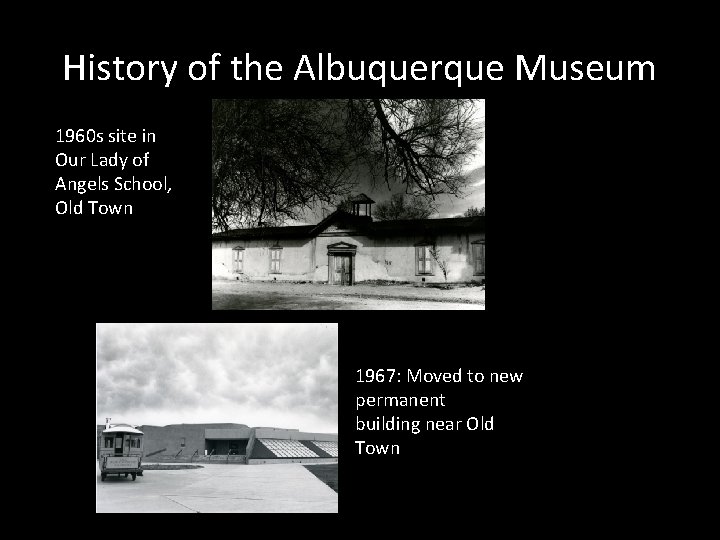
History of the Albuquerque Museum 1960 s site in Our Lady of Angels School, Old Town 1967: Moved to new permanent building near Old Town
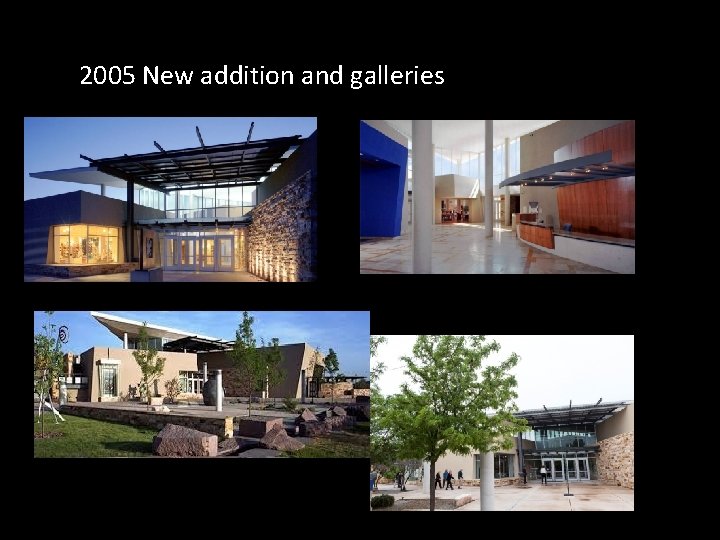
2005 New addition and galleries
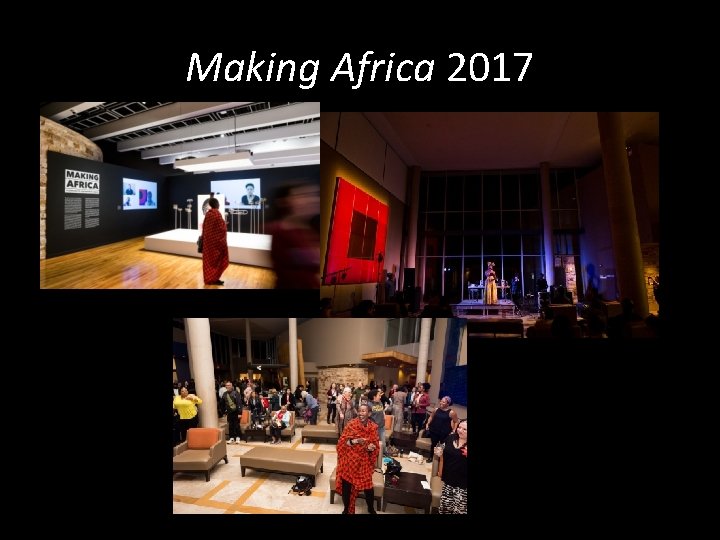
Making Africa 2017
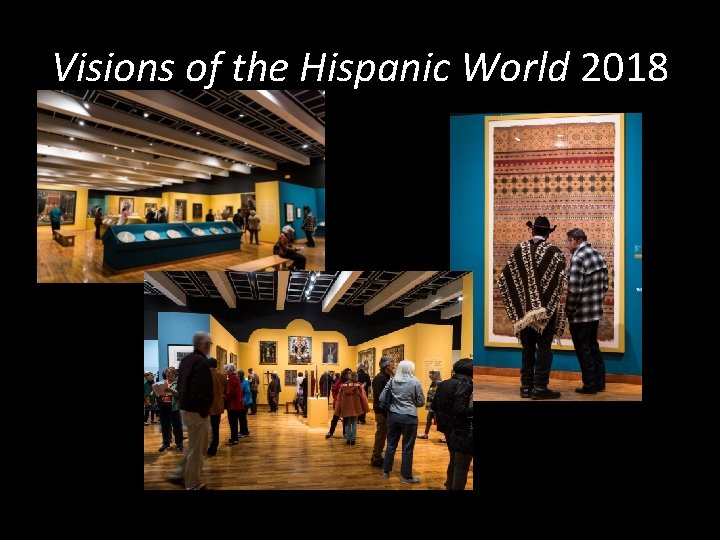
Visions of the Hispanic World 2018
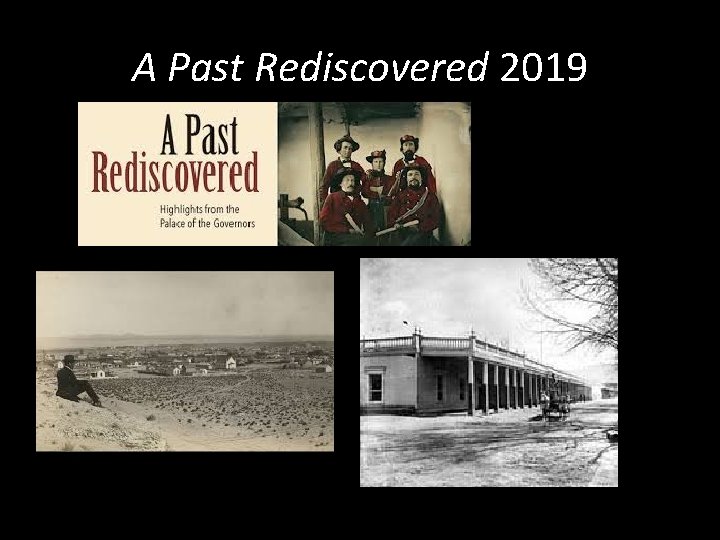
A Past Rediscovered 2019
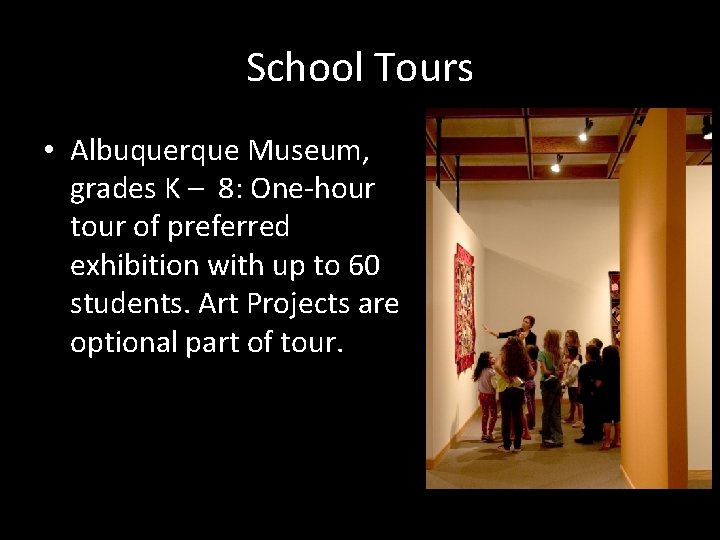
School Tours • Albuquerque Museum, grades K – 8: One-hour tour of preferred exhibition with up to 60 students. Art Projects are optional part of tour.
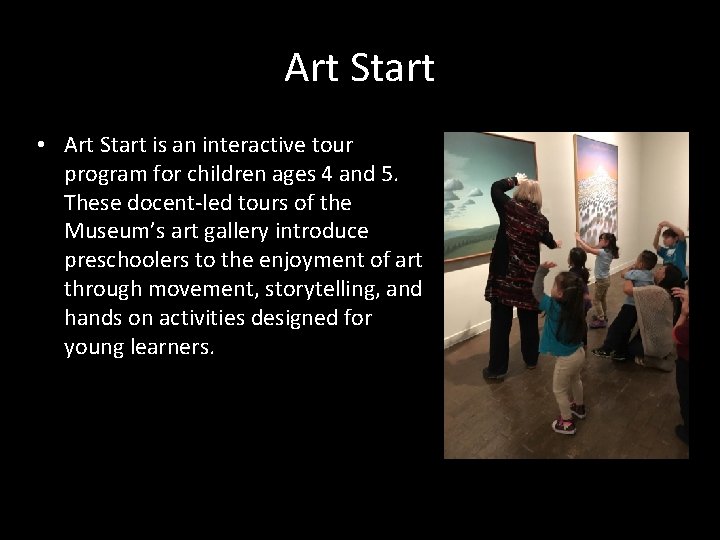
Art Start • Art Start is an interactive tour program for children ages 4 and 5. These docent-led tours of the Museum’s art gallery introduce preschoolers to the enjoyment of art through movement, storytelling, and hands on activities designed for young learners.
Magic Bus The Magic Bus is a program of the Albuquerque Museum Foundation. Funding is provided to cover transportation and admission to the Museum for students from the Albuquerque Metro Area.
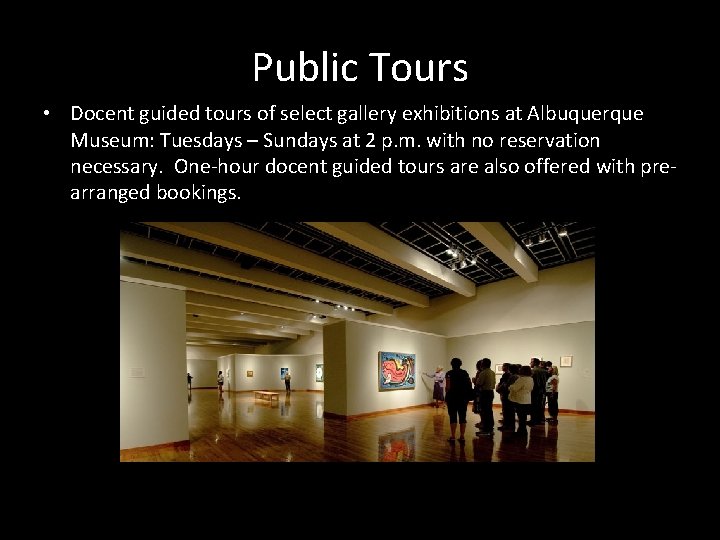
Public Tours • Docent guided tours of select gallery exhibitions at Albuquerque Museum: Tuesdays – Sundays at 2 p. m. with no reservation necessary. One-hour docent guided tours are also offered with prearranged bookings.
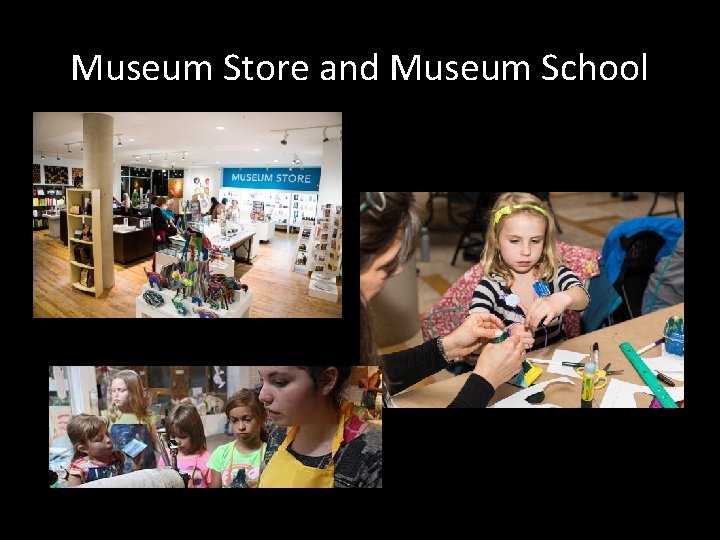
Museum Store and Museum School
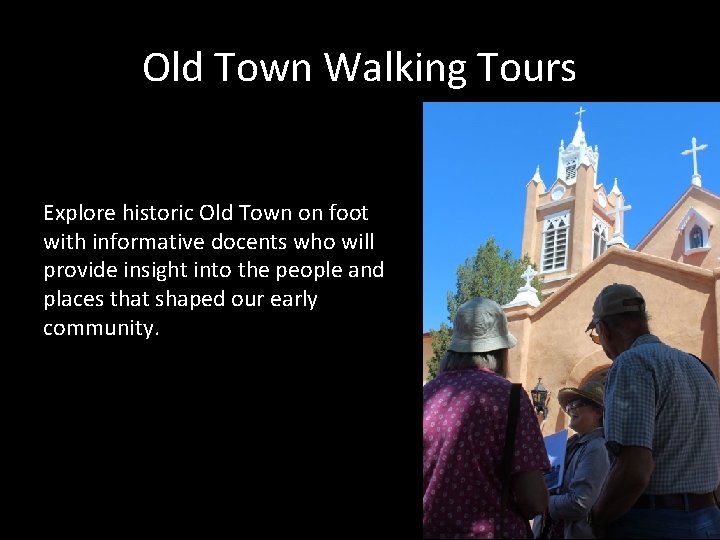
Old Town Walking Tours Explore historic Old Town on foot with informative docents who will provide insight into the people and places that shaped our early community.
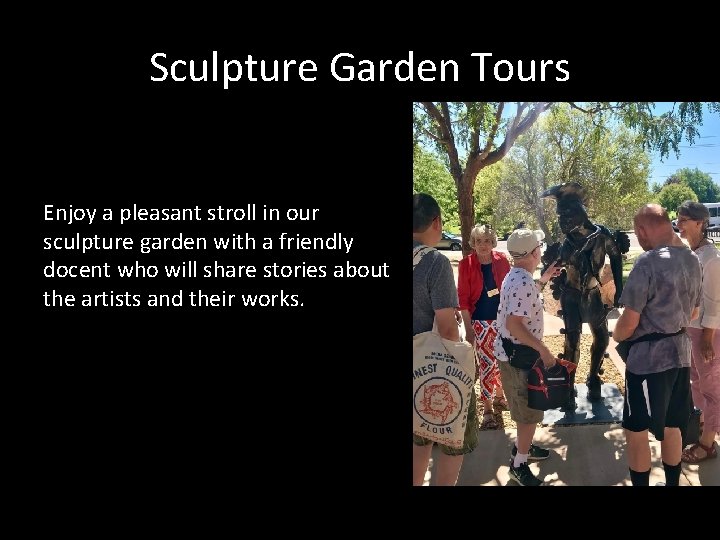
Sculpture Garden Tours Enjoy a pleasant stroll in our sculpture garden with a friendly docent who will share stories about the artists and their works.
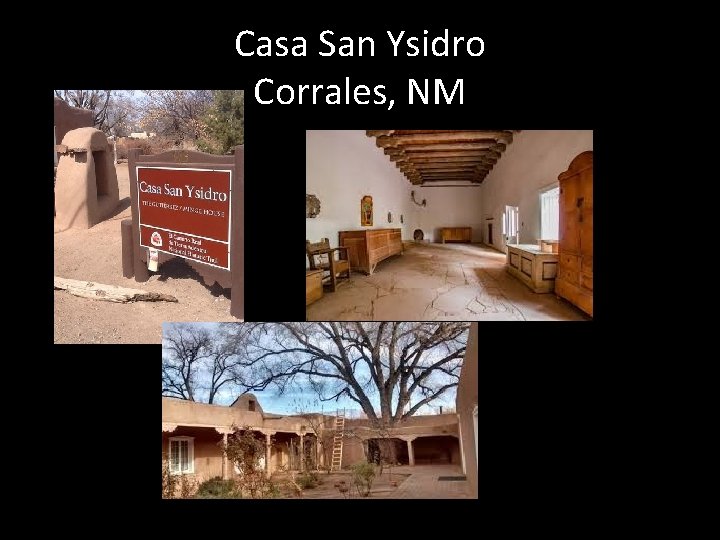
Casa San Ysidro Corrales, NM
Docent Program • • • Gallery Docents: 110 Old Town Walking Tour Docents: 20 Casa San Ysidro Docents: 30 Docent Trainees 2019: 25 Total: about 185 • Leadership: Docent Coordinator, Assistant Coordinator, Past Coordinator (one-year term; volunteer position). • Coordinator duties: chair the Docent Council; supervise docent training (odd-numbered years); lead Monday morning docent training sessions; plan the docent calendar in conjunction with Education Curator
The work begins… • Training Year 2015 -2016 changed from a two-year gallery program to one year (art in fall, history in spring) • Training evaluations revealed problems. • Education Curator assembled a Docent Task Force to study the evaluations. Areas of concern emerged: • Communication within the docent community • Diversity of tour audiences and docent community • Feedback on docent performance • Tour techniques, resources, planning, and delivery strategies • Docent Task Force addressed community-wide docent issues such as leadership and communication. Work groups addressed other issues.
Work Groups Six Work Groups were formed to address specific needs and issues: • Art Tours • Docents Helping Docents • Docent Lecture Series (ongoing training for veteran docents) • History Tours • Tour Guidelines • Tour Planning, Strategies, and Inquiry
• Work groups met from early 2017 through the summer and fall to develop recommendations to address issues defined by the original Docent Task Force. • Implementation of recommendations began during the 2017 -18 training year. • Representatives from each work group met periodically to share progress and maintain focus on their respective charges.
It’s all connected…. • Work groups originally met separately • Progress reporting revealed that most groups were working on related issues • For example: Tour Guidelines informed new docent training; Art and History tour themes informed Docent Lecture Series • Work groups began to integrate their actions and plans
OUTCOMES AND RECOMMENDATIONS from Steering Committee and Work Groups
Art Training • Curator lectures for new docent training became exhibit-specific as opposed to related to art in general. • New docent training decreased curatorial lectures and increased time spent on tour demonstrations in the museum galleries. • More time spent in new docent training on learning, teaching, and demonstrating the tools, techniques, and engagement strategies needed to give an exemplary tour. • Tour Guidelines were used for training, shadowing, and feedback after practice tours.
event include short, docent-led tours for Docents Helping Docents three galleries: Main, Common Ground, and • Mentoring Program for new docents was Only in Albuquerque. reinstated in fall of 2017 and expanded to two years. • A one-page evaluation form was developed for teachers and chaperones to give tour feedback. • Weekly training for all docents expanded to address topics such as disability awareness, working with special needs students, dealing with discipline problems, and understanding cultural differences.
Recommend using advanced docents On-going Docent Training • Monday morning on-going training sessions expanded to include Docent Lecture Series and Enrichment Programs. • Interactive training was supported by seating in table groups, providing portable microphones for question-and-answer sessions, and making listening devices available for docents with hearing difficulties. • Training in inquiry, engagement, and interactive skills for advanced docents and trainees was provided.
On-going Training, continued • Travel Committee and Speaker Series committees collaborated to identify and schedule enrichment tours and field trips as part of all docent training. • Demonstration tours given by docents to docents on special exhibitions included an emphasis on inquiry, audience engagement, and interactive strategies to address different audiences.
History Tours and Resources • Curator lectures for new docent training became exhibit-specific as opposed to related to NM History in general. • Tours were planned using the specific themes for which the galleries of Only in Albuquerque were designed: Our Land, Spirited, Courageous, Resourceful, and Innovative. Lessons plans which layered a sub-theme upon a gallery theme were discarded. • History committee created an Only in Albuquerque docent guide including one-page tour plan ideas; identification of stations that illustrate the gallery; provided background information for each gallery; consolidated materials in a binder of plans and resources for all galleries. • Only in Albuquerque guide became the “textbook” for docent history training. • New docent training focused on objects on display in the galleries and included in-gallery demonstrations and trainee practice tours.
History, continued… • Reduced the amount of time spent in new docent training on curatorial lectures and increase the time spent on demonstrations in the Museum galleries. • Increased new docent training time on learning, teaching, and demonstrating the tools, techniques, and engagement strategies needed to give an exemplary tour. • Provide full-participation workshops for all docents including inquiry, audience engagement, interactive strategies, behavior management training, modification of tour strategies for learning level of audience, and best tour practice tips.
Tour Guidelines and Evaluation • Define the elements of an exemplary tour that will engage visitor to observe, learn, and enjoy the Museum collections. • Tour Guidelines facilitated the development and growth of tour skills and knowledge for trainees as well as the docent community as a whole by providing: – Common and consistent definition of a quality tour for the docent community and staff – Common language for the docent community – Teaching tool for trainees – Constructive feedback tool for trainee practice tours as well as a selfreflection tool and refresher tool for advanced docents – Core document for trainee tour shadowing – Coaching tool for mentors to use with mentees
Tour Planning, Strategies, and Inquiry • New docent training in Common Ground and Only in Albuquerque provided direct instruction, experiential learning, resources, and support for new docent training. • Elements for new docent training included: – How to use Tour Guidelines for tour planning – Identifying a theme or big idea for tours – Planning tours based what you want visitors to know, be able to do, and understand at the end of the tour – How to use questions to ask visitors after the tour to find out what they learned – How to use Inquiry to facilitate learning and to engage visitors – Gallery-centered instruction – Gallery-centered demonstrations by staff and advanced docents
The work- and the learning -continue… • 2017 -2018: Theme “Year of Engagement” created by Education Curator to implement the task force work on engaging all visitors and improving our tours • 2018 -2019: Realization that if we engage docents during training (initial and ongoing), we can better engage visitors • 2019 -2020 Training Year: Adoption of adult learning practices – Andragogy – for initial docent training
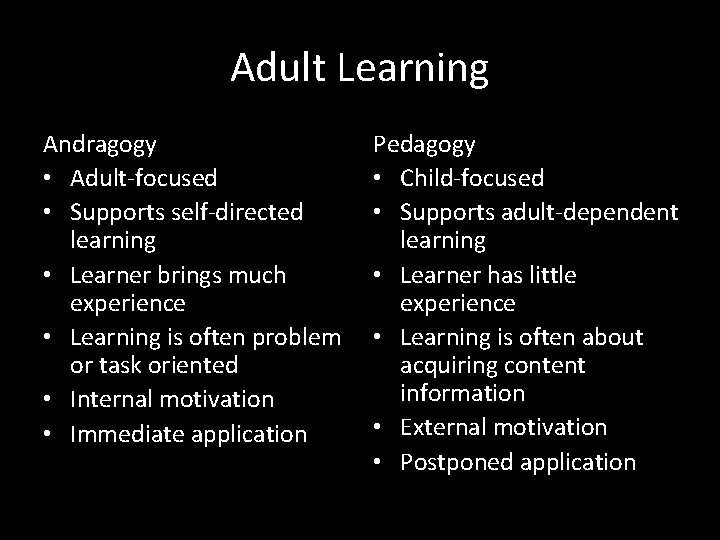
Adult Learning Andragogy • Adult-focused • Supports self-directed learning • Learner brings much experience • Learning is often problem or task oriented • Internal motivation • Immediate application Pedagogy • Child-focused • Supports adult-dependent learning • Learner has little experience • Learning is often about acquiring content information • External motivation • Postponed application
Adult Learning • Adults need reasons for learning (“how will I use this? ”) • Adults are independent and self-directed • Problem-solving and hands-on learning increases motivation and interest • Apply new knowledge and skills immediately • Social learning environments enrich experiences
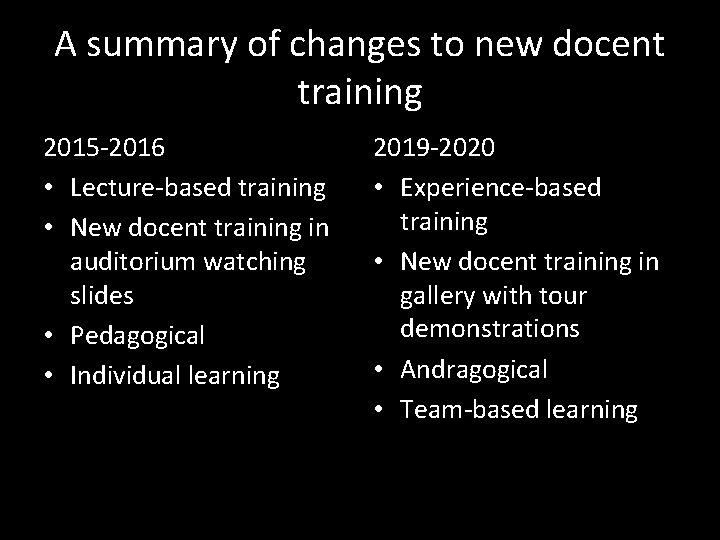
A summary of changes to new docent training 2015 -2016 • Lecture-based training • New docent training in auditorium watching slides • Pedagogical • Individual learning 2019 -2020 • Experience-based training • New docent training in gallery with tour demonstrations • Andragogical • Team-based learning
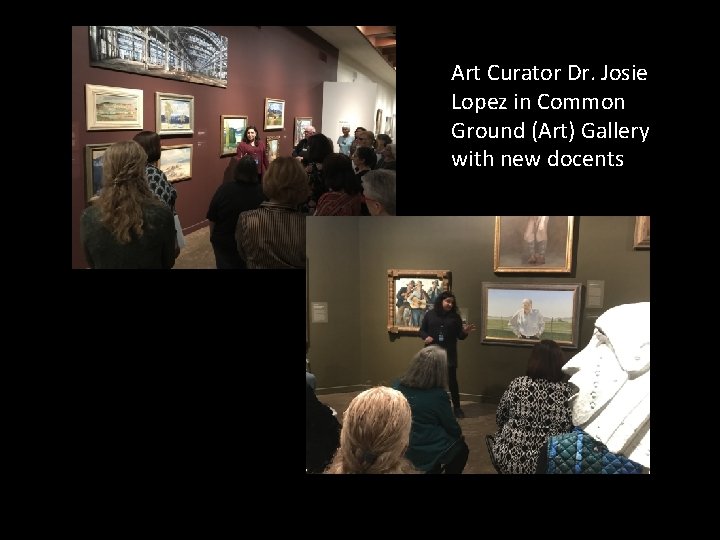
Art Curator Dr. Josie Lopez in Common Ground (Art) Gallery with new docents
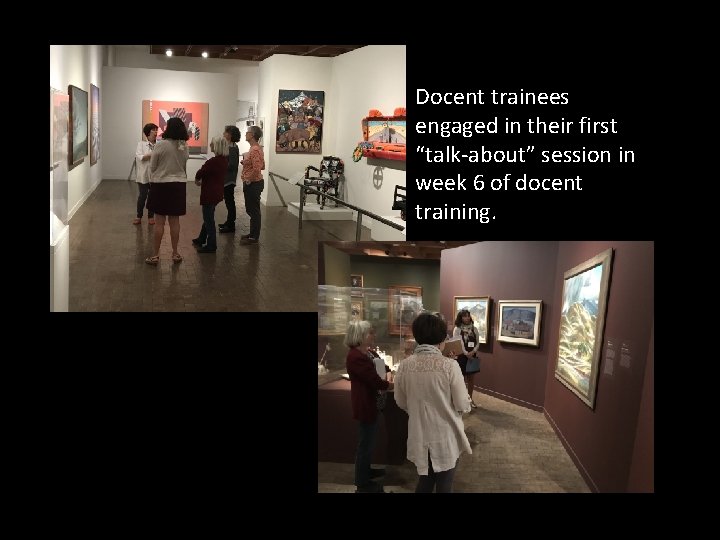
Docent trainees engaged in their first “talk-about” session in week 6 of docent training.
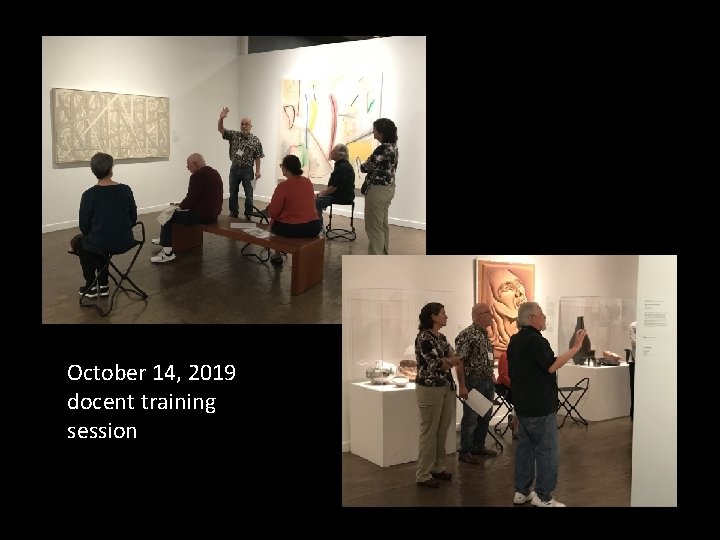
October 14, 2019 docent training session
Lessons Learned • People support what they create. • It’s all connected. Isolated work creates isolated results. Seek connections among and between ideas. • Evaluation is the key to improvement both during and after a project. • Communication is the “Miracle Gro” of an organization.
More lessons • To strengthen an organization, connect it to more of itself. • Support change processes by telling the story of the project or initiative to help people make sense of it. • The culture of an organization (“how we do things around here”) will determine how organizational changes work – or don’t.
How does our story of improving docent training fit with your work? What is similar? What is different? What is useful? What is puzzling?
Tell me and I forget Teach me and I remember Involve me and I learn Attributed to various philosophers