
Engaging different stakeholders in the policy making process
- Slides: 30
Engaging different stakeholders in the policy making process
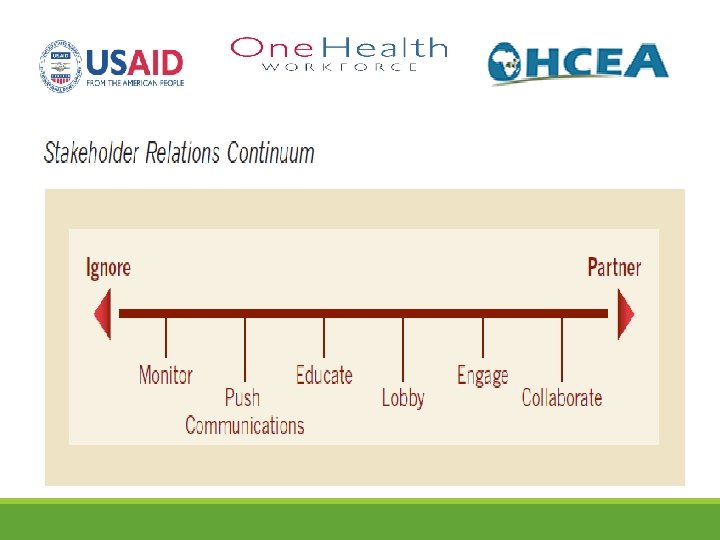
What is stakeholder engagement? Stakeholder engagement is open, two-way dialogue seeking understanding and solutions to issues of mutual concern. Stakeholder engagement consider the views and involvement, of someone or some group in making and implementing a decision.
Stakeholder engagement provides opportunities to further align OH policy practices with societal needs and expectations, helping to What will be the benefits of drive long-term sustainability and stakeholder engagement? shareholder value. §Engage with stakeholders in the most effective ways possible.
What will be the benefits of stakeholder engagement? §It brings together years of experience by many experts and provides helpful guidance for many of the OH policy decisions you will need to make if you choose to engage with stakeholders. §It is also designed to help build stakeholder trust in our stakeholder engagement process.
Methods of stakeholder engagement Stakeholder engagement methods are the means by which stakeholder views, information and opinions are elicited, or by which stakeholders are involved in decision-making. Engagement can take five levels of stakeholder engagement: inform, consult, involve, collaborate and empower (IAP 2, 2007).
Inform Stakeholders are merely informed, for example via websites, fact sheets, newsletters, or allowing visitors to policy discussions.
Involvement : Encourage broad involvement: Welcome interested parties and respect their roles. Build relationships: Find new participants to enrich dialogue. Candor: Be comprehensive: consider every issue. Build trust: Create an environment where different opinions are welcome. Be candid: Disclose agenda, assumptions, goals and boundaries.
Relevance Make it relevant: Focus on issues of greatest importance. Share knowledge: Provide access to pertinent information. Be timely: Engage when learning can influence decisions and actions
Learning Uncover new perspectives: Seek mutual understanding and identify mutually beneficial solutions. Focus on the future: Emphasize what can be done.
Action Act on results: Apply learning to improve business planning and decision making. Provide evidence: Show stakeholders how results will be used.
Stakeholder engagement planning process There are six Steps—Prepare, Plan, Design, Engage, Evaluate, Apply— that provide the greatest chance for a successful stakeholder engagement.
Prepare 1. Identify most important issues where stakeholder engagement might be helpful. 2. Identify Stakeholder Categories
Plan 1. Establish Objectives, Scope and Accountability 2. Identify and Research Stakeholders 3. Map/Prioritize Stakeholders 4. Determine Engagement Mode 5. Establish Evaluation Criteria
Design 1. Review Principles 2. Conduct Initial Outreach 3. Establish Mutual Objectives 4. Identify Technique and Need for Facilitation 5. Design Engagement 6. Consider Assurance Options
Engage 1. Prepare Staff 2. Provide Stakeholders with Background Information, materials and training to begin our engagement 3. Conduct Engagement 4. Confirm Next Steps
Evaluate 1. Determine Need for Further Engagement 2. Evaluate Process and Results 3. Perform Assurance
Apply 1. Assess Applications and ensure that the results of the engagement reach the right internal decision makers 2. Inform stakeholders about follow-up from the engagement session
Lobbying lobbying is direct attempts to influence policy makers, public officials or other decision makers through personal interviews and persuasion.
Activity: List examples of lobbying
Steps for lobbying Clarify the objectives of OHCEA What is the mission of the OHCEA? What are the objectives?
Define the target group for whom are you doing this? Also define the interests and perceptions of the target group (beneficiaries).
Choose OH lobbying and advocacy goal and set objective(s) Identify OH lobby and advocacy goals and objectives. Differentiate between the scope of concern and the scope of interest: what do you want to achieve and what can you achieve realistically?
Define the decision-makers Who do you aim to influence? Who are the decision makers? What are their positions and interests? What are the various (official) procedures? Which phase in the decision-making process have you arrived at? Is there still room for influencing?
Prepare OH network, coalition for lobby and advocacy Which are the methods and techniques that OH, network or coalition is capable of using? What are their internal procedures? What is the added value of OHCEA, network or coalition in relation to the topic?
Identify other stakeholders Who are other important stakeholders? Can you identify other networks with whom you might collaborate?
Check whether lobby and advocacy is the right instrument Is lobby and advocacy still the most effective option to influence? Or should other methods and instruments be considered?
Develop a lobby and advocacy action plan Define the methods you intend to use and the resources you have at your disposal. Set a clear timetable and define responsibilities (who is doing what and when? ). Integrate the indicators for monitoring and evaluation
Implement the lobby and advocacy action plan Carry out the lobby and advocacy action plan!
Ensure monitoring, evaluation and follow-up of your activities Develop a practical monitoring and evaluation system to keep track of the results and impacts of lobby and advocacy efforts and to allow your strategies to be readjusted according to changes in the internal or external environment.