
Engagement Strategies Using WICOR Activities Divide Into Groups


- Slides: 18
Engagement Strategies Using WICOR Activities
Divide Into Groups By Card Color • Share with your group the subjects you teach • Share your favorite activity you do in one of your classes • Tell why it is your favorite
What Makes Your Activity Engaging? Choose one person to share a strategy they learned from their group
What is WICOR? • W- Writing • I – Inquiry (critical thinking) • C – Collaboration • O- Organization • R – Reading
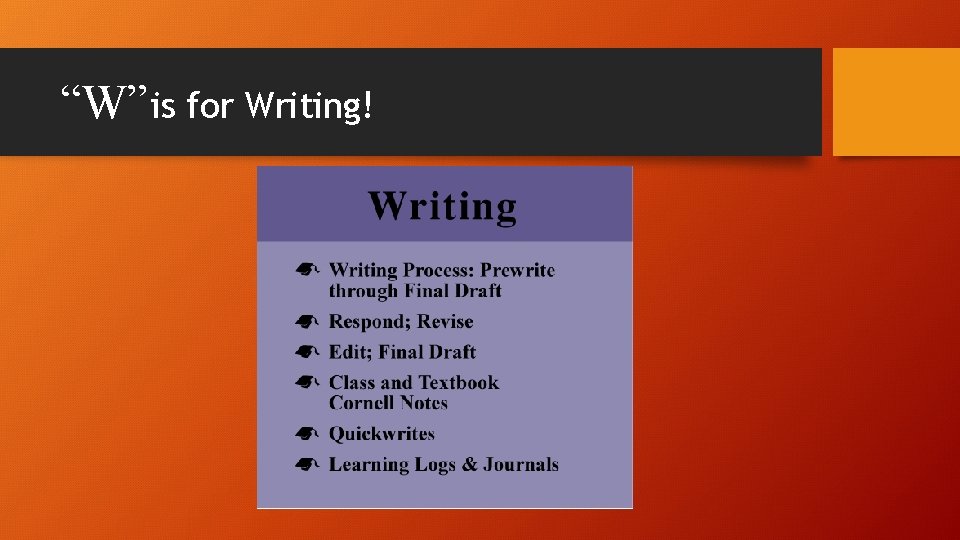
“W” is for Writing!
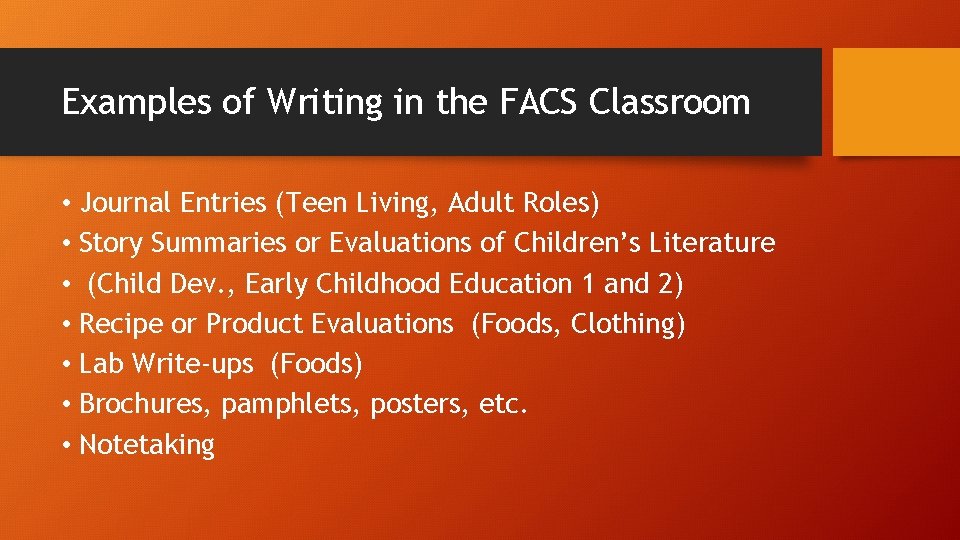
Examples of Writing in the FACS Classroom • Journal Entries (Teen Living, Adult Roles) • Story Summaries or Evaluations of Children’s Literature • (Child Dev. , Early Childhood Education 1 and 2) • Recipe or Product Evaluations (Foods, Clothing) • Lab Write-ups (Foods) • Brochures, pamphlets, posters, etc. • Notetaking
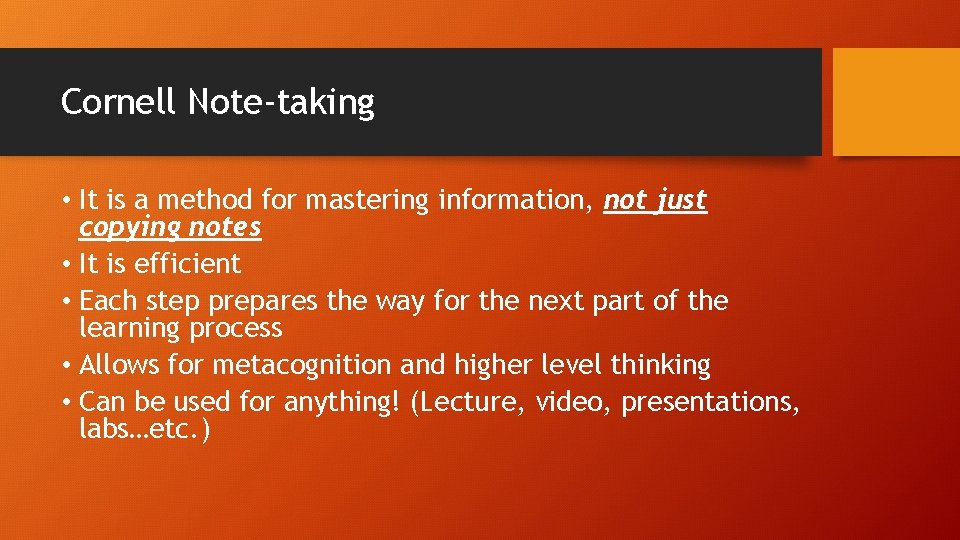
Cornell Note-taking • It is a method for mastering information, not just copying notes • It is efficient • Each step prepares the way for the next part of the learning process • Allows for metacognition and higher level thinking • Can be used for anything! (Lecture, video, presentations, labs…etc. )
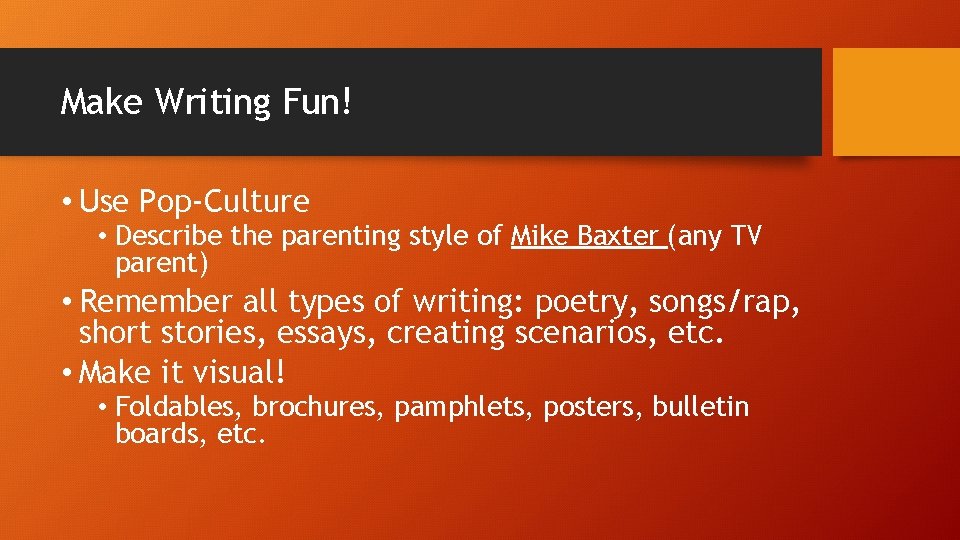
Make Writing Fun! • Use Pop-Culture • Describe the parenting style of Mike Baxter (any TV parent) • Remember all types of writing: poetry, songs/rap, short stories, essays, creating scenarios, etc. • Make it visual! • Foldables, brochures, pamphlets, posters, bulletin boards, etc.
“I”is for Inquiry! • Fundamental to rigorous teaching and deep learning. • Use higher order thinking skills • Apply, demonstrate, illustrate, interpret, implement • Analyze, compare and contrast, outline, question, examine, differentiate • Evaluate, argue, defend, judge, predict, justify • Create, deign, build, develop, plan, produce
Examples of Inquiry in the FACS Classroom • KWL charts …What do your students want to know? • Create your own quiz/test questions • Comparison or Evaluation projects in Adult Roles/Financial Lit • Diapers, appliances, insurance, etc. • Food Science Experiments in Foods • The effect of different ingredients, cooking methods, etc.
Philosophical Chairs • https: //youtu. be/19 elw. Vxjfe. A • Ocotomom article
“C” is for Collaboration • • • Group Projects, Food Labs Jigsaw Activities Numbered Heads Together Team Activities Getting to Know You activities Collaboration is all about RELATIONSHIPS
Collaboration Ideas for FACS Classes • Posters for Child Development Theorists • Mix to Music or Quiz-Trade for test reviews • Think-Pair-Share during lectures • Pattern Blocks in Interior Design to teach types of rhythm • Team building – create team names, mascots, etc. • Jigsaw articles in Child Development • Four Corners
“O” is for Organization • Graphic Organizers • Calendars/Planners • Binders • Time Management Techniques • How to study for tests, using Cornell Notes
“R” is for Reading • Critical Reading • Marking the Text • • Numbering paragraphs Circling key terms Underlining main ideas Use post-it notes when you don’t want them to write in the book • Outlining a Chapter • Helps students pull out main ideas!
Ideas for Reading in your FACS Classes • Recipe Instructions • Outlining Child Development Chapters • Fashion Designer or Fashion Decade Reports, Foldables, Brochures • Clothing Pattern Instructions • Creating Crossword Puzzles • Articles for Socratic Seminars or Philosophical Chairs • Peer Review and Editing
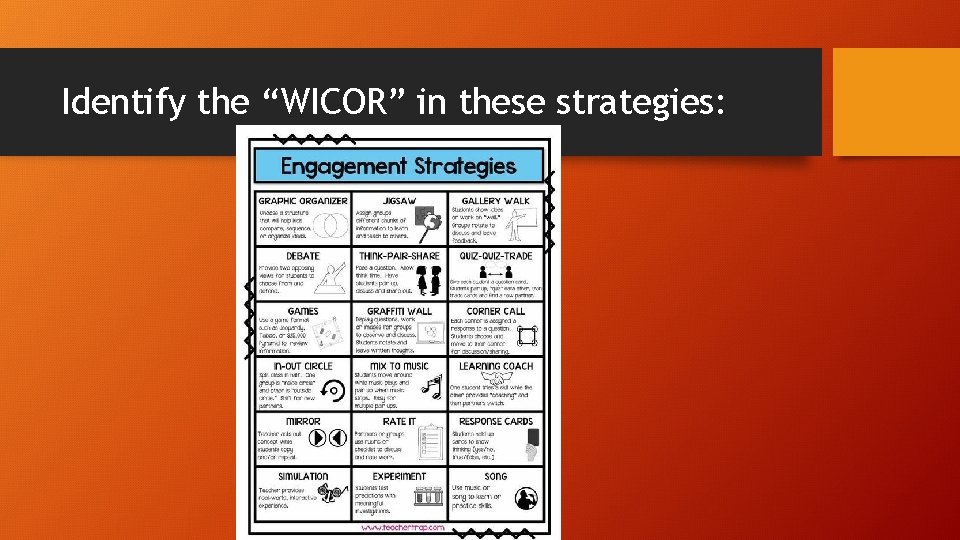
Identify the “WICOR” in these strategies: