
Engagement Approach Stakeholder mapping using the NHS 9

- Slides: 9
Engagement Approach Stakeholder mapping using the NHS 9 Cs approach Print this out on A 0. Blue tack on the wall. Use a separate post it note for each stakeholder (or if doing electronically, use post-it note template below and copy for each stakeholder) You might find some stakeholders appear multiple times, this is fine. This gives you an idea for the future stages of mapping of the degree of influence they have over success of the research. Once you’ve finished this exercise, photograph it. Commissioners Stakeholder name if specific person ORGANISATION those who fund the research Customers those who acquire and use the research outputs Collaborators those with whom the research team works to develop and deliver the research outputs Contributors those from whom the research team acquires content for the research outputs Channels those who provide the research team with a route to stakeholders Commentators those whose opinions of the research team are heard by stakeholders (*if by customer) Consumers those who are served by the research team’s ‘customers’ Champions those who believe in and will actively promote the project Competitors those researching in the same area and/or those who offer existing similar or alternative services. Author: Turner, B. D. Licensed under Creative Commons Attribution 4. 0 International: https: //creativecommons. org/licenses/by/4. 0/
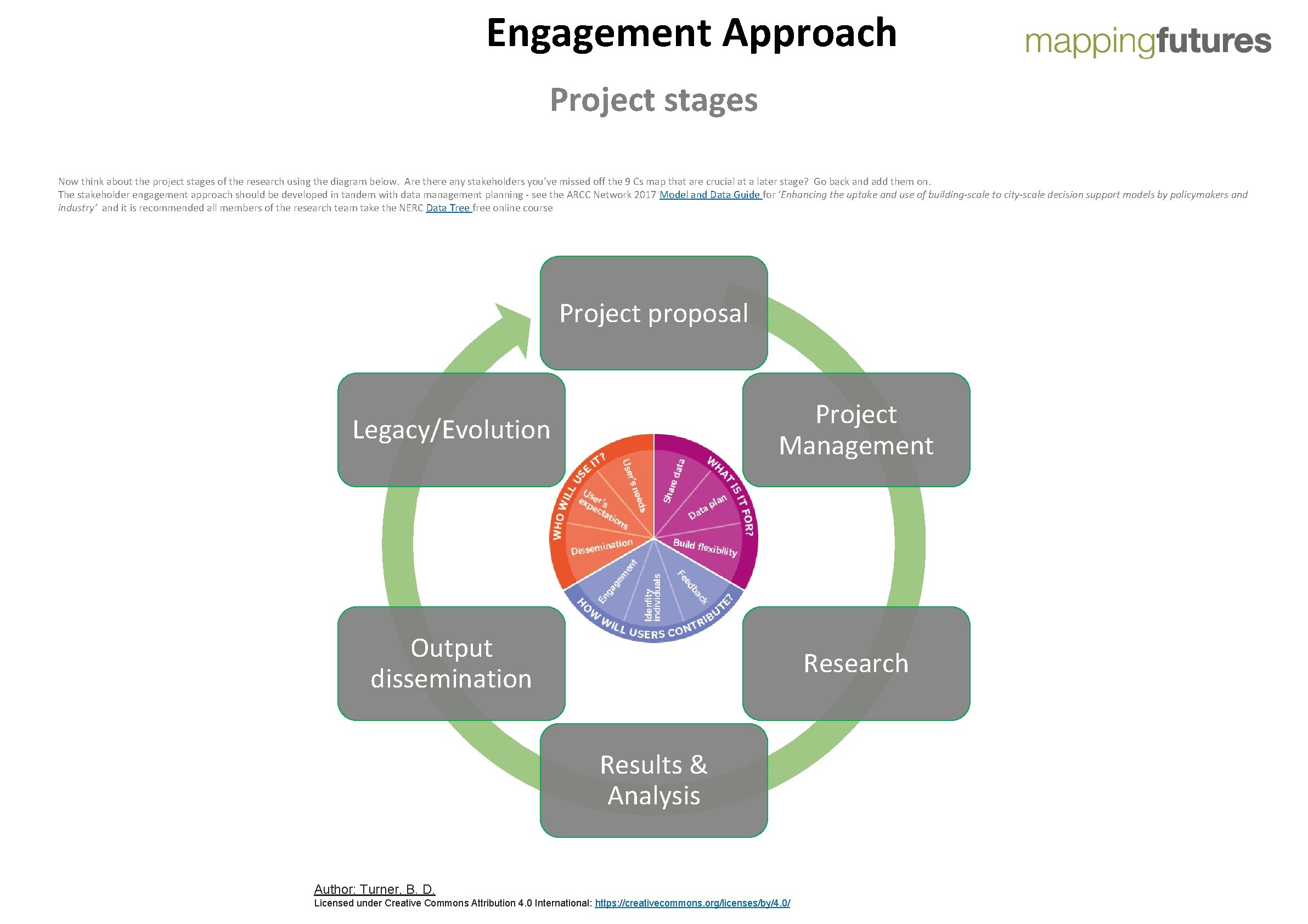
Engagement Approach Project stages Now think about the project stages of the research using the diagram below. Are there any stakeholders you’ve missed off the 9 Cs map that are crucial at a later stage? Go back and add them on. The stakeholder engagement approach should be developed in tandem with data management planning - see the ARCC Network 2017 Model and Data Guide for ‘Enhancing the uptake and use of building-scale to city-scale decision support models by policymakers and industry’ and it is recommended all members of the research team take the NERC Data Tree free online course Project proposal Legacy/Evolution Project Management Output dissemination Research Results & Analysis Author: Turner, B. D. Licensed under Creative Commons Attribution 4. 0 International: https: //creativecommons. org/licenses/by/4. 0/
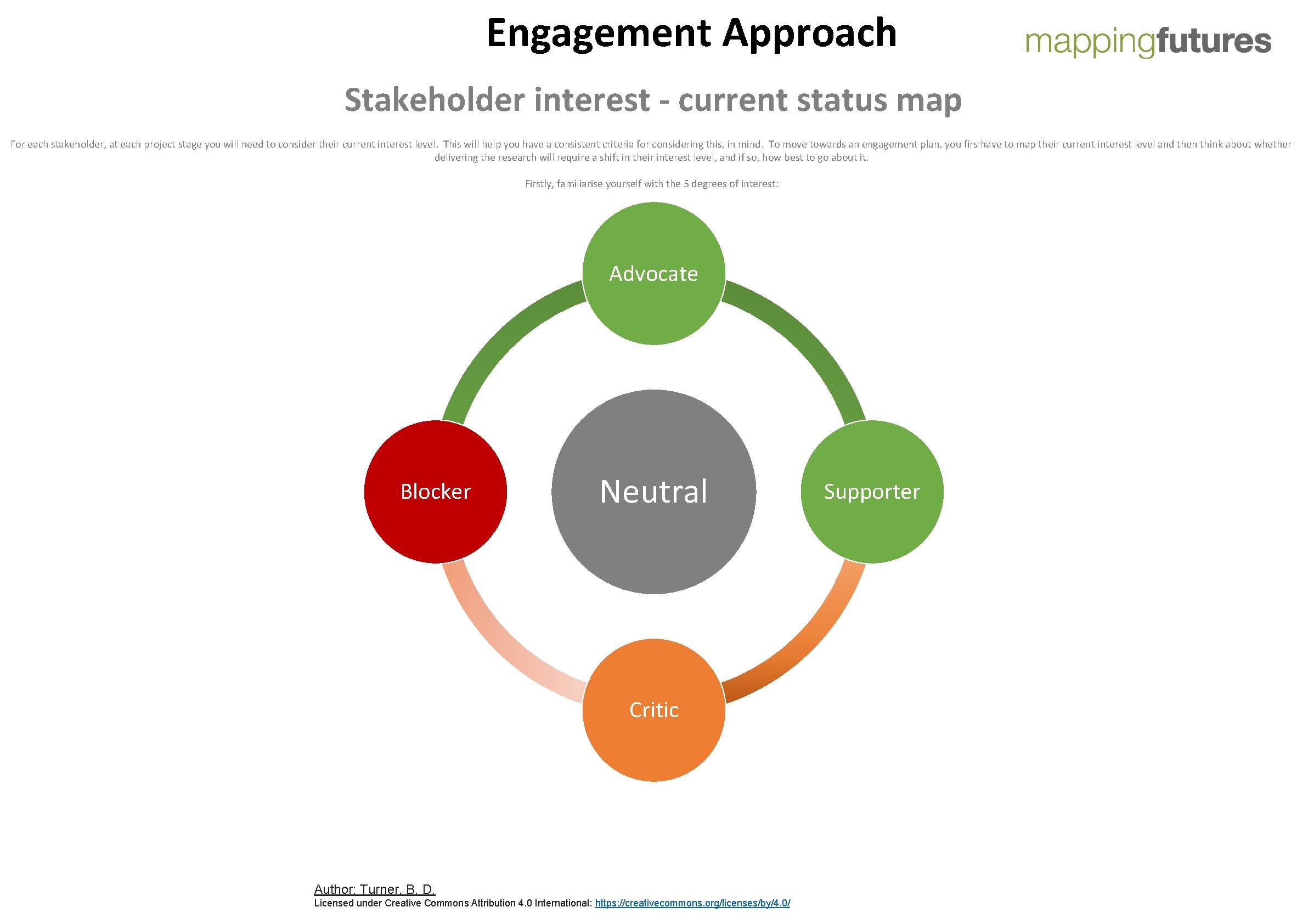
Engagement Approach Stakeholder interest - current status map For each stakeholder, at each project stage you will need to consider their current interest level. This will help you have a consistent criteria for considering this, in mind. To move towards an engagement plan, you firs have to map their current interest level and then think about whether delivering the research will require a shift in their interest level, and if so, how best to go about it. Firstly, familiarise yourself with the 5 degrees of interest: Advocate Blocker Neutral Critic Author: Turner, B. D. Licensed under Creative Commons Attribution 4. 0 International: https: //creativecommons. org/licenses/by/4. 0/ Supporter
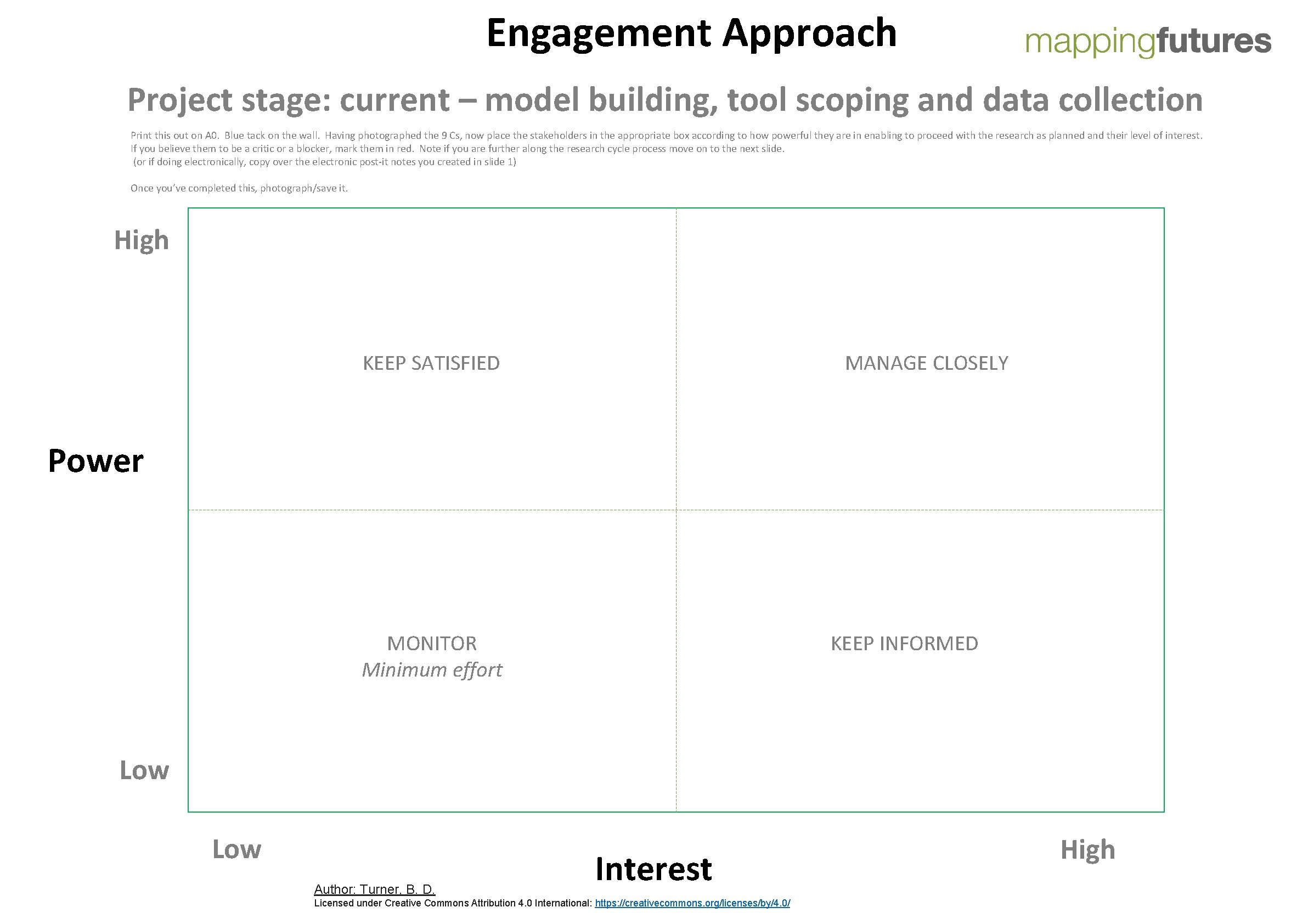
Engagement Approach Project stage: current – model building, tool scoping and data collection Print this out on A 0. Blue tack on the wall. Having photographed the 9 Cs, now place the stakeholders in the appropriate box according to how powerful they are in enabling to proceed with the research as planned and their level of interest. If you believe them to be a critic or a blocker, mark them in red. Note if you are further along the research cycle process move on to the next slide. (or if doing electronically, copy over the electronic post-it notes you created in slide 1) Once you’ve completed this, photograph/save it. High KEEP SATISFIED MANAGE CLOSELY Power MONITOR Minimum effort KEEP INFORMED Low Author: Turner, B. D. Interest Licensed under Creative Commons Attribution 4. 0 International: https: //creativecommons. org/licenses/by/4. 0/ High
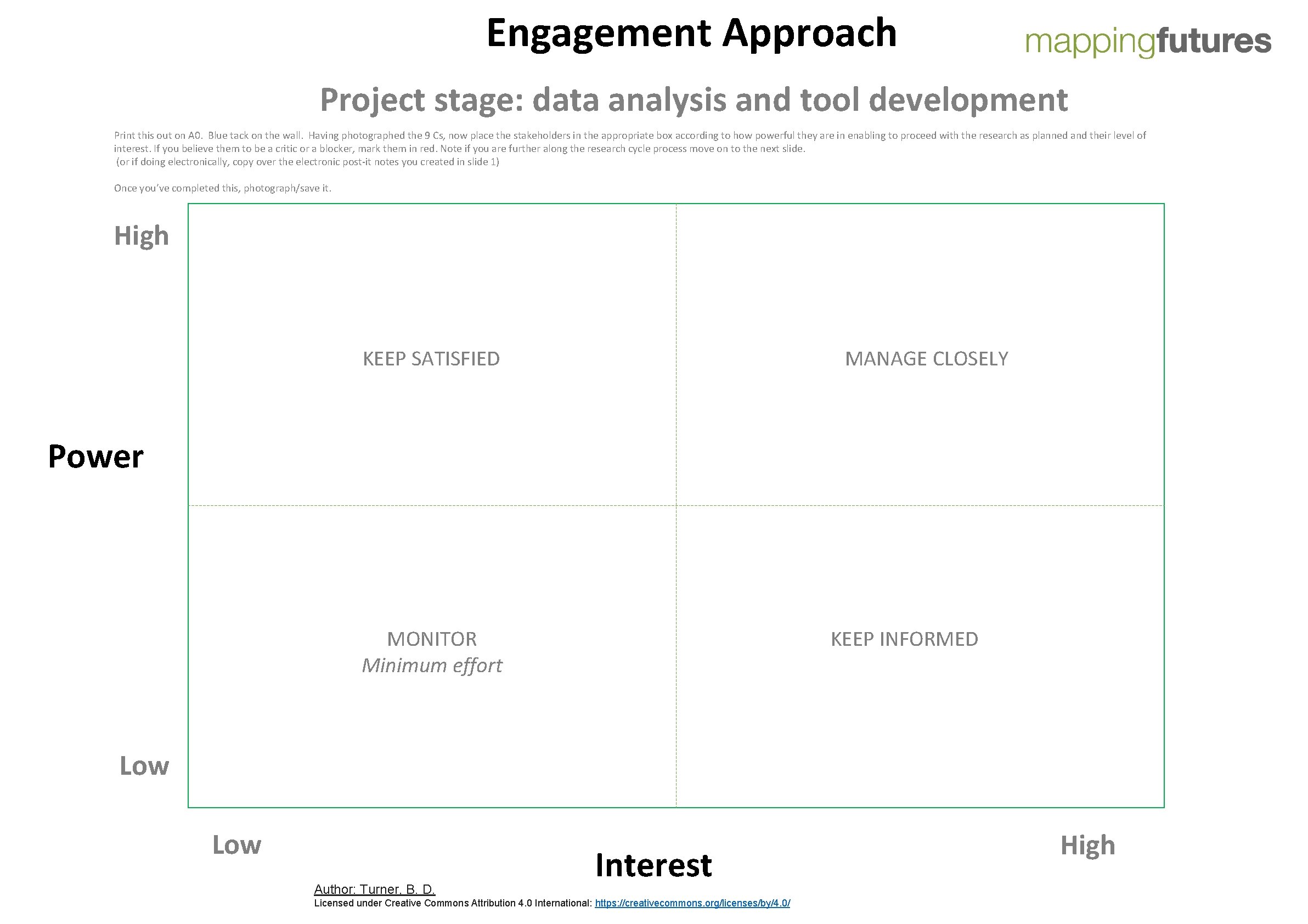
Engagement Approach Project stage: data analysis and tool development Print this out on A 0. Blue tack on the wall. Having photographed the 9 Cs, now place the stakeholders in the appropriate box according to how powerful they are in enabling to proceed with the research as planned and their level of interest. If you believe them to be a critic or a blocker, mark them in red. Note if you are further along the research cycle process move on to the next slide. (or if doing electronically, copy over the electronic post-it notes you created in slide 1) Once you’ve completed this, photograph/save it. High KEEP SATISFIED MANAGE CLOSELY Power MONITOR Minimum effort KEEP INFORMED Low Author: Turner, B. D. Interest Licensed under Creative Commons Attribution 4. 0 International: https: //creativecommons. org/licenses/by/4. 0/ High
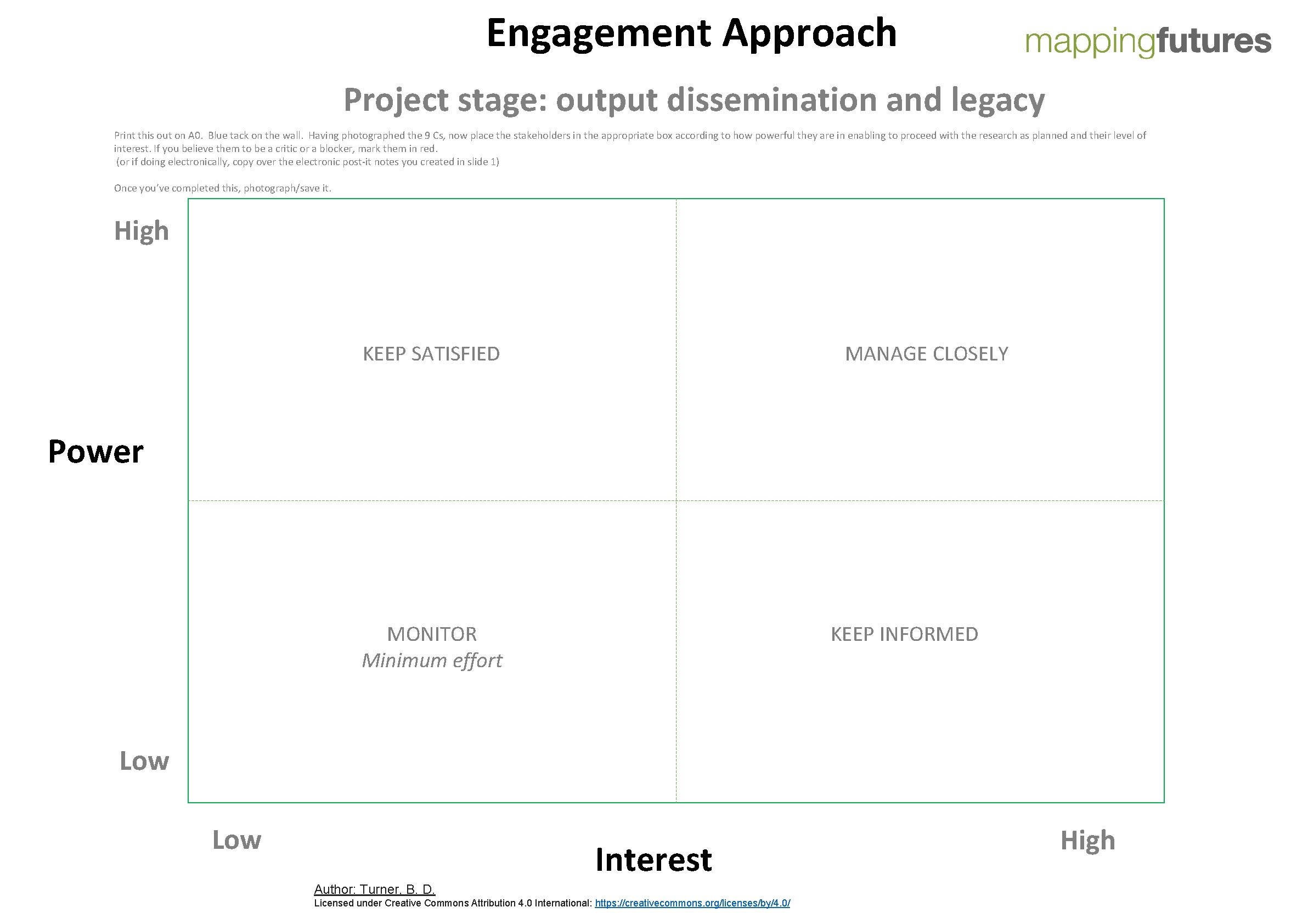
Engagement Approach Project stage: output dissemination and legacy Print this out on A 0. Blue tack on the wall. Having photographed the 9 Cs, now place the stakeholders in the appropriate box according to how powerful they are in enabling to proceed with the research as planned and their level of interest. If you believe them to be a critic or a blocker, mark them in red. (or if doing electronically, copy over the electronic post-it notes you created in slide 1) Once you’ve completed this, photograph/save it. High KEEP SATISFIED MANAGE CLOSELY Power MONITOR Minimum effort KEEP INFORMED Low Interest Author: Turner, B. D. Licensed under Creative Commons Attribution 4. 0 International: https: //creativecommons. org/licenses/by/4. 0/ High
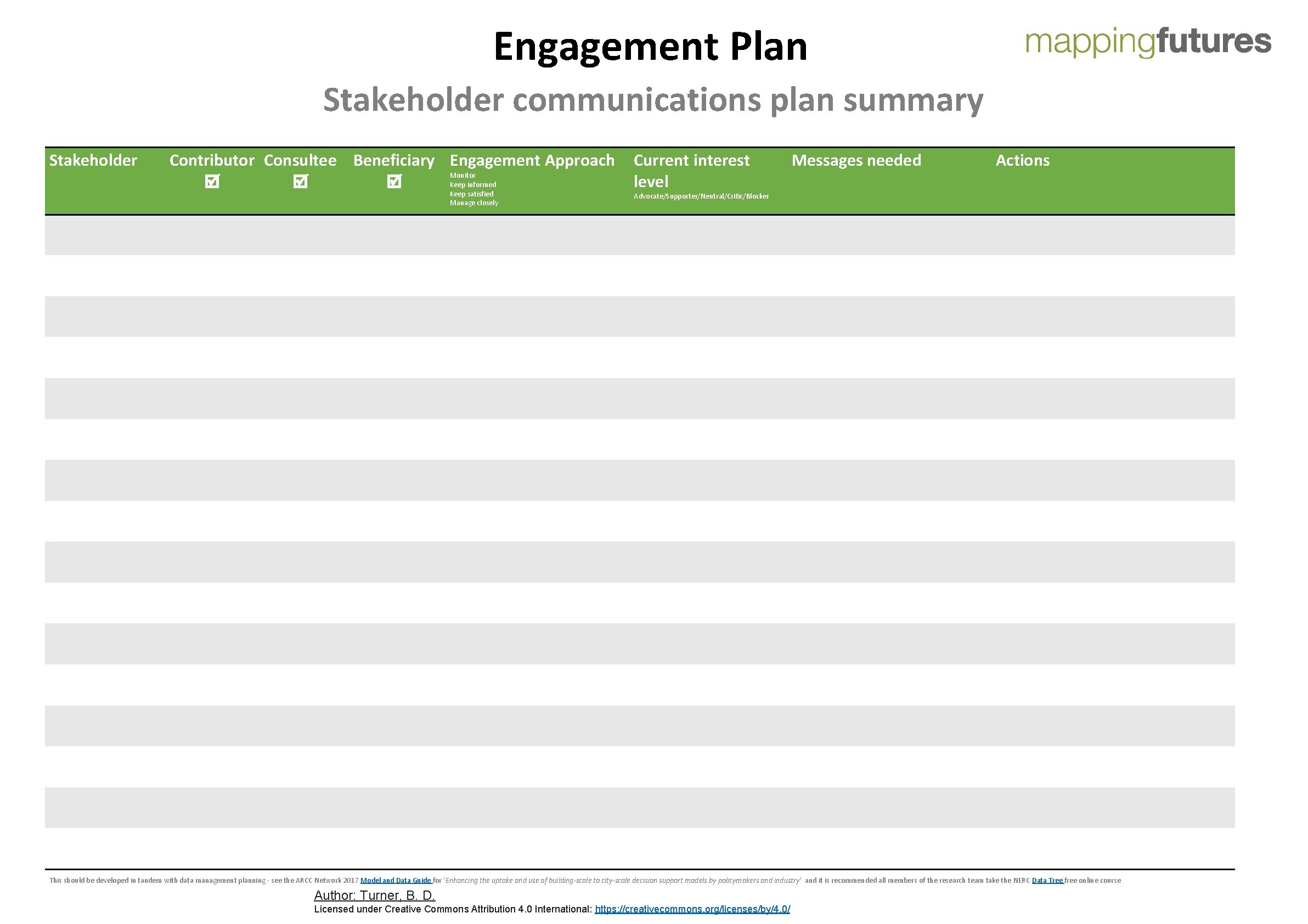
Engagement Plan Stakeholder communications plan summary Stakeholder Contributor Consultee Beneficiary Engagement Approach Monitor Keep informed Keep satisfied Manage closely Current interest level Messages needed Actions Advocate/Supporter/Neutral/Critic/Blocker This should be developed in tandem with data management planning - see the ARCC Network 2017 Model and Data Guide for ‘Enhancing the uptake and use of building-scale to city-scale decision support models by policymakers and industry’ and it is recommended all members of the research team take the NERC Data Tree free online course Author: Turner, B. D. Licensed under Creative Commons Attribution 4. 0 International: https: //creativecommons. org/licenses/by/4. 0/
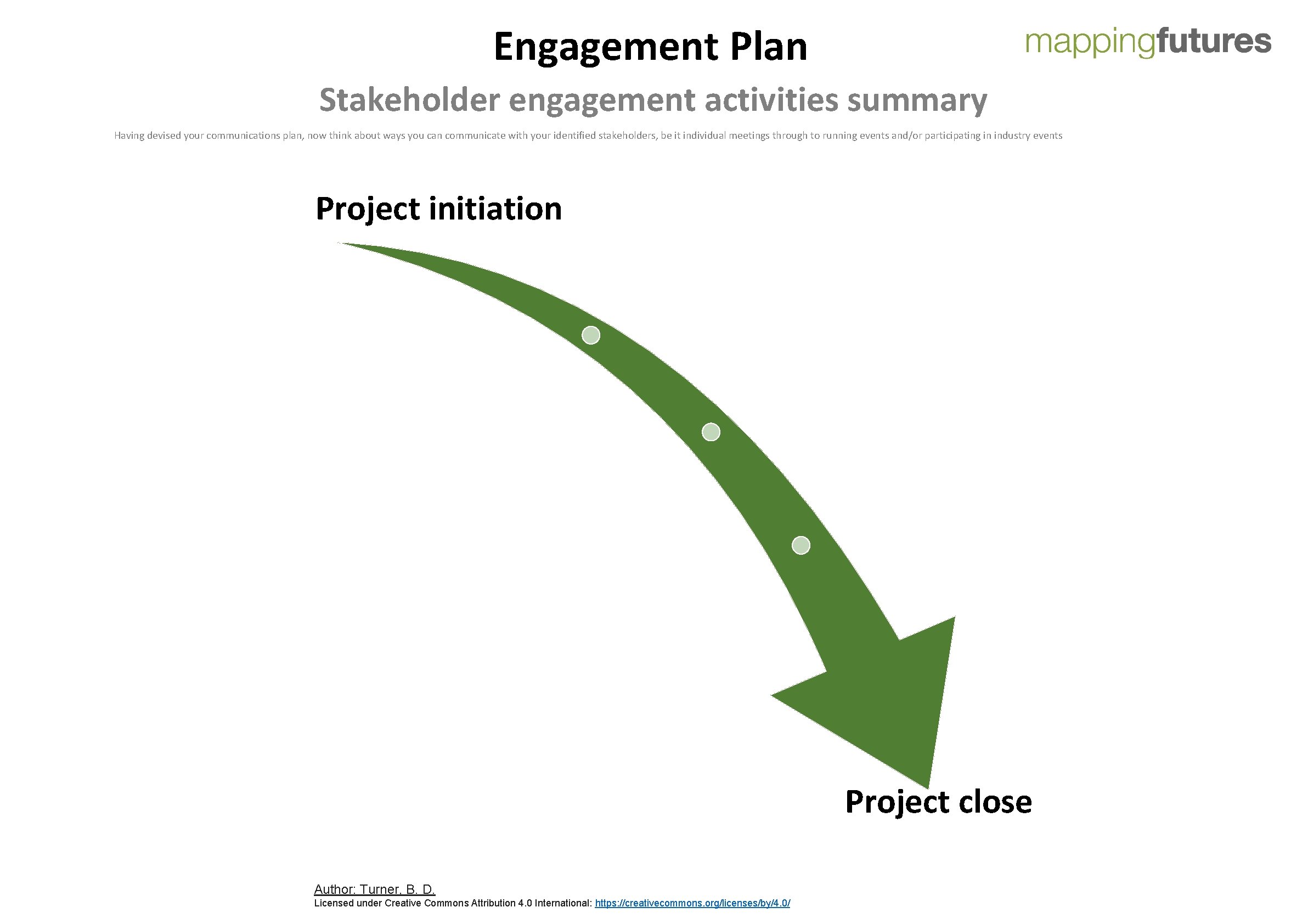
Engagement Plan Stakeholder engagement activities summary Having devised your communications plan, now think about ways you can communicate with your identified stakeholders, be it individual meetings through to running events and/or participating in industry events Project initiation Project close Author: Turner, B. D. Licensed under Creative Commons Attribution 4. 0 International: https: //creativecommons. org/licenses/by/4. 0/
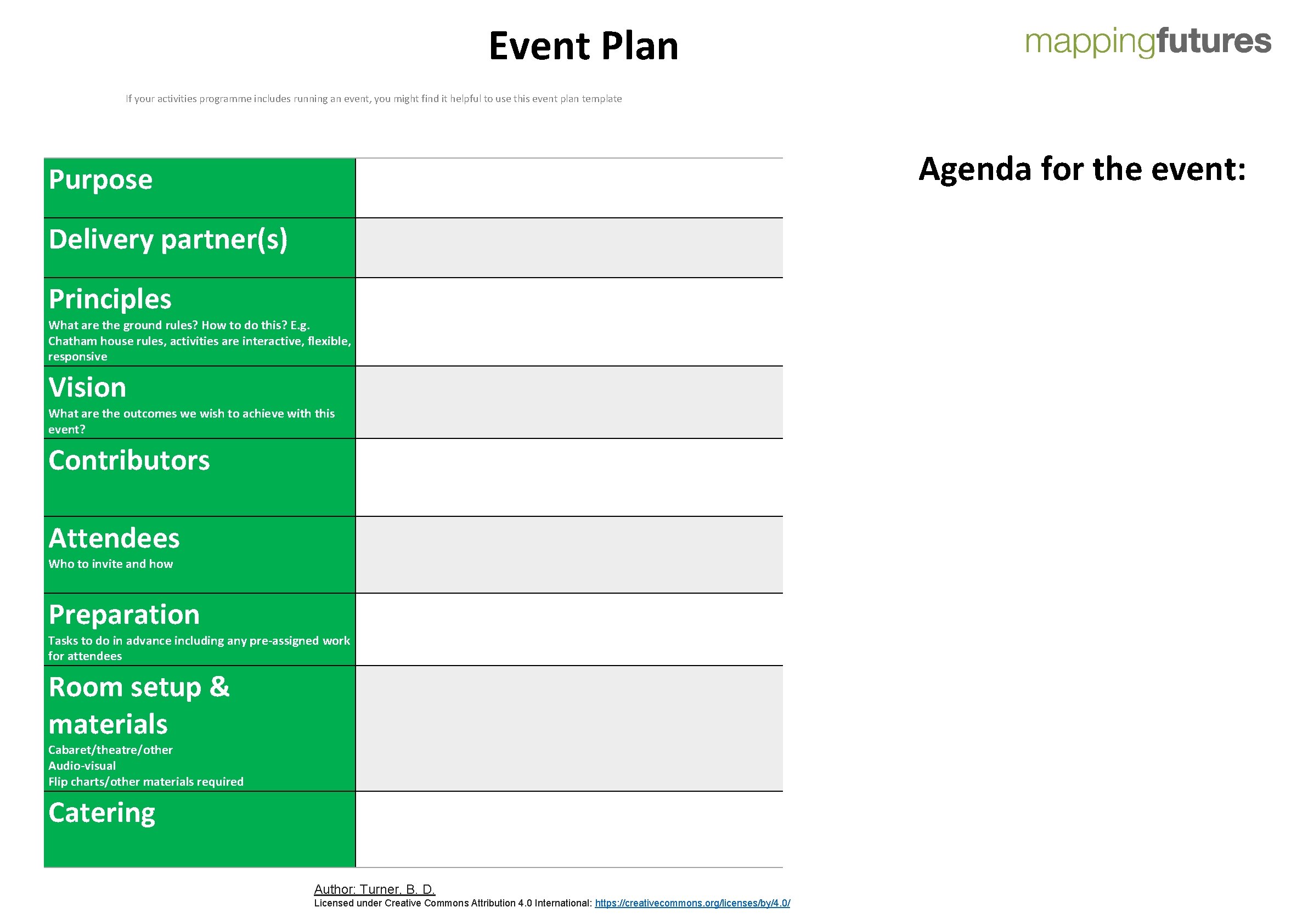
Event Plan If your activities programme includes running an event, you might find it helpful to use this event plan template Agenda for the event: Purpose Delivery partner(s) Principles What are the ground rules? How to do this? E. g. Chatham house rules, activities are interactive, flexible, responsive Vision What are the outcomes we wish to achieve with this event? Contributors Attendees Who to invite and how Preparation Tasks to do in advance including any pre-assigned work for attendees Room setup & materials Cabaret/theatre/other Audio-visual Flip charts/other materials required Catering Author: Turner, B. D. Licensed under Creative Commons Attribution 4. 0 International: https: //creativecommons. org/licenses/by/4. 0/