
ENG 412 Professional English Writing Routine Messages Writing
- Slides: 28
ENG 412 - Professional English Writing Routine Messages
Writing routine letters n n n Information request Order request Simple claim
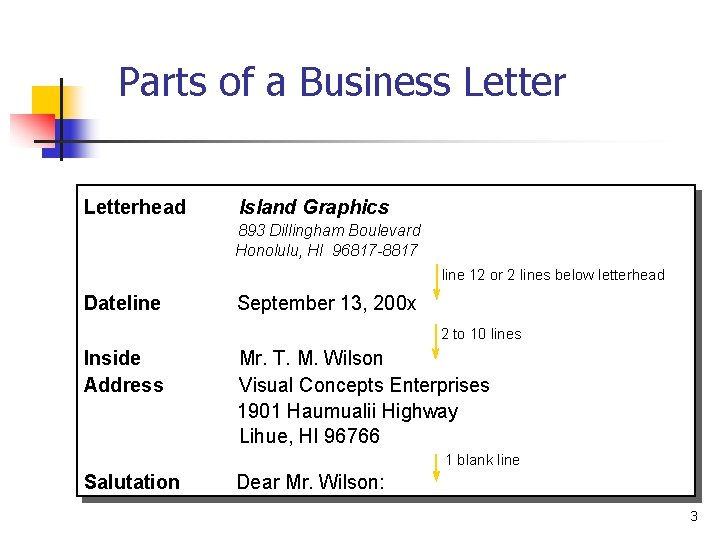
Parts of a Business Letterhead Island Graphics 893 Dillingham Boulevard Honolulu, HI 96817 -8817 line 12 or 2 lines below letterhead Dateline September 13, 200 x 2 to 10 lines Inside Address Mr. T. M. Wilson Visual Concepts Enterprises 1901 Haumualii Highway Lihue, HI 96766 1 blank line Salutation Dear Mr. Wilson: 3
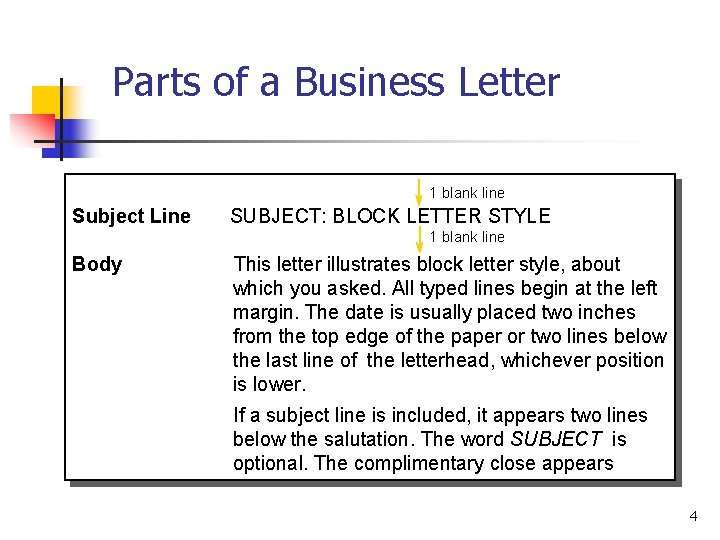
Parts of a Business Letter 1 blank line Subject Line SUBJECT: BLOCK LETTER STYLE 1 blank line Body This letter illustrates block letter style, about which you asked. All typed lines begin at the left margin. The date is usually placed two inches from the top edge of the paper or two lines below the last line of the letterhead, whichever position is lower. If a subject line is included, it appears two lines below the salutation. The word SUBJECT is optional. The complimentary close appears 4
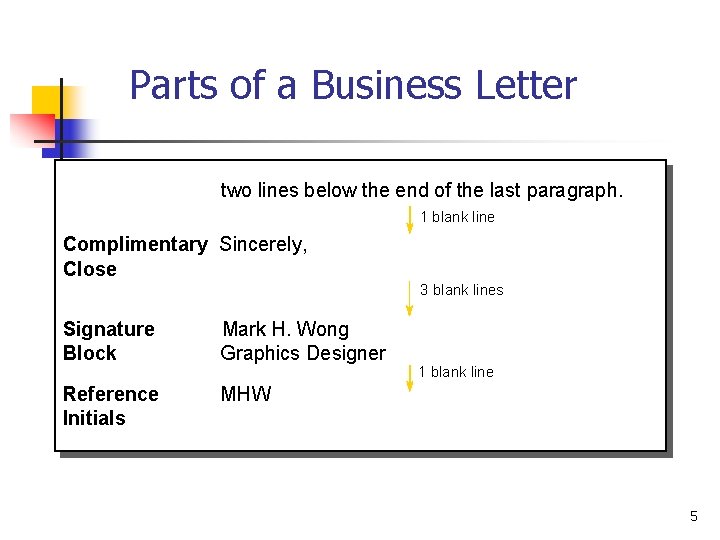
Parts of a Business Letter two lines below the end of the last paragraph. 1 blank line Complimentary Sincerely, Close 3 blank lines Signature Block Mark H. Wong Graphics Designer Reference Initials MHW 1 blank line 5
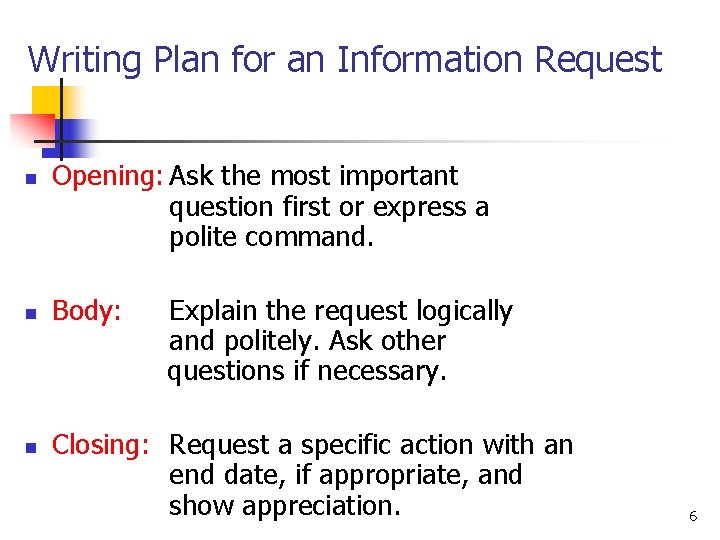
Writing Plan for an Information Request n n n Opening: Ask the most important question first or express a polite command. Body: Explain the request logically and politely. Ask other questions if necessary. Closing: Request a specific action with an end date, if appropriate, and show appreciation. 6
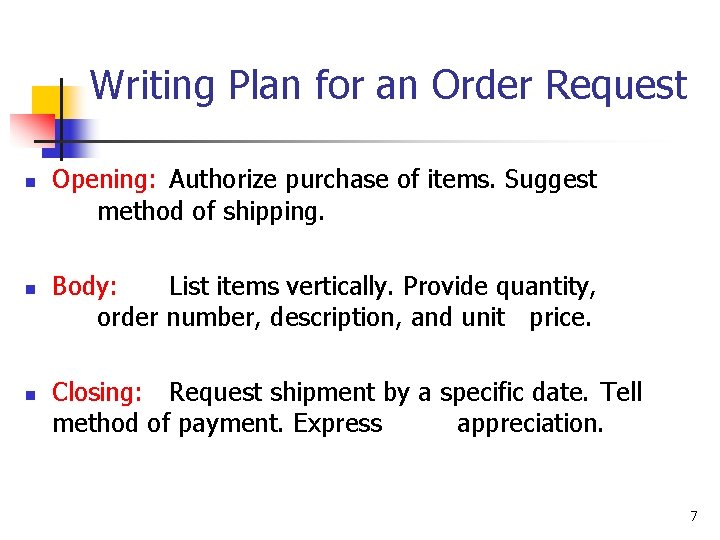
Writing Plan for an Order Request n n n Opening: Authorize purchase of items. Suggest method of shipping. Body: List items vertically. Provide quantity, order number, description, and unit price. Closing: Request shipment by a specific date. Tell method of payment. Express appreciation. 7
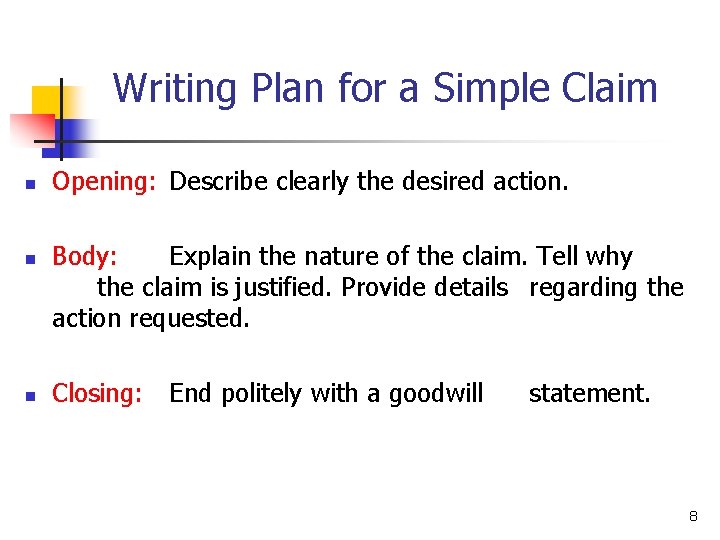
Writing Plan for a Simple Claim n n n Opening: Describe clearly the desired action. Body: Explain the nature of the claim. Tell why the claim is justified. Provide details regarding the action requested. Closing: End politely with a goodwill statement. 8
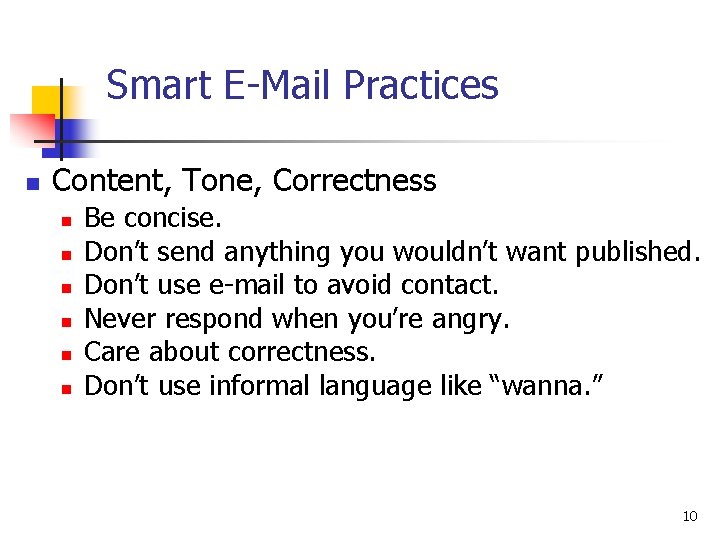
Smart E-Mail Practices n Content, Tone, Correctness n n n Be concise. Don’t send anything you wouldn’t want published. Don’t use e-mail to avoid contact. Never respond when you’re angry. Care about correctness. Don’t use informal language like “wanna. ” 10
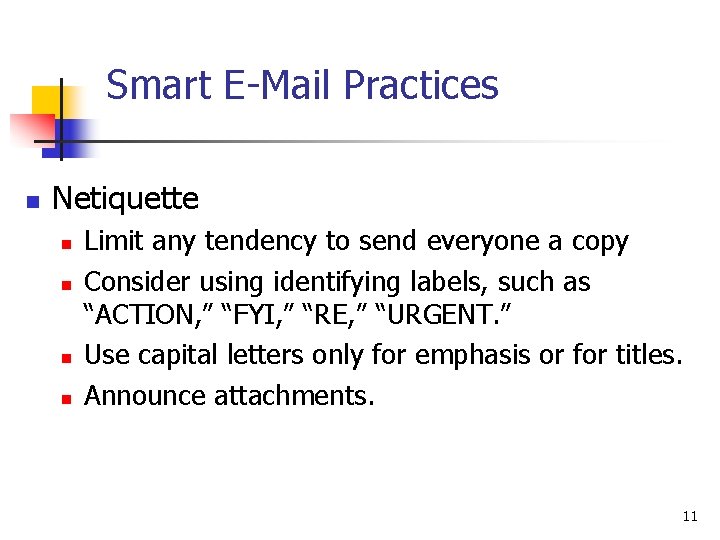
Smart E-Mail Practices n Netiquette n n Limit any tendency to send everyone a copy Consider using identifying labels, such as “ACTION, ” “FYI, ” “RE, ” “URGENT. ” Use capital letters only for emphasis or for titles. Announce attachments. 11
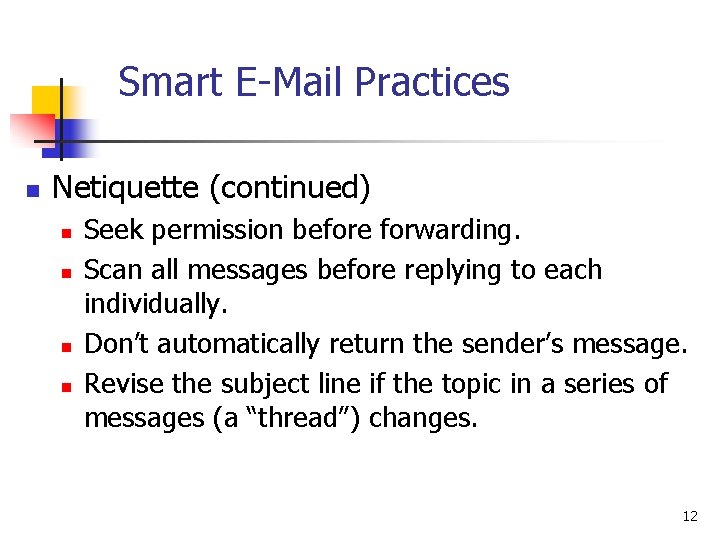
Smart E-Mail Practices n Netiquette (continued) n n Seek permission before forwarding. Scan all messages before replying to each individually. Don’t automatically return the sender’s message. Revise the subject line if the topic in a series of messages (a “thread”) changes. 12
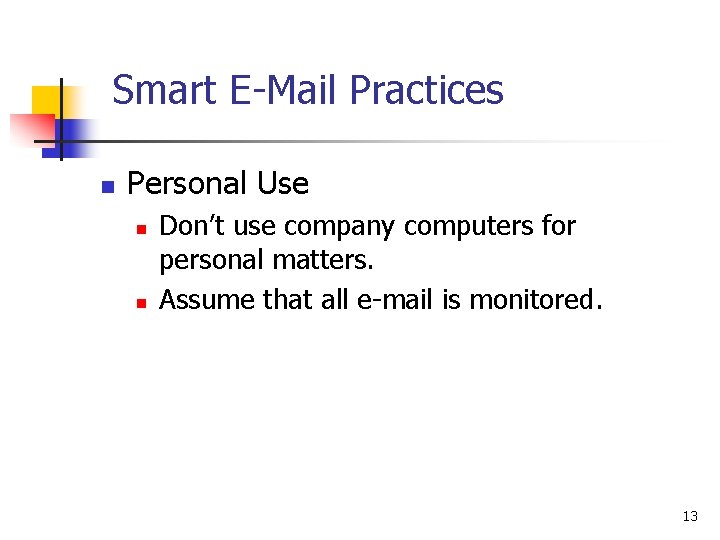
Smart E-Mail Practices n Personal Use n n Don’t use company computers for personal matters. Assume that all e-mail is monitored. 13
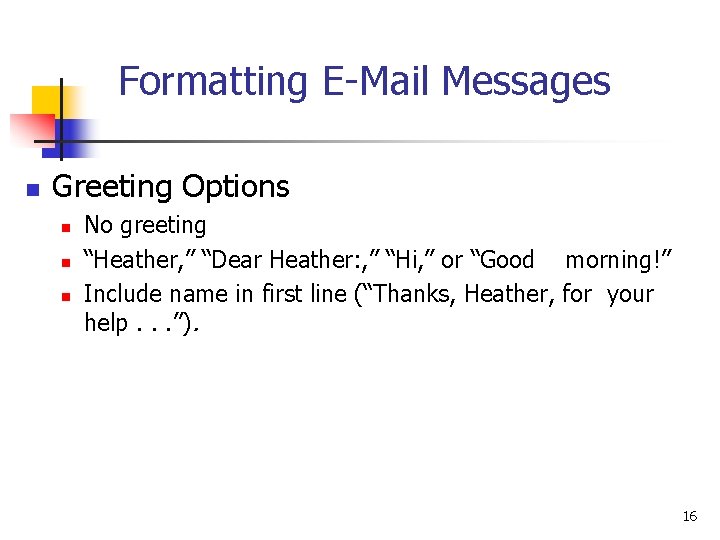
Formatting E-Mail Messages n Greeting Options n n n No greeting “Heather, ” “Dear Heather: , ” “Hi, ” or “Good morning!” Include name in first line (“Thanks, Heather, for your help. . . ”). 16
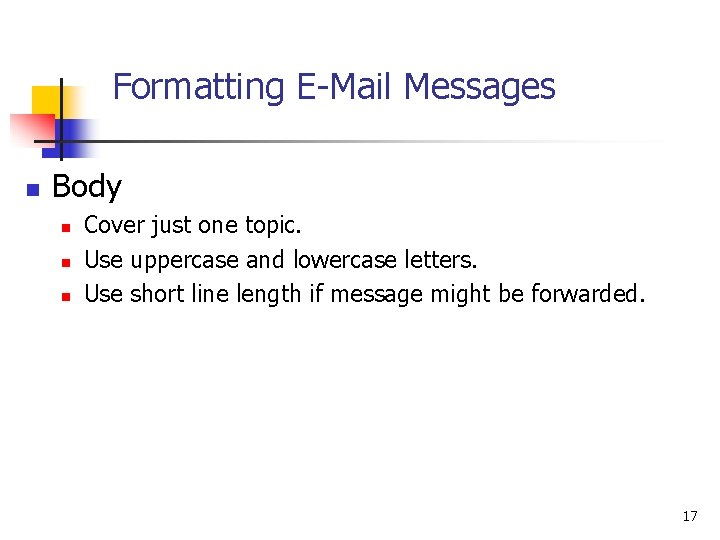
Formatting E-Mail Messages n Body n n n Cover just one topic. Use uppercase and lowercase letters. Use short line length if message might be forwarded. 17
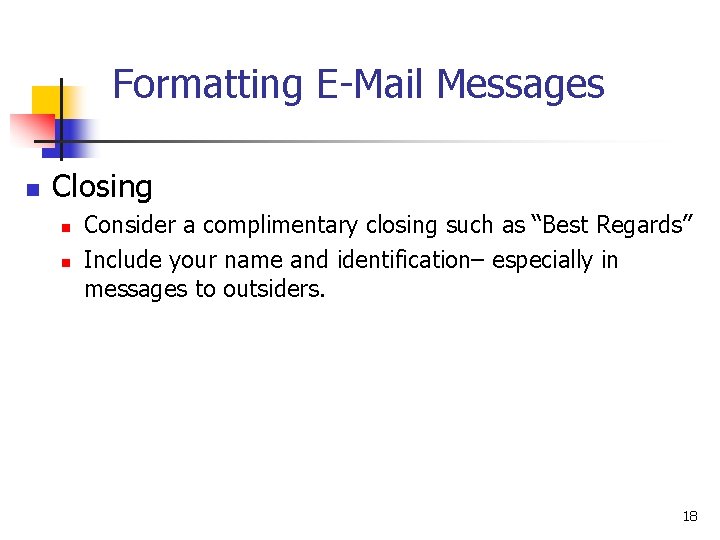
Formatting E-Mail Messages n Closing n n Consider a complimentary closing such as “Best Regards” Include your name and identification– especially in messages to outsiders. 18
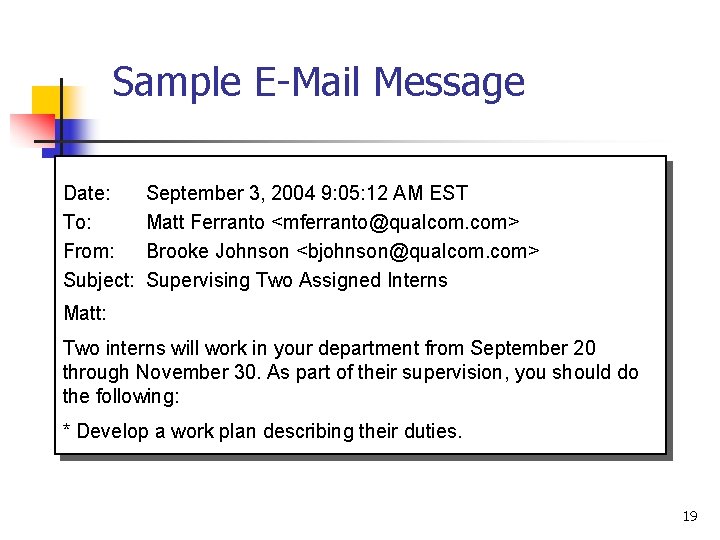
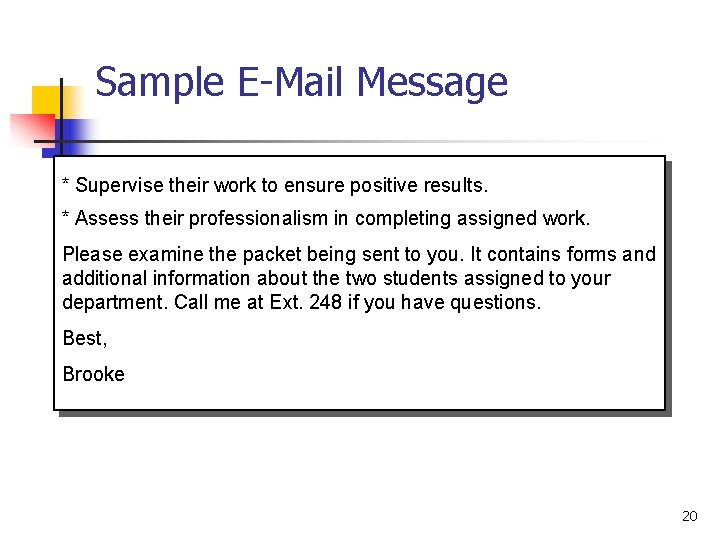
Sample E-Mail Message Date: To: From: Subject: September 3, 2004 9: 05: 12 AM EST Matt Ferranto <mferranto@qualcom. com> Brooke Johnson <bjohnson@qualcom. com> Supervising Two Assigned Interns Matt: Two interns will work in your department from September 20 through November 30. As part of their supervision, you should do the following: * Develop a work plan describing their duties. 19
Sample E-Mail Message * Supervise their work to ensure positive results. * Assess their professionalism in completing assigned work. Please examine the packet being sent to you. It contains forms and additional information about the two students assigned to your department. Call me at Ext. 248 if you have questions. Best, Brooke 20
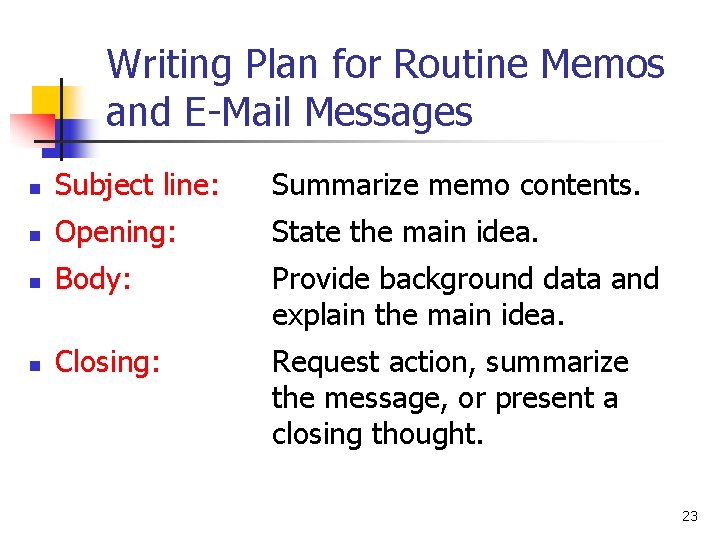
Writing Plan for Routine Memos and E-Mail Messages n Subject line: Summarize memo contents. n Opening: State the main idea. n Body: Provide background data and explain the main idea. n Closing: Request action, summarize the message, or present a closing thought. 23
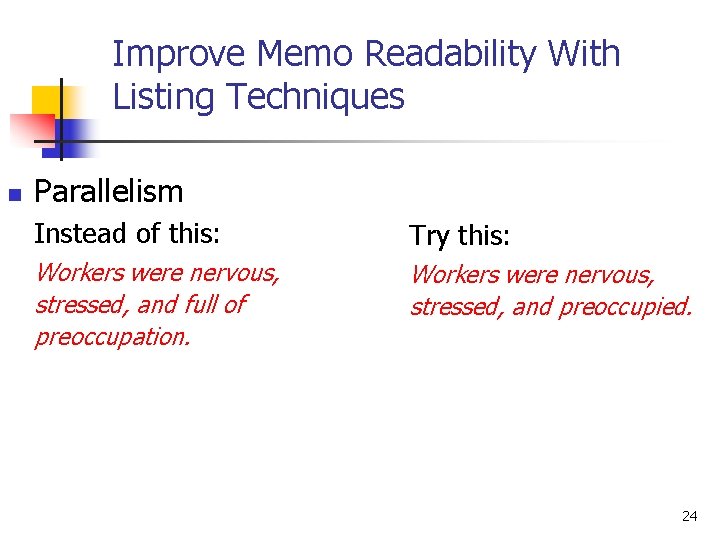
Improve Memo Readability With Listing Techniques n Parallelism Instead of this: Try this: Workers were nervous, stressed, and full of preoccupation. Workers were nervous, stressed, and preoccupied. 24
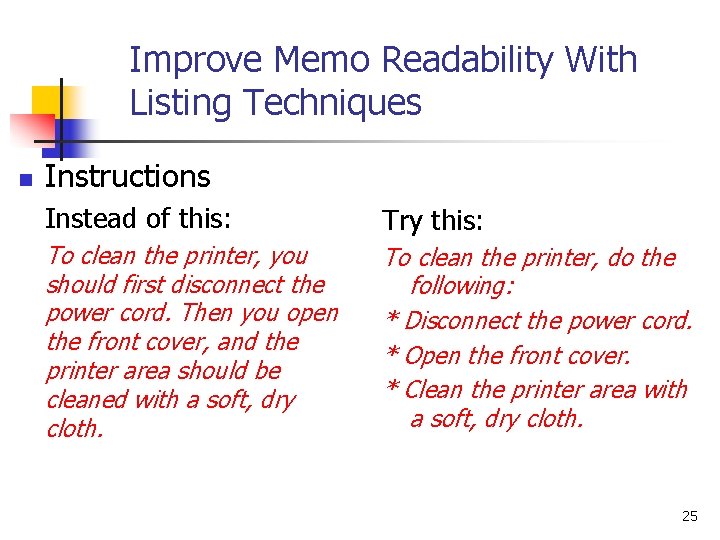
Improve Memo Readability With Listing Techniques n Instructions Instead of this: Try this: To clean the printer, you should first disconnect the power cord. Then you open the front cover, and the printer area should be cleaned with a soft, dry cloth. To clean the printer, do the following: * Disconnect the power cord. * Open the front cover. * Clean the printer area with a soft, dry cloth. 25
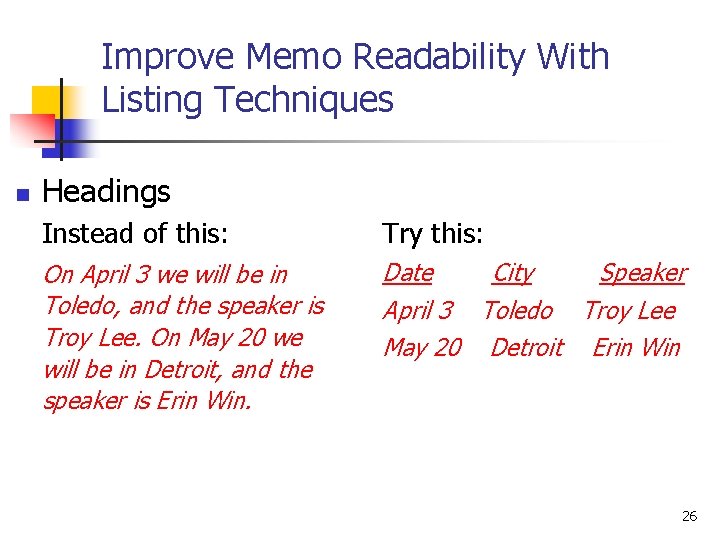
Improve Memo Readability With Listing Techniques n Headings Instead of this: Try this: On April 3 we will be in Toledo, and the speaker is Troy Lee. On May 20 we will be in Detroit, and the speaker is Erin Win. Date City Speaker April 3 Toledo Troy Lee May 20 Detroit Erin Win 26
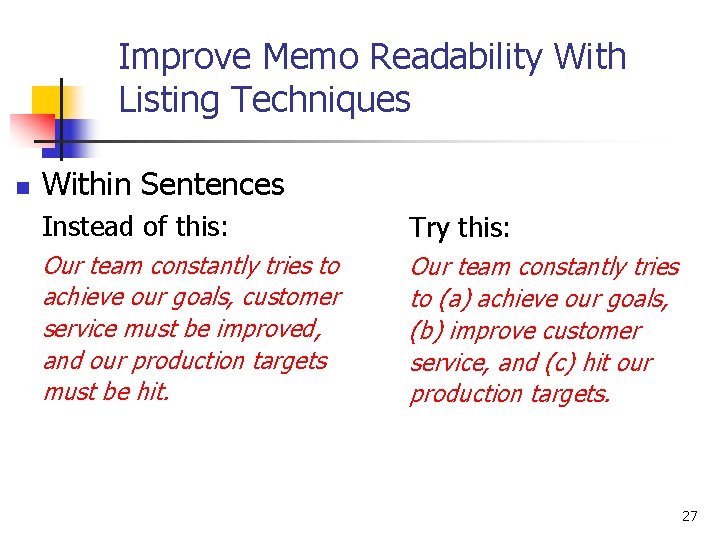
Improve Memo Readability With Listing Techniques n Within Sentences Instead of this: Try this: Our team constantly tries to achieve our goals, customer service must be improved, and our production targets must be hit. Our team constantly tries to (a) achieve our goals, (b) improve customer service, and (c) hit our production targets. 27
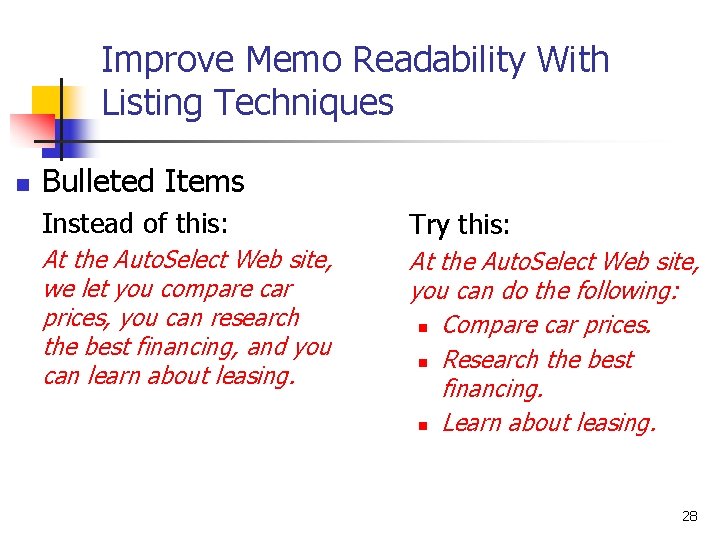
Improve Memo Readability With Listing Techniques n Bulleted Items Instead of this: Try this: At the Auto. Select Web site, we let you compare car prices, you can research the best financing, and you can learn about leasing. At the Auto. Select Web site, you can do the following: n Compare car prices. n Research the best financing. n Learn about leasing. 28
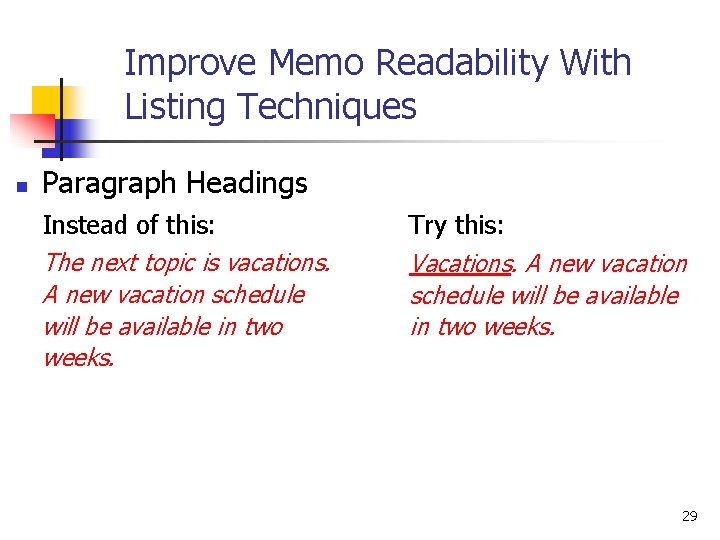
Improve Memo Readability With Listing Techniques n Paragraph Headings Instead of this: The next topic is vacations. A new vacation schedule will be available in two weeks. Try this: Vacations. A new vacation schedule will be available in two weeks. 29
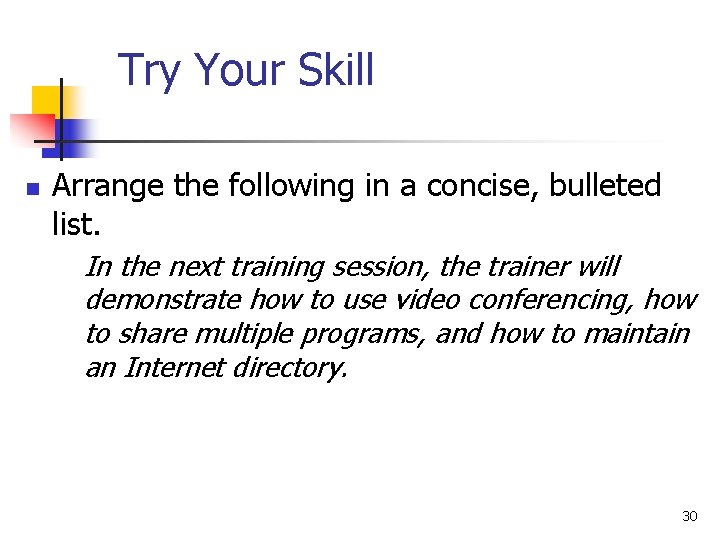
Try Your Skill n Arrange the following in a concise, bulleted list. In the next training session, the trainer will demonstrate how to use video conferencing, how to share multiple programs, and how to maintain an Internet directory. 30
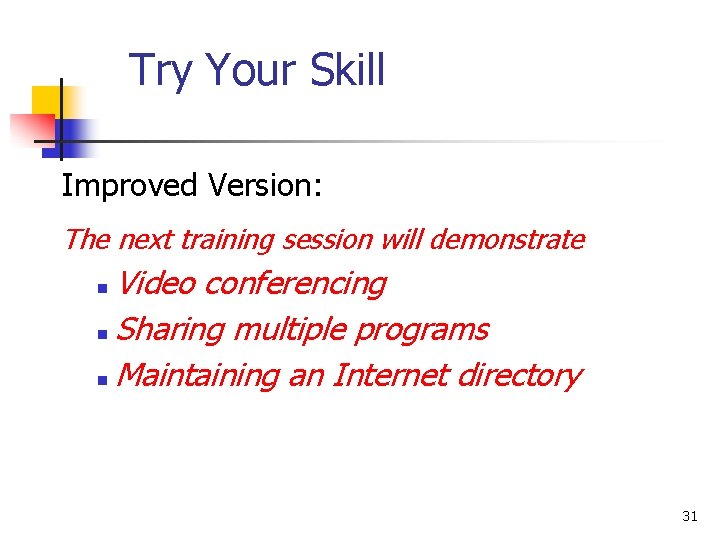
Try Your Skill Improved Version: The next training session will demonstrate Video conferencing n Sharing multiple programs n Maintaining an Internet directory n 31
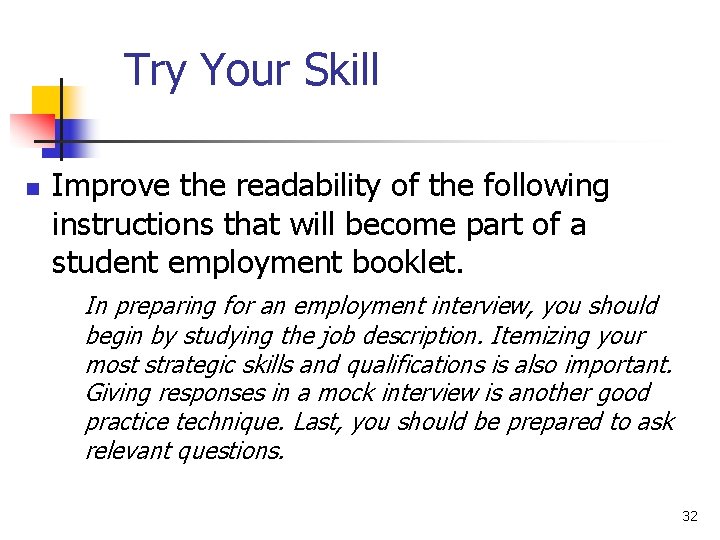
Try Your Skill n Improve the readability of the following instructions that will become part of a student employment booklet. In preparing for an employment interview, you should begin by studying the job description. Itemizing your most strategic skills and qualifications is also important. Giving responses in a mock interview is another good practice technique. Last, you should be prepared to ask relevant questions. 32
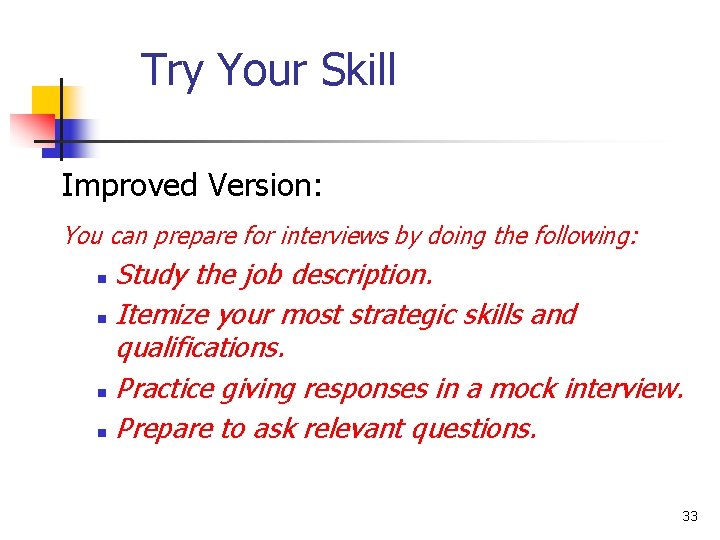
Try Your Skill Improved Version: You can prepare for interviews by doing the following: Study the job description. n Itemize your most strategic skills and qualifications. n Practice giving responses in a mock interview. n Prepare to ask relevant questions. n 33