
Energy Unit 1 States of Matter Changing State
- Slides: 10
Energy Unit 1
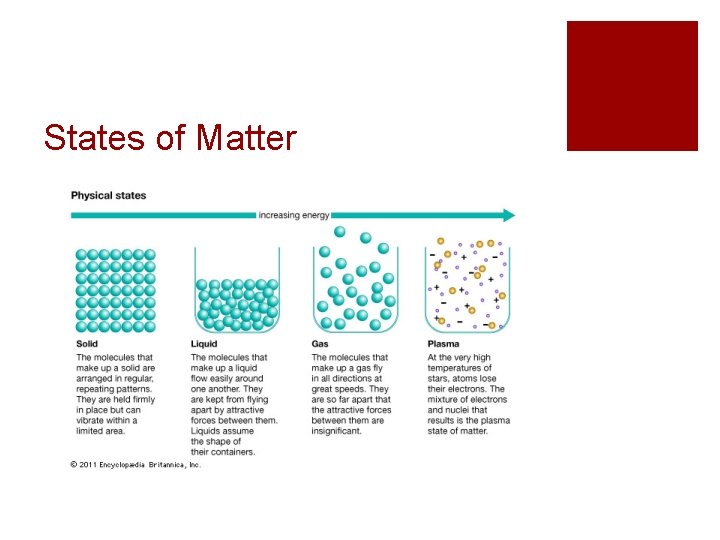
States of Matter
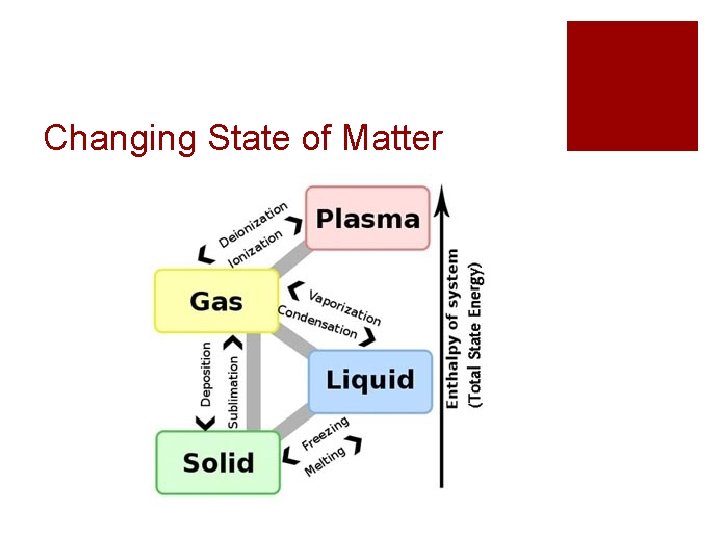
Changing State of Matter
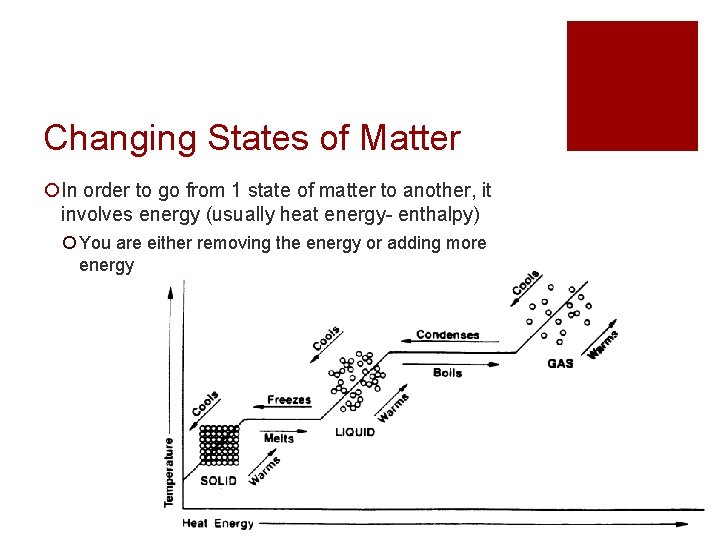
Changing States of Matter ¡In order to go from 1 state of matter to another, it involves energy (usually heat energy- enthalpy) ¡ You are either removing the energy or adding more energy
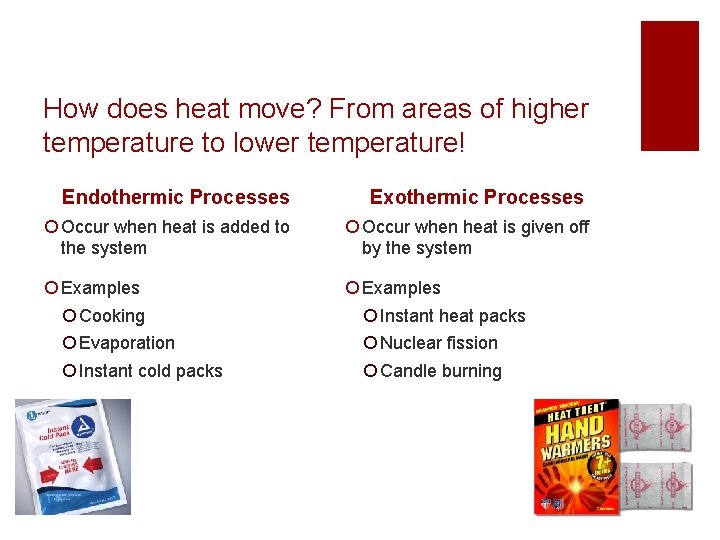
How does heat move? From areas of higher temperature to lower temperature! Endothermic Processes Exothermic Processes ¡ Occur when heat is added to the system ¡ Occur when heat is given off by the system ¡ Examples ¡ Cooking ¡ Evaporation ¡ Instant cold packs ¡ Examples ¡ Instant heat packs ¡ Nuclear fission ¡ Candle burning
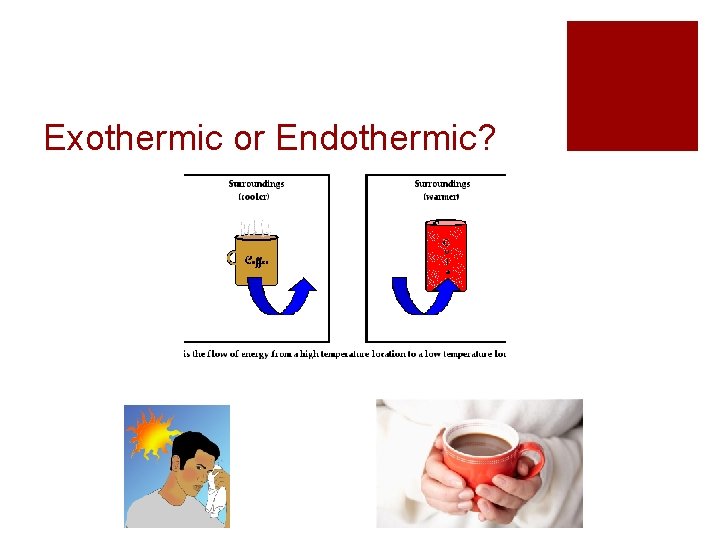
Exothermic or Endothermic?
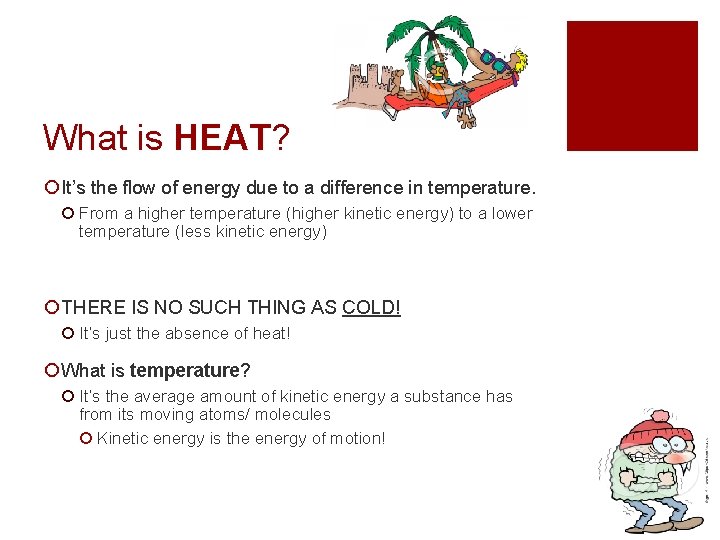
What is HEAT? ¡ It’s the flow of energy due to a difference in temperature. ¡ From a higher temperature (higher kinetic energy) to a lower temperature (less kinetic energy) ¡ THERE IS NO SUCH THING AS COLD! ¡ It’s just the absence of heat! ¡ What is temperature? ¡ It’s the average amount of kinetic energy a substance has from its moving atoms/ molecules ¡ Kinetic energy is the energy of motion!
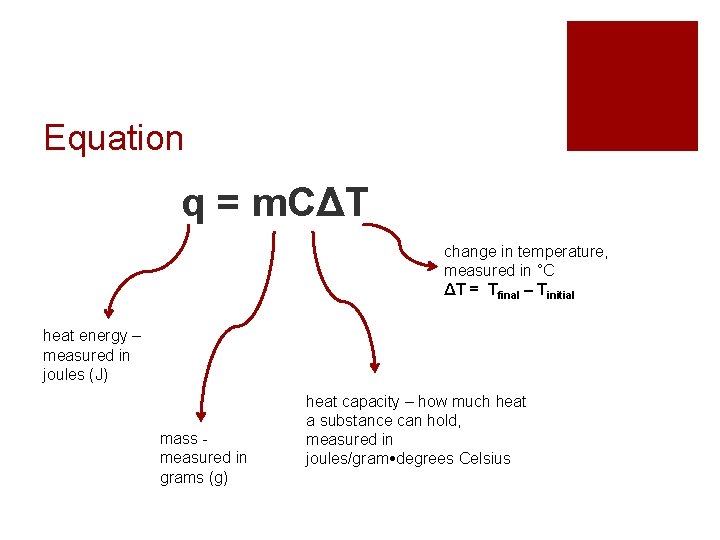
Equation q = m. CΔT change in temperature, measured in °C ΔT = Tfinal – Tinitial heat energy – measured in joules (J) mass measured in grams (g) heat capacity – how much heat a substance can hold, measured in joules/gram degrees Celsius
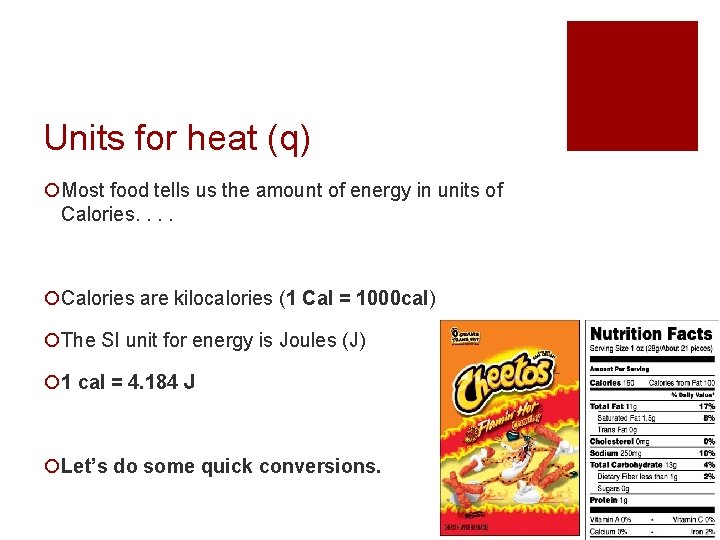
Units for heat (q) ¡Most food tells us the amount of energy in units of Calories. . ¡Calories are kilocalories (1 Cal = 1000 cal) ¡The SI unit for energy is Joules (J) ¡ 1 cal = 4. 184 J ¡Let’s do some quick conversions.
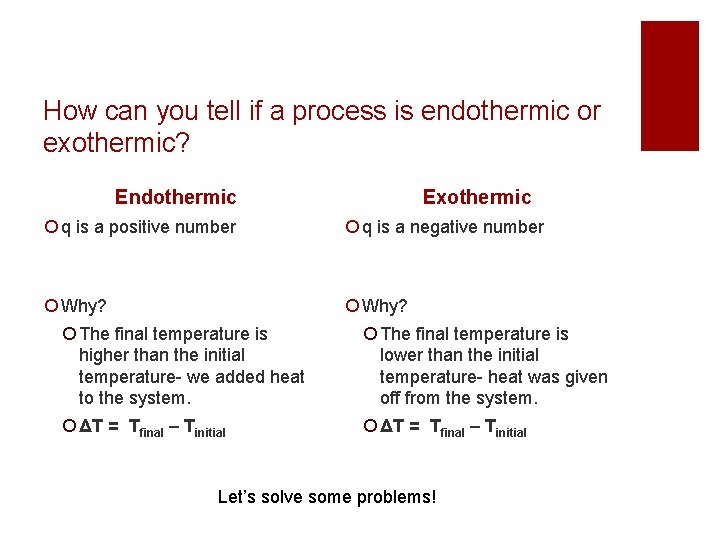
How can you tell if a process is endothermic or exothermic? Endothermic Exothermic ¡ q is a positive number ¡ q is a negative number ¡ Why? ¡ The final temperature is higher than the initial temperature- we added heat to the system. ¡ ΔT = Tfinal – Tinitial ¡ Why? ¡ The final temperature is lower than the initial temperature- heat was given off from the system. ¡ ΔT = Tfinal – Tinitial Let’s solve some problems!