
Energy Transition Mechanism Asia Clean Energy Forum 2021
- Slides: 8
Energy Transition Mechanism Asia Clean Energy Forum 2021: Just Transition to Low Carbon Future: Phasing Out Coal June 15, 2021
Executive Summary • Legacy coal-fired power plants constitute the single largest source of greenhouse gas (GHG) emissions. They will last for decades and must be removed from the global energy mix to achieve GHG emission targets. • Renewable energy costs are rapidly declining. It is estimated that in the next 10– 15 years, it will be more costly to operate existing coal plants compared to the levelized cost of new renewable energy plants. • ADB is exploring an exciting new initiative that leverages public and private sector funding to establish a fair and equitable blended finance mechanism for addressing the problem of coal-fired power. • Technical and financial feasibility work is underway focusing on three Southeast Asian developing member countries (DMCs) with high share of coal power – Indonesia, Philippines, and Viet Nam. The scheme could also be applicable to India, and other developing countries. • Just Transition impacts of coal plant retirement is an essential element to ensure developmental success of the Energy Transition Mechanism 2
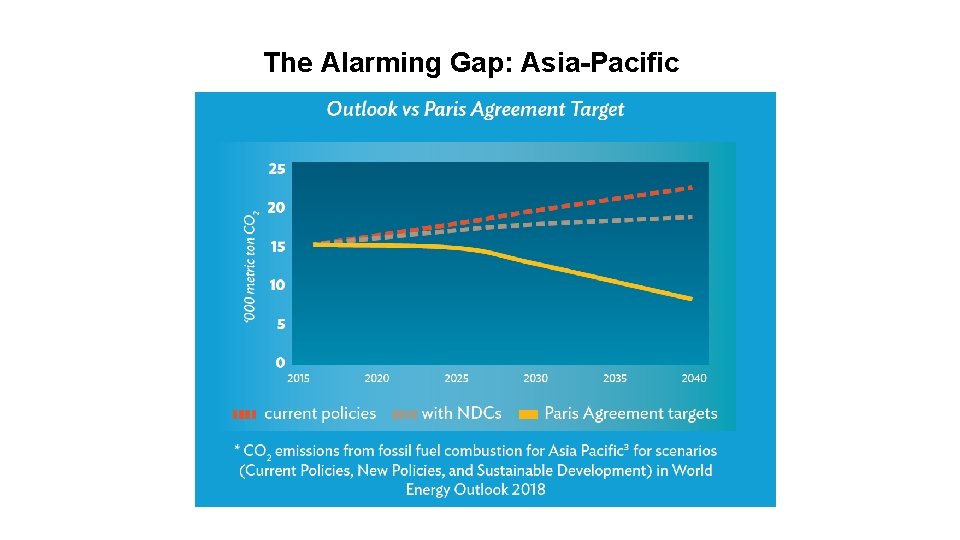
The Alarming Gap: Asia-Pacific
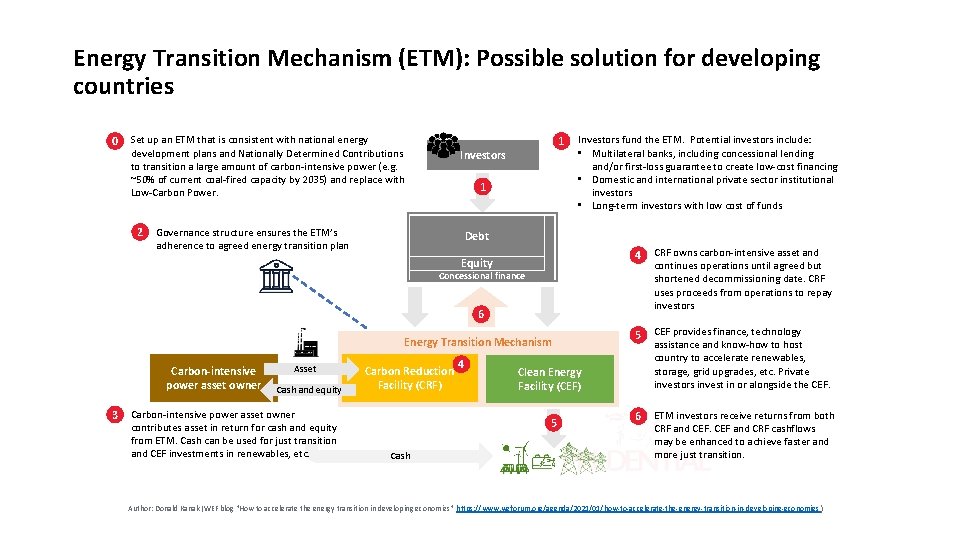
Energy Transition Mechanism (ETM): Possible solution for developing countries 0 Set up an ETM that is consistent with national energy development plans and Nationally Determined Contributions to transition a large amount of carbon-intensive power (e. g. ~50% of current coal-fired capacity by 2035) and replace with Low-Carbon Power. 2 1 Investors 1 Governance structure ensures the ETM’s adherence to agreed energy transition plan Investors fund the ETM. Potential investors include: • Multilateral banks, including concessional lending and/or first-loss guarantee to create low-cost financing • Domestic and international private sector institutional investors • Long-term investors with low cost of funds Debt Equity 4 CRF owns carbon-intensive asset and continues operations until agreed but shortened decommissioning date. CRF uses proceeds from operations to repay investors 5 CEF provides finance, technology assistance and know-how to host country to accelerate renewables, storage, grid upgrades, etc. Private investors invest in or alongside the CEF. 6 ETM investors receive returns from both CRF and CEF and CRF cashflows may be enhanced to achieve faster and more just transition. Concessional finance 6 Energy Transition Mechanism Carbon-intensive power asset owner 3 Asset Cash and equity Carbon-intensive power asset owner contributes asset in return for cash and equity from ETM. Cash can be used for just transition and CEF investments in renewables, etc. Carbon Reduction Facility (CRF) 4 Clean Energy Facility (CEF) 5 Cash Author: Donald Kanak (WEF blog "How to accelerate the energy transition in developing economies" https: //www. weforum. org/agenda/2021/01/how-to-accelerate-the-energy-transition-in-developing-economies )
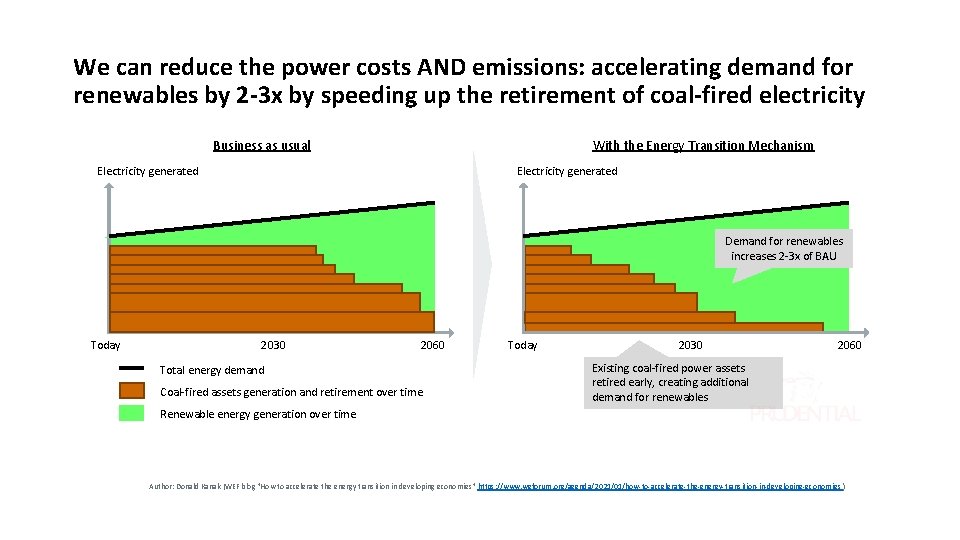
We can reduce the power costs AND emissions: accelerating demand for renewables by 2 -3 x by speeding up the retirement of coal-fired electricity Business as usual With the Energy Transition Mechanism Electricity generated Demand for renewables increases 2 -3 x of BAU Today 2030 2060 Total energy demand Coal-fired assets generation and retirement over time Today 2030 2060 Existing coal-fired power assets retired early, creating additional demand for renewables Renewable energy generation over time Author: Donald Kanak (WEF blog "How to accelerate the energy transition in developing economies" https: //www. weforum. org/agenda/2021/01/how-to-accelerate-the-energy-transition-in-developing-economies )
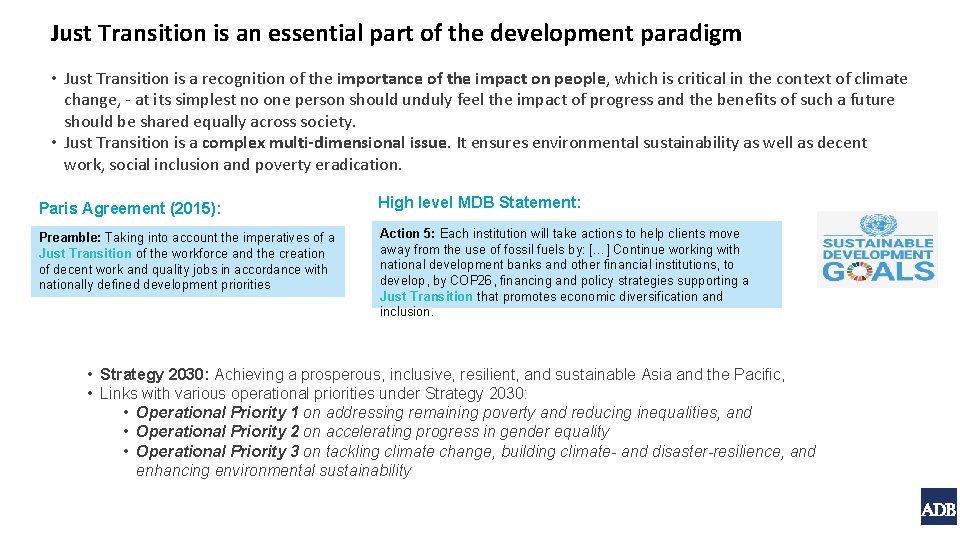
Just Transition is an essential part of the development paradigm • Just Transition is a recognition of the importance of the impact on people, which is critical in the context of climate change, - at its simplest no one person should unduly feel the impact of progress and the benefits of such a future should be shared equally across society. • Just Transition is a complex multi-dimensional issue. It ensures environmental sustainability as well as decent work, social inclusion and poverty eradication. Paris Agreement (2015): High level MDB Statement: Preamble: Taking into account the imperatives of a Just Transition of the workforce and the creation of decent work and quality jobs in accordance with nationally defined development priorities Action 5: Each institution will take actions to help clients move away from the use of fossil fuels by: […] Continue working with national development banks and other financial institutions, to develop, by COP 26, financing and policy strategies supporting a Just Transition that promotes economic diversification and inclusion. • Strategy 2030: Achieving a prosperous, inclusive, resilient, and sustainable Asia and the Pacific, • Links with various operational priorities under Strategy 2030: • Operational Priority 1 on addressing remaining poverty and reducing inequalities, and • Operational Priority 2 on accelerating progress in gender equality • Operational Priority 3 on tackling climate change, building climate- and disaster-resilience, and enhancing environmental sustainability
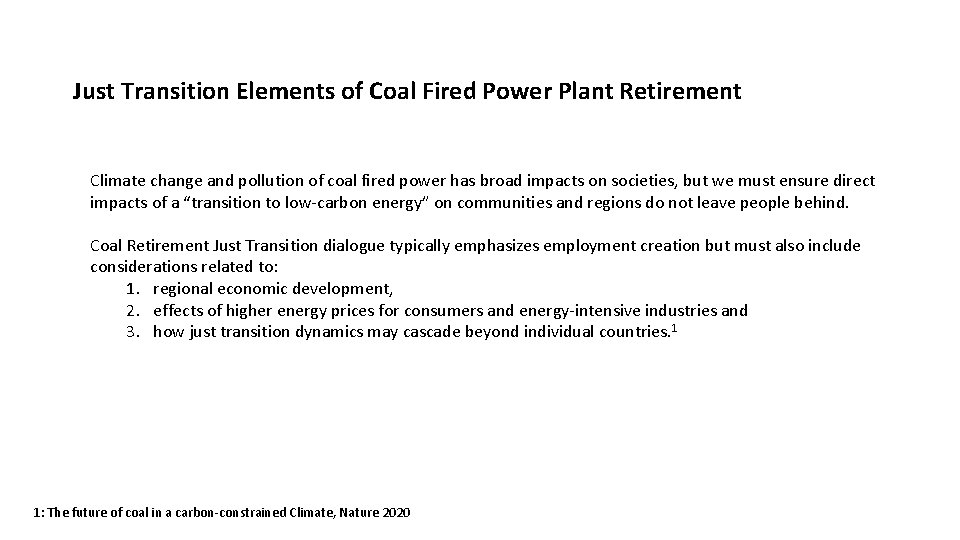
Just Transition Elements of Coal Fired Power Plant Retirement Climate change and pollution of coal fired power has broad impacts on societies, but we must ensure direct impacts of a “transition to low-carbon energy” on communities and regions do not leave people behind. Coal Retirement Just Transition dialogue typically emphasizes employment creation but must also include considerations related to: 1. regional economic development, 2. effects of higher energy prices for consumers and energy-intensive industries and 3. how just transition dynamics may cascade beyond individual countries. 1 1: The future of coal in a carbon-constrained Climate, Nature 2020
Thank you David Elzinga Senior Energy Specialist, Southeast Asia Energy, Asian Development Bank