
Energy Transformations in Photosynthesis Plants use radiant energy
- Slides: 23
Energy Transformations in Photosynthesis
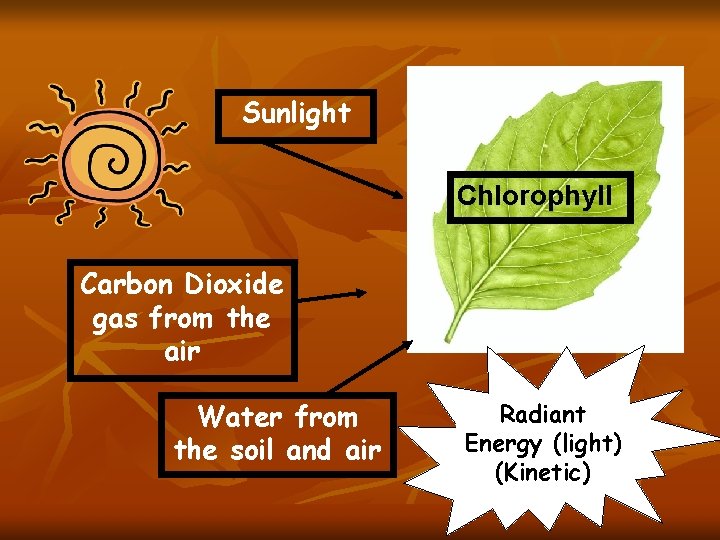
Plants use radiant energy they receive from the sun & convert it to chemical energy in a process called photosynthesis.
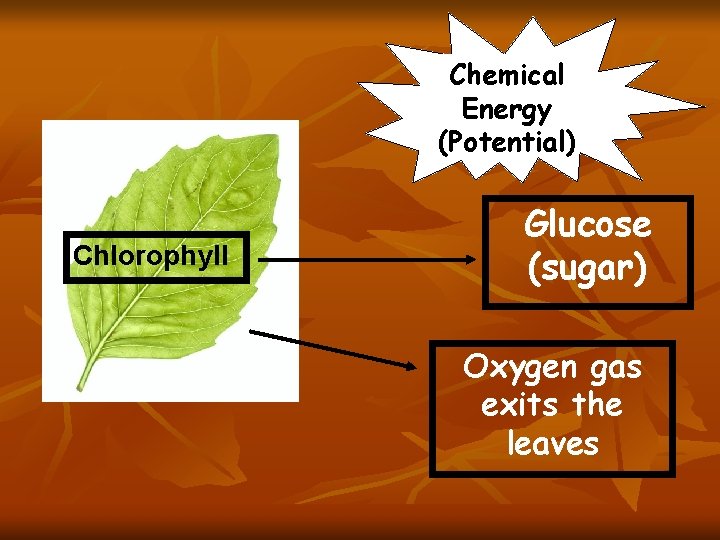
During photosynthesis, the atoms that make up carbon dioxide & water rearrange, with help from chlorophyll and sunlight, to form glucose & oxygen.
Glucose is a type of sugar that the plant uses for food to provide energy for growth & cellular processes.
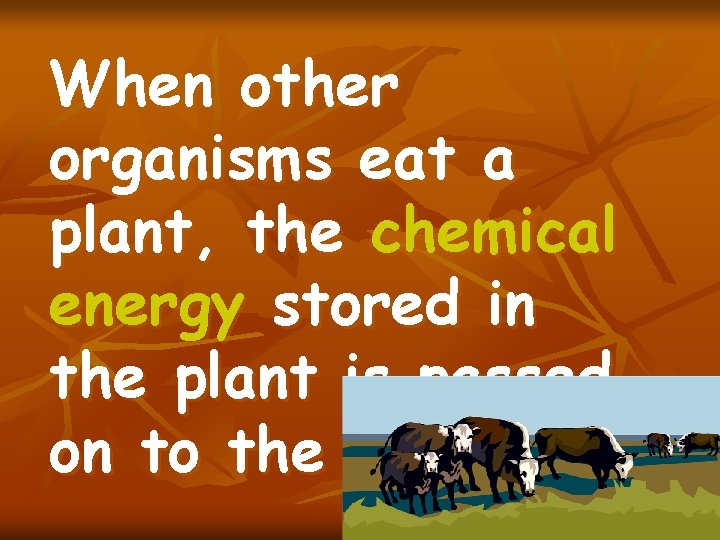
When other organisms eat a plant, the chemical energy stored in the plant is passed on to the organism.
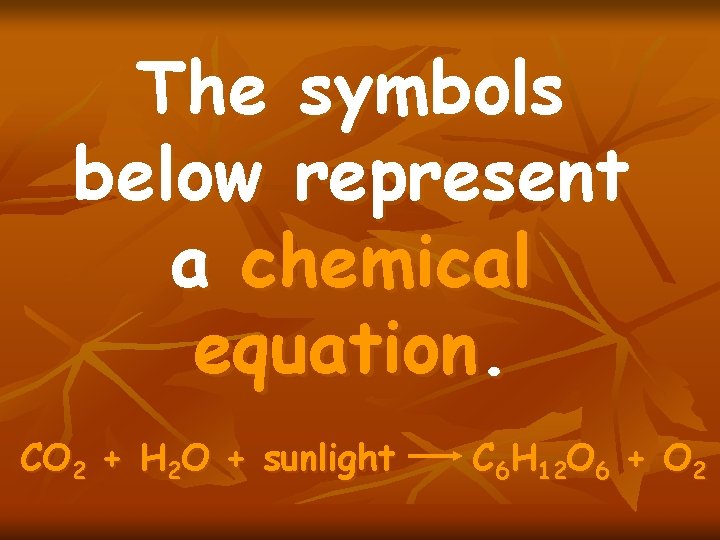
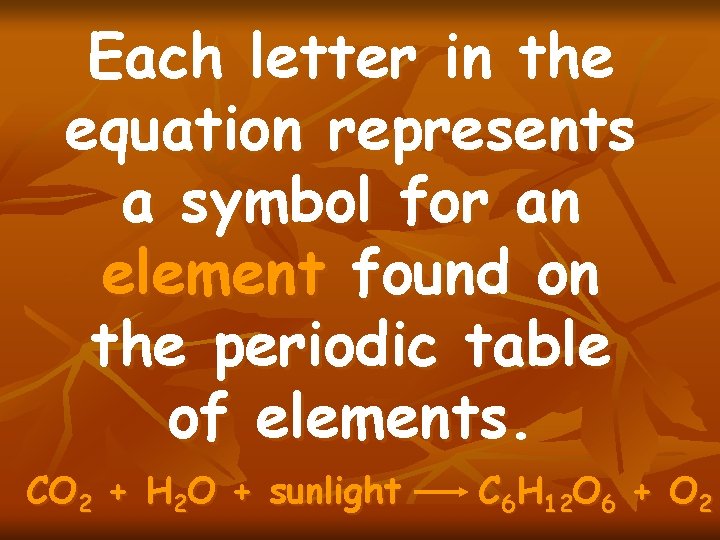
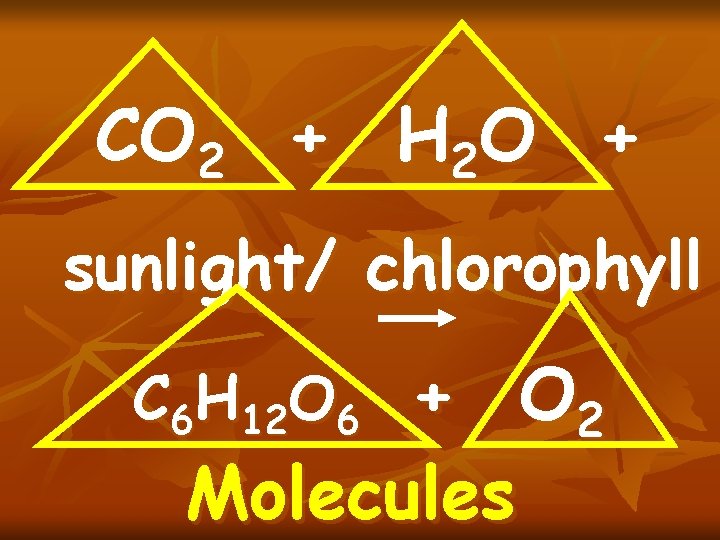
The symbols below represent a chemical equation. CO 2 + H 2 O + sunlight C 6 H 12 O 6 + O 2
If the equation was put into words it would read like this. . .
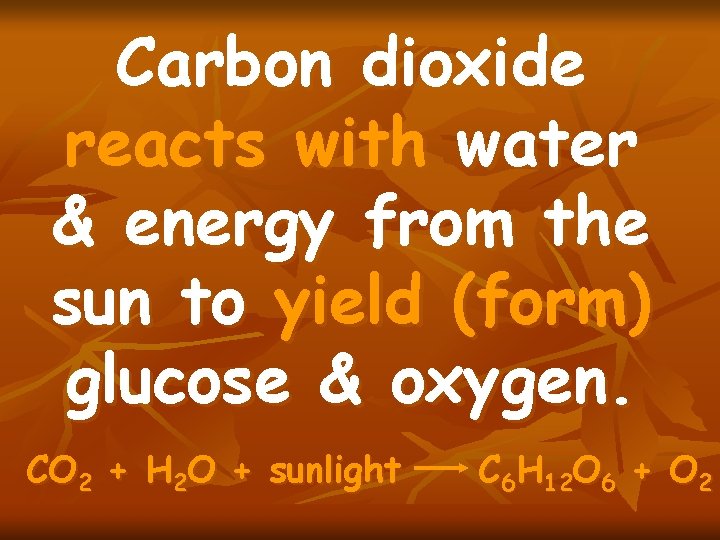
Carbon dioxide reacts with water & energy from the sun to yield (form) glucose & oxygen. CO 2 + H 2 O + sunlight C 6 H 12 O 6 + O 2
Each letter in the equation represents a symbol for an element found on the periodic table of elements. CO 2 + H 2 O + sunlight C 6 H 12 O 6 + O 2
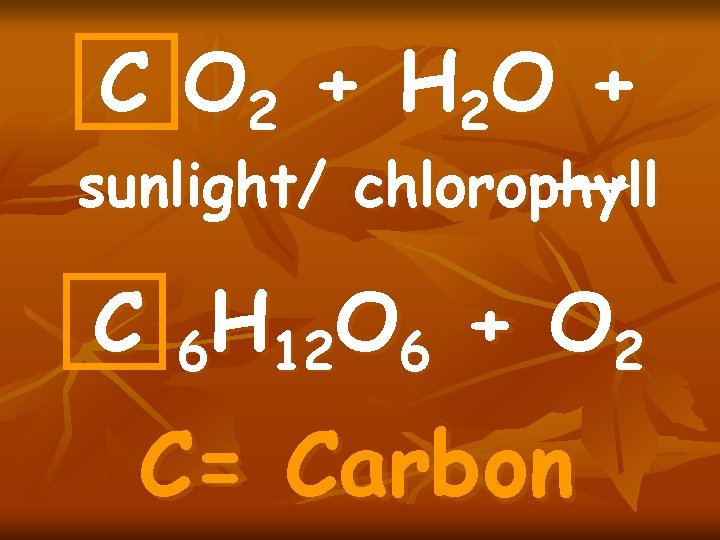
C O 2 + H 2 O + sunlight/ chlorophyll C 6 H 12 O 6 + O 2 C= Carbon
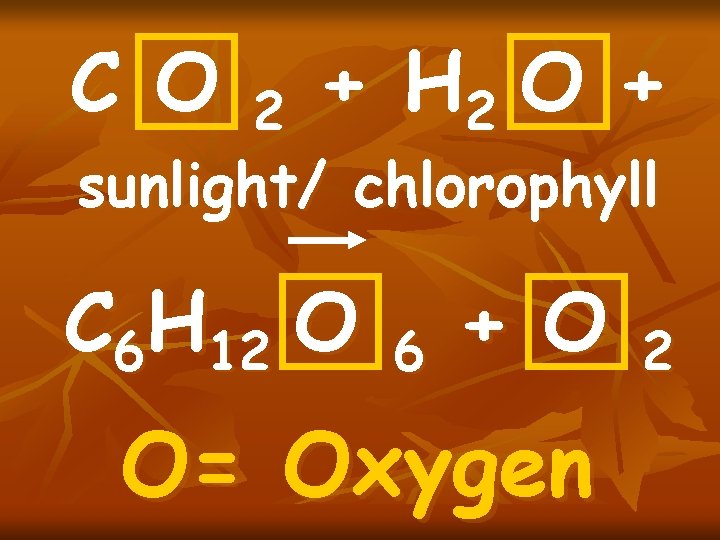
C O 2 + H 2 O + sunlight/ chlorophyll C 6 H 12 O 6 + O O= Oxygen 2
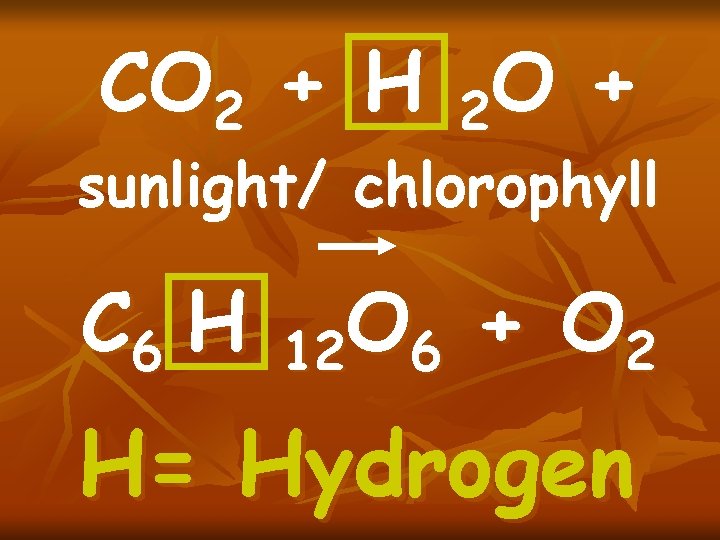
CO 2 + H 2 O + sunlight/ chlorophyll C 6 H O + O 12 6 2 H= Hydrogen
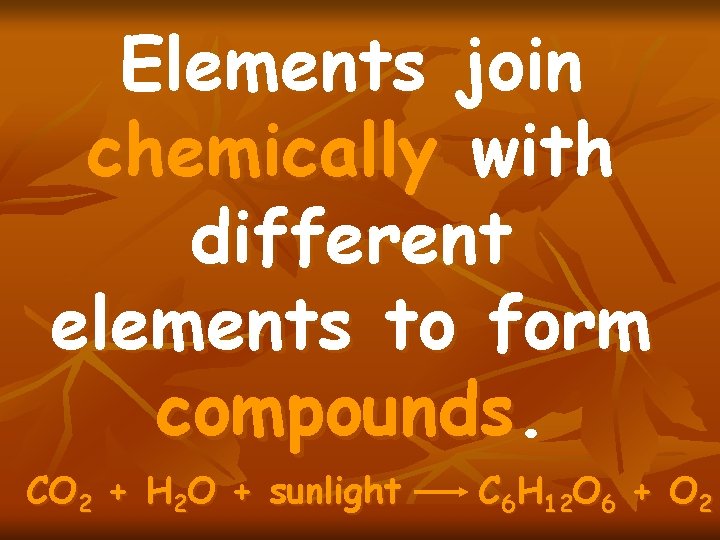
Elements join chemically with different elements to form compounds. CO 2 + H 2 O + sunlight C 6 H 12 O 6 + O 2
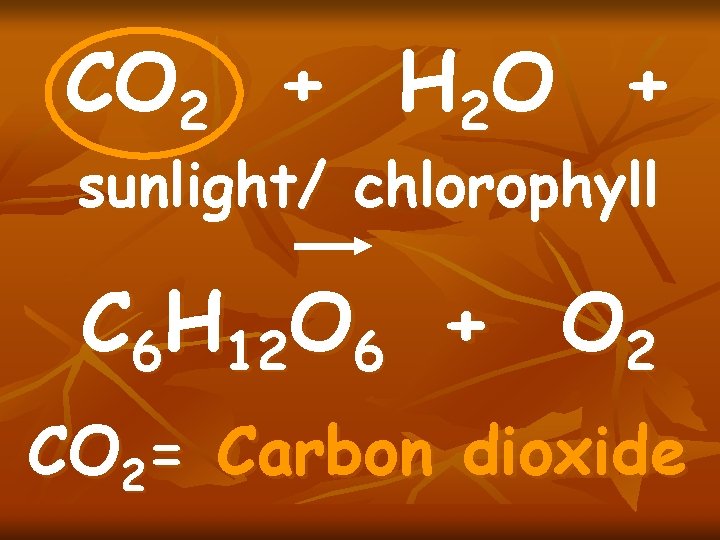
CO 2 + H 2 O + sunlight/ chlorophyll C 6 H 12 O 6 + O 2 CO 2= Carbon dioxide
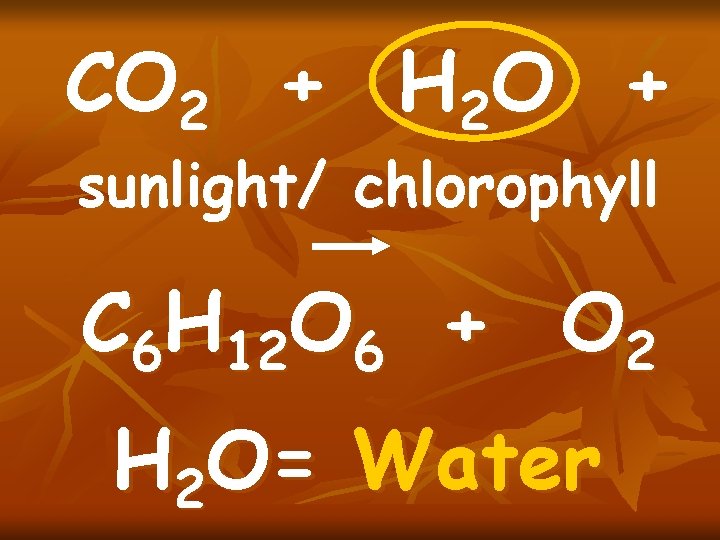
CO 2 + H 2 O + sunlight/ chlorophyll C 6 H 12 O 6 + O 2 H 2 O= Water
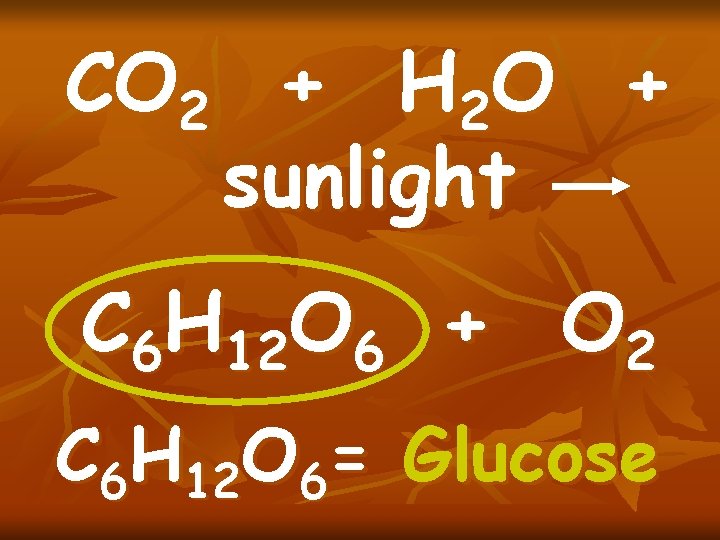
CO 2 + H 2 O + sunlight C 6 H 12 O 6 + O 2 C 6 H 12 O 6= Glucose
When elements join together they form a molecule.
Elements forming a molecule may be the same kind or different kinds of atoms.
CO 2 + H 2 O + sunlight/ chlorophyll + O 2 Molecules C 6 H 12 O 6
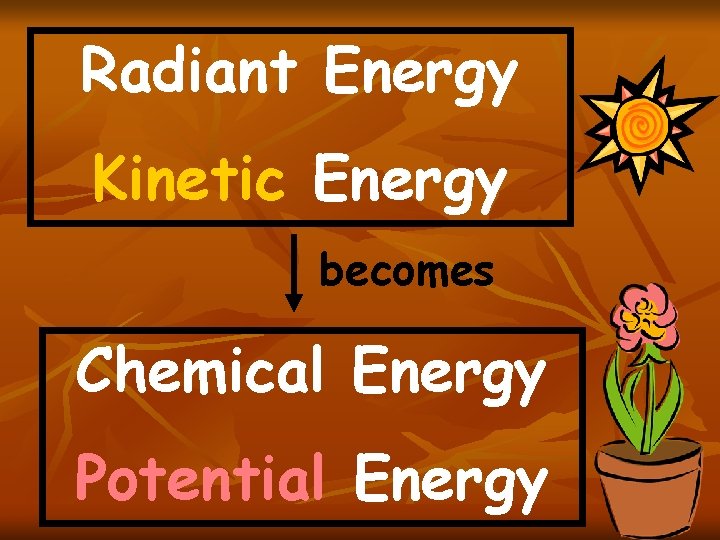
Radiant Energy Kinetic Energy becomes Chemical Energy Potential Energy
Sunlight Chlorophyll Carbon Dioxide gas from the air Water from the soil and air Radiant Energy (light) (Kinetic)
Chemical Energy (Potential) Chlorophyll Glucose (sugar) Oxygen gas exits the leaves
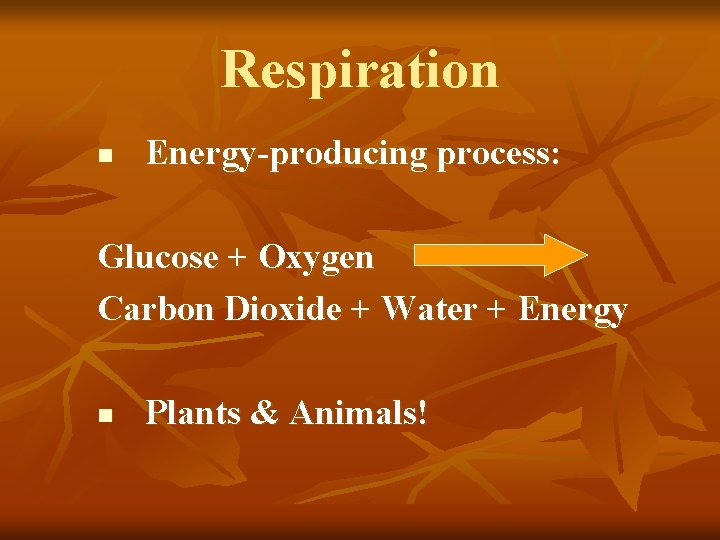
Respiration n Energy-producing process: Glucose + Oxygen Carbon Dioxide + Water + Energy n Plants & Animals!