
Energy Transfer Waves Waves A wave is any
- Slides: 10
Energy Transfer - Waves
Waves • A wave is any disturbance that transmits energy through matter or empty space. • Energy can be carried away from it’s source by a wave. As a wave travels, it does work on everything in it’s path – Ex. Wave in water – does work to make water move up and down, to make boats move up and down with the water
Mediums • Energy can be transferred with or without a medium • A medium is a substance through which a wave can travel. • Medium can be solid, liquid, or gas • In a medium, when one particle vibrates, it passes energy to the particle next to it, which causes the second particle to vibrate. • Waves that require a medium to travel – Mechanical Waves – Sound waves – Ocean waves
Energy transfer without a medium • Some waves can transfer energy without going through a medium – Called Electromagnetic Waves – Visible light – Microwaves – Radio waves – Xrays – Although they don’t require a medium, they can travel through matter (air, water, glass, etc)
Types of Waves • Waves are classified based on the direction in which the particles of the medium vibrate compared with the direction in which the waves move. • 3 types of waves – Transverse – Longitudinal – Surface
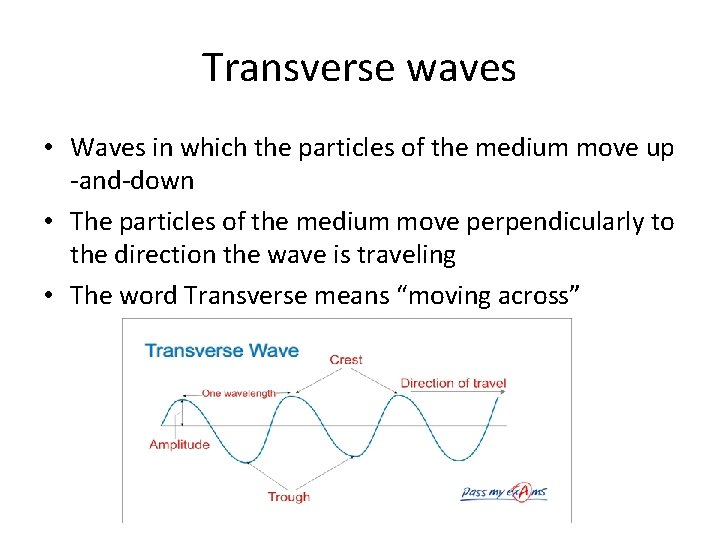
Transverse waves • Waves in which the particles of the medium move up -and-down • The particles of the medium move perpendicularly to the direction the wave is traveling • The word Transverse means “moving across”
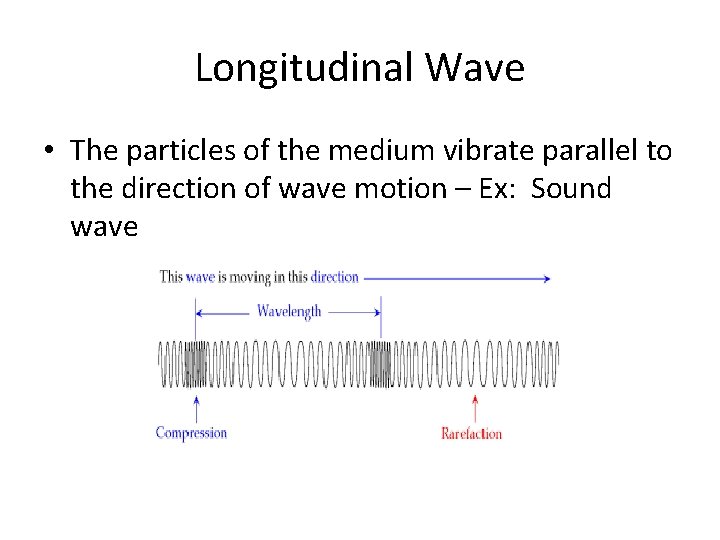
Longitudinal Wave • The particles of the medium vibrate parallel to the direction of wave motion – Ex: Sound wave
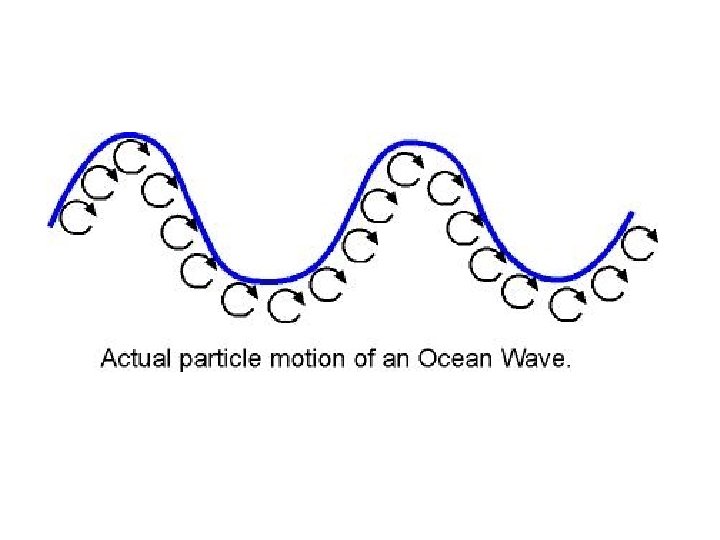
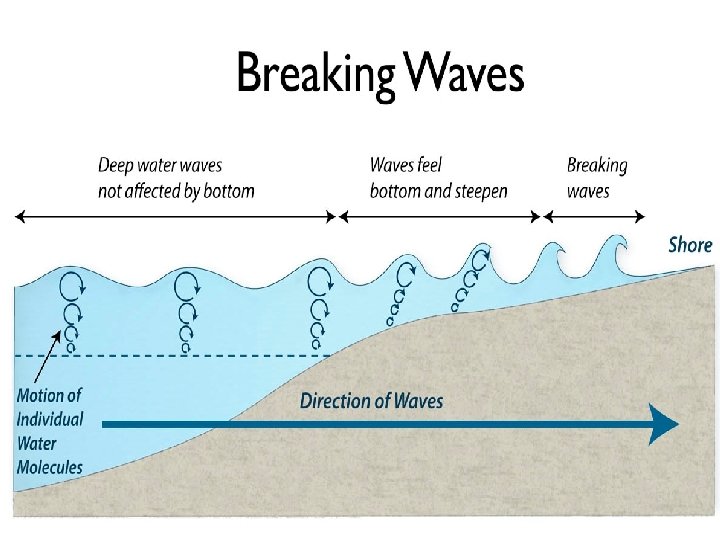
Surface Wave • When waves form at or near the boundary between two media, a transverse wave and a longitudinal wave can combine to form a Surface Wave • Look like transverse waves, but the particles of the medium move in circles rather than up and down. They move forward at the crest and backward at the trough