
Energy Transfer in Spheres Guiding Questions How do


- Slides: 61
Energy Transfer in Spheres
Guiding Questions: How do we describe types of energy? Is there anything that doesn’t require energy? How does energy transfer influence our environment? How do human activities influence energy transfer? (is it for the better and/or the worse? )
What is the role of the Sun’s energy in Earth’s spheres? Key Concepts: Solar energy that reaches Earth is absorbed and reflected by Earth’s atmosphere and surface Solar energy heats Earth’s surface unevenly and global winds and ocean currents help redistribute thermal energy around Earth Solar energy enters the biosphere through photosynthesis and cellular respiration
Heat and Thermal Energy
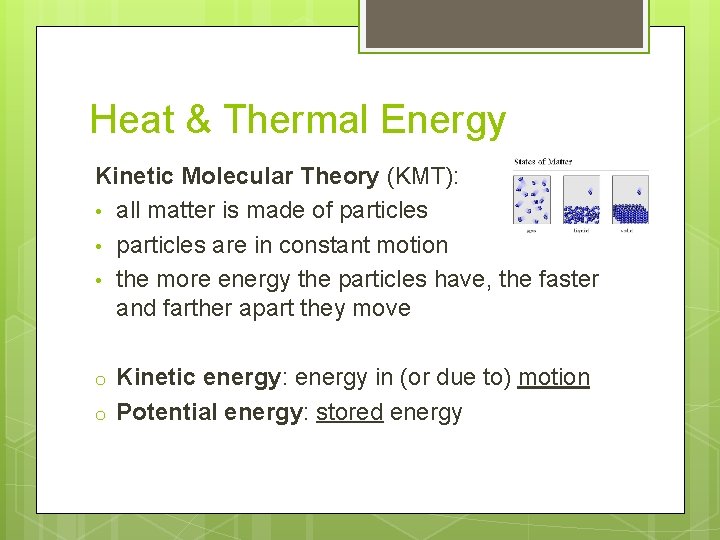
Heat & Thermal Energy Kinetic Molecular Theory (KMT): • all matter is made of particles • particles are in constant motion • the more energy the particles have, the faster and farther apart they move o o Kinetic energy: energy in (or due to) motion Potential energy: stored energy
Temperature influences our everyday lives Temperature: is the measure of average kinetic energy of a substance.
Factors that affect kinetic energy: 1. solids vs gases at different temps particles in a gas move faster than particles in a solid at the same temperature a gas at -50 o. C will have less kinetic energy than a solid at 500 o. C because the gas molecules are moving more slowly 2. mass of the particles the larger the particle, the more energy it has vs. a smaller particle moving at the same speed but a very fast, smaller particle may have more kinetic energy than a very slow, large particle other factors: pressure, atmosphere, density
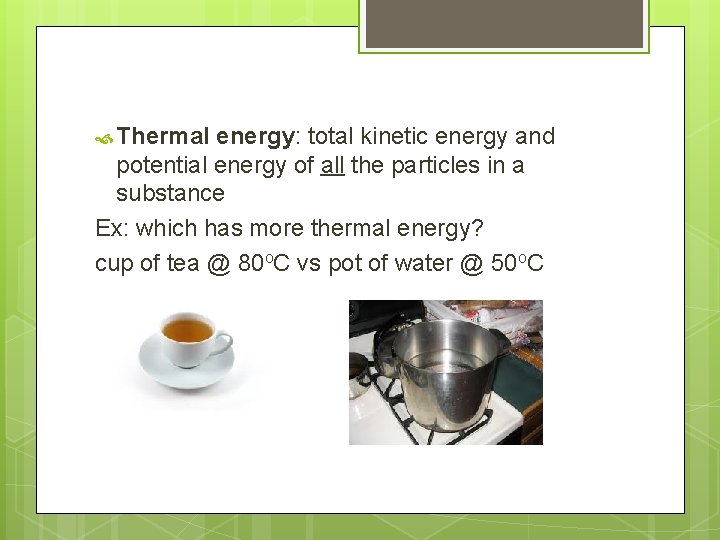
Thermal energy: total kinetic energy and potential energy of all the particles in a substance Ex: which has more thermal energy? cup of tea @ 80 o. C vs pot of water @ 50 o. C
Pot – has less temperature, but more thermal energy than the cup because of more particles Cup – has more temperature than the pot, but less thermal energy because of fewer particles
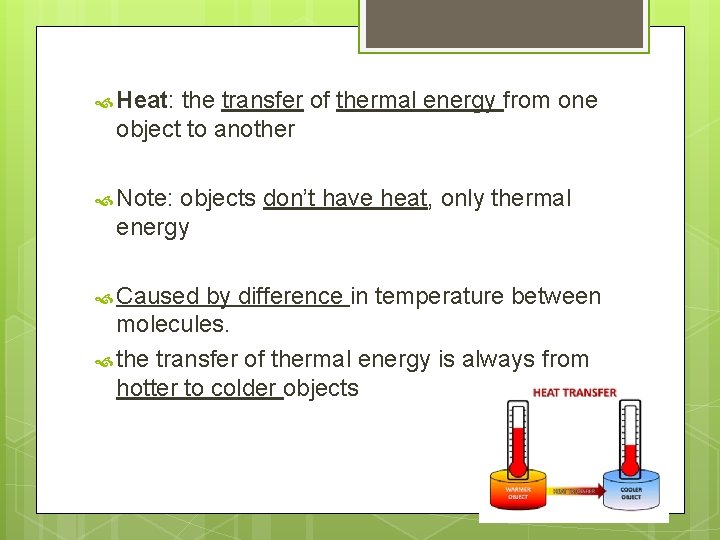
Heat: the transfer of thermal energy from one object to another Note: objects don’t have heat, only thermal energy Caused by difference in temperature between molecules. the transfer of thermal energy is always from hotter to colder objects
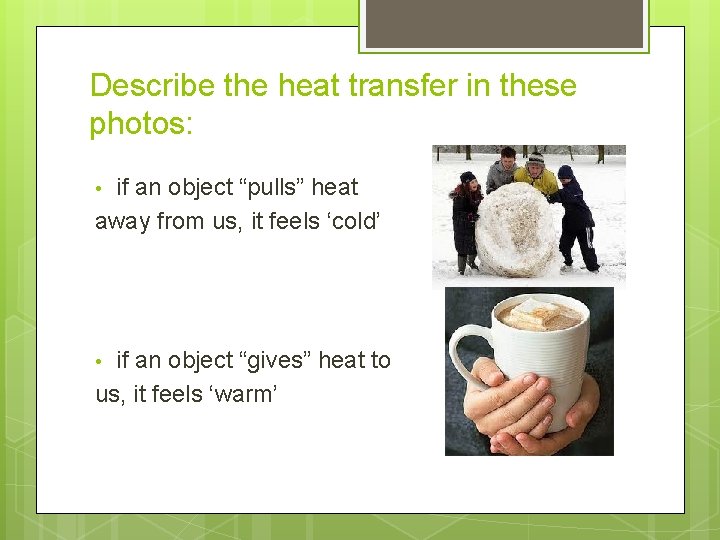
Describe the heat transfer in these photos: if an object “pulls” heat away from us, it feels ‘cold’ • if an object “gives” heat to us, it feels ‘warm’ •
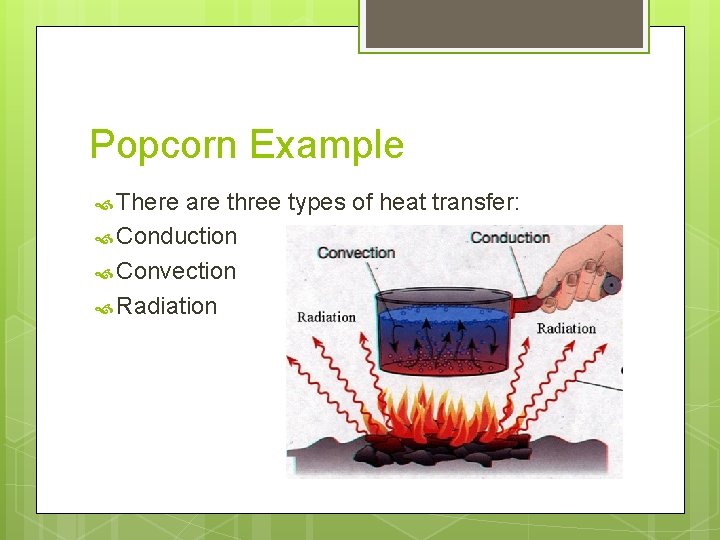
Popcorn Example There are three types of heat transfer: Conduction Convection Radiation
Heat Transfer: 1. Conduction: transfer of thermal energy by direct particle to particle contact • • Transfer is from higher to lower energy/temperature particles Transfer process will continue until equilibrium, balance reached in energy content.
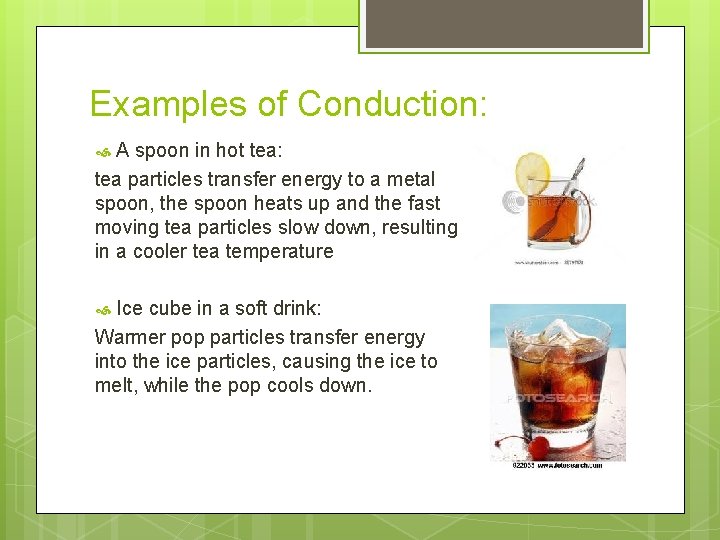
Examples of Conduction: A spoon in hot tea: tea particles transfer energy to a metal spoon, the spoon heats up and the fast moving tea particles slow down, resulting in a cooler tea temperature Ice cube in a soft drink: Warmer pop particles transfer energy into the ice particles, causing the ice to melt, while the pop cools down.
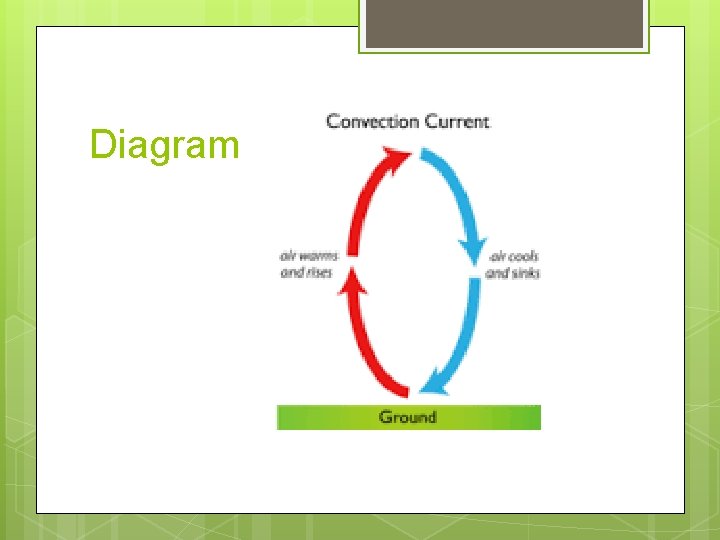
2. Convection: transfer of thermal energy by movement of heated, fluid particles. The heated particles increase the average kinetic energy. • Convection works well in some liquids and most gases • In “closed” systems, the convection cycle process will continue until all the particles are the same temperature
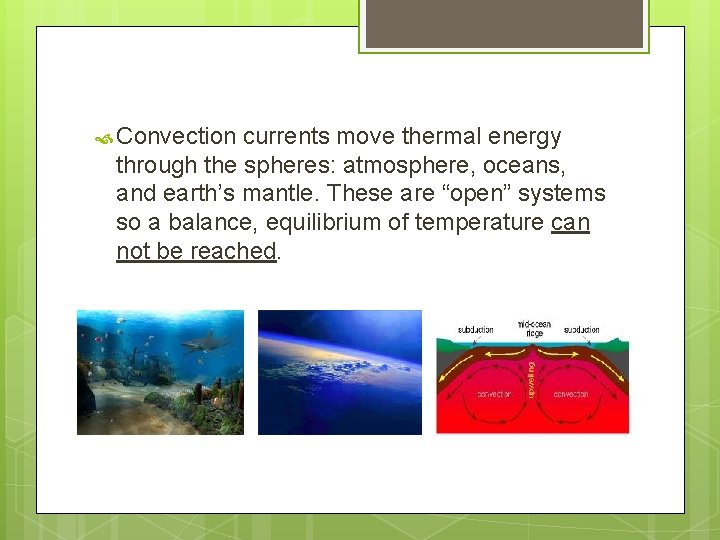
Convection currents move thermal energy through the spheres: atmosphere, oceans, and earth’s mantle. These are “open” systems so a balance, equilibrium of temperature can not be reached.
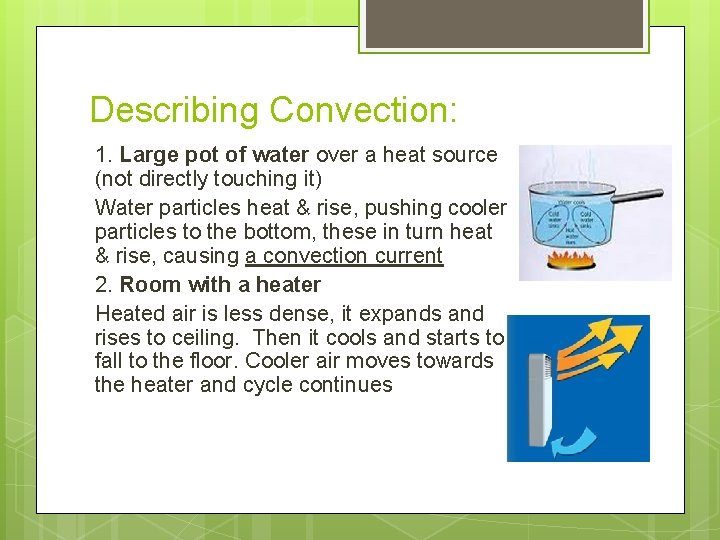
Describing Convection: 1. Large pot of water over a heat source (not directly touching it) Water particles heat & rise, pushing cooler particles to the bottom, these in turn heat & rise, causing a convection current 2. Room with a heater Heated air is less dense, it expands and rises to ceiling. Then it cools and starts to fall to the floor. Cooler air moves towards the heater and cycle continues
Diagram
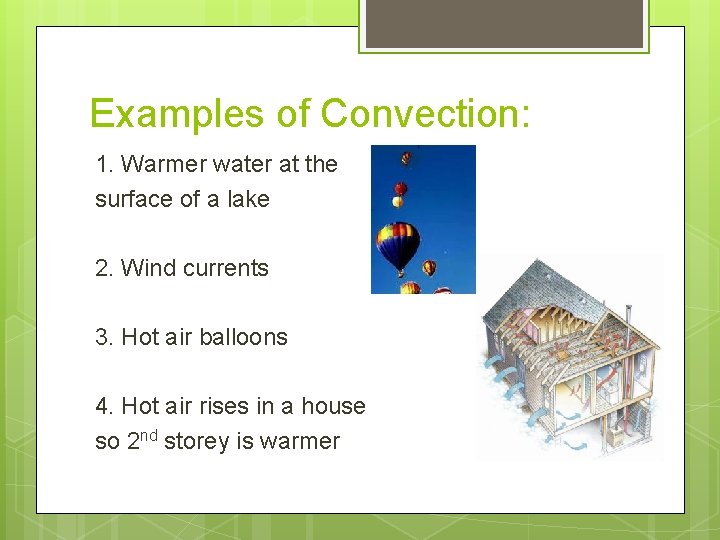
Examples of Convection: 1. Warmer water at the surface of a lake 2. Wind currents 3. Hot air balloons 4. Hot air rises in a house so 2 nd storey is warmer
3. Radiation: energy is transferred by electromagnetic waves in the absence of matter, even through empty space. radiation thermal energy is found in radio waves, microwaves, infrared, visible light, U. V. , X-Rays, and Gamma rays. radiation that is absorbed turns into thermal energy. If it is reflected no transfer of energy occurs. Solar radiation: transfer of radiant energy from the sun Ex. Skin feeling warm due to sunlight
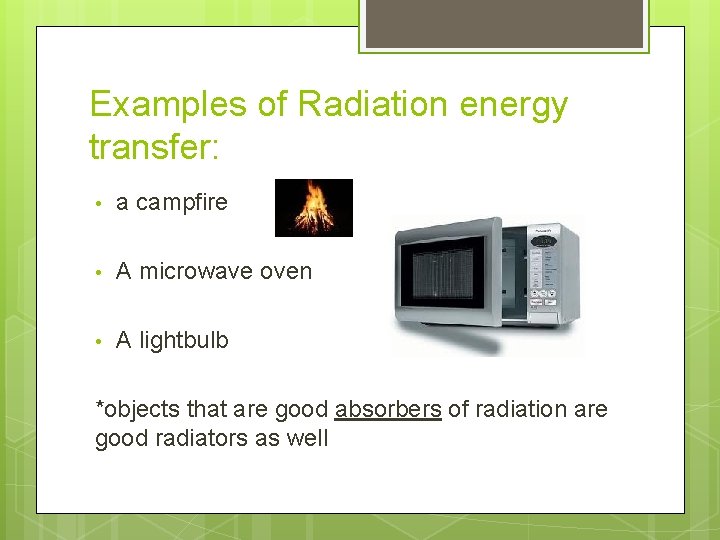
Examples of Radiation energy transfer: • a campfire • A microwave oven • A lightbulb *objects that are good absorbers of radiation are good radiators as well
Demonstrating energy currents
Conductors vs. Insulators of Thermal Energy Conductors: materials that allow the transfer of thermal energy Good conductors – metals, some liquids (mercury, oils) Poor conductors – glass, wood, plastics, most liquids (water), most gases (molecules are far apart therefore no collisions or transfer of energy between the 2 substances)
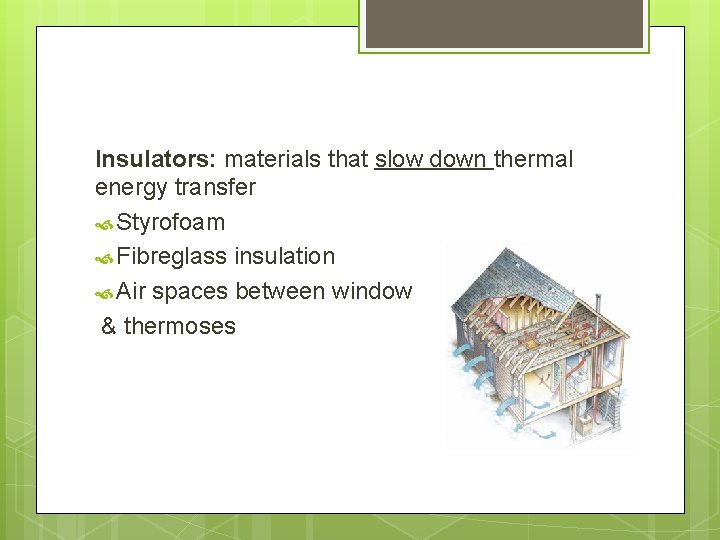
Insulators: materials that slow down thermal energy transfer Styrofoam Fibreglass insulation Air spaces between window & thermoses
Application: Give two everyday examples of using a conductor for thermal energy transfer: Give two everyday examples of using an insulator to slow down thermal energy transfer: Think of examples in the home of how using a conductor or insulator can save money
Materials absorb, reflect, or transmit radiation. Heat is transferred when a substance absorbs radiation, causing it to increase in temperature, melt or evaporate.
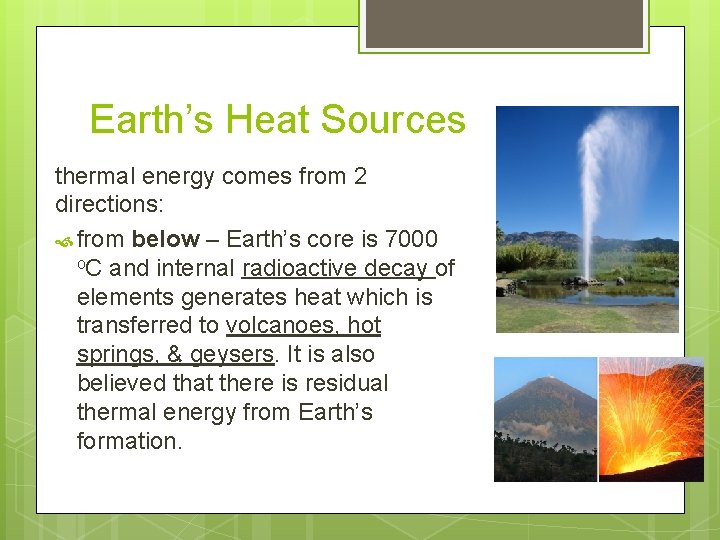
Earth’s Heat Sources thermal energy comes from 2 directions: from below – Earth’s core is 7000 o. C and internal radioactive decay of elements generates heat which is transferred to volcanoes, hot springs, & geysers. It is also believed that there is residual thermal energy from Earth’s formation.
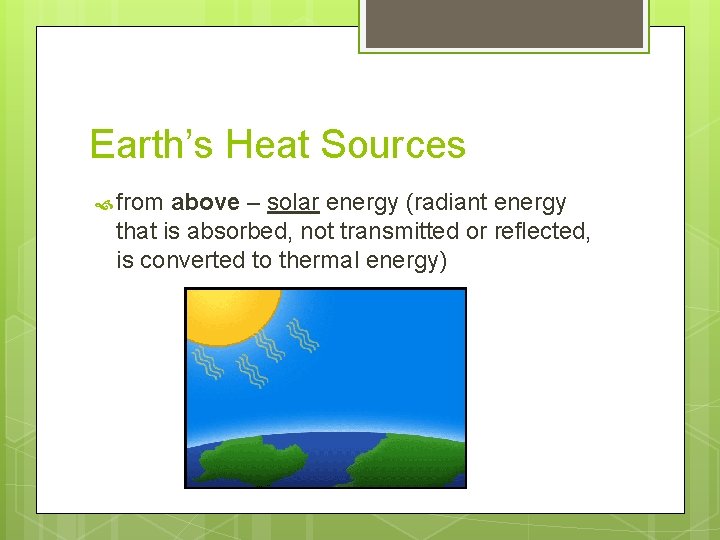
Earth’s Heat Sources from above – solar energy (radiant energy that is absorbed, not transmitted or reflected, is converted to thermal energy)
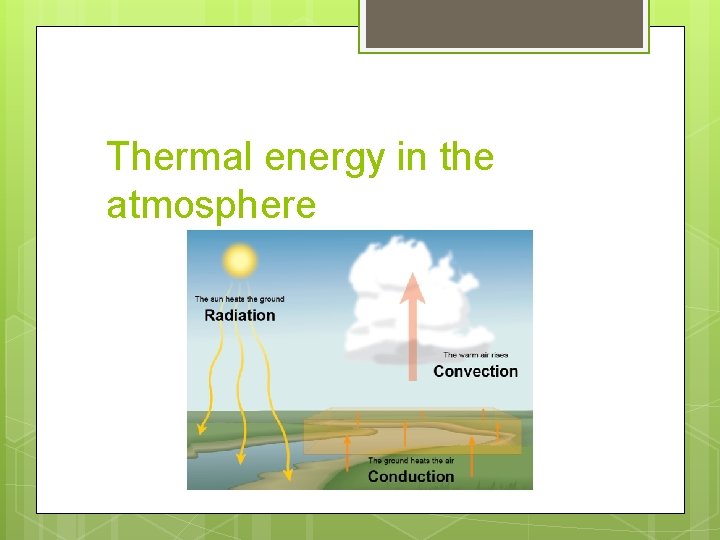
Thermal energy in the atmosphere
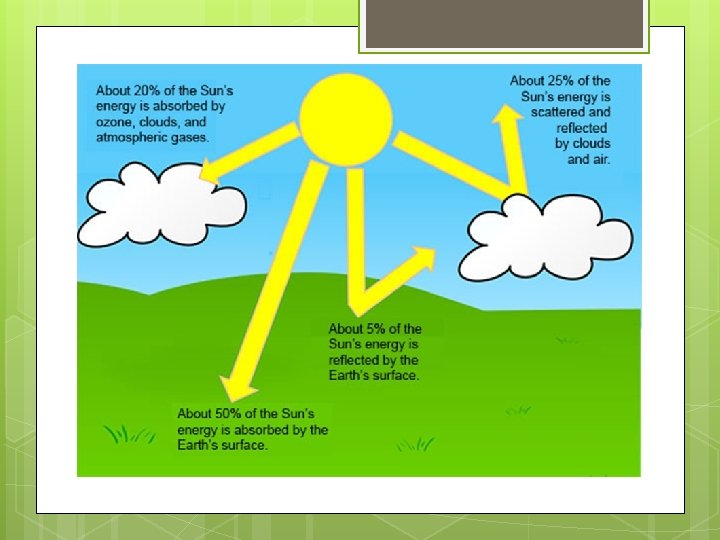
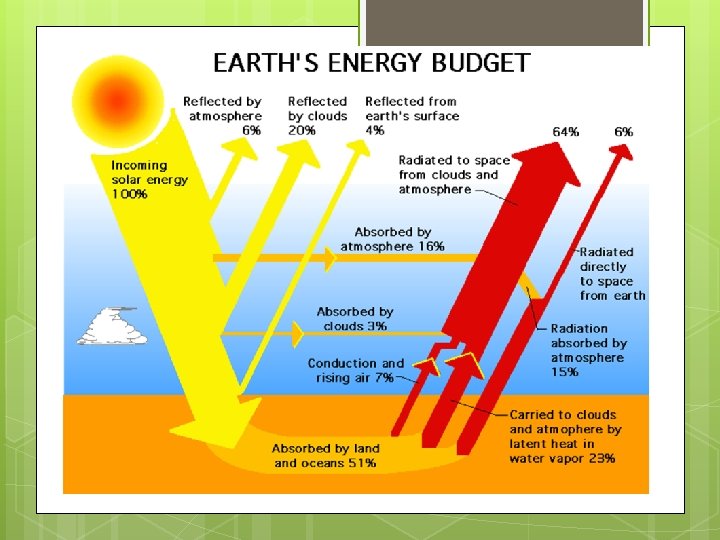
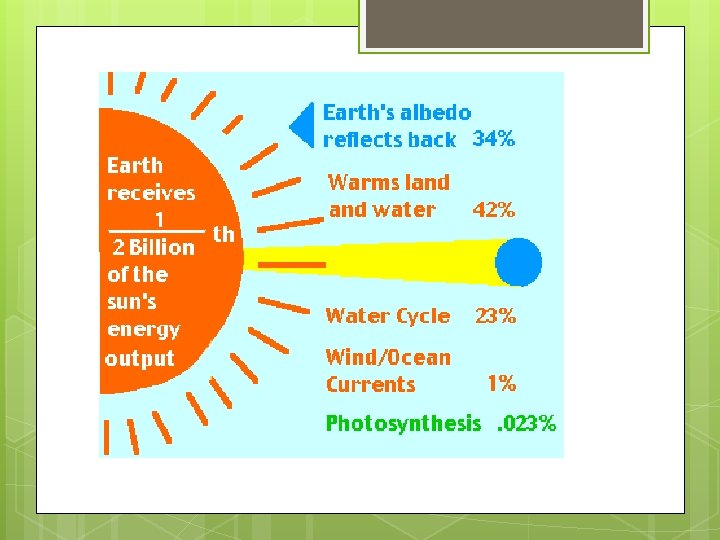
Only a tiny portion of solar radiation reaches Earth Solar radiation is converted to thermal energy Insolation: amount of solar radiation that reaches a certain area Locations at higher latitudes receive less insolation
Solar radiation comes in short wavelengths, some of which pass through the atmosphere to Earth’s surface where they are absorbed Earth’s surface reradiates some of this energy in longer, infrared waves
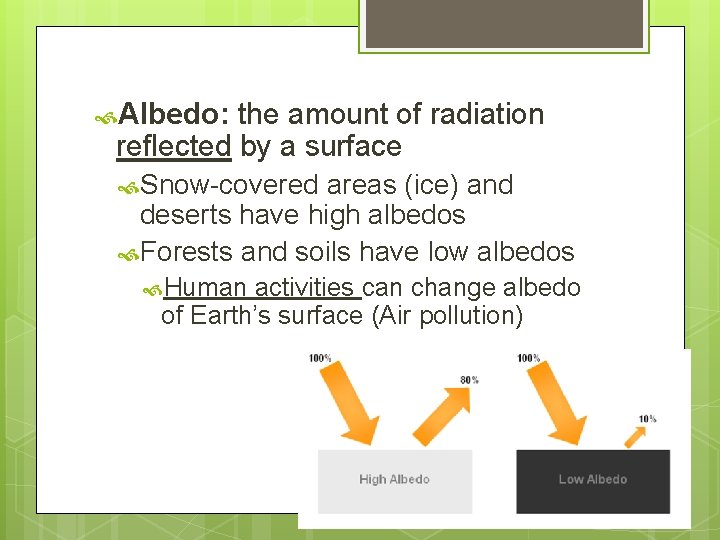
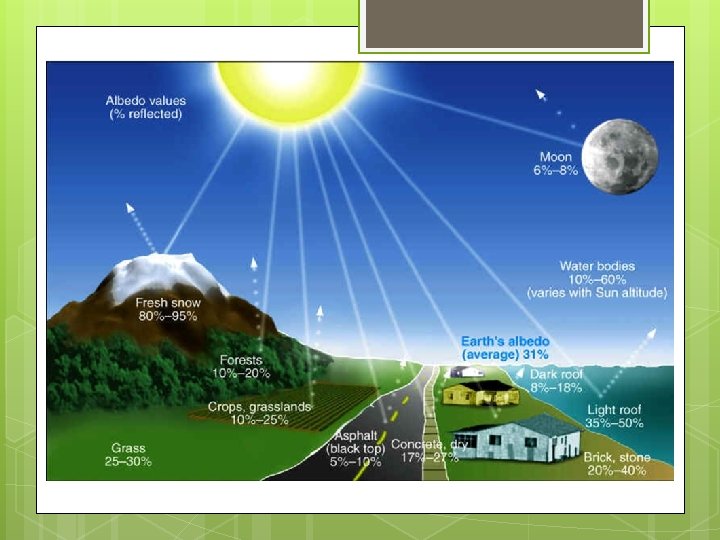
Albedo: the amount of radiation reflected by a surface Snow-covered areas (ice) and deserts have high albedos Forests and soils have low albedos Human activities can change albedo of Earth’s surface (Air pollution)
Which is better? Should earth have a high or low albedo?
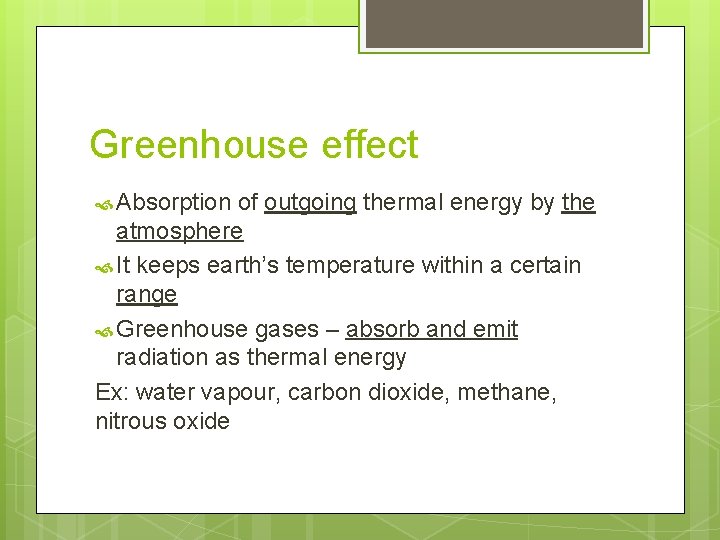
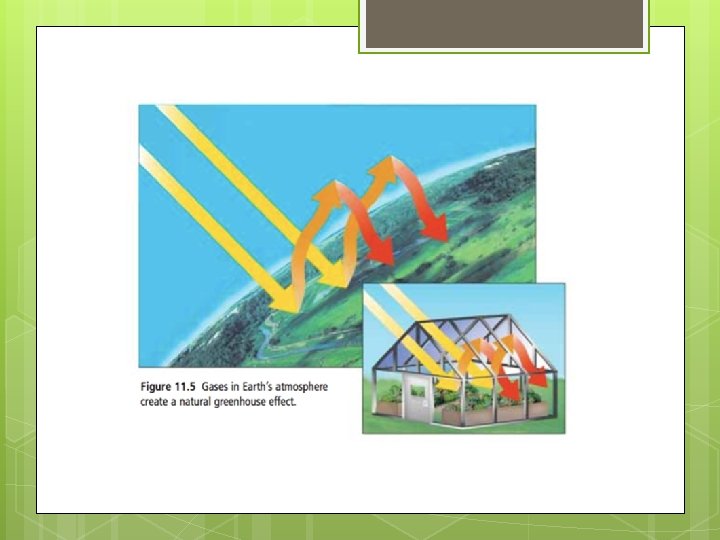
Greenhouse effect Absorption of outgoing thermal energy by the atmosphere It keeps earth’s temperature within a certain range Greenhouse gases – absorb and emit radiation as thermal energy Ex: water vapour, carbon dioxide, methane, nitrous oxide
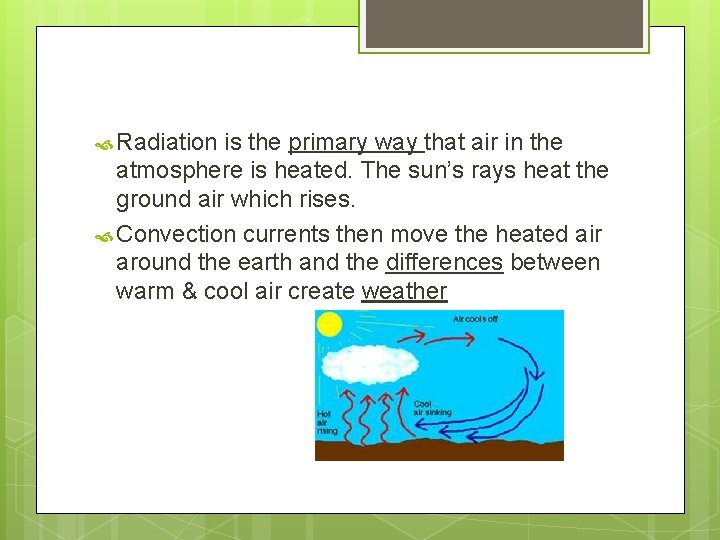
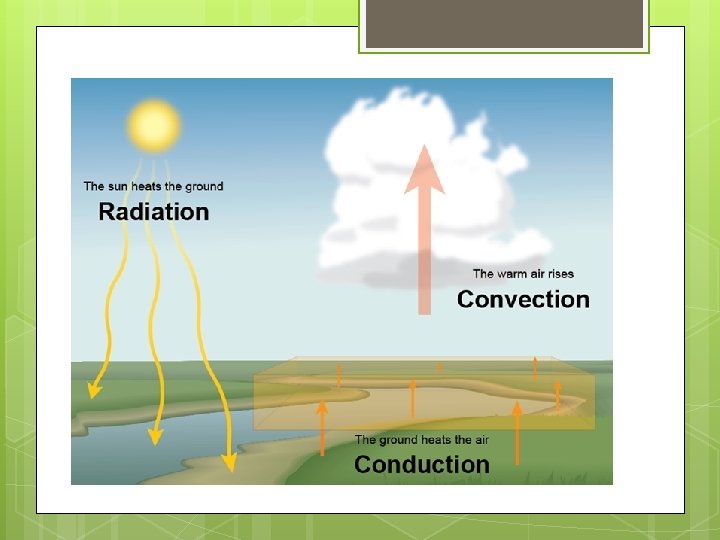
Radiation is the primary way that air in the atmosphere is heated. The sun’s rays heat the ground air which rises. Convection currents then move the heated air around the earth and the differences between warm & cool air create weather
Redistribution of Thermal Energy around Earth
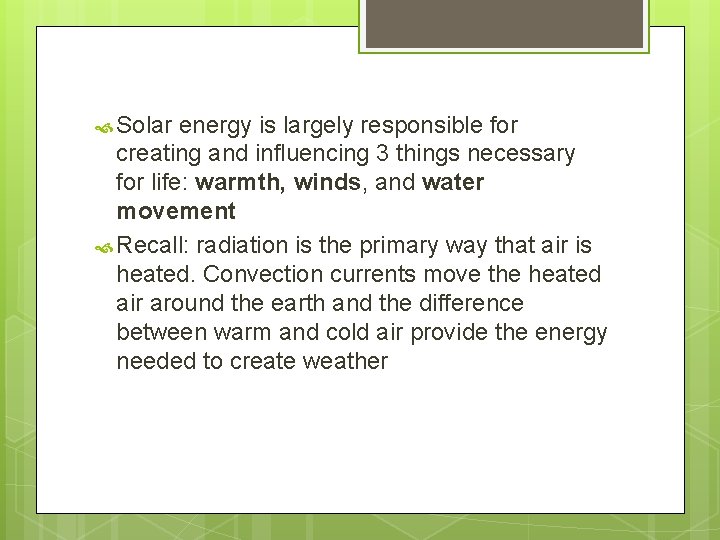
Solar energy is largely responsible for creating and influencing 3 things necessary for life: warmth, winds, and water movement Recall: radiation is the primary way that air is heated. Convection currents move the heated air around the earth and the difference between warm and cold air provide the energy needed to create weather
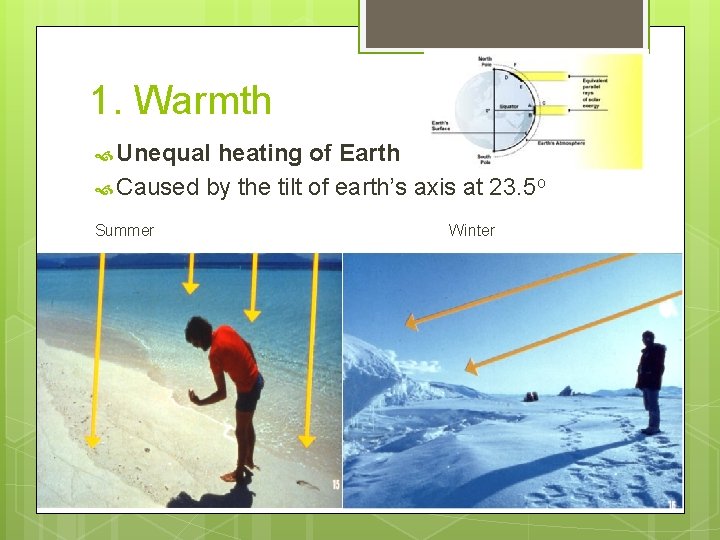
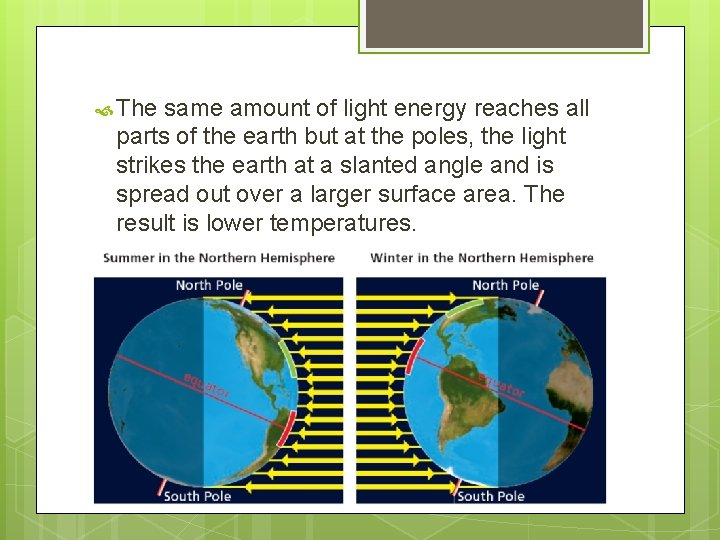
1. Warmth Unequal heating of Earth Caused by the tilt of earth’s axis at 23. 5 o Summer Winter
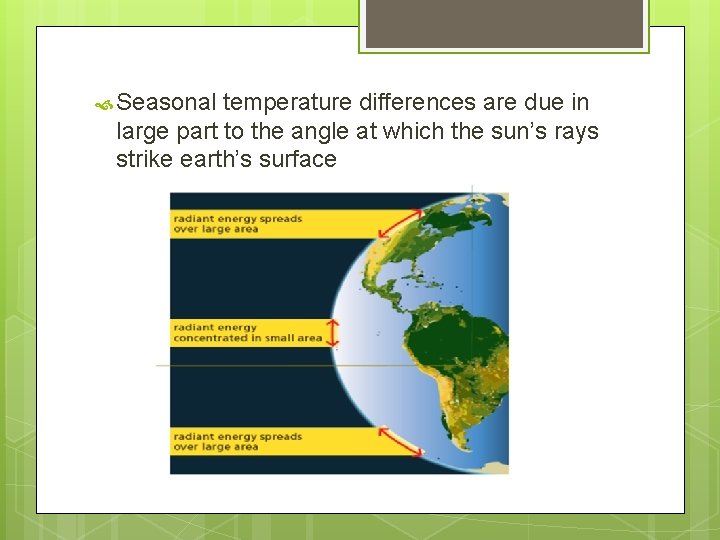
Seasonal temperature differences are due in large part to the angle at which the sun’s rays strike earth’s surface
The same amount of light energy reaches all parts of the earth but at the poles, the light strikes the earth at a slanted angle and is spread out over a larger surface area. The result is lower temperatures.
2. Global Wind Systems Unequal heating of Earth requires redistribution of thermal energy Global wind systems move thermal energy around Earth and distribute it more evenly throughout the atmosphere
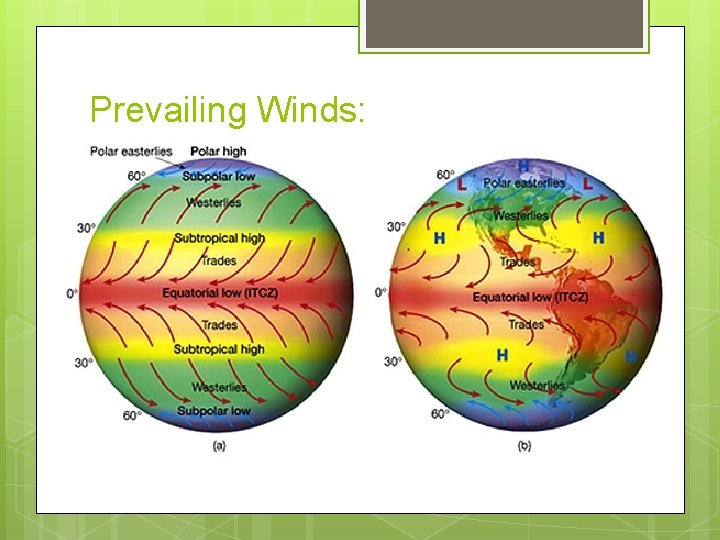
Prevailing Winds: are caused by convection currents produced by differences in high and low pressure cells Uneven heating of earth’s surface causes the convection currents to form, mainly originating at the equator
The winds blow in consistent patterns over large portions of the globe Wind is named for the direction it comes from ex. Easterlies, Westerlies, NE and SE trade winds Jet streams are prevailing winds (high speed westerly winds) in the upper atmosphere Directions of Earth’s wind systems vary with the latitudes in which they occur
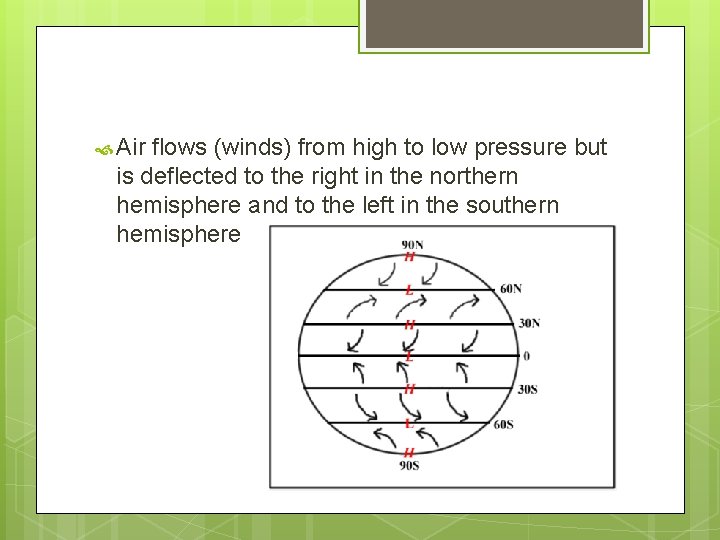
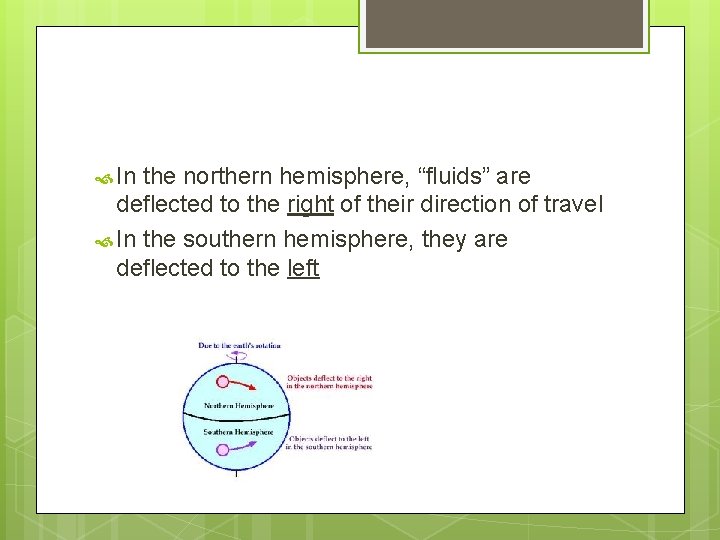
Air flows (winds) from high to low pressure but is deflected to the right in the northern hemisphere and to the left in the southern hemisphere
Prevailing Winds:
Which prevailing wind system in active in our area of the world?
The Coriolis Effect: the apparent deflection of moving objects over the surface of a rotating earth (planes, winds, ocean currents) the object doesn't actually deviate from its path, but appears to do so because of the rotating motion of the system. The Coriolis effect explains the directions of the trade winds in equatorial regions on Earth; caused by differences in wind speeds at different points on earth
In the northern hemisphere, “fluids” are deflected to the right of their direction of travel In the southern hemisphere, they are deflected to the left
Model it: Draw a circle on a piece of paper with a dot in the center as the north pole. Slowly rotate the paper counter clockwise with one hand while drawing a straight line from the dot (N. Pole)to the edge of the circle What happens? Results in a curved line to the right Switch direction of rotation to clockwise to model S. Pole movement
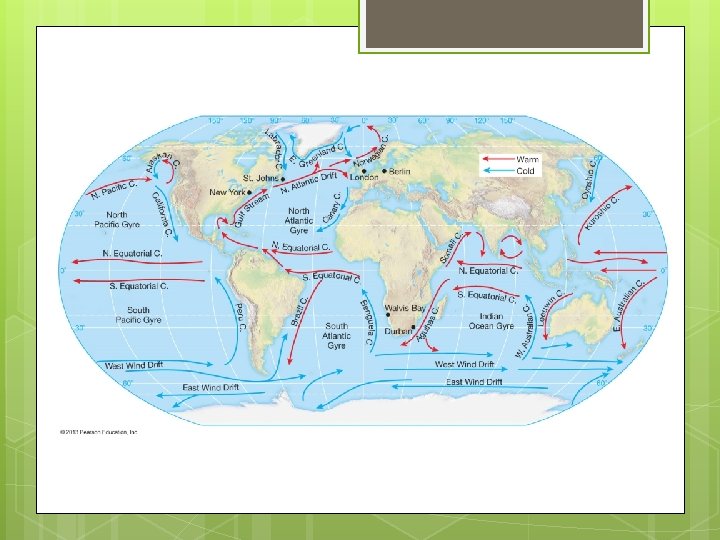
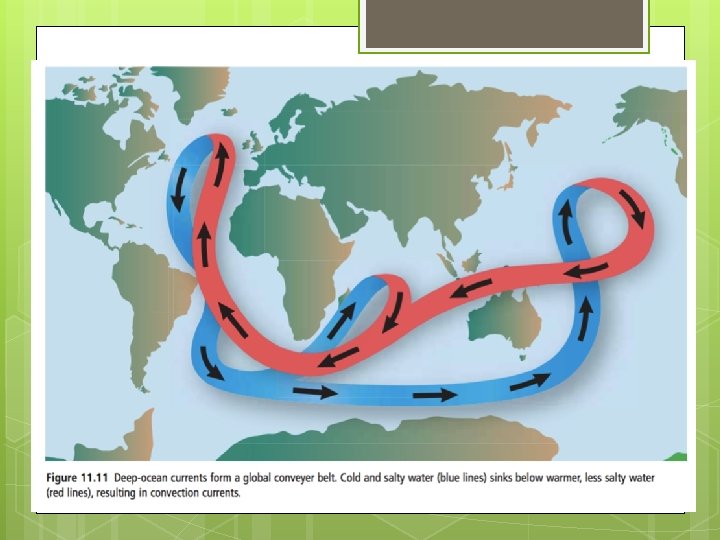
3. Ocean currents Prevailing winds are the major driving force behind ocean currents Currents can also be caused by greater heating of water near the equator and differences in salinity in different parts of the ocean Currents transport thermal energy (as wells as water and nutrients) & cause moderate temperatures along coastal areas
The Ocean: driving force
Energy of the Earth- an overview Energy explained