
Energy Transfer in an Ecosystem Why do organisms
![Carnivore vs. Omnivore Carnivore Omnivore • Eat other consumers • Ex] Lions • Eat](https://slidetodoc.com/presentation_image_h2/c074fe9e71cb091f57693f0e0ca57d29/image-8.jpg "Carnivore vs. Omnivore Carnivore Omnivore • Eat other consumers • Ex] Lions • Eat")
- Slides: 16
Energy Transfer in an Ecosystem
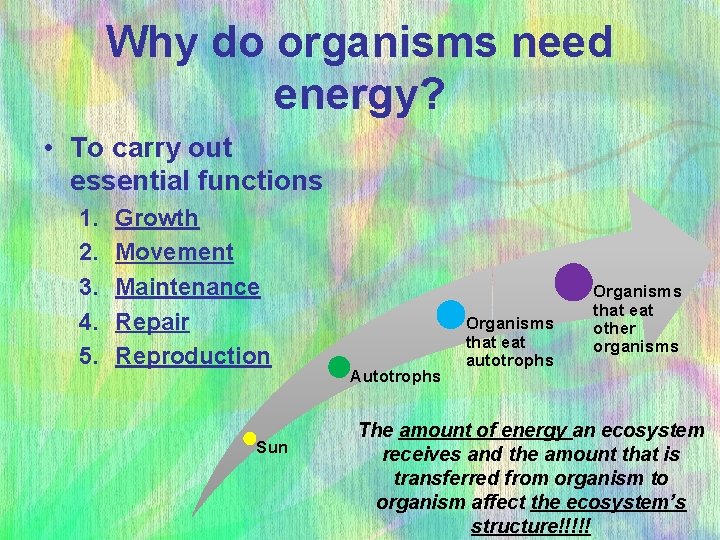
Why do organisms need energy? • To carry out essential functions 1. 2. 3. 4. 5. Growth Movement Maintenance Repair Reproduction Sun Autotrophs Organisms that eat autotrophs Organisms that eat other organisms The amount of energy an ecosystem receives and the amount that is transferred from organism to organism affect the ecosystem’s structure!!!!!
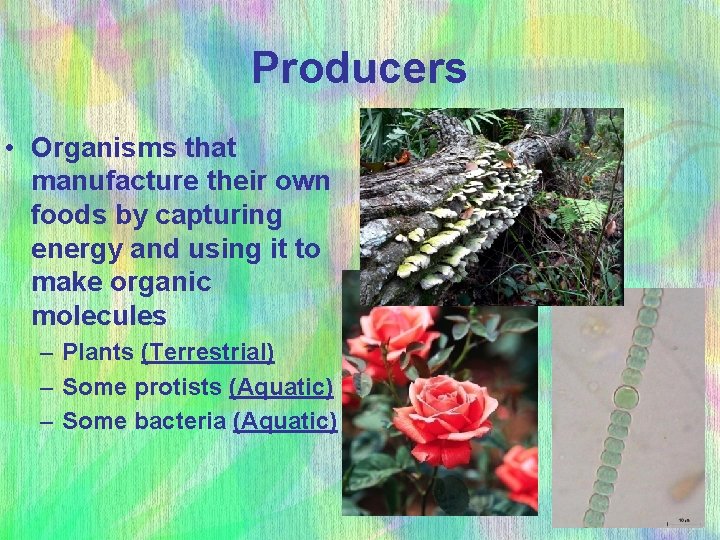
Producers • Organisms that manufacture their own foods by capturing energy and using it to make organic molecules – Plants (Terrestrial) – Some protists (Aquatic) – Some bacteria (Aquatic)
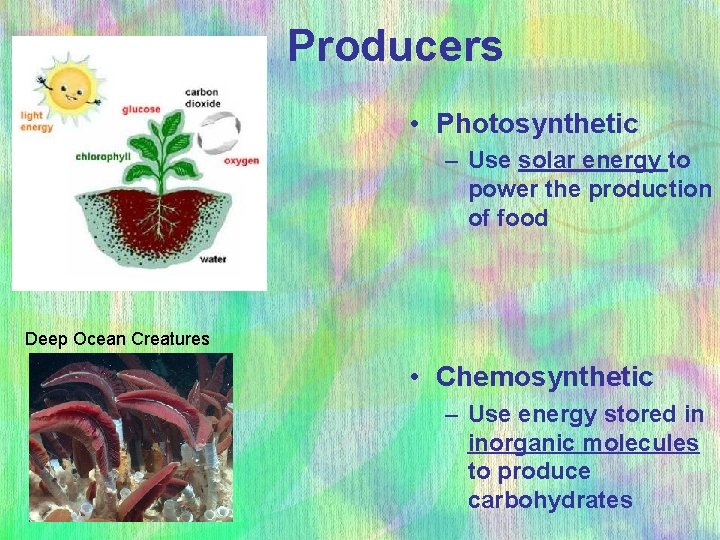
Producers • Photosynthetic – Use solar energy to power the production of food Deep Ocean Creatures • Chemosynthetic – Use energy stored in inorganic molecules to produce carbohydrates
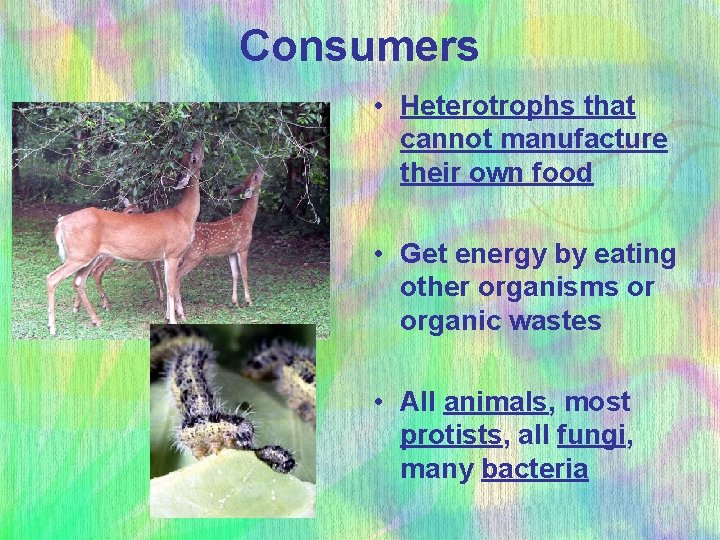
Consumers • Heterotrophs that cannot manufacture their own food • Get energy by eating other organisms or organic wastes • All animals, most protists, all fungi, many bacteria
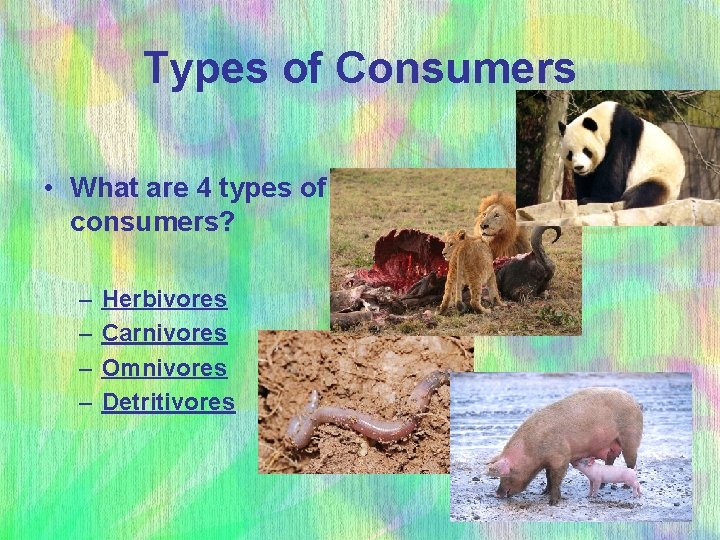
Types of Consumers • What are 4 types of consumers? – – Herbivores Carnivores Omnivores Detritivores
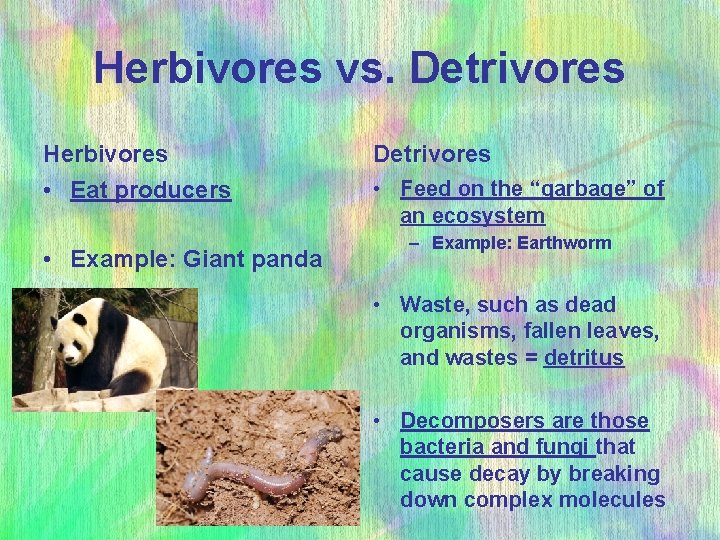
Herbivores vs. Detrivores Herbivores Detrivores • Eat producers • Feed on the “garbage” of an ecosystem • Example: Giant panda – Example: Earthworm • Waste, such as dead organisms, fallen leaves, and wastes = detritus • Decomposers are those bacteria and fungi that cause decay by breaking down complex molecules
Carnivore vs. Omnivore Carnivore Omnivore • Eat other consumers • Ex] Lions • Eat both consumers and producers • Ex] Pigs
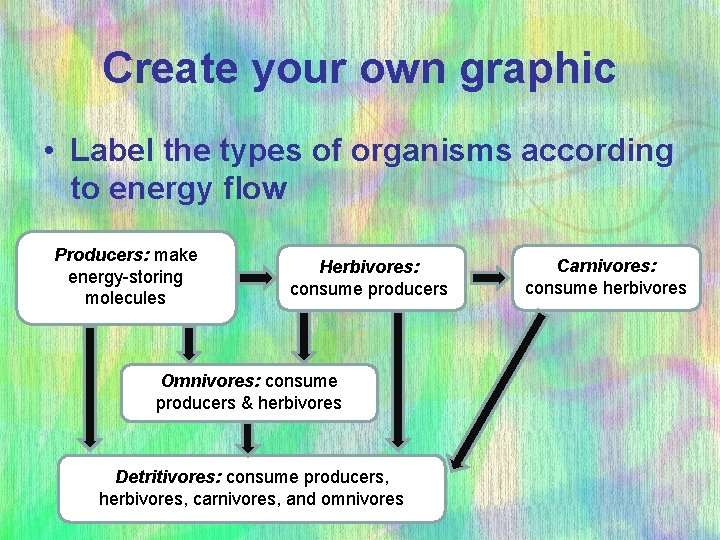
Create your own graphic • Label the types of organisms according to energy flow Producers: make energy-storing molecules Herbivores: consume producers Omnivores: consume producers & herbivores Detritivores: consume producers, herbivores, carnivores, and omnivores Carnivores: consume herbivores
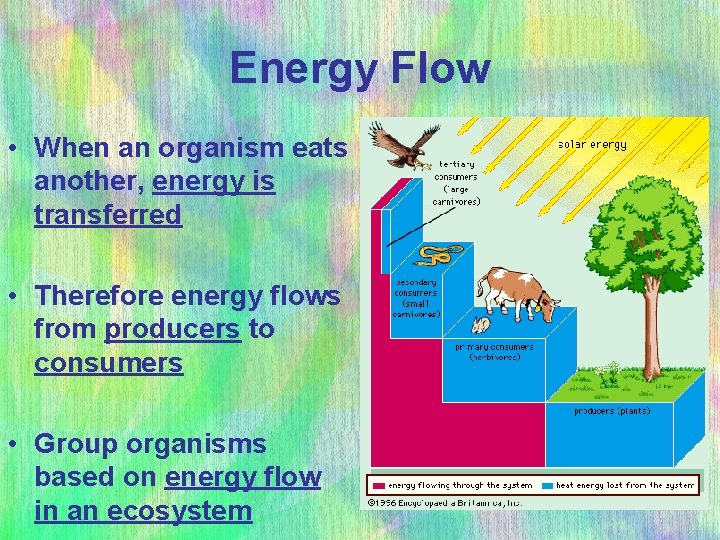
Energy Flow • When an organism eats another, energy is transferred • Therefore energy flows from producers to consumers • Group organisms based on energy flow in an ecosystem
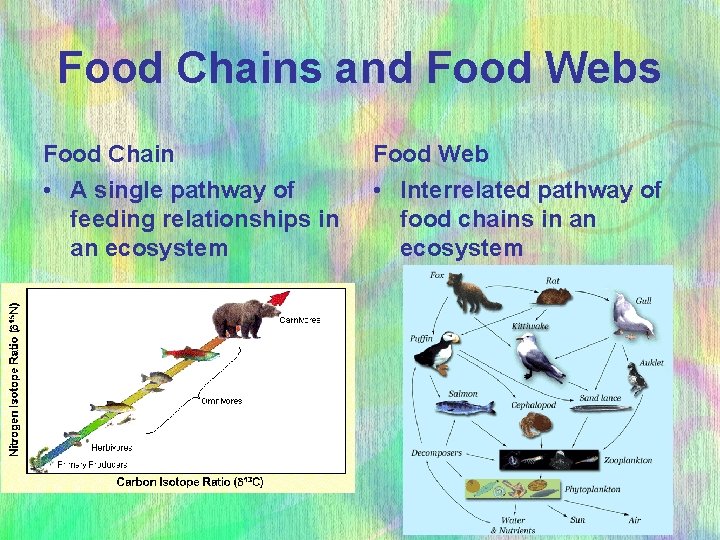
Food Chains and Food Webs Food Chain Food Web • A single pathway of feeding relationships in an ecosystem • Interrelated pathway of food chains in an ecosystem
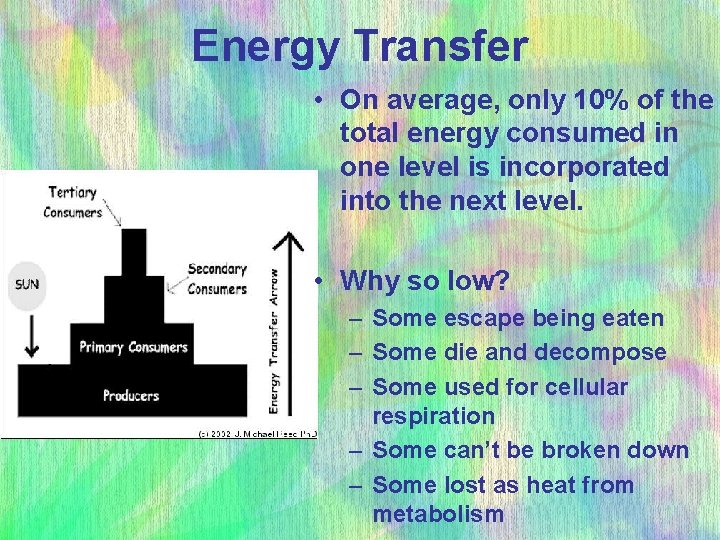
Energy Transfer • On average, only 10% of the total energy consumed in one level is incorporated into the next level. • Why so low? – Some escape being eaten – Some die and decompose – Some used for cellular respiration – Some can’t be broken down – Some lost as heat from metabolism
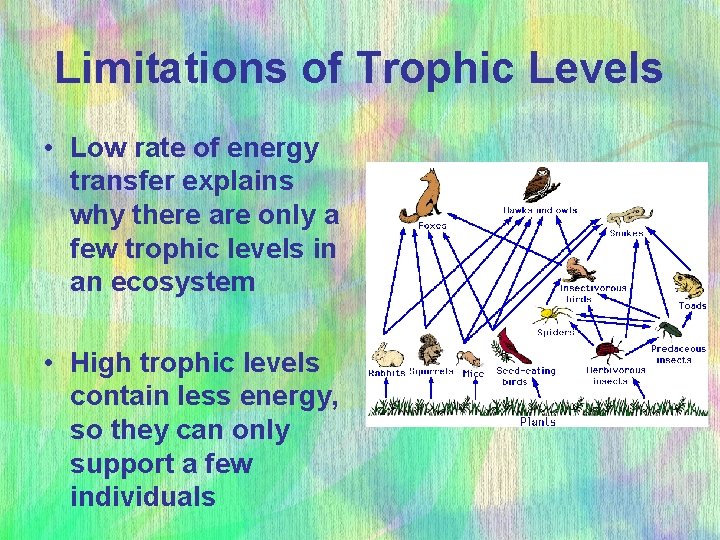
Limitations of Trophic Levels • Low rate of energy transfer explains why there are only a few trophic levels in an ecosystem • High trophic levels contain less energy, so they can only support a few individuals
What is the organic material in an ecosystem called?
What is an organism called that eats both producers and consumers?
How much of the total energy is transferred from one trophic level to the next?