
ENERGY The Engineering Grand Challenges and Green Engineering
- Slides: 26
ENERGY The Engineering Grand Challenges and Green Engineering
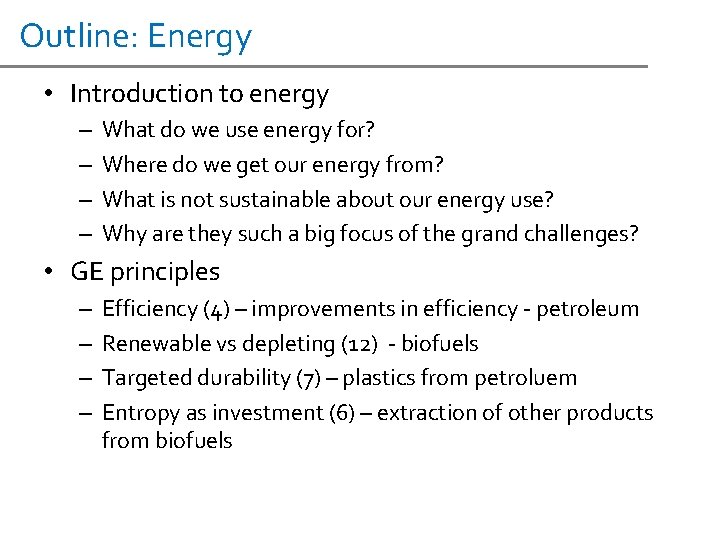
Outline: Energy • Introduction to energy – – What do we use energy for? Where do we get our energy from? What is not sustainable about our energy use? Why are they such a big focus of the grand challenges? • GE principles – – Efficiency (4) – improvements in efficiency - petroleum Renewable vs depleting (12) - biofuels Targeted durability (7) – plastics from petroluem Entropy as investment (6) – extraction of other products from biofuels
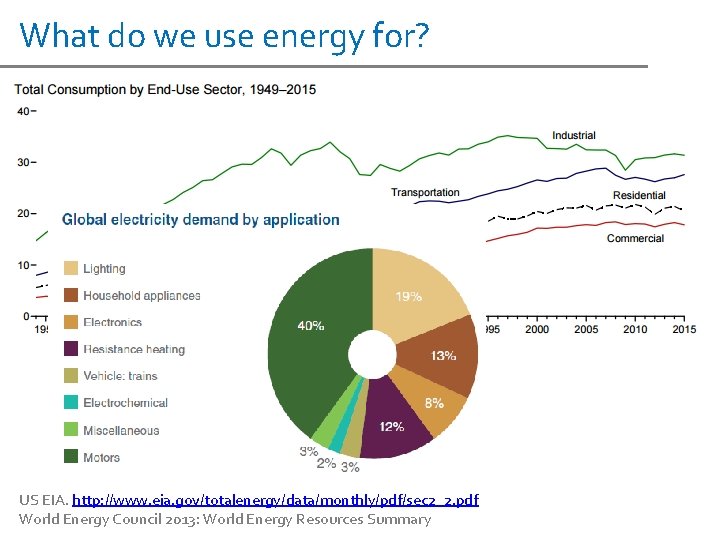
What do we use energy for? US EIA. http: //www. eia. gov/totalenergy/data/monthly/pdf/sec 2_2. pdf World Energy Council 2013: World Energy Resources Summary
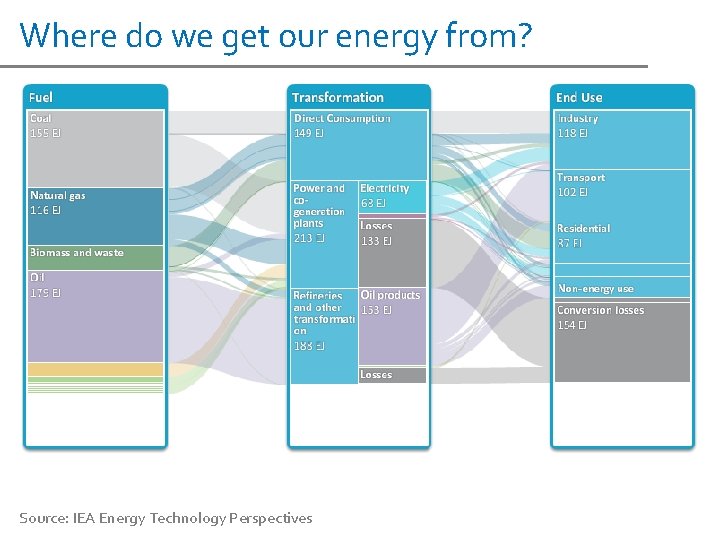
Where do we get our energy from? Source: IEA Energy Technology Perspectives
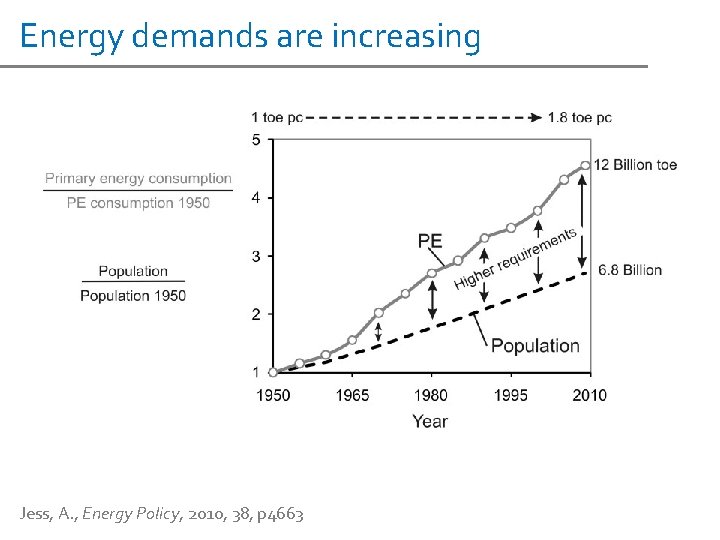
Energy demands are increasing Jess, A. , Energy Policy, 2010, 38, p 4663
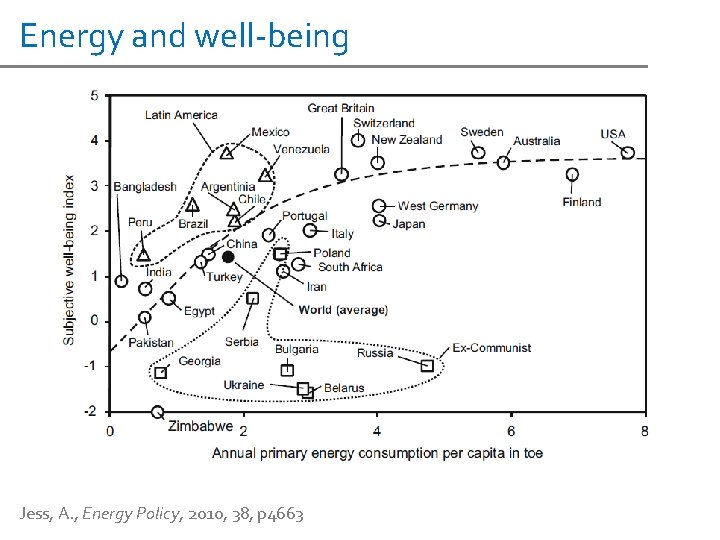
Energy and well-being Jess, A. , Energy Policy, 2010, 38, p 4663
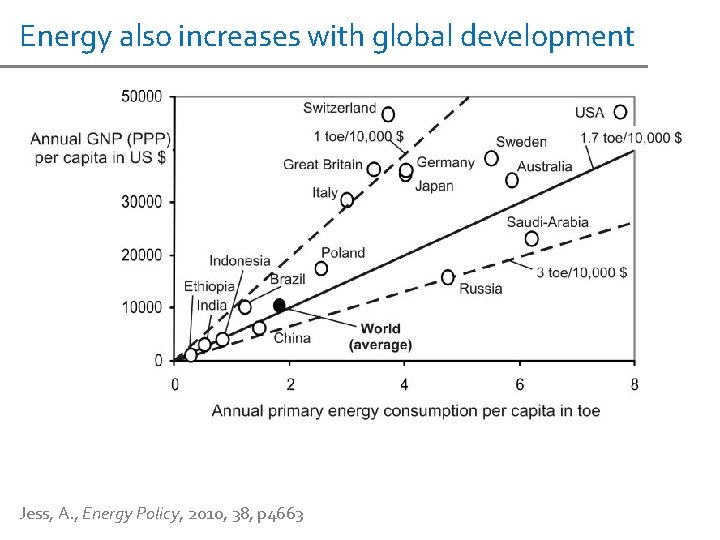
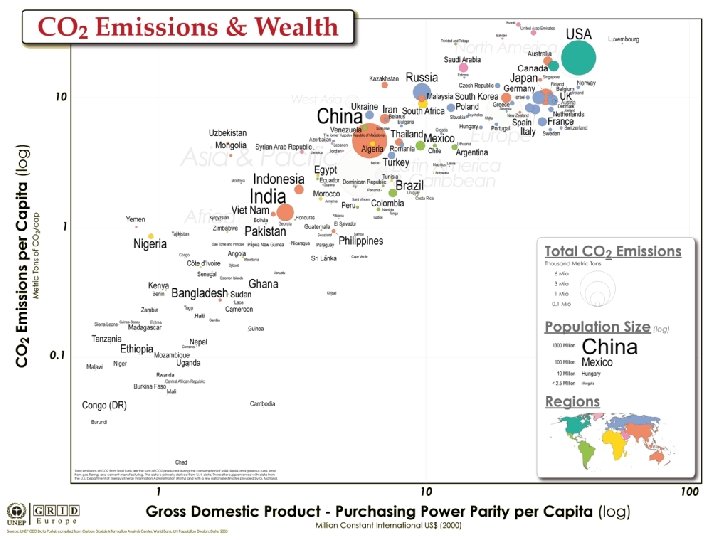
Energy also increases with global development Jess, A. , Energy Policy, 2010, 38, p 4663
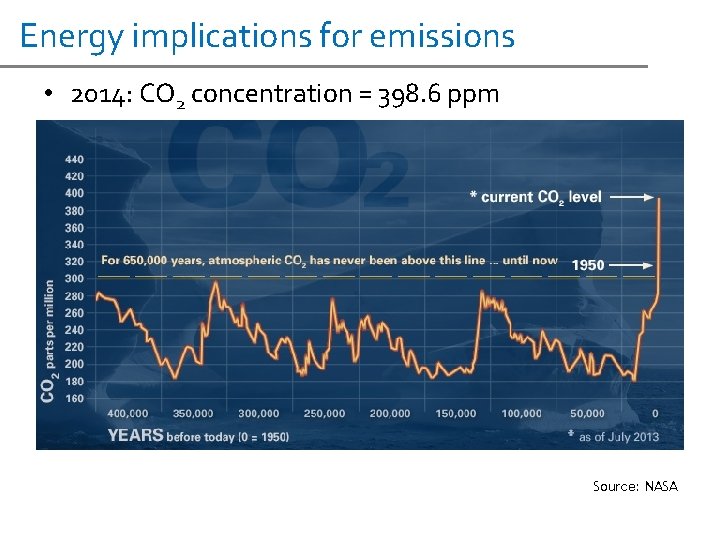
Energy implications for emissions • 2014: CO 2 concentration = 398. 6 ppm Source: NASA
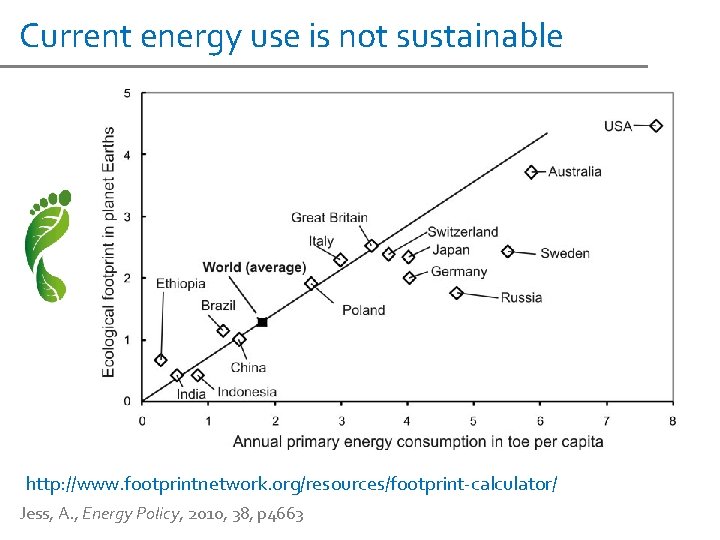
Current energy use is not sustainable http: //www. footprintnetwork. org/resources/footprint-calculator/ Jess, A. , Energy Policy, 2010, 38, p 4663
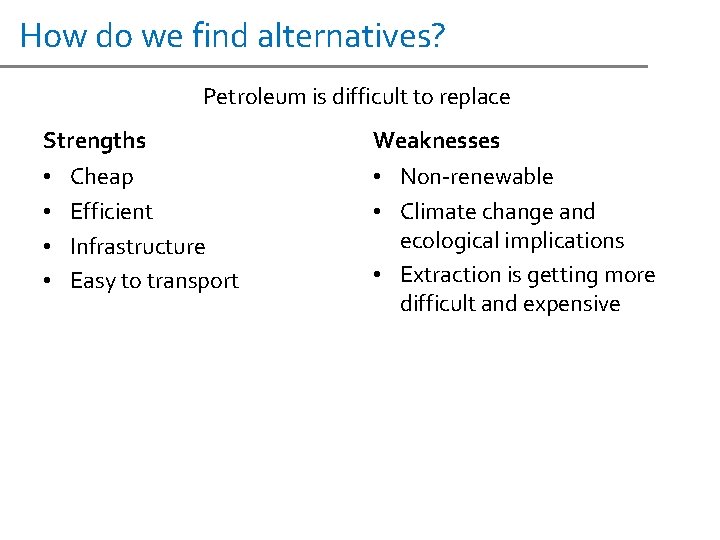
How do we find alternatives? Petroleum is difficult to replace Strengths • • Cheap Efficient Infrastructure Easy to transport Weaknesses • Non-renewable • Climate change and ecological implications • Extraction is getting more difficult and expensive
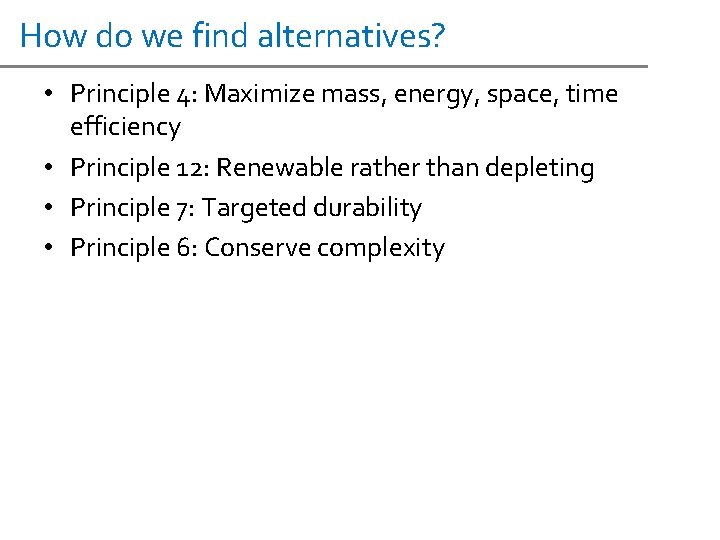
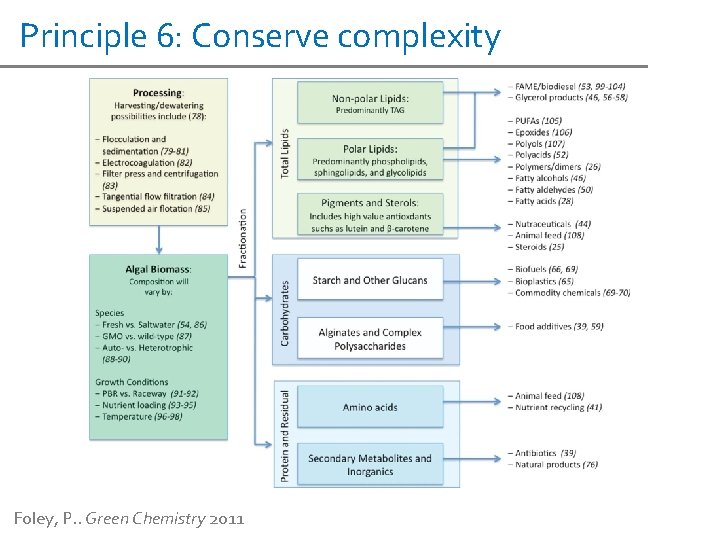
How do we find alternatives? • Principle 4: Maximize mass, energy, space, time efficiency • Principle 12: Renewable rather than depleting • Principle 7: Targeted durability • Principle 6: Conserve complexity
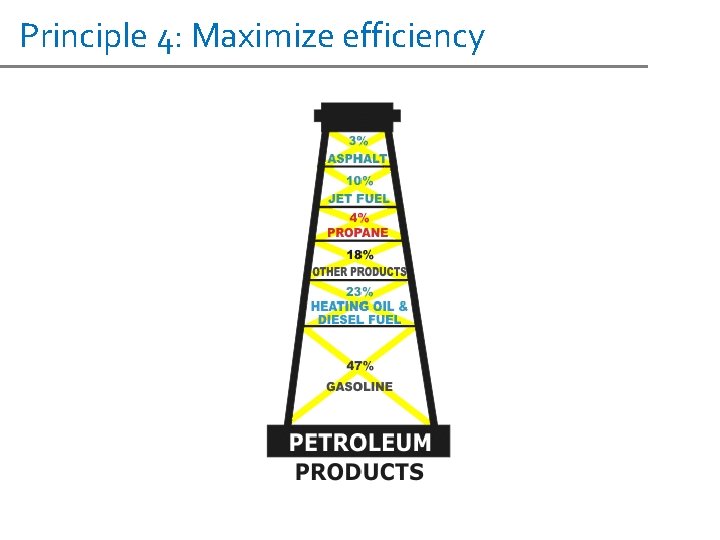
Principle 4: Maximize efficiency
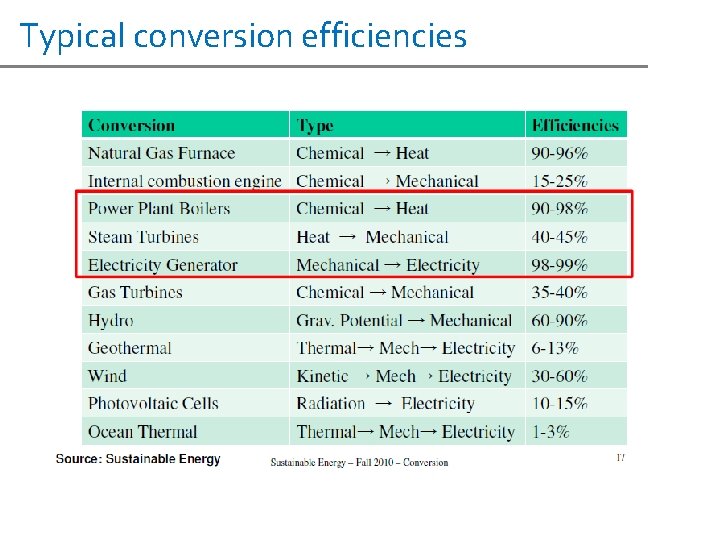
Typical conversion efficiencies
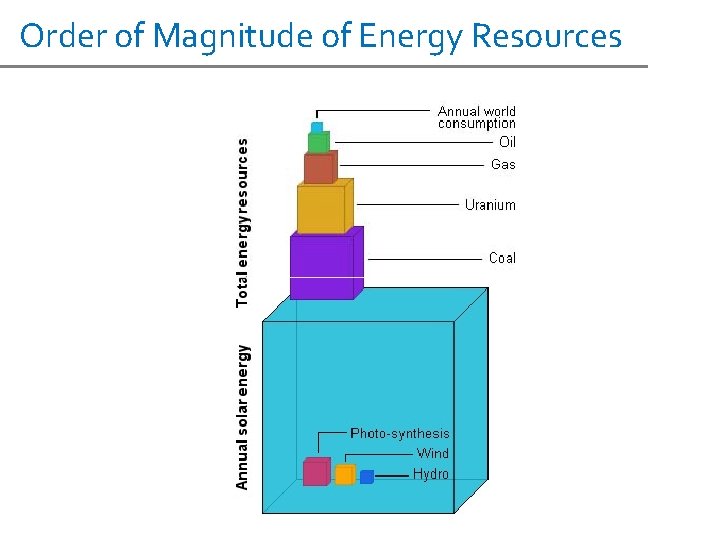
Order of Magnitude of Energy Resources
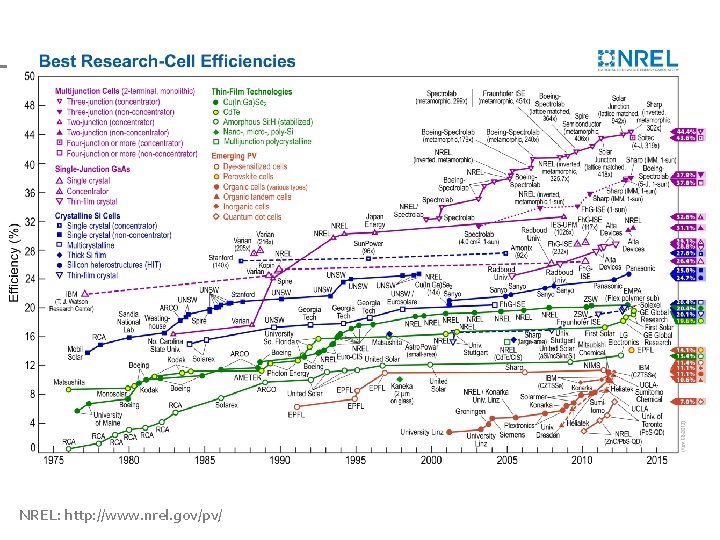
NREL: http: //www. nrel. gov/pv/
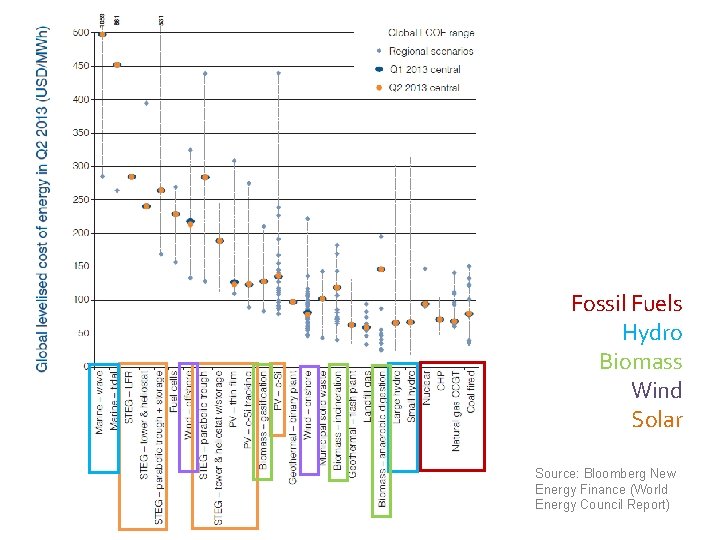
Fossil Fuels Hydro Biomass Wind Solar Source: Bloomberg New Energy Finance (World Energy Council Report)
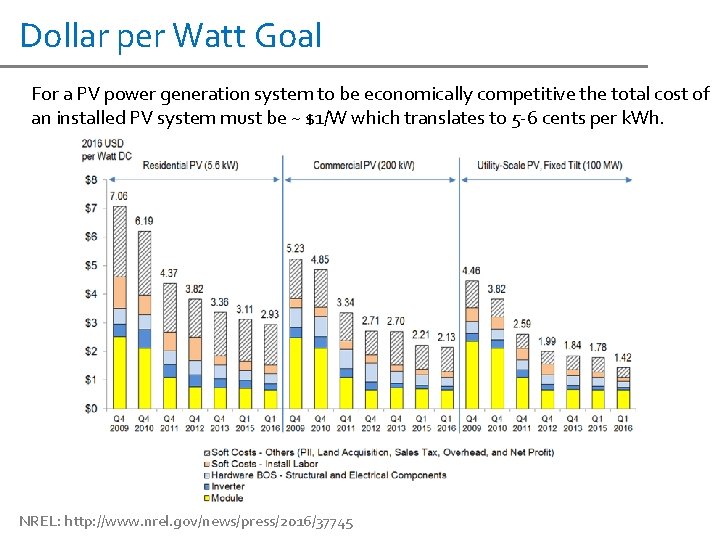
Dollar per Watt Goal For a PV power generation system to be economically competitive the total cost of an installed PV system must be ~ $1/W which translates to 5 -6 cents per k. Wh. NREL: http: //www. nrel. gov/news/press/2016/37745
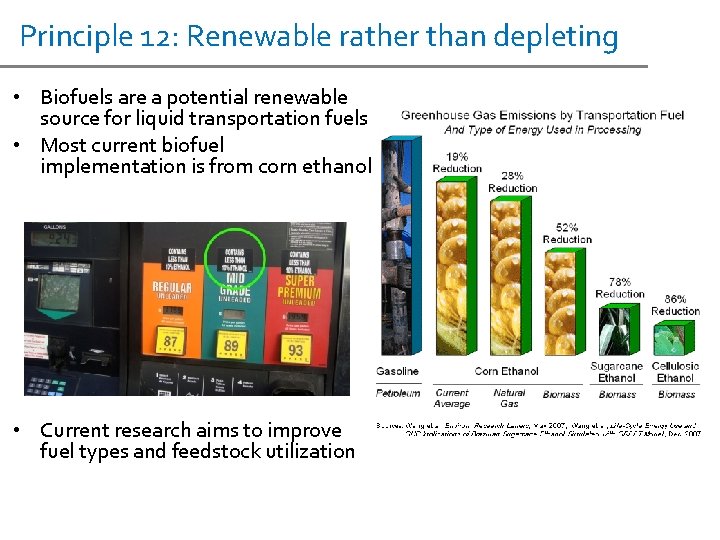
Principle 12: Renewable rather than depleting • Biofuels are a potential renewable source for liquid transportation fuels • Most current biofuel implementation is from corn ethanol • Current research aims to improve fuel types and feedstock utilization
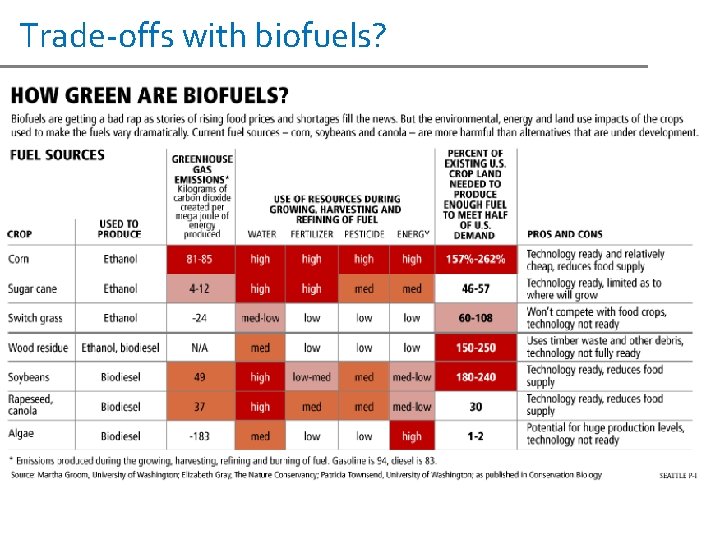
Trade-offs with biofuels?
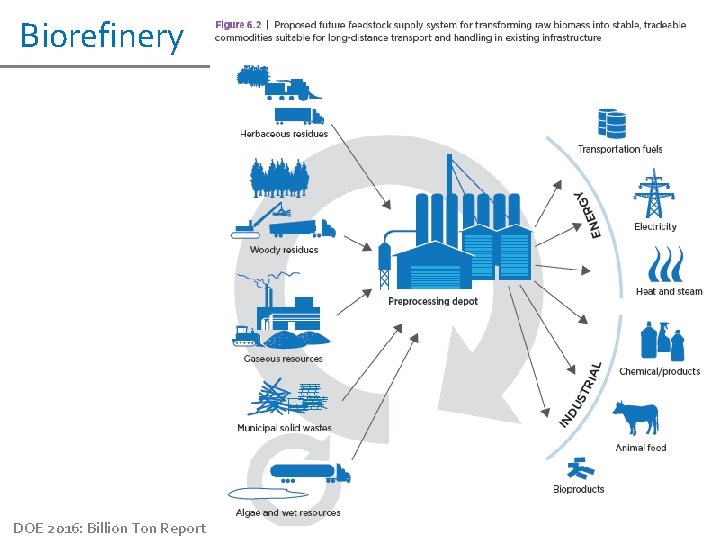
Biorefinery DOE 2016: Billion Ton Report
Principle 6: Conserve complexity Foley, P. . Green Chemistry 2011
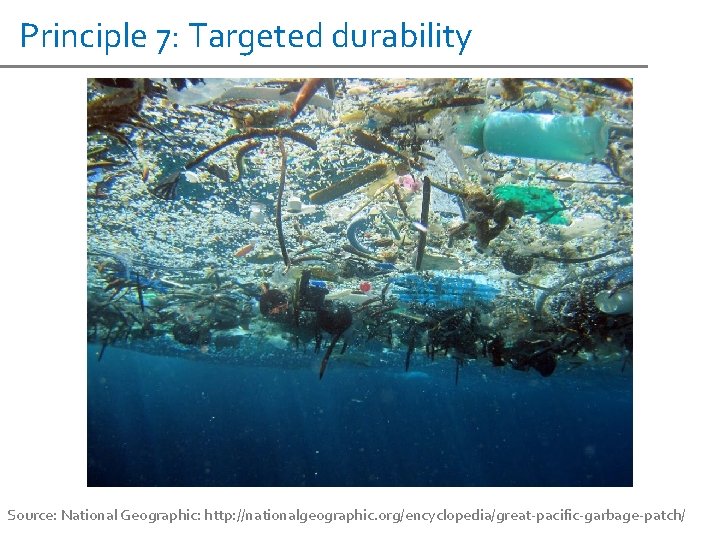
Principle 7: Targeted durability Source: National Geographic: http: //nationalgeographic. org/encyclopedia/great-pacific-garbage-patch/
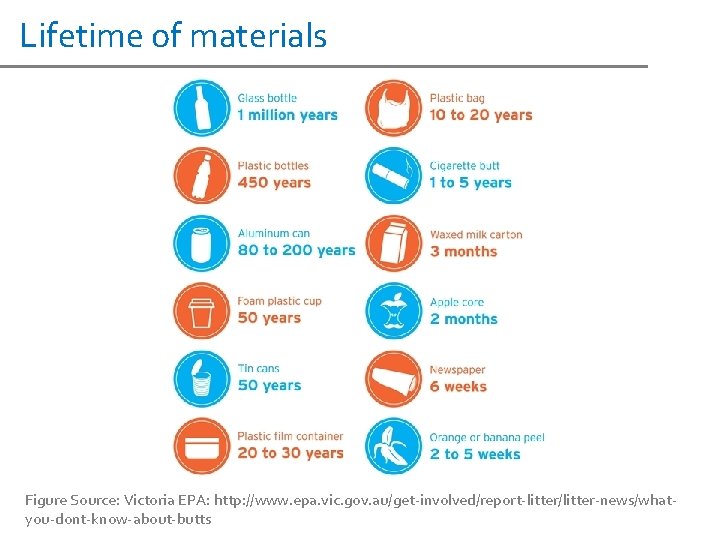
Lifetime of materials Figure Source: Victoria EPA: http: //www. epa. vic. gov. au/get-involved/report-litter/litter-news/whatyou-dont-know-about-butts
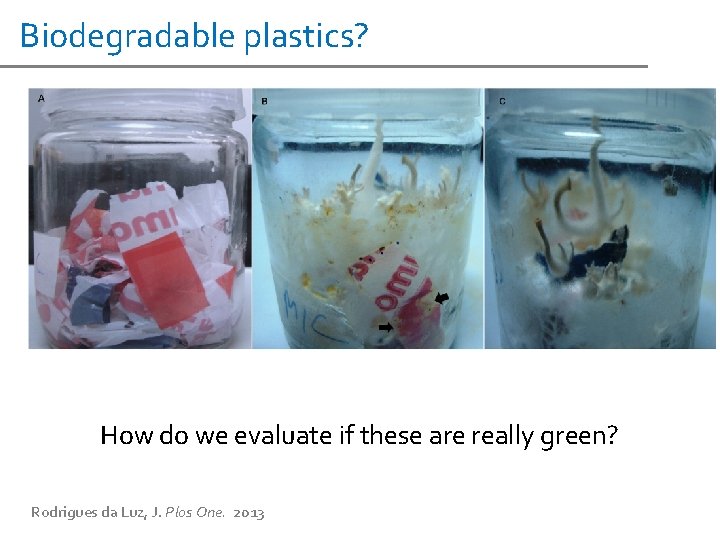
Biodegradable plastics? How do we evaluate if these are really green? Rodrigues da Luz, J. Plos One. 2013
Conclusion • The use of green engineering can be helpful for the design of alternative energy systems. • The use of petroleum products is current very efficient and cost effective so finding strategies requires improvements in cost and products • Biomass is a potential feedstock to replace fossil fuel feedstocks • Products and bio-products must also keep up with different metrics (renewable and low life cycle impacts) for green engineering