
Energy The capacity to do work or to







- Slides: 26
Energy The capacity to do work or to produce heat.
Law of Conservation of Energy can be converted from one form to another but can neither be created nor destroyed. (Euniverse is constant)
The Two Types of Energy Potential: due to position or composition can be converted to work Kinetic: due to motion of the object KE = 1/2 mv 2 (m = mass, v = velocity)
Temperature v. Heat Temperature reflects random motions of particles, therefore related to kinetic energy of the system. Heat involves a transfer of energy between 2 objects due to a temperature difference
State Function Depends only on the present state of the system - not how it arrived there. It is independent of pathway.
System and Surroundings System: That on which we focus attention Surroundings: Everything else in the universe Universe = System + Surroundings
Exo and Endothermic Heat exchange accompanies chemical reactions. Exothermic: Heat flows out of the system (to the surroundings). Endothermic: Heat flows into the system (from the surroundings).
First Law of Thermodynamics: The energy of the universe is constant.
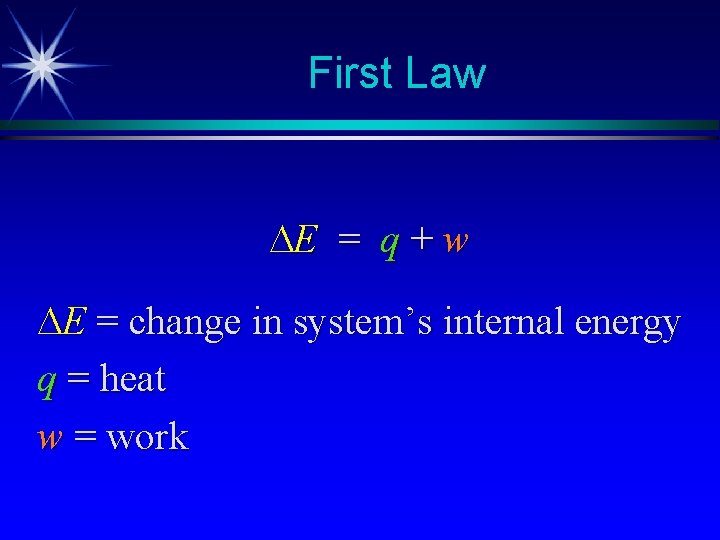
First Law E = q + w E = change in system’s internal energy q = heat w = work
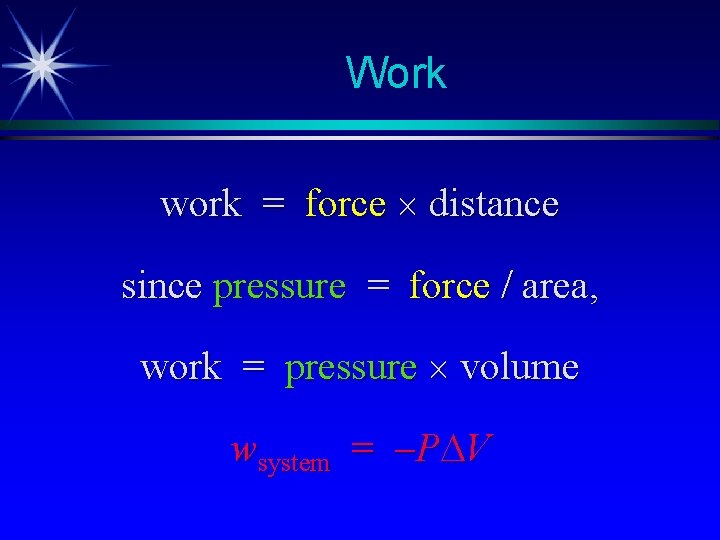
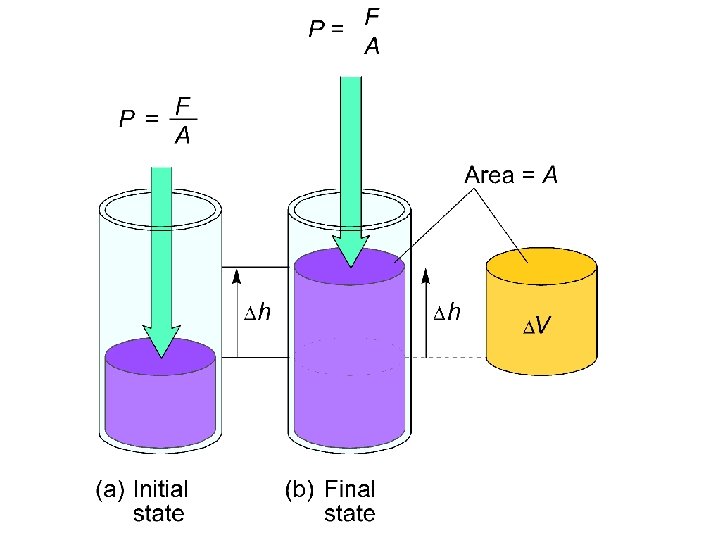
Work work = force distance since pressure = force / area, work = pressure volume wsystem = P V
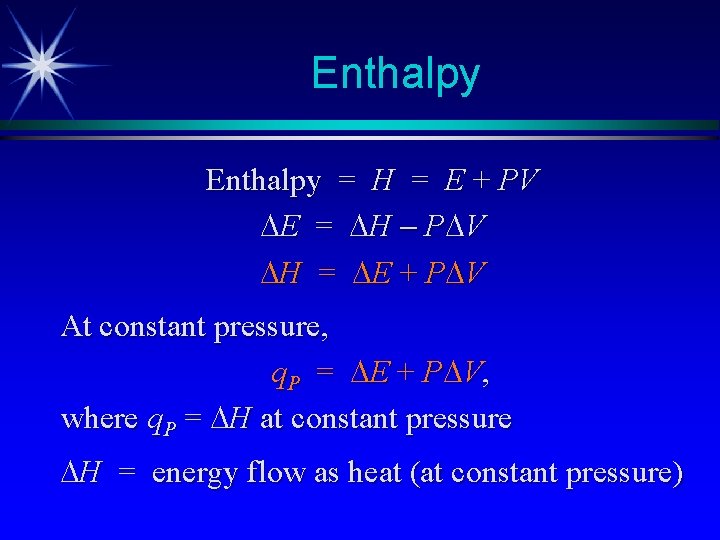
Enthalpy = H = E + PV E = H P V H = E + P V At constant pressure, q. P = E + P V, where q. P = H at constant pressure H = energy flow as heat (at constant pressure)
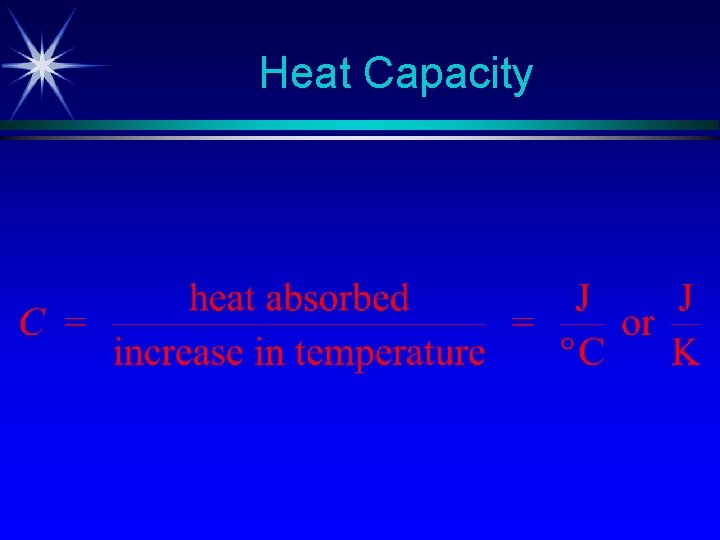
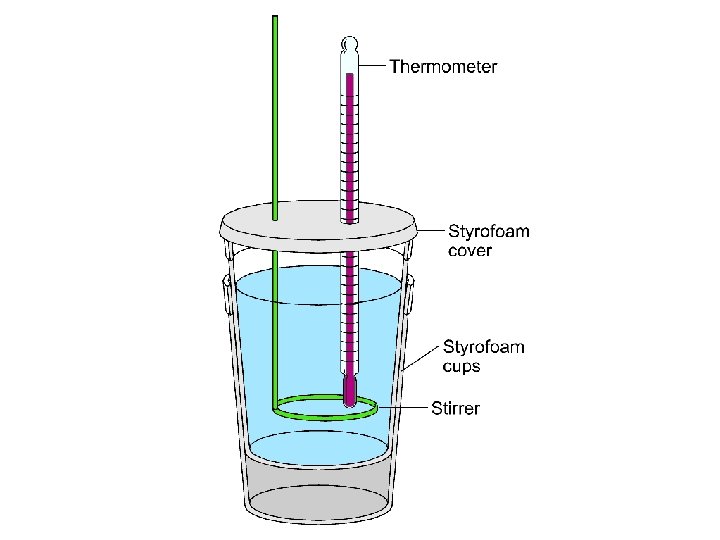
Heat Capacity
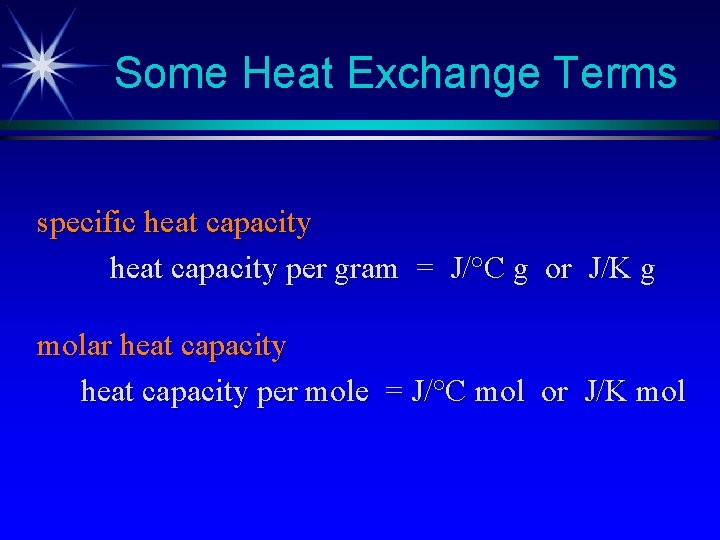
Some Heat Exchange Terms specific heat capacity per gram = J/°C g or J/K g molar heat capacity per mole = J/°C mol or J/K mol
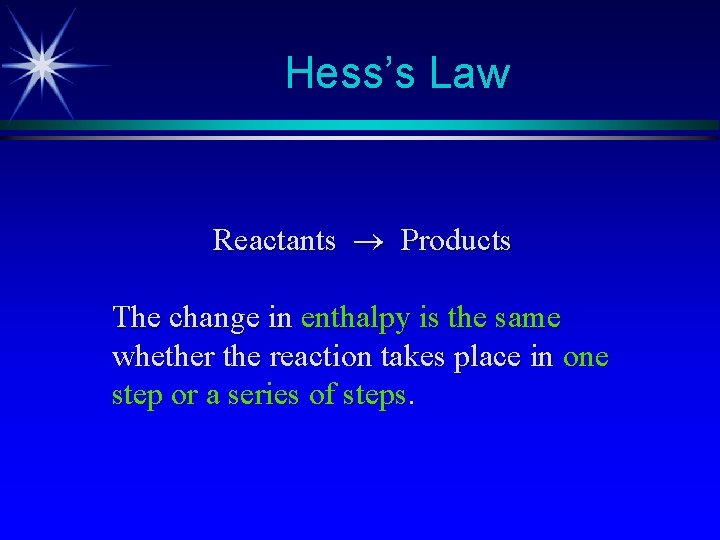
Hess’s Law Reactants Products The change in enthalpy is the same whether the reaction takes place in one step or a series of steps.
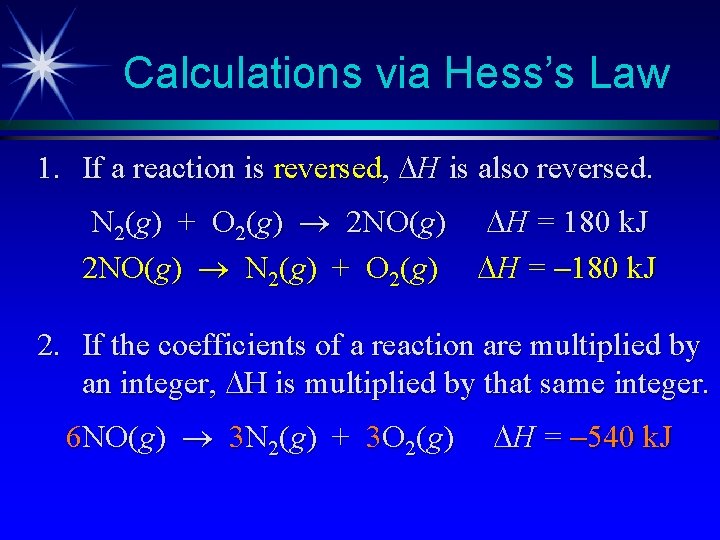
Calculations via Hess’s Law 1. If a reaction is reversed, H is also reversed. N 2(g) + O 2(g) 2 NO(g) H = 180 k. J 2 NO(g) N 2(g) + O 2(g) H = 180 k. J 2. If the coefficients of a reaction are multiplied by an integer, H is multiplied by that same integer. 6 NO(g) 3 N 2(g) + 3 O 2(g) H = 540 k. J
Standard Enthalpies of Formation Change in enthalpy that accompanies the formation of one mole of substance from its elements, with all substances in their standard states. Hf o
Standard States Compound - For a gas, pressure is exactly 1 atmosphere. - For a solution, concentration is exactly 1 molar. - Pure substance (liquid or solid), it is the pure liquid or solid. Element - The form [N 2(g), K(s)] in which it exists at atm and 25°C. 1
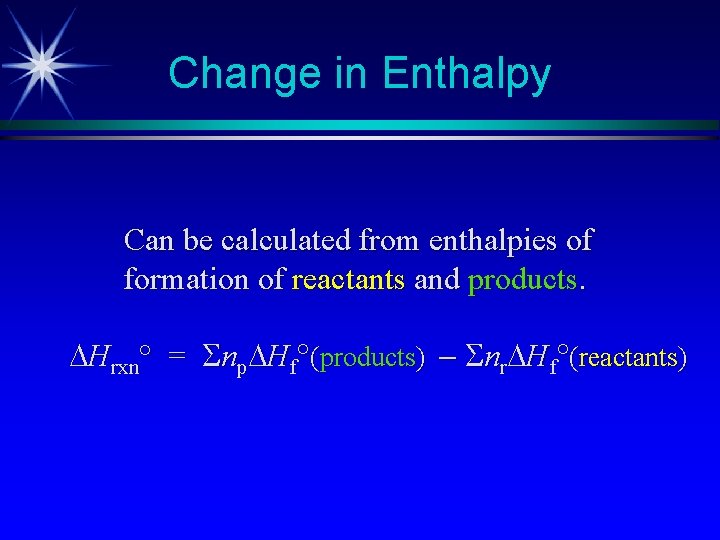
Change in Enthalpy Can be calculated from enthalpies of formation of reactants and products. Hrxn° = np Hf (products) nr Hf (reactants)