
Energy Systems and Fatigue Muscular Strength Endurance Testing

- Slides: 33
Energy Systems and Fatigue Muscular Strength & Endurance (Testing) 1
Outline • Muscle strength versus endurance • Energy systems and fatigue – what limits muscle strength and endurance • Reasons for strength and endurance evaluation • Types of muscle contraction and testing equipment • Problems with muscular fitness testing 2
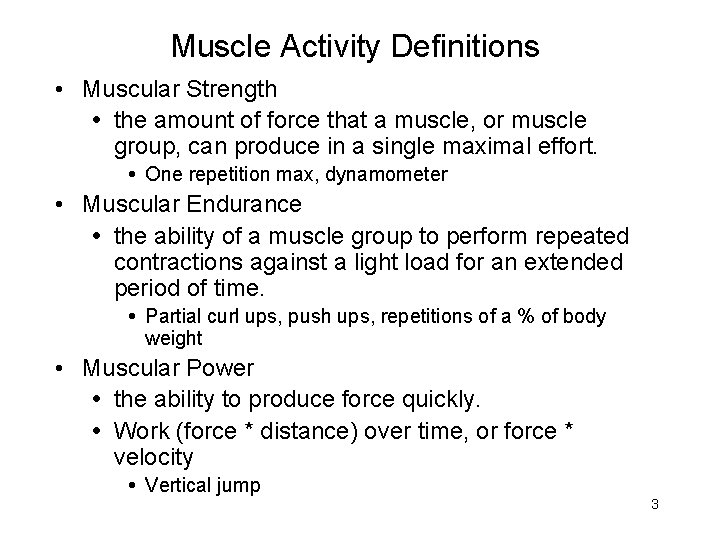
Muscle Activity Definitions • Muscular Strength the amount of force that a muscle, or muscle group, can produce in a single maximal effort. One repetition max, dynamometer • Muscular Endurance the ability of a muscle group to perform repeated contractions against a light load for an extended period of time. Partial curl ups, push ups, repetitions of a % of body weight • Muscular Power the ability to produce force quickly. Work (force * distance) over time, or force * velocity Vertical jump 3
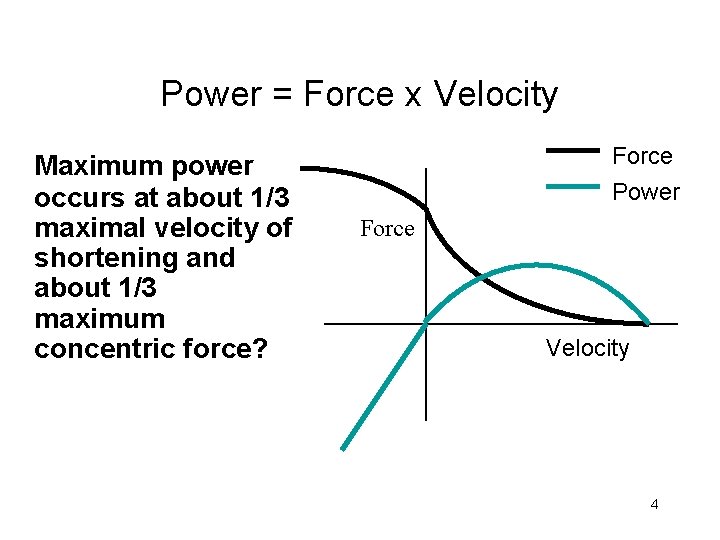
Power = Force x Velocity Maximum power occurs at about 1/3 maximal velocity of shortening and about 1/3 maximum concentric force? Force Power Force Velocity 4
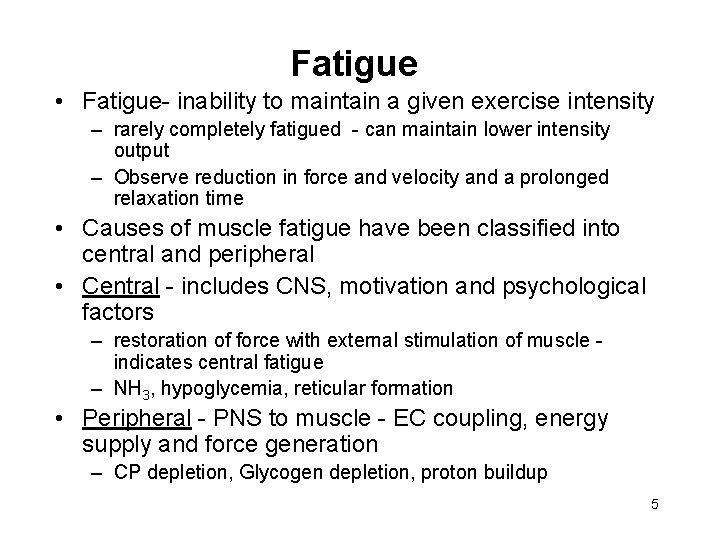
Fatigue • Fatigue- inability to maintain a given exercise intensity – rarely completely fatigued - can maintain lower intensity output – Observe reduction in force and velocity and a prolonged relaxation time • Causes of muscle fatigue have been classified into central and peripheral • Central - includes CNS, motivation and psychological factors – restoration of force with external stimulation of muscle indicates central fatigue – NH 3, hypoglycemia, reticular formation • Peripheral - PNS to muscle - EC coupling, energy supply and force generation – CP depletion, Glycogen depletion, proton buildup 5
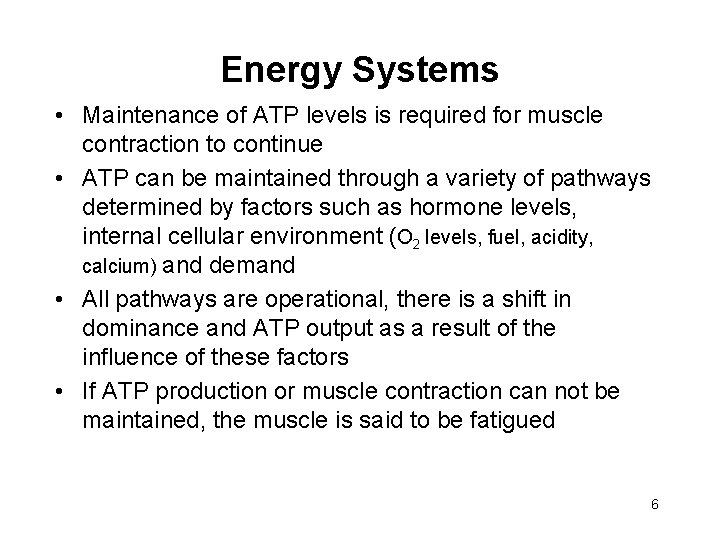
Energy Systems • Maintenance of ATP levels is required for muscle contraction to continue • ATP can be maintained through a variety of pathways determined by factors such as hormone levels, internal cellular environment (O 2 levels, fuel, acidity, calcium) and demand • All pathways are operational, there is a shift in dominance and ATP output as a result of the influence of these factors • If ATP production or muscle contraction can not be maintained, the muscle is said to be fatigued 6
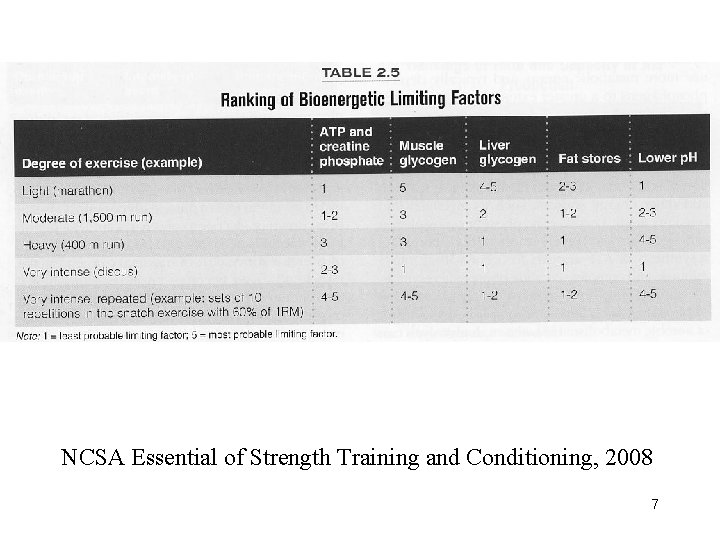
NCSA Essential of Strength Training and Conditioning, 2008 7
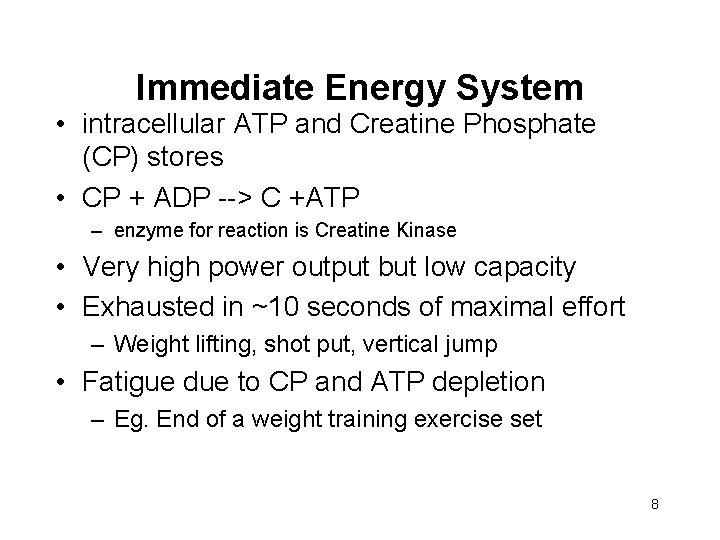
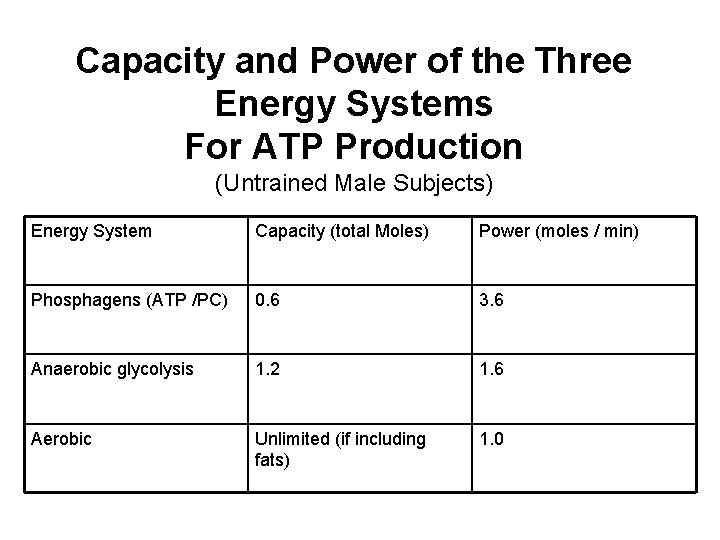
Immediate Energy System • intracellular ATP and Creatine Phosphate (CP) stores • CP + ADP --> C +ATP – enzyme for reaction is Creatine Kinase • Very high power output but low capacity • Exhausted in ~10 seconds of maximal effort – Weight lifting, shot put, vertical jump • Fatigue due to CP and ATP depletion – Eg. End of a weight training exercise set 8
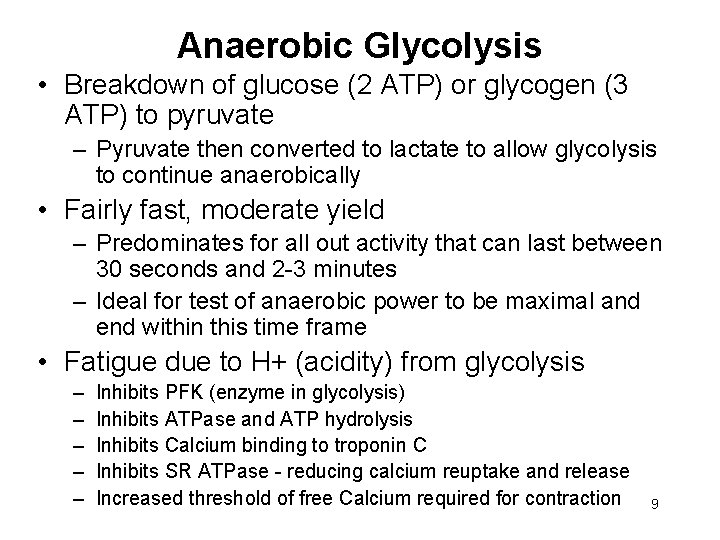
Anaerobic Glycolysis • Breakdown of glucose (2 ATP) or glycogen (3 ATP) to pyruvate – Pyruvate then converted to lactate to allow glycolysis to continue anaerobically • Fairly fast, moderate yield – Predominates for all out activity that can last between 30 seconds and 2 -3 minutes – Ideal for test of anaerobic power to be maximal and end within this time frame • Fatigue due to H+ (acidity) from glycolysis – – – Inhibits PFK (enzyme in glycolysis) Inhibits ATPase and ATP hydrolysis Inhibits Calcium binding to troponin C Inhibits SR ATPase - reducing calcium reuptake and release Increased threshold of free Calcium required for contraction 9
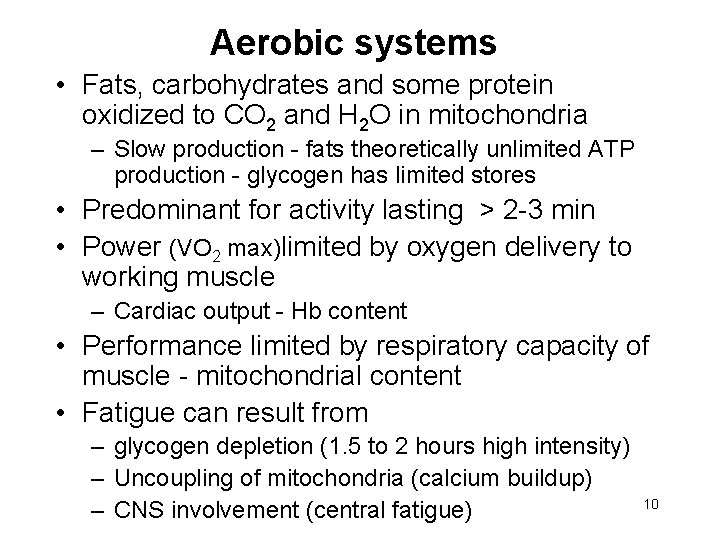
Aerobic systems • Fats, carbohydrates and some protein oxidized to CO 2 and H 2 O in mitochondria – Slow production - fats theoretically unlimited ATP production - glycogen has limited stores • Predominant for activity lasting > 2 -3 min • Power (VO 2 max)limited by oxygen delivery to working muscle – Cardiac output - Hb content • Performance limited by respiratory capacity of muscle - mitochondrial content • Fatigue can result from – glycogen depletion (1. 5 to 2 hours high intensity) – Uncoupling of mitochondria (calcium buildup) – CNS involvement (central fatigue) 10
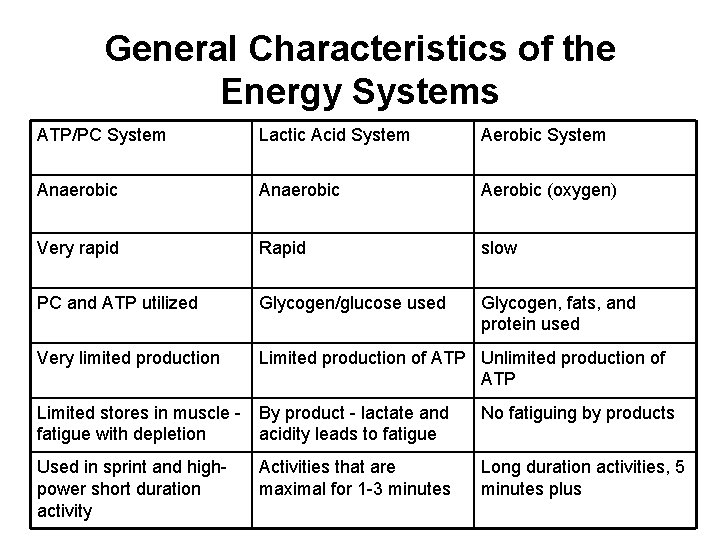
General Characteristics of the Energy Systems ATP/PC System Lactic Acid System Aerobic System Anaerobic Aerobic (oxygen) Very rapid Rapid slow PC and ATP utilized Glycogen/glucose used Glycogen, fats, and protein used Very limited production Limited production of ATP Unlimited production of ATP Limited stores in muscle fatigue with depletion By product - lactate and acidity leads to fatigue No fatiguing by products Used in sprint and highpower short duration activity Activities that are maximal for 1 -3 minutes Long duration activities, 5 minutes plus
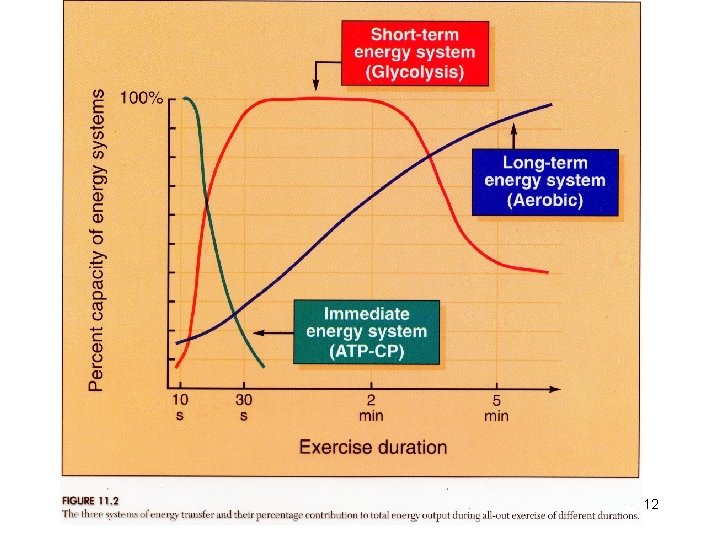
12
Capacity and Power of the Three Energy Systems For ATP Production (Untrained Male Subjects) Energy System Capacity (total Moles) Power (moles / min) Phosphagens (ATP /PC) 0. 6 3. 6 Anaerobic glycolysis 1. 2 1. 6 Aerobic Unlimited (if including fats) 1. 0
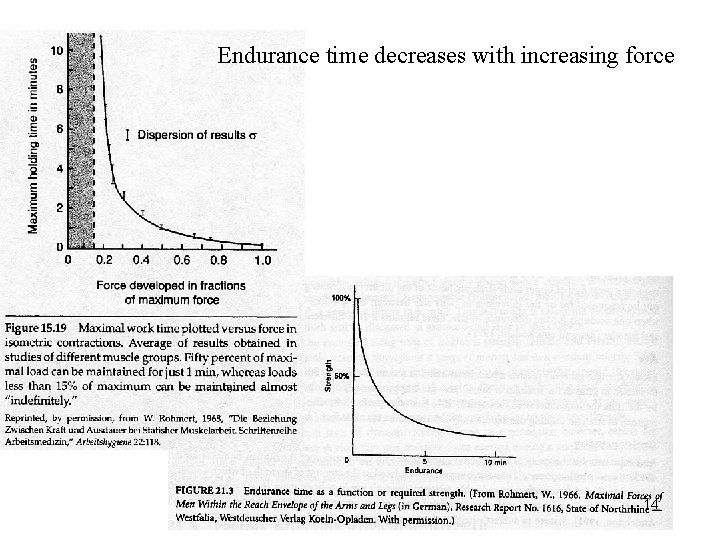
Endurance time decreases with increasing force 14
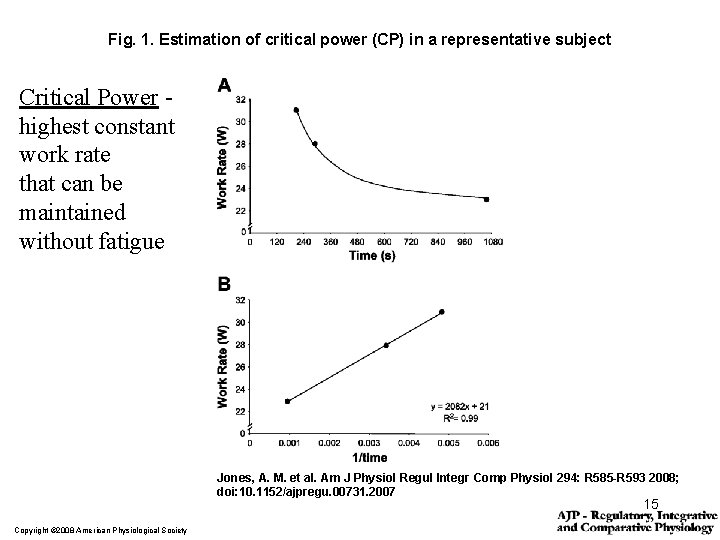
Fig. 1. Estimation of critical power (CP) in a representative subject Critical Power highest constant work rate that can be maintained without fatigue Jones, A. M. et al. Am J Physiol Regul Integr Comp Physiol 294: R 585 -R 593 2008; doi: 10. 1152/ajpregu. 00731. 2007 15 Copyright © 2008 American Physiological Society
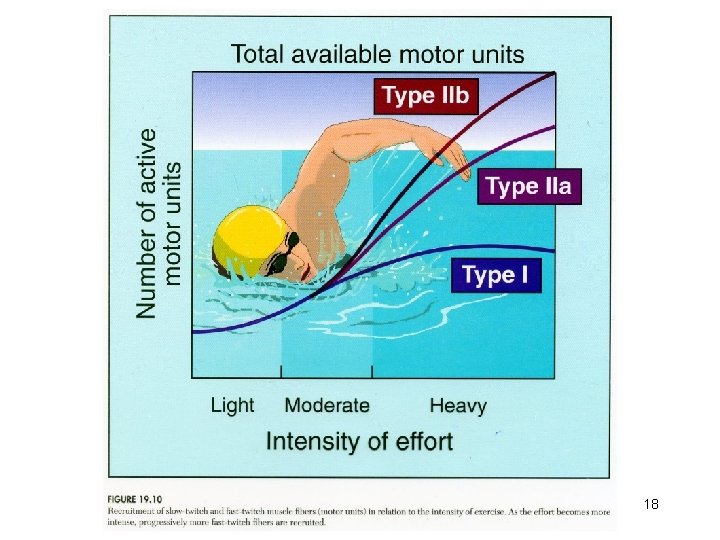
Skeletal muscle Fiber types • Fiber types have different capacities for each energy system - specialized for different types of activity • Variability in size of fibers and motor units, speed and strength of contraction, capillarization, enzyme and fuel content • Fibers recruited based on demand – Type I - light activity – Type I and II a - moderate activity – All fibers types - high intensity demand - high power output - contribution of II b will be high 16
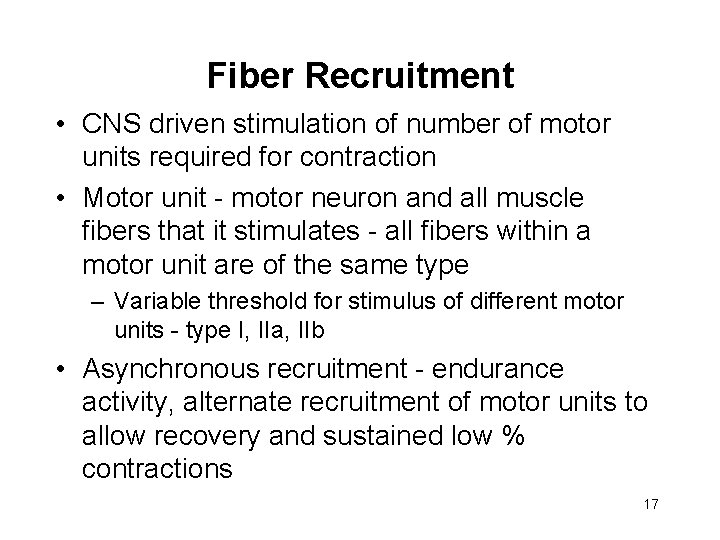
Fiber Recruitment • CNS driven stimulation of number of motor units required for contraction • Motor unit - motor neuron and all muscle fibers that it stimulates - all fibers within a motor unit are of the same type – Variable threshold for stimulus of different motor units - type I, IIa, IIb • Asynchronous recruitment - endurance activity, alternate recruitment of motor units to allow recovery and sustained low % contractions 17
18
Muscular Strength Testing • Purpose – – Assess muscular fitness Identify specific areas of weakness Monitor progress in a rehabilitation program Measure effectiveness of a resistance training program • Correlation between Endurance and Strength is greater than. 90 – These measures are clearly related – We know, however, that training programs can result in specific improvements in strength or endurance depending on design 19
Strength Training Benefits • • Increased muscle fiber size (hypertrophy). Reduced percent body fat Increased muscle contractile strength. Increased bone mineral density and tensile strength. • Increased ligament tensile strength. • Improved physical functioning with old age • These changes improve our physical capacity, physical appearance, metabolic function and injury risk. 20
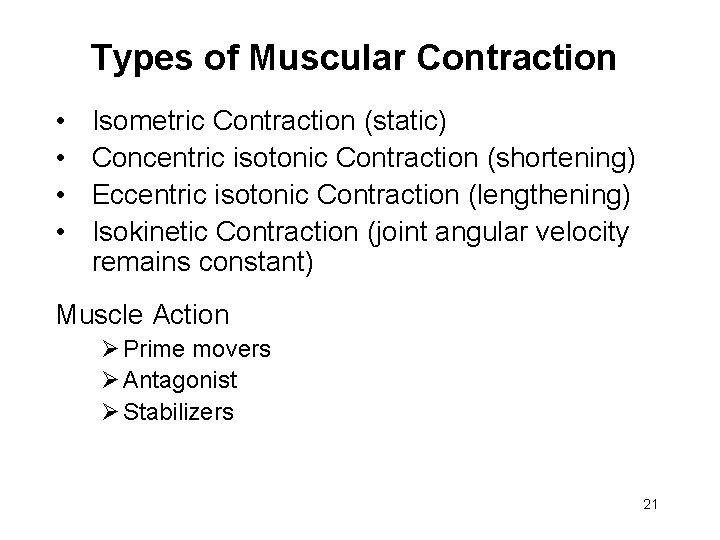
Types of Muscular Contraction • • Isometric Contraction (static) Concentric isotonic Contraction (shortening) Eccentric isotonic Contraction (lengthening) Isokinetic Contraction (joint angular velocity remains constant) Muscle Action Ø Prime movers Ø Antagonist Ø Stabilizers 21
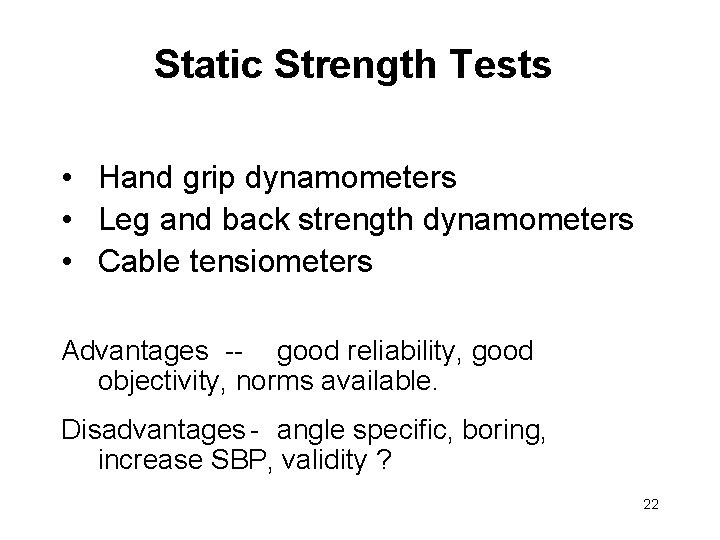
Static Strength Tests • Hand grip dynamometers • Leg and back strength dynamometers • Cable tensiometers Advantages -- good reliability, good objectivity, norms available. Disadvantages - angle specific, boring, increase SBP, validity ? 22
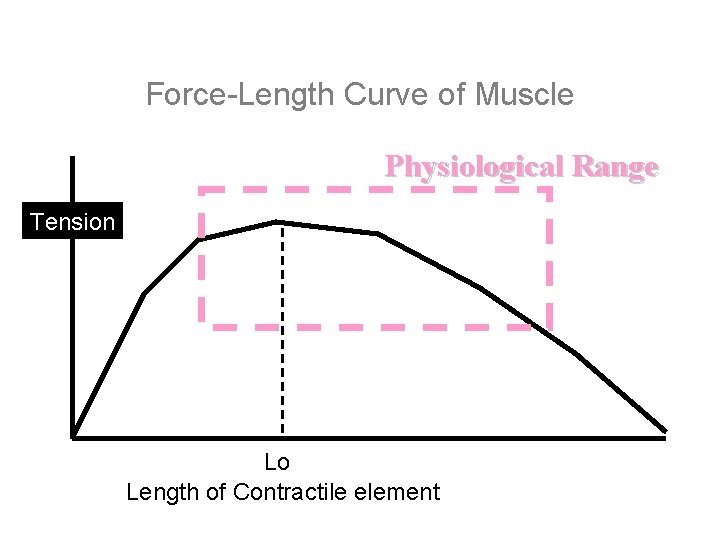
Force-Length Curve of Muscle Physiological Range Tension Lo Length of Contractile element
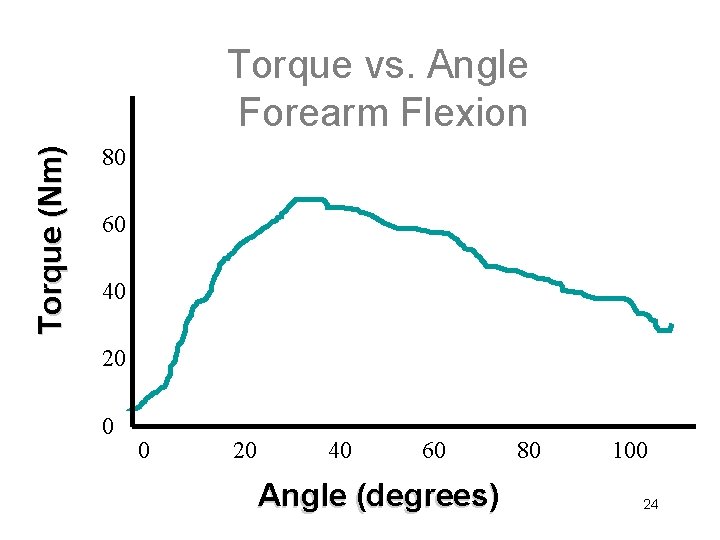
Torque (Nm) Torque vs. Angle Forearm Flexion 80 60 40 20 0 0 20 40 60 Angle (degrees) 80 100 24
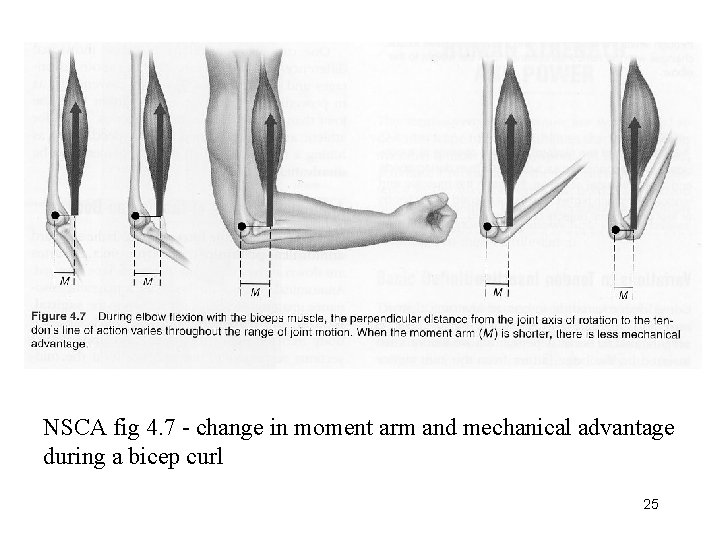
NSCA fig 4. 7 - change in moment arm and mechanical advantage during a bicep curl 25
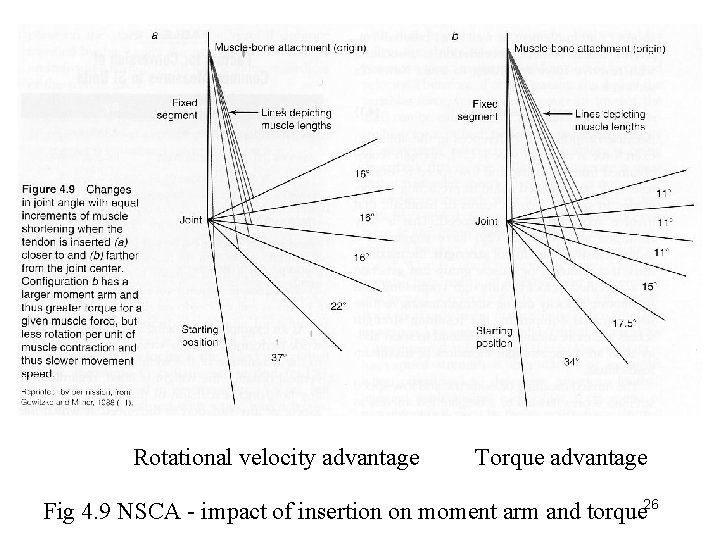
Rotational velocity advantage Torque advantage Fig 4. 9 NSCA - impact of insertion on moment arm and torque 26
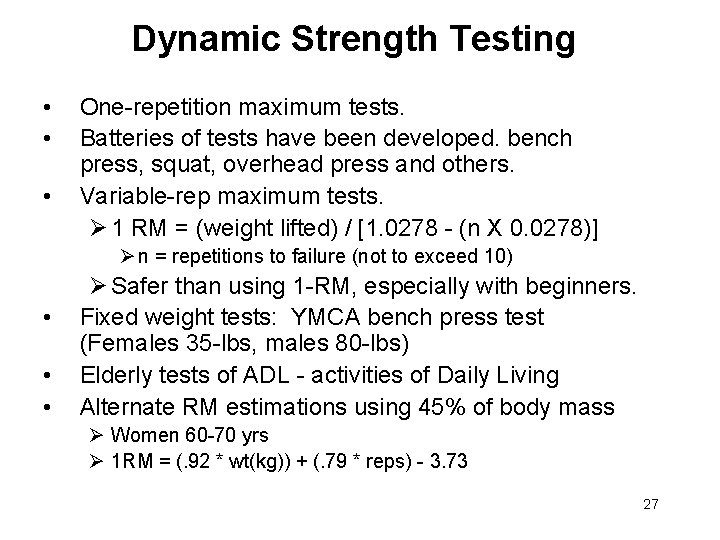
Dynamic Strength Testing • • • One-repetition maximum tests. Batteries of tests have been developed. bench press, squat, overhead press and others. Variable-rep maximum tests. Ø 1 RM = (weight lifted) / [1. 0278 - (n X 0. 0278)] Ø n = repetitions to failure (not to exceed 10) • • • Ø Safer than using 1 -RM, especially with beginners. Fixed weight tests: YMCA bench press test (Females 35 -lbs, males 80 -lbs) Elderly tests of ADL - activities of Daily Living Alternate RM estimations using 45% of body mass Ø Women 60 -70 yrs Ø 1 RM = (. 92 * wt(kg)) + (. 79 * reps) - 3. 73 27
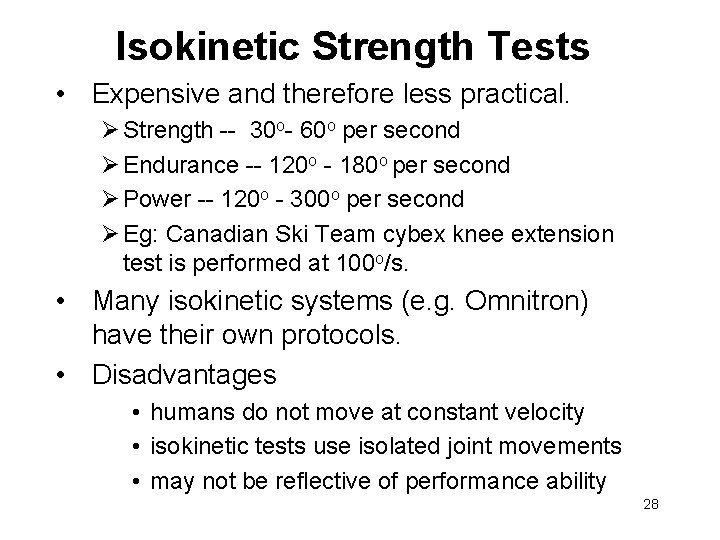
Isokinetic Strength Tests • Expensive and therefore less practical. Ø Strength -- 30 o- 60 o per second Ø Endurance -- 120 o - 180 o per second Ø Power -- 120 o - 300 o per second Ø Eg: Canadian Ski Team cybex knee extension test is performed at 100 o/s. • Many isokinetic systems (e. g. Omnitron) have their own protocols. • Disadvantages • humans do not move at constant velocity • isokinetic tests use isolated joint movements • may not be reflective of performance ability 28
Problems Associated With Muscular Fitness Testing • Strength & endurance are specific to the muscle group, the type and speed of contraction, and the angle being tested (how applicable are isometric tests? ). • Caution should be used in selecting test items to measure muscular strength (often really measuring endurance!). • Most tests of strength & endurance require a maximal effort (motivation? ). 29
Problems Associated With Muscular Fitness Testing (cont. ) • Because strength is related to lean body weight of the individual, the tests should be expressed in relative terms. • Performance on some endurance tests (e. g. chin-ups and push-ups) is highly dependent on the strength and strength to weight ratio of the individual. • There is a lack of up-to-date endurance norms for men and women (especially >25). 30
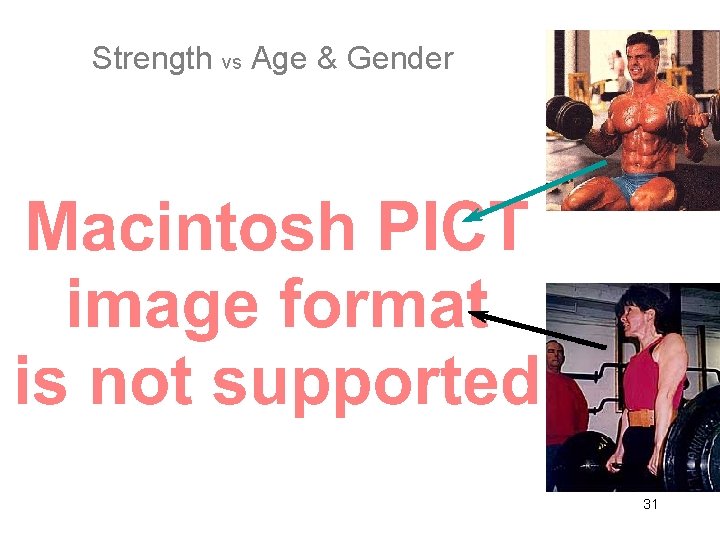
Strength vs Age & Gender 31
Musculoskeletal Health in Older Adults • • • Muscle function is reduced in older adults as a result of aging and inactivity Largest impact on lower limb and trunk extensors lower limb flexors and upper limb muscles are also affected There is a selective loss of Type II muscle fibers and a proportionately larger decrease in power and strength Strength to mass ratio also declines Ability to adapt to a resistance training program is not affected by aging 32
Muscular Strength and Endurance Lab • Preparation Ø Determine % of body weight requirements for weight room portion of lab prior to start of lab session Ø see lab manual 2 Ø Bring proper clothing to perform strength and endurance assessments in both Pipers gym and lab room. Ø Be prepared to travel between these facilities quickly during lab session. • • • Instructions for weight room in lab manual Instructions for lab room in CPAFLA manual Enter all results in log book 33