
Energy Systems and Exercise Chapter 3 Nutrition for

- Slides: 85
Energy Systems and Exercise Chapter 3 Nutrition for Sport and Exercise Dunford & Doyle
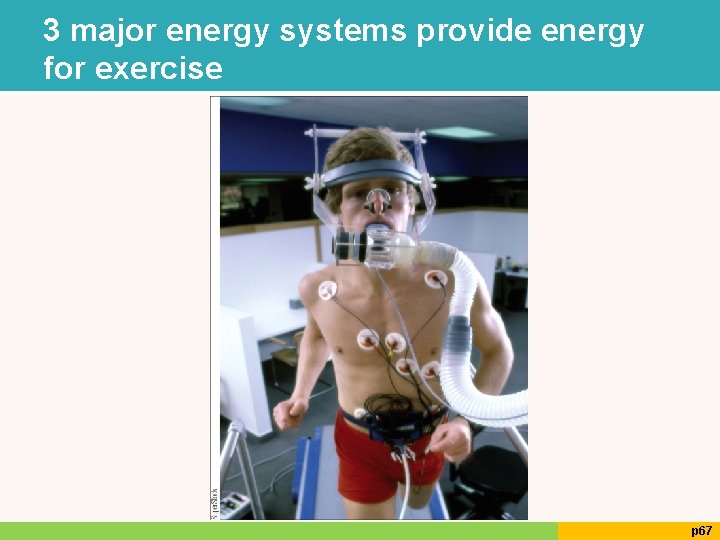
3 major energy systems provide energy for exercise p 67
Learning Objectives § Describe the rephosphorylation of ATP and the general characteristics of the creatine phosphate, anaerobic glycolysis, and oxidative phosphorylation energy systems. § Describe the specific characteristics of the creatine phosphate energy system, and explain how it is used to replace ATP during exercise. § Describe the specific characteristics of the anaerobic glycolysis energy system, and explain how it is used to replace ATP during exercise.
Learning Objectives § Describe the specific characteristics of the oxidative phosphorylation (aerobic) energy system and explain how it is used to replace ATP during exercise. § Explain the process of aerobic metabolism of carbohydrates, fats, and proteins (amino acids), and the concept of measuring fuel utilization with the respiratory exchange ratio, and describe the factors that influence fuel utilization.
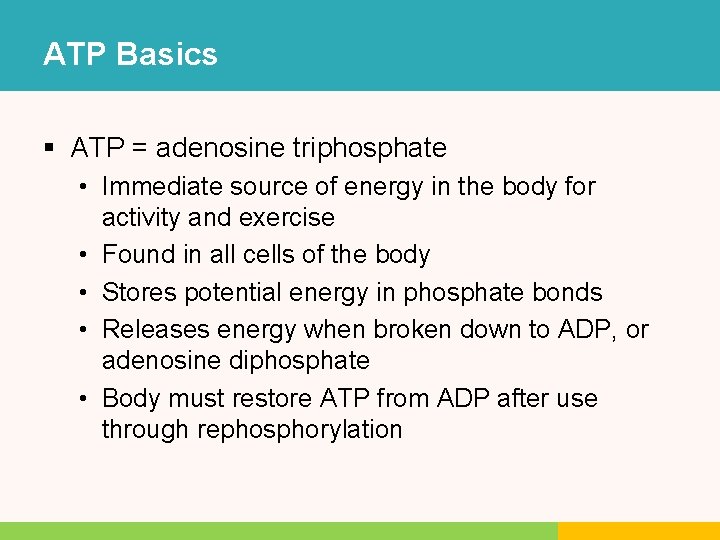
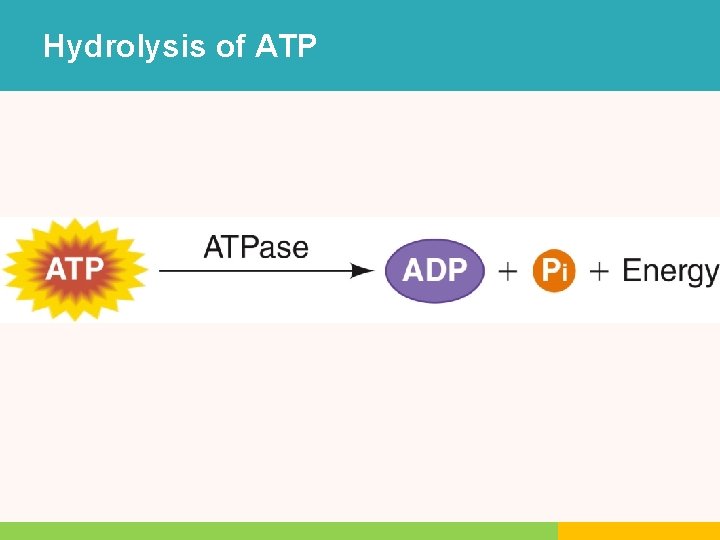
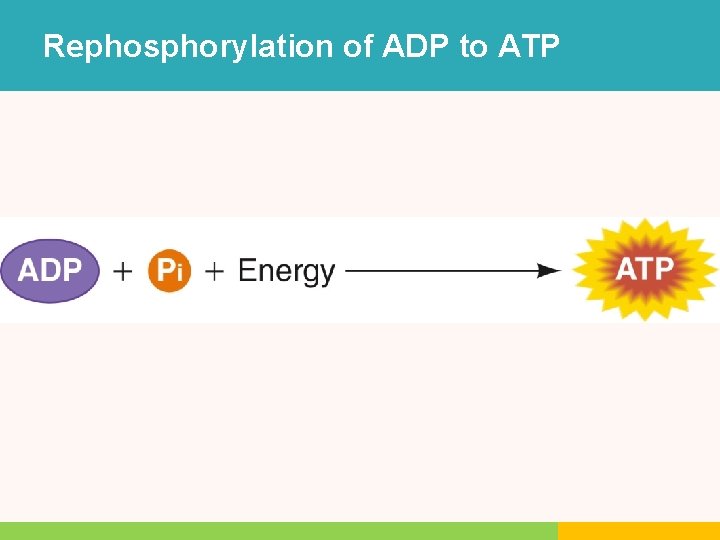
ATP Basics § ATP = adenosine triphosphate • Immediate source of energy in the body for activity and exercise • Found in all cells of the body • Stores potential energy in phosphate bonds • Releases energy when broken down to ADP, or adenosine diphosphate • Body must restore ATP from ADP after use through rephosphorylation
Hydrolysis of ATP
Rephosphorylation of ADP to ATP
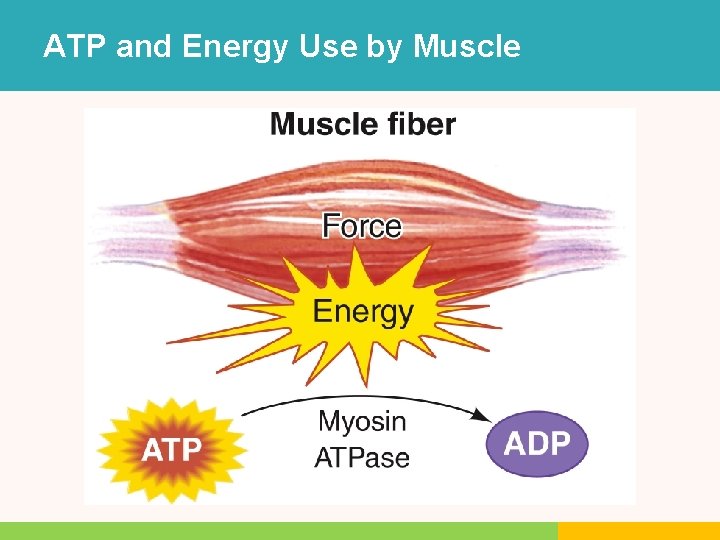
ATP and Energy Use by Muscle
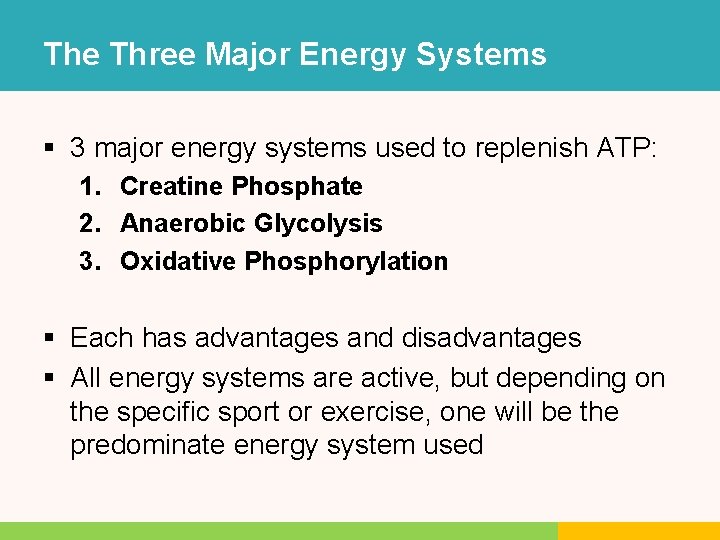
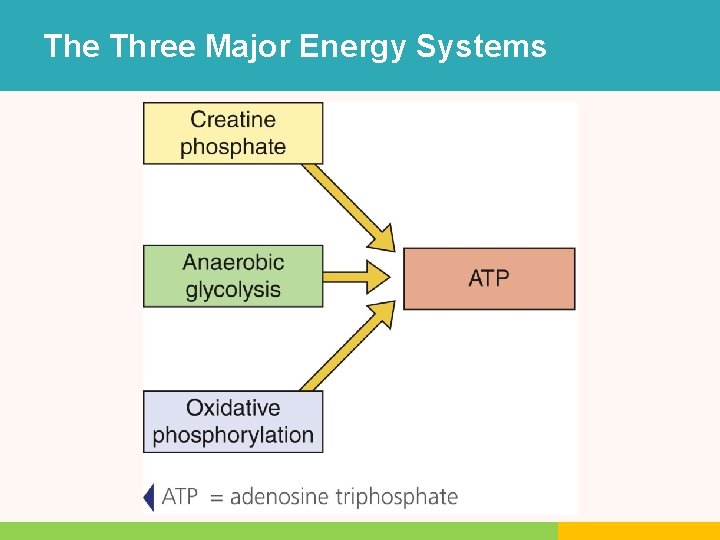
The Three Major Energy Systems § 3 major energy systems used to replenish ATP: 1. Creatine Phosphate 2. Anaerobic Glycolysis 3. Oxidative Phosphorylation § Each has advantages and disadvantages § All energy systems are active, but depending on the specific sport or exercise, one will be the predominate energy system used
The Three Major Energy Systems
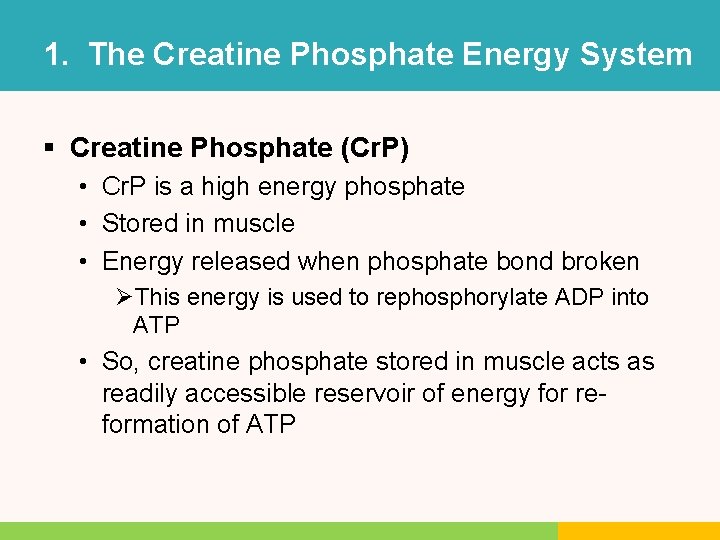
1. The Creatine Phosphate Energy System § Creatine Phosphate (Cr. P) • Cr. P is a high energy phosphate • Stored in muscle • Energy released when phosphate bond broken ØThis energy is used to rephosphorylate ADP into ATP • So, creatine phosphate stored in muscle acts as readily accessible reservoir of energy for reformation of ATP
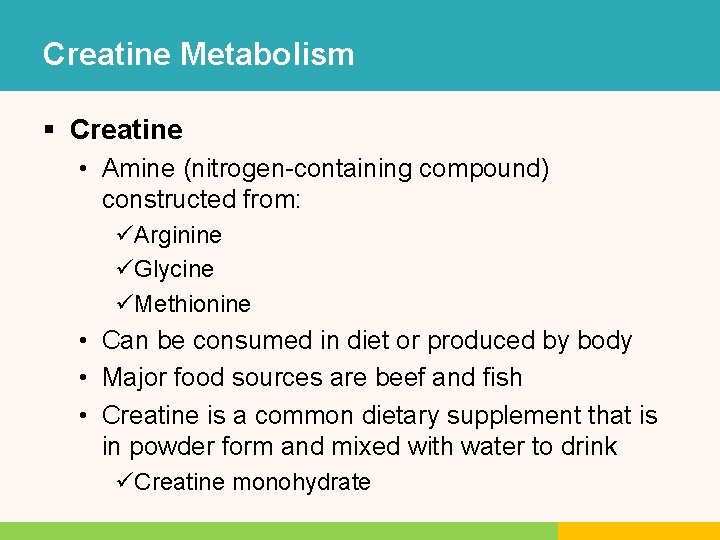
Creatine Metabolism § Creatine • Amine (nitrogen-containing compound) constructed from: üArginine üGlycine üMethionine • Can be consumed in diet or produced by body • Major food sources are beef and fish • Creatine is a common dietary supplement that is in powder form and mixed with water to drink üCreatine monohydrate
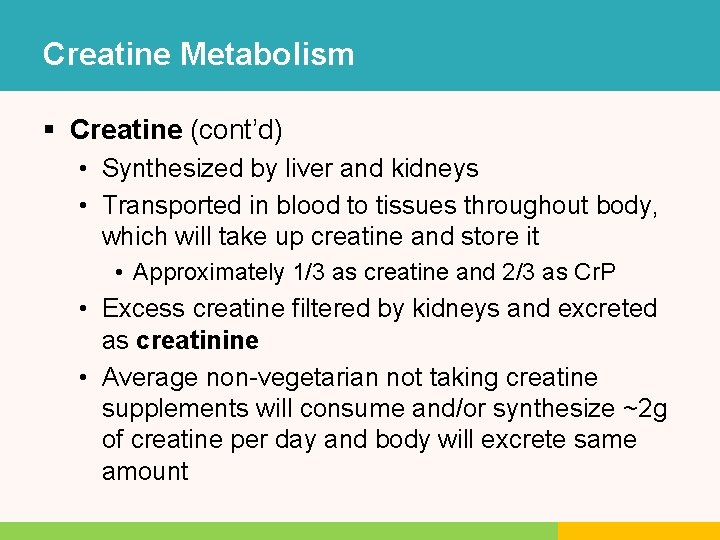
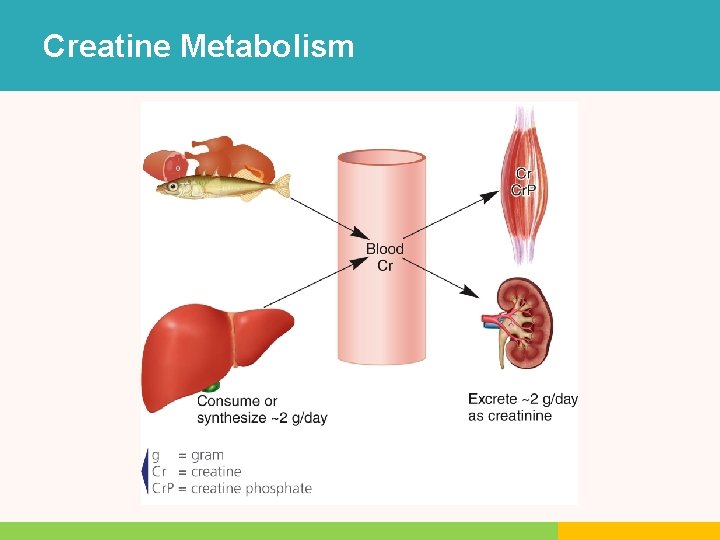
Creatine Metabolism § Creatine (cont’d) • Synthesized by liver and kidneys • Transported in blood to tissues throughout body, which will take up creatine and store it • Approximately 1/3 as creatine and 2/3 as Cr. P • Excess creatine filtered by kidneys and excreted as creatinine • Average non-vegetarian not taking creatine supplements will consume and/or synthesize ~2 g of creatine per day and body will excrete same amount
Creatine Metabolism
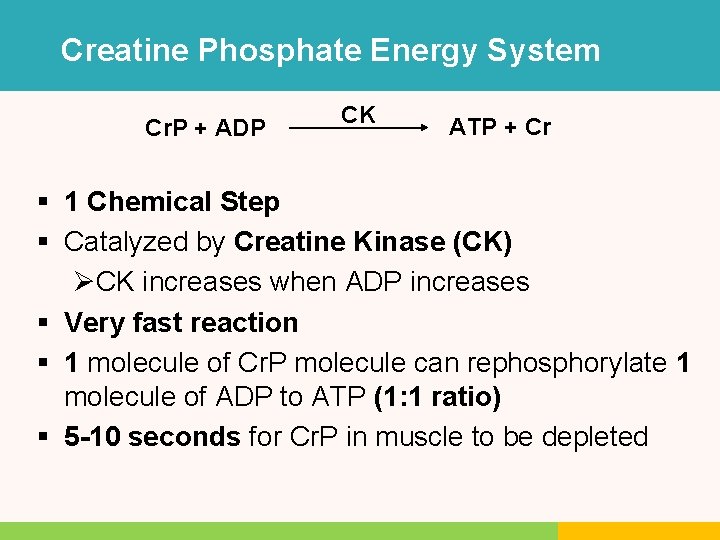
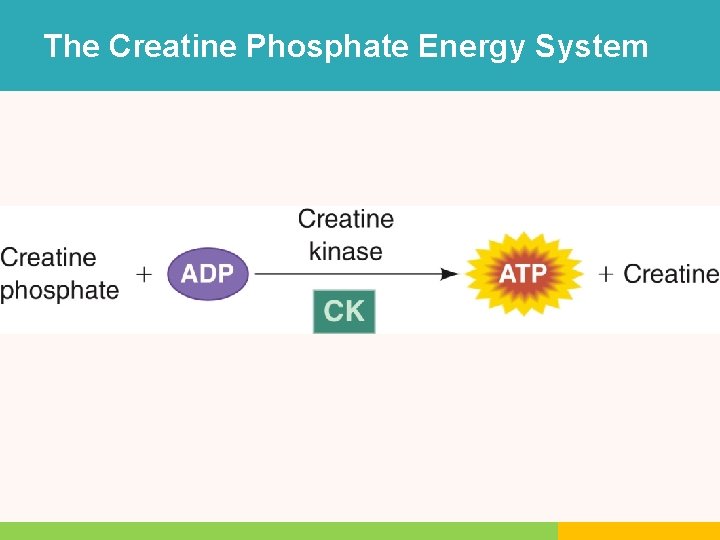
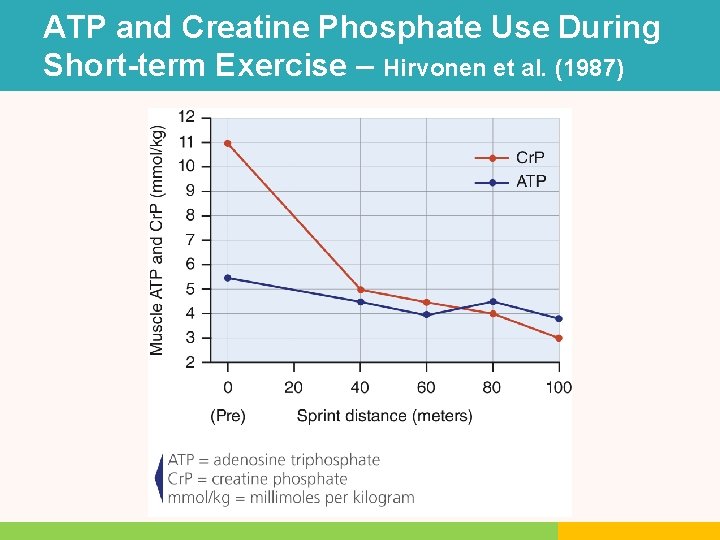
Creatine Phosphate Energy System Cr. P + ADP CK ATP + Cr § 1 Chemical Step § Catalyzed by Creatine Kinase (CK) ØCK increases when ADP increases § Very fast reaction § 1 molecule of Cr. P molecule can rephosphorylate 1 molecule of ADP to ATP (1: 1 ratio) § 5 -10 seconds for Cr. P in muscle to be depleted
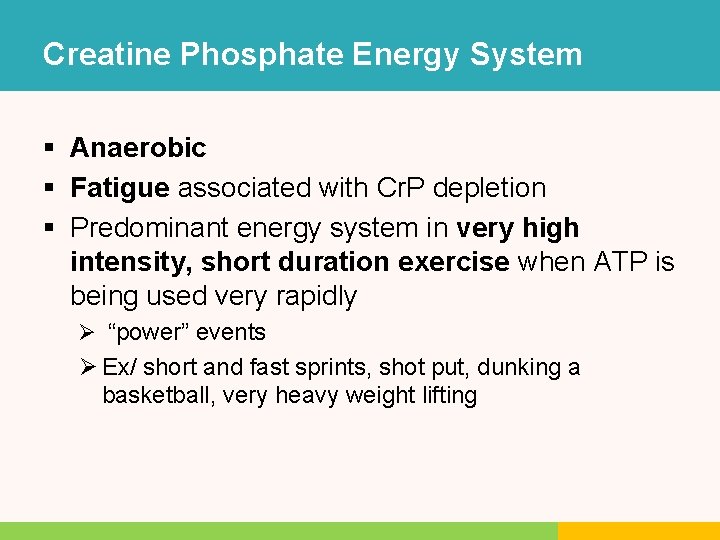
Creatine Phosphate Energy System § Anaerobic § Fatigue associated with Cr. P depletion § Predominant energy system in very high intensity, short duration exercise when ATP is being used very rapidly Ø “power” events Ø Ex/ short and fast sprints, shot put, dunking a basketball, very heavy weight lifting
The Creatine Phosphate Energy System
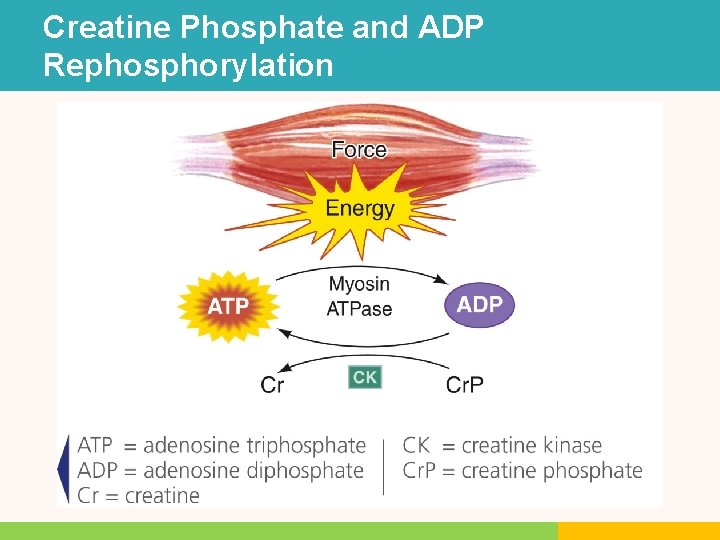
Creatine Phosphate and ADP Rephosphorylation
ATP and Creatine Phosphate Use During Short-term Exercise – Hirvonen et al. (1987)
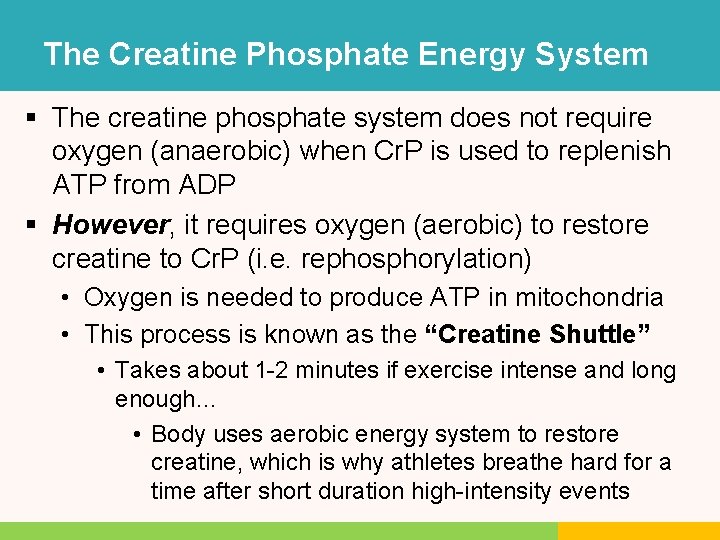
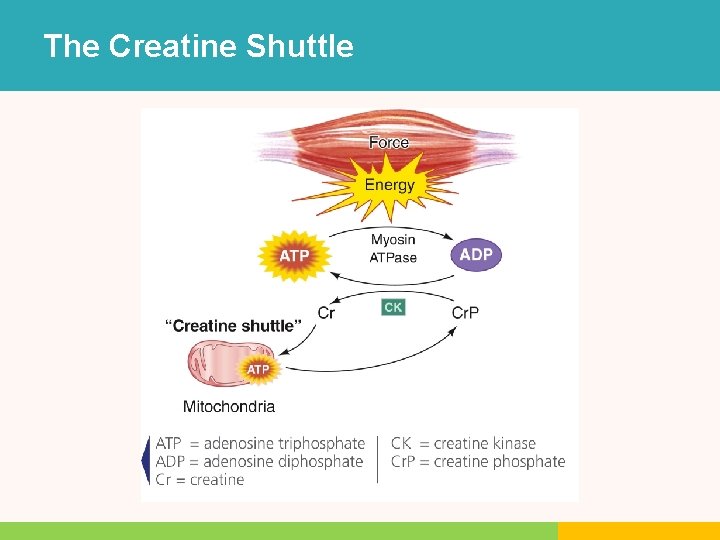
The Creatine Phosphate Energy System § The creatine phosphate system does not require oxygen (anaerobic) when Cr. P is used to replenish ATP from ADP § However, it requires oxygen (aerobic) to restore creatine to Cr. P (i. e. rephosphorylation) • Oxygen is needed to produce ATP in mitochondria • This process is known as the “Creatine Shuttle” • Takes about 1 -2 minutes if exercise intense and long enough… • Body uses aerobic energy system to restore creatine, which is why athletes breathe hard for a time after short duration high-intensity events
The Creatine Shuttle
Question… § So, is the creatine phosphate system completely anaerobic? § NO! – oxygen is required to recover Cr. P from Cr
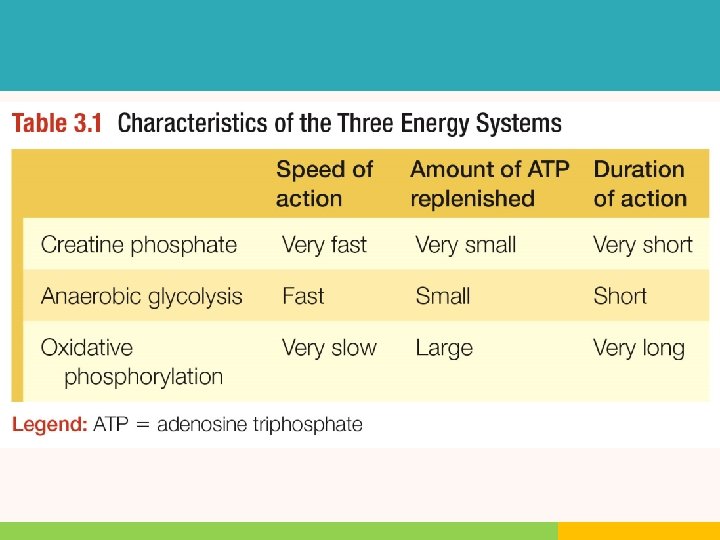
The Creatine Phosphate Energy System § Advantages: • Very rapid way to replace ATP § Disadvantages: • Cr. P stored in very limited amounts in the muscle, can be depleted rapidly, and has very short duration
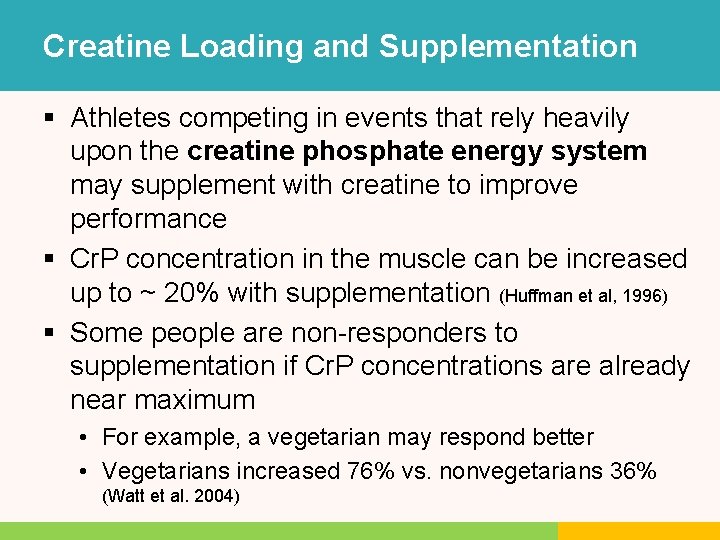
Creatine Loading and Supplementation § Athletes competing in events that rely heavily upon the creatine phosphate energy system may supplement with creatine to improve performance § Cr. P concentration in the muscle can be increased up to ~ 20% with supplementation (Huffman et al, 1996) § Some people are non-responders to supplementation if Cr. P concentrations are already near maximum • For example, a vegetarian may respond better • Vegetarians increased 76% vs. nonvegetarians 36% (Watt et al. 2004)
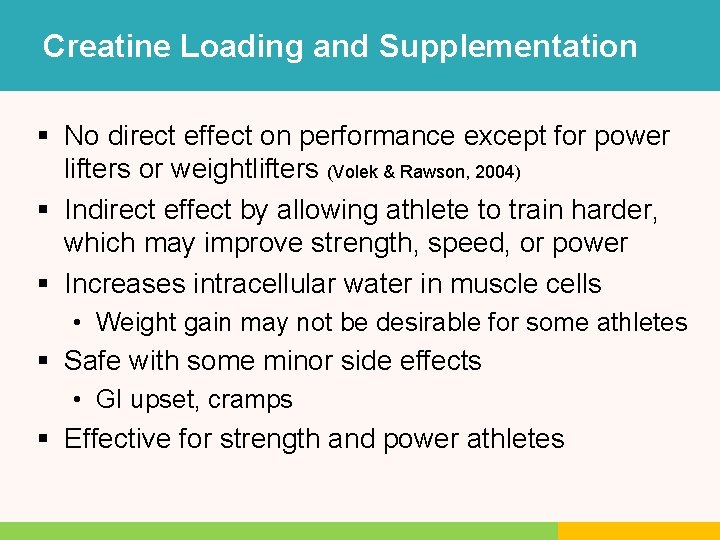
Creatine Loading and Supplementation § No direct effect on performance except for power lifters or weightlifters (Volek & Rawson, 2004) § Indirect effect by allowing athlete to train harder, which may improve strength, speed, or power § Increases intracellular water in muscle cells • Weight gain may not be desirable for some athletes § Safe with some minor side effects • GI upset, cramps § Effective for strength and power athletes
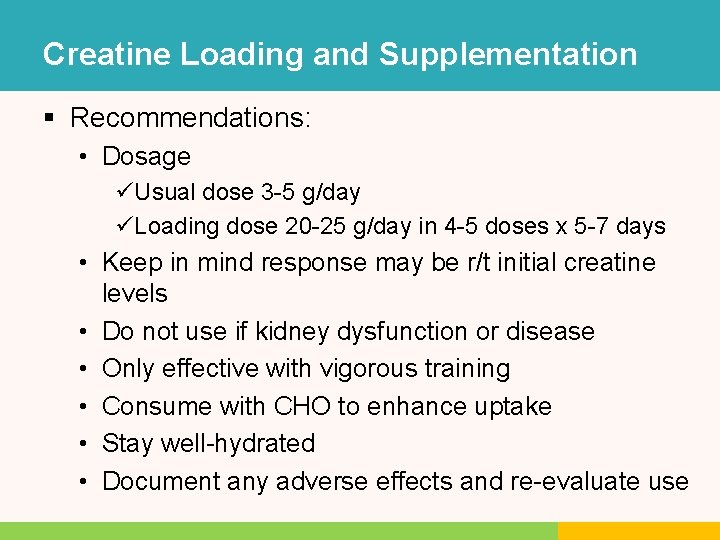
Creatine Loading and Supplementation § Recommendations: • Dosage üUsual dose 3 -5 g/day üLoading dose 20 -25 g/day in 4 -5 doses x 5 -7 days • Keep in mind response may be r/t initial creatine levels • Do not use if kidney dysfunction or disease • Only effective with vigorous training • Consume with CHO to enhance uptake • Stay well-hydrated • Document any adverse effects and re-evaluate use
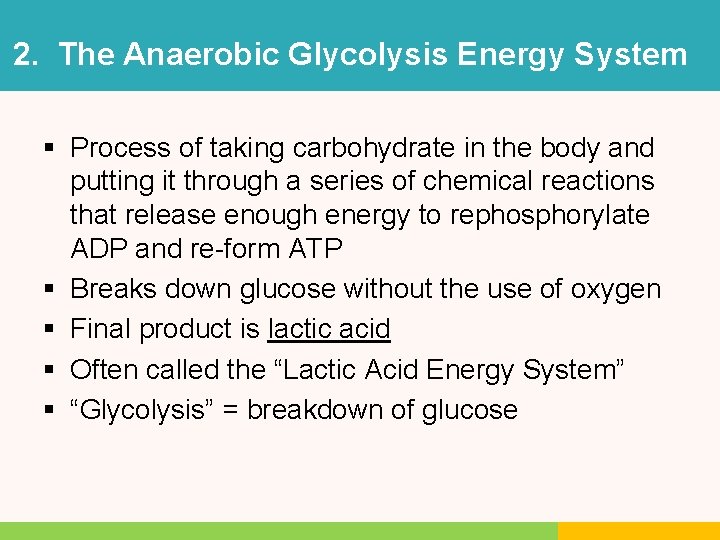
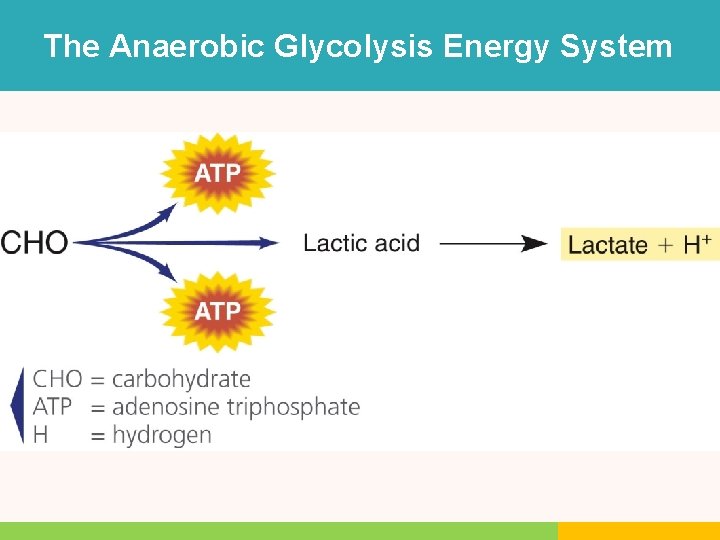
2. The Anaerobic Glycolysis Energy System § Process of taking carbohydrate in the body and putting it through a series of chemical reactions that release enough energy to rephosphorylate ADP and re-form ATP § Breaks down glucose without the use of oxygen § Final product is lactic acid § Often called the “Lactic Acid Energy System” § “Glycolysis” = breakdown of glucose
The Anaerobic Glycolysis Energy System
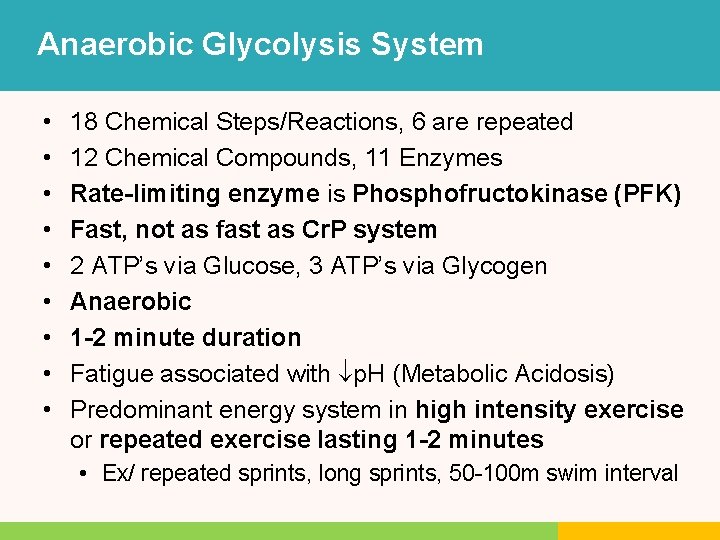
Anaerobic Glycolysis System • • • 18 Chemical Steps/Reactions, 6 are repeated 12 Chemical Compounds, 11 Enzymes Rate-limiting enzyme is Phosphofructokinase (PFK) Fast, not as fast as Cr. P system 2 ATP’s via Glucose, 3 ATP’s via Glycogen Anaerobic 1 -2 minute duration Fatigue associated with p. H (Metabolic Acidosis) Predominant energy system in high intensity exercise or repeated exercise lasting 1 -2 minutes • Ex/ repeated sprints, long sprints, 50 -100 m swim interval
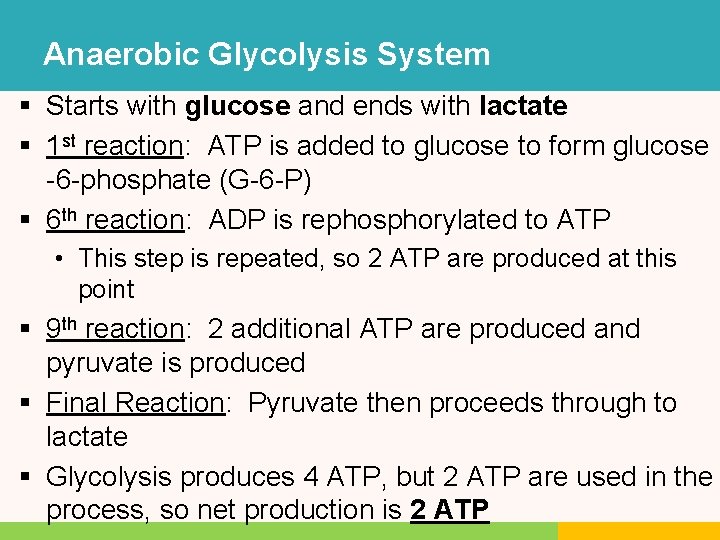
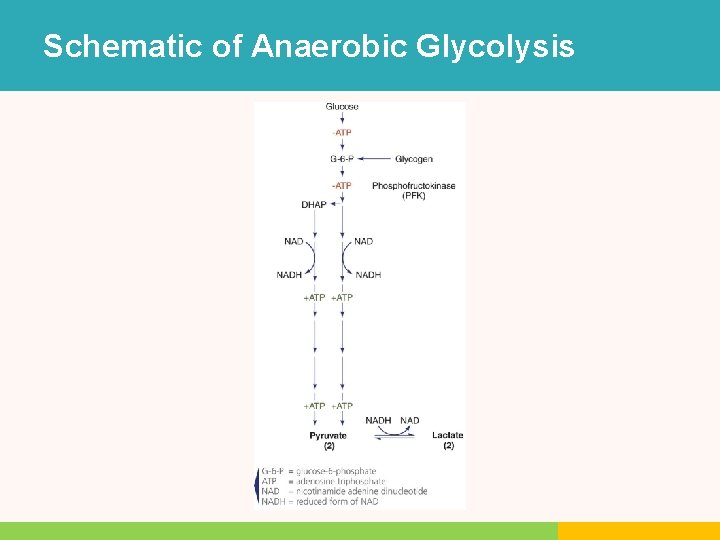
Anaerobic Glycolysis System § Starts with glucose and ends with lactate § 1 st reaction: ATP is added to glucose to form glucose -6 -phosphate (G-6 -P) § 6 th reaction: ADP is rephosphorylated to ATP • This step is repeated, so 2 ATP are produced at this point § 9 th reaction: 2 additional ATP are produced and pyruvate is produced § Final Reaction: Pyruvate then proceeds through to lactate § Glycolysis produces 4 ATP, but 2 ATP are used in the process, so net production is 2 ATP
Schematic of Anaerobic Glycolysis
Anaerobic Glycolysis System § Glucose – a sugar found in food and in the blood § Glycolysis – metabolic breakdown of glucose § Glycogen – large molecule composed of many glucose molecules linked together • Stored in liver and skeletal muscle • Broken down directly into G-6 -P without the use of an ATP • Net ATP of 3 produced if glycogen used, since only 1 ATP is used while 4 are produced § Glycogenolysis – metabolic breakdown of glycogen
Anaerobic Glycolysis System § Advantage: Uses blood glucose and stored glycogen, so is rarely limited by depleted energy stores § Disadvantage: Increasing acidity, or decline in p. H w/in the muscle cell that occurs when anaerobic glycolysis is used at a high rate • Metabolic acidosis • If acidosis occurs in exercising muscle, the drop in p. H can decrease activity of key metabolic enzymes, interfere with force production and cause muscle fatigue ØThis occurs in 1 -2 minutes
Anaerobic Glycolysis System § Uses only carbohydrate as fuel source § Becomes predominant energy system after 5 -10 seconds when Cr. P system reaches its limit § Types of exercise: • Long sprints, such as 400 -meter sprint • Repeated high intensity sprints, such as intermittent sprints by a soccer or basketball player • Repeated high-force activities, such as 10 -15 repetitions of weight lifting • Regular/repeated intervals, such as 50 -100 meter swimming intervals
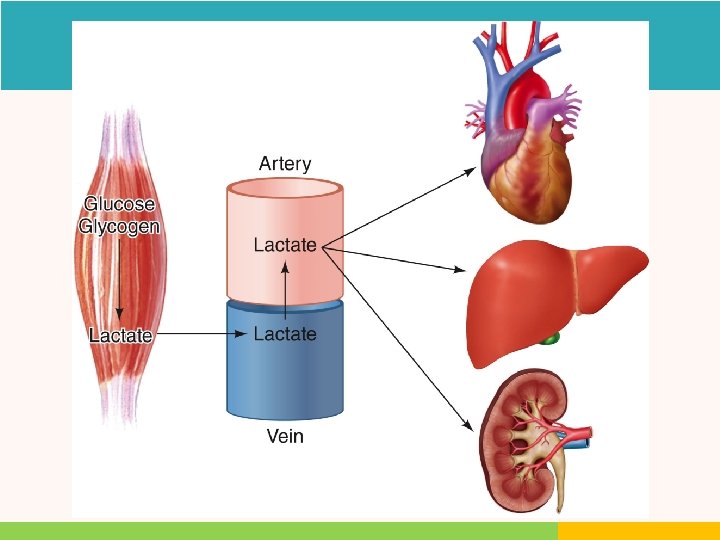
Anaerobic Glycolysis System § During anaerobic glycolysis, lactate concentration increases § Lactate is transported out of exercising muscle into the venous circulation and is then distributed throughout body via arterial circulation § When concentrations of lactate are high, lactate can be converted back to pyruvate • Pyruvate can be converted to lactate anaerobically • Pyruvate can be taken into mitochondria of highly aerobic tissues (liver, muscle, heart) and be used to produce ATP via oxidative phosphorylation
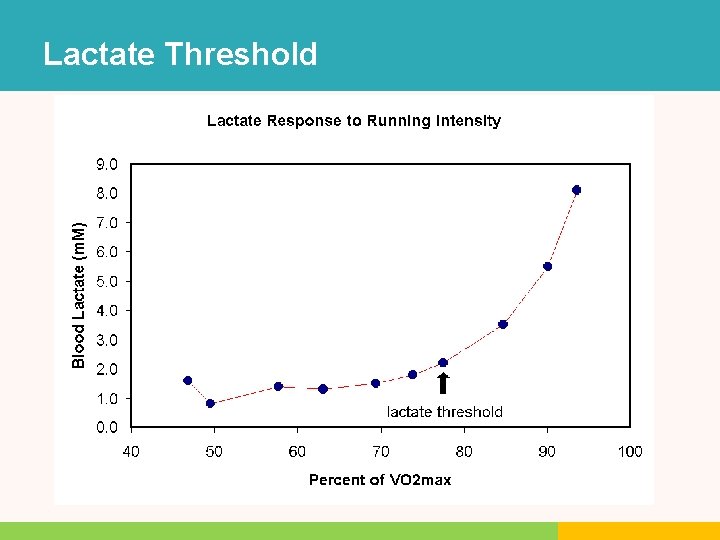
Lactate Threshold § Lactate Threshold – the level of exercise intensity in which lactate production has increased to the point where it has overwhelmed the body’s lactate removal mechanisms § Significance – it is associated with an exercise intensity that can be sustained for long periods during endurance exercises § Ex/ LT correlates highly with the race pace for a distance runner • A pace too much faster results in fatigue and poor results • A pace too much slower results in less than optimal performance
Lactate Threshold § As exercise intensity and O 2 consumption increase, initially the concentration of blood lactate does not change much b/c it is being removed from blood by aerobic tissues and oxidized as fast as the exercising muscles are releasing lactate into the blood § However, as exercise increases in intensity, the production of lactate exceeds its rate of removal and the lactate concentration continually increases
Lactate Threshold
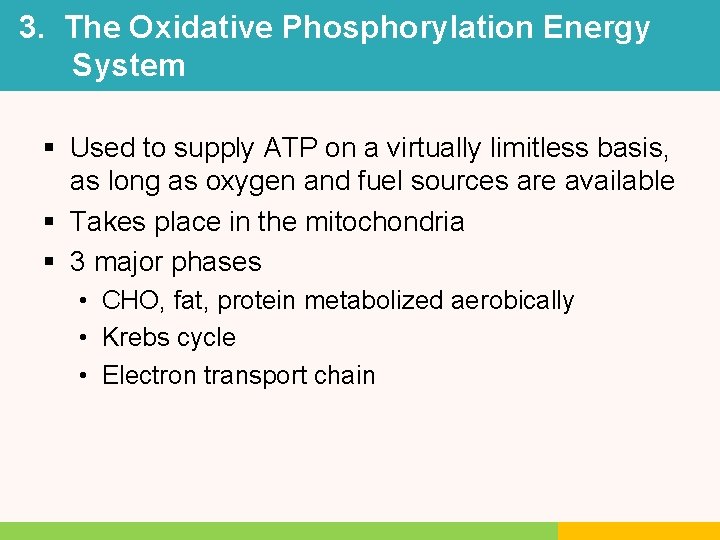
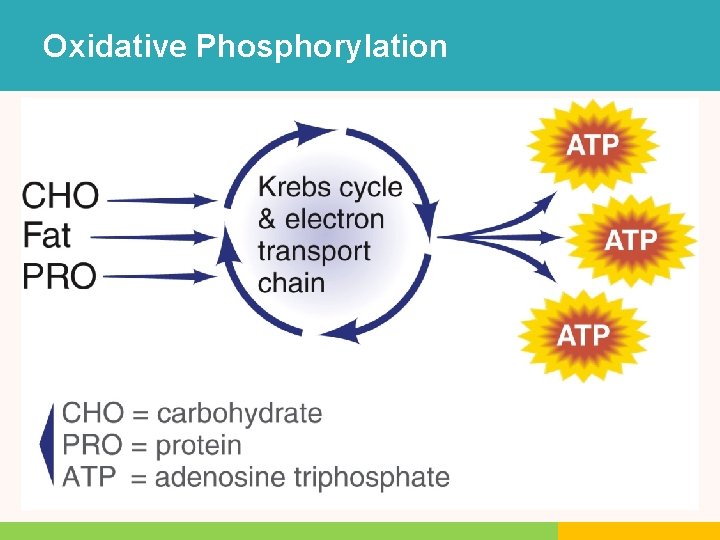
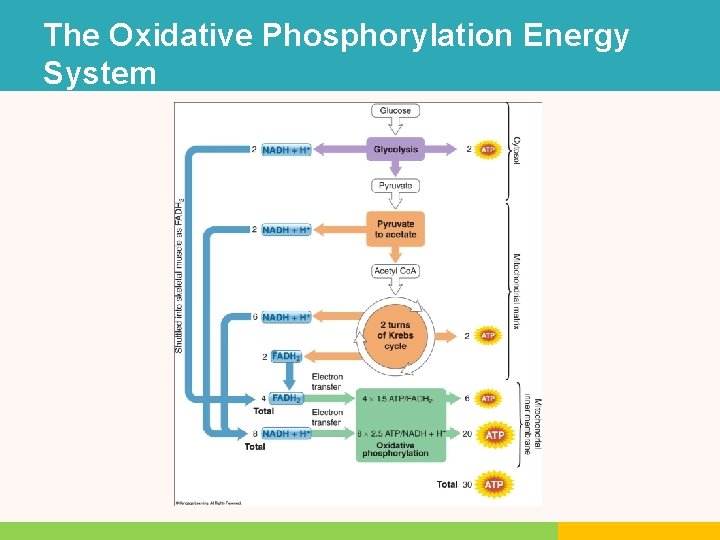
3. The Oxidative Phosphorylation Energy System § Used to supply ATP on a virtually limitless basis, as long as oxygen and fuel sources are available § Takes place in the mitochondria § 3 major phases • CHO, fat, protein metabolized aerobically • Krebs cycle • Electron transport chain
Oxidative Phosphorylation
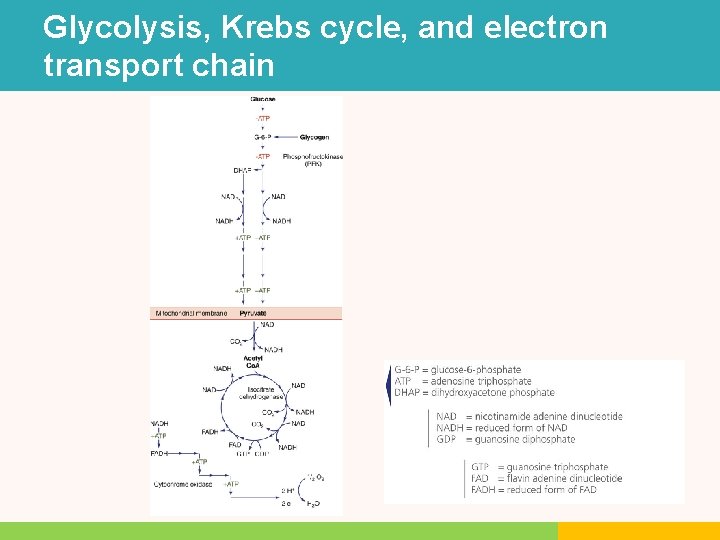
Glycolysis, Krebs cycle, and electron transport chain
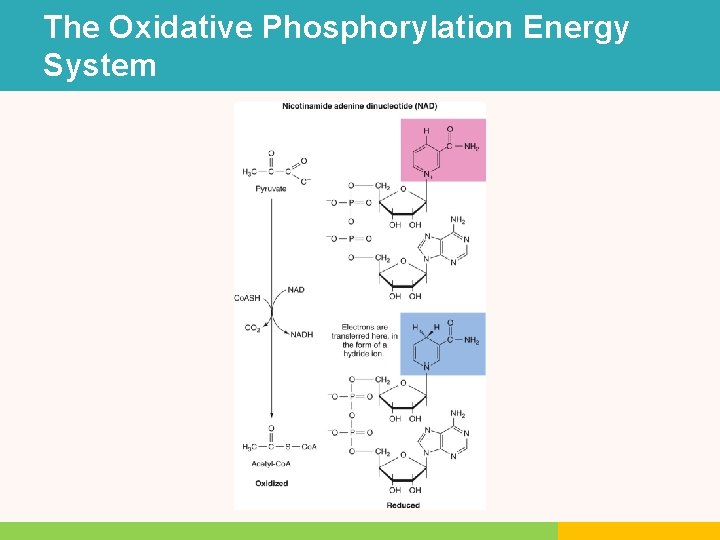
The Oxidative Phosphorylation Energy System
The Oxidative Phosphorylation Energy System
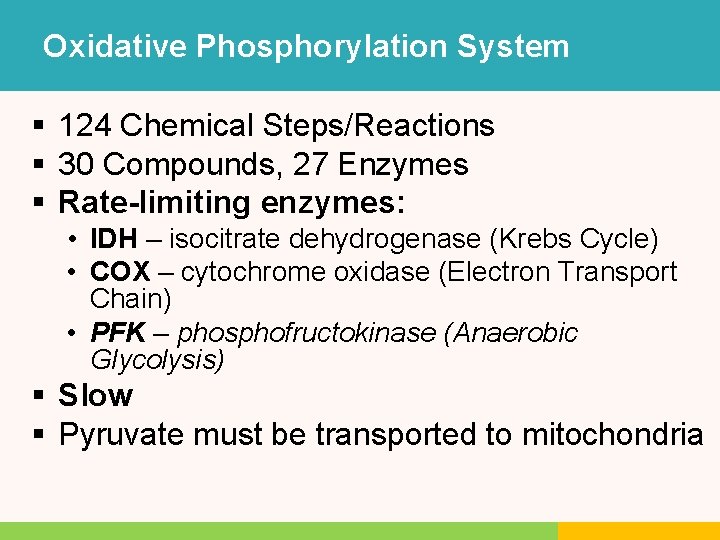
Oxidative Phosphorylation System § 124 Chemical Steps/Reactions § 30 Compounds, 27 Enzymes § Rate-limiting enzymes: • IDH – isocitrate dehydrogenase (Krebs Cycle) • COX – cytochrome oxidase (Electron Transport Chain) • PFK – phosphofructokinase (Anaerobic Glycolysis) § Slow § Pyruvate must be transported to mitochondria
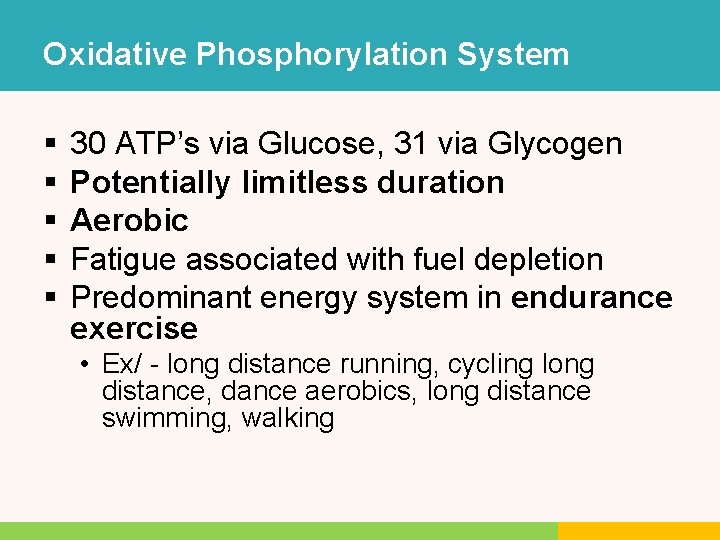
Oxidative Phosphorylation System § § § 30 ATP’s via Glucose, 31 via Glycogen Potentially limitless duration Aerobic Fatigue associated with fuel depletion Predominant energy system in endurance exercise • Ex/ - long distance running, cycling long distance, dance aerobics, long distance swimming, walking
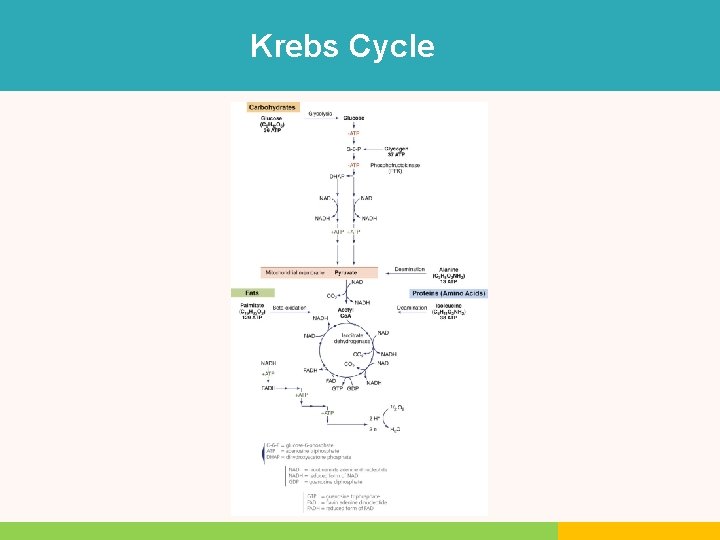
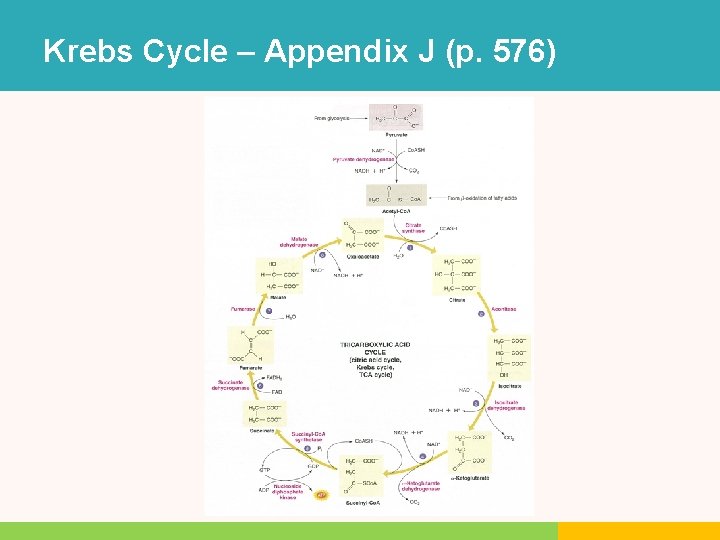
Krebs Cycle
Krebs Cycle – Appendix J (p. 576)
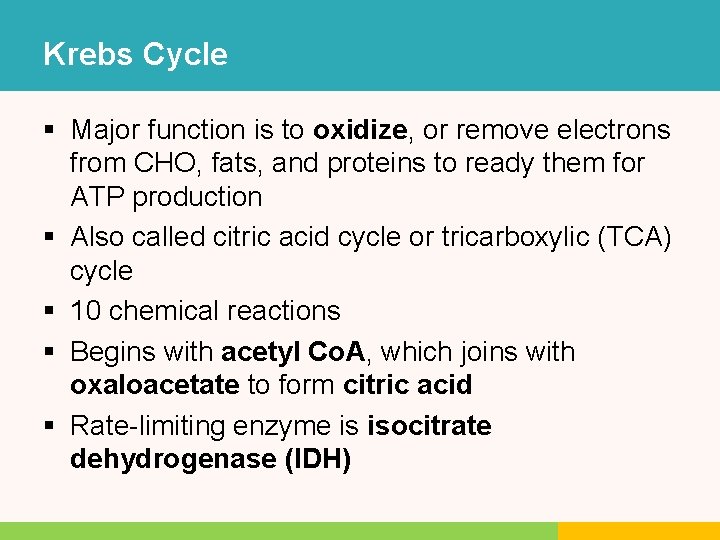
Krebs Cycle § Major function is to oxidize, or remove electrons from CHO, fats, and proteins to ready them for ATP production § Also called citric acid cycle or tricarboxylic (TCA) cycle § 10 chemical reactions § Begins with acetyl Co. A, which joins with oxaloacetate to form citric acid § Rate-limiting enzyme is isocitrate dehydrogenase (IDH)
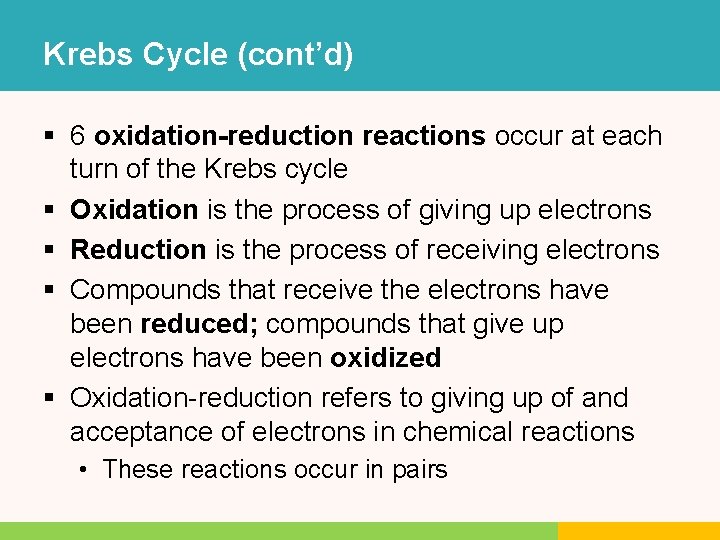
Krebs Cycle (cont’d) § 6 oxidation-reduction reactions occur at each turn of the Krebs cycle § Oxidation is the process of giving up electrons § Reduction is the process of receiving electrons § Compounds that receive the electrons have been reduced; compounds that give up electrons have been oxidized § Oxidation-reduction refers to giving up of and acceptance of electrons in chemical reactions • These reactions occur in pairs
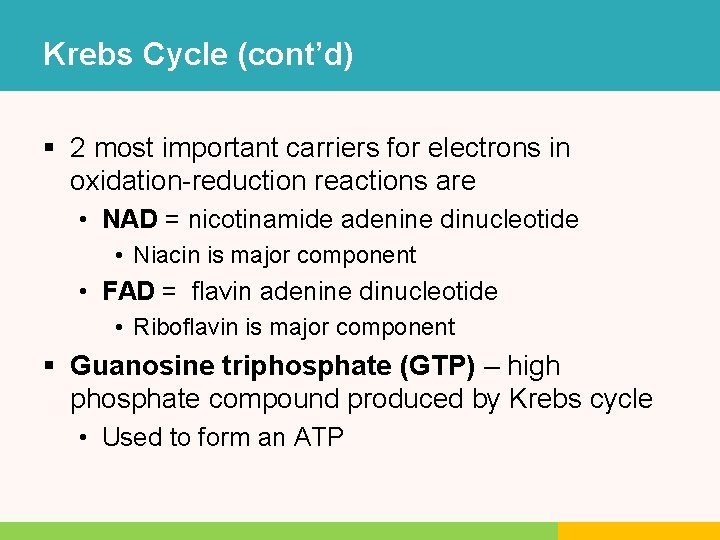
Krebs Cycle (cont’d) § 2 most important carriers for electrons in oxidation-reduction reactions are • NAD = nicotinamide adenine dinucleotide • Niacin is major component • FAD = flavin adenine dinucleotide • Riboflavin is major component § Guanosine triphosphate (GTP) – high phosphate compound produced by Krebs cycle • Used to form an ATP
Spotlight on Free Radicals… • Free radicals are highly reactive molecules with an unpaired electron, also known as reactive oxygen species (ROS) • Occur due to uncoupling of oxidation-reduction reactions • Normal part of oxidative phosphorylation • If antioxidant systems are overwhelmed tissue damage may occur (oxidative stress) • Excess oxidative stress associated with aging and some chronic diseases
Electron Transport Chain § Primary function is to shuttle electrons from NADH and FADH to rephosphorylate ATP § Takes place w/in inner membrane of mitochondria § Rate-limiting enzyme is cytochrome oxidase (CO) § In skeletal muscle, electrons are transferred into mitochondria via FAD; while other tissues electrons are transferred via NAD § Final electron acceptor is oxygen, therefore aerobic energy system
Oxidative Phosphorylation § Advantages: • Supplies ATP on a virtually limitless basis, as long as oxygen and fuel sources are available • Can produce many ATP § Disadvantages: • Reactions are very slow and are dependent upon provision of oxygen
Application: Which Energy System? 1. A baseball player hits a double and sprints from home plate to second base… 2. A soccer midfielder runs back and forth alternately playing offense and defense as the teams change possession of the ball… 3. A triathlete completes the Hawaii Ironman Triathlon… 4. A track athlete runs a 1, 500 meter race… 5. An Olympic swimmer swims in a 200 meter freestyle race…
Fats § Triglycerides are the major storage form of fat • Made up of 1 glycerol molecule and 3 fatty acid chains § When fats are needed for energy source… • Triglycerides are broken down via lipolysis into 3 fatty acid chains and glycerol • Fatty acids are then released from adipocytes (fat cells) into blood for transportation throughout body • Free fatty acids (FFAs) bound to protein are taken up by various tissues, such as muscle • Then the fatty acids are transported to the mitochondria for aerobic metabolism
Fats § Before entering Krebs cycle, fatty acids must pass through another series of reactions called beta-oxidation § Beta-oxidation – Process by which fats are metabolized aerobically by oxidation of fatty acids • Occurs in mitochondria • Involves 4 chemical steps • 2 carbon segments are removed from fatty acid chains and converted to acetyl Co. A • Then acetyl Co. A can enter Krebs cycle and be oxidized
Fats § Advantage of fat metabolism is the large number of ATP yielded • Ex/ Complete metabolism of palmitate (fatty acid) results in 129 ATP produced § Disadvantage of fat metabolism is the increased number of steps required and the amount of oxygen needed for aerobic metabolism (CH 6 will focus on fat metabolism)
Proteins § Proteins are not “stored” as energy source like CHO (glycogen) and fat (triglycerides) § Proteins are typically incorporated into functional (enzymes) or structural (muscle) components of the body § Proteins can be metabolized aerobically once amino or nitrogen group as been removed • Transamination – nitrogen group transferred to another compound • Deamination – nitrogen group removed completely and eliminated as urea in the urine
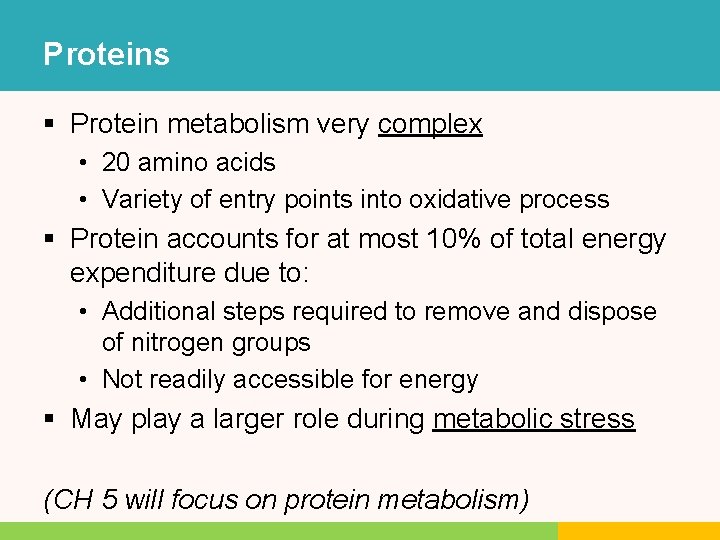
Proteins § Protein metabolism very complex • 20 amino acids • Variety of entry points into oxidative process § Protein accounts for at most 10% of total energy expenditure due to: • Additional steps required to remove and dispose of nitrogen groups • Not readily accessible for energy § May play a larger role during metabolic stress (CH 5 will focus on protein metabolism)
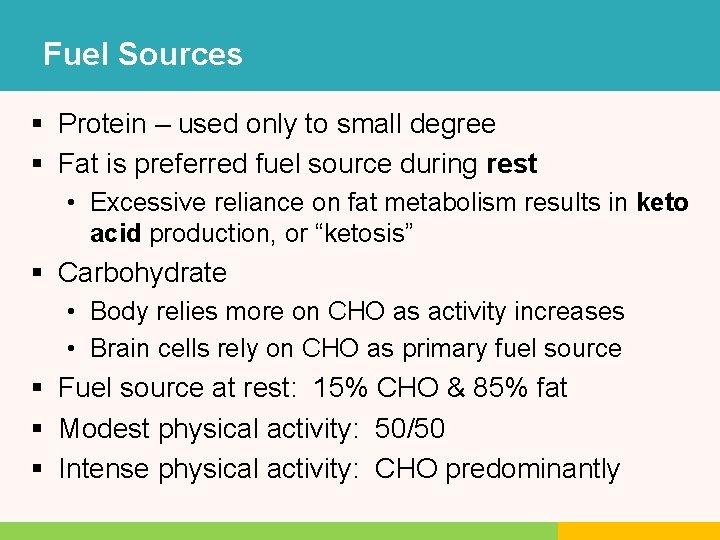
Fuel Sources § Protein – used only to small degree § Fat is preferred fuel source during rest • Excessive reliance on fat metabolism results in keto acid production, or “ketosis” § Carbohydrate • Body relies more on CHO as activity increases • Brain cells rely on CHO as primary fuel source § Fuel source at rest: 15% CHO & 85% fat § Modest physical activity: 50/50 § Intense physical activity: CHO predominantly
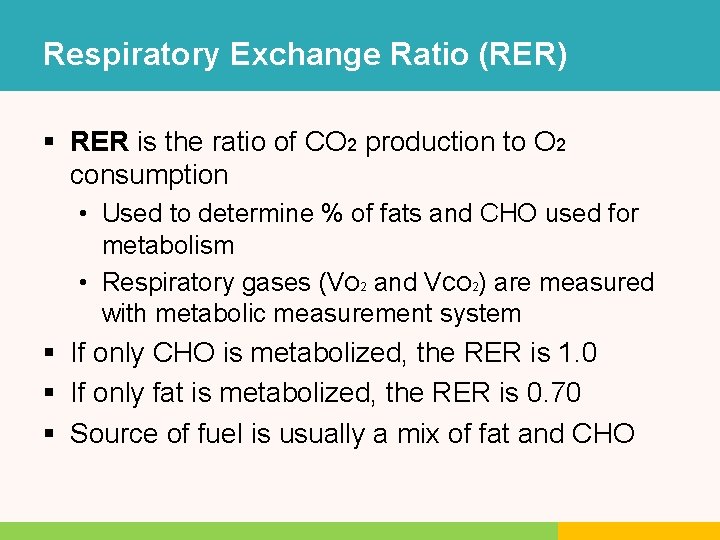
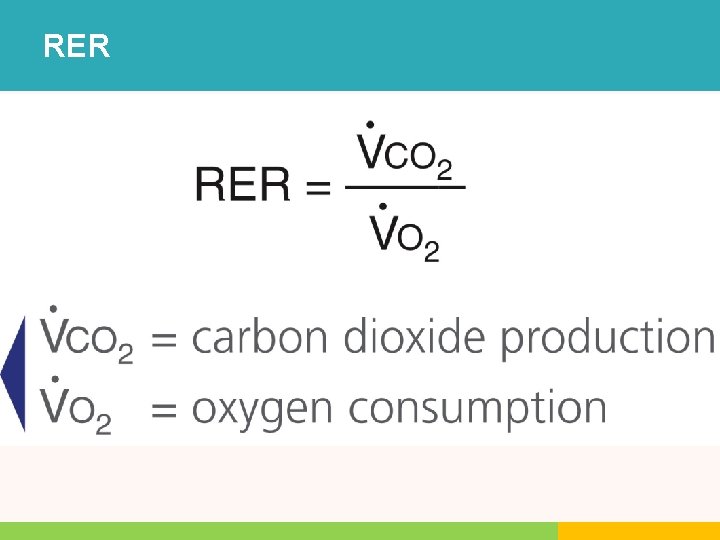
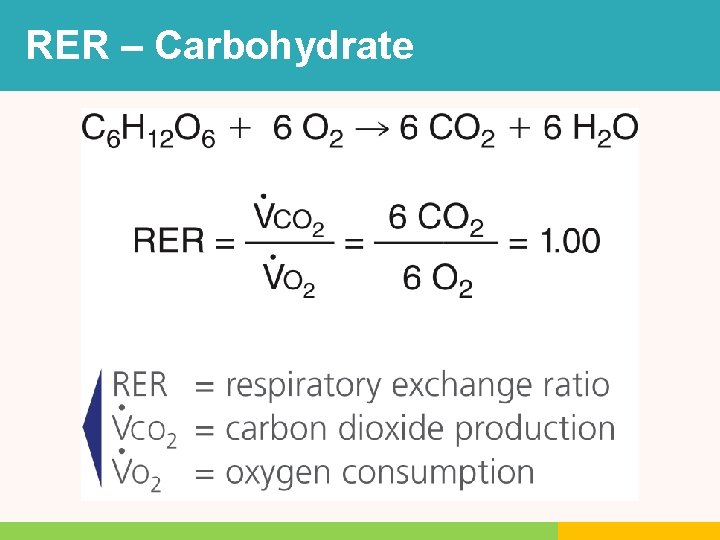
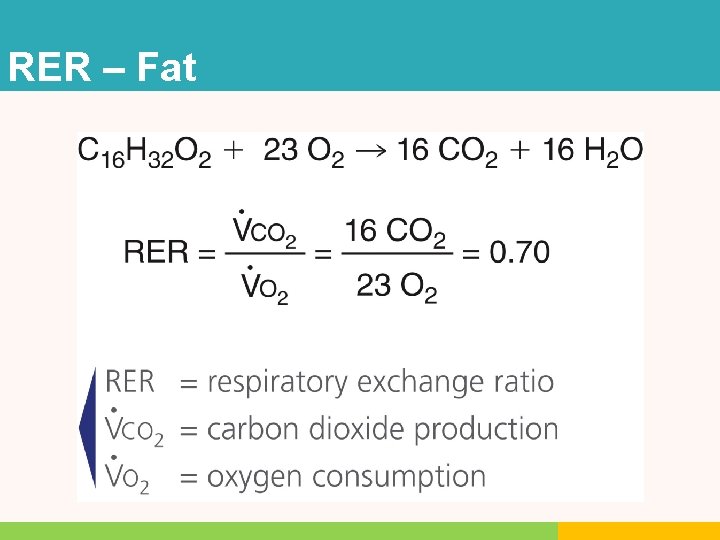
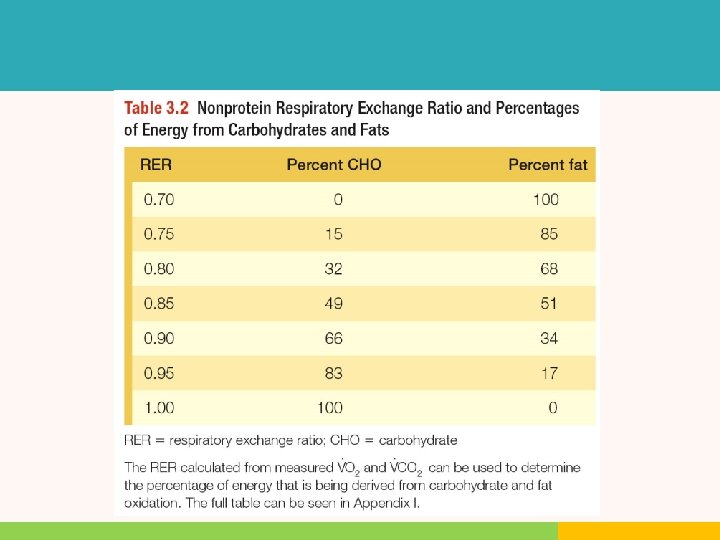
Respiratory Exchange Ratio (RER) § RER is the ratio of CO 2 production to O 2 consumption • Used to determine % of fats and CHO used for metabolism • Respiratory gases (VO 2 and VCO 2) are measured with metabolic measurement system § If only CHO is metabolized, the RER is 1. 0 § If only fat is metabolized, the RER is 0. 70 § Source of fuel is usually a mix of fat and CHO
RER
RER – Carbohydrate
RER – Fat
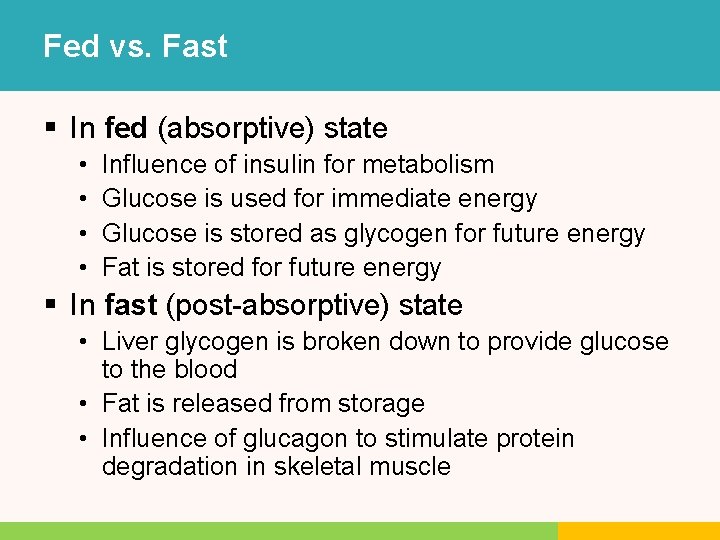
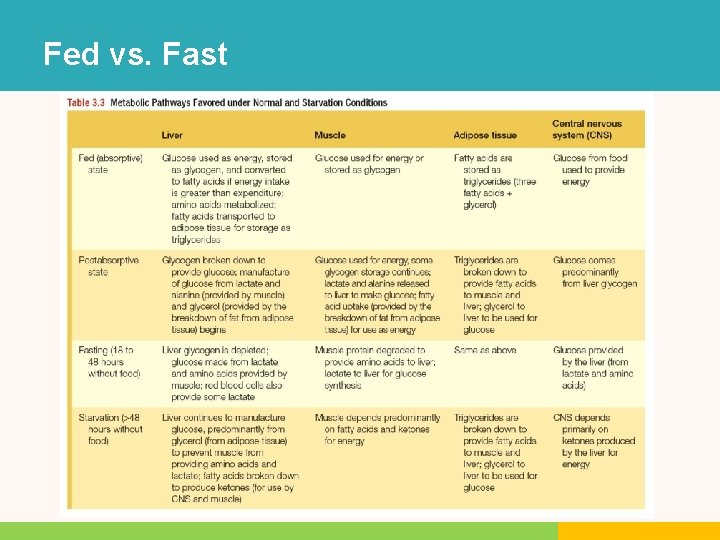
Fed vs. Fast § In fed (absorptive) state • • Influence of insulin for metabolism Glucose is used for immediate energy Glucose is stored as glycogen for future energy Fat is stored for future energy § In fast (post-absorptive) state • Liver glycogen is broken down to provide glucose to the blood • Fat is released from storage • Influence of glucagon to stimulate protein degradation in skeletal muscle
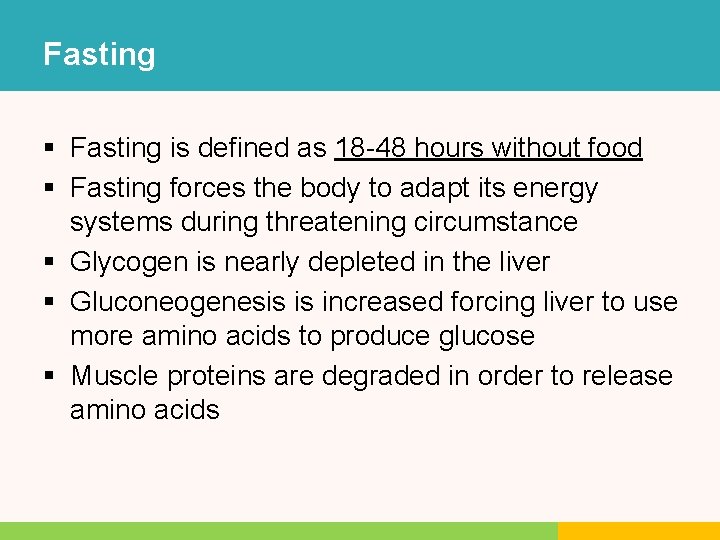
Fasting § Fasting is defined as 18 -48 hours without food § Fasting forces the body to adapt its energy systems during threatening circumstance § Glycogen is nearly depleted in the liver § Gluconeogenesis is increased forcing liver to use more amino acids to produce glucose § Muscle proteins are degraded in order to release amino acids
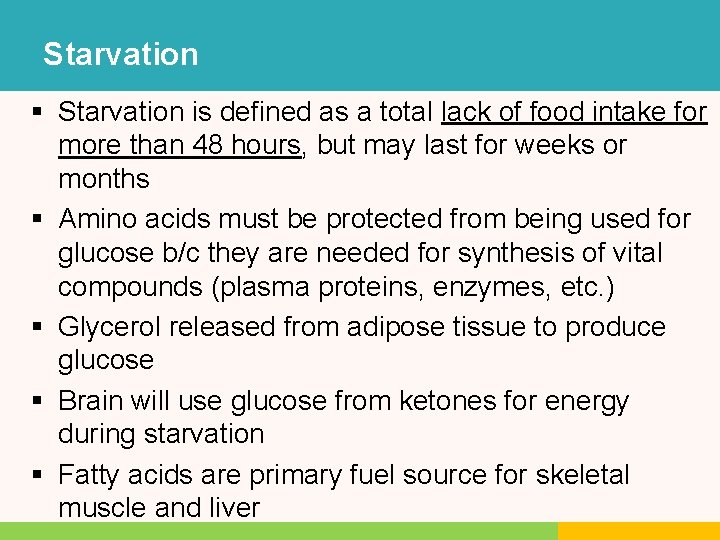
Starvation § Starvation is defined as a total lack of food intake for more than 48 hours, but may last for weeks or months § Amino acids must be protected from being used for glucose b/c they are needed for synthesis of vital compounds (plasma proteins, enzymes, etc. ) § Glycerol released from adipose tissue to produce glucose § Brain will use glucose from ketones for energy during starvation § Fatty acids are primary fuel source for skeletal muscle and liver
Fed vs. Fast
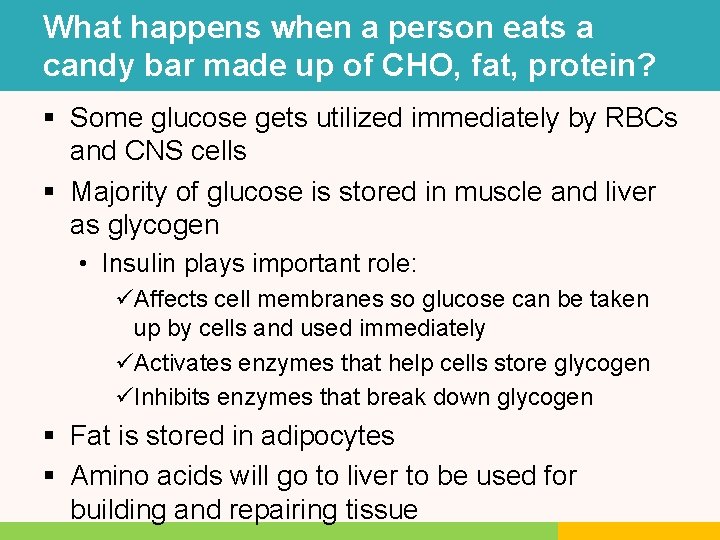
What happens when a person eats a candy bar made up of CHO, fat, protein? § Some glucose gets utilized immediately by RBCs and CNS cells § Majority of glucose is stored in muscle and liver as glycogen • Insulin plays important role: üAffects cell membranes so glucose can be taken up by cells and used immediately üActivates enzymes that help cells store glycogen üInhibits enzymes that break down glycogen § Fat is stored in adipocytes § Amino acids will go to liver to be used for building and repairing tissue
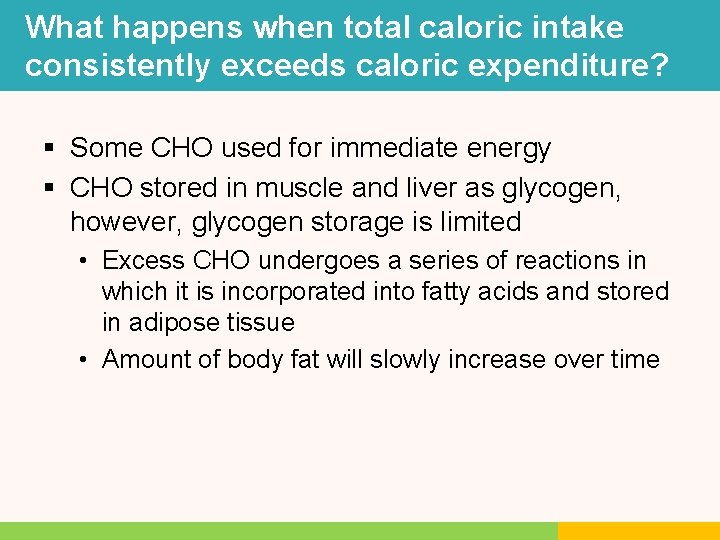
What happens when total caloric intake consistently exceeds caloric expenditure? § Some CHO used for immediate energy § CHO stored in muscle and liver as glycogen, however, glycogen storage is limited • Excess CHO undergoes a series of reactions in which it is incorporated into fatty acids and stored in adipose tissue • Amount of body fat will slowly increase over time
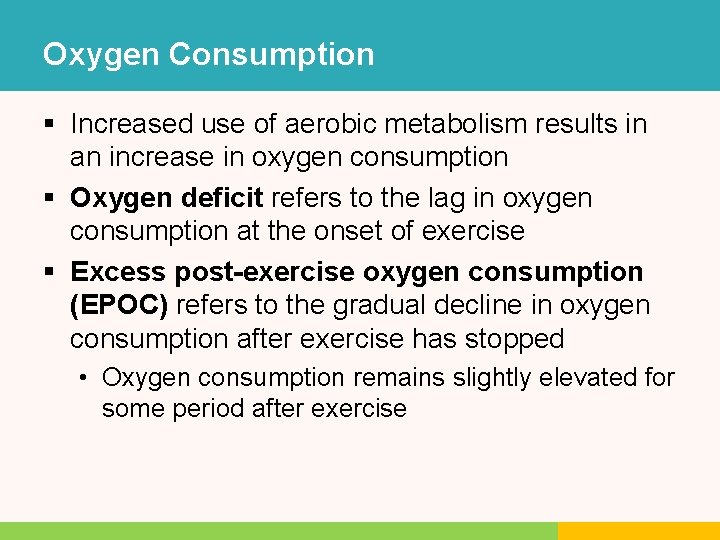
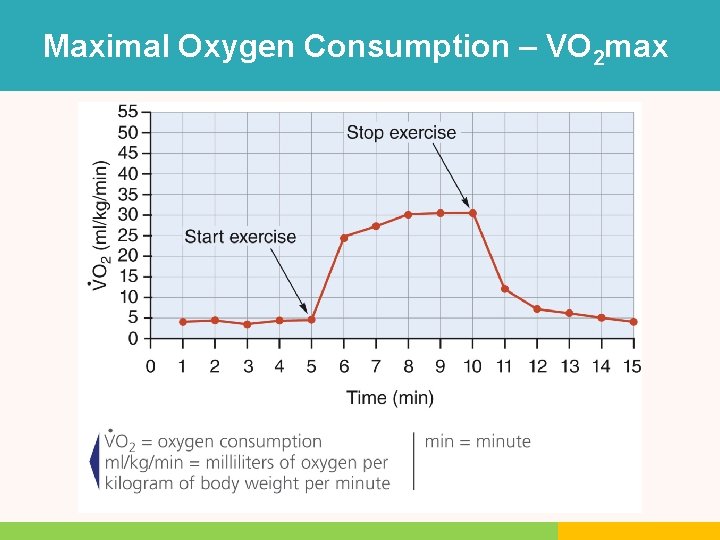
Oxygen Consumption § Increased use of aerobic metabolism results in an increase in oxygen consumption § Oxygen deficit refers to the lag in oxygen consumption at the onset of exercise § Excess post-exercise oxygen consumption (EPOC) refers to the gradual decline in oxygen consumption after exercise has stopped • Oxygen consumption remains slightly elevated for some period after exercise
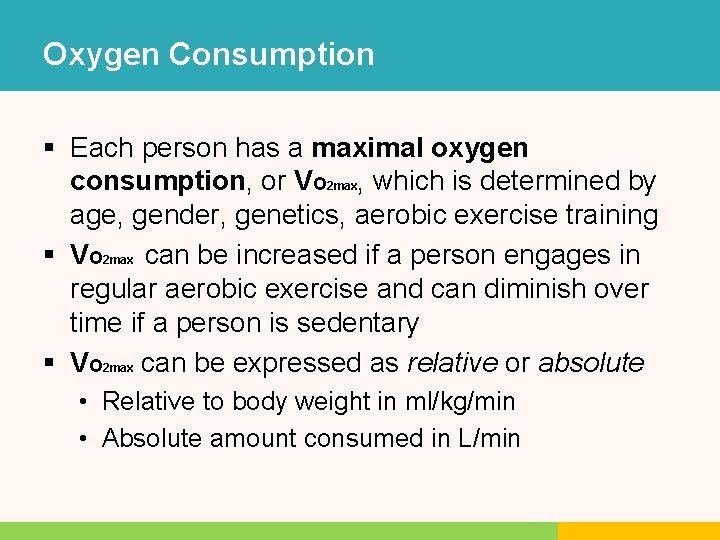
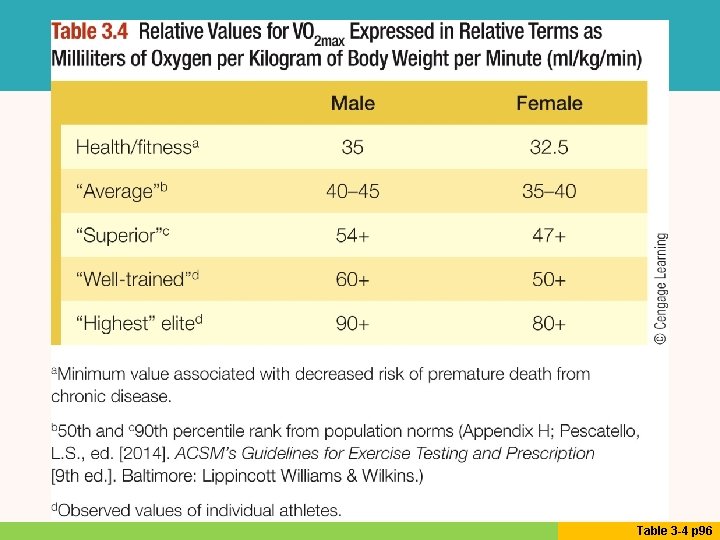
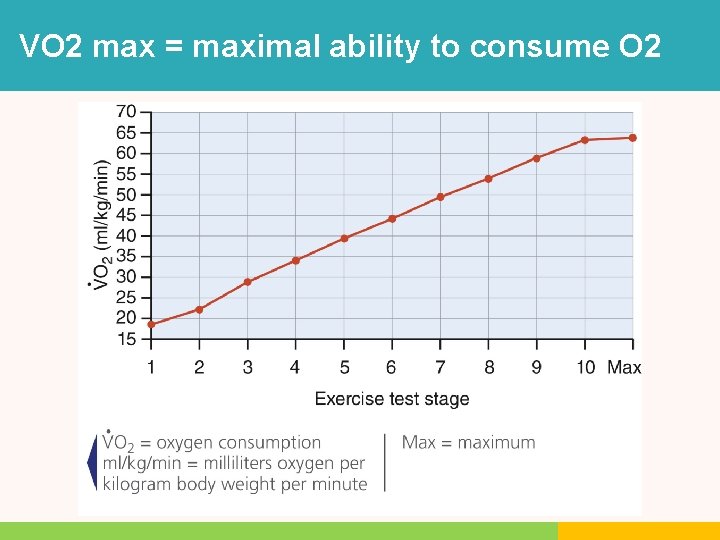
Oxygen Consumption § Each person has a maximal oxygen consumption, or VO 2 max, which is determined by age, gender, genetics, aerobic exercise training § VO 2 max can be increased if a person engages in regular aerobic exercise and can diminish over time if a person is sedentary § VO 2 max can be expressed as relative or absolute • Relative to body weight in ml/kg/min • Absolute amount consumed in L/min
Table 3 -4 p 96
VO 2 max = maximal ability to consume O 2
Maximal Oxygen Consumption – VO 2 max
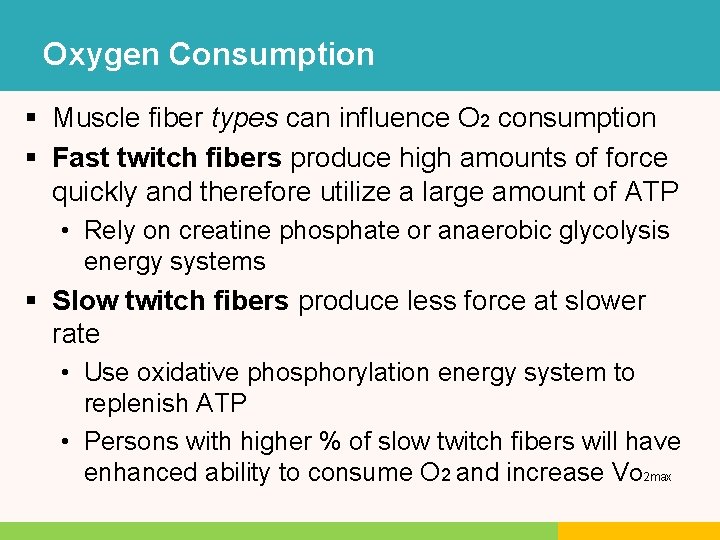
Oxygen Consumption § Muscle fiber types can influence O 2 consumption § Fast twitch fibers produce high amounts of force quickly and therefore utilize a large amount of ATP • Rely on creatine phosphate or anaerobic glycolysis energy systems § Slow twitch fibers produce less force at slower rate • Use oxidative phosphorylation energy system to replenish ATP • Persons with higher % of slow twitch fibers will have enhanced ability to consume O 2 and increase VO 2 max
Spotlight on Alcohol (Ethanol) Metabolism § 7 kcal/g § Absorbed rapidly initially in stomach • Absorption is rapid if stomach does not contain food • Presence of food in stomach slows absorption of ethanol d/t absorptive surface area is decreased • Food also results in contents of stomach being emptied more slowly into intestine § Ethanol is transported to liver where it is metabolized
Spotlight on Alcohol (Ethanol) Metabolism § Two primary pathways for metabolism – depends on amount of alcohol consumed as to which is used: 1. Alcohol dehydrogenase (ADH) • Low to moderate consumption of alcohol - Up to 1 drink/d (women) and 2 drinks/d (men) • Takes place in cytoplasm of cell 2. Microsomal ethanol-oxidizing system (MEOS) • High consumption of alcohol • Takes place in microsome (small structure found in cellular fluid)
Spotlight on Alcohol (Ethanol) Metabolism § When alcohol is present, the breakdown of ethanol is body’s highest priority b/c intermediary compound acetaldehyde is toxic § Ethanol is used immediately for energy – it is not stored as glycogen or adipose tissue § Athletes often remove alcohol from their diets when they are trying to restrict caloric intake § 1 drink is defined as ½ oz of ethanol which is: • 3 -4 oz wine • 12 oz beer • 1. 5 oz liquor
Summary § The direct source of energy for most cellular processes is ATP § Creatine phosphate, anaerobic glycolysis, and oxidative phosphorylation are three major energy systems § These three energy systems work in concert although one energy system usually predominates
Summary • Each energy system has distinct advantages (e. g. , speed, amount produced, duration) and limitations (e. g. , speed, amount produced, duration, depletion of substrate, undesirable effects) • Carbohydrates, proteins, and fats can be metabolized aerobically through the oxidative phosphorylation energy system • As exercise intensity increases above moderate levels, carbohydrates become the predominant fuel source for energy expenditure