
Energy Sources Fossil Fuels Formed by the decay
Energy Sources
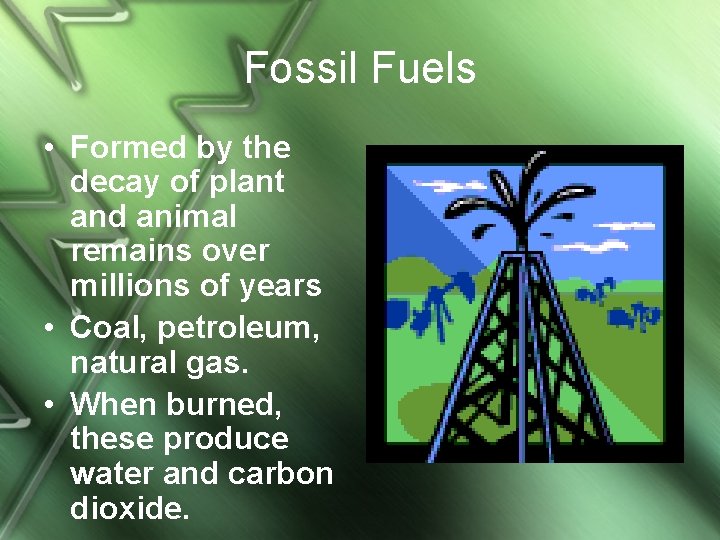
Fossil Fuels • Formed by the decay of plant and animal remains over millions of years • Coal, petroleum, natural gas. • When burned, these produce water and carbon dioxide.
Non-Renewable Resources • Fossil fuels are non-renewable because they cannot be replaced as quickly as they are used. • These fuels can be burned to produce electricity in a power plant.
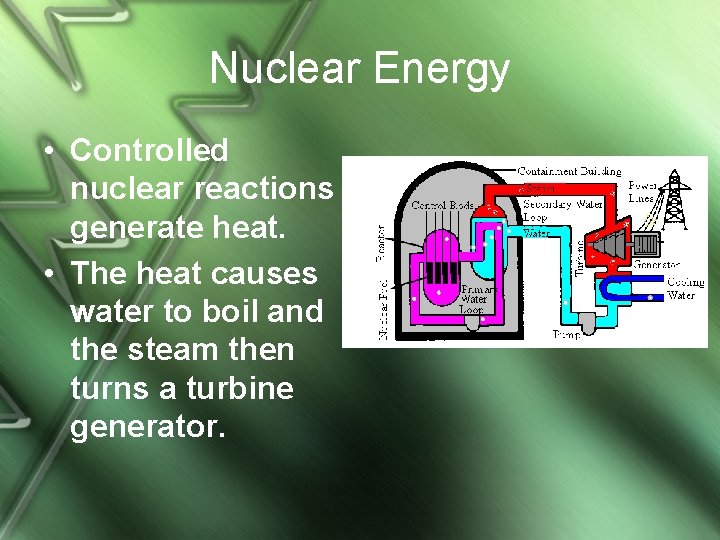
Nuclear Energy • Controlled nuclear reactions generate heat. • The heat causes water to boil and the steam then turns a turbine generator.
Renewable Energy Sources • Energy sources that can be replaced nearly as quickly as it is used. • Solar power • Hydroelectricity • Geothermal • Gravitational • Wind
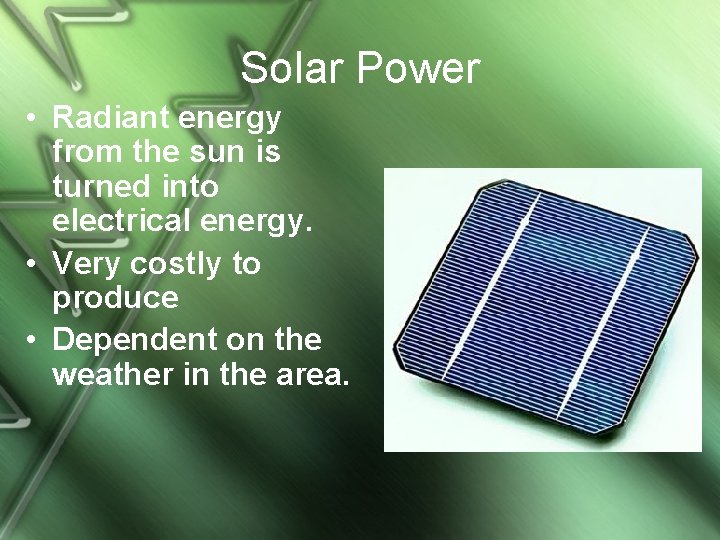
Solar Power • Radiant energy from the sun is turned into electrical energy. • Very costly to produce • Dependent on the weather in the area.
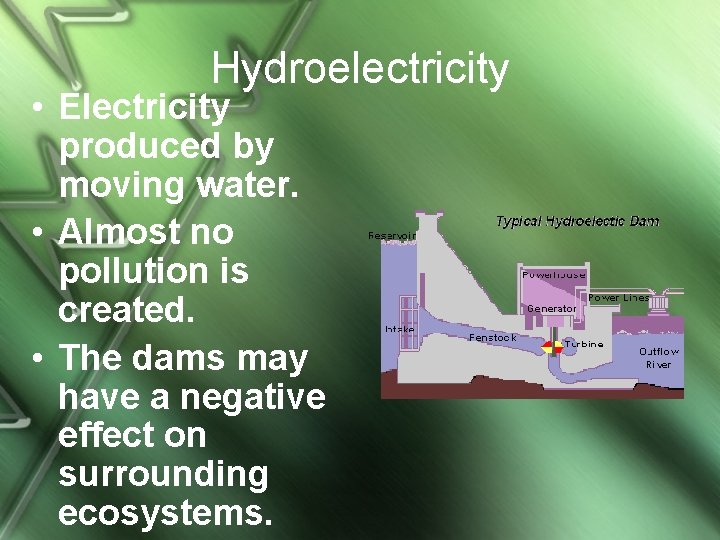
Hydroelectricity • Electricity produced by moving water. • Almost no pollution is created. • The dams may have a negative effect on surrounding ecosystems.
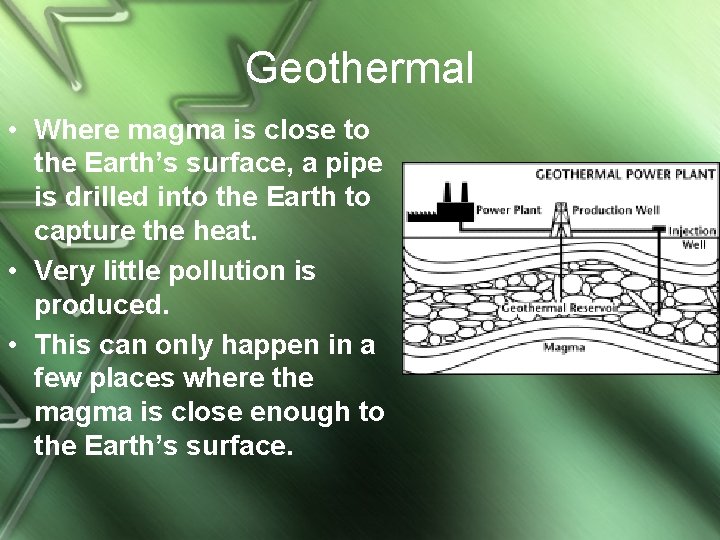
Geothermal • Where magma is close to the Earth’s surface, a pipe is drilled into the Earth to capture the heat. • Very little pollution is produced. • This can only happen in a few places where the magma is close enough to the Earth’s surface.
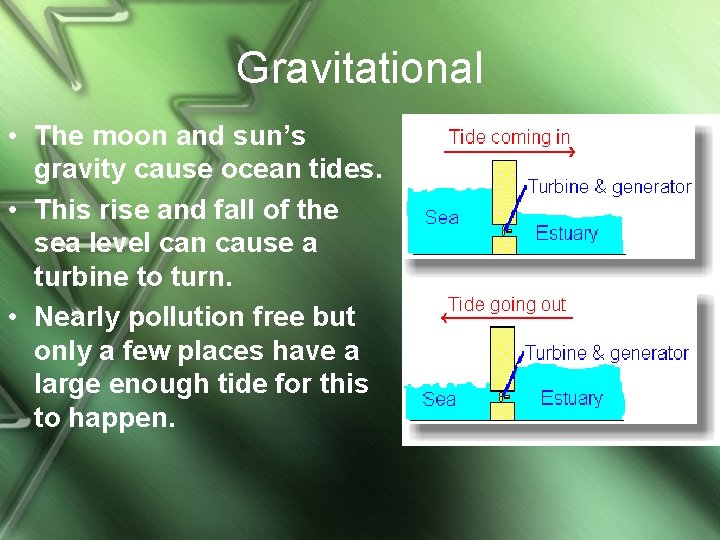
Gravitational • The moon and sun’s gravity cause ocean tides. • This rise and fall of the sea level can cause a turbine to turn. • Nearly pollution free but only a few places have a large enough tide for this to happen.
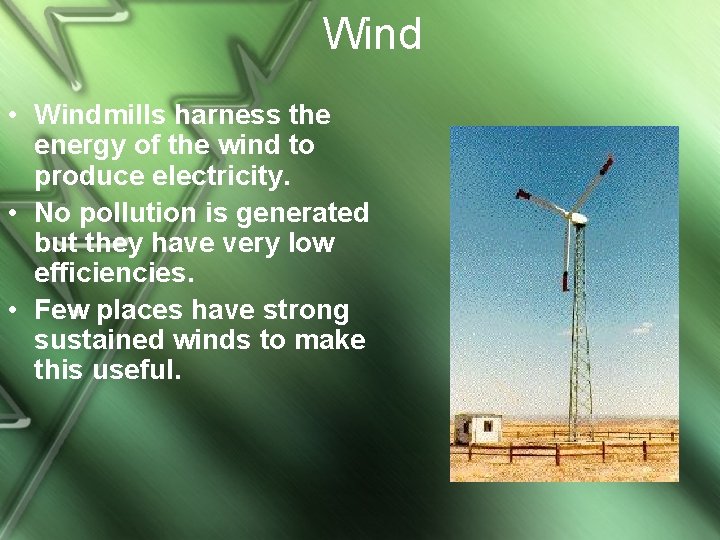
Wind • Windmills harness the energy of the wind to produce electricity. • No pollution is generated but they have very low efficiencies. • Few places have strong sustained winds to make this useful.
- Slides: 10