
Energy Sources for Contraction T Rick Energy sources
- Slides: 7
Energy Sources for Contraction T. Rick
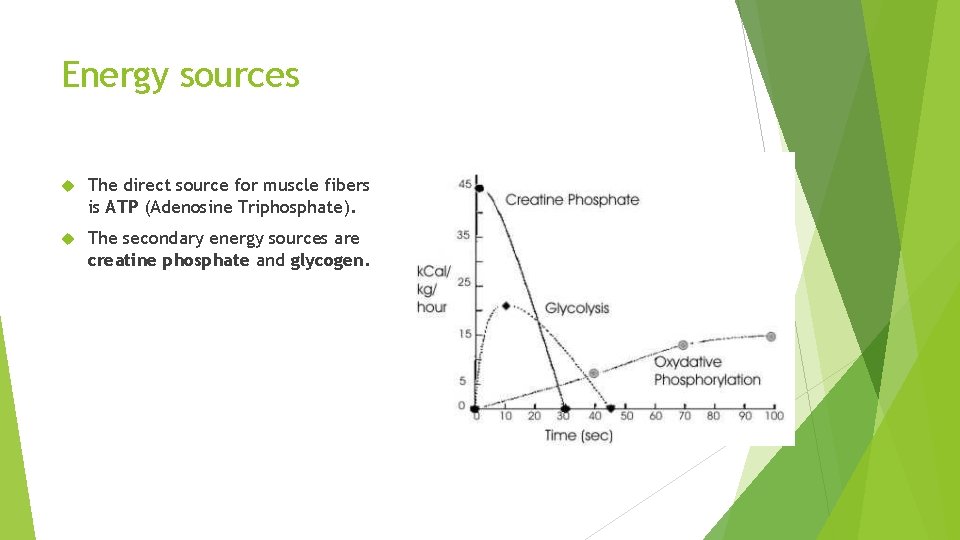
Energy sources The direct source for muscle fibers is ATP (Adenosine Triphosphate). The secondary energy sources are creatine phosphate and glycogen.
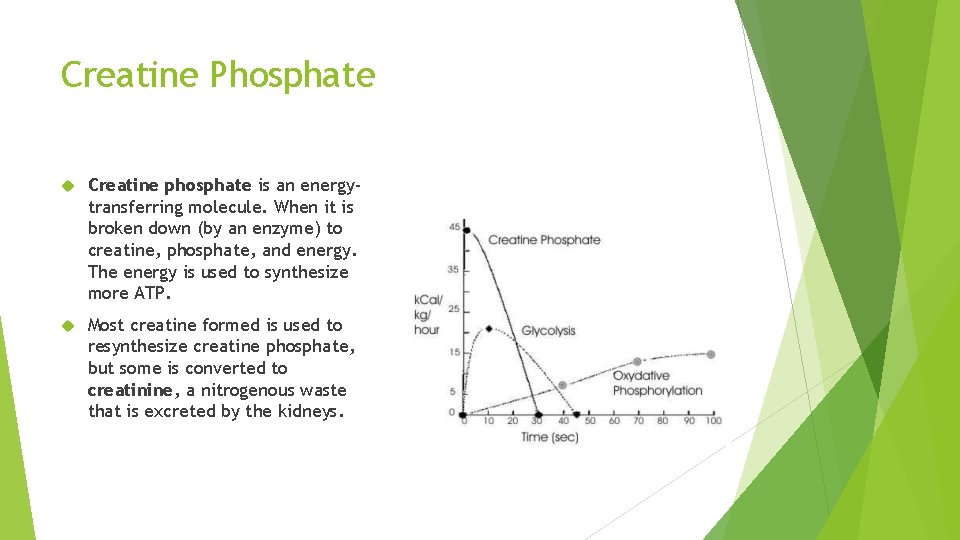
Creatine Phosphate Creatine phosphate is an energytransferring molecule. When it is broken down (by an enzyme) to creatine, phosphate, and energy. The energy is used to synthesize more ATP. Most creatine formed is used to resynthesize creatine phosphate, but some is converted to creatinine, a nitrogenous waste that is excreted by the kidneys.
Glycogen The most abundant energy source in muscle fibers is glycogen. Glycogen is needed to provide energy for sustained contractions (more than a few seconds). It is broken down into the glucose molecules of which it is made. It is then further broken down in the process of cell respiration to produce ATP. Glucose + O 2 -> CO 2 + H 2 O + ATP + heat
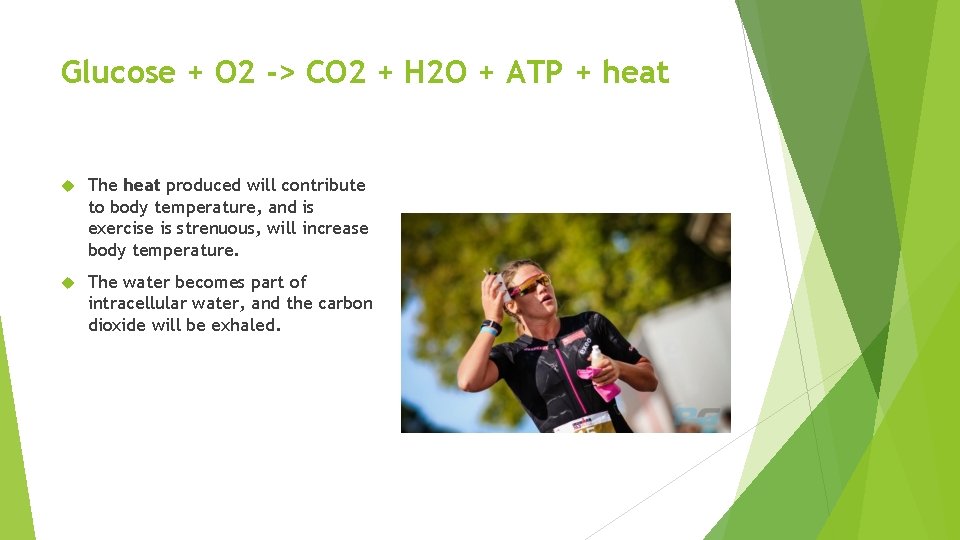
Glucose + O 2 -> CO 2 + H 2 O + ATP + heat The heat produced will contribute to body temperature, and is exercise is strenuous, will increase body temperature. The water becomes part of intracellular water, and the carbon dioxide will be exhaled.
Hemoglobin and Myoglobin Hemoglobin in red blood cells continuously carry oxygen to the muscle fibers. Myoglobin is a protein in muscle fibers that stores some oxygen within the muscle cells. Myoglobin and hemoglobin contain iron, which enables them to bond to oxygen. Oxygen in myoglobin is quickly used up and normal circulation isn’t quick enough to permit cell respiration. When muscle fibers run out of oxygen, this is called oxygen debt. And glucose might be converted to an intermediate molecule called lactic acid, which causes muscle fatigue.
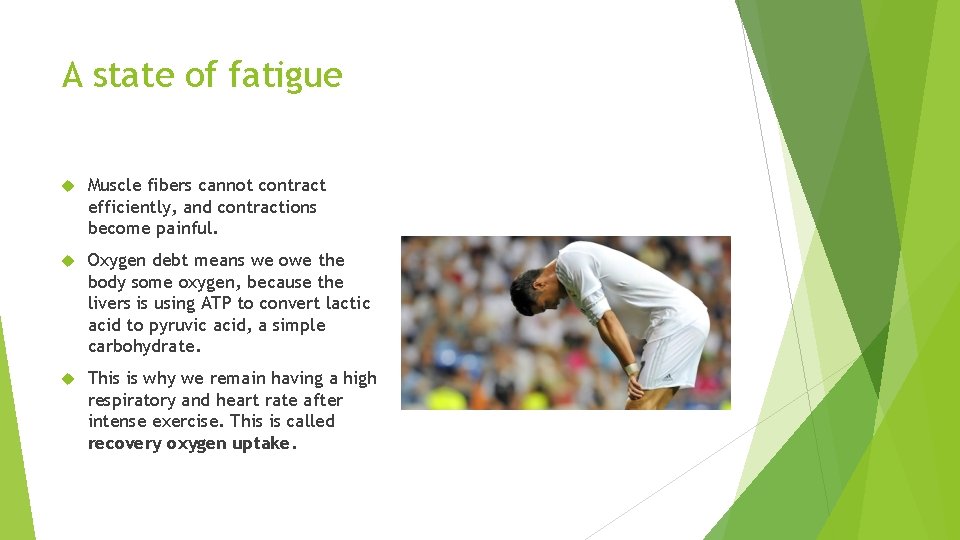
A state of fatigue Muscle fibers cannot contract efficiently, and contractions become painful. Oxygen debt means we owe the body some oxygen, because the livers is using ATP to convert lactic acid to pyruvic acid, a simple carbohydrate. This is why we remain having a high respiratory and heart rate after intense exercise. This is called recovery oxygen uptake.