
Energy Section 14 6 Forms of Energy Forms
- Slides: 19
Energy Section 14. 6 Forms of Energy
Forms of Energy The six major forms of energy are: 1. 2. 3. 4. 5. 6. Mechanical Energy Thermal Energy Chemical Energy Electromagnetic Energy Nuclear Energy
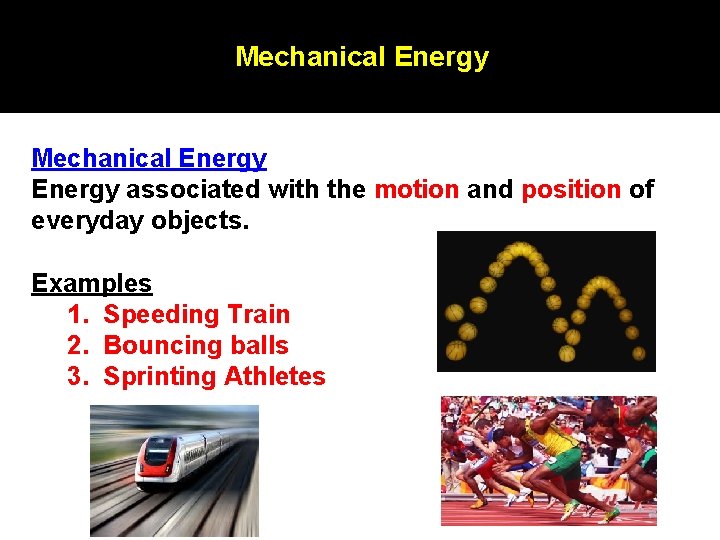
Mechanical Energy associated with the motion and position of everyday objects. Examples 1. Speeding Train 2. Bouncing balls 3. Sprinting Athletes
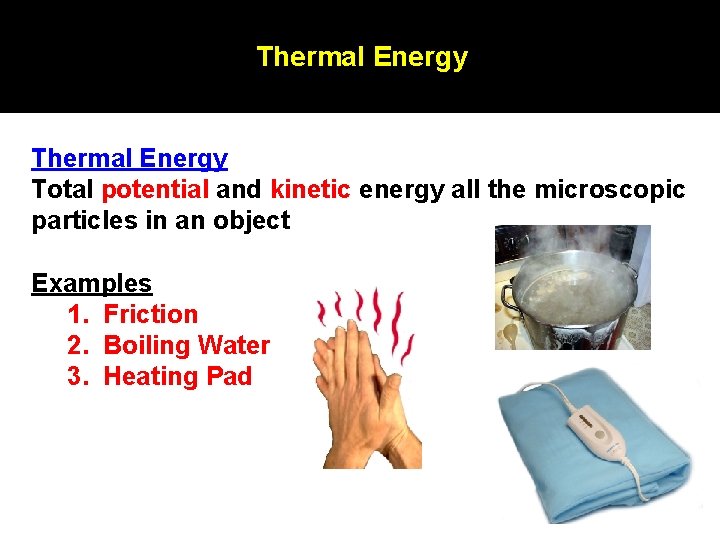
Thermal Energy Total potential and kinetic energy all the microscopic particles in an object Examples 1. Friction 2. Boiling Water 3. Heating Pad
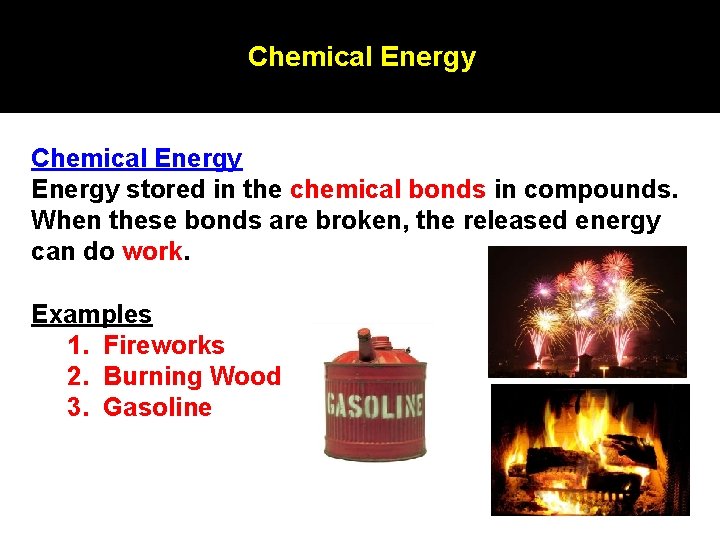
Chemical Energy stored in the chemical bonds in compounds. When these bonds are broken, the released energy can do work. Examples 1. Fireworks 2. Burning Wood 3. Gasoline
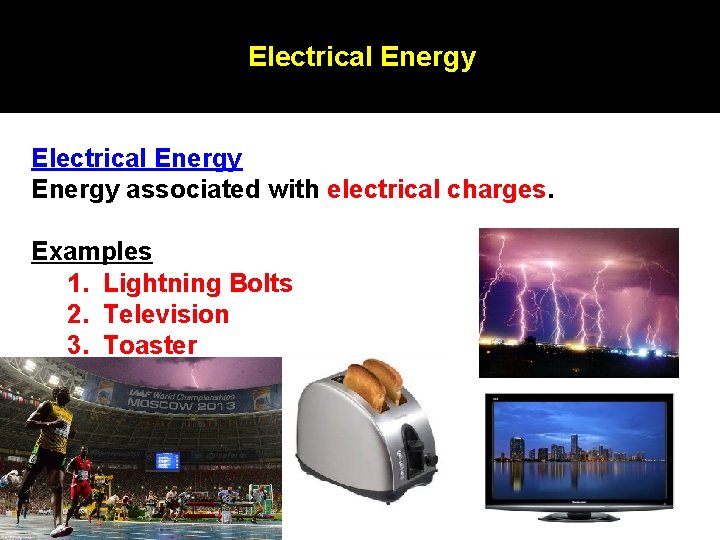
Electrical Energy associated with electrical charges. Examples 1. Lightning Bolts 2. Television 3. Toaster
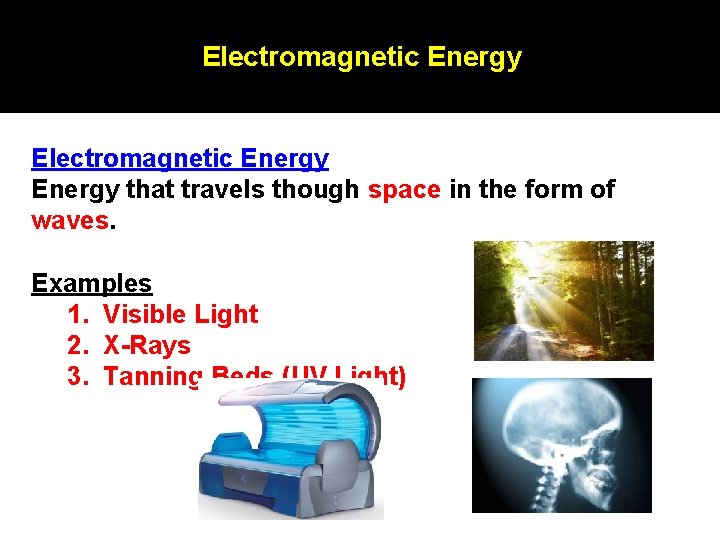
Electromagnetic Energy that travels though space in the form of waves. Examples 1. Visible Light 2. X-Rays 3. Tanning Beds (UV Light)
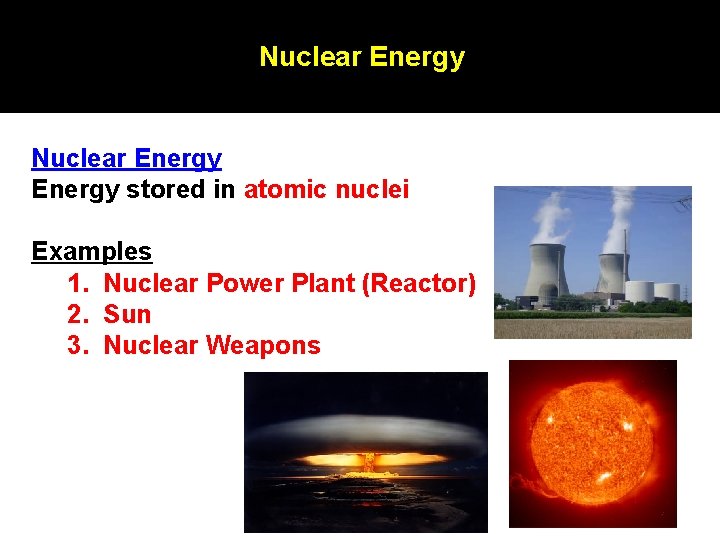
Nuclear Energy stored in atomic nuclei Examples 1. Nuclear Power Plant (Reactor) 2. Sun 3. Nuclear Weapons
Energy Conversion Energy can be converted from one form to another
Wind-Up Toy Elastic Potential Energy in a compressed spring. When the spindle unwinds, potential energy is converted to kinetic energy of the toys moving parts.
Energy Conservation The Law of conservation of energy states that energy can not be created or destroyed, it only changes form.
Bicycle The bicycle had kinetic energy. The bike slowed down and stopped because of frictional forces acting over a distance. The work done by friction changes the kinetic energy into thermal energy. So when we account for thermal energy (friction) this is equal to the kinetic energy the bike previously had, thus energy is conserved overall.
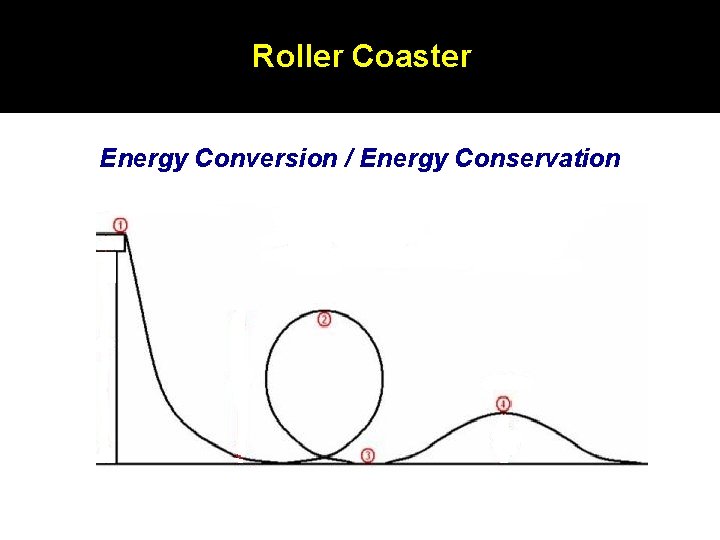
Roller Coaster Energy Conversion / Energy Conservation
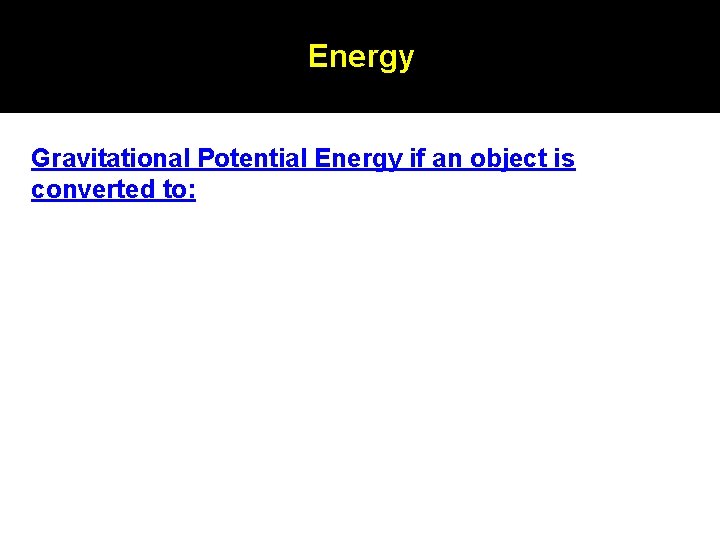
Energy Gravitational Potential Energy if an object is converted to:
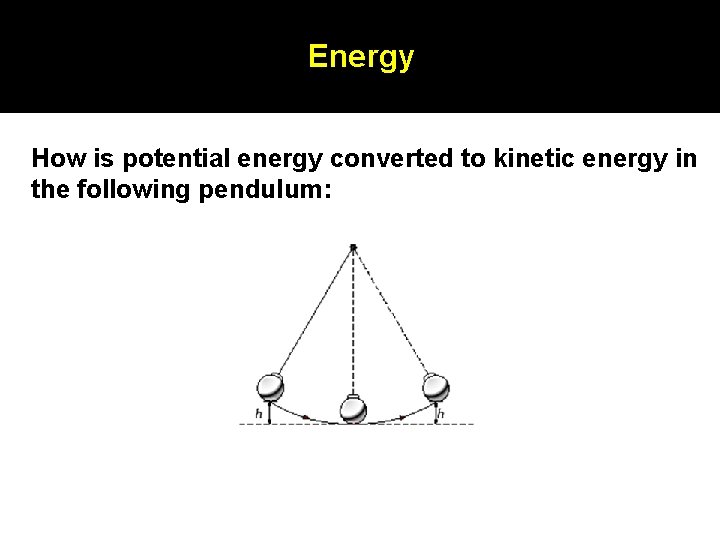
Energy How is potential energy converted to kinetic energy in the following pendulum:
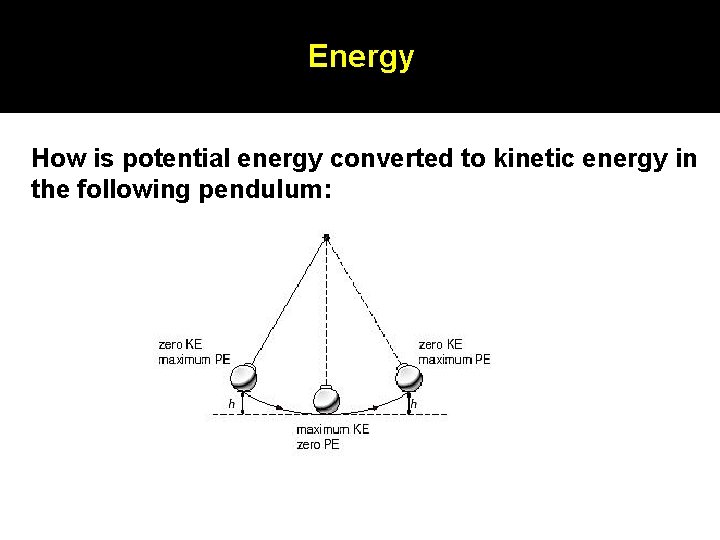
Energy How is potential energy converted to kinetic energy in the following pendulum:
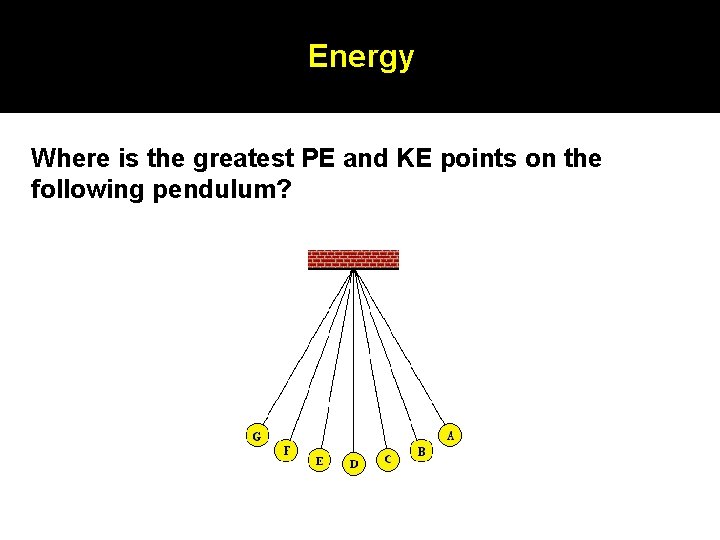
Energy Where is the greatest PE and KE points on the following pendulum?
Activity Label the types of energy in each example: Cars engines gears: Mechanical Energy Gasoline: Chemical Energy Friction in the engine creating Thermal heat: Energy The car battery Chemical Energy
Activity As a group, find the five steps (four types of energy) that a match uses to convert energy 1. Muscles us chemical energy to move your hand (kinetic energy) to strike the match 2. Friction between the match and the matchbox converts kinetic energy into thermal energy (heat). 3. Thermal energy to chemical energy to light the match 4. Chemical energy converted to thermal energy 5. Thermal energy to electromagnetic energy (Flame Waves)