
Energy Overview Topics Covered Energy Resources and Consumption

- Slides: 28
Energy Overview
Topics Covered • Energy Resources and Consumption – Energy Concepts • • • Energy Forms Power Units Conversions Laws of Thermodynamics – Energy Consumption • History – Industrial Revolution – Exponential Growth – Energy Crisis • Present Global Energy Use • Future Energy Needs
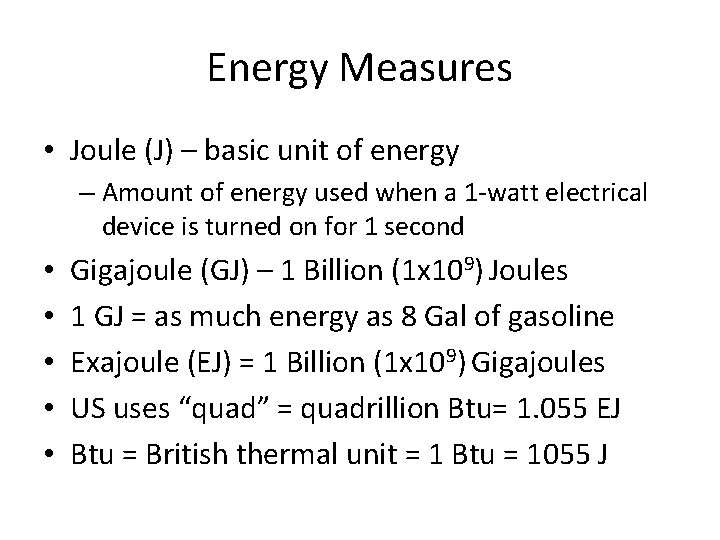
Energy Measures • Joule (J) – basic unit of energy – Amount of energy used when a 1 -watt electrical device is turned on for 1 second • • • Gigajoule (GJ) – 1 Billion (1 x 10⁹) Joules 1 GJ = as much energy as 8 Gal of gasoline Exajoule (EJ) = 1 Billion (1 x 10⁹) Gigajoules US uses “quad” = quadrillion Btu= 1. 055 EJ Btu = British thermal unit = 1 Btu = 1055 J
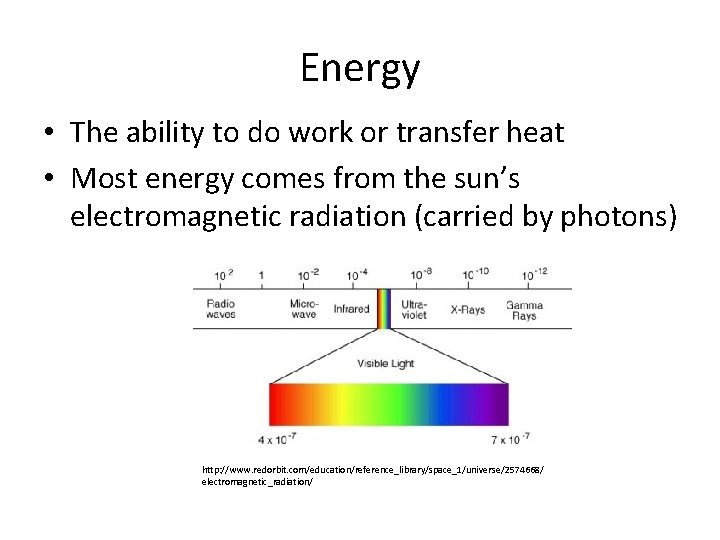
Energy • The ability to do work or transfer heat • Most energy comes from the sun’s electromagnetic radiation (carried by photons) http: //www. redorbit. com/education/reference_library/space_1/universe/2574668/ electromagnetic_radiation/
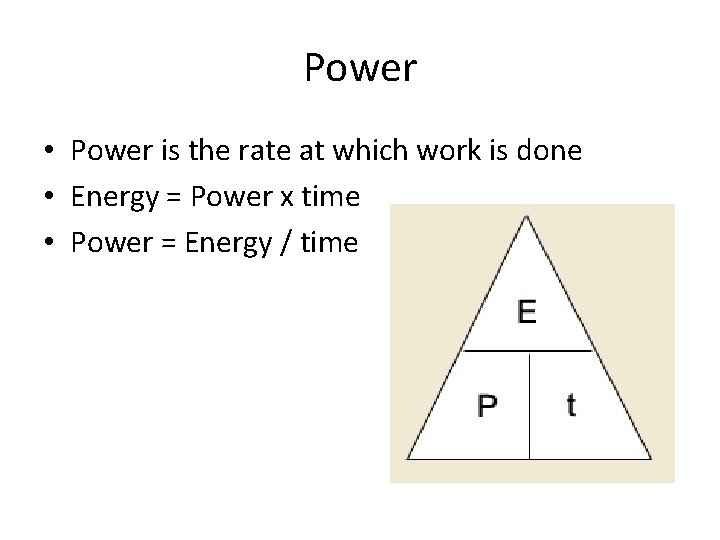
Power • Power is the rate at which work is done • Energy = Power x time • Power = Energy / time
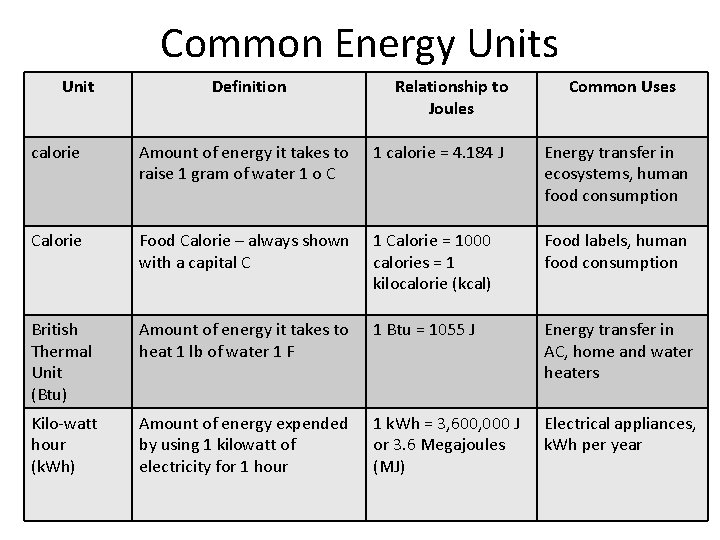
Common Energy Units Unit Definition Relationship to Joules Common Uses calorie Amount of energy it takes to raise 1 gram of water 1 o C 1 calorie = 4. 184 J Energy transfer in ecosystems, human food consumption Calorie Food Calorie – always shown with a capital C 1 Calorie = 1000 calories = 1 kilocalorie (kcal) Food labels, human food consumption British Thermal Unit (Btu) Amount of energy it takes to heat 1 lb of water 1 F 1 Btu = 1055 J Energy transfer in AC, home and water heaters Kilo-watt hour (k. Wh) Amount of energy expended by using 1 kilowatt of electricity for 1 hour 1 k. Wh = 3, 600, 000 J or 3. 6 Megajoules (MJ) Electrical appliances, k. Wh per year
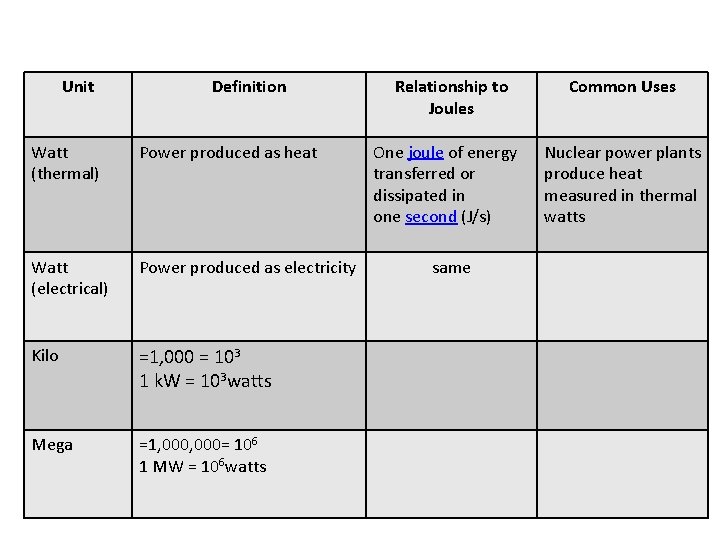
Unit Definition Watt (thermal) Power produced as heat Watt (electrical) Power produced as electricity Kilo =1, 000 = 103 1 k. W = 103 watts Mega =1, 000= 106 1 MW = 106 watts Relationship to Joules One joule of energy transferred or dissipated in one second (J/s) same Common Uses Nuclear power plants produce heat measured in thermal watts
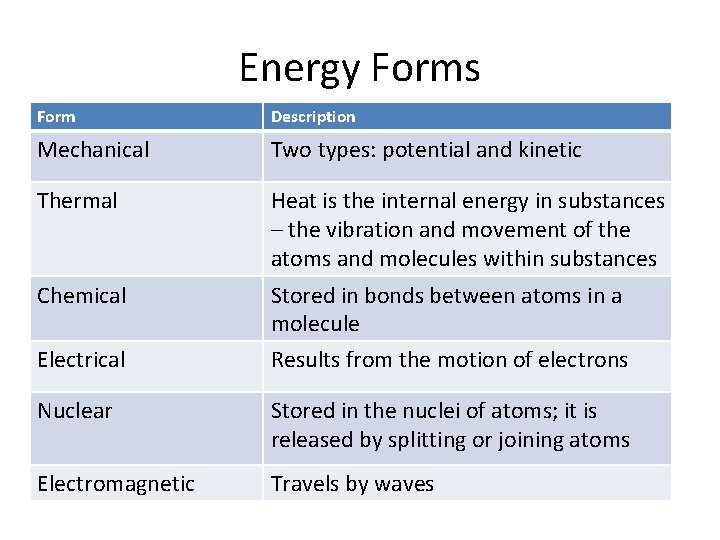
Energy Forms Form Description Mechanical Two types: potential and kinetic Thermal Heat is the internal energy in substances – the vibration and movement of the atoms and molecules within substances Chemical Stored in bonds between atoms in a molecule Results from the motion of electrons Electrical Nuclear Stored in the nuclei of atoms; it is released by splitting or joining atoms Electromagnetic Travels by waves
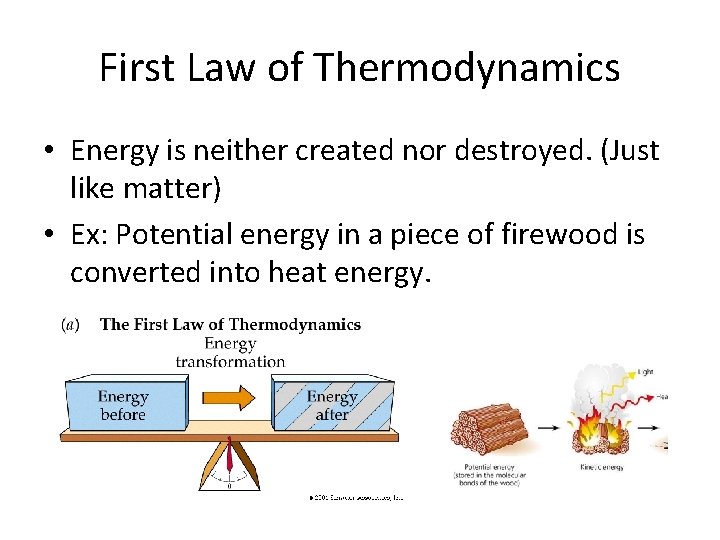
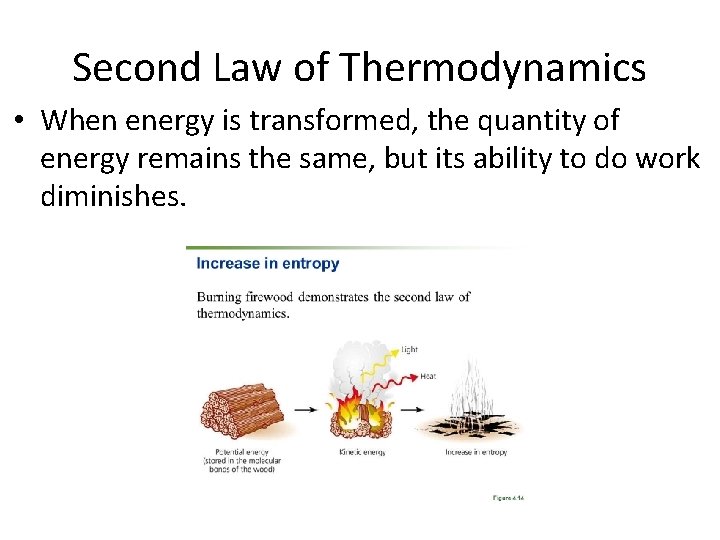
First Law of Thermodynamics • Energy is neither created nor destroyed. (Just like matter) • Ex: Potential energy in a piece of firewood is converted into heat energy.
Second Law of Thermodynamics • When energy is transformed, the quantity of energy remains the same, but its ability to do work diminishes.
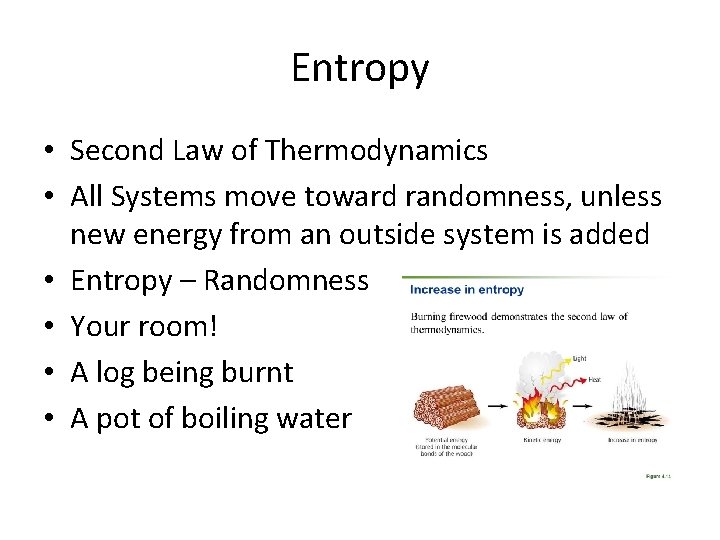
Entropy • Second Law of Thermodynamics • All Systems move toward randomness, unless new energy from an outside system is added • Entropy – Randomness • Your room! • A log being burnt • A pot of boiling water
Energy Efficiency • Ratio of the amount of work that is done to the total amount of energy that’s introduced into the system initially. • Ex: Fireplace that’s 70% efficient might use 2 kg of firewood to heat a room to 20˚C (68˚ F). A fireplace that’s 10% efficient would require 14 kg to reach 20˚C (68˚ F).
Energy Efficiency 2 • Chemical energy Electricity • Coal-burning power plant can convert 1 metric ton of coal containing 24, 000 megajoules (MJ) into 8400 MJ of electricity. • 8400 MJ is 35% of 24, 000 MJ, the process is 35% efficient. (65% is lost as heat) • 10% is lost as heat and sound in powerlines – 90% efficient • Incandescent bulbs are 5% efficient. • Total energy efficiency: • . 35 x. 90 x. 05 =. 016 1. 6% efficient Coal Electricity x Transport x light bulb efficiency = overall efficiency
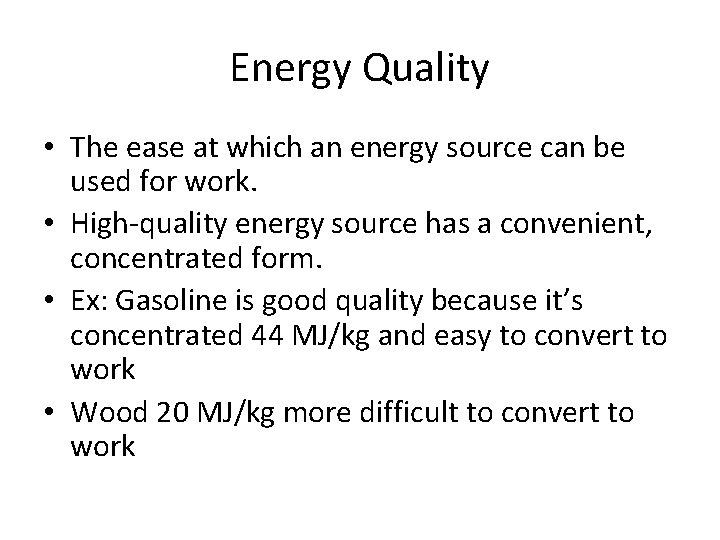
Energy Quality • The ease at which an energy source can be used for work. • High-quality energy source has a convenient, concentrated form. • Ex: Gasoline is good quality because it’s concentrated 44 MJ/kg and easy to convert to work • Wood 20 MJ/kg more difficult to convert to work
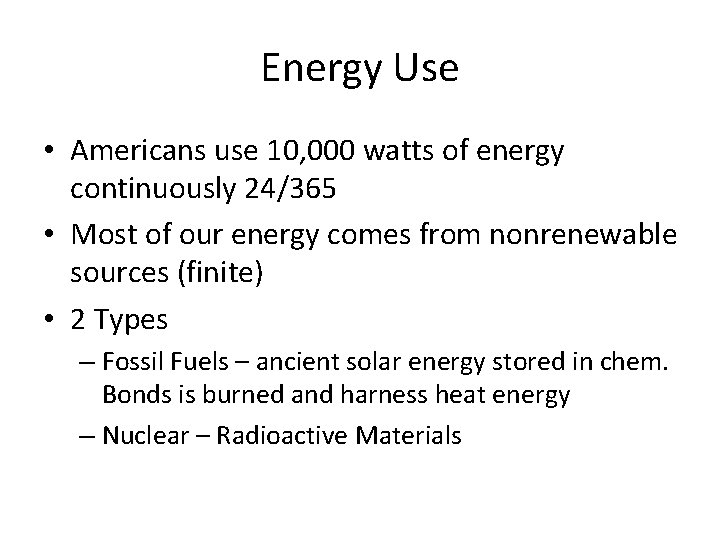
Energy Use • Americans use 10, 000 watts of energy continuously 24/365 • Most of our energy comes from nonrenewable sources (finite) • 2 Types – Fossil Fuels – ancient solar energy stored in chem. Bonds is burned and harness heat energy – Nuclear – Radioactive Materials
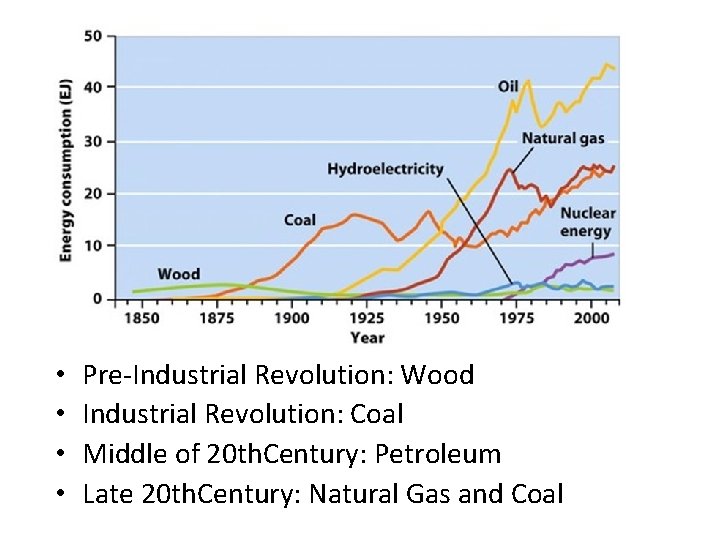
• • Pre-Industrial Revolution: Wood Industrial Revolution: Coal Middle of 20 th. Century: Petroleum Late 20 th. Century: Natural Gas and Coal
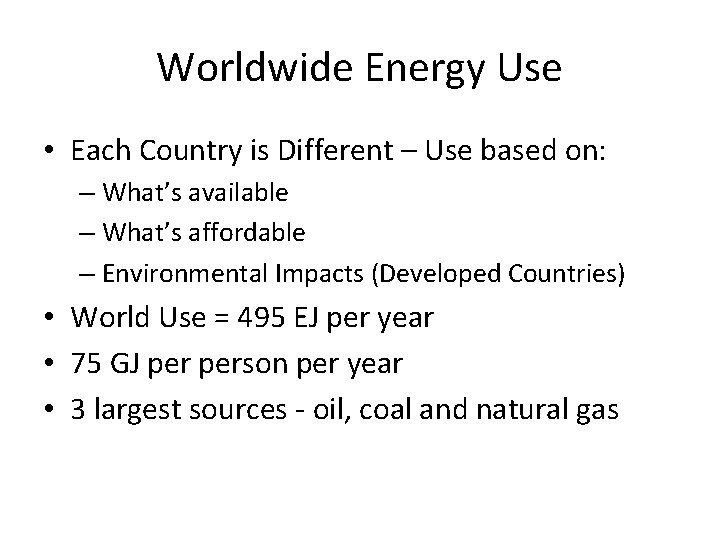
Worldwide Energy Use • Each Country is Different – Use based on: – What’s available – What’s affordable – Environmental Impacts (Developed Countries) • World Use = 495 EJ per year • 75 GJ person per year • 3 largest sources - oil, coal and natural gas
• Developed and cities of developing countries – use fossil fuels • Developing rural areas still use wood, charcoal and animal waste • Commercial Energy Sources – Bought and sold such as coal, oil and natural gas. Sometimes wood, charcoal and animal waste • Subsistence Energy sources – gathered by individuals for their own immediate needs
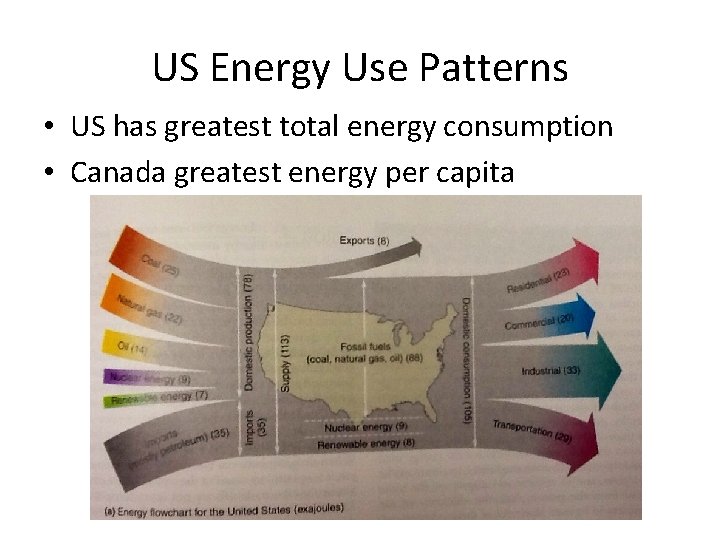
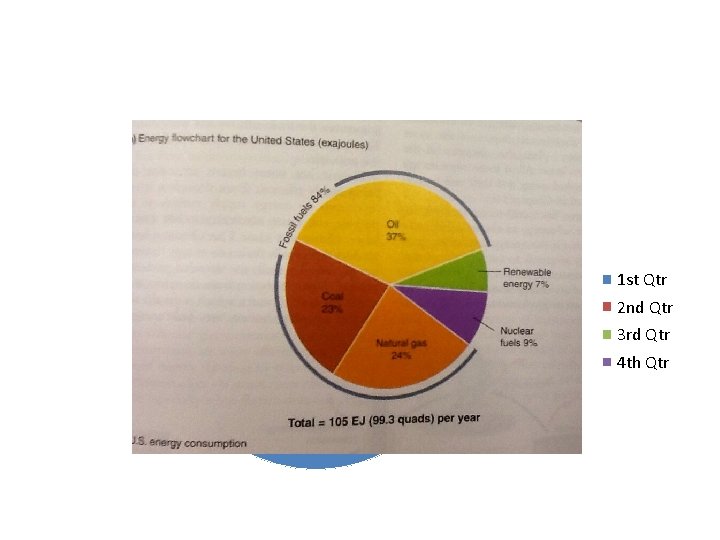
US Energy Use Patterns • US has greatest total energy consumption • Canada greatest energy per capita
Sales 1 st Qtr 2 nd Qtr 3 rd Qtr 4 th Qtr
Energy Types and Quality • Best suited for purposes based on – Energy-to-mass ratio – Speed at which they provide/cut off the energy supply • Run a car on coal or firewood? Why or why not?
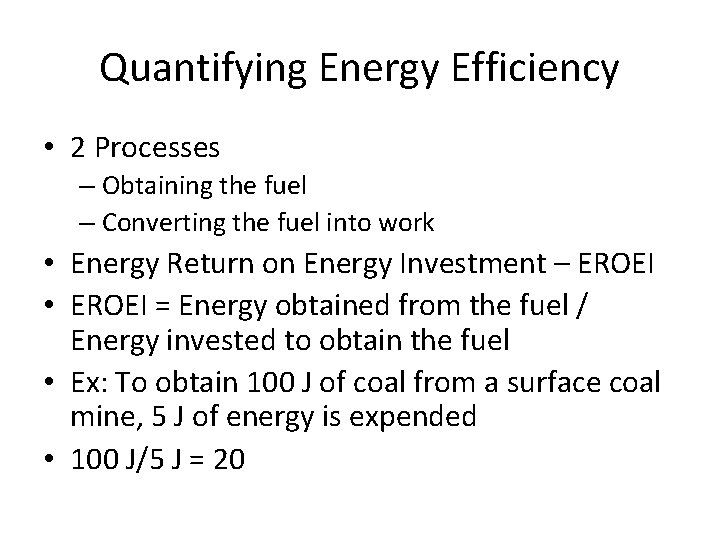
Quantifying Energy Efficiency • 2 Processes – Obtaining the fuel – Converting the fuel into work • Energy Return on Energy Investment – EROEI • EROEI = Energy obtained from the fuel / Energy invested to obtain the fuel • Ex: To obtain 100 J of coal from a surface coal mine, 5 J of energy is expended • 100 J/5 J = 20
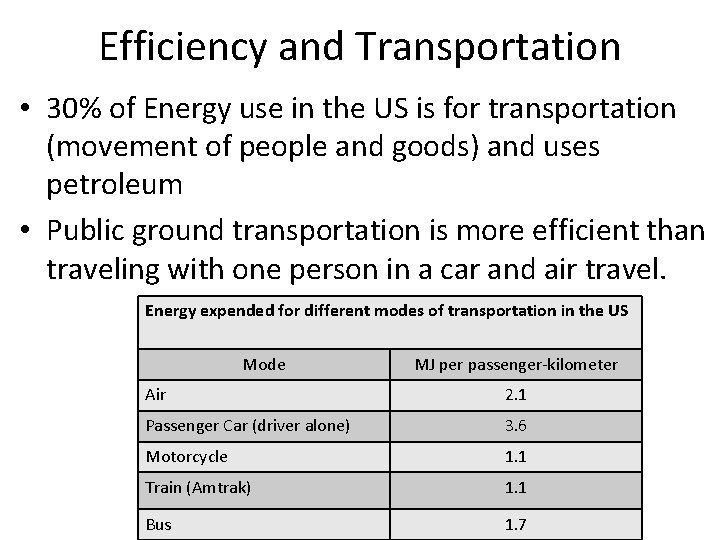
Efficiency and Transportation • 30% of Energy use in the US is for transportation (movement of people and goods) and uses petroleum • Public ground transportation is more efficient than traveling with one person in a car and air travel. Energy expended for different modes of transportation in the US Mode MJ per passenger-kilometer Air 2. 1 Passenger Car (driver alone) 3. 6 Motorcycle 1. 1 Train (Amtrak) 1. 1 Bus 1. 7
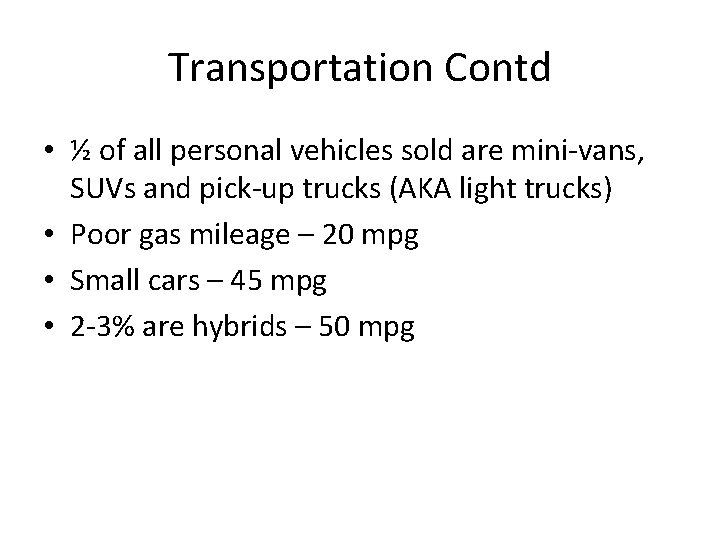
Transportation Contd • ½ of all personal vehicles sold are mini-vans, SUVs and pick-up trucks (AKA light trucks) • Poor gas mileage – 20 mpg • Small cars – 45 mpg • 2 -3% are hybrids – 50 mpg
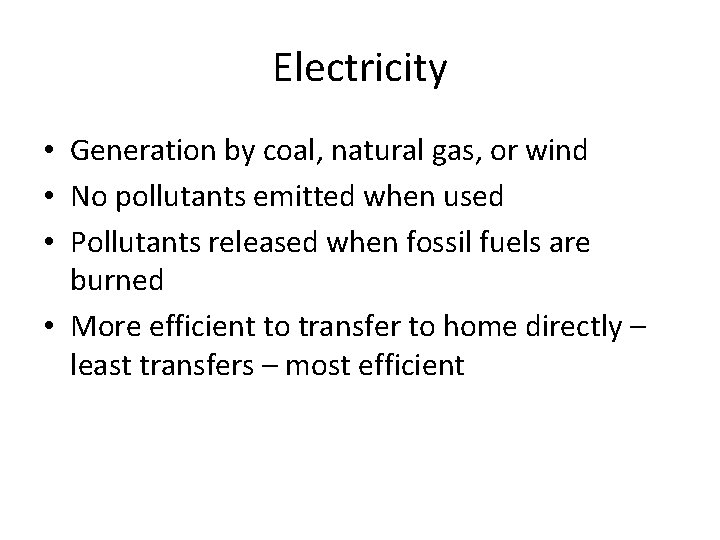
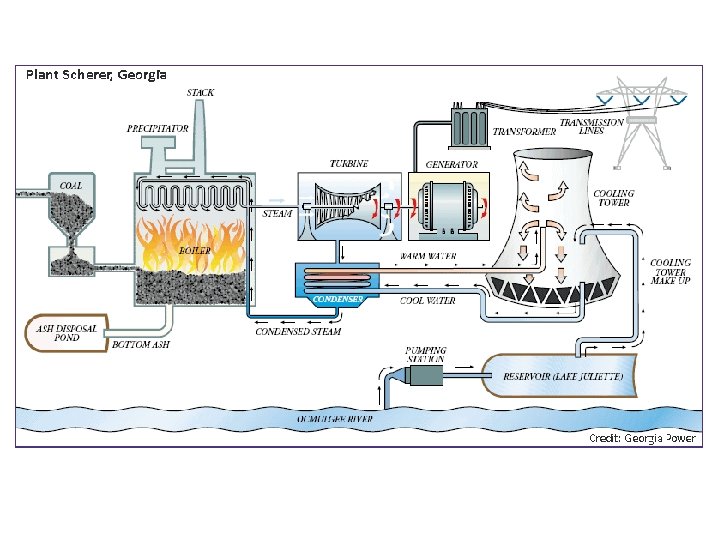
Electricity • Generation by coal, natural gas, or wind • No pollutants emitted when used • Pollutants released when fossil fuels are burned • More efficient to transfer to home directly – least transfers – most efficient
Grid • A network of interconnected transmission lines • Connects power plants and links with users
Electricity Efficiency • Coal burning – 35% efficient • Gas combustion – Combined cycle natural gas – 60% efficient – Gas combustion turns first turbine and steam from excess heat turns second turbine • Typical US power plants have 500 megawatt capacity (max output) • Capacity Factor – Fraction of time a plant is operating