
ENERGY Mrs Danza Science What is energy The

- Slides: 25
ENERGY Mrs. Danza Science
What is energy? • The ability to do work. • The ability to cause matter to move. • The ability to cause matter to change. • Measured in joules and calories.
Kinetic Energy • Kinetic energy- the energy of motion (ex. Running) • Depends on mass and speed
Potential Energy • Energy an object has because of its position. (ex. The top of a roller coaster hill) • Elastic Potential Energy (ex. Rubber bands) • Gravitational Potential Energy • Depends on height.
Bill Nye Hydroelectric Potential and Kinetic Energy (4: 17)
What are the basic forms of energy? • Mechanical (potential and kinetic energy) • Heat (thermal) • Chemical • Radiant (light, electro-magnetic) • Nuclear (atomic) • Sound • Electrical
Forms of Energy… (2: 41)
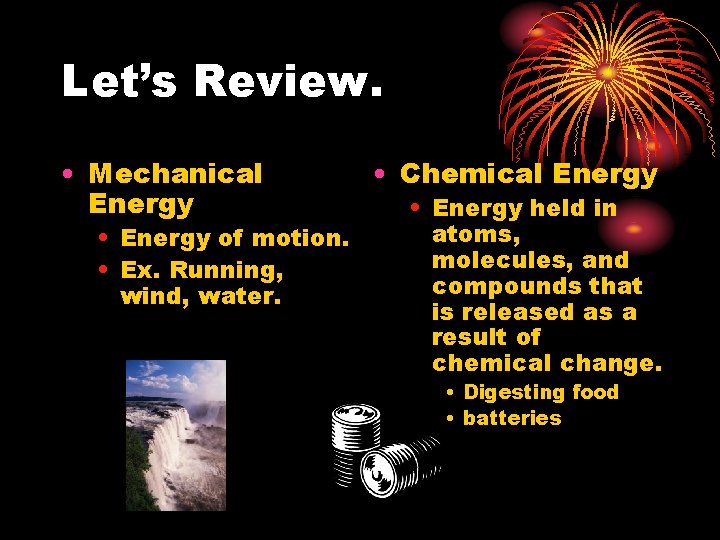
Let’s Review. • Mechanical Energy • Energy of motion. • Ex. Running, wind, water. • Chemical Energy • Energy held in atoms, molecules, and compounds that is released as a result of chemical change. • Digesting food • batteries
• Radiant Energy • Also light (solar) or electromagnetic • Moving waves • Ex. • Sunlight • Light bulbs • Heat Energy • Also thermal • Energy moves particles in matter. • Faster the molecules move the greater the heat. • Ex. Friction
• Electrical Energy • Flowing of electrons. • Conductors allow electrons to flow. This also creates heat. Ex. Metal. • Insulators do not. Ex. Plastic or rubber. • Sound Energy • Molecules in the air, water, etc. that vibrate creating waves. • If vibrating energy is transformed into electrical energy in our brain, we hear Sound.
• Nuclear Energy • Splitting or combining the nucleus of atoms. • Fission- splits- Nuclear Power Plants • Fusion- combines- The Sun.
What are Renewable Energy Resources? • Can be replaced. • Can be considered to be limitless. • Examples include: • • • Solar Wind Geothermal Biomass hydropower
Renewable Resources
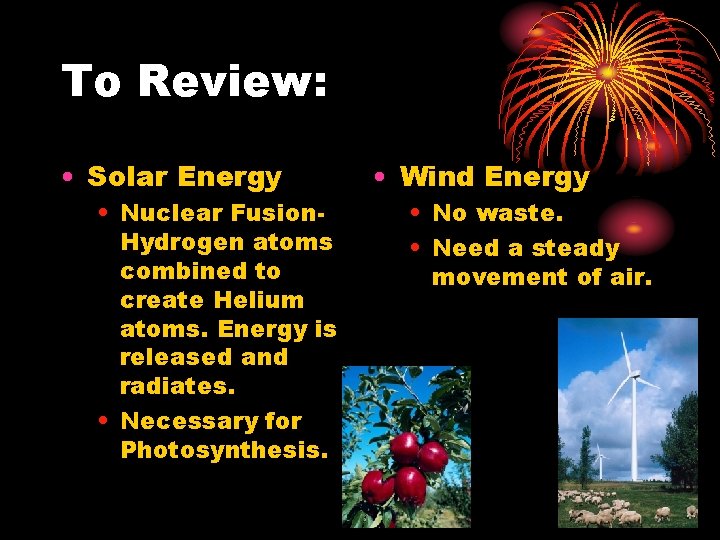
To Review: • Solar Energy • Nuclear Fusion. Hydrogen atoms combined to create Helium atoms. Energy is released and radiates. • Necessary for Photosynthesis. • Wind Energy • No waste. • Need a steady movement of air.
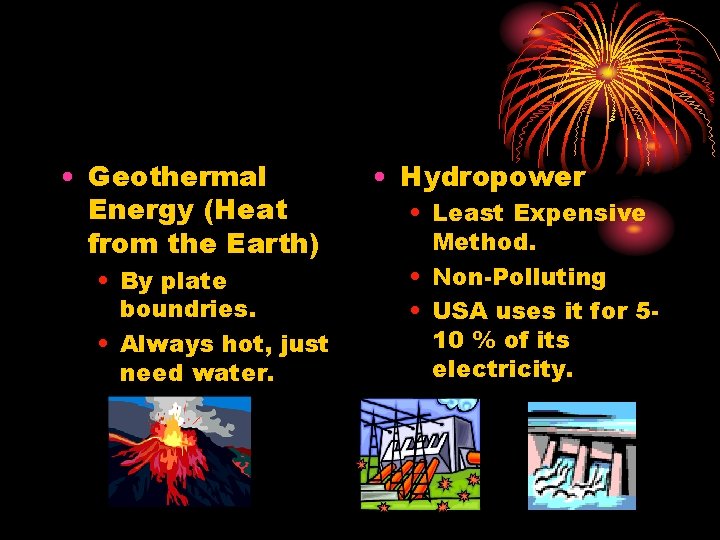
• Geothermal Energy (Heat from the Earth) • By plate boundries. • Always hot, just need water. • Hydropower • Least Expensive Method. • Non-Polluting • USA uses it for 510 % of its electricity.
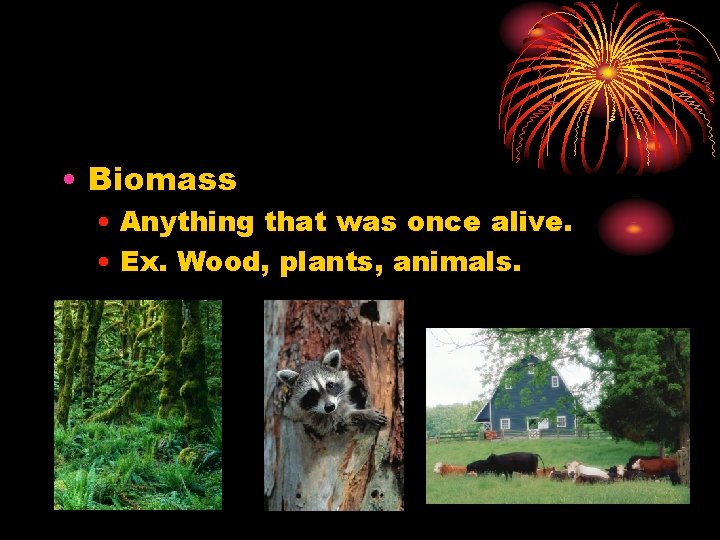
• Biomass • Anything that was once alive. • Ex. Wood, plants, animals.
What are Non-Renewable Energy Resources? • Once used, can NOT be replaced. • Some examples include: • Uranium • Fossil fuels • Coal • Petroleum • Natural gas • Propane
Non-Renewable Resources
To Review: • USA mostly uses non-renewable resources- 94% • Fossil fuels formed millions of years ago from plants and animals before the dinosaurs. They sank, water and dirt piled on creating pressure, then they changed chemically.
• Coal- • Must be mined. • Last about 300 more years. • Creates acid rain • Natural Gas • Cleanest to burn • Used to heat mostly. • About 50 years left.
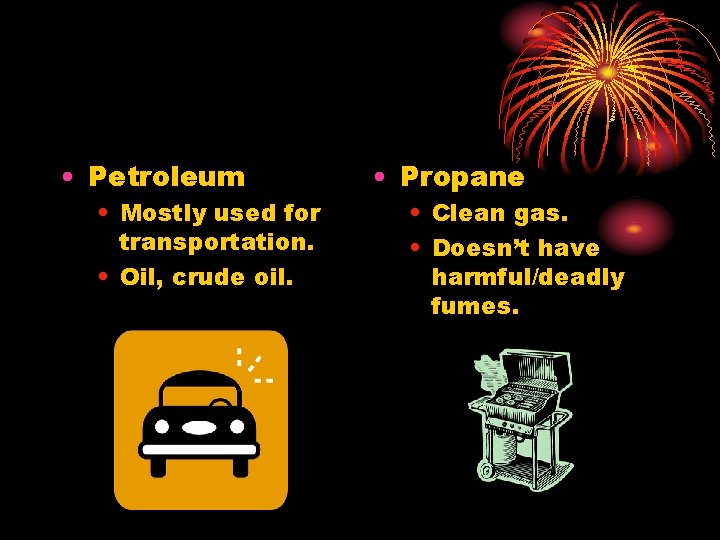
• Petroleum • Mostly used for transportation. • Oil, crude oil. • Propane • Clean gas. • Doesn’t have harmful/deadly fumes.
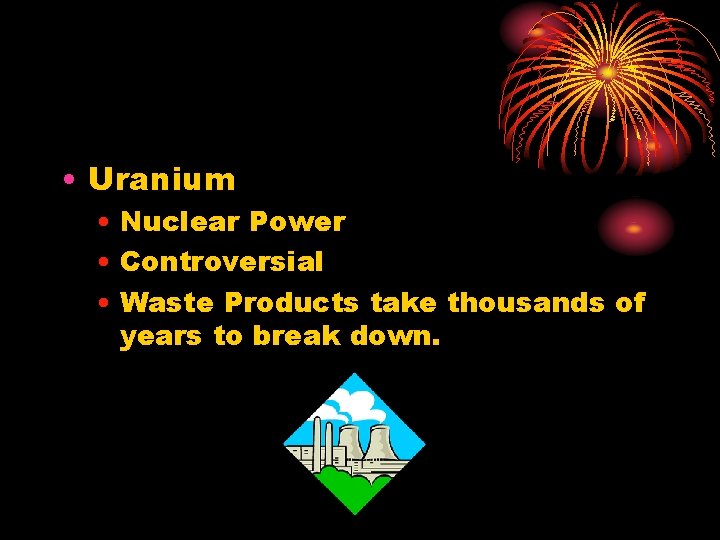
• Uranium • Nuclear Power • Controversial • Waste Products take thousands of years to break down.
Law of Conservation of Energy • States that energy can neither be created nor destroyed, only transformed.
Video
To conclude: • Energy is all around you. • Living organisms need energy to grow and move. • All energy can be transformed into other forms of energy.