
Energy in Ecosystems KEY CONCEPT Life in an
- Slides: 16
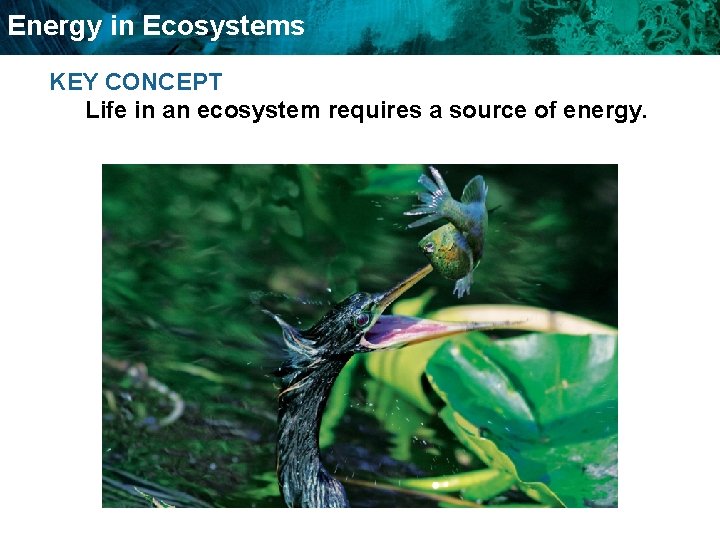
Energy in Ecosystems KEY CONCEPT Life in an ecosystem requires a source of energy.
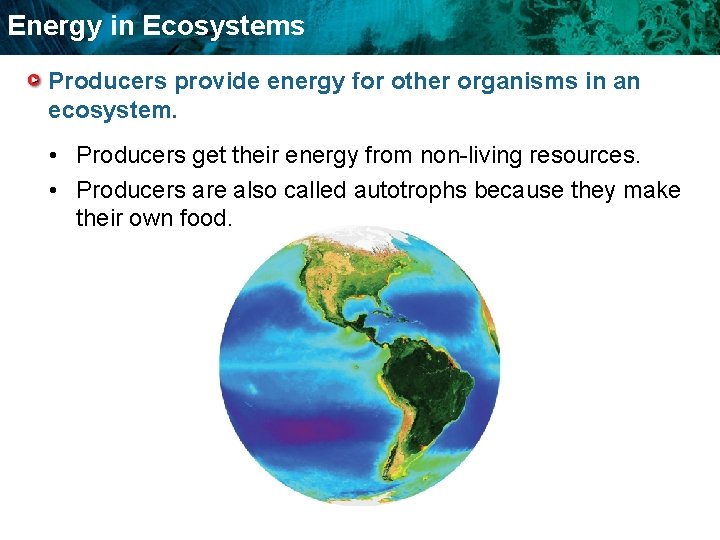
Energy in Ecosystems Producers provide energy for other organisms in an ecosystem. • Producers get their energy from non-living resources. • Producers are also called autotrophs because they make their own food.
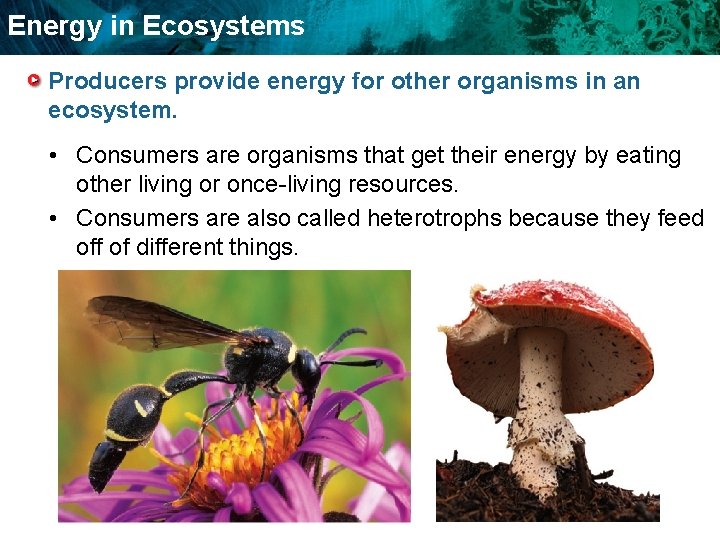
Energy in Ecosystems Producers provide energy for other organisms in an ecosystem. • Consumers are organisms that get their energy by eating other living or once-living resources. • Consumers are also called heterotrophs because they feed off of different things.
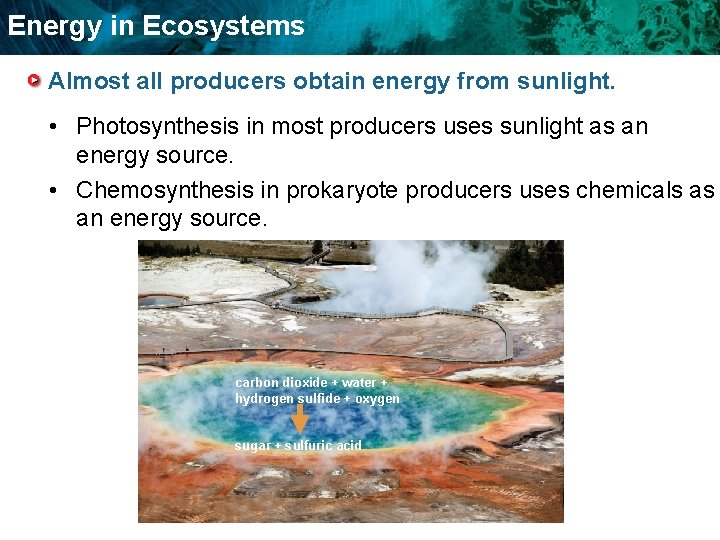
Energy in Ecosystems Almost all producers obtain energy from sunlight. • Photosynthesis in most producers uses sunlight as an energy source. • Chemosynthesis in prokaryote producers uses chemicals as an energy source. carbon dioxide + water + hydrogen sulfide + oxygen sugar + sulfuric acid
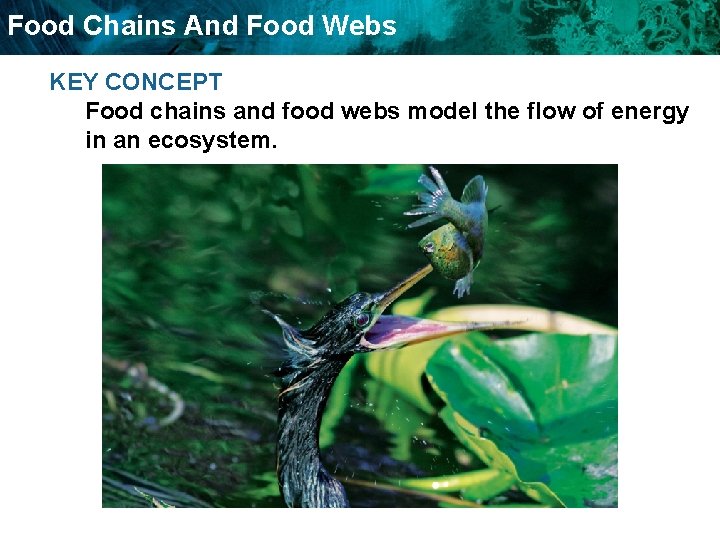
Food Chains And Food Webs KEY CONCEPT Food chains and food webs model the flow of energy in an ecosystem.
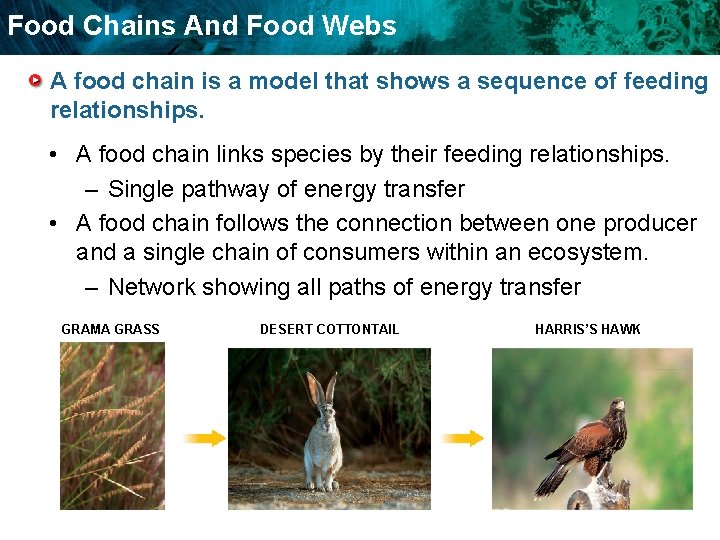
Food Chains And Food Webs A food chain is a model that shows a sequence of feeding relationships. • A food chain links species by their feeding relationships. – Single pathway of energy transfer • A food chain follows the connection between one producer and a single chain of consumers within an ecosystem. – Network showing all paths of energy transfer GRAMA GRASS DESERT COTTONTAIL HARRIS’S HAWK
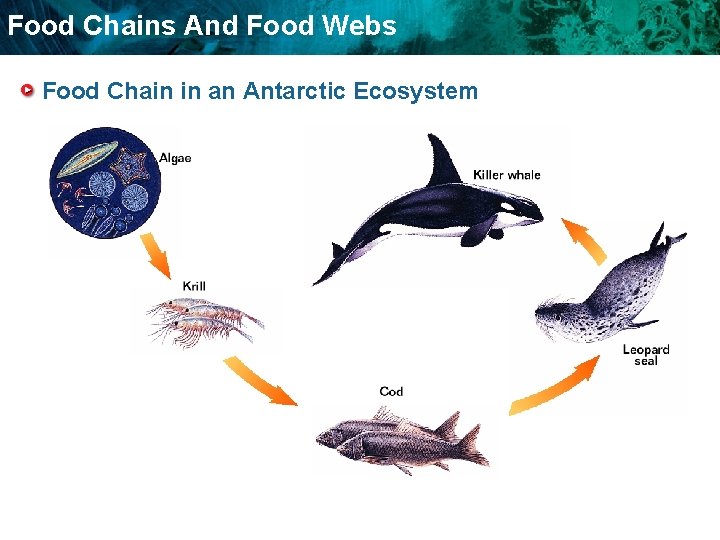
Food Chains And Food Webs Food Chain in an Antarctic Ecosystem
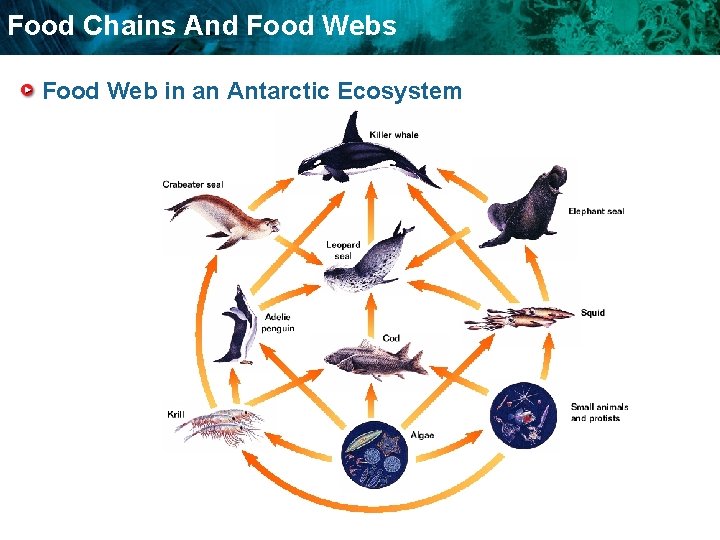
Food Chains And Food Webs Food Web in an Antarctic Ecosystem
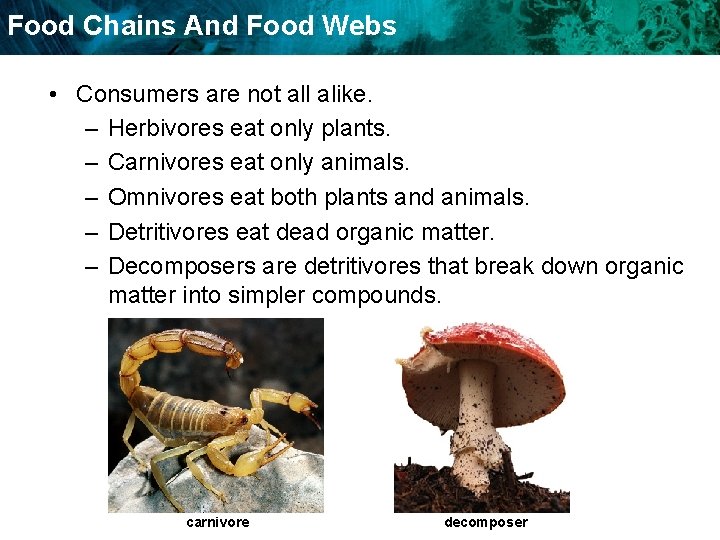
Food Chains And Food Webs • Consumers are not all alike. – Herbivores eat only plants. – Carnivores eat only animals. – Omnivores eat both plants and animals. – Detritivores eat dead organic matter. – Decomposers are detritivores that break down organic matter into simpler compounds. carnivore decomposer
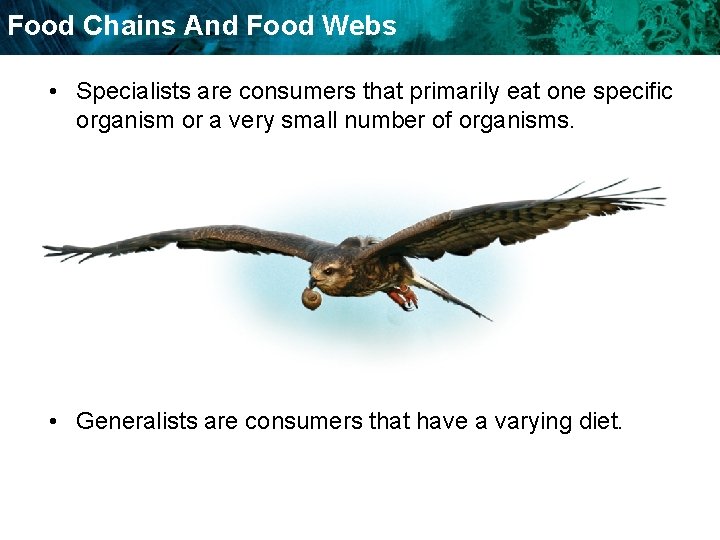
Food Chains And Food Webs • Specialists are consumers that primarily eat one specific organism or a very small number of organisms. • Generalists are consumers that have a varying diet.
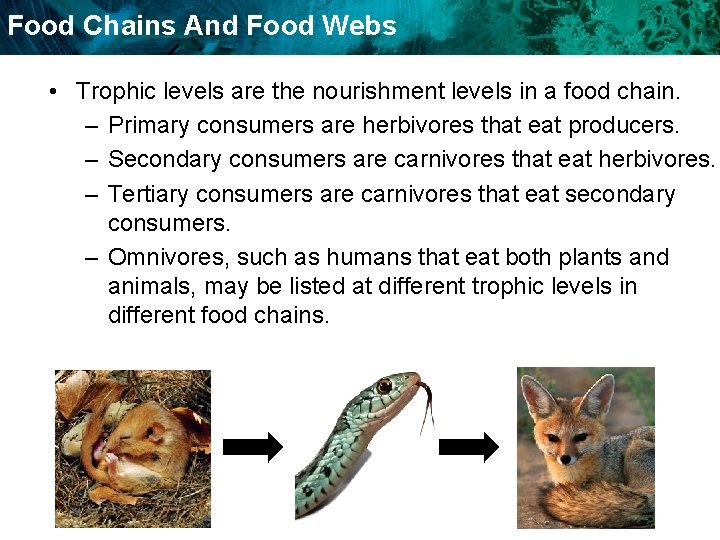
Food Chains And Food Webs • Trophic levels are the nourishment levels in a food chain. – Primary consumers are herbivores that eat producers. – Secondary consumers are carnivores that eat herbivores. – Tertiary consumers are carnivores that eat secondary consumers. – Omnivores, such as humans that eat both plants and animals, may be listed at different trophic levels in different food chains.
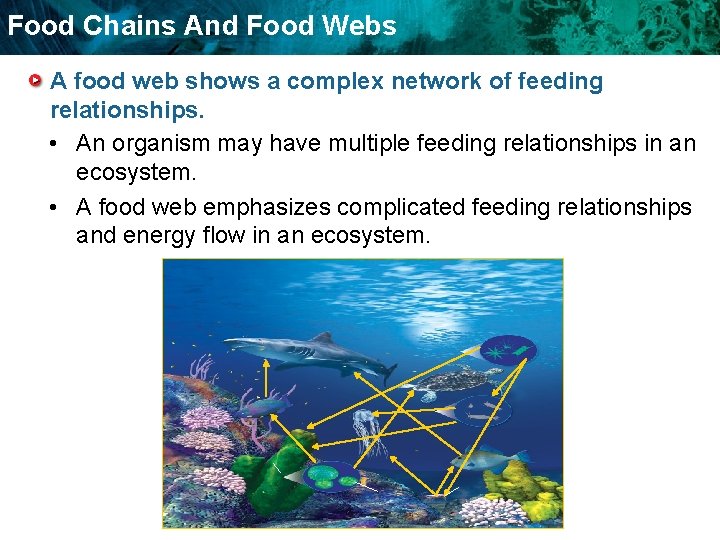
Food Chains And Food Webs A food web shows a complex network of feeding relationships. • An organism may have multiple feeding relationships in an ecosystem. • A food web emphasizes complicated feeding relationships and energy flow in an ecosystem.
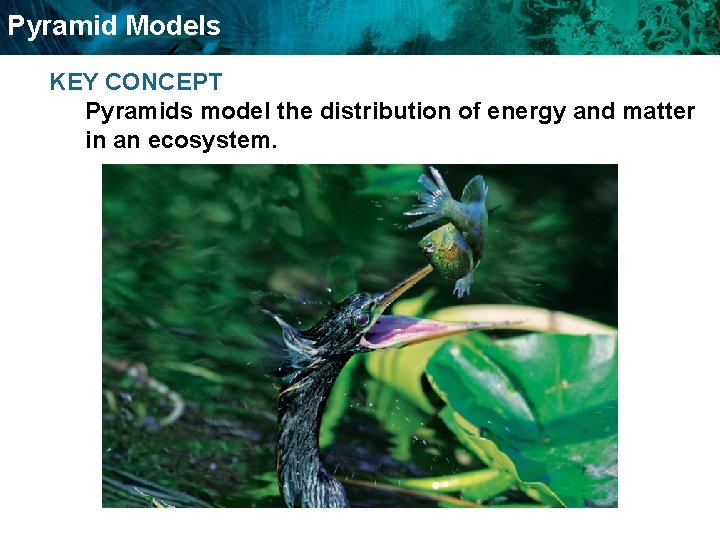
Pyramid Models KEY CONCEPT Pyramids model the distribution of energy and matter in an ecosystem.
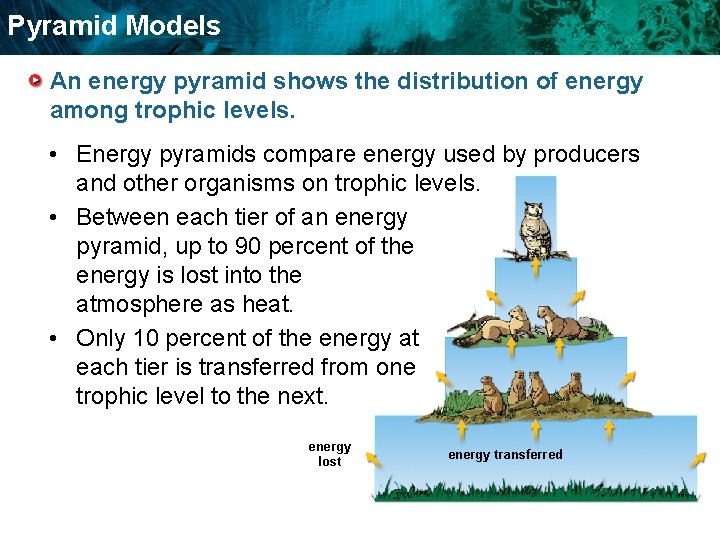
Pyramid Models An energy pyramid shows the distribution of energy among trophic levels. • Energy pyramids compare energy used by producers and other organisms on trophic levels. • Between each tier of an energy pyramid, up to 90 percent of the energy is lost into the atmosphere as heat. • Only 10 percent of the energy at each tier is transferred from one trophic level to the next. energy lost energy transferred
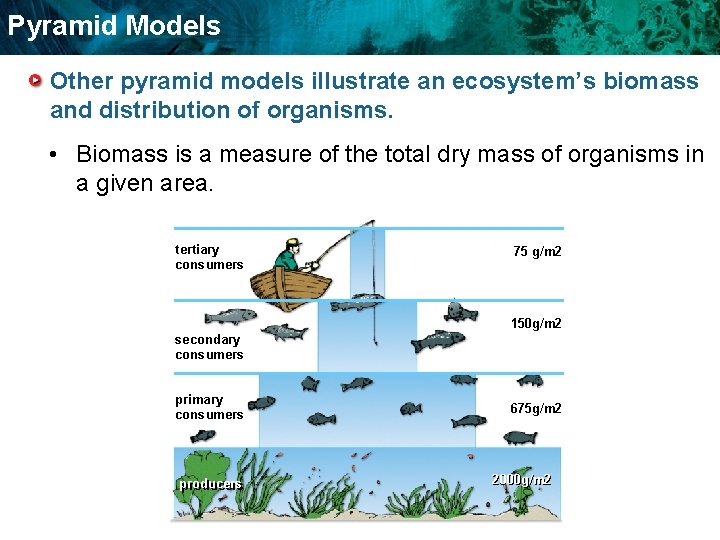
Pyramid Models Other pyramid models illustrate an ecosystem’s biomass and distribution of organisms. • Biomass is a measure of the total dry mass of organisms in a given area. tertiary consumers 75 g/m 2 150 g/m 2 secondary consumers primary consumers producers 675 g/m 2 2000 g/m 2
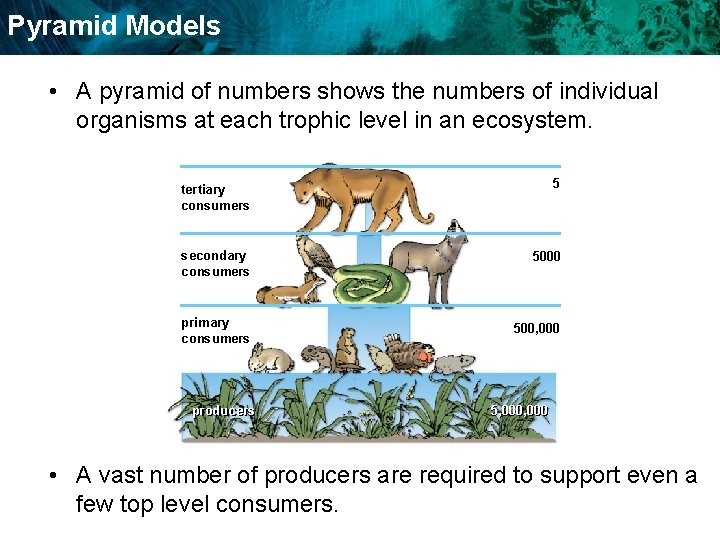
Pyramid Models • A pyramid of numbers shows the numbers of individual organisms at each trophic level in an ecosystem. tertiary consumers 5 secondary consumers 5000 primary consumers 500, 000 producers 5, 000 • A vast number of producers are required to support even a few top level consumers.