
Energy In A Cell Photosynthesis Cellular Respiration The
- Slides: 73
Energy In A Cell Photosynthesis Cellular Respiration
The Need for Energy • All cells use energy for life processes. • Potential energy is stored energy. Ex: compressed spring. • Kinetic energy is energy in motion. Ex: moving parts in an engine. • Chemical energy- energy contained in chemical bonds and released by chemical reactions; Ex: energy from food, gas, batteries, any combustible fuel
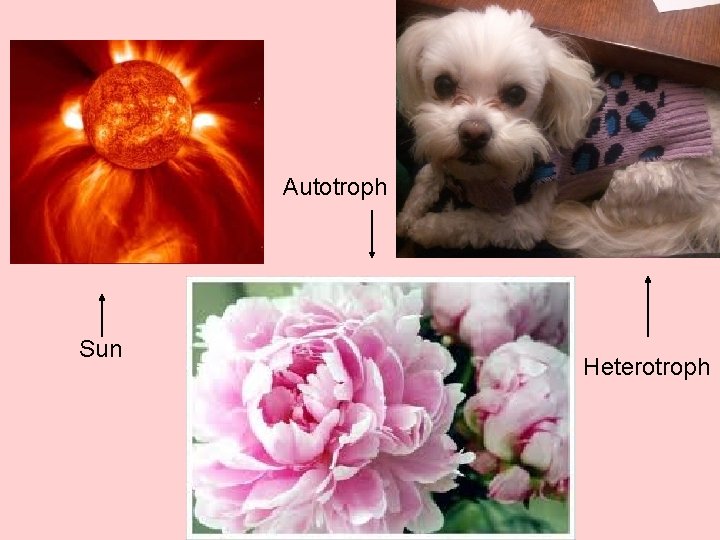
• Where do cells get energy? Food (chemical energy) • What is the original energy source for most organisms? Sunlight (electromagnetic energy) – Autotrophs- (producers) make their own food from the sun’s energy. Ex: Plants – Heterotrophs- (consumers) organisms unable to make their own food; they depend on other organisms for a source of food. Ex: animals, fungi
Autotroph Sun Heterotroph
II. Thermodynamics A. The study of energy (heat dynamics). B. There are two thermodynamic laws that govern all the activities of our universe. One applies to this unit. 1. First law of thermodynamics: a. energy cannot be created or destroyed b. It can change forms or move through a system, which organisms rely on c. Generally, biological energy is lost to the biosphere in the form of heat, which decreases the amount of energy at each step
• Reactants- the substance that changes during a chemical reaction; what the reaction starts with • Products- the substance resulting from a chemical reaction; what is produced at the end of a reaction • In photosynthesis and cellular respirations, these arrows/reactions only travel in one direction, so: – Left of the arrow is reactants – Right of the arrow is products
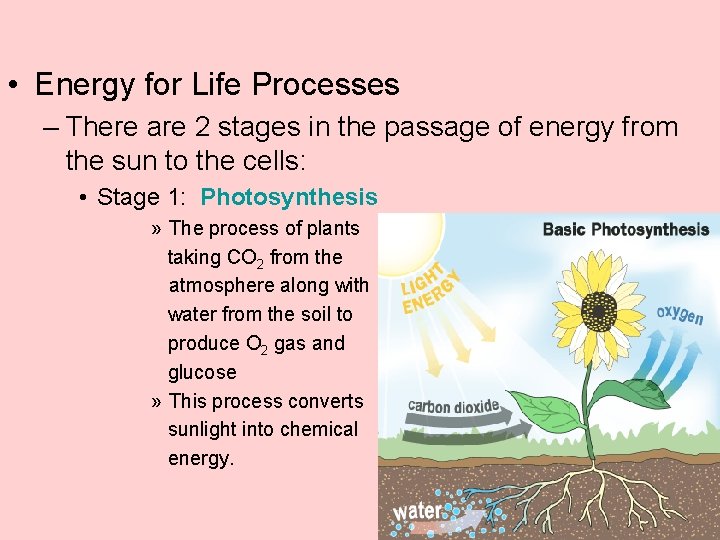
• Energy for Life Processes – There are 2 stages in the passage of energy from the sun to the cells: • Stage 1: Photosynthesis » The process of plants taking CO 2 from the atmosphere along with water from the soil to produce O 2 gas and glucose » This process converts sunlight into chemical energy.
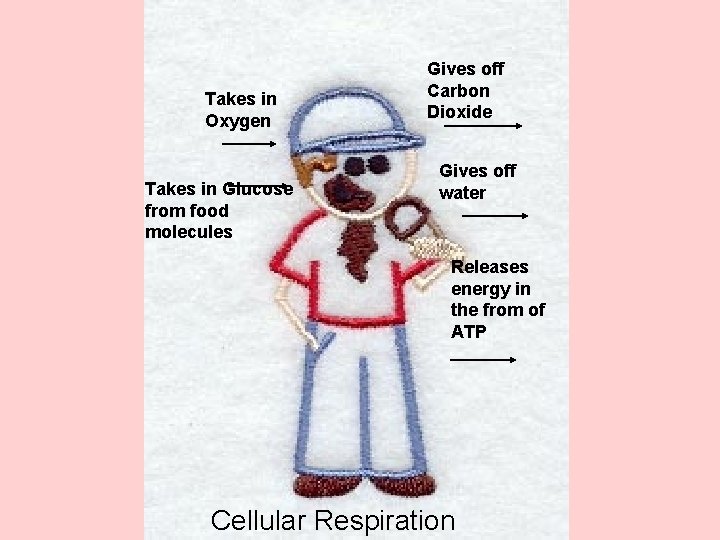
Energy for Life Process Cont. • Stage 2 Cellular Respiration – The process of taking oxygen gas from the atmosphere and glucose from food molecules to produce CO 2, H 2 O, and energy in the form ATP. – **This process occurs in the mitochondria and the cytoplasm of cells. ** – This process does not occur in prokaryotes, since they do not have mitochondria. Cellular Respiration takes in food to give us energy!! This player really needed ENERGY!
State Test Question • Many cell processes cannot directly use the energy from food. Which organelles covert food energy to a form that can be used by the cell? a) b) c) d) Endoplasmic reticulum Golgi body Ribosomes Mitochondria
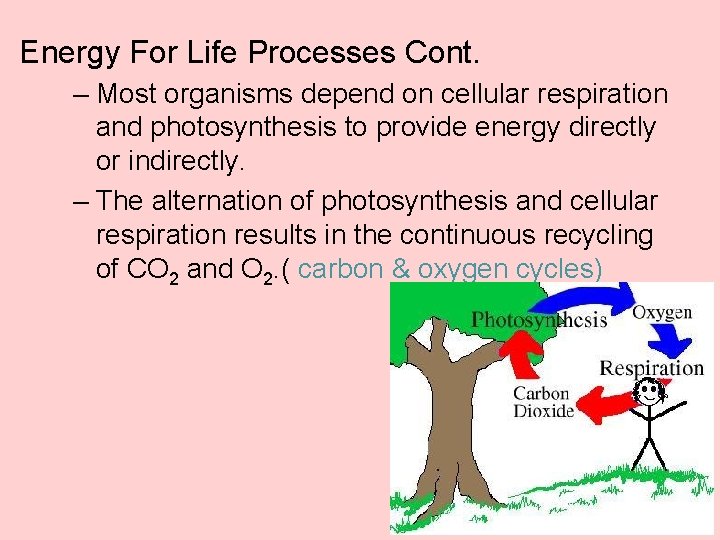
Energy For Life Processes Cont. – Most organisms depend on cellular respiration and photosynthesis to provide energy directly or indirectly. – The alternation of photosynthesis and cellular respiration results in the continuous recycling of CO 2 and O 2. ( carbon & oxygen cycles)
• Metabolism: – set of chemical reactions that takes place in cells to maintain life – Conversion of energy within a cell ATP: – Main form of energy used by cells of living organisms – Stores and releases SHORT TERM energy – Made when organisms break down food (chemical energy) like glucose, starch, and other sugars/carbohydrates
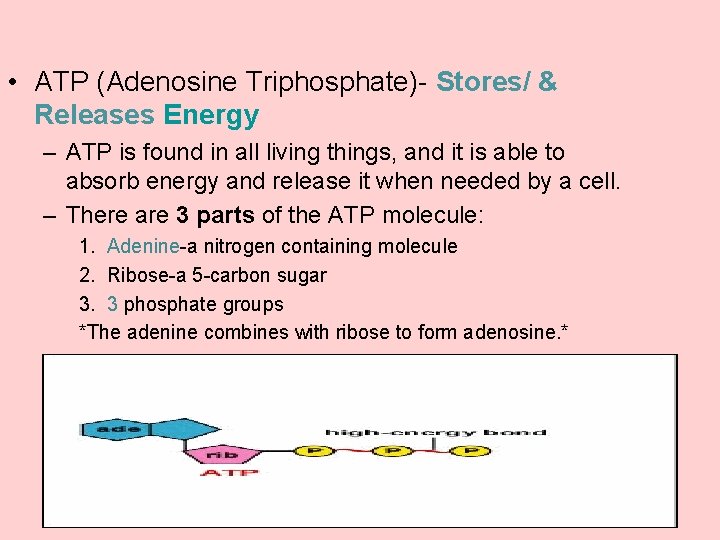
• ATP (Adenosine Triphosphate)- Stores/ & Releases Energy – ATP is found in all living things, and it is able to absorb energy and release it when needed by a cell. – There are 3 parts of the ATP molecule: 1. Adenine-a nitrogen containing molecule 2. Ribose-a 5 -carbon sugar 3. 3 phosphate groups *The adenine combines with ribose to form adenosine. *
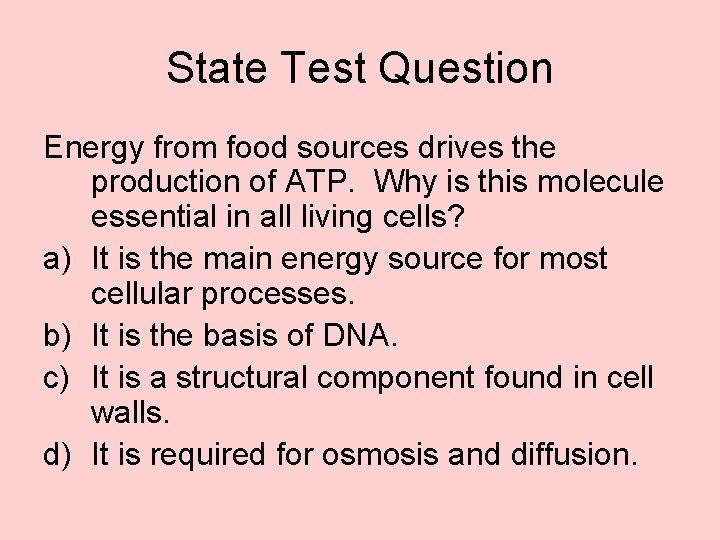
State Test Question Energy from food sources drives the production of ATP. Why is this molecule essential in all living cells? a) It is the main energy source for most cellular processes. b) It is the basis of DNA. c) It is a structural component found in cell walls. d) It is required for osmosis and diffusion.
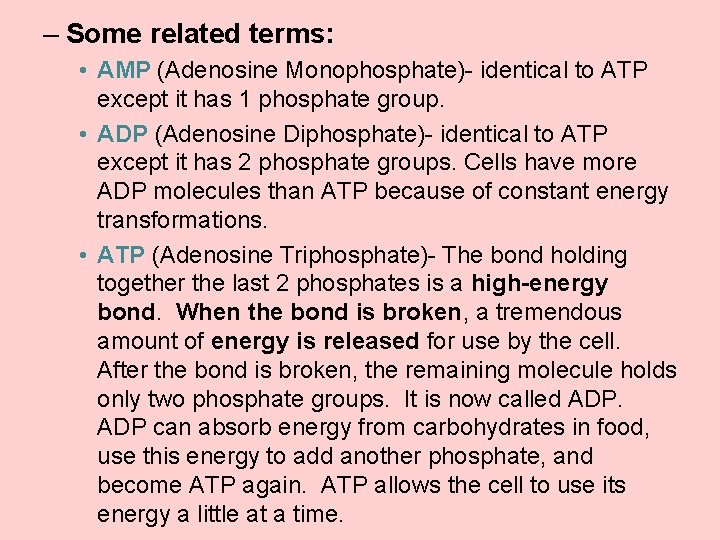
– Some related terms: • AMP (Adenosine Monophosphate)- identical to ATP except it has 1 phosphate group. • ADP (Adenosine Diphosphate)- identical to ATP except it has 2 phosphate groups. Cells have more ADP molecules than ATP because of constant energy transformations. • ATP (Adenosine Triphosphate)- The bond holding together the last 2 phosphates is a high-energy bond. When the bond is broken, a tremendous amount of energy is released for use by the cell. After the bond is broken, the remaining molecule holds only two phosphate groups. It is now called ADP can absorb energy from carbohydrates in food, use this energy to add another phosphate, and become ATP again. ATP allows the cell to use its energy a little at a time.
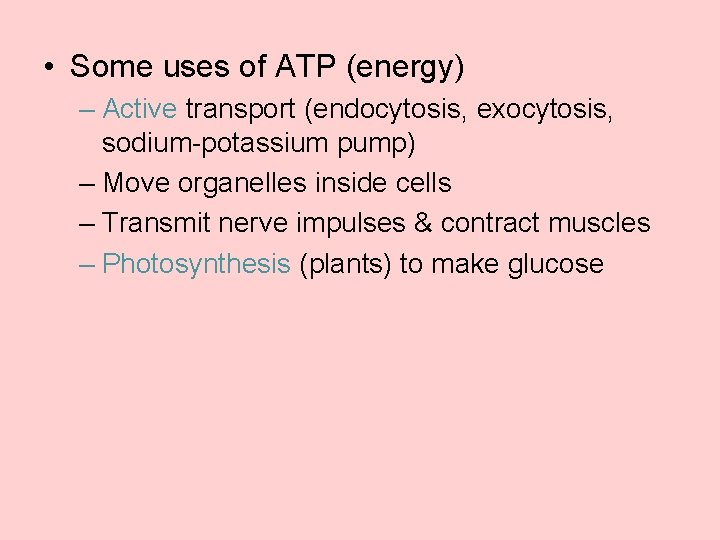
• Some uses of ATP (energy) – Active transport (endocytosis, exocytosis, sodium-potassium pump) – Move organelles inside cells – Transmit nerve impulses & contract muscles – Photosynthesis (plants) to make glucose
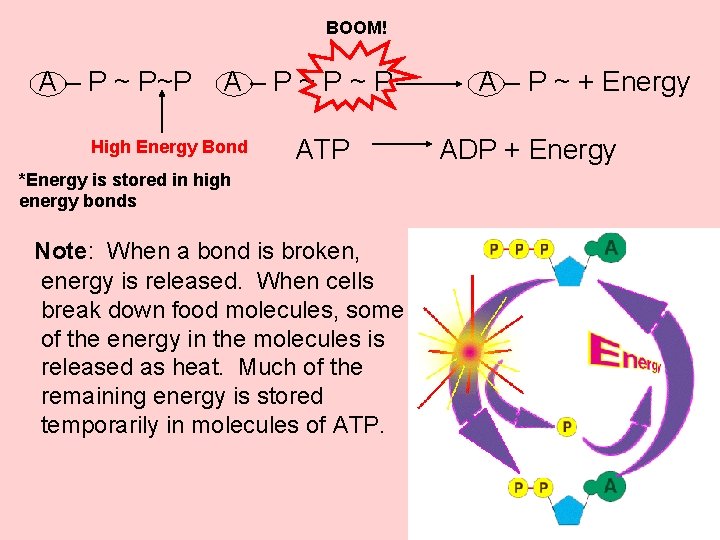
BOOM! A – P ~ P~P A–P~P~P High Energy Bond ATP *Energy is stored in high energy bonds Note: When a bond is broken, energy is released. When cells break down food molecules, some of the energy in the molecules is released as heat. Much of the remaining energy is stored temporarily in molecules of ATP. A – P ~ + Energy ADP + Energy
State Test Question ATP is continuously regenerated from ADP when energy released by cellular respiration is used in an endergonic reaction. Energy stored in food is released when— • chemical bonds are broken. • atomic nuclei are split. • elements combine. • electrons are produced.
State Test Question a) b) c) d) ATP is called the energy currency for cells because it— is a constantly renewing source of energy. is the ultimate source of energy on Earth. is the exchange molecule for energy transfers. provides energy for exergonic reactions.
State Test Question a) b) c) d) The process of breaking down ATP to ADP is termed— fermentation. an exergonic reaction. an endergonic reaction. a synthesis reaction.
State Test Question a) b) c) d) Energy for most cellular processes is obtained by breaking a bond between which two components of ATP? Phosphate and nitrogen Phosphate and carbon Phosphate and adenosine Phosphate and phosphate
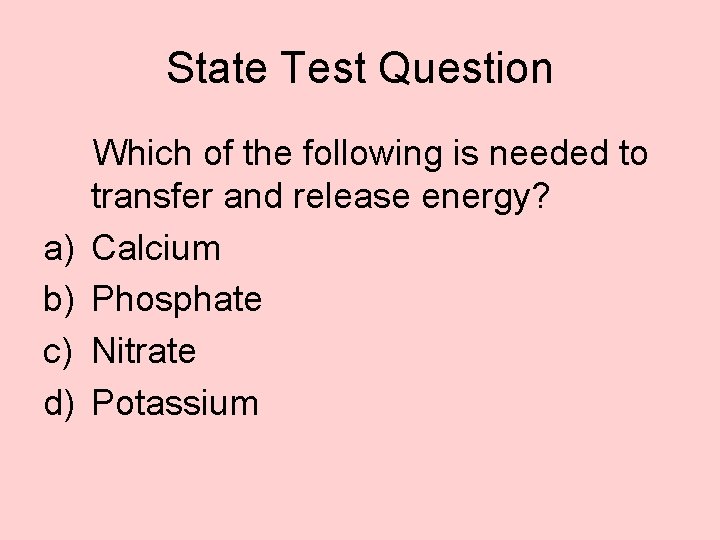
State Test Question a) b) c) d) Which of the following is needed to transfer and release energy? Calcium Phosphate Nitrate Potassium
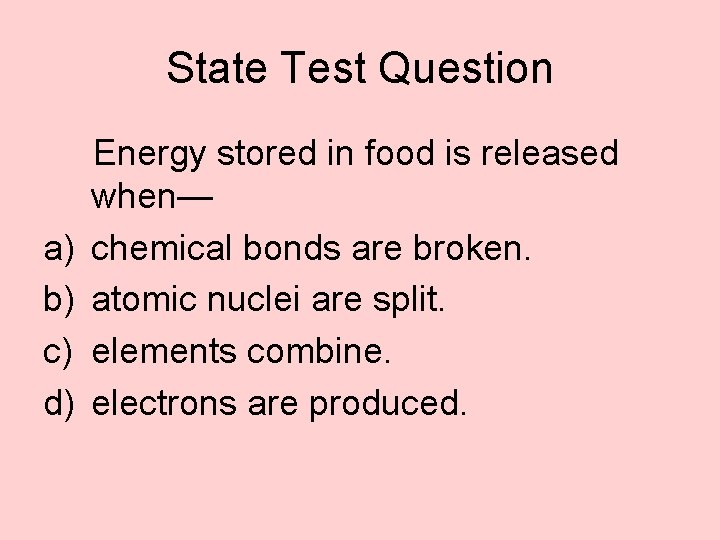
State Test Question a) b) c) d) Energy stored in food is released when— chemical bonds are broken. atomic nuclei are split. elements combine. electrons are produced.
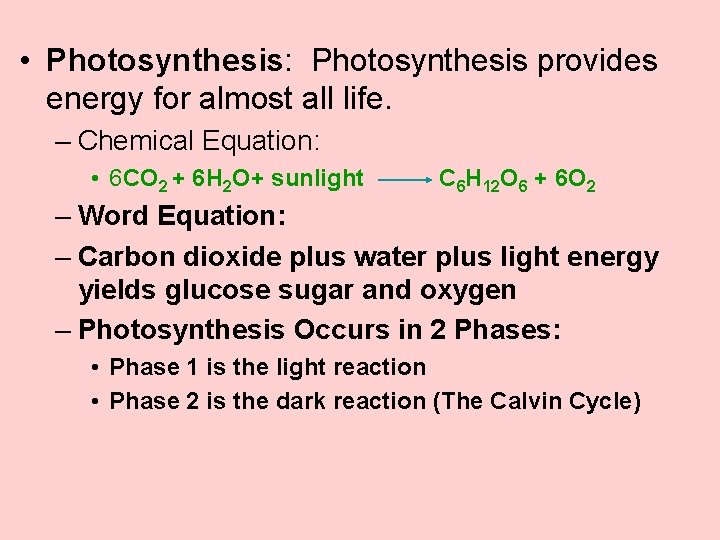
• Photosynthesis: Photosynthesis provides energy for almost all life. – Chemical Equation: • 6 CO 2 + 6 H 2 O+ sunlight C 6 H 12 O 6 + 6 O 2 – Word Equation: – Carbon dioxide plus water plus light energy yields glucose sugar and oxygen – Photosynthesis Occurs in 2 Phases: • Phase 1 is the light reaction • Phase 2 is the dark reaction (The Calvin Cycle)
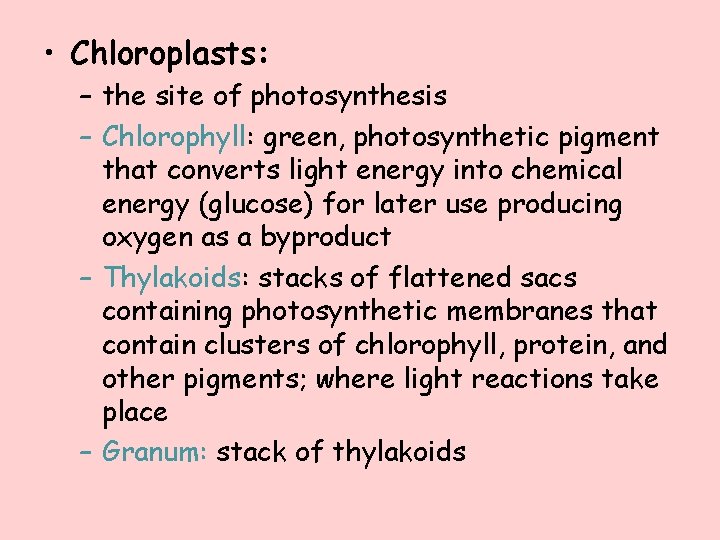
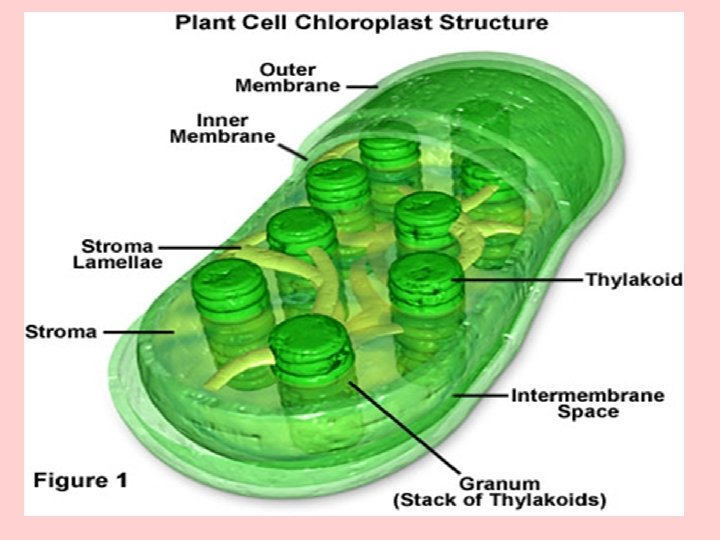
• Chloroplasts: – the site of photosynthesis – Chlorophyll: green, photosynthetic pigment that converts light energy into chemical energy (glucose) for later use producing oxygen as a byproduct – Thylakoids: stacks of flattened sacs containing photosynthetic membranes that contain clusters of chlorophyll, protein, and other pigments; where light reactions take place – Granum: stack of thylakoids
– Photosystems: energy capturing elements of thylakoids in chloroplasts – Stroma: watery fluid surrounding thylakoids in chloroplasts; where Calvin cycle takes place – Not all photosynthetic organisms are green. Red and brown algae (protists) rely on other pigments for photosynthesis – Some bacteria like cyanobacteria are also photosynthetic
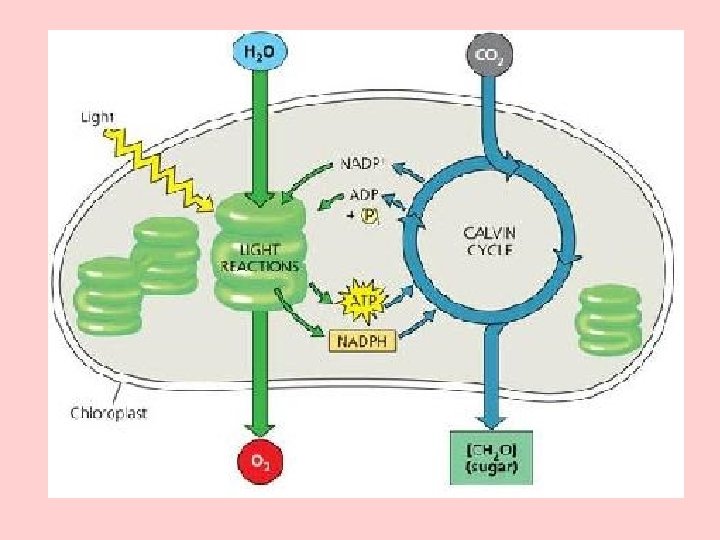
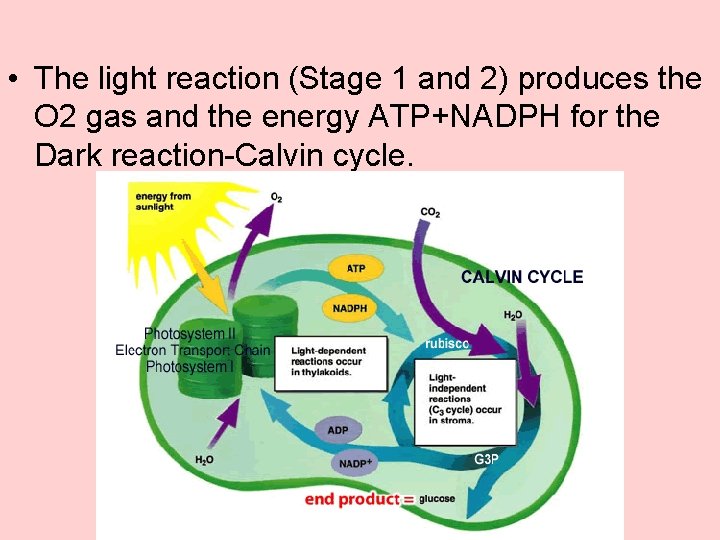
• Phase 1. The light reaction or light-dependent reaction • Occurs in thylakoids – Stage 1: Sunlight energy excites electrons in photosystems (chlorophyll, protein, & accessory pigments) • Stage 2: Light energy is converted to chemical energy • Once electrons are energized in the photosystems, water is split (photolysis) • Photolysis releases oxygen into the atmosphere as a byproduct • The rest of the hydrogen ions and electrons attach to the carrier molecule NADP+ (making it NADPH+) in the electron transport chains (ETC) • ETCs convert ADP into ATP (storing chemical energy in the bonds between phosphate groups)
State Test Question The light-dependent reactions of photosynthesis use the Sun’s energy to produce— a) glucose. b) chemical energy. c) carbon dioxide. d) water.
• The light reaction (Stage 1 and 2) produces the O 2 gas and the energy ATP+NADPH for the Dark reaction-Calvin cycle.
State Test Question In the light-dependent phase of photosynthesis, energy from the Sun is used to drive the production of which of the following molecules? a) Proteins b) Carbohydrates c) ATP d) ADP
State Test Question The process of photosynthesis produces sugar, water and— a) hydrogen gas. b) nitrogen dioxide gas. c) carbon dioxide gas. d) oxygen gas.
State Test Question The glucose produced during photosynthesis is an example of a— a) lipid. b) monosaccharide. c) protein. d) nucleic acid.
State Test Quesiton When excess sugar is produced in a plant, the plant will— a) release the sugar into the soil. b) convert the sugar into minerals. c) store the sugar by forming larger molecules. d) burn the leaves of the plant as it releases energy.
State Test Question Because most plants are able to undergo photosynthesis, they do NOT— a) require carbon dioxide. b) store energy for later use. c) undergo cellular respiration. d) depend on other organisms for energy.
State Test Question Photosynthesis begins when sunlight causes chlorophyll molecules to— a) produce sugars. b) absorb carbon dioxide. c) emit oxygen. d) emit electrons.
State Test Question In photosynthesis, light energy from the Sun is stored in the bonds of— a) lipids. b) carbohydrates. c) proteins. d) enzymes.
State Test Qustion What are the raw materials for photosynthesis? a) CO 2 and H 2 O b) H 2 O and O 2 c) C 6 H 12 O 6 and O 2 d) C 6 H 12 O 6 and H 2 O
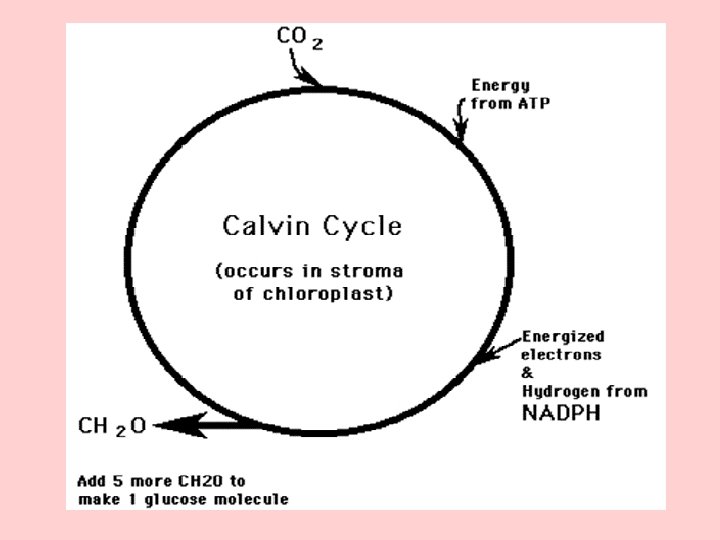
• Phase 2: The Dark Reaction: Calvin Cycle or light independent reaction – CO 2 enters the leaf through hundreds of small pores called stomata – CO 2 combines with ATP, NADPH+, and hydrogen ions to form C 6 H 12 O 6 -glucose (stores chemical energy long term) – carbohydrates can be combined to make complex carbohydrates like sucrose (disaccharide) & starch (polysaccharide) in which energy is stored for later use. So, this excess sugar is stored for use later. – Plants can use excess sugar for growth & development – ***The dark reaction-Calvin cycle produces the organic compound C 6 H 12 O 6 -glucose
• The Calvin cycle takes place in the stroma of the chloroplast • Remember the Calvin cycle deals with Carbon (turning CO 2 into C 6 H 12 O 6) • Carbon fixation is when inorganic carbon is turned into organic carbon, which occurs in photosynthesis in the Calvin cycle
State Test Question What are the main products of photosynthesis? a) Glucose and oxygen b) Glucose and water c) Carbon dioxide and water d) Water and ATP
State Test Question During photosynthesis, energy from the sun is trapped in— a) chemical bonds. b) the nuclei of atoms. c) enzymes. d) Golgi bodies.
Cellular Respiration – All living cells require energy and undergo cellular respiration – The process of taking O 2 gas from the atmosphere and glucose from food molecules to produce CO 2, H 2 O and energy in the form of ATP. Cellular Respiration produces ATP. Food molecule are broken down to release the energy in their bonds. Glucose is the energy source for cellular respiration. Respiration occurs in the cytoplasm; glycolysis) in the mitochondria (Citric Acid Cycle/ Krebs’ Cycle. )
Takes in Oxygen Takes in Glucose from food molecules Gives off Carbon Dioxide Gives off water Releases energy in the from of ATP Cellular Respiration
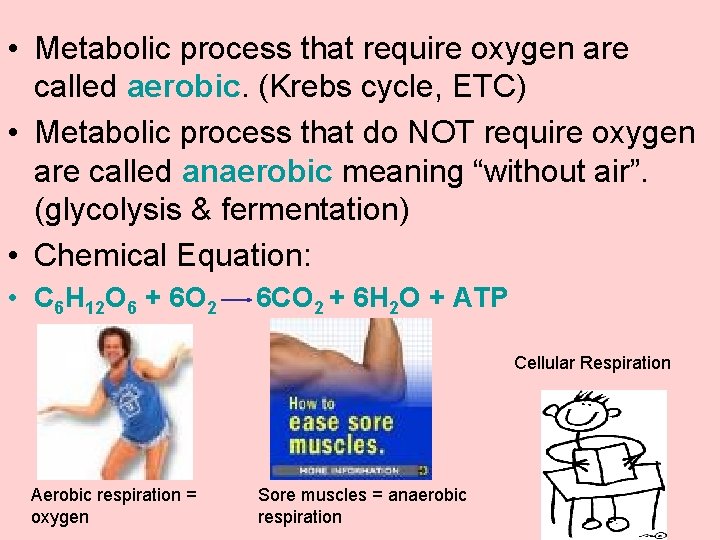
• Metabolic process that require oxygen are called aerobic. (Krebs cycle, ETC) • Metabolic process that do NOT require oxygen are called anaerobic meaning “without air”. (glycolysis & fermentation) • Chemical Equation: • C 6 H 12 O 6 + 6 O 2 6 CO 2 + 6 H 2 O + ATP Cellular Respiration Aerobic respiration = oxygen Sore muscles = anaerobic respiration
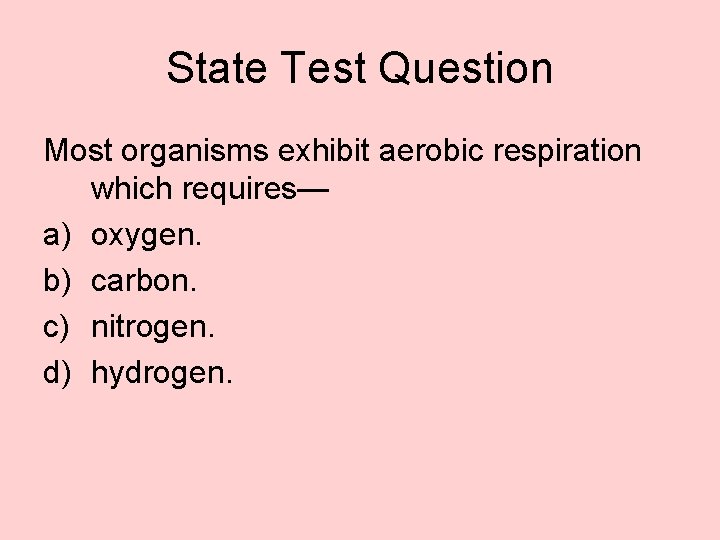
State Test Question Most organisms exhibit aerobic respiration which requires— a) oxygen. b) carbon. c) nitrogen. d) hydrogen.
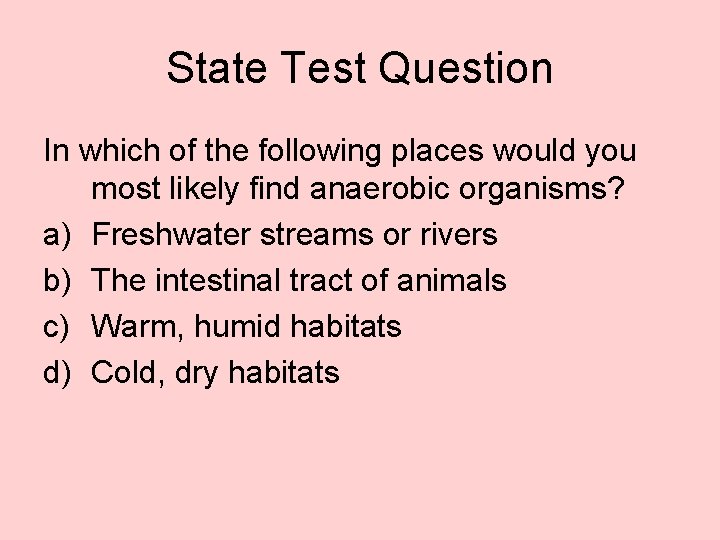
State Test Question In which of the following places would you most likely find anaerobic organisms? a) Freshwater streams or rivers b) The intestinal tract of animals c) Warm, humid habitats d) Cold, dry habitats
• Word equation: • Glucose plus oxygen yields carbon dioxide, water, and energy • Cellular Respiration (Aerobic Respiration with Oxygen) Occurs in 3 phases: – Phase 1 is Glycolysis (Anaerobic) – Phase 2 is the Citric Acid Cyle/Kreb’s Cycle (Aerobic) – Phase 3: Election Transport Chain (Aerobic)
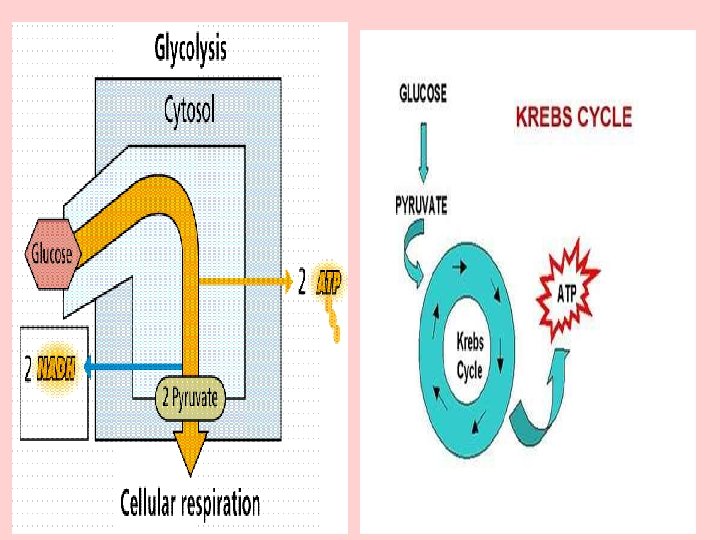
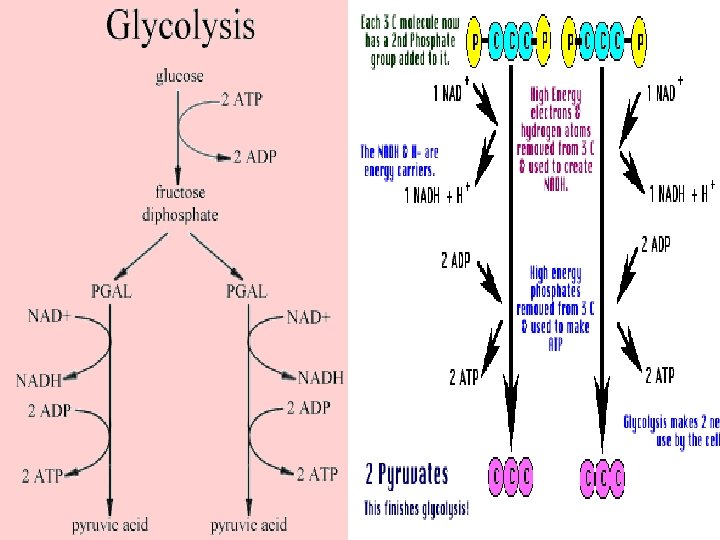
• Phase I: Anaerobic • Named: Glycolysis means the splitting of glucose – Oxygen is NOT directly involved in this step – Occurs in the cytoplasm of cells – The process of breaking down glucose begins with glycolysis, producing 2 molecules of ATP for each molecule of glucose broken down. – Glycolysis breaks down 1 glucose into 2 pyruvic acid. – Produces 2 ATPs • At the end of glycolysis if O 2 is NOT present, anaerobic respiration (without oxygen) takes place. • At the end of glycolysis if O 2 is present aerobic respiration (with oxygen) takes place (Citric Acid Cycle)
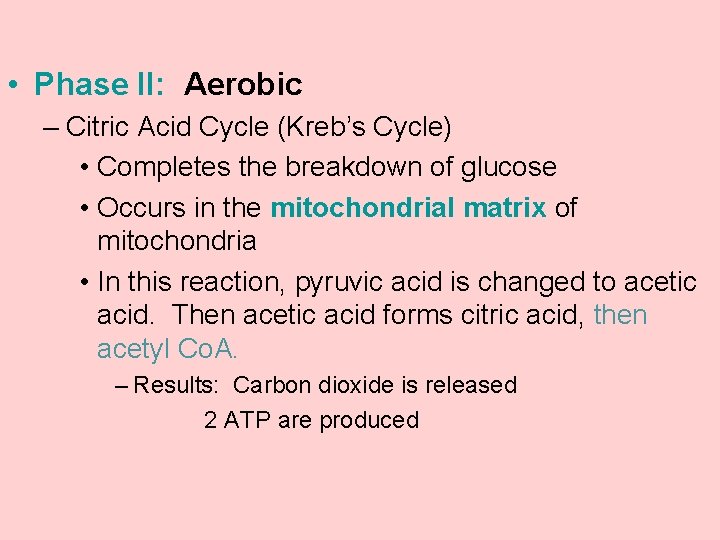
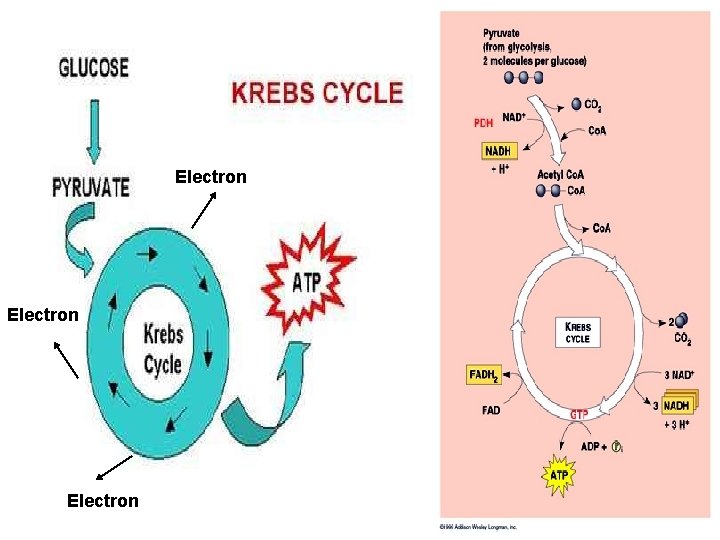
• Phase II: Aerobic – Citric Acid Cycle (Kreb’s Cycle) • Completes the breakdown of glucose • Occurs in the mitochondrial matrix of mitochondria • In this reaction, pyruvic acid is changed to acetic acid. Then acetic acid forms citric acid, then acetyl Co. A. – Results: Carbon dioxide is released 2 ATP are produced
State Test Question Which organelle performs cellular respiration? a) Lysosome b) Ribosome c) Chromosome d) Mitochondria
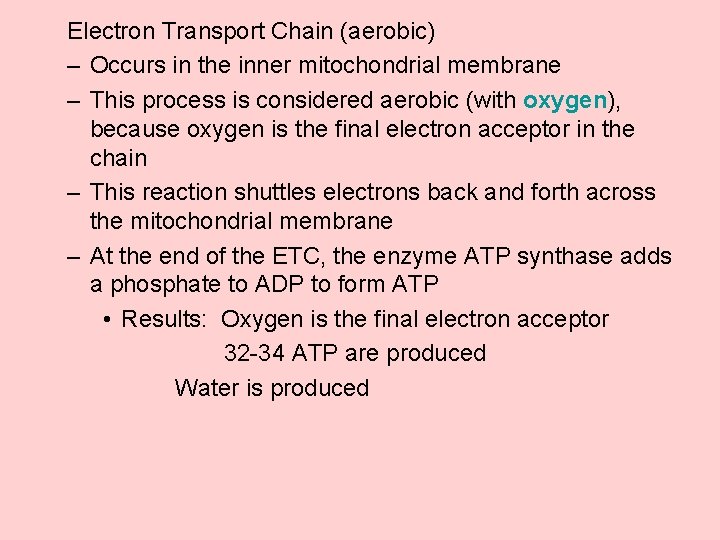
Electron Transport Chain (aerobic) – Occurs in the inner mitochondrial membrane – This process is considered aerobic (with oxygen), because oxygen is the final electron acceptor in the chain – This reaction shuttles electrons back and forth across the mitochondrial membrane – At the end of the ETC, the enzyme ATP synthase adds a phosphate to ADP to form ATP • Results: Oxygen is the final electron acceptor 32 -34 ATP are produced Water is produced
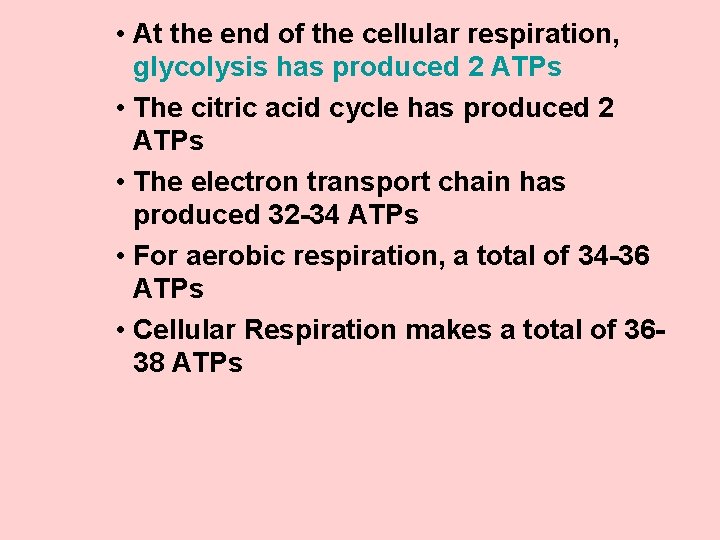
• At the end of the cellular respiration, glycolysis has produced 2 ATPs • The citric acid cycle has produced 2 ATPs • The electron transport chain has produced 32 -34 ATPs • For aerobic respiration, a total of 34 -36 ATPs • Cellular Respiration makes a total of 3638 ATPs
Electron
State Test Question • a) b) c) d) Both plant and animal cells have the ability to— make glucose. move. reproduce. release oxygen.
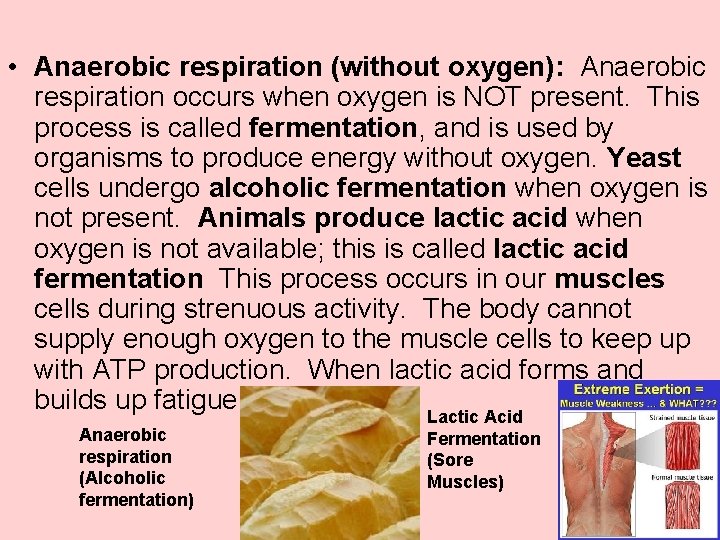
• Anaerobic respiration (without oxygen): Anaerobic respiration occurs when oxygen is NOT present. This process is called fermentation, and is used by organisms to produce energy without oxygen. Yeast cells undergo alcoholic fermentation when oxygen is not present. Animals produce lactic acid when oxygen is not available; this is called lactic acid fermentation This process occurs in our muscles cells during strenuous activity. The body cannot supply enough oxygen to the muscle cells to keep up with ATP production. When lactic acid forms and builds up fatigue sets in. Anaerobic respiration (Alcoholic fermentation) Lactic Acid Fermentation (Sore Muscles)
• Factors that affect the rate of fermentation: – Concentration of fermenting agent (yeast or bacteria) – Type of sugar being fermented – Concentration of nutrients/sugar – Temperature – p. H
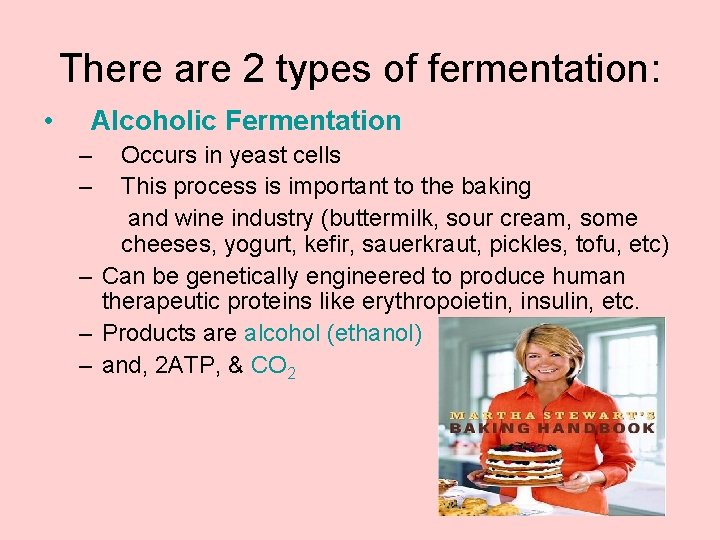
There are 2 types of fermentation: • Alcoholic Fermentation – – Occurs in yeast cells This process is important to the baking and wine industry (buttermilk, sour cream, some cheeses, yogurt, kefir, sauerkraut, pickles, tofu, etc) – Can be genetically engineered to produce human therapeutic proteins like erythropoietin, insulin, etc. – Products are alcohol (ethanol) – and, 2 ATP, & CO 2
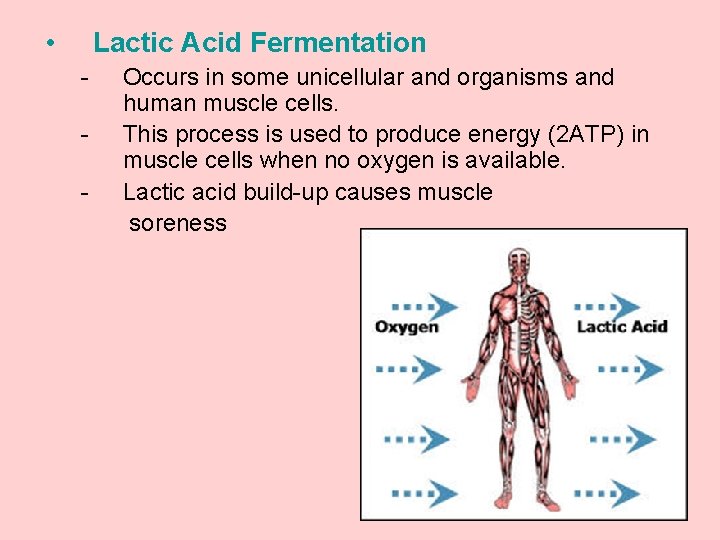
• Lactic Acid Fermentation - Occurs in some unicellular and organisms and human muscle cells. This process is used to produce energy (2 ATP) in muscle cells when no oxygen is available. Lactic acid build-up causes muscle soreness
State Test Question The energy from food that is used to produce ATP from ADP is— a) released via photosynthesis. b) stored as radiation energy. c) released in the Calvin cycle. d) stored in the bonds of glucose.
State Test Question As respiration begins, glucose is broken down into pyruvic acid and two molecules of ATP are formed. What will happen next in yeast cells if NO oxygen is available? a) Krebs cycle b) Photosynthesis c) Alcoholic fermentation d) Lactic acid fermentation
State Test Question Which of the following BEST describes the purpose of cellular respiration? a) The production ATP in animals cells b) The release of energy from glucose molecules inside the cell c) The diffusion of oxygen into and out of cells d) The production of amino acids
State Test Question Which step in aerobic cellular respiration produces the most ATP? • Glycolysis • Fermentation • Krebs cycle • Electron transport chain
State Test Question The aerobic process in cellular respiration uses the products of glycolysis in a series of enzyme-catalyzed reactions in the mitochondria to release CO 2. This process is called— a) photosynthesis. b) the Calvin cycle. c) the Krebs cycle. d) fermentation.
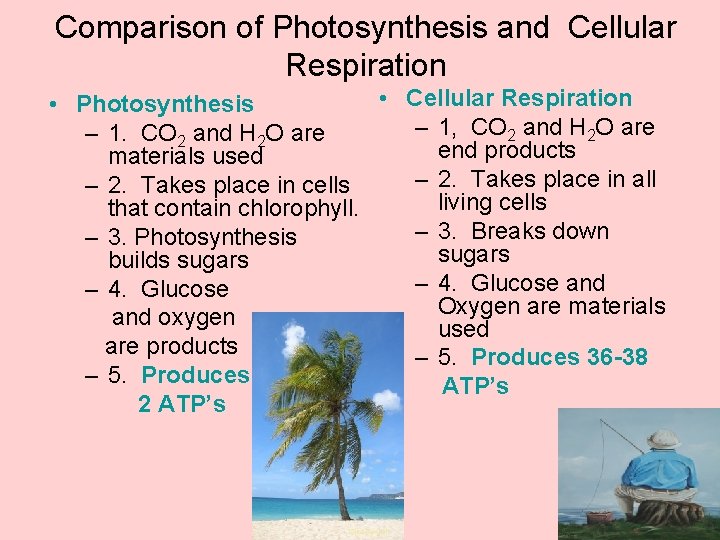
Comparison of Photosynthesis and Cellular Respiration • Photosynthesis – 1, CO 2 and H 2 O are – 1. CO 2 and H 2 O are end products materials used – 2. Takes place in all – 2. Takes place in cells living cells that contain chlorophyll. – 3. Breaks down – 3. Photosynthesis sugars builds sugars – 4. Glucose and – 4. Glucose Oxygen are materials and oxygen used are products – 5. Produces 36 -38 – 5. Produces ATP’s 2 ATP’s
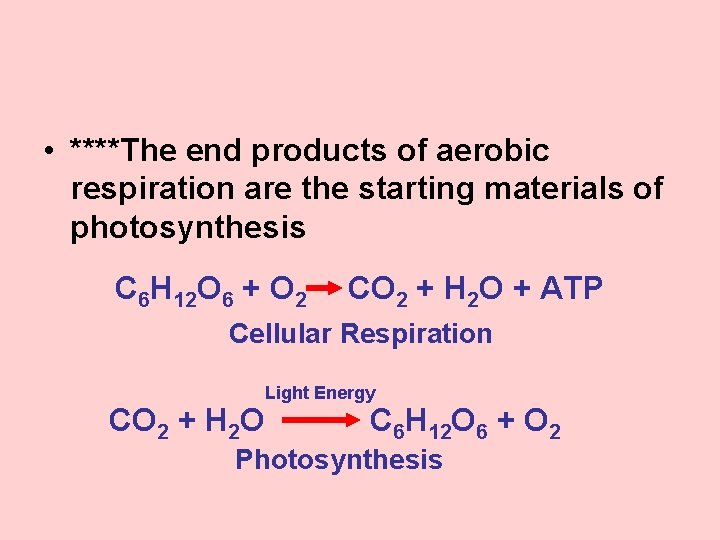
• ****The end products of aerobic respiration are the starting materials of photosynthesis C 6 H 12 O 6 + O 2 CO 2 + H 2 O + ATP Cellular Respiration CO 2 + H 2 O Light Energy C 6 H 12 O 6 + O 2 Photosynthesis
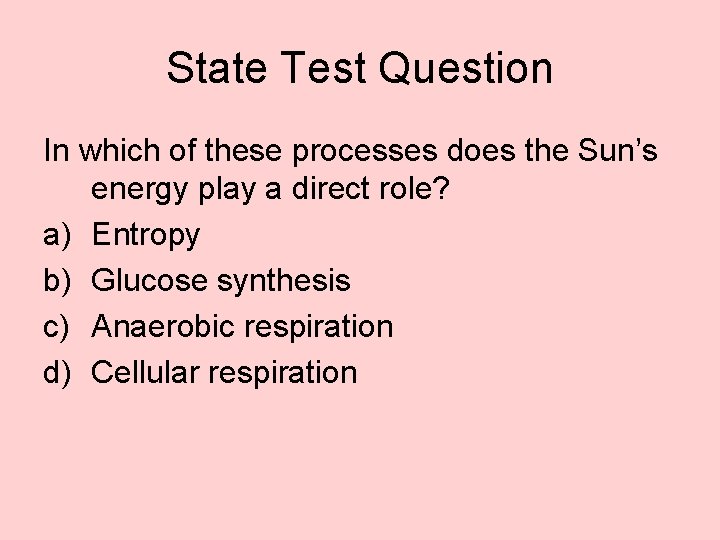
State Test Question In which of these processes does the Sun’s energy play a direct role? a) Entropy b) Glucose synthesis c) Anaerobic respiration d) Cellular respiration
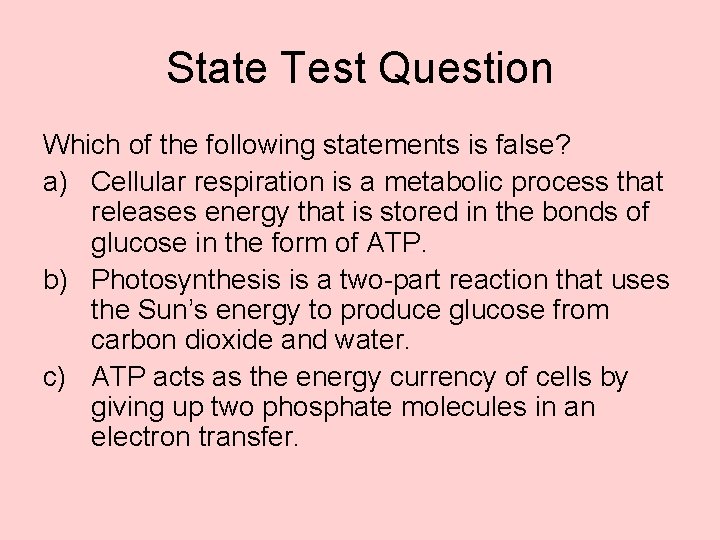
State Test Question Which of the following statements is false? a) Cellular respiration is a metabolic process that releases energy that is stored in the bonds of glucose in the form of ATP. b) Photosynthesis is a two-part reaction that uses the Sun’s energy to produce glucose from carbon dioxide and water. c) ATP acts as the energy currency of cells by giving up two phosphate molecules in an electron transfer.
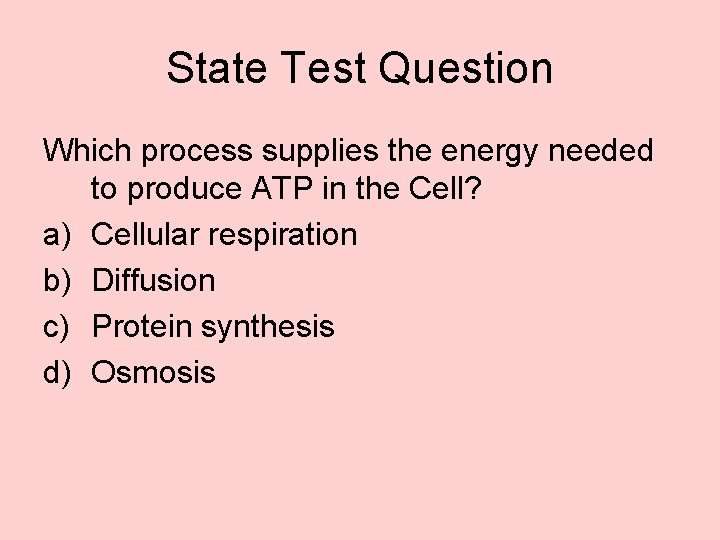
State Test Question Which process supplies the energy needed to produce ATP in the Cell? a) Cellular respiration b) Diffusion c) Protein synthesis d) Osmosis
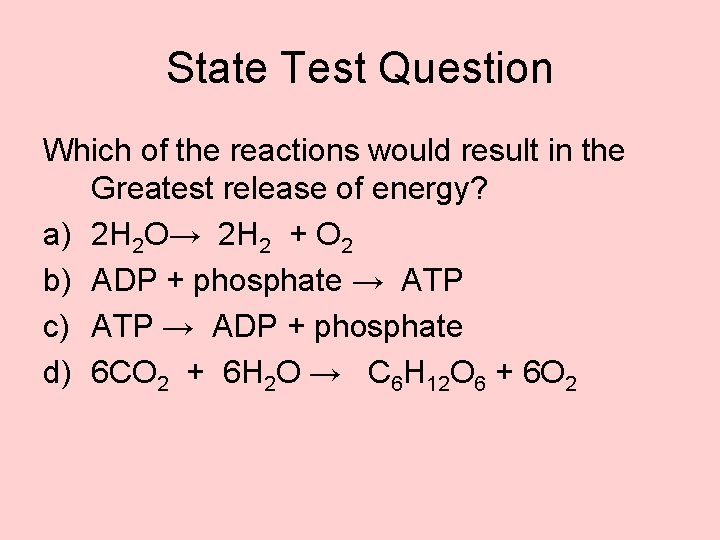
State Test Question Which of the reactions would result in the Greatest release of energy? a) 2 H 2 O→ 2 H 2 + O 2 b) ADP + phosphate → ATP c) ATP → ADP + phosphate d) 6 CO 2 + 6 H 2 O → C 6 H 12 O 6 + 6 O 2