
Energy in a Cell PART 1 Photosynthesis and
- Slides: 17
Energy in a Cell PART 1 Photosynthesis and Cellular Respiration http: //www. youtube. com/watch? v=eo 5 Xnd. Jaz-Y
Predictions n Why do humans rely on plants? !!! n What biomolecule is formed? !!!
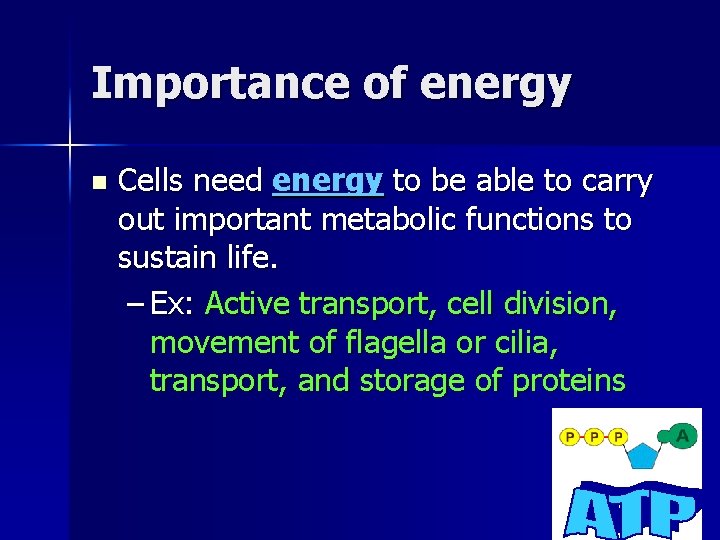
Importance of energy n Cells need energy to be able to carry out important metabolic functions to sustain life. – Ex: Active transport, cell division, movement of flagella or cilia, transport, and storage of proteins
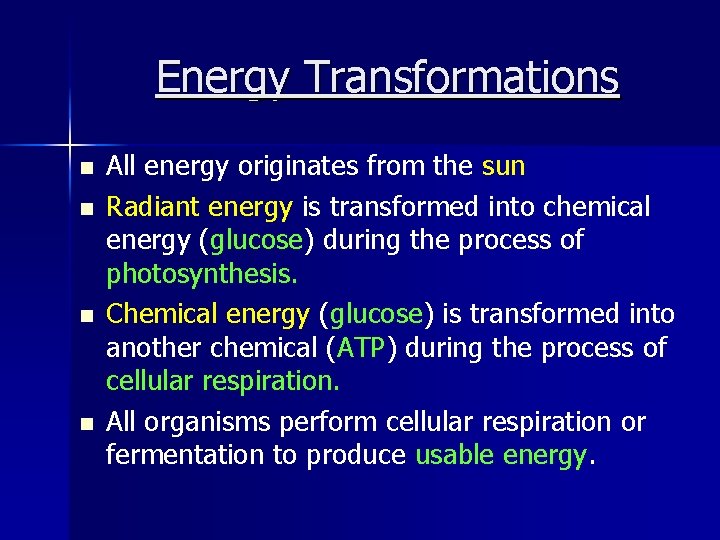
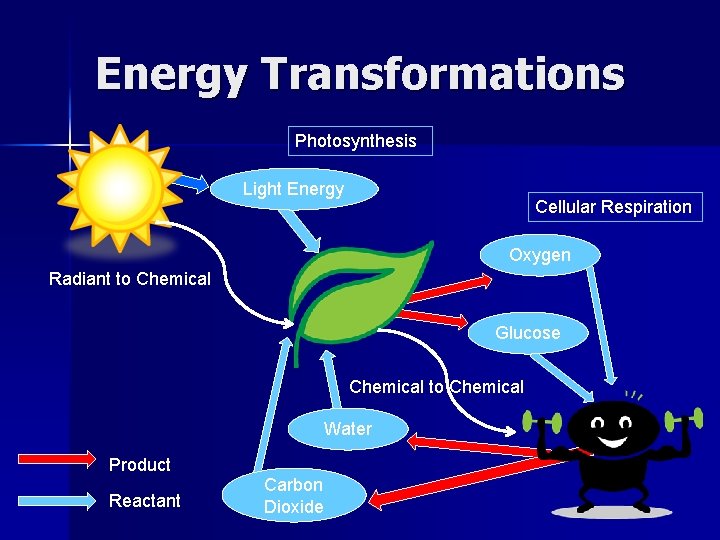
Energy Transformations n n All energy originates from the sun Radiant energy is transformed into chemical energy (glucose) during the process of photosynthesis. Chemical energy (glucose) is transformed into another chemical (ATP) during the process of cellular respiration. All organisms perform cellular respiration or fermentation to produce usable energy.
Energy Transformations Photosynthesis Light Energy Cellular Respiration Oxygen Radiant to Chemical Glucose Chemical to Chemical Water Product Reactant Carbon Dioxide
Use the diagram to complete the following sentence stem: Based on the energy transformations diagram, I can infer that _________________________ _____________
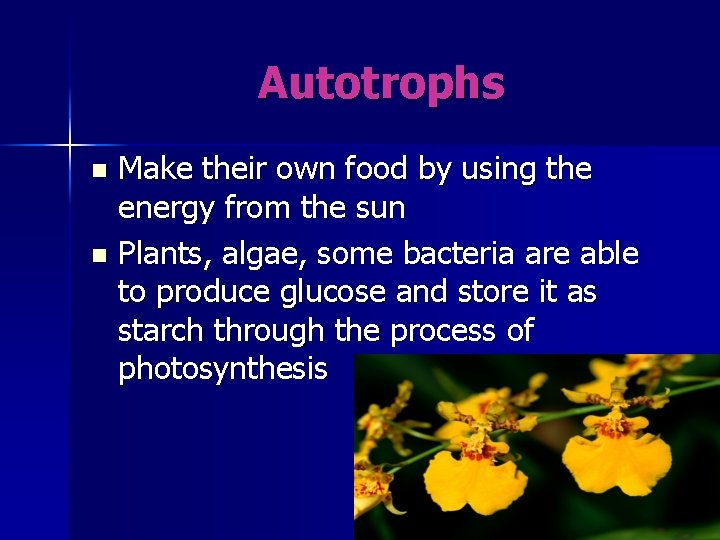
Autotrophs Make their own food by using the energy from the sun n Plants, algae, some bacteria are able to produce glucose and store it as starch through the process of photosynthesis n
Photosynthesis: the autotrophic process of producing sugars by converting light energy from the sun into chemical energy
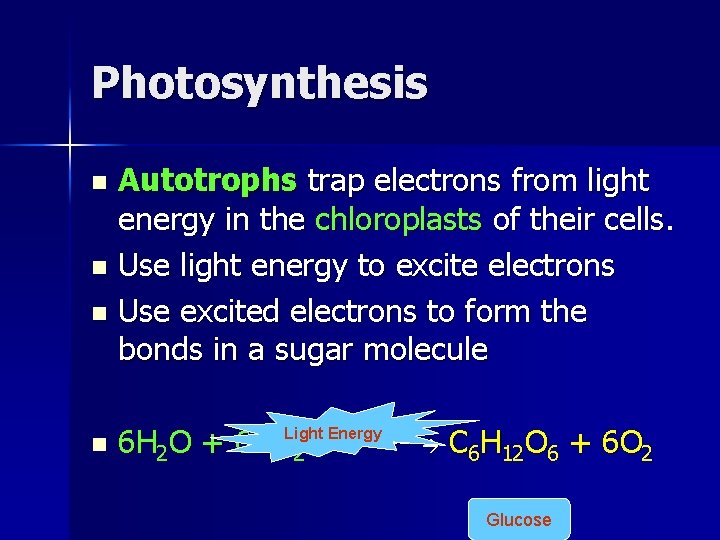
Photosynthesis Autotrophs trap electrons from light energy in the chloroplasts of their cells. n Use light energy to excite electrons n Use excited electrons to form the bonds in a sugar molecule n n 6 H 2 O + 6 CO 2 ----- C 6 H 12 O 6 + 6 O 2 Light Energy Glucose
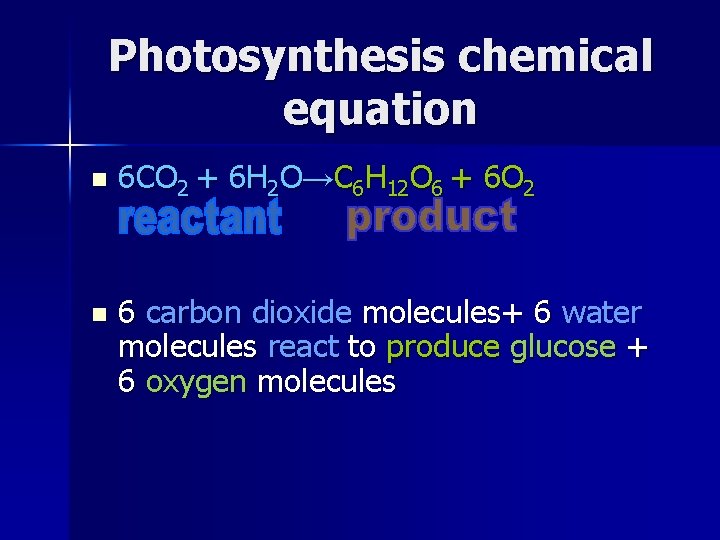
Photosynthesis chemical equation n 6 CO 2 + 6 H 2 O→C 6 H 12 O 6 + 6 O 2 n 6 carbon dioxide molecules+ 6 water molecules react to produce glucose + 6 oxygen molecules
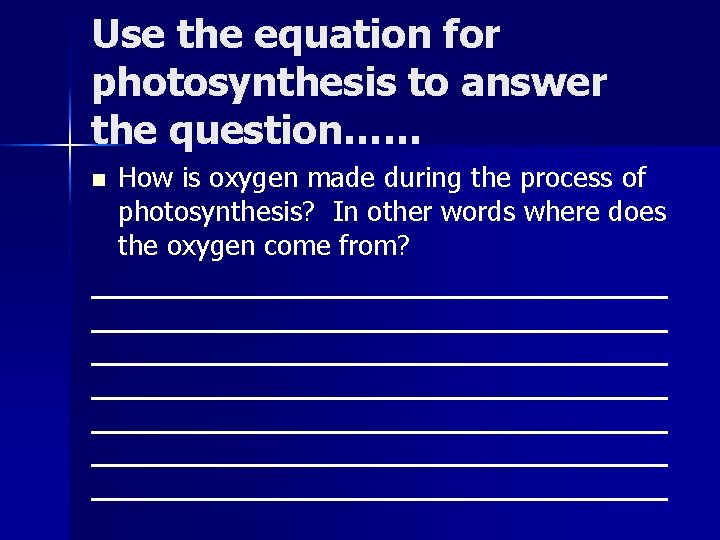
Use the equation for photosynthesis to answer the question…… n How is oxygen made during the process of photosynthesis? In other words where does the oxygen come from?
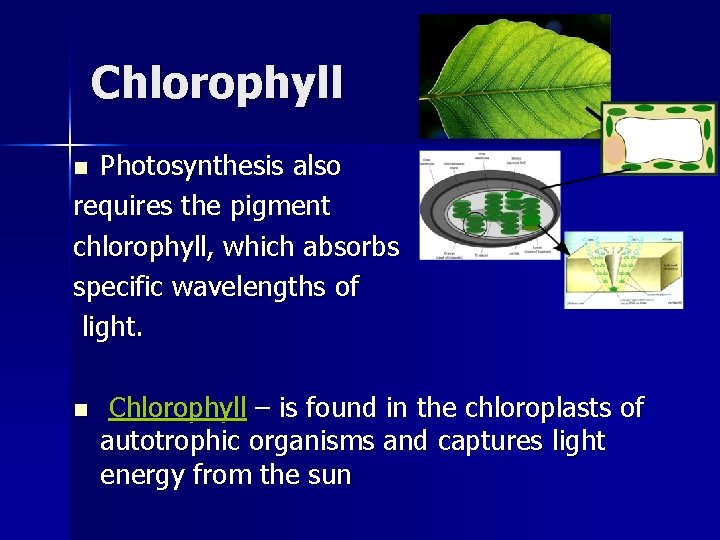
Chlorophyll Photosynthesis also requires the pigment chlorophyll, which absorbs specific wavelengths of light. n n Chlorophyll – is found in the chloroplasts of autotrophic organisms and captures light energy from the sun
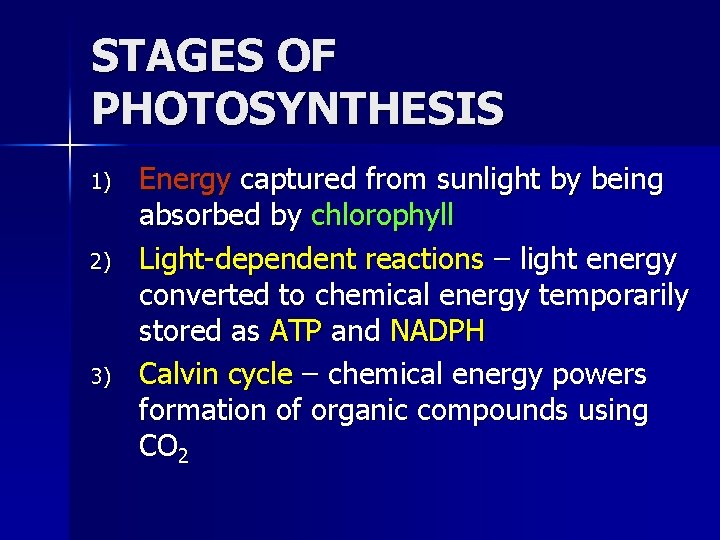
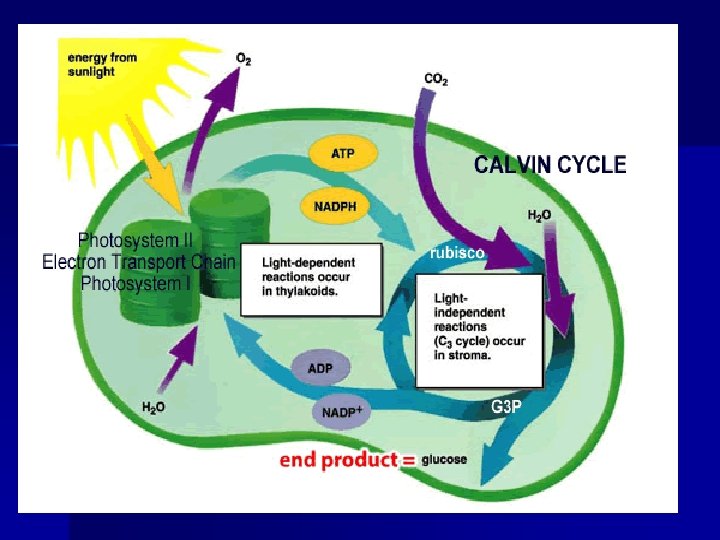
STAGES OF PHOTOSYNTHESIS 1) 2) 3) Energy captured from sunlight by being absorbed by chlorophyll Light-dependent reactions – light energy converted to chemical energy temporarily stored as ATP and NADPH Calvin cycle – chemical energy powers formation of organic compounds using CO 2
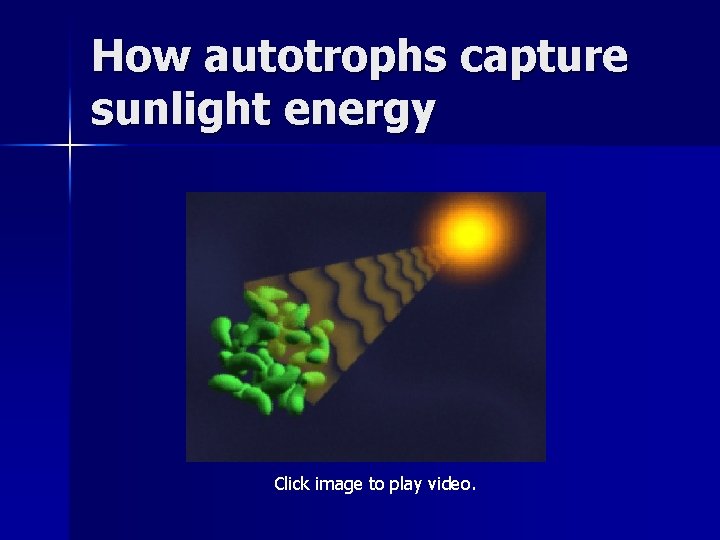
How autotrophs capture sunlight energy Click image to play video.
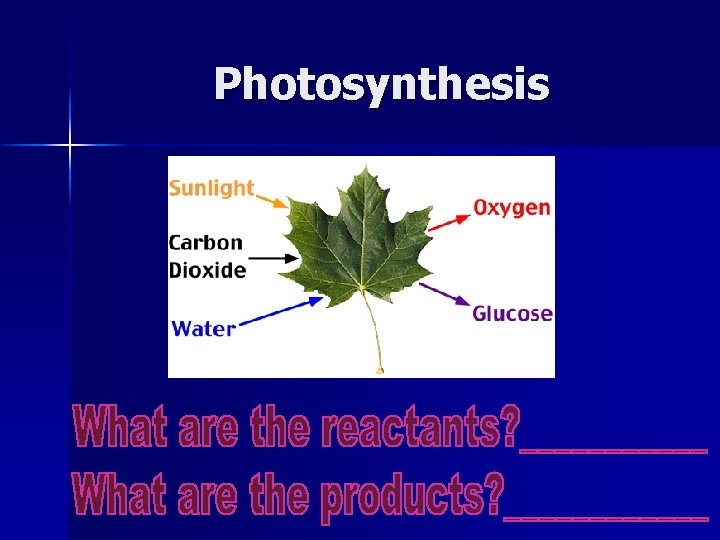
Photosynthesis
Exit Ticket: Explain the role of CO 2 in the formation of organic molecules.