
ENERGY Fossil Fuels 1 FOSSIL FUELS FOSSIL FUELS
- Slides: 29
ENERGY Fossil Fuels 1
FOSSIL FUELS • FOSSIL FUELS - an energy source created from the remains of once living plants and animals – Often called HYDROCARBONS – because from Hydrogen and Carbon • Examples of Fossils Fuels • • Petroleum Coal Natural Gas Oil Shales and Tar Sands 2
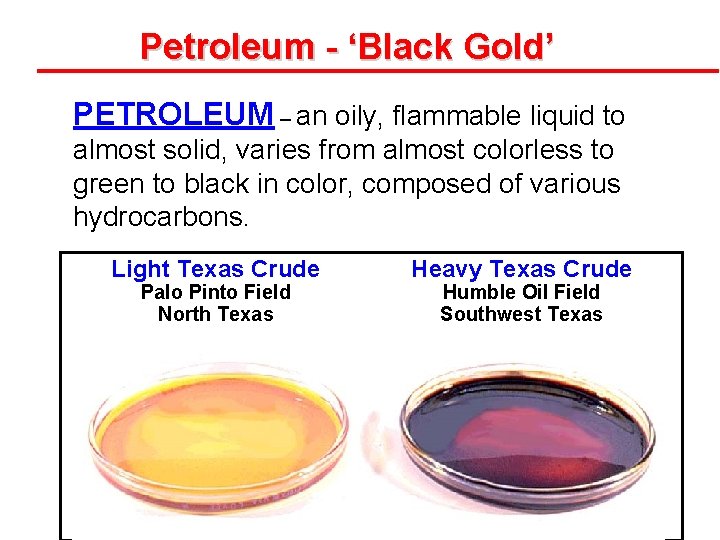
Petroleum - ‘Black Gold’ PETROLEUM – an oily, flammable liquid to almost solid, varies from almost colorless to green to black in color, composed of various hydrocarbons. Light Texas Crude Palo Pinto Field North Texas Heavy Texas Crude Humble Oil Field Southwest Texas 3
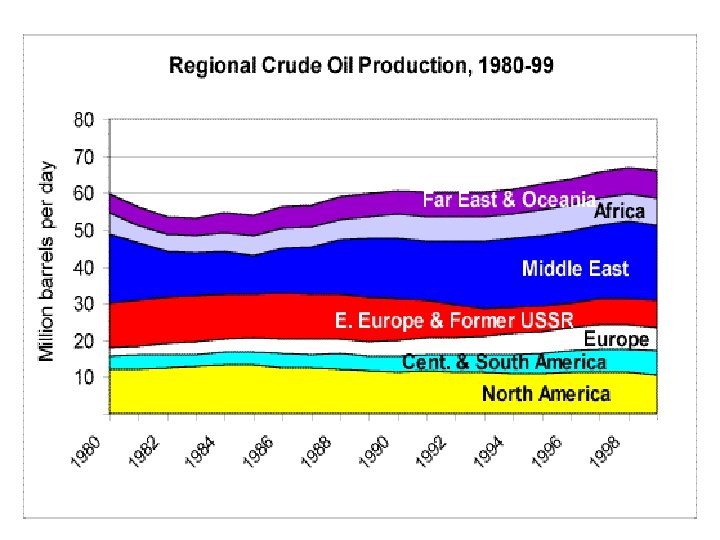
WHAT IS OIL? • Crude Oil - the term for "unprocessed" oil, the stuff that comes out of the ground. – It is also known as petroleum. • Crude oils are a source of raw material form many products because they contain hydrocarbons. • Found in the upper strata of the Earth in certain locations. • Takes millions of years to form from decaying plant material 4
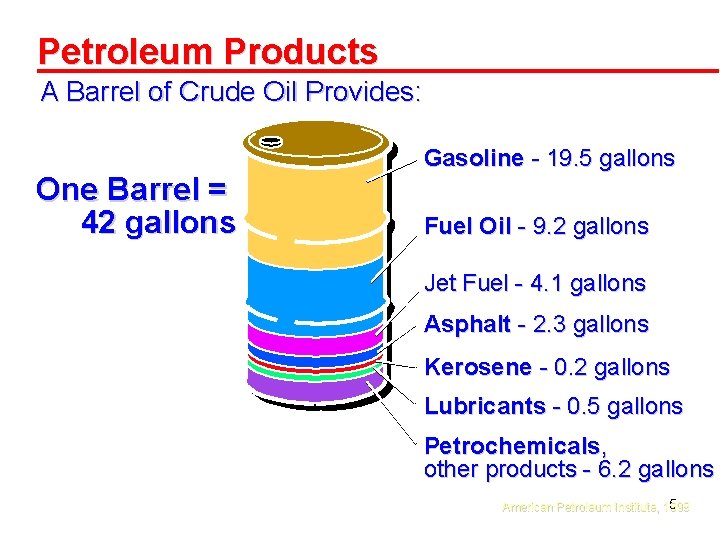
Petroleum Products A Barrel of Crude Oil Provides: One Barrel = 42 gallons Gasoline - 19. 5 gallons Fuel Oil - 9. 2 gallons Jet Fuel - 4. 1 gallons Asphalt - 2. 3 gallons Kerosene - 0. 2 gallons Lubricants - 0. 5 gallons Petrochemicals, other products - 6. 2 gallons 5 American Petroleum Institute, 1999
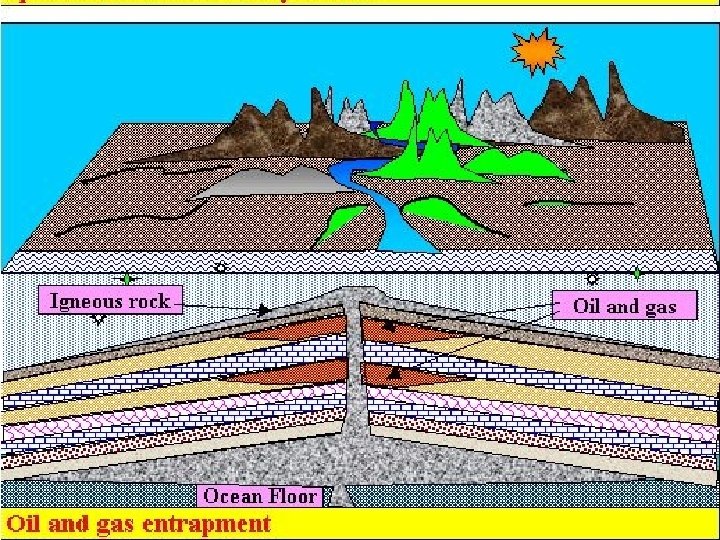
HOW PETROLEUM is FORMED • Organisms (mostly plant material) are buried in a marine environment • Large number of organisms, mixed with sediments (dirt) • Eventually buried in an anaerobic environment (little oxygen) • Must have deep burial, heat, and time to change from organic material to petroleum. • Impurities are “squeezed out” and the hydrocarbons are transformed into Oil 6
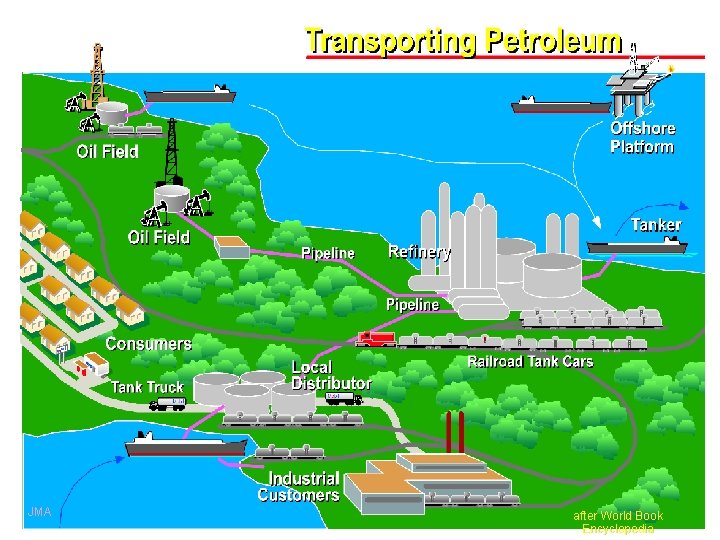
7
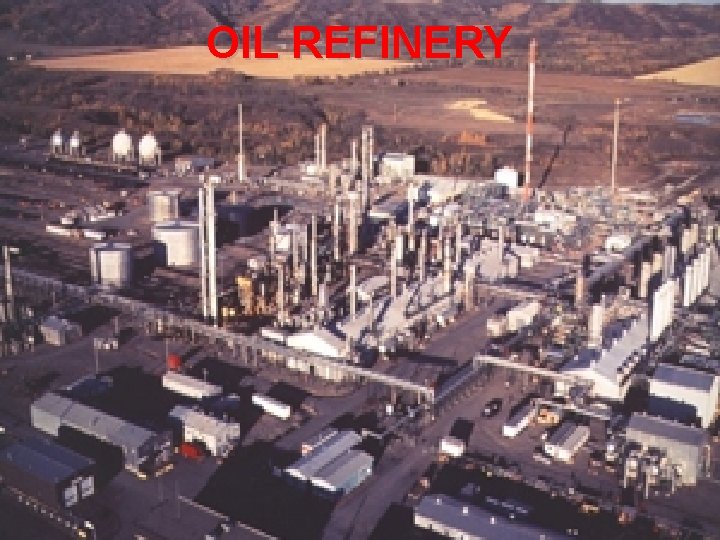
OIL REFINERY 8
JMA after World Book Encyclopedia 9
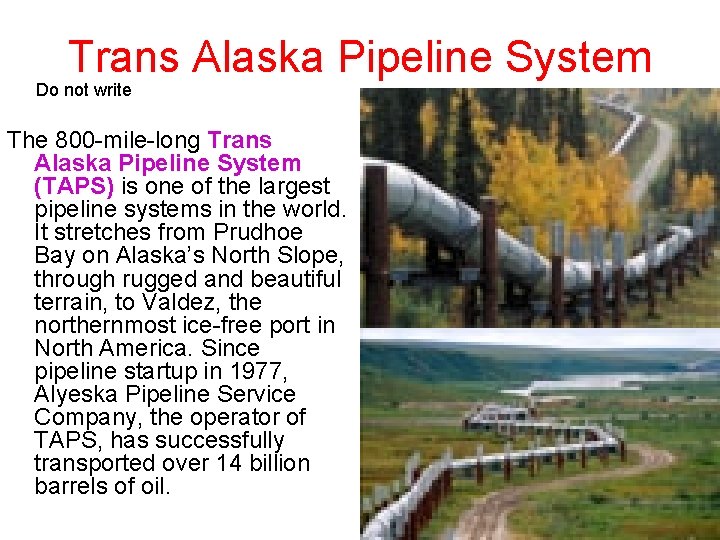
Trans Alaska Pipeline System Do not write The 800 -mile-long Trans Alaska Pipeline System (TAPS) is one of the largest pipeline systems in the world. It stretches from Prudhoe Bay on Alaska’s North Slope, through rugged and beautiful terrain, to Valdez, the northernmost ice-free port in North America. Since pipeline startup in 1977, Alyeska Pipeline Service Company, the operator of TAPS, has successfully transported over 14 billion barrels of oil. 10
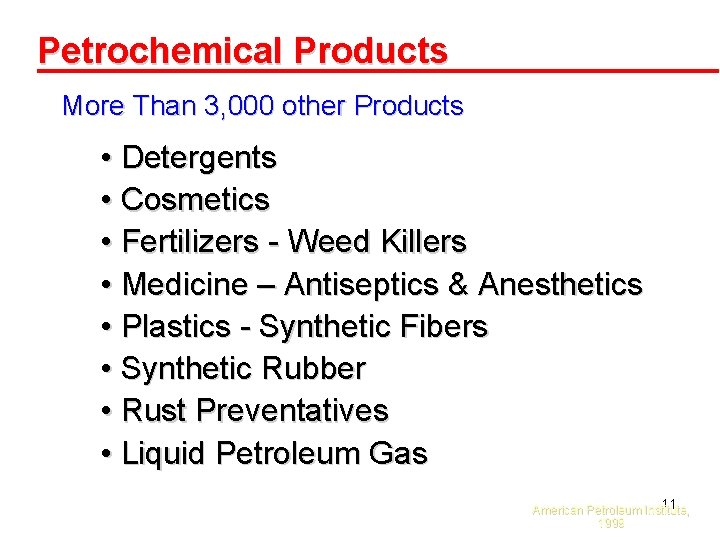
Petrochemical Products More Than 3, 000 other Products • Detergents • Cosmetics • Fertilizers - Weed Killers • Medicine – Antiseptics & Anesthetics • Plastics - Synthetic Fibers • Synthetic Rubber • Rust Preventatives • Liquid Petroleum Gas 11 American Petroleum Institute, 1999
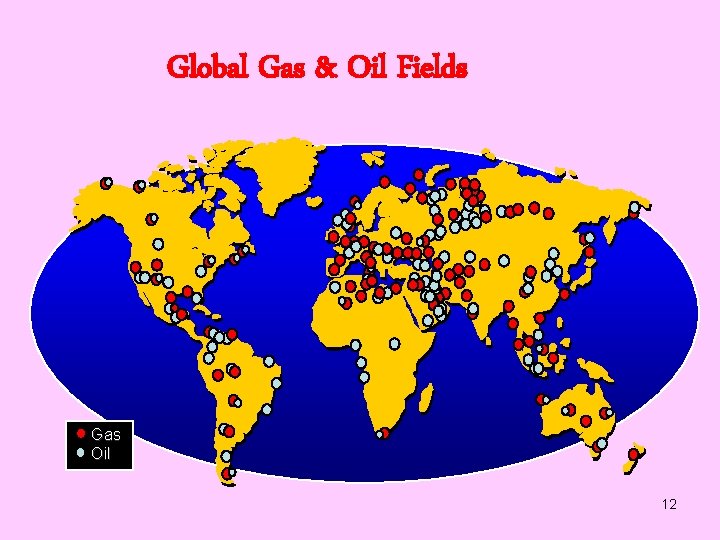
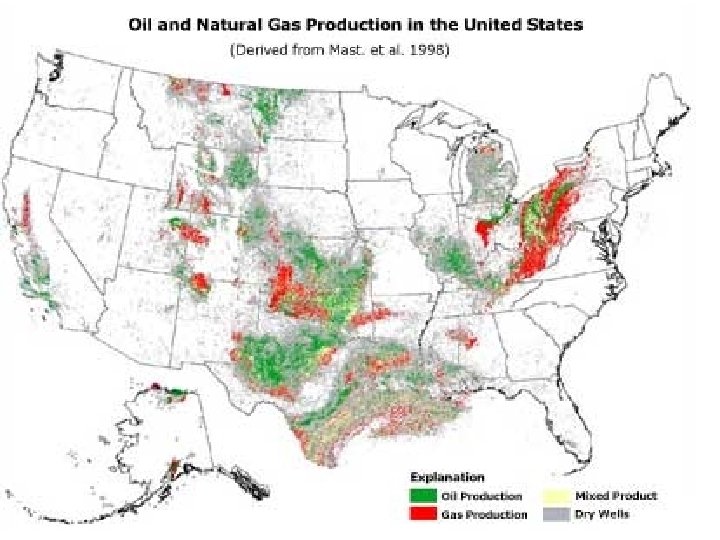
Global Gas & Oil Fields Gas Oil 12
13
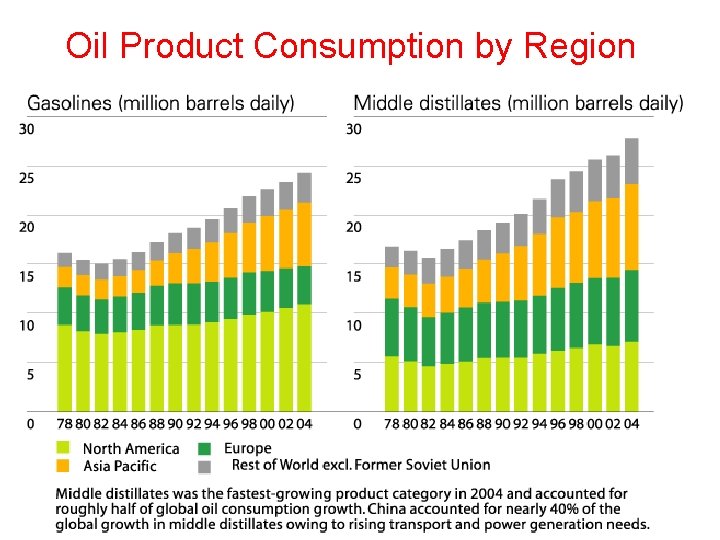
Oil Product Consumption by Region 14
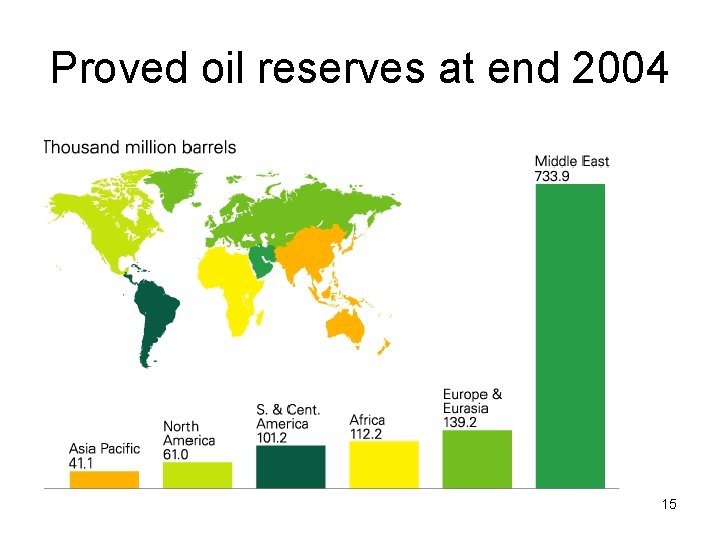
Proved oil reserves at end 2004 15
16
NATURAL GAS • NATURAL GAS – A gas mixture that is trapped in the earth. – – Usually Methane and Ethane Often found in same well as Petroleum. Transported as Liquidified Natural Gas (LNG) Used to be discarded as waste; burned off • Used increasingly as a fuel – Cheaper – Burns cleaner, less pollution CH 4 + 2 O 2 -- CO 2 + 2 H 2 O + Heat 17
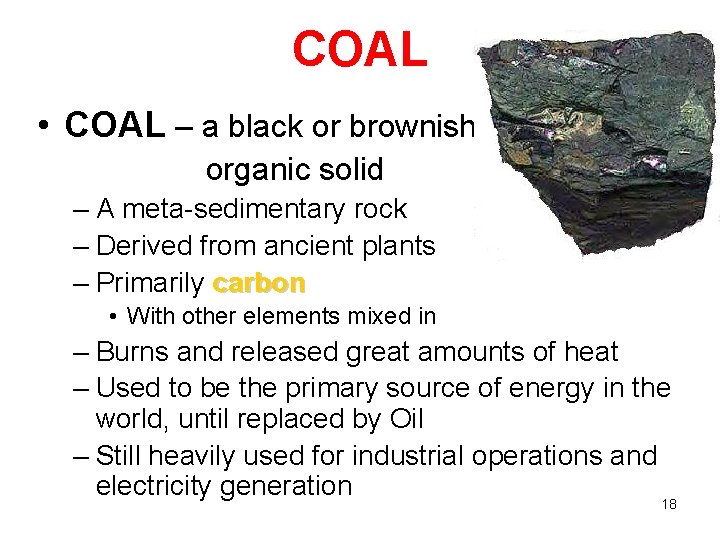
COAL • COAL – a black or brownish organic solid – A meta-sedimentary rock – Derived from ancient plants – Primarily carbon • With other elements mixed in – Burns and released great amounts of heat – Used to be the primary source of energy in the world, until replaced by Oil – Still heavily used for industrial operations and electricity generation 18
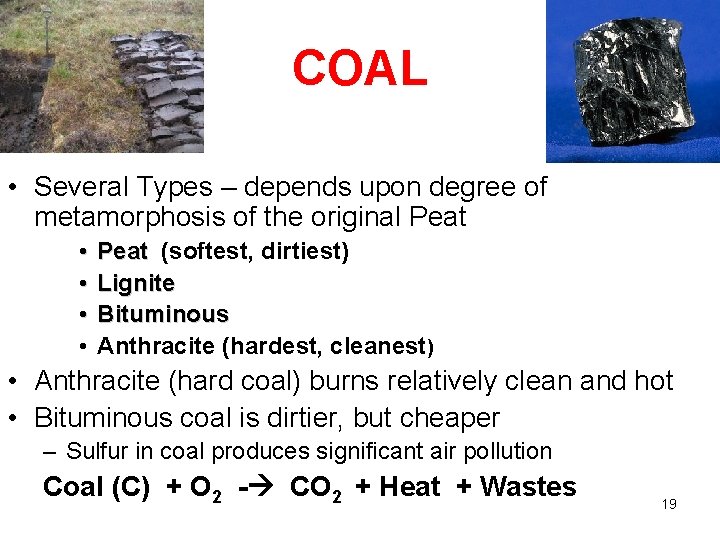
COAL • Several Types – depends upon degree of metamorphosis of the original Peat • • Peat (softest, dirtiest) Lignite Bituminous Anthracite (hardest, cleanest) • Anthracite (hard coal) burns relatively clean and hot • Bituminous coal is dirtier, but cheaper – Sulfur in coal produces significant air pollution Coal (C) + O 2 - CO 2 + Heat + Wastes 19
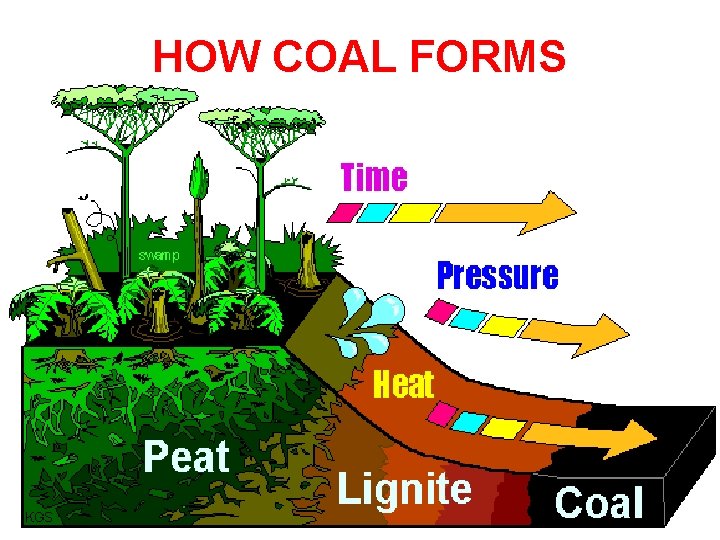
FORMATION of COAL • Plants grow and die • Dead plants form PEAT in water logged environments (Swamps) – Accumulates fast than it can decay • Due to lack of Oxygen – PEAT contains recognizable plant parts • Peat becomes Coal when – Peat is buried – Peat is compacted – Heat and Time cause an alteration of the organic Carbon molecules • Pure Carbon is left behind • About 10 ‘ of PEAT becomes 1’ of COAL 20
HOW COAL FORMS 21
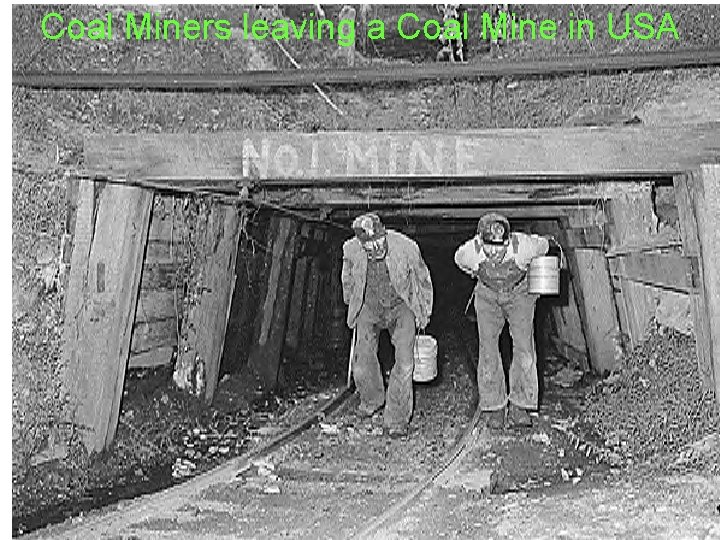
Coal Miners leaving a Coal Mine in USA 22
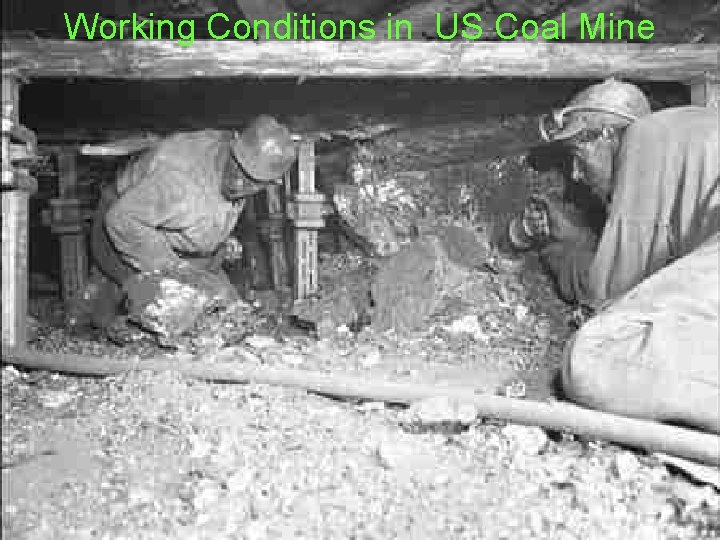
Working Conditions in US Coal Mine 23
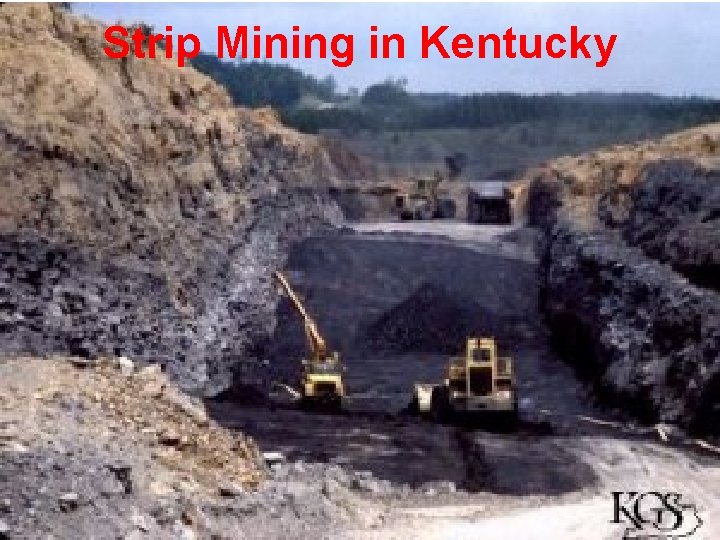
Strip Mining in Kentucky 24
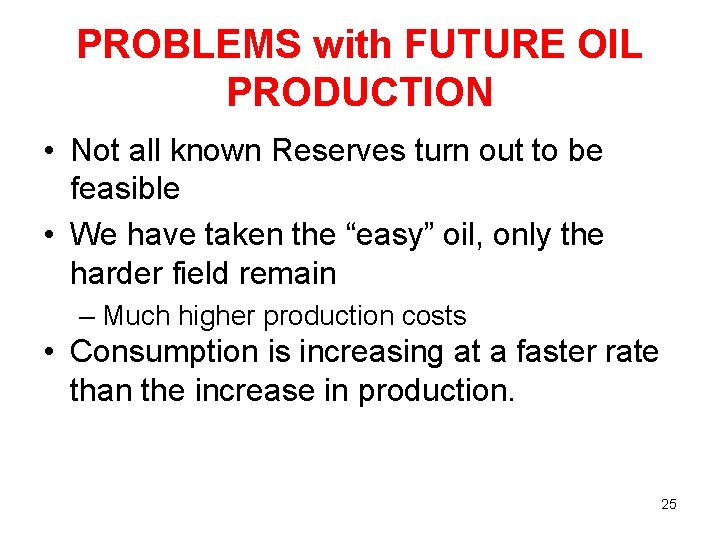
PROBLEMS with FUTURE OIL PRODUCTION • Not all known Reserves turn out to be feasible • We have taken the “easy” oil, only the harder field remain – Much higher production costs • Consumption is increasing at a faster rate than the increase in production. 25
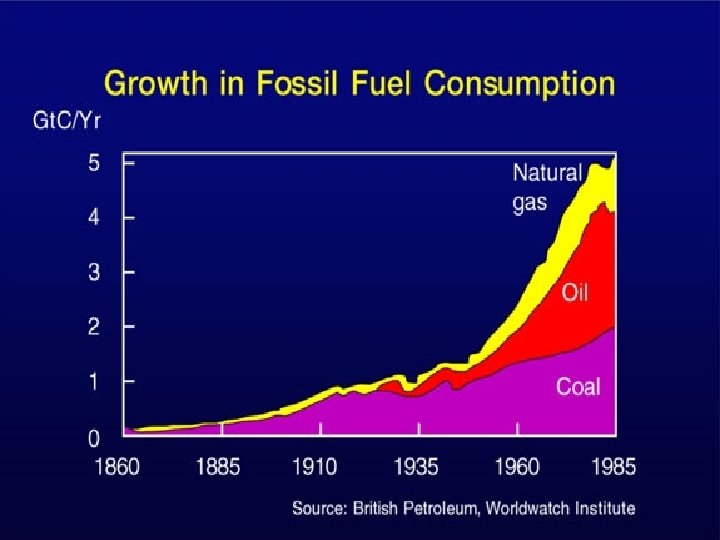
26
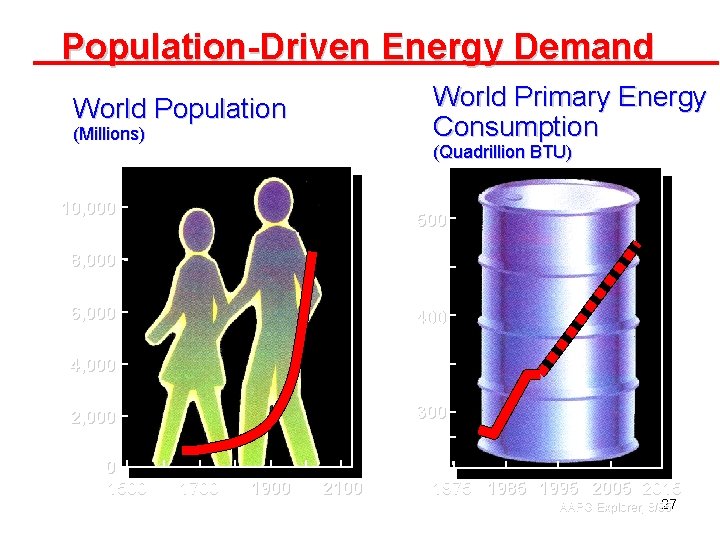
Population-Driven Energy Demand World Primary Energy Consumption World Population (Millions) (Quadrillion BTU) 10, 000 500 8, 000 6, 000 4, 000 300 2, 000 0 1500 1700 1900 2100 1975 1985 1995 2005 2015 27 AAPG Explorer, 8/95
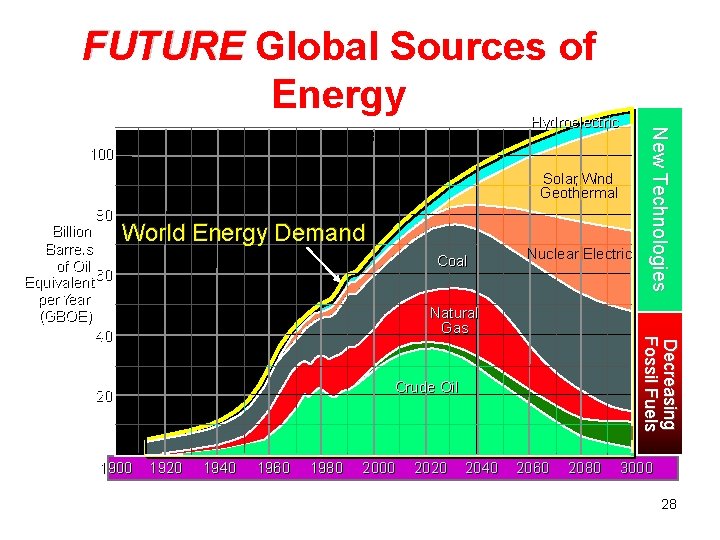
FUTURE Global Sources of Energy 1993 100 80 Solar, Wind Geothermal World Energy Demand Coal Natural Gas Crude Oil 20 1900 Nuclear Electric Decreasing Fossil Fuels Billion Barrels of Oil Equivalent 60 per Year (GBOE) 40 100 BILLION BARRELS 1920 1940 1960 1980 2000 2020 2040 New Technologies Hydroelectric 2060 2080 3000 28
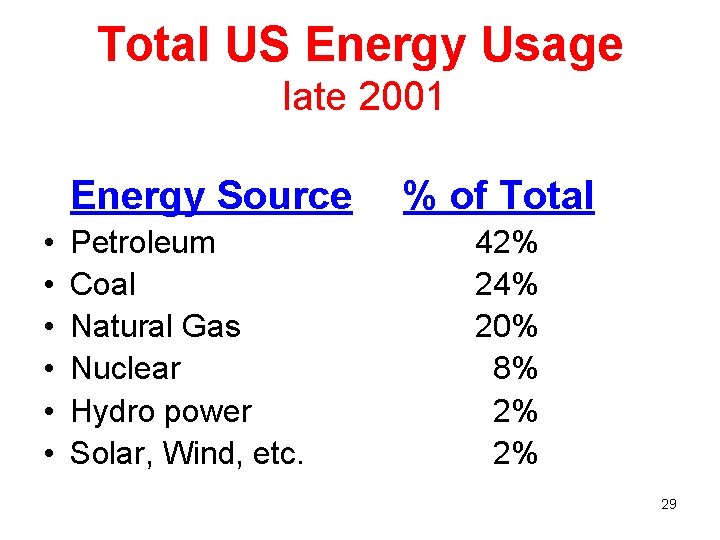
Total US Energy Usage late 2001 Energy Source • • • Petroleum Coal Natural Gas Nuclear Hydro power Solar, Wind, etc. % of Total 42% 24% 20% 8% 2% 2% 29