
Energy for the Cell ATP What is energy
- Slides: 13
Energy for the Cell: ATP
What is energy? Energy is the ability to do work and can take on many different forms – Thermal energy – Potential energy – Kinetic Energy
What do we need energy for? All cell processes require energy: – DNA replication and cell growth – Metabolism – Synthesis of compounds – Excretion – Active Transport
Where does energy for life come from? All energy for life on earth originally comes from the sun and is converted to sugar through photosynthesis Plant sugars provide energy to all other living things (food is potential energy)
Plants are autotrophs and make their own food through photosynthesis Then plants break food down to release energy as ATP through respiration Plants do both processes!
Animals are heterotrophs and depend on food that plants make for energy (eat other things) Food that is eaten is broken down into ATP through respiration
Money Analogy Energy can come in different “currencies” like money: – Think of starch (long glucose chain) as a $100 bill – It can be broken down into individual glucose molecules as $1 bills – Through respiration, glucose is converted to ATP as pennies
What is ATP? ATP stands for adenosine triphosphate It is a usable, “change-form” of energy It comes broken the breakdown of glucose during respiration
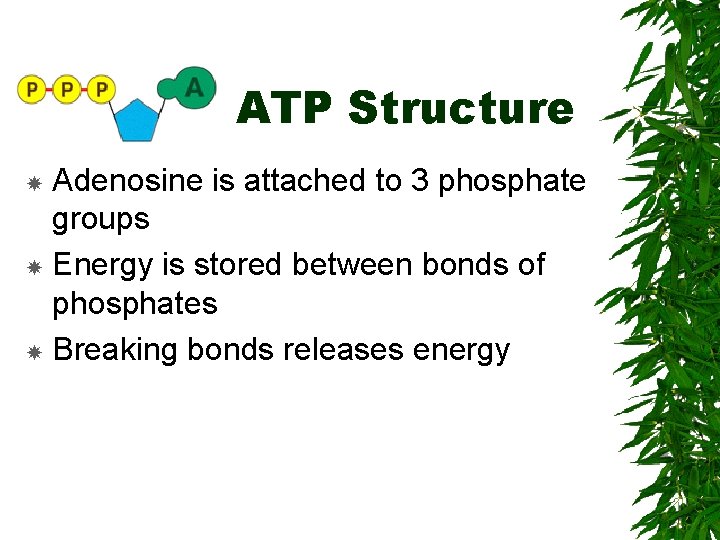
ATP Structure Adenosine is attached to 3 phosphate groups Energy is stored between bonds of phosphates Breaking bonds releases energy
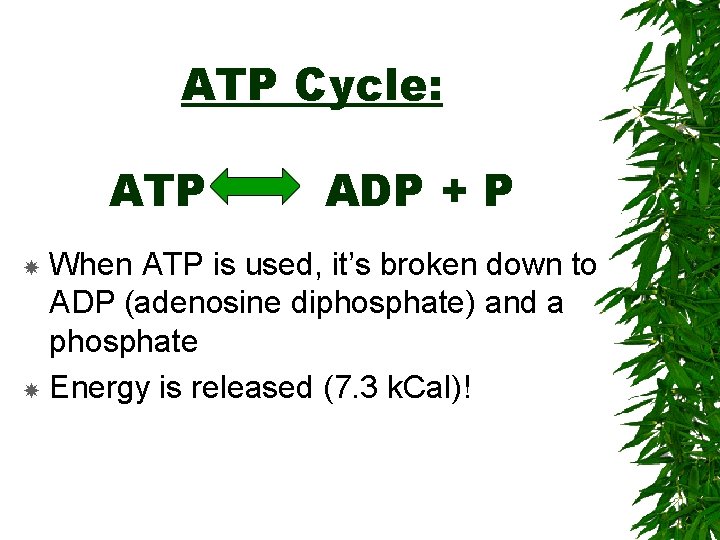
ATP Cycle: ATP ADP + P When ATP is used, it’s broken down to ADP (adenosine diphosphate) and a phosphate Energy is released (7. 3 k. Cal)!
Recycling of ATP The process of using ATP can be reversed by adding phosphate back to ADP Energy use is an investment (some things cost energy and some things produce energy)
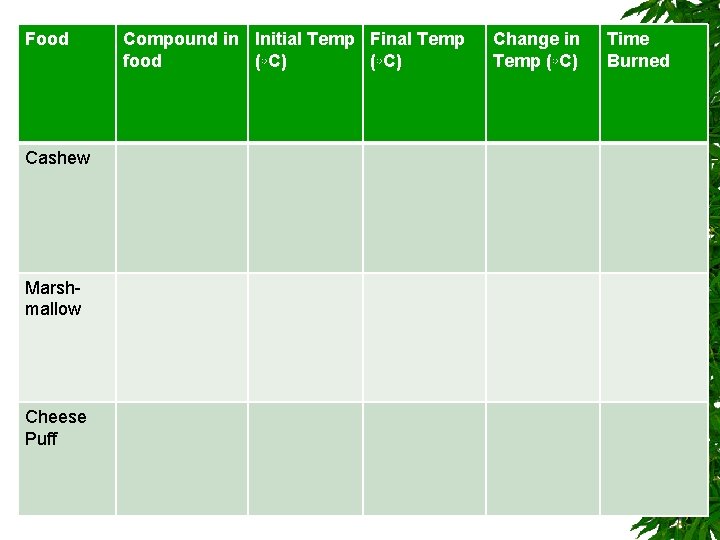
Food Cashew Marshmallow Cheese Puff Compound in Initial Temp Final Temp food (◦C) Change in Temp (◦C) Time Burned