
Energy Flow in Ecosystems Environmental Science Chapter 5

- Slides: 20
Energy Flow in Ecosystems Environmental Science Chapter 5 Section I How Ecosystems Work
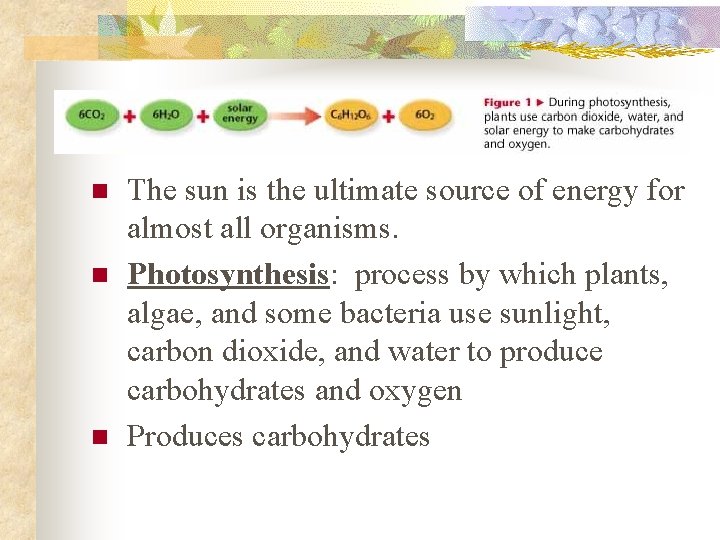
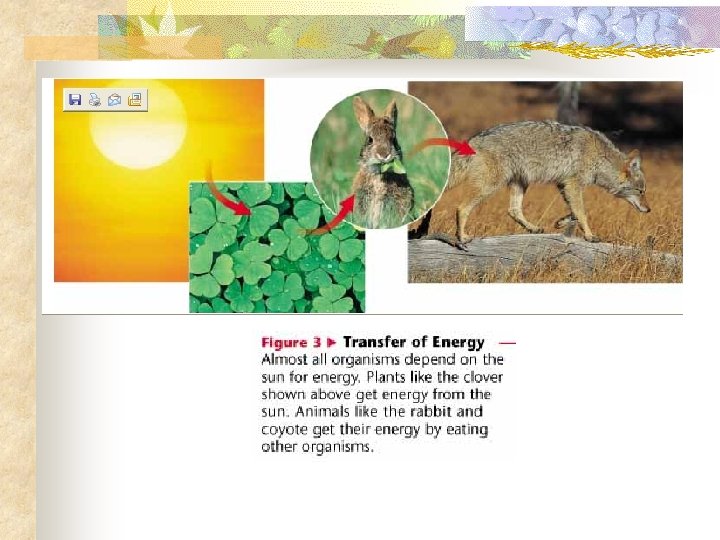
n n n The sun is the ultimate source of energy for almost all organisms. Photosynthesis: process by which plants, algae, and some bacteria use sunlight, carbon dioxide, and water to produce carbohydrates and oxygen Produces carbohydrates
Carbohydrates n n Energy-rich molecules used by organisms to carry out daily activities (move, grow, reproduce, etc. ) As organisms consume other organisms energy travels from one organism to another n Example: plants get energy from the sun – convert the energy to carbohydrates – animals eat the plants – energy is transferred from the plant to the animal
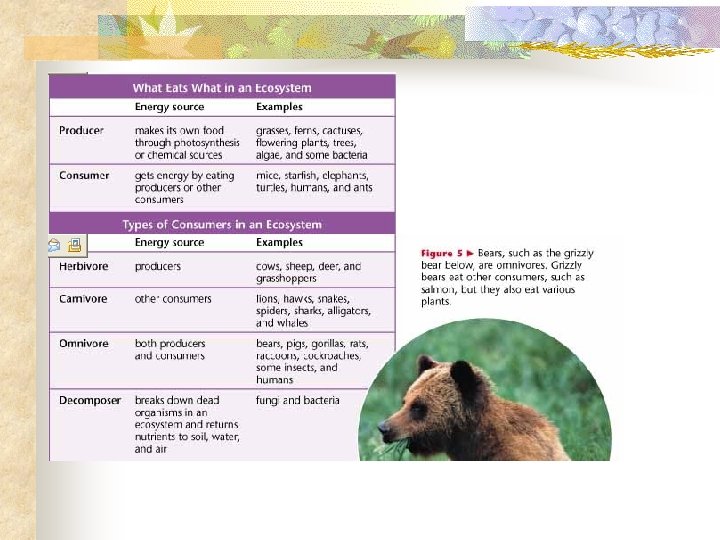
From producers to consumers n n n Producer: organism that makes its own food (also called autotroph) Consumer: organisms that get their energy by eating other organisms (also called heterotroph) Producers get energy directly from the sun and consumers get energy indirectly from the sun by eating producers.
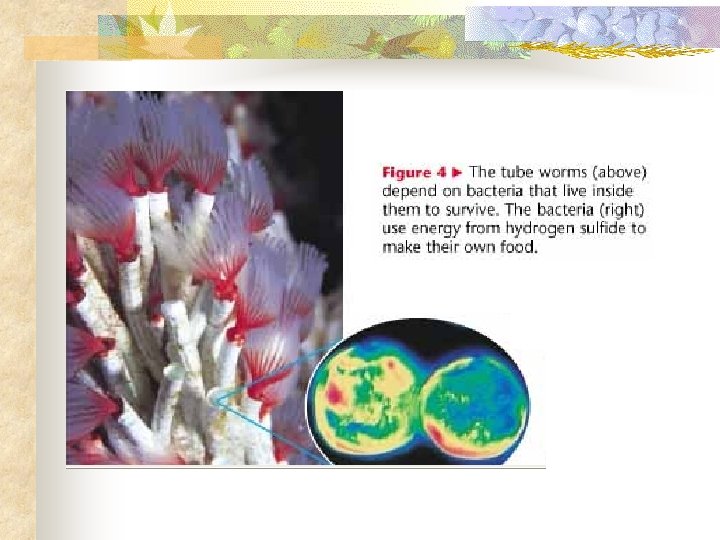
An exception to the rule n n In 1977 scientists discovered life in the deep-ocean where no sunlight reached Energy comes from hydrogen sulfide Hydrogen sulfide is present in hot water that escapes from cracks in the ocean floor Bacteria use hydrogen sulfide to make their own food and other organisms consume the bacteria
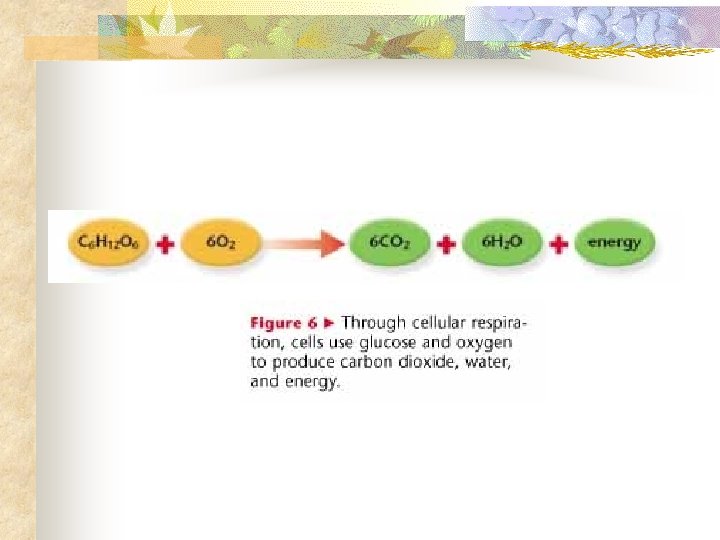
Cellular Respiration n n Cellular respiration: breaking down food to yield energy Cells absorb oxygen and use it to release energy Reverse of photosynthesis Sugar and oxygen combine to yield CO 2, water, and energy
Energy Transfer n n Everything you do requires the use of energy – excess energy is stored as fat Every time one organism eats anothere is a transfer of energy
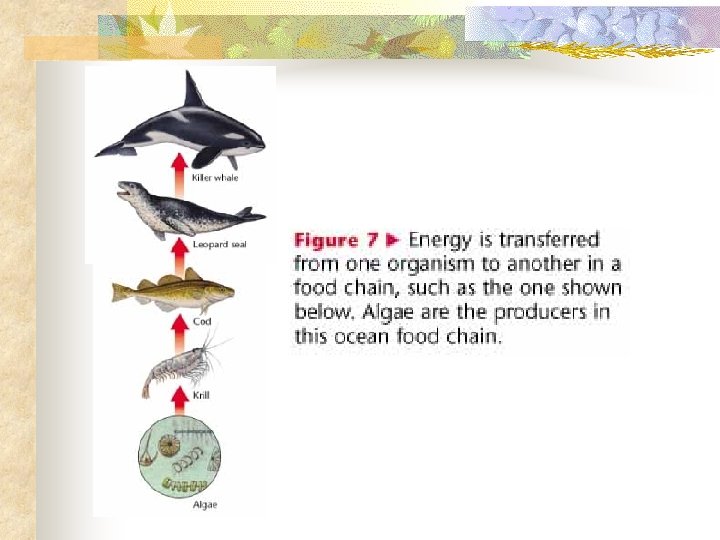
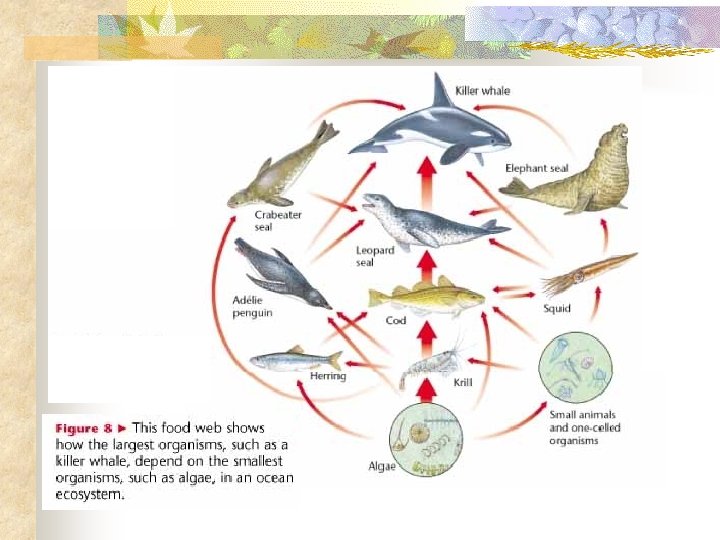
Food Chain n n Sequence in which energy is transferred from one organism to the next as each organism eats another organism Energy flow in ecosystems is usually much more complicated than a simple food chain
Food Web n n Shows many feeding relationships that are possible in an ecosystem A food chain is just one strand in the larger food web
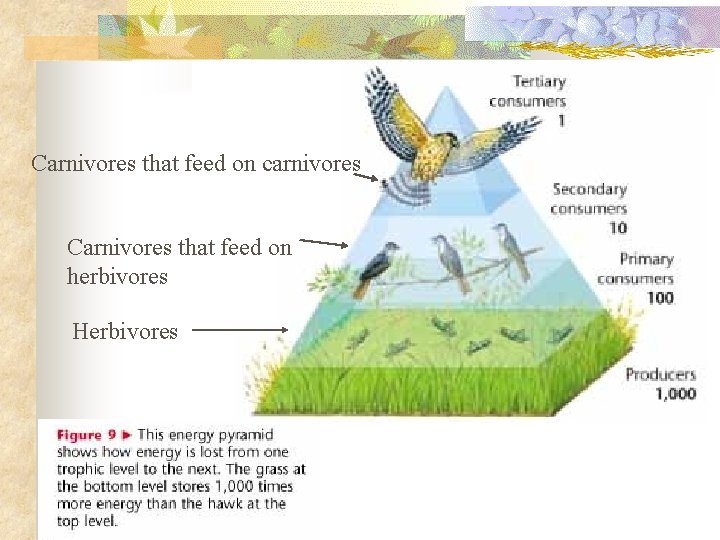
Trophic Level n n n Each step in the transfer of energy through a food chain or food web Each time energy is transferred some energy is lost as heat and less energy is available to the next trophic level About 90% of energy is used at each trophic level (producing new cells, regulating body temperature, moving around, etc. ) and the remaining 10% is stored in body and available to next trophic level
Energy Pyramid n n Shows loss of energy between trophic levels Producers form base of pyramid – level with the most energy
Carnivores that feed on carnivores Carnivores that feed on herbivores Herbivores
How Energy Loss Affects Ecosystems n n n Because there is so much energy lost at each level there are fewer organisms at the higher trophic levels Loss of energy between trophic levels limits the number of trophic levels in an ecosystem Organisms that feed on organisms at the top trophic level are usually small (example: parasites)