
Energy Flow in Ecosystems 8 th grade science

- Slides: 16
Energy Flow in Ecosystems 8 th grade science Spring 2014
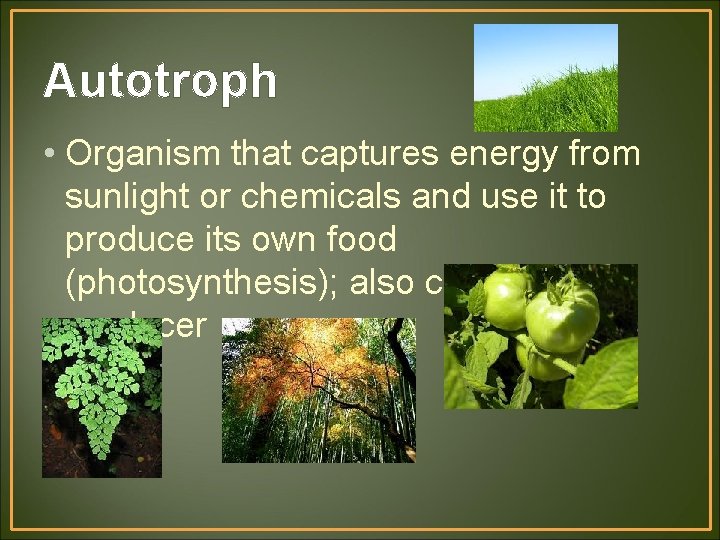
Autotroph • Organism that captures energy from sunlight or chemicals and use it to produce its own food (photosynthesis); also called a producer
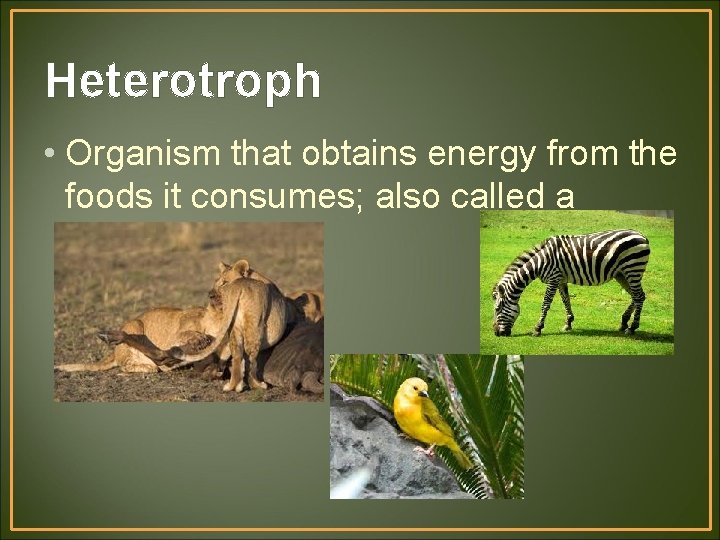
Heterotroph • Organism that obtains energy from the foods it consumes; also called a consumer
Herbivore • Organism that obtains energy by eating only plants
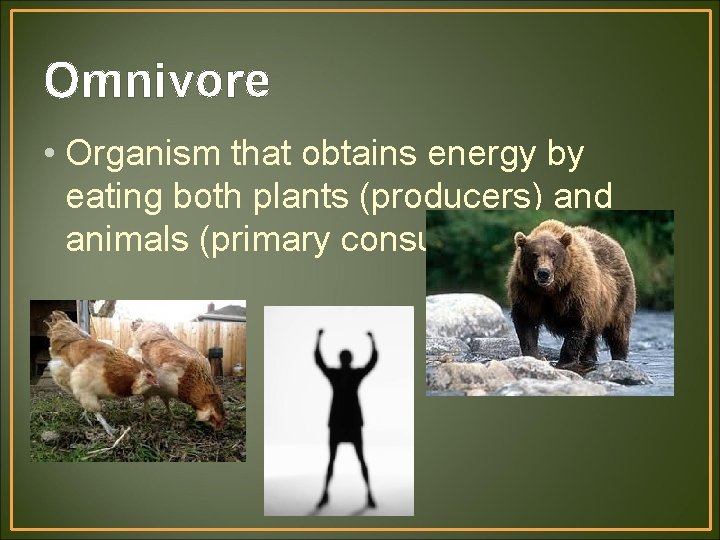
Omnivore • Organism that obtains energy by eating both plants (producers) and animals (primary consumers)
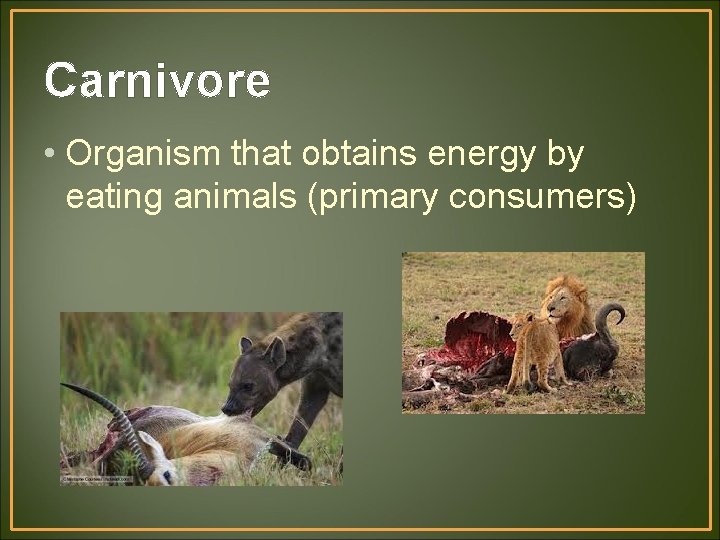
Carnivore • Organism that obtains energy by eating animals (primary consumers)
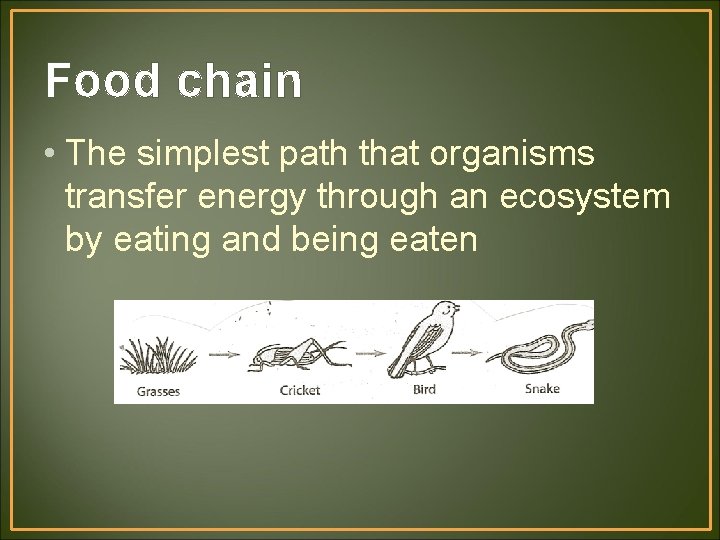
Food chain • The simplest path that organisms transfer energy through an ecosystem by eating and being eaten
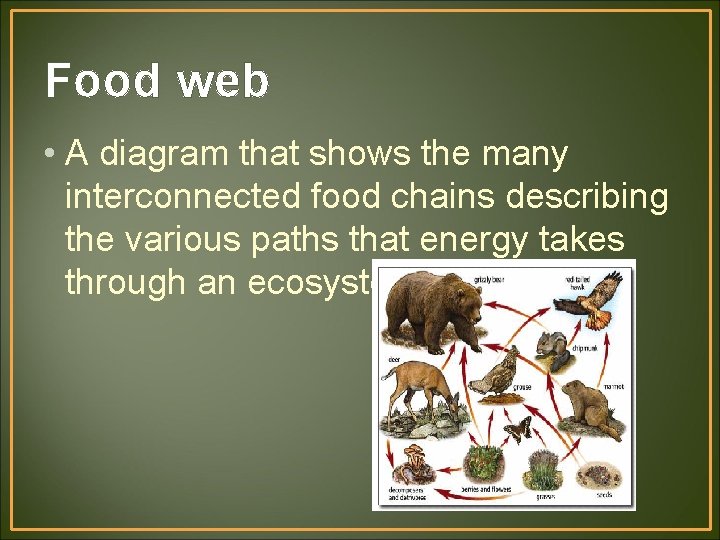
Food web • A diagram that shows the many interconnected food chains describing the various paths that energy takes through an ecosystem.
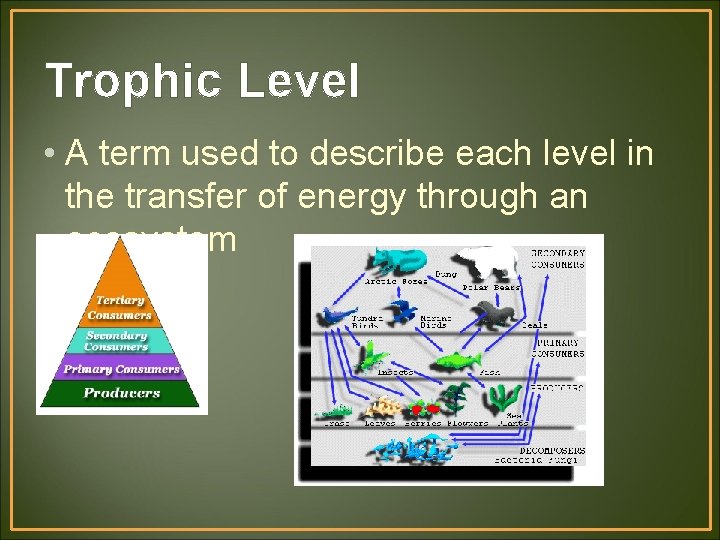
Trophic Level • A term used to describe each level in the transfer of energy through an ecosystem
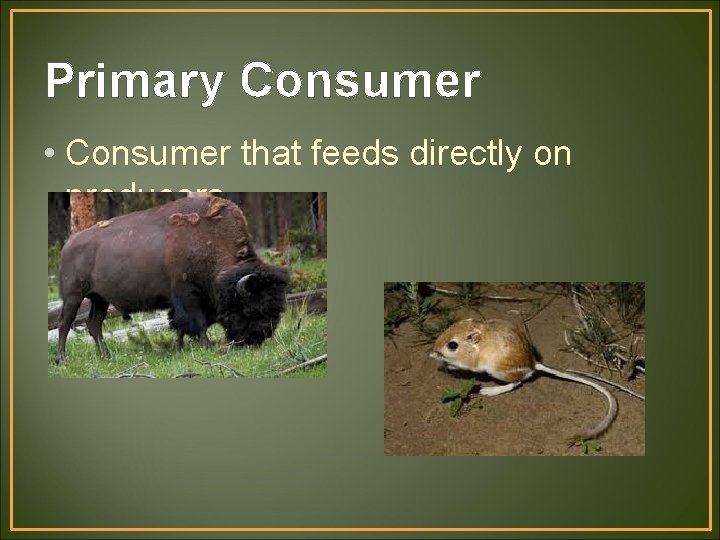
Primary Consumer • Consumer that feeds directly on producers
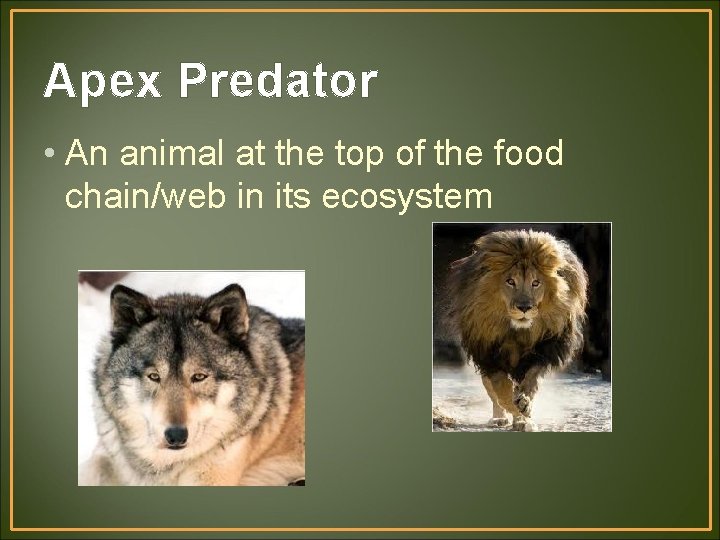
Apex Predator • An animal at the top of the food chain/web in its ecosystem
STOP! • Label one of the following on your food chain diagram: • Primary consumer • Autotroph (producer) • Heterotroph (consumer)
STOP! • Label one of each of the following on your food web diagram: • Producer • Primary consumer • Heterotroph (consumer) • Herbivore • Omnivore • Carnivore • Apex predator
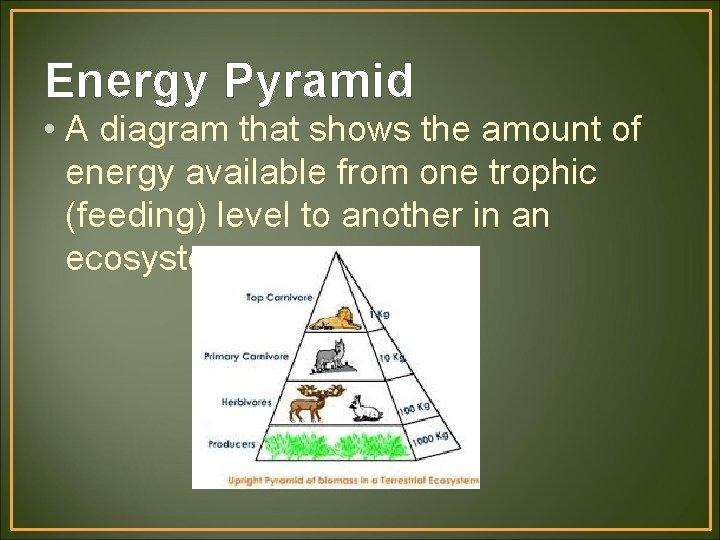
Energy Pyramid • A diagram that shows the amount of energy available from one trophic (feeding) level to another in an ecosystem
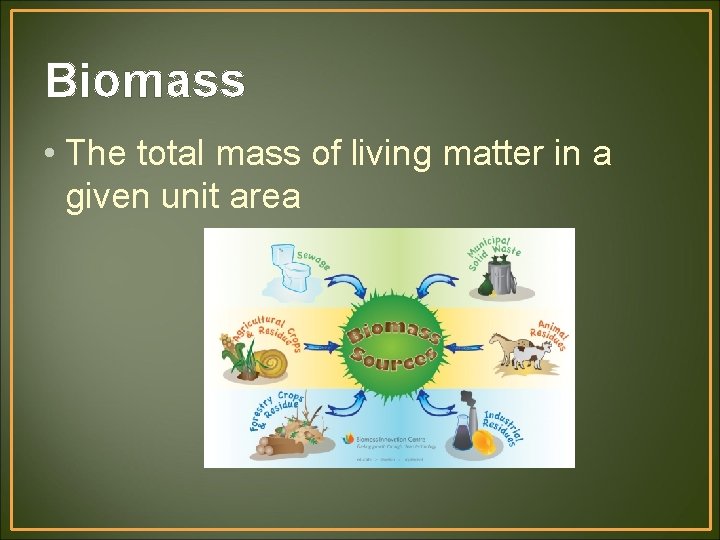
Biomass • The total mass of living matter in a given unit area
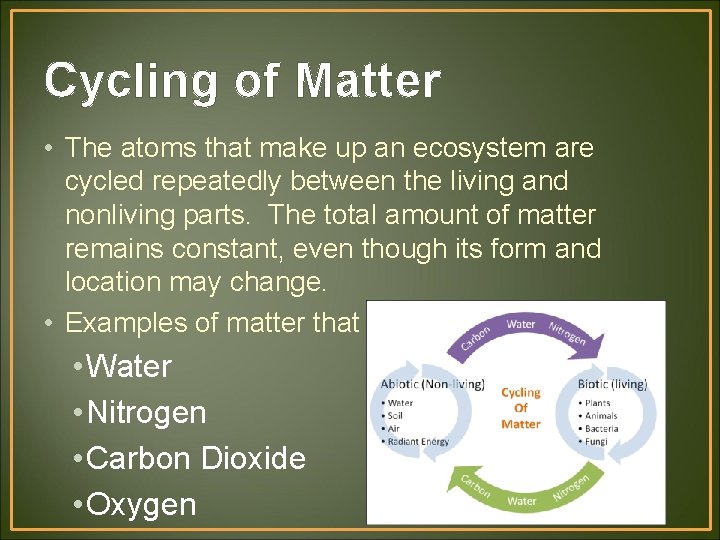
Cycling of Matter • The atoms that make up an ecosystem are cycled repeatedly between the living and nonliving parts. The total amount of matter remains constant, even though its form and location may change. • Examples of matter that cycles includes: • Water • Nitrogen • Carbon Dioxide • Oxygen