
Energy Flow in CMS P Colin Bernet Patrick
Energy Flow in CMS ; -P Colin Bernet & Patrick Janot, for the CMS PF group. PF discussion, Feb 15, 2011 1
Outline • CMS: a PF-friendly detector? – Reconstruction of the PF elements : • Tracks, clusters, etc. • Particle flow – Linking • Elements together – Particle ID and reco • • • Charged hadrons Photons Neutral hadrons Muons Electrons • Particle-based physics objects – – – e and μ from PF Isolation Tau id Jets MET B tagging (nothing yet) • Concluding remarks – PF analyses – Other subjects 2
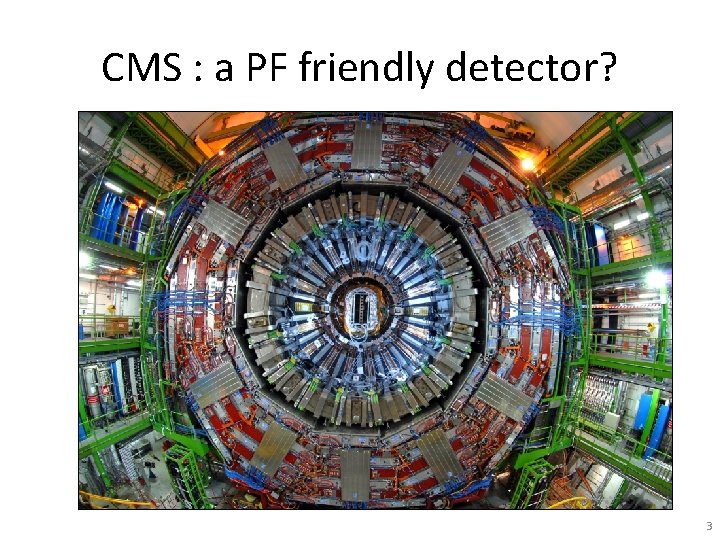
CMS : a PF friendly detector? 3
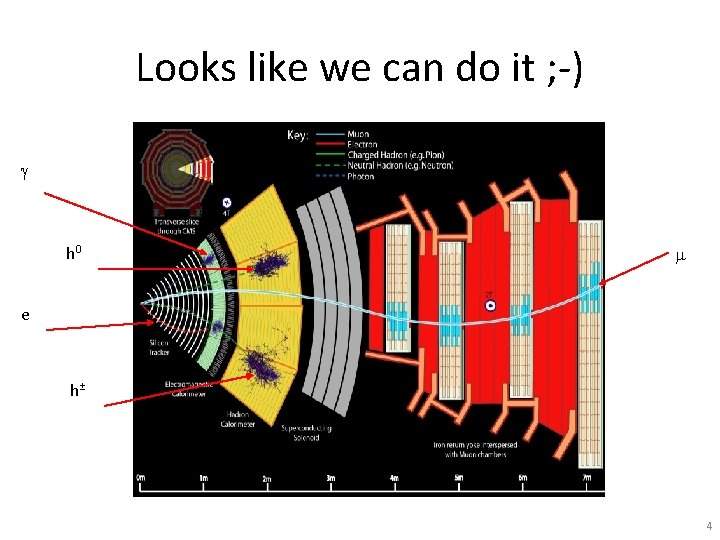
Looks like we can do it ; -) g h 0 m e h± 4
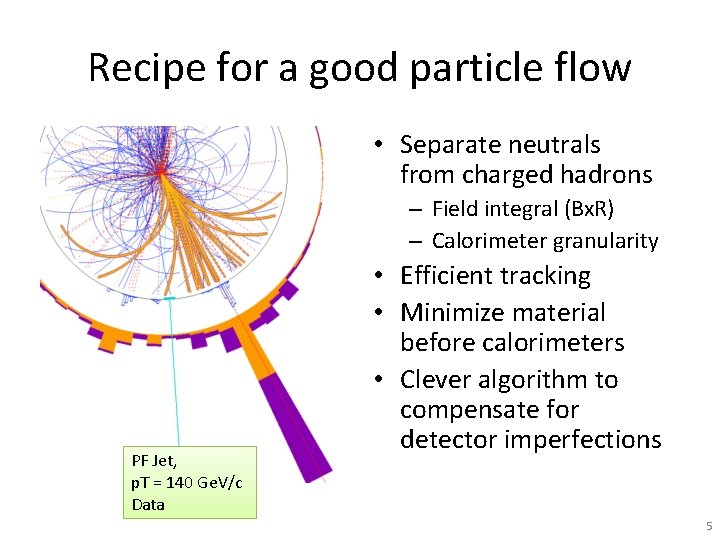
Recipe for a good particle flow • Separate neutrals from charged hadrons – Field integral (Bx. R) – Calorimeter granularity PF Jet, p. T = 140 Ge. V/c Data • Efficient tracking • Minimize material before calorimeters • Clever algorithm to compensate for detector imperfections 5
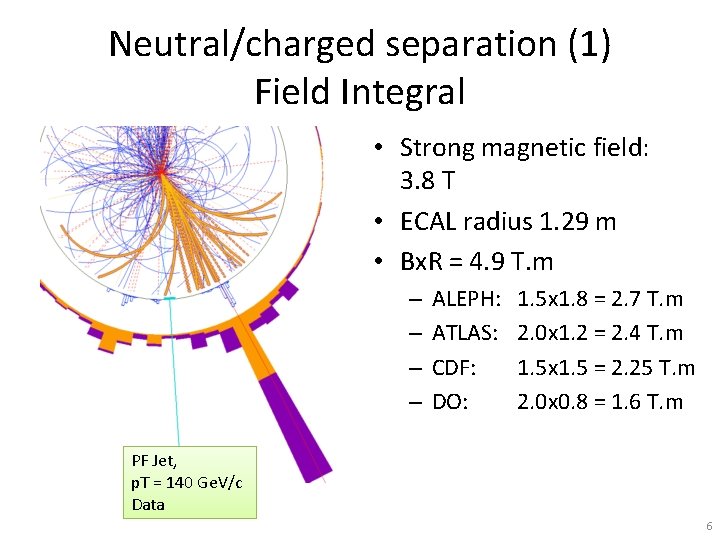
Neutral/charged separation (1) Field Integral • Strong magnetic field: 3. 8 T • ECAL radius 1. 29 m • Bx. R = 4. 9 T. m – – ALEPH: ATLAS: CDF: DO: 1. 5 x 1. 8 = 2. 7 T. m 2. 0 x 1. 2 = 2. 4 T. m 1. 5 x 1. 5 = 2. 25 T. m 2. 0 x 0. 8 = 1. 6 T. m PF Jet, p. T = 140 Ge. V/c Data 6
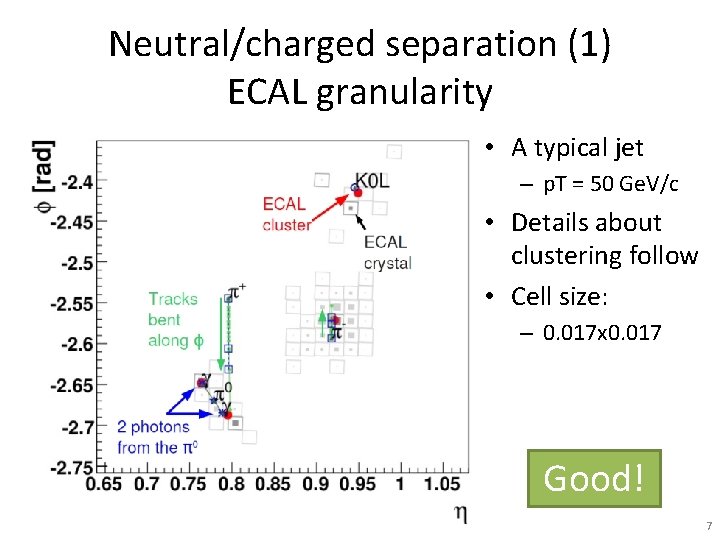
Neutral/charged separation (1) ECAL granularity • A typical jet – p. T = 50 Ge. V/c • Details about clustering follow • Cell size: – 0. 017 x 0. 017 Good! 7
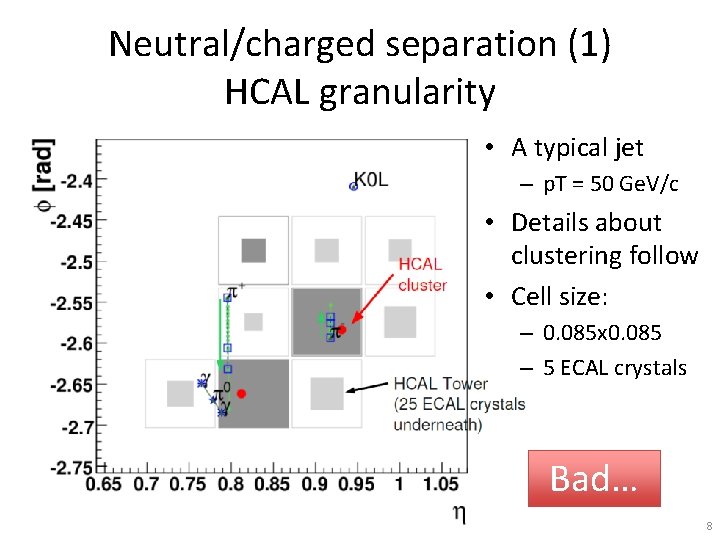
Neutral/charged separation (1) HCAL granularity • A typical jet – p. T = 50 Ge. V/c • Details about clustering follow • Cell size: – 0. 085 x 0. 085 – 5 ECAL crystals Bad… 8
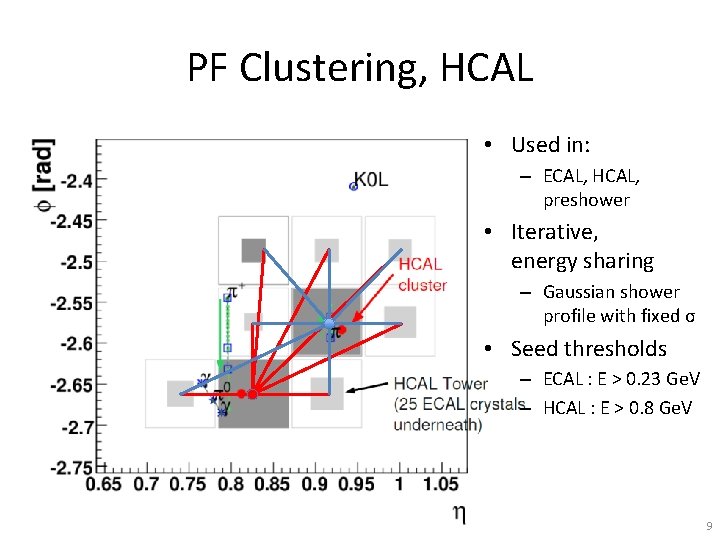
PF Clustering, HCAL • Used in: – ECAL, HCAL, preshower • Iterative, energy sharing – Gaussian shower profile with fixed σ • Seed thresholds – ECAL : E > 0. 23 Ge. V – HCAL : E > 0. 8 Ge. V 9
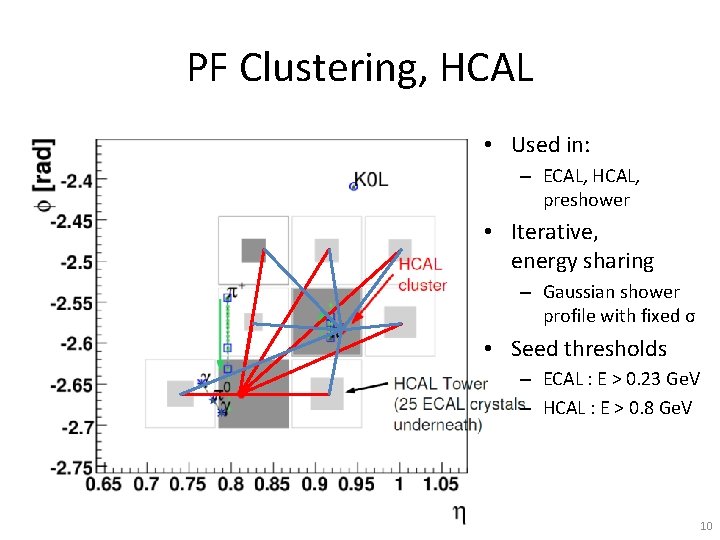
PF Clustering, HCAL • Used in: – ECAL, HCAL, preshower • Iterative, energy sharing – Gaussian shower profile with fixed σ • Seed thresholds – ECAL : E > 0. 23 Ge. V – HCAL : E > 0. 8 Ge. V 10
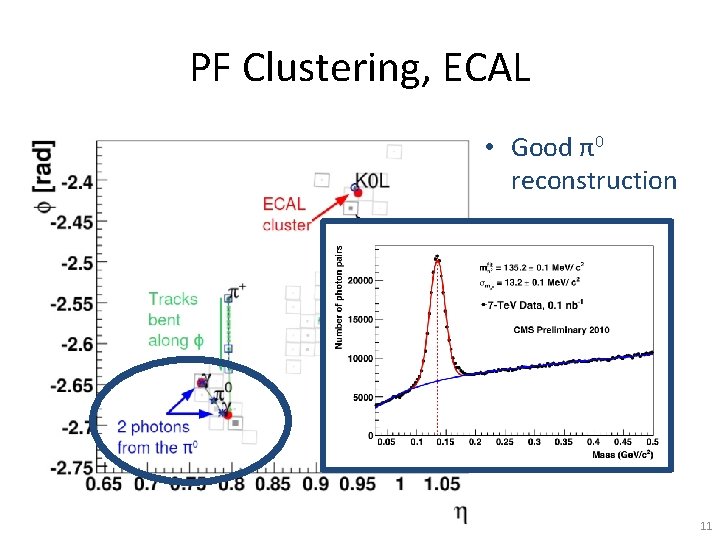
PF Clustering, ECAL • Good π0 reconstruction 11
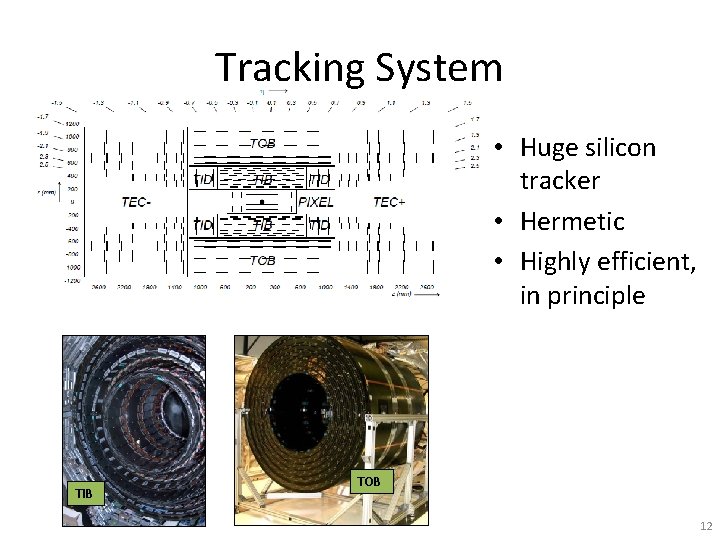
Tracking System • Huge silicon tracker • Hermetic • Highly efficient, in principle TIB TOB 12
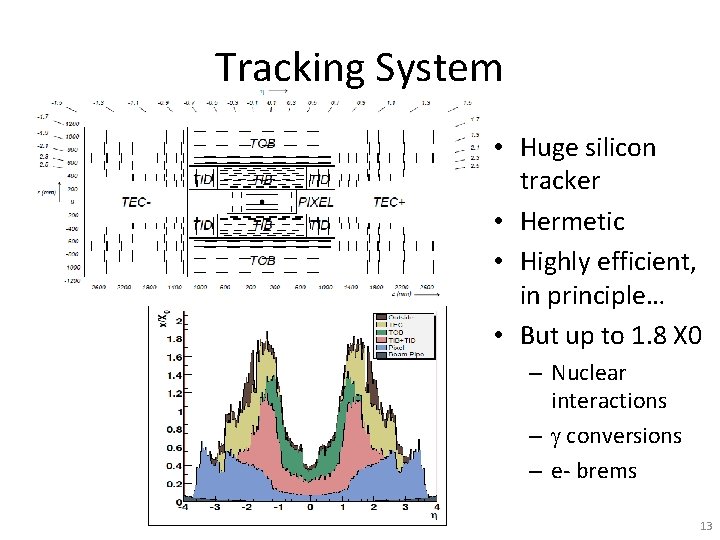
Tracking System • Huge silicon tracker • Hermetic • Highly efficient, in principle… • But up to 1. 8 X 0 – Nuclear interactions – g conversions – e- brems 13
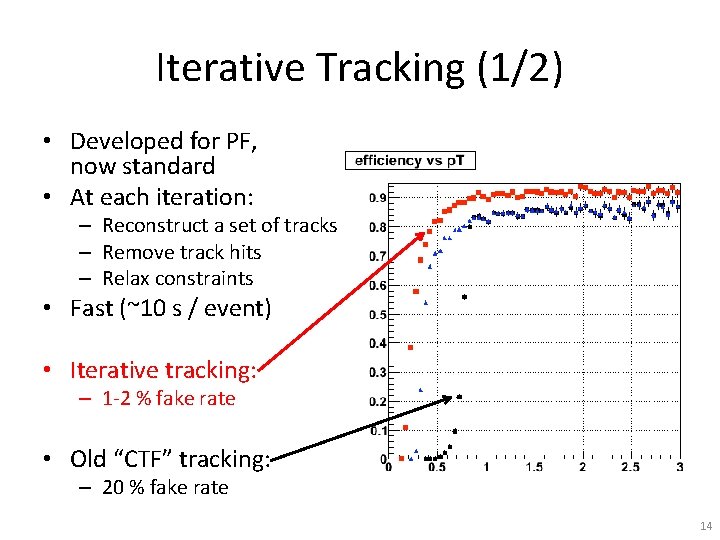
Iterative Tracking (1/2) • Developed for PF, now standard • At each iteration: – Reconstruct a set of tracks – Remove track hits – Relax constraints Pixel layers • Fast (~10 s / event) • Iterative tracking: – 1 -2 % fake rate Beam tube • Old “CTF” tracking: – 20 % fake rate 14
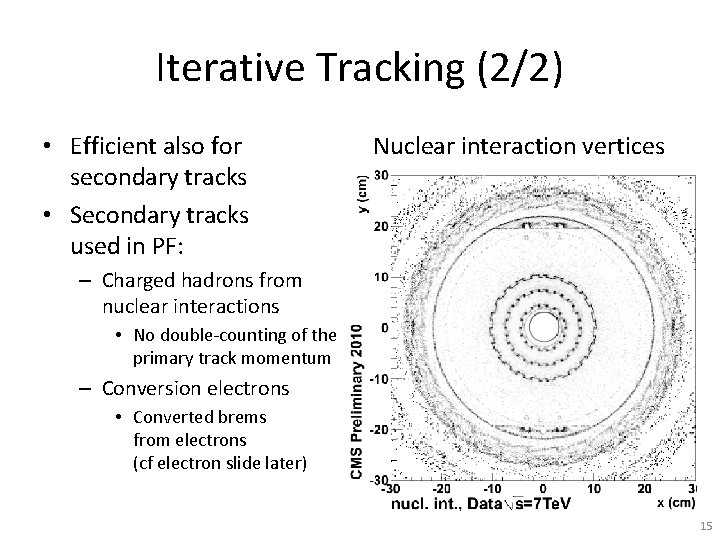
Iterative Tracking (2/2) • Efficient also for secondary tracks • Secondary tracks used in PF: Nuclear interaction vertices – Charged hadrons from nuclear interactions • No double-counting of the primary track momentum – Conversion electrons • Converted brems from electrons (cf electron slide later) 15
Outline • CMS: a PF-friendly detector? – Reconstruction of the PF elements : • Tracks, clusters, etc. • Particle flow – Linking • Elements together – Particle ID and reco • • • Charged hadrons Photons Neutral hadrons Muons Electrons • Particle-based physics objects – – – e and μ from PF Isolation Tau id Jets MET B tagging (nothing yet) • Concluding remarks – PF analyses – Other subjects 16
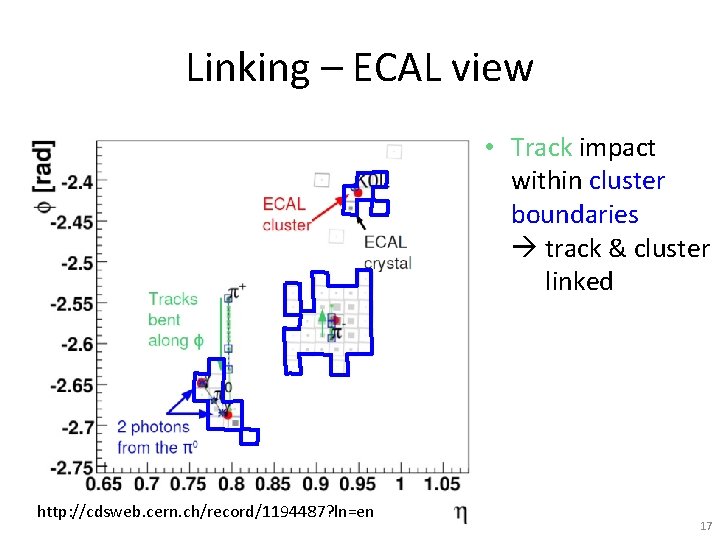
Linking – ECAL view • Track impact within cluster boundaries track & cluster linked http: //cdsweb. cern. ch/record/1194487? ln=en 17
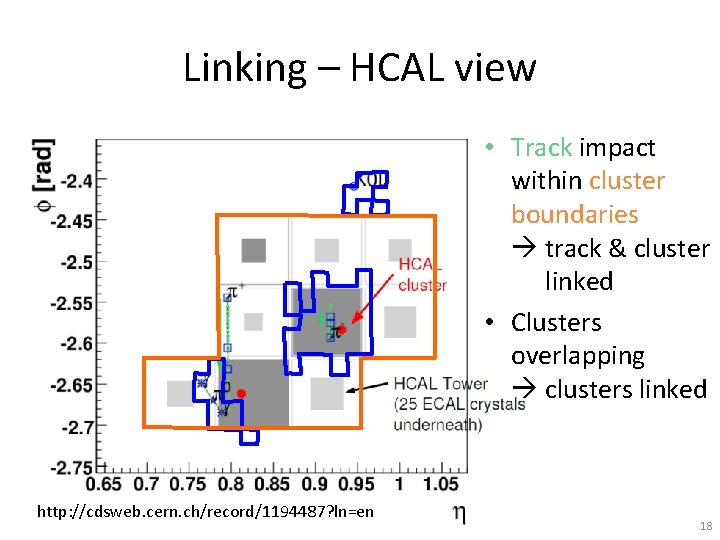
Linking – HCAL view • Track impact within cluster boundaries track & cluster linked • Clusters overlapping clusters linked http: //cdsweb. cern. ch/record/1194487? ln=en 18
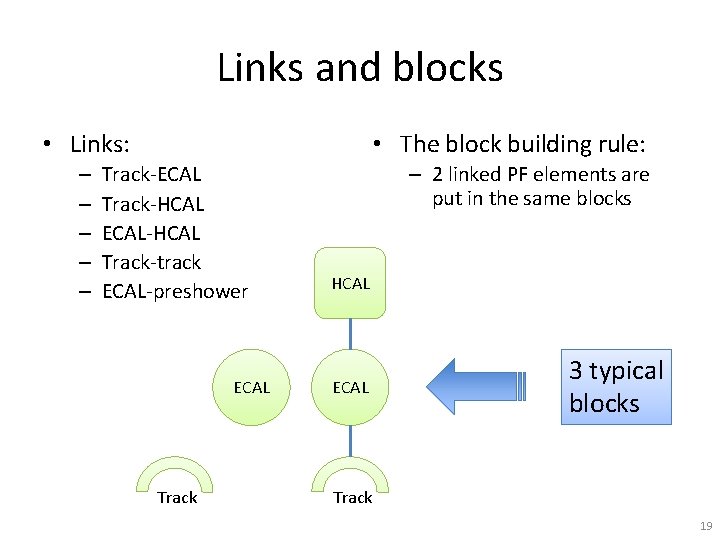
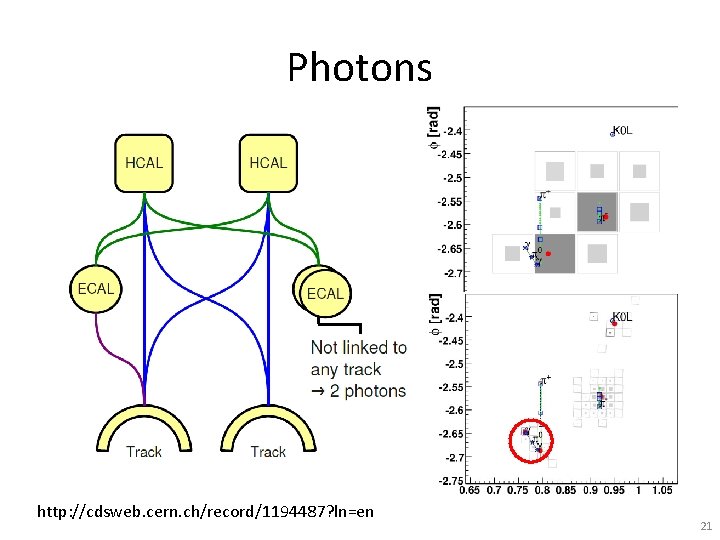
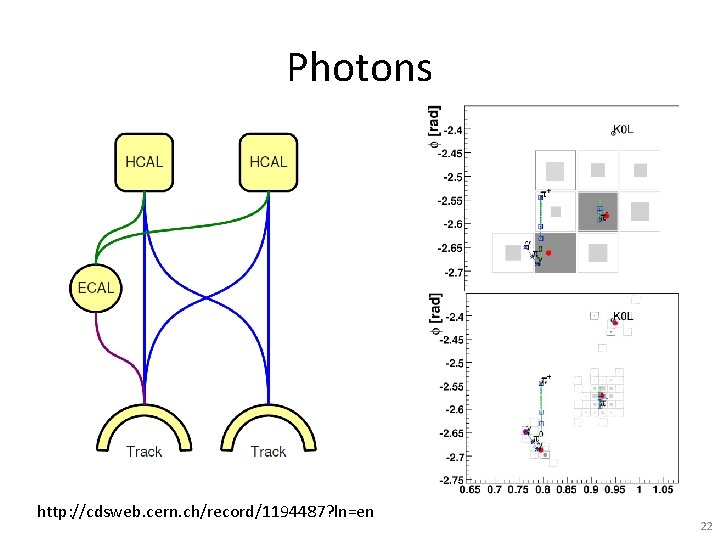
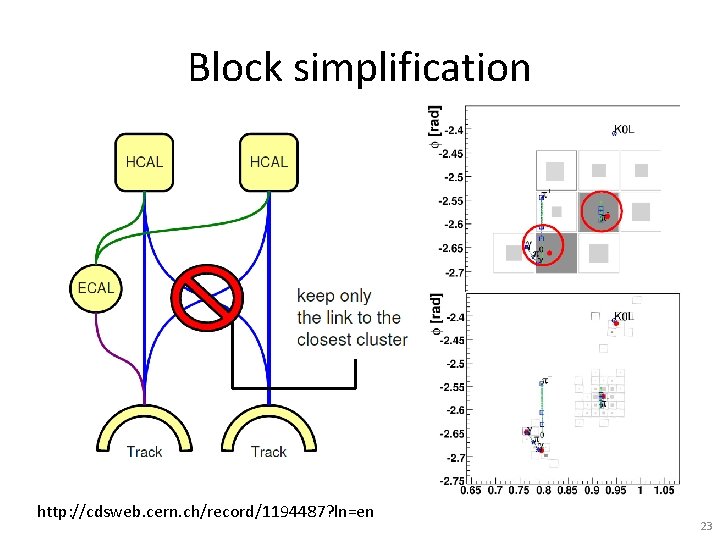
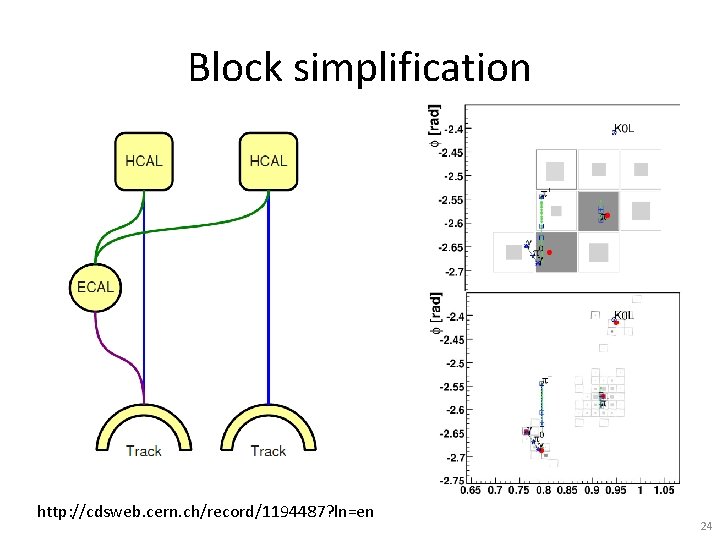
Links and blocks • Links: – – – • The block building rule: Track-ECAL Track-HCAL ECAL-HCAL Track-track ECAL-preshower ECAL Track – 2 linked PF elements are put in the same blocks HCAL ECAL 3 typical blocks Track 19
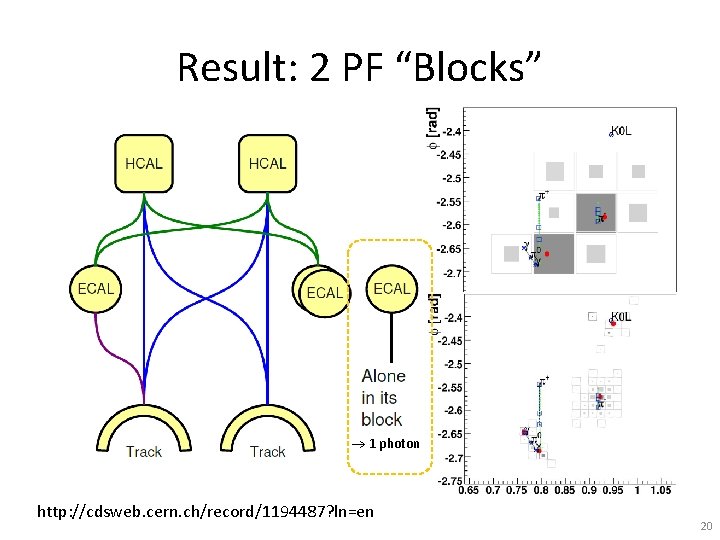
Result: 2 PF “Blocks” 1 photon http: //cdsweb. cern. ch/record/1194487? ln=en 20
Photons http: //cdsweb. cern. ch/record/1194487? ln=en 21
Photons http: //cdsweb. cern. ch/record/1194487? ln=en 22
Block simplification http: //cdsweb. cern. ch/record/1194487? ln=en 23
Block simplification http: //cdsweb. cern. ch/record/1194487? ln=en 24
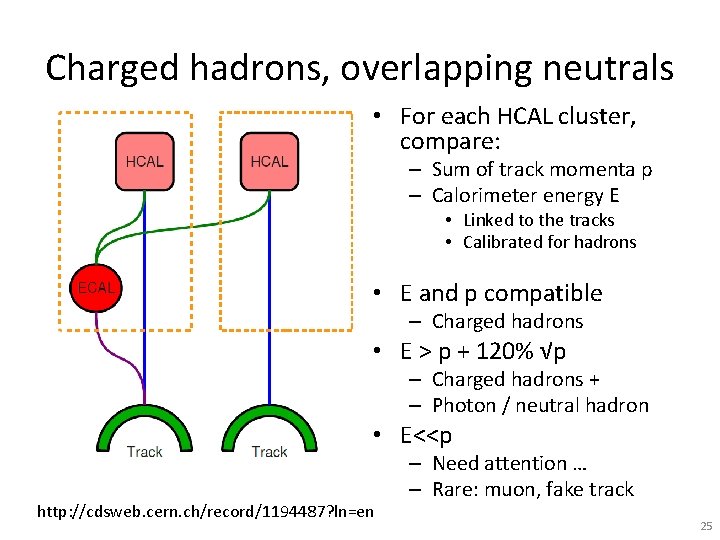
Charged hadrons, overlapping neutrals • For each HCAL cluster, compare: – Sum of track momenta p – Calorimeter energy E • Linked to the tracks • Calibrated for hadrons • E and p compatible – Charged hadrons • E > p + 120% √p – Charged hadrons + – Photon / neutral hadron • E<<p http: //cdsweb. cern. ch/record/1194487? ln=en – Need attention … – Rare: muon, fake track 25
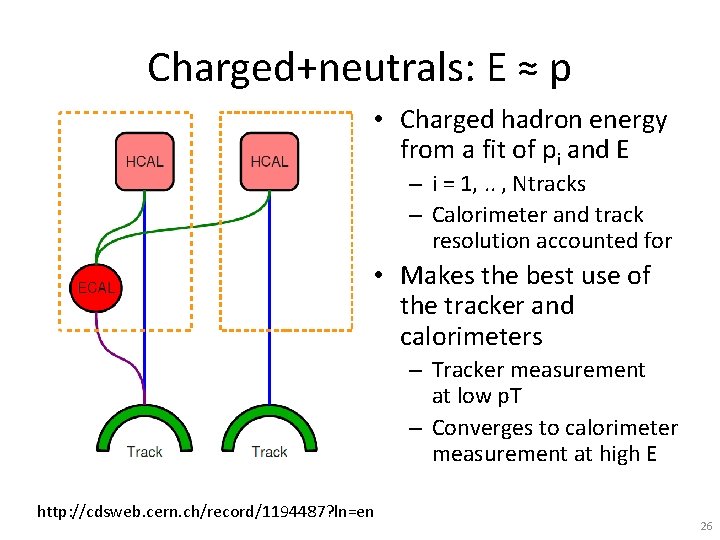
Charged+neutrals: E ≈ p • Charged hadron energy from a fit of pi and E – i = 1, . . , Ntracks – Calorimeter and track resolution accounted for • Makes the best use of the tracker and calorimeters – Tracker measurement at low p. T – Converges to calorimeter measurement at high E http: //cdsweb. cern. ch/record/1194487? ln=en 26
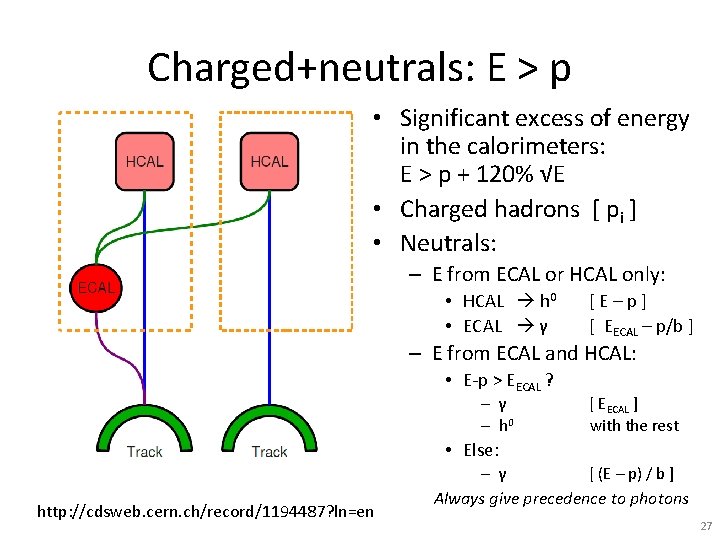
Charged+neutrals: E > p • Significant excess of energy in the calorimeters: E > p + 120% √E • Charged hadrons [ pi ] • Neutrals: – E from ECAL or HCAL only: • HCAL h 0 • ECAL γ [E–p] [ EECAL – p/b ] – E from ECAL and HCAL: • E-p > EECAL ? – γ – h 0 [ EECAL ] with the rest • Else: http: //cdsweb. cern. ch/record/1194487? ln=en – γ [ (E – p) / b ] Always give precedence to photons 27
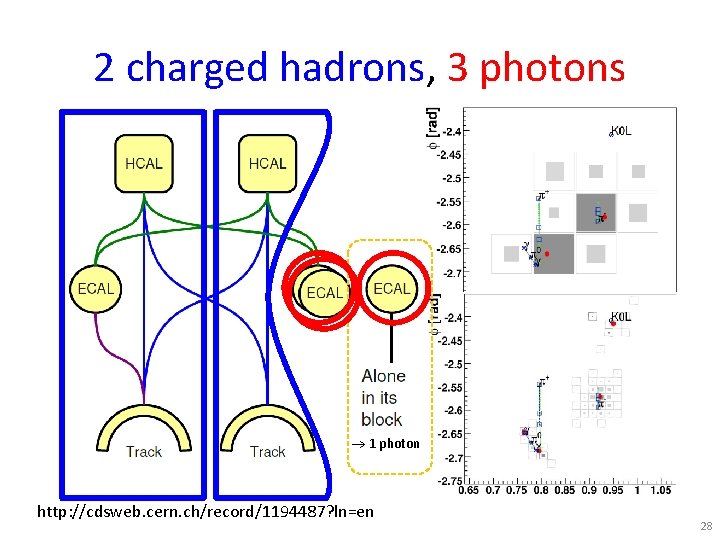
2 charged hadrons, 3 photons 1 photon http: //cdsweb. cern. ch/record/1194487? ln=en 28
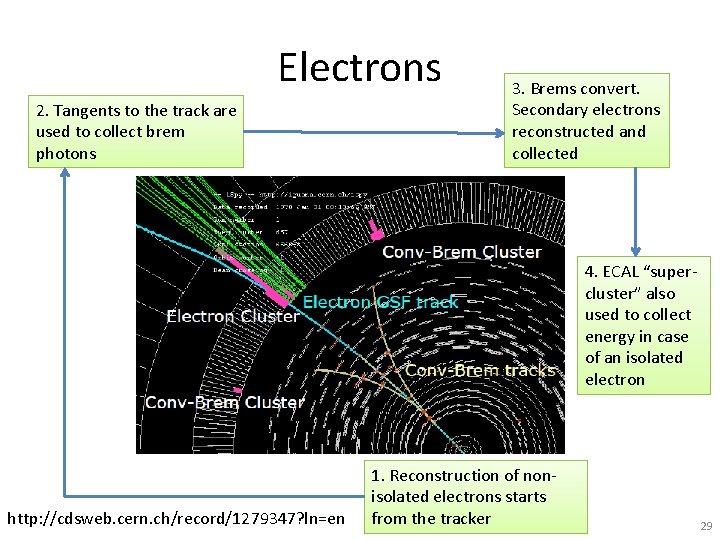
Electrons 2. Tangents to the track are used to collect brem photons 3. Brems convert. Secondary electrons reconstructed and collected 4. ECAL “supercluster” also used to collect energy in case of an isolated electron http: //cdsweb. cern. ch/record/1279347? ln=en 1. Reconstruction of nonisolated electrons starts from the tracker 29
Muons (1/2) • In a jet: • Isolated: – Need high efficiency: Lost muon linked calorimeter energy double-counted – Need low fake rate Fake muon linked calorimeter energy lost • high efficiency & low fake rate to avoid tails http: //cdsweb. cern. ch/record/1279347? ln=en – Need very high efficiency Not to bias analyses • Muon ID cuts applied at analysis stage – Fake rate not important • Low probability for a jet with only a muon and neutrals linked to the muon. 30
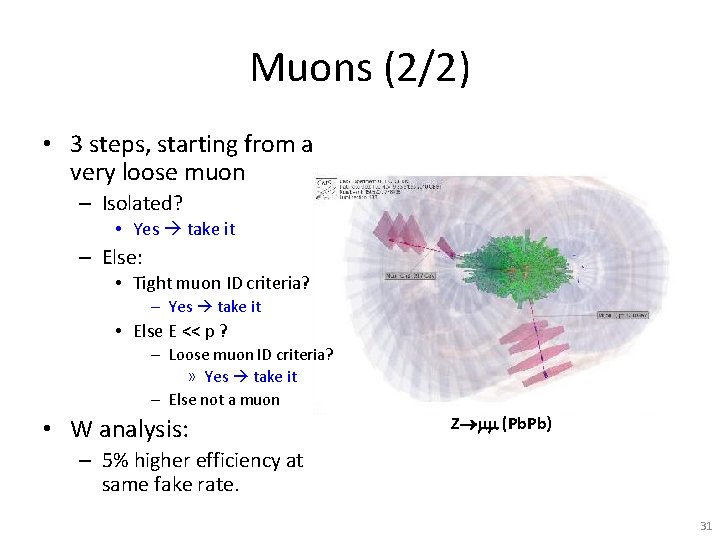
Muons (2/2) • 3 steps, starting from a very loose muon – Isolated? • Yes take it – Else: • Tight muon ID criteria? – Yes take it • Else E << p ? – Loose muon ID criteria? » Yes take it – Else not a muon • W analysis: Z (Pb. Pb) – 5% higher efficiency at same fake rate. 31
Outline • CMS: a PF-friendly detector? – Reconstruction of the PF elements : • Tracks, clusters, etc. • Particle flow – Linking • Elements together – Particle ID and reco • • • Charged hadrons Photons Neutral hadrons Muons Electrons • Particle-based physics objects – – – e and μ from PF Isolation Tau id Jets MET B tagging (nothing yet) • Concluding remarks – PF analyses – Other subjects 32
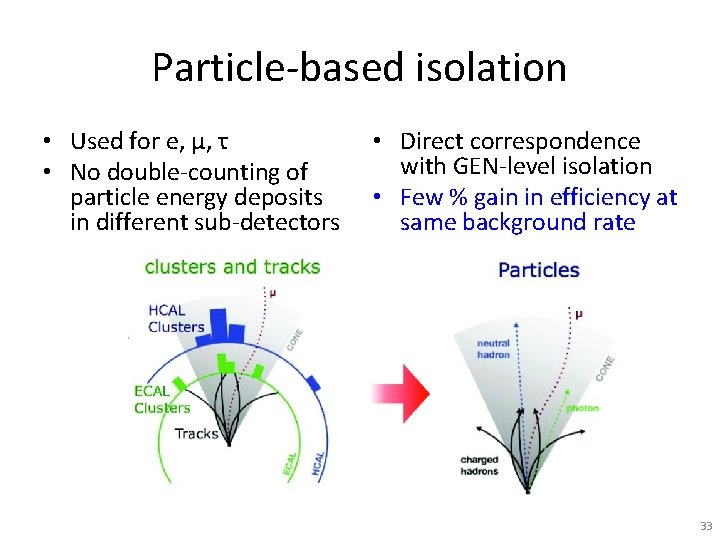
Particle-based isolation • Used for e, μ, τ • No double-counting of particle energy deposits in different sub-detectors • Direct correspondence with GEN-level isolation • Few % gain in efficiency at same background rate 33
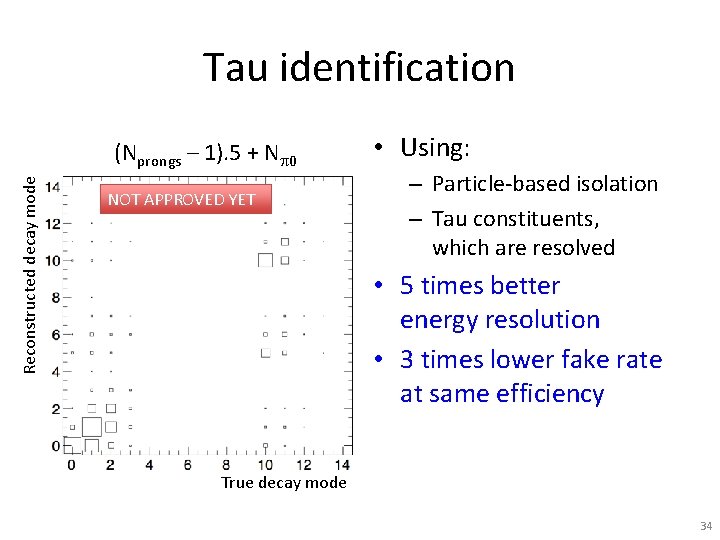
Tau identification Reconstructed decay mode (Nprongs – 1). 5 + Np 0 NOT APPROVED YET • Using: – Particle-based isolation – Tau constituents, which are resolved • 5 times better energy resolution • 3 times lower fake rate at same efficiency True decay mode 34
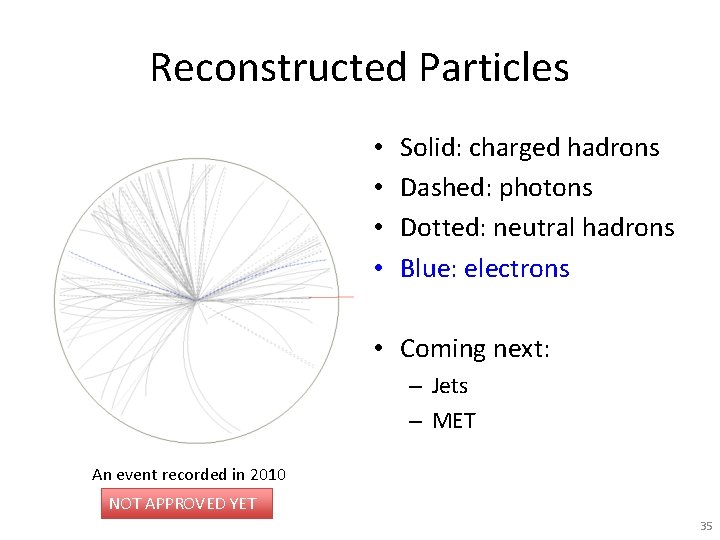
Reconstructed Particles • • Solid: charged hadrons Dashed: photons Dotted: neutral hadrons Blue: electrons • Coming next: – Jets – MET An event recorded in 2010 NOT APPROVED YET 35
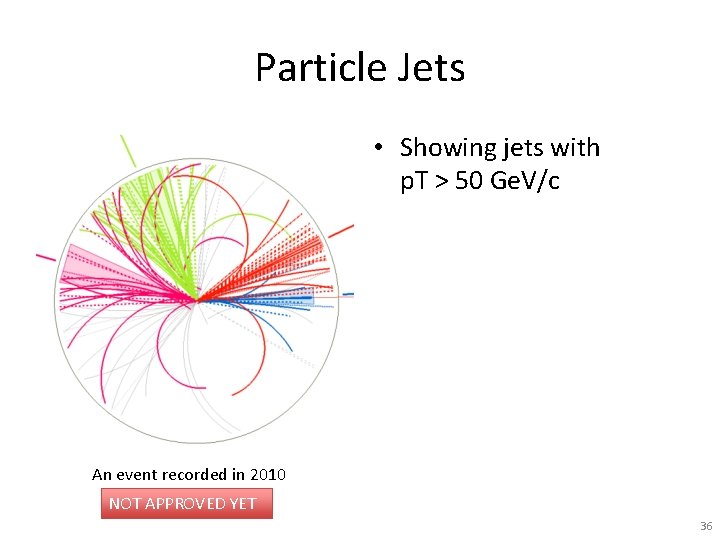
Particle Jets • Showing jets with p. T > 50 Ge. V/c An event recorded in 2010 NOT APPROVED YET 36
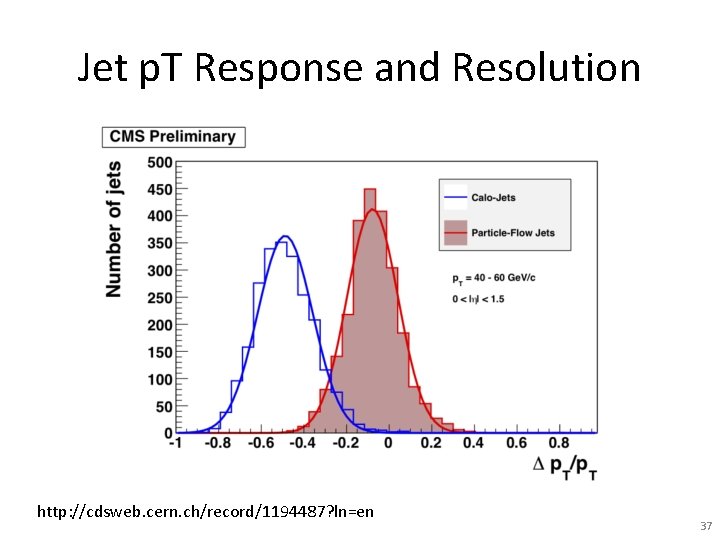
Jet p. T Response and Resolution http: //cdsweb. cern. ch/record/1194487? ln=en 37
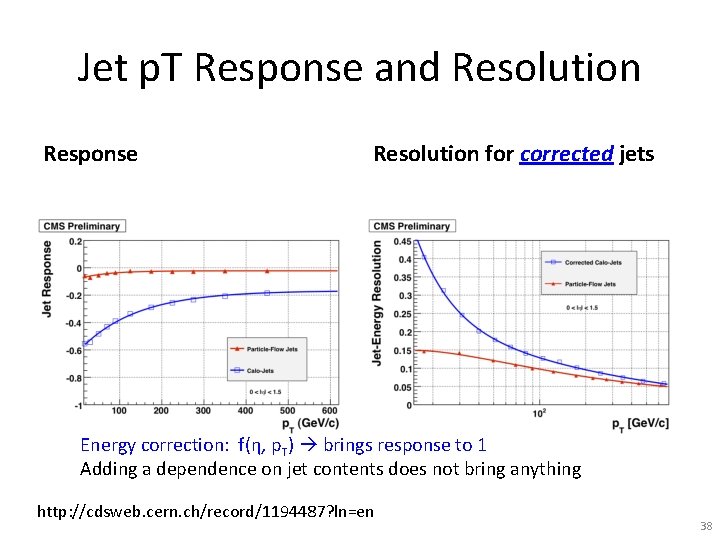
Jet p. T Response and Resolution Response Resolution for corrected jets Energy correction: f(η, p. T) brings response to 1 Adding a dependence on jet contents does not bring anything http: //cdsweb. cern. ch/record/1194487? ln=en 38
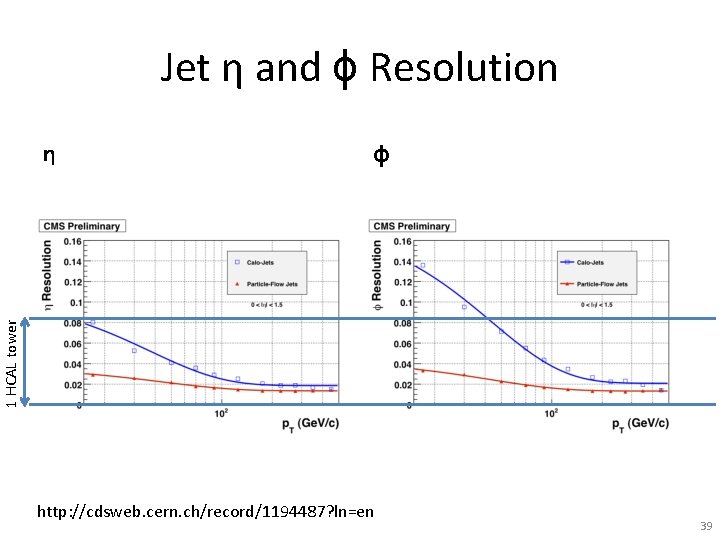
Jet η and ϕ Resolution ϕ 1 HCAL tower η http: //cdsweb. cern. ch/record/1194487? ln=en 39
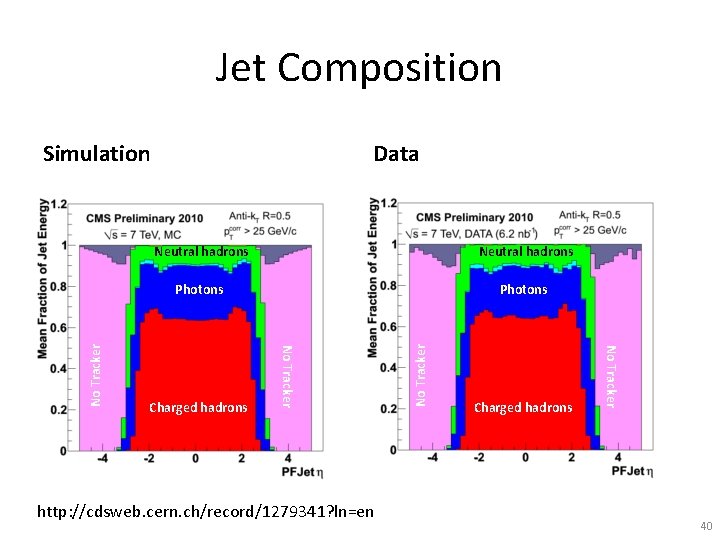
Jet Composition Data Neutral hadrons Photons http: //cdsweb. cern. ch/record/1279341? ln=en Charged hadrons No Tracker Neutral hadrons No Tracker Simulation 40
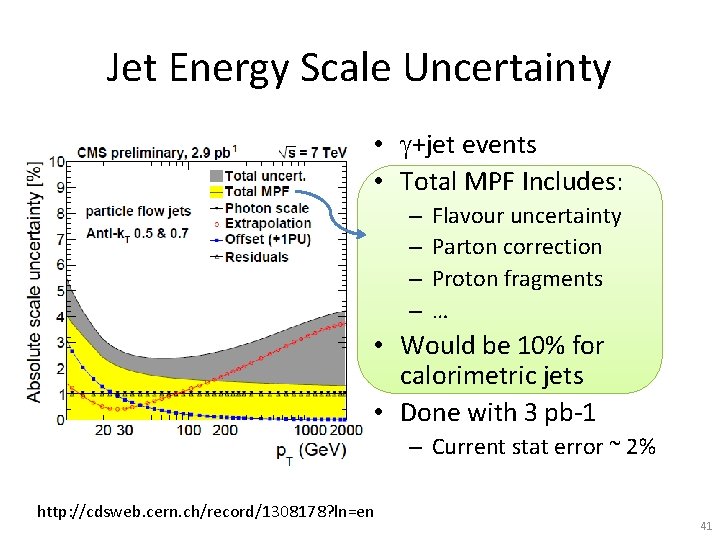
Jet Energy Scale Uncertainty • g+jet events • Total MPF Includes: – – Flavour uncertainty Parton correction Proton fragments … • Would be 10% for calorimetric jets • Done with 3 pb-1 – Current stat error ~ 2% http: //cdsweb. cern. ch/record/1308178? ln=en 41
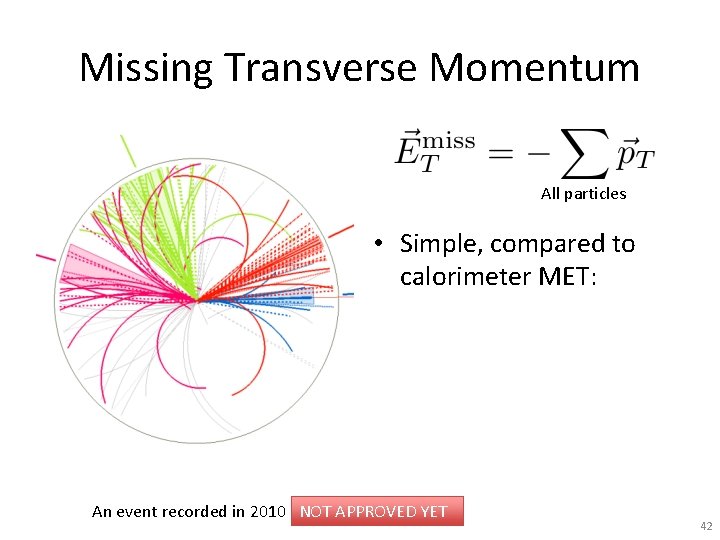
Missing Transverse Momentum All particles • Simple, compared to calorimeter MET: An event recorded in 2010 NOT APPROVED YET 42
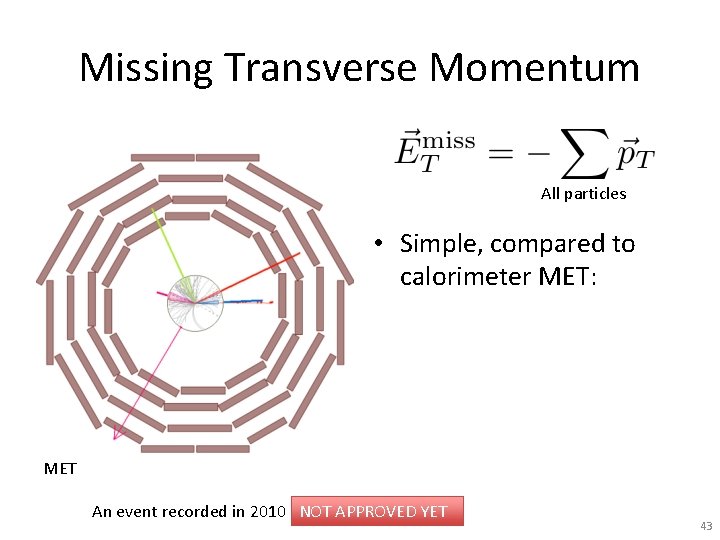
Missing Transverse Momentum All particles • Simple, compared to calorimeter MET: MET An event recorded in 2010 NOT APPROVED YET 43
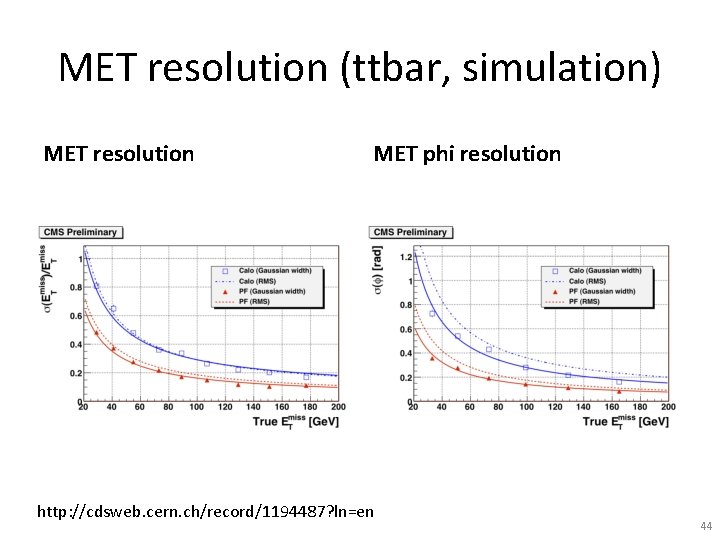
MET resolution (ttbar, simulation) MET resolution MET phi resolution http: //cdsweb. cern. ch/record/1194487? ln=en 44
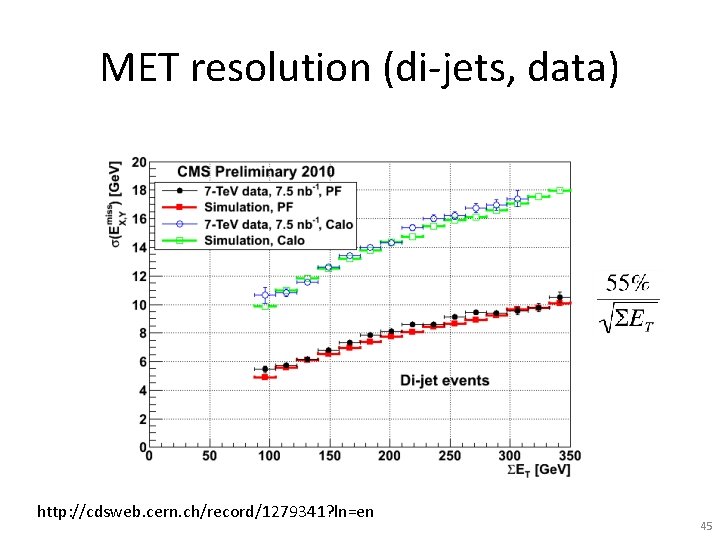
MET resolution (di-jets, data) http: //cdsweb. cern. ch/record/1279341? ln=en 45
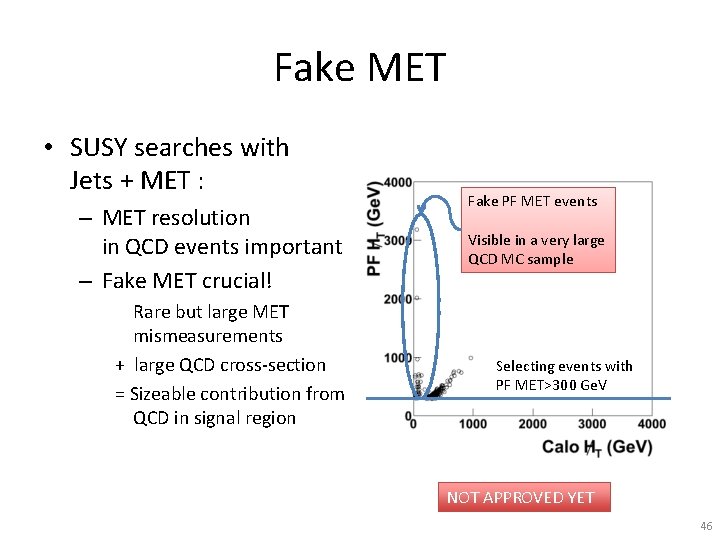
Fake MET • SUSY searches with Jets + MET : – MET resolution in QCD events important – Fake MET crucial! Rare but large MET mismeasurements + large QCD cross-section = Sizeable contribution from QCD in signal region Fake PF MET events Visible in a very large QCD MC sample Selecting events with PF MET>300 Ge. V NOT APPROVED YET 46
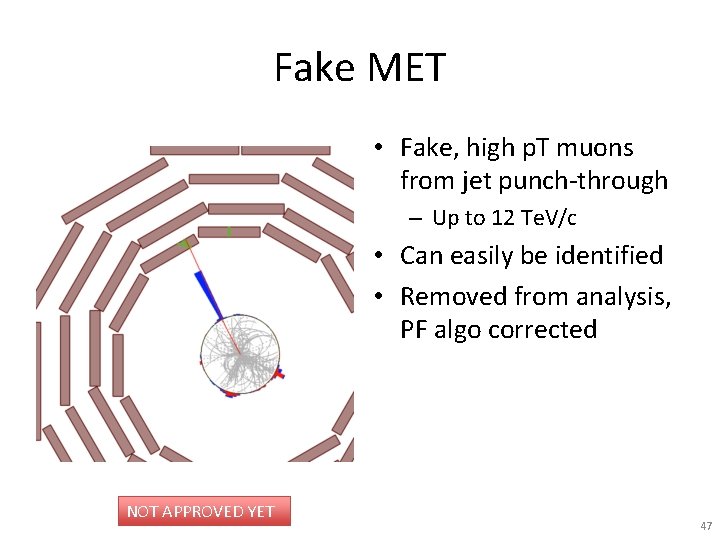
Fake MET • Fake, high p. T muons from jet punch-through – Up to 12 Te. V/c • Can easily be identified • Removed from analysis, PF algo corrected NOT APPROVED YET 47
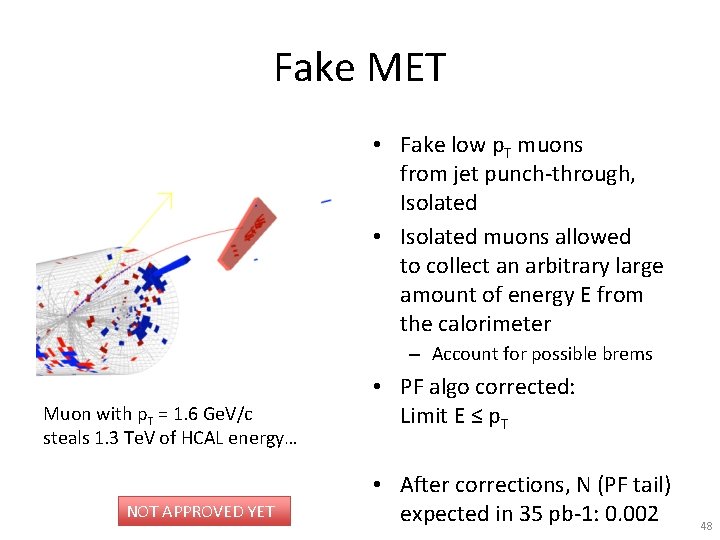
Fake MET • Fake low p. T muons from jet punch-through, Isolated • Isolated muons allowed to collect an arbitrary large amount of energy E from the calorimeter – Account for possible brems Muon with p. T = 1. 6 Ge. V/c steals 1. 3 Te. V of HCAL energy… NOT APPROVED YET • PF algo corrected: Limit E ≤ p. T • After corrections, N (PF tail) expected in 35 pb-1: 0. 002 48
Outline • CMS: a PF-friendly detector? – Reconstruction of the PF elements : • Tracks, clusters, etc. • Particle flow – Linking • Elements together – Particle ID and reco • • • Charged hadrons Photons Neutral hadrons Muons Electrons • Particle-based physics objects – – – e and μ from PF Isolation Tau id Jets MET B tagging (nothing yet) • Concluding remarks – PF analyses – Other subjects 49
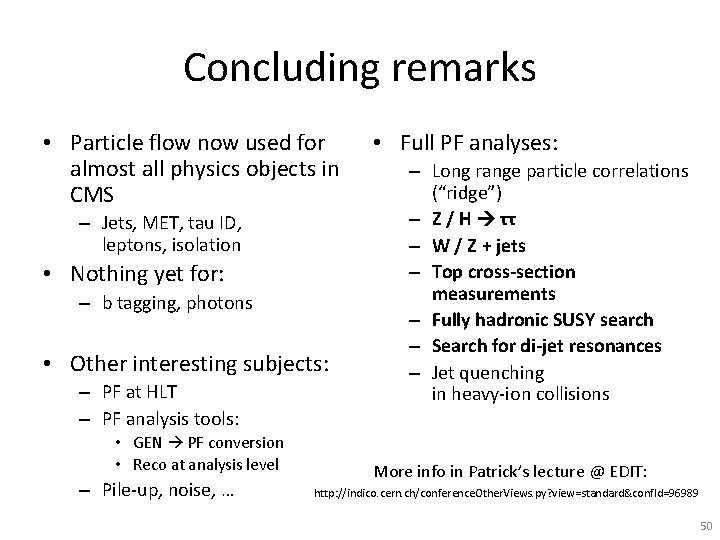
Concluding remarks • Particle flow now used for almost all physics objects in CMS – Jets, MET, tau ID, leptons, isolation • Nothing yet for: – b tagging, photons • Other interesting subjects: – PF at HLT – PF analysis tools: • GEN PF conversion • Reco at analysis level – Pile-up, noise, … • Full PF analyses: – Long range particle correlations (“ridge”) – Z / H ττ – W / Z + jets – Top cross-section measurements – Fully hadronic SUSY search – Search for di-jet resonances – Jet quenching in heavy-ion collisions More info in Patrick’s lecture @ EDIT: http: //indico. cern. ch/conference. Other. Views. py? view=standard&conf. Id=96989 50
- Slides: 50