
Energy Flow in an Ecosystem Food Webs Herbivores
Energy Flow in an Ecosystem
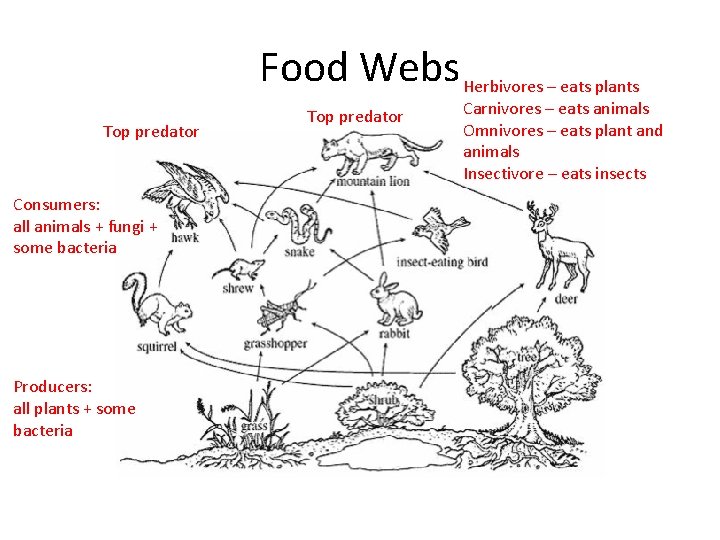
Food Webs Herbivores – eats plants Top predator Consumers: all animals + fungi + some bacteria Producers: all plants + some bacteria Top predator Carnivores – eats animals Omnivores – eats plant and animals Insectivore – eats insects
What happens when organisms die? • Detrius – dead plants, dead animals, and animal waste • Detrius – contains organic (carbon containing) and inorganic compounds
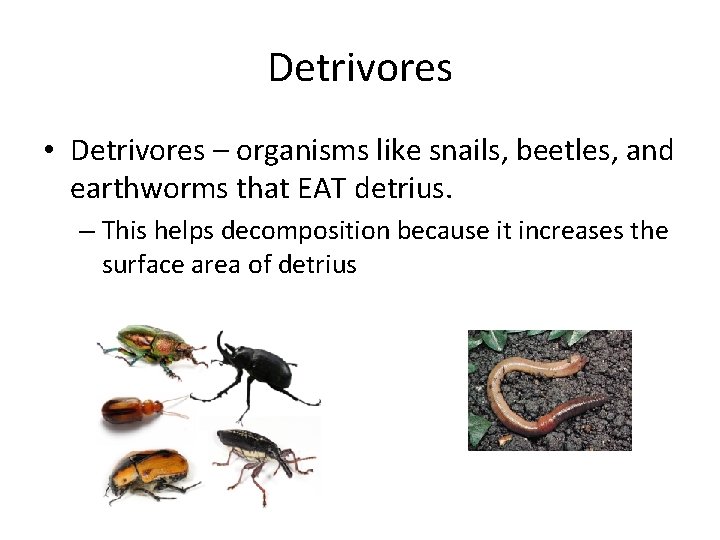
Detrivores • Detrivores – organisms like snails, beetles, and earthworms that EAT detrius. – This helps decomposition because it increases the surface area of detrius
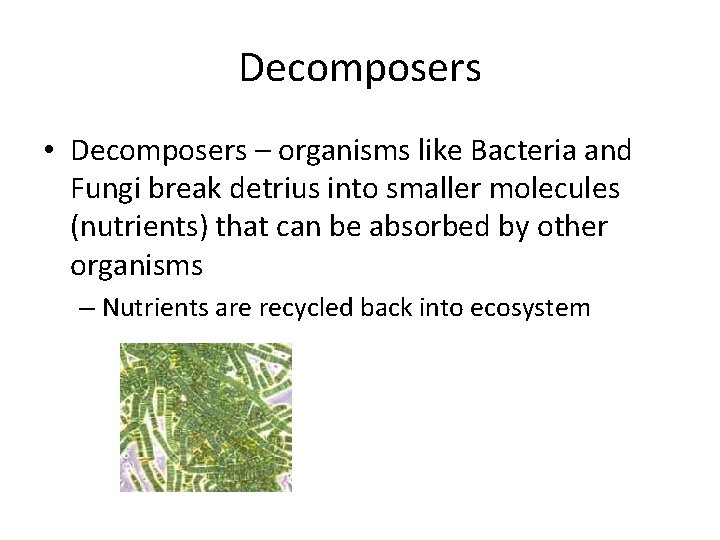
Decomposers • Decomposers – organisms like Bacteria and Fungi break detrius into smaller molecules (nutrients) that can be absorbed by other organisms – Nutrients are recycled back into ecosystem
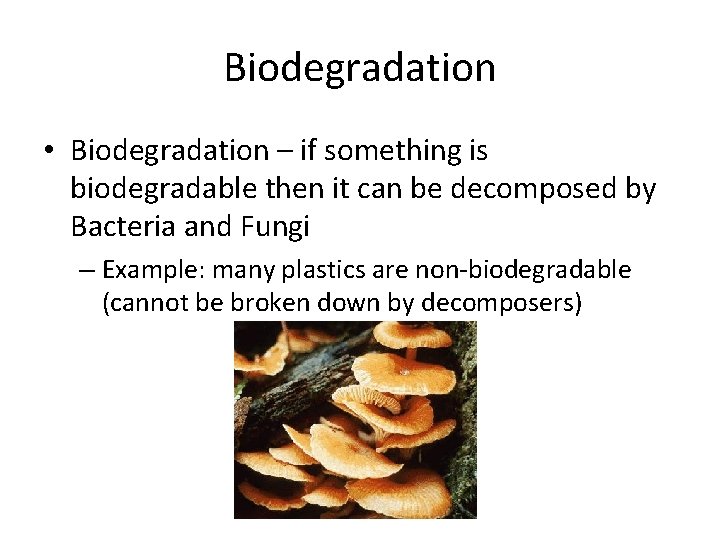
Biodegradation • Biodegradation – if something is biodegradable then it can be decomposed by Bacteria and Fungi – Example: many plastics are non-biodegradable (cannot be broken down by decomposers)
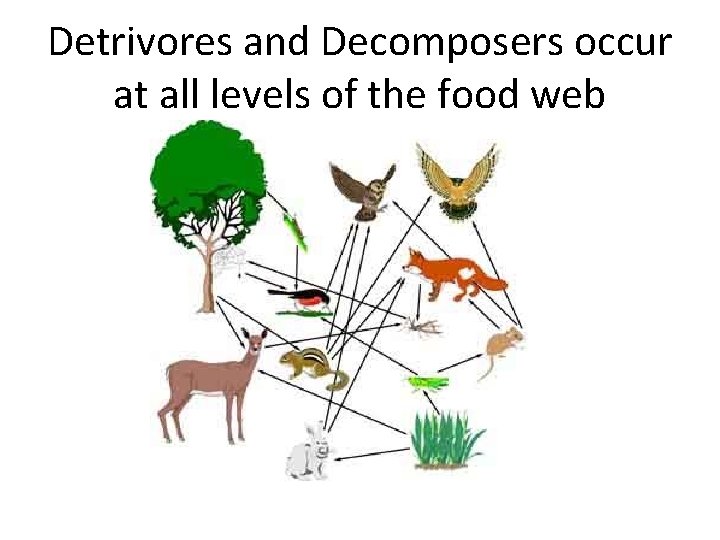
Detrivores and Decomposers occur at all levels of the food web
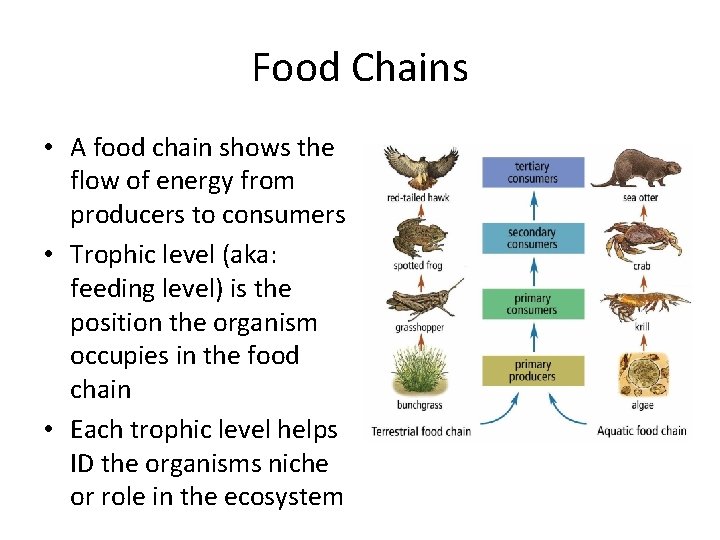
Food Chains • A food chain shows the flow of energy from producers to consumers • Trophic level (aka: feeding level) is the position the organism occupies in the food chain • Each trophic level helps ID the organisms niche or role in the ecosystem
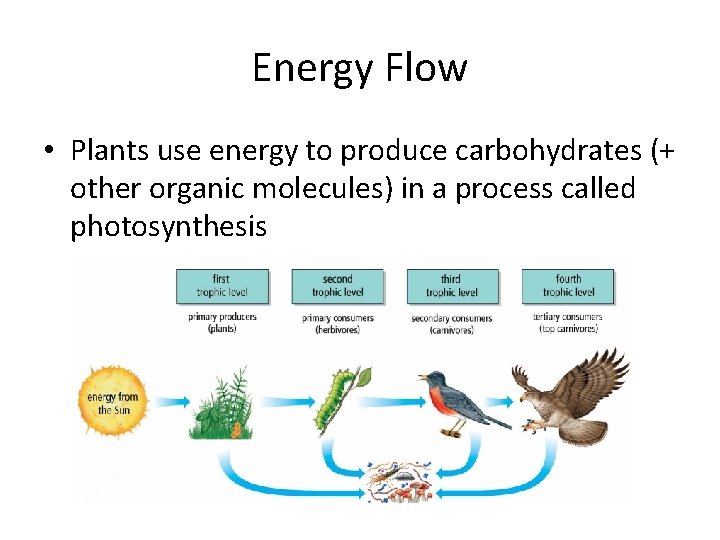
Energy Flow • Plants use energy to produce carbohydrates (+ other organic molecules) in a process called photosynthesis
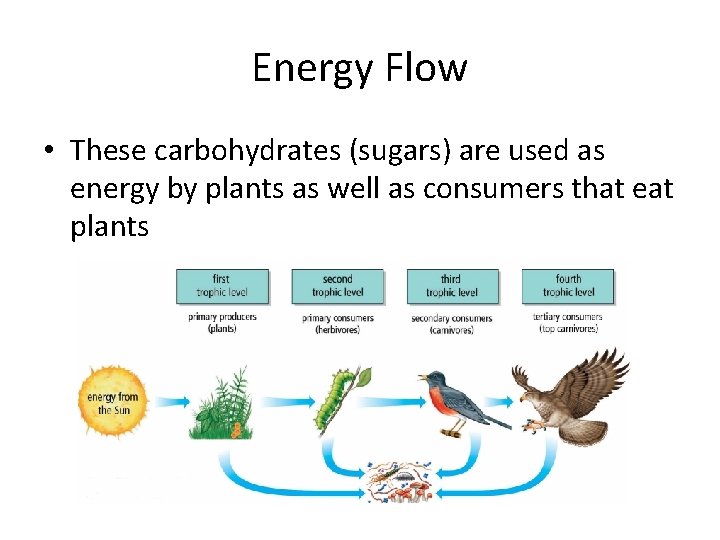
Energy Flow • These carbohydrates (sugars) are used as energy by plants as well as consumers that eat plants
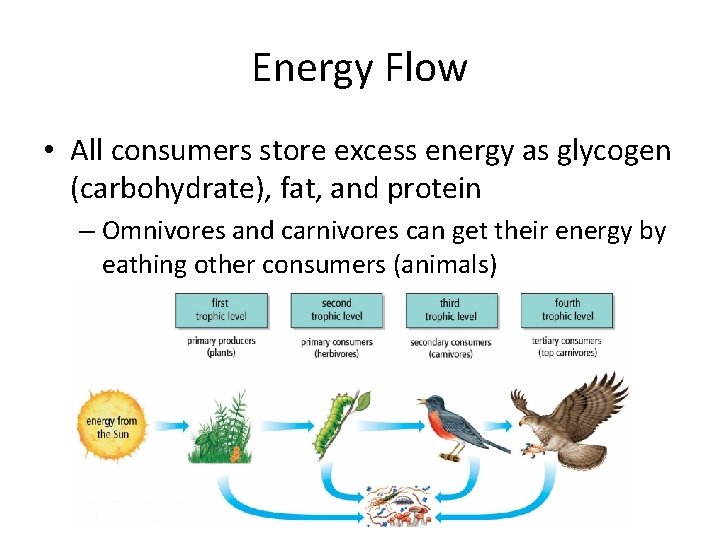
Energy Flow • All consumers store excess energy as glycogen (carbohydrate), fat, and protein – Omnivores and carnivores can get their energy by eathing other consumers (animals)
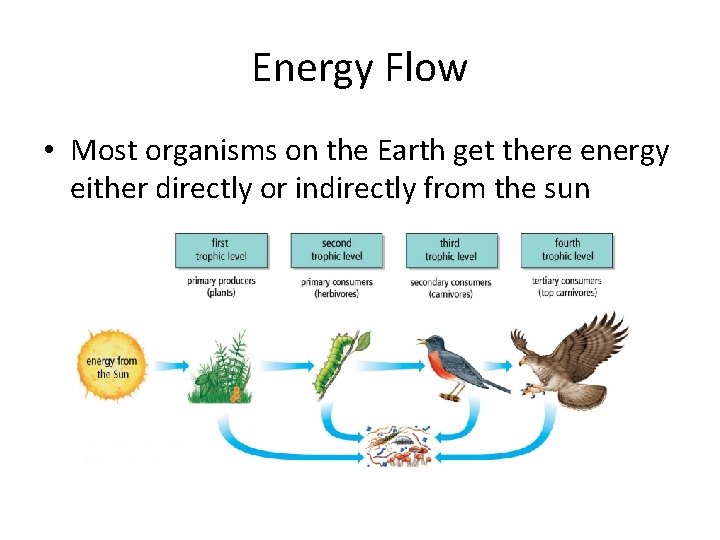
Energy Flow • Most organisms on the Earth get there energy either directly or indirectly from the sun
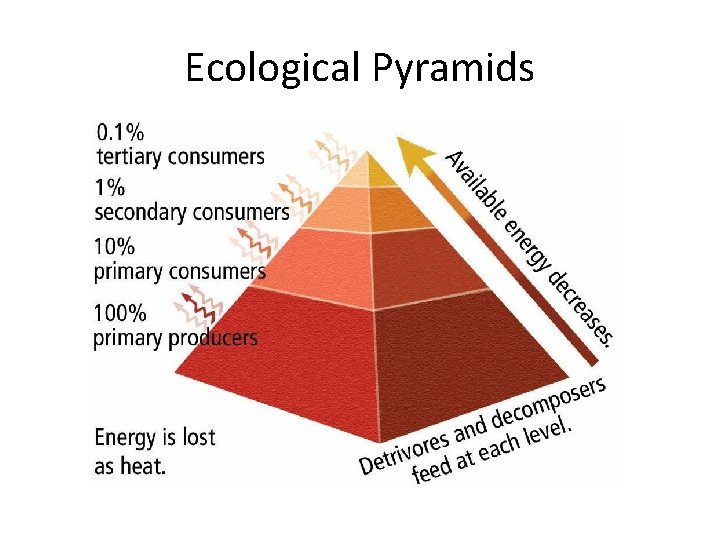
Ecological Pyramids
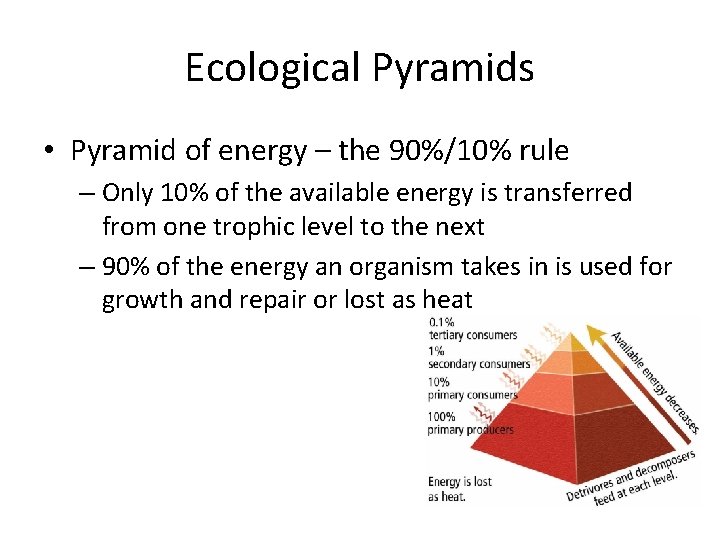
Ecological Pyramids • Pyramid of energy – the 90%/10% rule – Only 10% of the available energy is transferred from one trophic level to the next – 90% of the energy an organism takes in is used for growth and repair or lost as heat
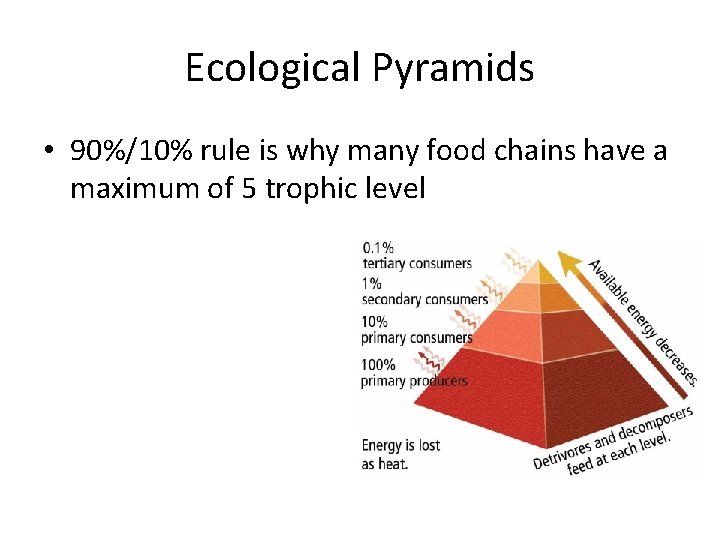
Ecological Pyramids • 90%/10% rule is why many food chains have a maximum of 5 trophic level
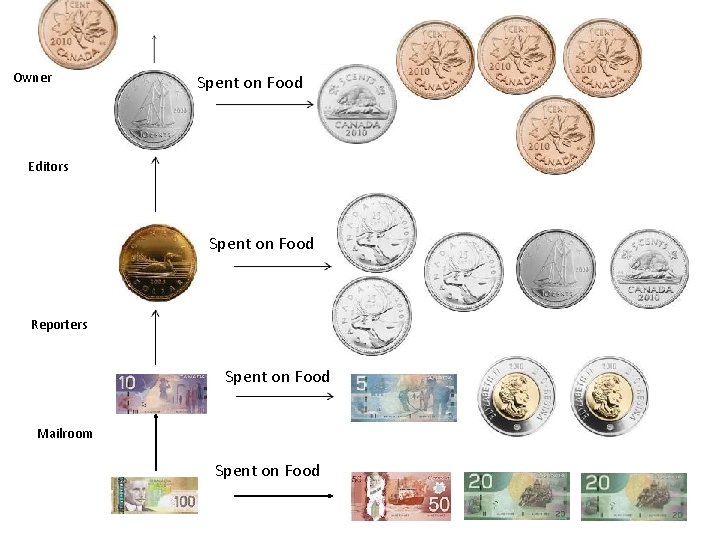
Owner Spent on Food Editors Spent on Food Reporters Spent on Food Mailroom Spent on Food
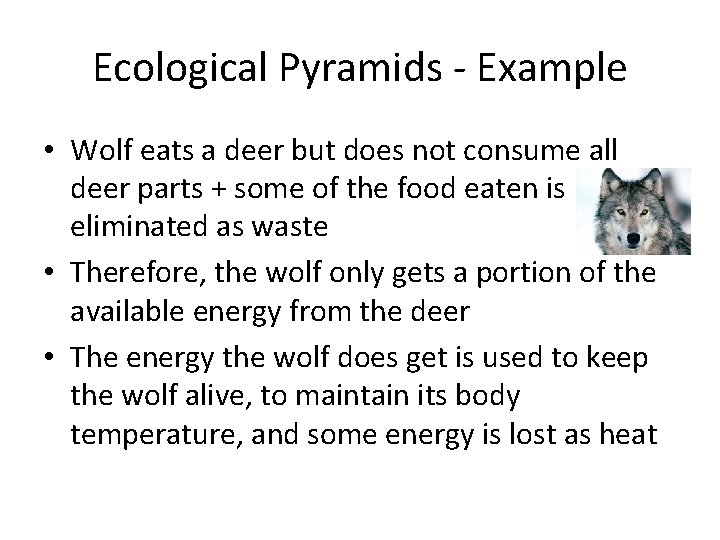
Ecological Pyramids - Example • Wolf eats a deer but does not consume all deer parts + some of the food eaten is eliminated as waste • Therefore, the wolf only gets a portion of the available energy from the deer • The energy the wolf does get is used to keep the wolf alive, to maintain its body temperature, and some energy is lost as heat
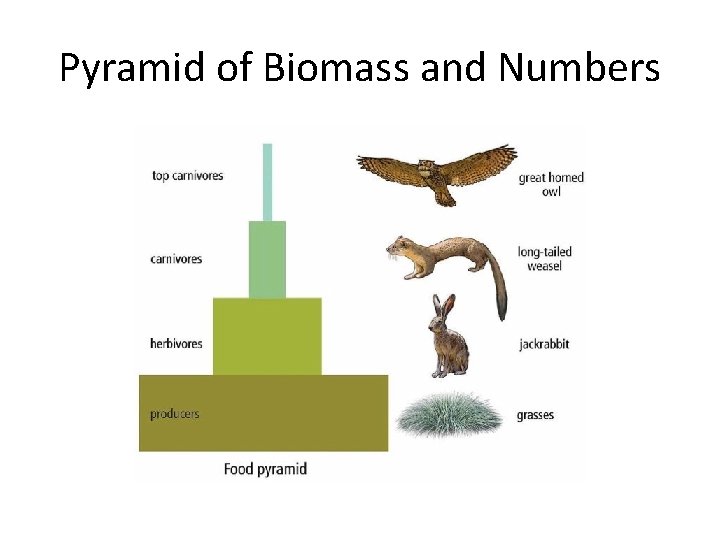
Pyramid of Biomass and Numbers
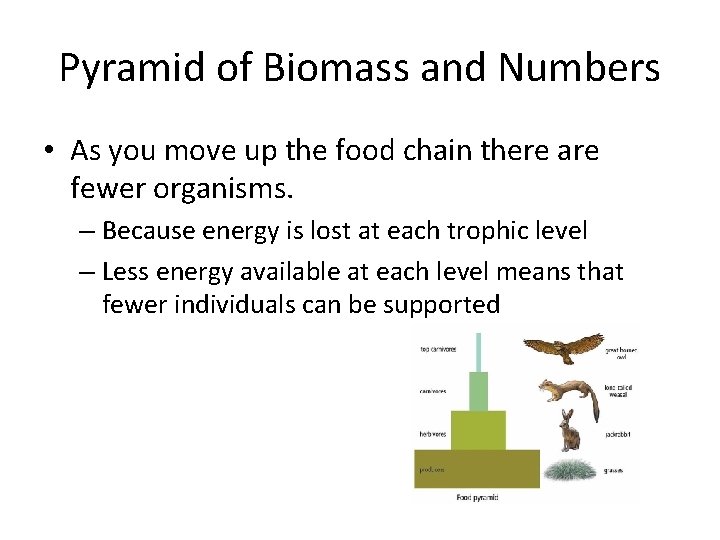
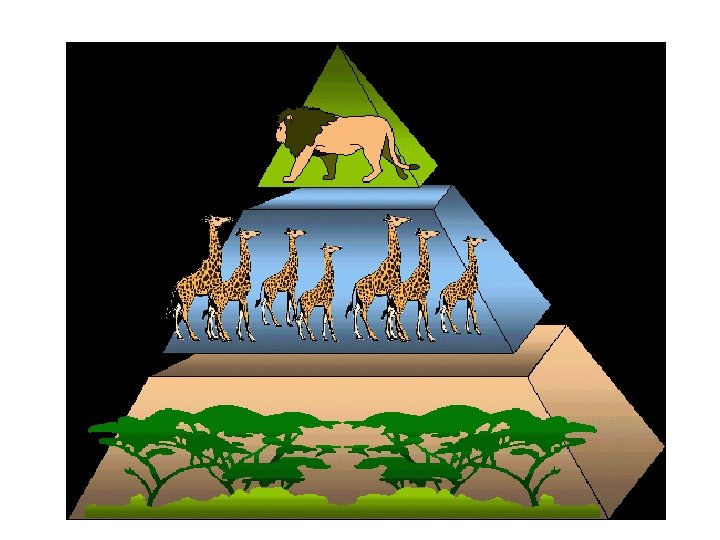
Pyramid of Biomass and Numbers • As you move up the food chain there are fewer organisms. – Because energy is lost at each trophic level – Less energy available at each level means that fewer individuals can be supported
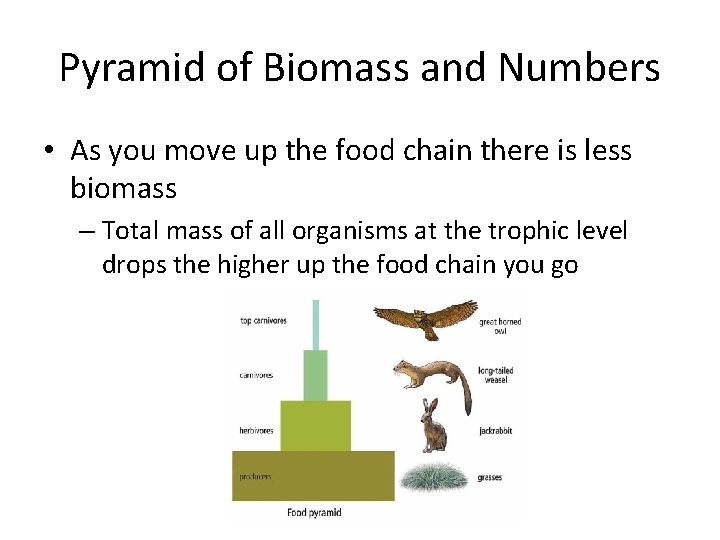
Pyramid of Biomass and Numbers • As you move up the food chain there is less biomass – Total mass of all organisms at the trophic level drops the higher up the food chain you go
- Slides: 21